
REVIEW · KYOTO ZEN MEDITATION EXPERIENCES
Kyoto: Zen and Yoga Experience at Myoshinji Temple
The best part of this Kyoto experience is its setting: you practice Zen and yoga inside a normally non-public part of Myoshinji Temple, with a garden in view and the sounds of birds, leaves, and wind around you. It is not a sightseeing sprint. It is a quiet pause in the middle of a busy Japan itinerary.
I like the thoughtful mix of Zen discussion and gentle physical practice, and I like that the experience ends with Japanese tea rather than simply sending you back onto the street. The main drawback is clear: if you already practice yoga or meditation, the content may feel basic. One participant described it as ideal for a complete beginner but weak for an experienced practitioner.
In This Review
- Key points
- A quiet corner of Myoshinji Temple
- What the Zen session actually adds
- Yoga with a garden in view
- Japanese tea and open conversation
- Why Agasa matters to the experience
- The value of a $96, two-hour activity
- Who should book this Myoshinji experience
- Practical preparation for the temple
- How to fit it into a Kyoto day
- Should you book it?
- FAQ
- How long does the Zen and yoga experience last?
- How much does the experience cost?
- Where is the meeting point?
- What language is the activity conducted in?
- Is this a private activity?
- What is included in the price?
- What should I bring?
- Is the experience suitable for beginners?
- Can I cancel the booking?
Key points
- Private temple setting: Practice in a normally closed section of the Myoshinji complex, overlooking a traditional garden.
- Beginner-friendly instruction: The session introduces Zen and its five key elements before moving into meditation and yoga.
- Agasa as instructor: Agasa is described as kind, thoughtful, gracious, and informative, with English instruction.
- Two-hour cultural format: The time is divided among Zen, yoga, and Japanese tea rather than devoted to exercise alone.
- Bring practical items: Pack comfortable clothes, a change of clothes, a towel, and water.
- Clear health limits: The activity is not suitable for pregnant women, people with heart problems, people with a cold, or people over 70.
A quiet corner of Myoshinji Temple
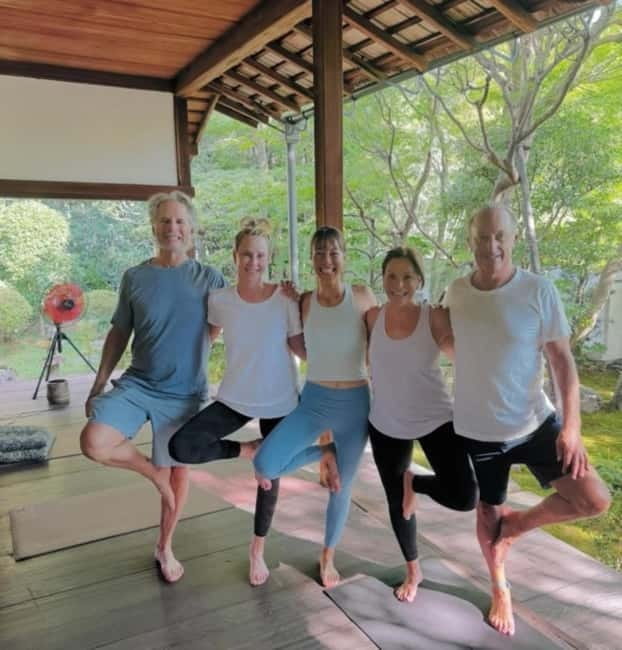
Kyoto has no shortage of temples, gardens, and cultural classes. What makes this experience different is the chance to slow down inside Myoshinji, a major Rinzai Zen temple, and enter a part of the grounds that is normally not open to the public.
You meet at the South Entrance, not the North Entrance. Look for the large gate, where your guide will be waiting. This detail matters because temple complexes can be confusing, especially when you are trying to arrive quietly and on time.
The activity lasts two hours and is offered as a private group experience. That gives the session a more personal feel than a large class, particularly when you are asking questions about Zen or trying meditation for the first time.
You should arrive ready to shift gears. The experience calls for a quiet and respectful manner, so it is not designed as a lively group outing or a casual exercise class. You are entering a working religious setting, not simply renting a pretty room for yoga.
More Zen sittings in Kyoto:
- Kyoto Zen Meditation & Garden Tour at a Zen Temple with Lunch
★ 5.0 · 441 reviews - Kyoto: Zen Experience in a Hidden Temple
★ 5.0 · 437 reviews - Kyoto: Tea Ceremony Meditation – Make Matcha with Tea Master
★ 4.8 · 406 reviews
What the Zen session actually adds
The first part introduces Zen and its five key elements. The information provided does not list those elements by name, so you should not expect a fixed set of terms you can study in advance. Instead, the value is in hearing the ideas explained in the temple itself and discussing how Zen connects with Japanese gardens.
That connection is worth your attention. A Zen garden is not just a backdrop for photographs. Its arrangement, empty space, balance, and quiet can support the same kind of focused attention encouraged in meditation. The session gives you a way to look at the garden with more purpose instead of simply admiring it from a path.
Discussion is part of the format. You can ask questions and use the conversation to sort out ideas that might otherwise seem abstract. For a first introduction, that can be more useful than reading a few pages about Zen on your own.
The mini Zen guide book is included, which gives you something small to take away after the session. It will not replace a full study of Rinzai Zen, but it can help you remember the main points once you are back among Kyoto’s shrines and city streets.
I would approach this section with modest expectations. It is an introductory session, not a formal course in Buddhist philosophy. The description of the activity and the available feedback point to a good starting place for beginners, especially people who want cultural context along with a calm activity.
Yoga with a garden in view
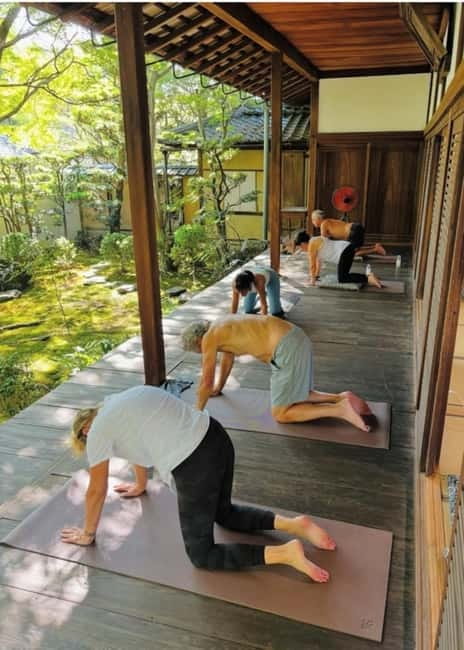
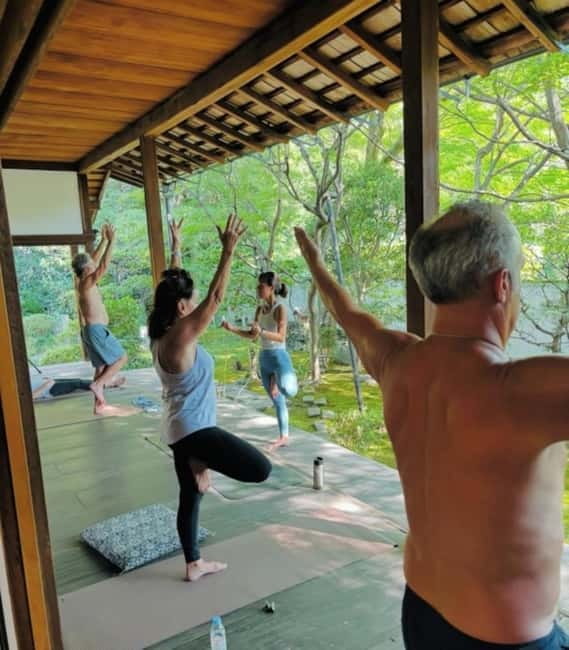
After the Zen portion, you take part in a yoga session shaped by Zen principles. The setting does much of the work here. You practice while looking toward a quiet temple garden, with birdsong, rustling leaves, and a gentle breeze providing the background.
That sounds simple, and it is. The appeal is not a demanding workout or a long list of advanced poses. The appeal is the combination of movement, stillness, and place. You are asked to pay attention to your breathing and surroundings while practicing in a traditional temple.
This is where the experience will likely suit a beginner best. You do not need to arrive with a strong yoga background to understand the basic idea of linking body and attention. The setting may also make the practice feel more memorable than a normal class at home.
If you already practice yoga or meditation regularly, keep your expectations in check. One verified participant rated the experience highly for the kind instructor and special location but felt the actual content was too light for an experienced practitioner. That is a useful distinction: the temple setting and teaching style may carry more weight than the technical depth of the yoga.
The activity asks you to bring comfortable clothes, a towel, water, and a change of clothes. These are sensible items for any yoga session, but they matter more here because you are combining a physical activity with a temple visit. Choose clothing that lets you move easily while still feeling suitable for a quiet religious space.
Japanese tea and open conversation
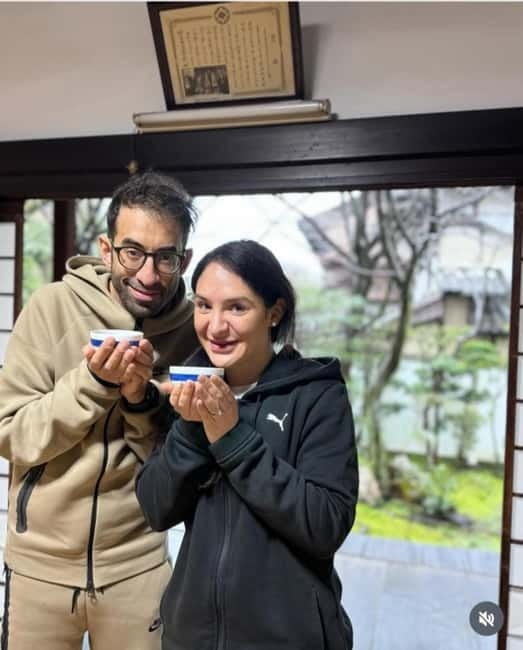
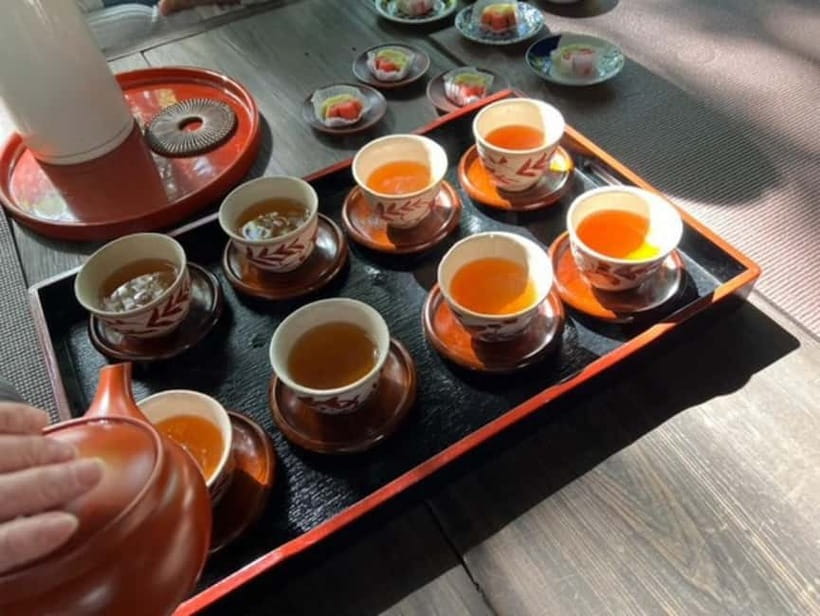
The final part is a Japanese tea session. This is a welcome change of pace after the Zen discussion and yoga practice. You can ask questions, share cultural insights, and let the experience settle before leaving the temple.
Tea here is less about a formal performance and more about conversation and reflection. The format gives you room to connect the earlier parts of the activity: Zen ideas, the garden, meditation, and the physical practice of yoga.
I like this ending because it keeps the experience from becoming a simple fitness class in an unusual room. You are not only moving your body. You are also given time to talk about what you have seen and learned.
The tea session may be especially useful if you are visiting Japan for the first time and want a little help understanding how religious spaces, gardens, and daily customs relate to one another. You can ask questions directly in English, which removes much of the guesswork.
More Kyoto temples worth a morning:
- Kyoto: Tea Ceremony Ju-An at Jotokuji Temple
★ 4.9 · 3,207 reviews - Arashiyama Bamboo, Temple, Monkeys, or Secret Sake Brewery
★ 4.8 · 886 reviews - Kyoto: Arashiyama Bamboo Forest, Monkeys, Matcha & Temple Tour
★ 5.0 · 759 reviews - Kyoto: Ninnaji Temple Entry Ticket
★ 4.2 · 650 reviews
Why Agasa matters to the experience
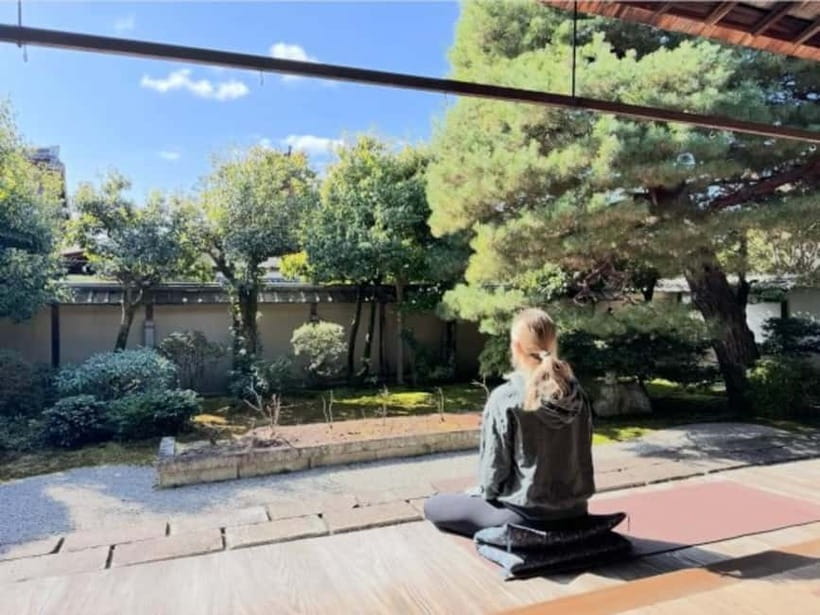
The instructor is listed as English-speaking, and one verified participant specifically praised Agasa as kind, thoughtful, gracious, and informative. That personal approach is important for an activity built around meditation and discussion.
A good instructor needs to do more than demonstrate movements. The teacher has to create a calm mood, explain unfamiliar ideas without making them sound mysterious, and give beginners enough confidence to participate. The available feedback suggests Agasa does this well.
Another participant also described the teacher as very nice and said the experience worked well for a complete beginner. At the same time, that person found it too weak for someone already experienced in meditation and yoga.
So, think of Agasa’s role as a guide into the subject, not as a specialist leading an advanced retreat. If you want a friendly introduction and a chance to ask basic questions, the teaching style should suit you. If you are seeking challenging yoga or serious meditation training, you may want something more advanced.
The value of a $96, two-hour activity
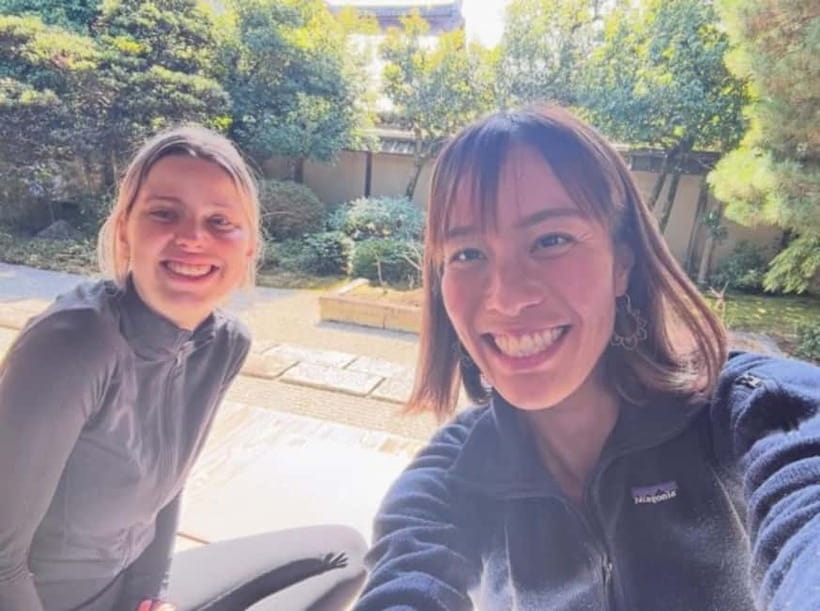
At $96 per person, this is not a cheap drop-in yoga class. You are paying for a private group format, temple admission, an English-language Zen session, yoga, tea, and access to a normally non-public part of Myoshinji.
The value depends on what you want from your Kyoto schedule. If you only want exercise, the price is difficult to justify. You could find a less expensive class elsewhere, and this session is not aimed at advanced yoga students.
If you want a carefully arranged cultural experience in a special setting, the calculation looks better. You get three connected parts in two hours, rather than a single activity: an introduction to Zen, a garden-view yoga session, and Japanese tea. The private format can also make questions easier than they would be in a crowded public class.
I would book it for the setting and the personal instruction, not for the length. Two hours goes quickly, and the class is designed as a taste of Zen and yoga rather than a full retreat. The included mini guide book adds a small practical benefit, but it should not be the reason you choose the activity.
The current rating is 4.7 from three reviews, so the score is encouraging but based on a small sample. The strongest praise focuses on the instructor, the quiet private temple setting, and the chance to learn about Zen and yoga in Japan. The main criticism concerns depth for experienced practitioners.
Who should book this Myoshinji experience
This activity makes the most sense for several kinds of visitors:
- Yoga beginners who want a calm first session in an unusual setting.
- Cultural visitors who want more than photographs at a temple.
- People interested in Zen but unsure how to approach meditation or Japanese gardens.
- Couples or small private groups looking for a quiet shared activity.
- Busy sightseers who need two hours away from crowded streets and packed schedules.
It may not suit you if your main goal is a vigorous workout. It also may disappoint you if you have extensive experience with yoga or meditation and want new technical instruction.
The activity is not suitable for pregnant women, people with heart problems, people with a cold, or people over 70. These restrictions are part of the booking information, so take them seriously rather than assuming the session is physically effortless.
Practical preparation for the temple
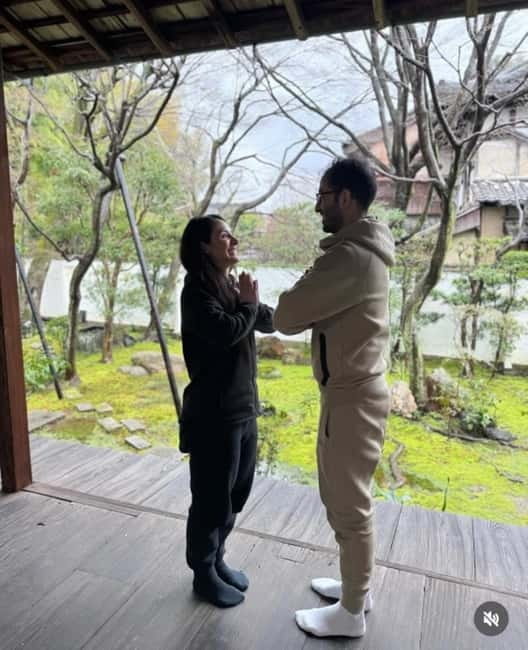
Wear comfortable clothes that allow movement. Bring a towel, water, and a change of clothes. The change is useful if you prefer to freshen up after yoga before continuing your day in Kyoto.
Plan your arrival around the correct entrance. The meeting point is the South Entrance, marked by a big gate. Do not go to the North Entrance, since the guide will be waiting at the South Entrance.
Once the session begins, quiet behavior is expected. Keep your phone out of the way, speak softly, and treat the temple space with care. The peaceful mood is a central part of the activity, not a minor detail.
The tour is conducted in English. That makes the discussions and question period accessible to English-speaking participants, though the amount of explanation you receive may depend on the questions you bring.
The booking terms are useful for a changing Japan itinerary. You can reserve now and pay later, and cancellation is free up to 24 hours in advance for a full refund. Check the available start times before booking, since the activity lasts two hours but the exact schedule varies.
How to fit it into a Kyoto day
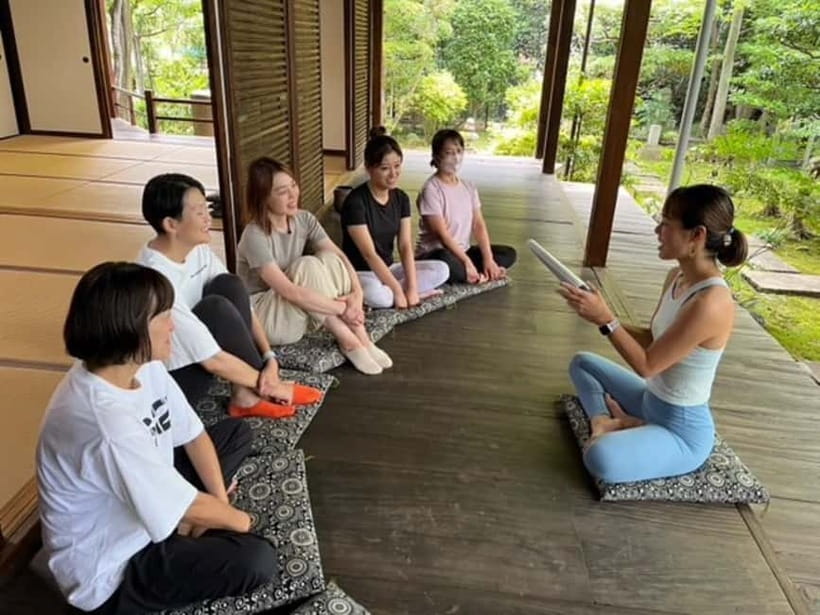
This is best placed in a part of your itinerary when you are willing to slow down. Do not squeeze it between two major sights if you are likely to spend the entire session watching the clock.
The activity is a good counterpoint to a day of temples and shopping. After walking through busy parts of Kyoto, two hours of quiet practice can help you notice a different side of the city. You might also prefer to schedule it before an evening meal, giving yourself time afterward to continue in a calmer mood.
Because the session includes discussion and meditation, you should arrive mentally prepared for stillness. If you want constant activity and quick visual rewards, the pace may feel slow. If you enjoy learning through conversation and observation, the slower rhythm is the point.
Should you book it?
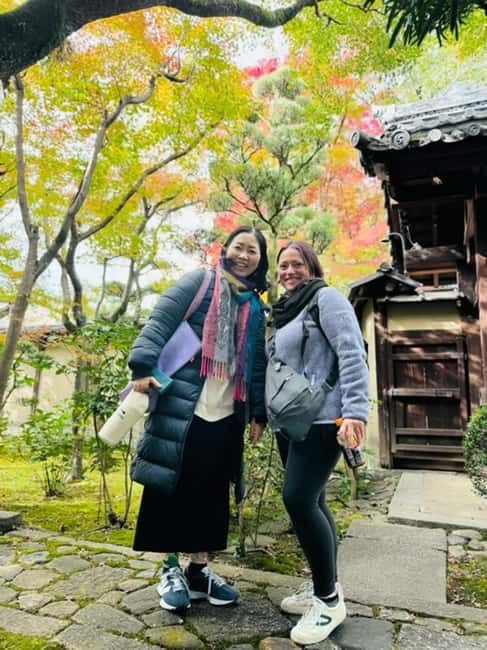
Book this Myoshinji experience if you are new to yoga or Zen, value a private setting, and want a gentle cultural activity with an excellent sense of place. Agasa’s warm teaching style, the garden view, and the tea conversation are the strongest reasons to choose it.
Think twice if you already meditate or practice yoga at an intermediate or advanced level. The class may offer a beautiful setting and a pleasant introduction, but not enough technical challenge.
For the right audience, $96 buys more than two hours of stretching. It buys access to a quiet temple space, a thoughtful introduction to Zen, and time to experience Kyoto at a slower pace. That is a fair value if authentic atmosphere and personal guidance matter more to you than an intense workout.
FAQ
How long does the Zen and yoga experience last?
The experience lasts two hours.
How much does the experience cost?
The price is $96 per person.
Where is the meeting point?
Meet at the South Entrance of Myoshinji Temple. There is a big gate, and the guide will be waiting there. Do not go to the North Entrance.
What language is the activity conducted in?
The instructor speaks English, and the experience is offered in English.
Is this a private activity?
Yes. The group type is private.
What is included in the price?
The price includes temple admission, a mini Zen guide book, the Zen session, the yoga session, and the Japanese tea session.
What should I bring?
Bring comfortable clothes, a change of clothes, a towel, and water.
Is the experience suitable for beginners?
Yes. The activity introduces Zen and yoga, and the available feedback describes it as especially suitable for someone with no previous meditation or yoga experience. People with more experience may find the content basic.
Can I cancel the booking?
You can cancel up to 24 hours in advance for a full refund. You can also reserve now and pay later.
Recently added around Kyoto
- Higashiyama | Kyoto: Sakura Season Private Rickshaw Tour★ 5.0 · 3 reviews
- Kyoto Kimono Rental CHAMATSU|Kimono/Yukata Rental FamilyPlan★ 5.0 · 3 reviews
- Kyoto: Half-Day Private Guided Tour to the Old Town of Gion★ 4.4 · 3 reviews
- Nara Private Customizable Half Day Tour★ 5.0 · 3 reviews
- Kansai Region Hiking Adventure in Nara Kobe Kyoto and More★ 5.0 · 3 reviews
- Full Day Nara Deer, Temple, Shrine, Activities & Tea Ceremony★ 5.0 · 3 reviews
- Nara: Essential Private Tour with Deer Park and Temples★ 5.0 · 3 reviews
- Hiking Tour for Sacred Sites in Kyoto with a Guide★ 5.0 · 3 reviews
Kyoto Zen Meditation Experiences, compared.
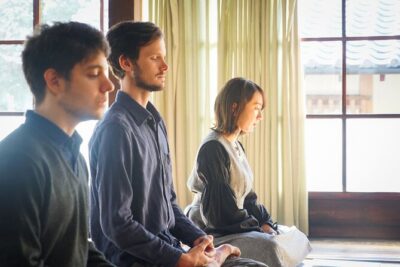
Kyoto Zen Meditation & Garden Tour at a Zen Temple with Lunch
Read our review →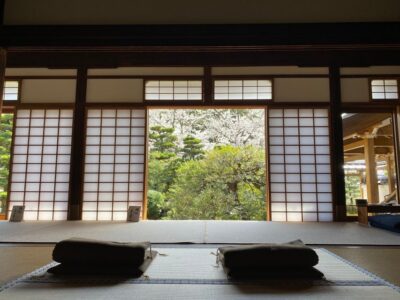
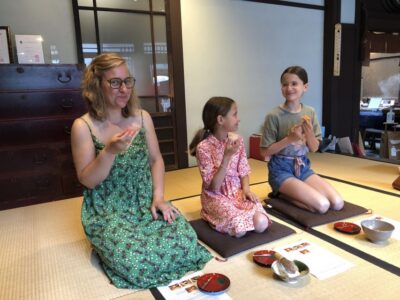
Tea Ceremony Meditation – Make Matcha with Tea Master
Read our review →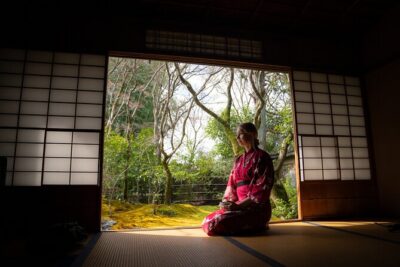
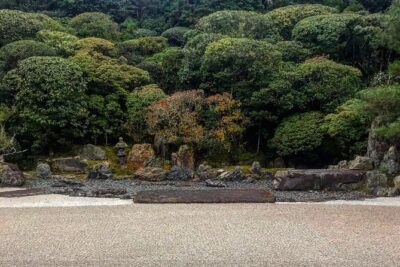
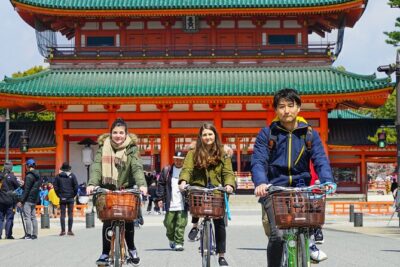
4.5-Hour Kyoto Bike Tour with Lunch and UNESCO Zen Temples
Read our review →
Zen Meditation and Garden Tour at a Temple with Lunch
Read our review →
Arashiyama Guided Tour, Bamboo, Monkey, Zen Temple
Read our review →Browse the lists this tour appears in