
REVIEW · KYOTO NIGHT WALKS
Kyoto: Station and Tower Night Tour with Light Show
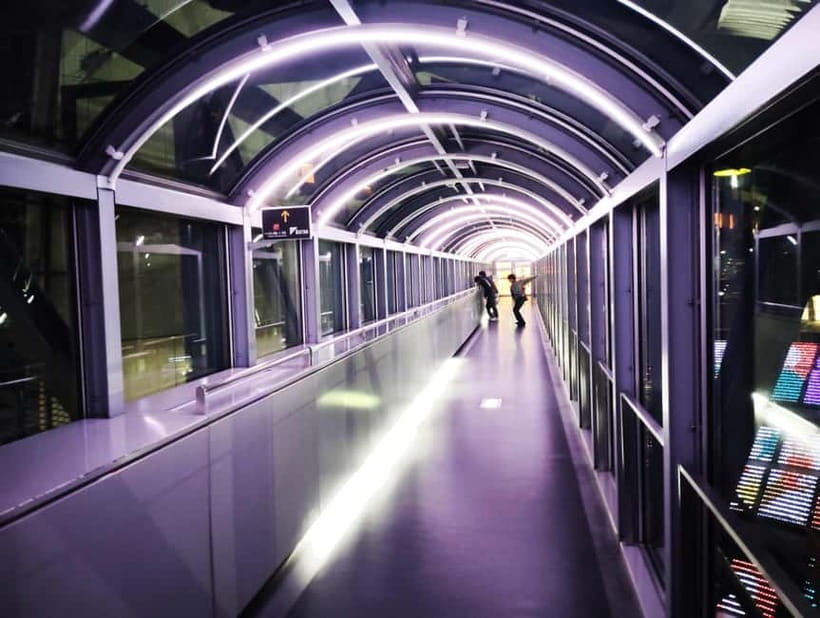
Kyoto Station is at its most surprising after dark. Steel beams, glass walls, long escalators, and shifting lights turn this busy transport hub into a giant piece of modern art. This tour also takes you up Kyoto Tower, where temple roofs and city lights spread below.
I like the secret station light show and the chance to see Kyoto from two very different heights. I also like the simple 90-minute format, which fits neatly after dinner or before an evening train. The main drawback is the price: at $52 per person, you are paying for a guided look at places you can partly visit on your own.
In This Review
- Key details at a glance
- Why Kyoto Station deserves an evening visit
- The station’s illuminated atrium and rooftop garden
- Finding the hidden geometric light show
- Walking from the station to Kyoto Tower
- Kyoto Tower’s night view from above
- What rain changes on this tour
- Is $52 a fair price?
- Who will enjoy this 90-minute tour?
- Practical details before you book
- Should you book Kyoto Station and Tower at night?
- FAQ
- How long does the Kyoto Station and Tower night tour last?
- Where does the tour begin?
- Where does the tour end?
- Is the tour conducted in English?
- Is the route suitable for a rainy night?
- What is included in the price?
Key details at a glance
- A nighttime look at Kyoto Station: See the futuristic terminal after its steel frame and glass surfaces begin to glow.
- A geometric light show: Follow a less obvious station route where shadow and illumination become part of the architecture.
- Kyoto Tower after dark: Use the observation deck for broad views of Kyoto’s temples, roads, and low city spread.
- A private English-language group: The experience is designed for a private group rather than a large shared crowd.
- A short, easy evening plan: The full tour lasts 90 minutes and requires no long commute between sights.
- Rain-friendly sightseeing: Most of the route is covered, and wet streets can add reflections and neon color to the view.
Why Kyoto Station deserves an evening visit
Many people use Kyoto Station as a place to arrive, change trains, and leave. That is a mistake. The building is one of the city’s boldest modern spaces, with a huge glass façade, exposed steel beams, and a dramatic interior that feels far removed from the wooden lanes and temple gates usually associated with Kyoto.
At night, the station’s scale becomes easier to appreciate. Daylight tends to make it feel like a functional transport center. After dark, the lit surfaces give the building a different mood, and the long lines of the structure become much more striking.
This is the part of the tour I find most distinctive. Kyoto has no shortage of temple walks, tea stops, and traditional streets. A guided look at the station gives you a needed change of pace and shows how the city handles modern design.
Your guide begins at the Rashōmon Gate replica in front of Kyoto Station. Look for the yellow sign marked DeepExperience. The meeting point matters because Kyoto Station is large, and wandering around inside looking for a guide can waste the first part of a short tour.
More Kyoto walks after dark:
- Night Walk in Gion: Kyoto’s Geisha District
★ 4.5 · 2,003 reviews - Kyoto Gion Night Walk & Geisha District Guided Tour
★ 5.0 · 786 reviews - Kyoto Bar Hopping Night Tour
★ 5.0 · 613 reviews
The station’s illuminated atrium and rooftop garden
The Kyoto Station visit lasts about 30 minutes. That is enough time to see the major architectural features without turning the evening into a long building tour.
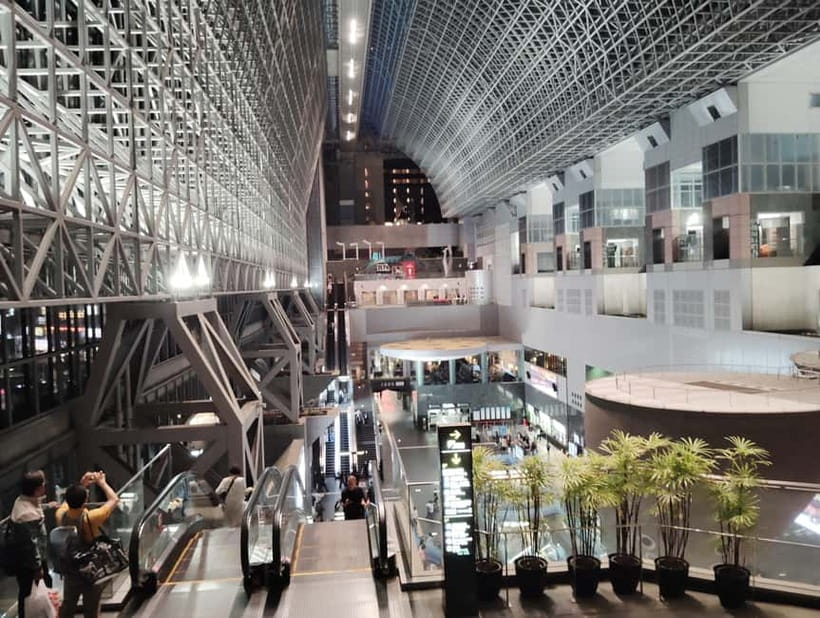
You will walk through the station’s illuminated atrium, where the height and open space are the main attraction. The architecture is not delicate or traditionally Japanese. It is big, angular, and futuristic, with layers of stairs, walkways, glass, and metal creating changing views as you move.
The rooftop garden provides another angle. From above, you can look back at the station’s structure and see how the building is arranged as a series of platforms and open spaces. I would bring a camera, but I would also make time to simply look around. The best images may be wide shots that show the contrast between the glowing station and the darker city beyond.
The tour’s guide adds context that you may miss if you explore alone. The supplied guide information specifically names Masa and Nabet, and each has received praise for making the station and tower more understandable. If your guide is one of them, you can expect attention to the building’s story rather than a quick walk to the next photo stop.
Finding the hidden geometric light show
The light show is not presented as a large performance with seats or a formal theater setup. It is a less obvious part of Kyoto Station, where lighting and architecture work together. Geometric shapes, shadow, and reflected light make the station feel almost like a moving pattern.
That wording is important for setting expectations. You are not booking a full-scale concert or a long staged production. The appeal is the setting itself. As you walk, the illuminated surfaces shift in relation to your position, and the station becomes more than a place to catch a train.
I like this because it rewards a slower look at a familiar public building. A person passing through may see bright stairs and a glass wall. With a guide pointing out the right areas, you get a better sense of how the station was designed to be experienced from different levels.
Bring a charged smartphone as well as a camera. The phone can help with meeting your guide and taking quick photos, while a proper camera may do a better job with the darker sections and bright lights. Comfortable shoes are a good idea because the tour includes walking through the station and onward to the tower.
Walking from the station to Kyoto Tower
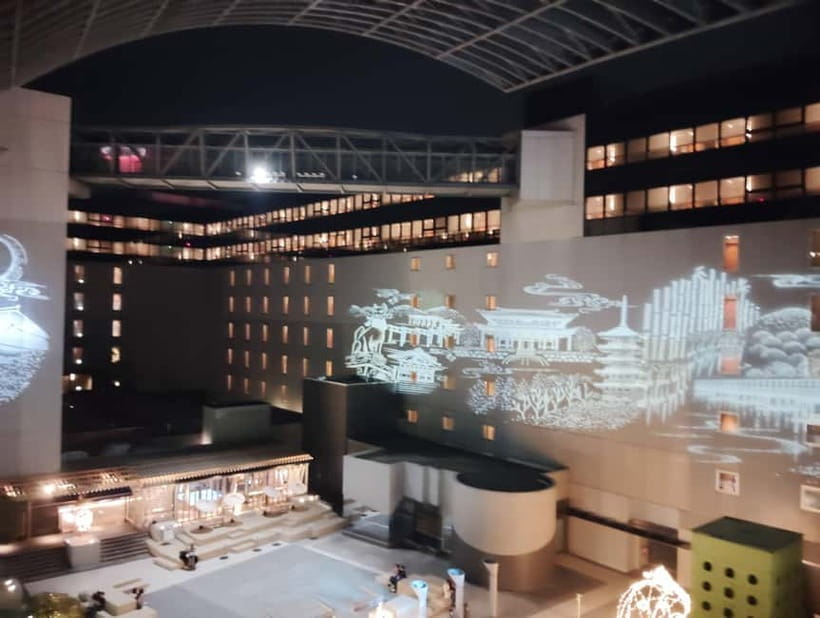
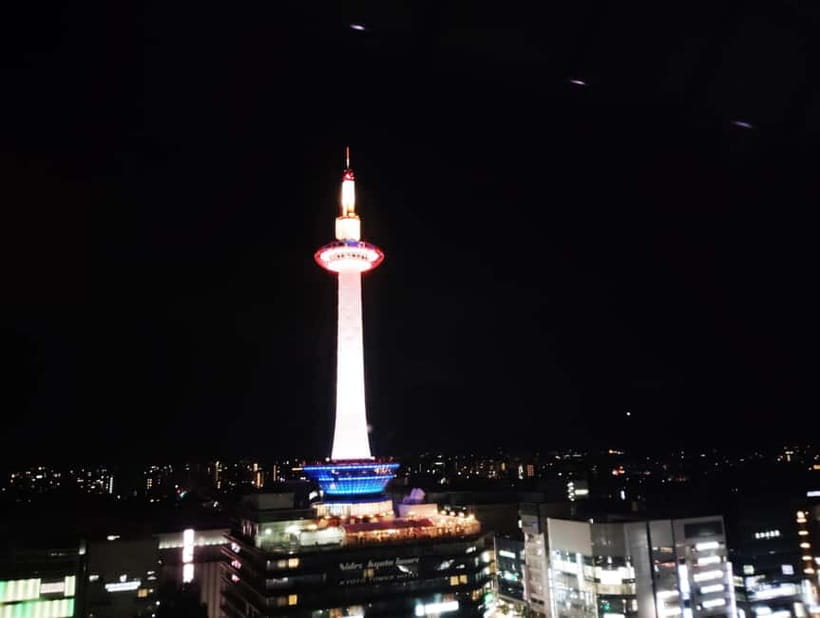
The next stop is Kyoto Tower, identified locally as Nidec Kyoto Tower. It is the tallest structure in Kyoto and a clear landmark beside the station.
The transfer is one reason this experience is easy to fit into an evening. You do not need a long trip across town after the station visit. The route remains close to the main station area, so the tour works well if you are staying nearby or have evening plans in this part of Kyoto.
Transportation to the starting point is not included, and you arrange your own way there. The same applies to getting away after the tour ends. The finish is at Nidec Kyoto Tower, which is useful because you will already be near a major city transport hub, but you should still allow time to find your next connection.
The short walk also creates a useful contrast. Kyoto Station is wide and horizontal, with its dramatic interior spaces. Kyoto Tower is a vertical marker that gives you a much broader look at the city.
A few more Kyoto experiences worth comparing
- Kyoto Gion Cultural Walk & Geisha Show with Dining Options
★ 5.0 · 518 reviews - Kyoto Gion Cultural Walk & Geisha Show with Dining Options
★ 5.0 · 483 reviews - 1 Hour Geisha Show in Kyoto
★ 5.0 · 452 reviews - Kyoto: Samurai Kenbu Traditional Sword Dancing Show
★ 4.5 · 426 reviews
Kyoto Tower’s night view from above
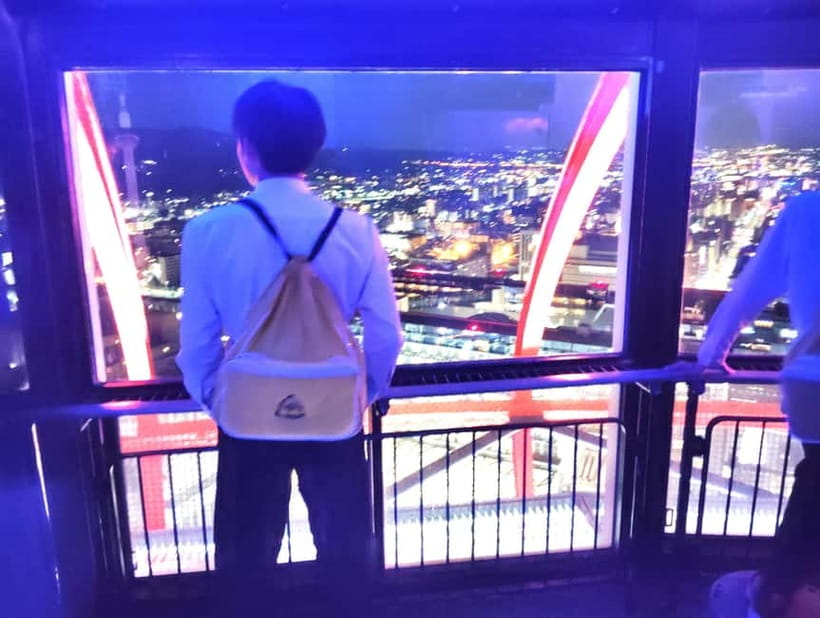
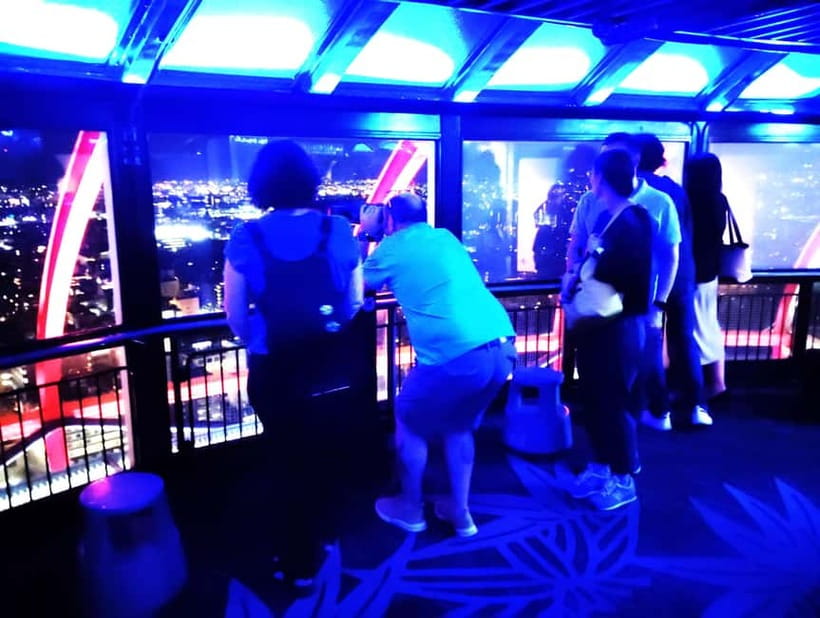
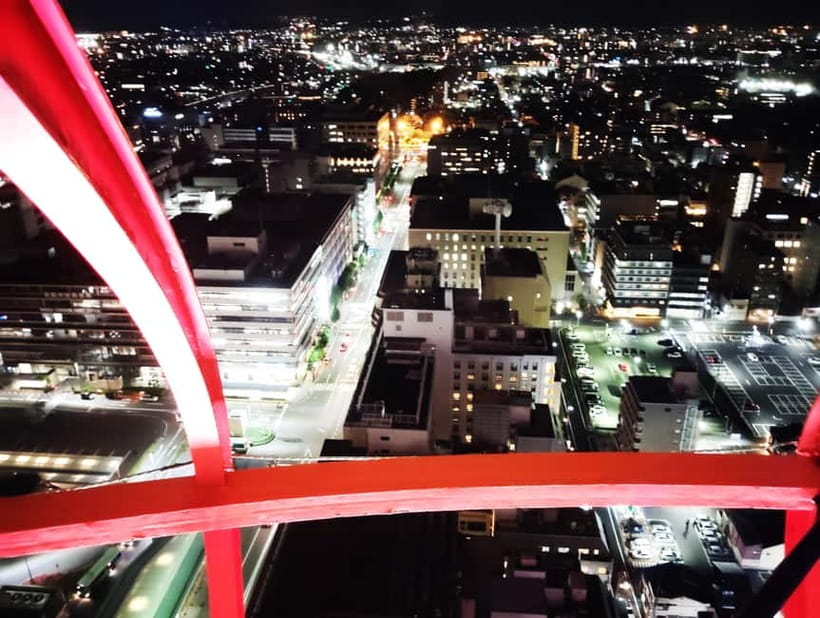
The tower portion lasts about an hour, making it the longer and more relaxed part of the experience. From the observation deck, you can look across Kyoto after sunset, with illuminated streets, temple silhouettes, and the city’s gentle spread beneath the night sky.
This is not the same view you get from a temple balcony or a hillside. Kyoto Tower gives you a wide city view, and it helps you understand the relationship between the compact central area and the darker edges around it. The glowing outlines of temples are especially useful reminders that Kyoto’s old religious sites remain part of a modern city.
I would not book this tour only for an ordinary city panorama. The tower view is valuable because it follows the station visit. First you see Kyoto’s modern architecture from ground level. Then you rise above the city and see how the newer urban center fits within the wider setting.
Your guide can also help you identify what you are seeing. One verified booking specifically praised Nabet for explaining the history of Kyoto Station and the tower clearly. That kind of help can turn a collection of distant lights into a more readable view.
The deck is also a good place to slow down. The station section is active, with movement through a large building. At the tower, you have more time to take photos, compare directions, and enjoy the city without rushing from one sight to another.
What rain changes on this tour
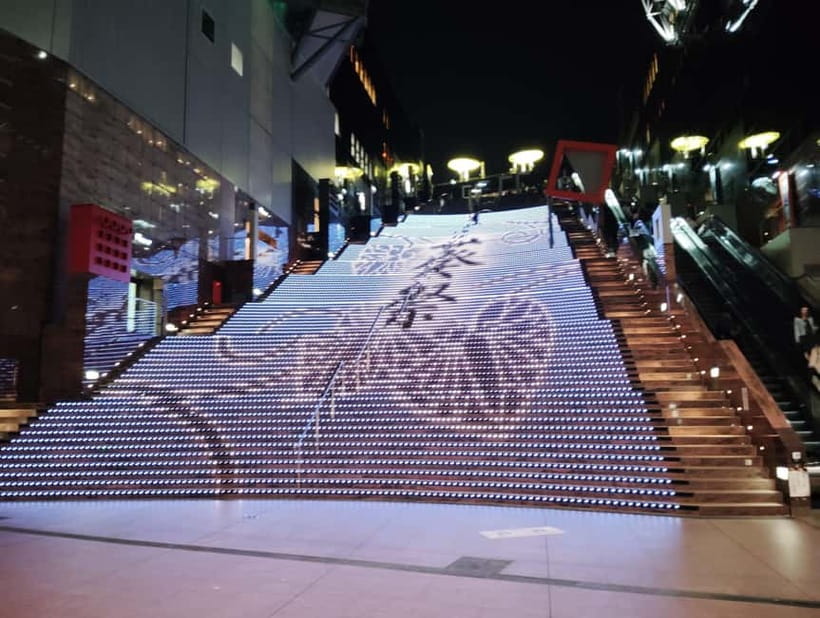
Most of the route is covered, so rain does not automatically spoil the plan. You should still wear comfortable shoes and bring suitable protection for the outdoor portions, but the tour is designed to remain workable on a wet evening.
Rain may even improve the visual side of the experience. Lights reflect across wet surfaces, and the station’s glass and metal can take on a more dramatic, almost cyberpunk appearance. At street level, neon reflections add another layer between the station and tower.
The tower view can be less clear in poor weather, though the supplied information does not promise a particular level of visibility. If a clear, distant panorama is your main reason for booking, check the forecast before committing. If you like architecture, lighting, and atmosphere, a rainy night still has plenty to offer.
Is $52 a fair price?
At $52 per person, this is not the cheapest way to see Kyoto Station and Kyoto Tower. Both are prominent places, and an independent visitor can explore much of the station without paying for a tour. The value comes from having a guide connect the two sights and point out the station’s less obvious lighting features.
The private-group format also matters. You are not being moved through the building as part of a large crowd, and the guide can keep the pace suited to your group. The available information does not specify the maximum number of people, so I would not assume an especially small group, but it is clearly described as private rather than a standard shared departure.
For a first evening in Kyoto, the price is easier to justify. You get a compact introduction to the area, a guided architectural walk, access to the rooftop garden and atrium, and the tower observation deck. It is a tidy option for someone who values explanation and convenience more than finding the lowest possible cost.
For repeat visitors or independent sightseers, the calculation is different. If you already know the station and mainly want the tower view, you may prefer to arrange your own visit. The tour makes more sense when the station light show and the guide’s interpretation are central to your plans.
Who will enjoy this 90-minute tour?
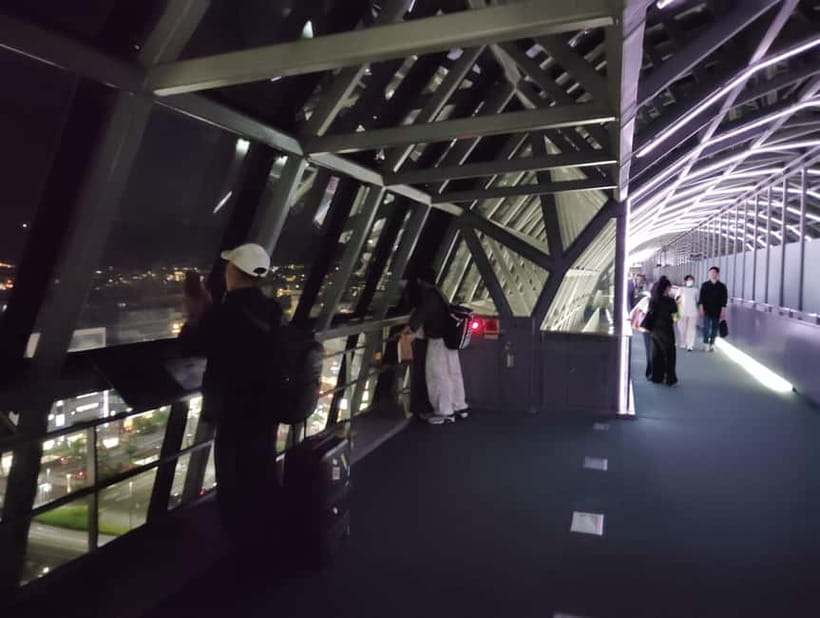
I would recommend it most to people who have already seen Kyoto’s classic daytime sights or want to add a modern counterpoint to them. It is also a good fit if you enjoy buildings, city lighting, photography, or broad nighttime views.
The 90-minute length suits several kinds of schedules:
- You have an evening free after arriving in Kyoto.
- You want an activity near the station before a late meal or train.
- You prefer a short guided walk rather than a full-night excursion.
- You want a covered plan in case of rain.
- You are visiting Kyoto with someone who appreciates modern design as much as temples.
Families and mixed-interest groups may find the combination useful. One person can enjoy the tower view, another can focus on photography, and the station gives the group something different from another temple visit.
I would hesitate if you dislike city architecture or want a deeply traditional Kyoto experience. This tour does not take you through old lanes, gardens, or historic temple interiors. Its subject is modern Kyoto at night, with a guide helping you notice details you might otherwise pass.
Practical details before you book
Meet in front of the Rashōmon Gate replica at Kyoto Station. Your guide will carry a yellow DeepExperience sign. Because the station is large, arrive with enough time to locate the replica and avoid starting the tour in a rush.
The tour is conducted in English and is led by a live guide. It is described as a private-group experience, which gives it a more personal feel than a large public walk. The guides connected with this activity include Masa and Nabet, with Masa receiving a warm thank-you and Nabet praised for clear explanations of the station and tower.
Wear comfortable shoes. The route involves walking through the station and continuing to Kyoto Tower, and the tour includes time in the rooftop garden and around the illuminated atrium.
Bring a camera and a charged smartphone. The phone is especially useful for finding the meeting point, while the camera can capture the geometric lighting and city view. Meals are not included, so plan dinner before or after the 90-minute tour.
You can cancel up to 24 hours in advance for a full refund, and the reserve-now, pay-later option keeps your schedule flexible. Starting times vary, so check availability for the evening that suits you.
Should you book Kyoto Station and Tower at night?
Book this tour if you want a short, guided introduction to Kyoto’s modern side, especially if the idea of a station light show appeals to you. The strongest features are the unusual architecture, the covered route, the rooftop garden, and the change of perspective at Kyoto Tower.
At $52, it is best viewed as a convenience and interpretation purchase, not simply an admission ticket. If you are happy exploring on your own, you may find the cost high. If you want a well-shaped evening with a live English guide, a private-group setting, and two contrasting views of Kyoto, it is a sensible choice.
FAQ
How long does the Kyoto Station and Tower night tour last?
The tour lasts 90 minutes. About 30 minutes is spent at Kyoto Station, followed by about one hour at Kyoto Tower.
Where does the tour begin?
Meet in front of the Rashōmon Gate replica at Kyoto Station. Your guide will be waiting with a yellow sign that says DeepExperience.
Where does the tour end?
The tour finishes at Nidec Kyoto Tower.
Is the tour conducted in English?
Yes. The activity includes a live English-speaking guide.
Is the route suitable for a rainy night?
Most of the route is covered, so the tour can still operate as a useful evening activity in rainy weather. Wet surfaces may also create striking reflections around the station and city streets.
What is included in the price?
The price includes the night tour of Kyoto Station and Kyoto Tower, access to the rooftop garden and illuminated atrium, and the observation deck view from Kyoto Tower. Meals and transportation to and from the starting location are not included.
More Kyoto Evenings
- Kyoto: Gion Magical Night Walking Tour with Geisha Trivia
★ 4.9 · 2,393 reviews - Kyoto Night Foodie Tour in Gion (9+ dishes + 6 Sake tastings)
★ 5.0 · 1,762 reviews - Kyoto Ghost Tour: Dark Tales, Urban Legends, Bamboo Forest Night
★ 5.0 · 625 reviews - Kyoto Night All-Inclusive Eats and Streets, Gion and Beyond
★ 4.7 · 601 reviews
Recently added around Kyoto
- Higashiyama | Kyoto: Sakura Season Private Rickshaw Tour★ 5.0 · 3 reviews
- Kyoto Kimono Rental CHAMATSU|Kimono/Yukata Rental FamilyPlan★ 5.0 · 3 reviews
- Kyoto: Half-Day Private Guided Tour to the Old Town of Gion★ 4.4 · 3 reviews
- Nara Private Customizable Half Day Tour★ 5.0 · 3 reviews
- Kansai Region Hiking Adventure in Nara Kobe Kyoto and More★ 5.0 · 3 reviews
- Full Day Nara Deer, Temple, Shrine, Activities & Tea Ceremony★ 5.0 · 3 reviews
- Nara: Essential Private Tour with Deer Park and Temples★ 5.0 · 3 reviews
- Hiking Tour for Sacred Sites in Kyoto with a Guide★ 5.0 · 3 reviews
Kyoto Night Walks, compared.
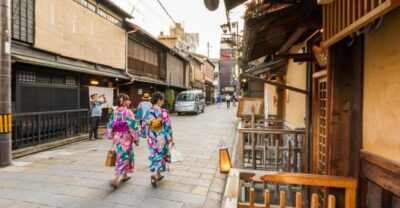
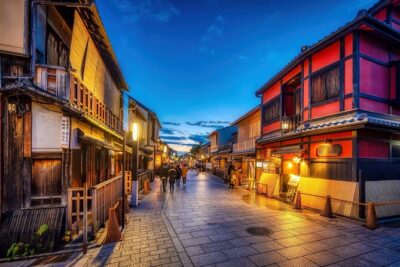
Kyoto Gion Night Walk & Geisha District Guided Tour
Read our review →

Kyoto 5-Star Geisha Night Walk: Small-Group Authentic Experience
Read our review →
Kyoto Private Night Tour with a Local – Bars, Bites & Culture
Read our review →
Foodie Night Tour in Gion with 9 dishes + 6 Sake
Read our review →Browse the lists this tour appears in