
REVIEW · GION GEISHA DISTRICT TOURS
Kyoto night walk tour (Gion district)
Kyoto after dark is at its best in the quiet lanes behind Gion’s main streets. This private walk with Hiro takes you from Minamiza Kabuki Theatre toward Yasaka Shrine, Yasakanoto Pagoda, and the slopes near Kiyomizu-dera, with time for photos and local context along the way.
I like two things right away: the small private format, which lets you ask questions and set an easy pace, and Hiro’s habit of taking photos for couples, families, and solo visitors. The main consideration is that the tour lasts only 90 minutes, includes a fair amount of walking, and gives limited explanation in the silent stone-wall district.
In This Review
- Key points to know before booking
- Starting beneath the Minamiza Kabuki Theatre
- Yasaka Shrine, Kyoto’s lively starting point
- Silent stone walls and the quieter side of Gion
- Yasakanoto Pagoda and the best photo stop
- The famous slope toward Kiyomizu-dera
- Kiyomizu-dera and seasonal night lighting
- What Hiro adds beyond the route
- Is $35 a fair price?
- Who will enjoy this evening walk
- Tips for making the most of the 90 minutes
- Should you book the Gion night walk?
- FAQ
- How long does the Kyoto Gion night walk last?
- Where does the tour begin?
- Where does the tour finish?
- Is this a private tour?
- How much does the tour cost?
- Is a mobile ticket available?
- Which main sights are included?
- Are admission tickets included?
- Can the tour include night views of Kiyomizu-dera?
- Can I cancel for a full refund?
Key points to know before booking
- A private Gion walk after sunset: Your group is the only group on the activity, making it easier to talk with Hiro and pause for pictures.
- Meeting point by Minamiza Theatre: The walk begins at 194 Kawabatacho, in front of the Minamiza Kabuki Theatre.
- Three major Kyoto sights: The route includes Yasaka Shrine, Yasakanoto Pagoda, and the Kiyomizu-dera area.
- Photos are a major extra: Hiro often takes family and solo portraits at attractive night locations.
- Restaurant advice can add value: Hiro has helped visitors find ramen, barbecue, gyoza, and Kobe beef restaurants after the walk.
- Plan for comfortable shoes: Several people found the walk longer or more active than expected, even though the scheduled time is about 90 minutes.
Starting beneath the Minamiza Kabuki Theatre
The meeting point is in front of the Minamiza Kabuki Theatre at 194 Kawabatacho in Kyoto’s Higashiyama Ward. This is a useful place to begin because it puts you near the Gion district, Yasaka Shrine, and the narrow streets leading toward the historic temple area.
You receive a mobile ticket, and confirmation is sent within 48 hours of booking, subject to availability. The tour is often reserved well ahead, with an average booking time of 32 days in advance, so I would not leave it until the last evening of a short Kyoto stay.
The walk ends back at the same meeting point. That makes the logistics simple, though you should allow time to return to your hotel or continue to dinner after the activity. Hiro has sometimes helped people find restaurants or walked with them toward a chosen place, but that should be treated as a friendly possibility rather than a guaranteed part of the route.
The experience is private. If you are a couple, a family, or a solo visitor, you will not be added to a large public group. That matters in Gion, where narrow lanes and quiet residential corners are better handled with a small party.
More evenings in Gion:
- Kyoto Geisha Walking Tour: Gion District & Hidden Gems
★ 4.7 · 3,273 reviews - Kyoto: Gion Magical Night Walking Tour with Geisha Trivia
★ 4.9 · 2,393 reviews - Kyoto: Gion Geisha District Walking Tour – Stories of Geisha
★ 4.7 · 2,187 reviews
Yasaka Shrine, Kyoto’s lively starting point
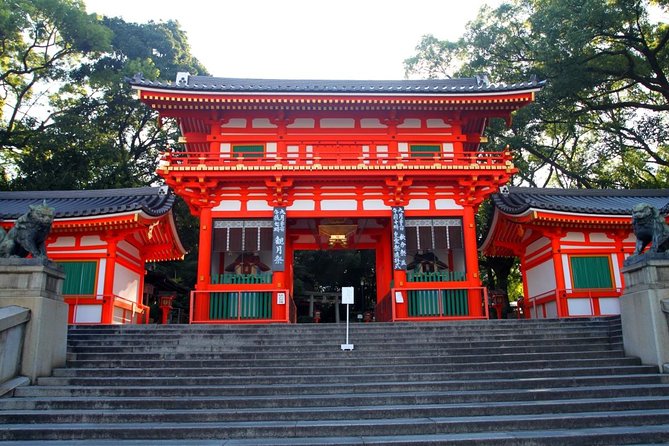
The first planned stop is Yasaka Shrine, with about 15 minutes set aside for an introduction. Admission is free, so the tour price is paying for the guide’s time, route, stories, and personal help rather than entrance tickets at this stage.
Yasaka Shrine gives you a useful base for understanding the area. Hiro explains its history using local knowledge, then connects the shrine to the surrounding Yasaka and Gion districts. The supplied details do not promise a formal lecture, so expect a conversational explanation rather than a long academic talk.
Night changes the feel of the shrine. Light, open space, and the contrast with the narrow lanes ahead make this a good first stop for getting your bearings. If you have just arrived in Kyoto, this is one reason to schedule the walk early in your visit. You can learn the basic shape of Gion before returning on your own.
The 15-minute stop is brief. If you want to study every gate, building, and religious detail, you will need a separate visit. The value here is orientation and context, not a complete shrine tour.
Silent stone walls and the quieter side of Gion
The route then moves through a stone-wall district. This section is deliberately quiet, and Hiro does not explain much because you are expected to walk silently there.
That may sound like a gap in the tour, but it reflects an important part of visiting Gion. Some lanes are residential or culturally sensitive spaces, and silence helps you pass through without turning the neighborhood into a stage. You get a look at the atmosphere instead of a constant stream of commentary.
This is also where expectations matter. If you want nonstop facts every minute, this portion may feel thin. I see it as a short pause in the evening, when the architecture, paving, walls, and low light do more of the talking.
Please follow Hiro’s lead about photography and noise. The quiet is part of the point. Gion is not simply a collection of photogenic alleys; it is also a lived-in district.
Yasakanoto Pagoda and the best photo stop
Yasakanoto, commonly known as the Yasaka Pagoda, is the visual centerpiece of the walk. About 20 minutes are allotted here for an explanation of the pagoda’s history and for photographs in front of it.
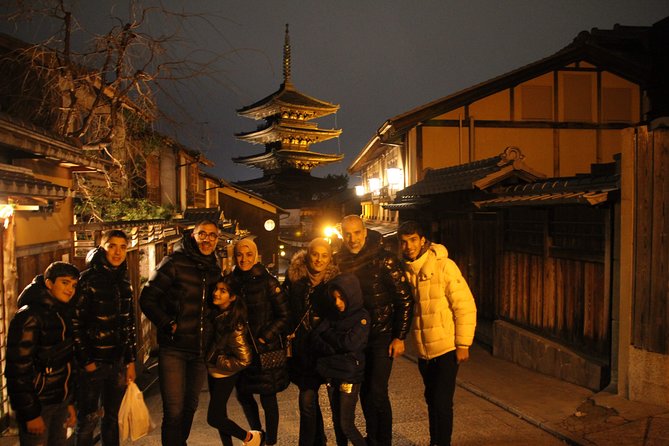
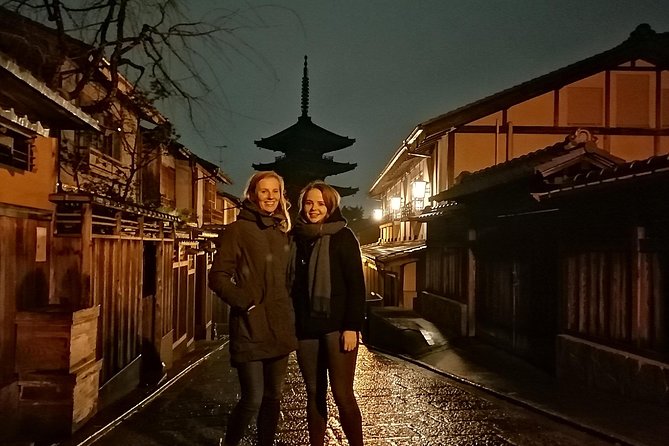
This stop receives particular attention because Hiro is also a capable photographer. He has taken family portraits, couple pictures, and solo travel photos during the walk. That is a practical benefit if you are tired of asking strangers to take a quick snapshot, or if you want a picture with everyone in the frame.
The pagoda is especially effective at night, when the surrounding streets and lighting give the scene a calmer mood. You should not expect a ticketed interior visit from the information provided. The stop focuses on the history of the pagoda and exterior photographs.
Photo conditions can change with the season, weather, and crowds. Hiro can help with locations and composition, but a night walk is not the same as a professional photography session with guaranteed lighting. Think of the photos as a welcome travel extra.
The guide’s personal manner is another part of the appeal here. The strongest praise centers on Hiro being easy to talk with, friendly, attentive, and happy to answer questions. That makes the pagoda stop more than a quick photo call. You can ask about Japanese customs, local food, or the district’s past as you walk.
More Kyoto walks after dark:
- Night Walk in Gion: Kyoto’s Geisha District
★ 4.5 · 2,003 reviews - Kyoto Gion Night Walk & Geisha District Guided Tour
★ 5.0 · 786 reviews - Kyoto Bar Hopping Night Tour
★ 5.0 · 613 reviews - Kyoto Foodie Night Tour
★ 5.0 · 376 reviews
The famous slope toward Kiyomizu-dera
After Yasakanoto, you walk through a well-known slope in the Yasaka area. The supplied details do not name the slope, so I would not book this tour expecting a formal explanation of every street or building.
The appeal is the setting. Sloping lanes, old-looking facades, and evening light create the classic Kyoto mood that many people hope to find in Gion. Hiro’s route also includes side roads that can be difficult to locate alone, giving you a more varied walk than simply following the busiest commercial street.
This portion reinforces the need for good footwear. One person described the tour as involving a lot of walking, and several comments praise the guide for showing sites that were easy to miss without local help. The total duration is only about an hour and a half, but the route is not a stationary sightseeing stop.
If anyone in your group has limited walking stamina, say so at the start. One couple asked for a shorter version after a long day, and Hiro adjusted the walk while still providing photos and cultural information. That shows useful flexibility, but it is best to discuss your needs before setting off.
Kiyomizu-dera and seasonal night lighting
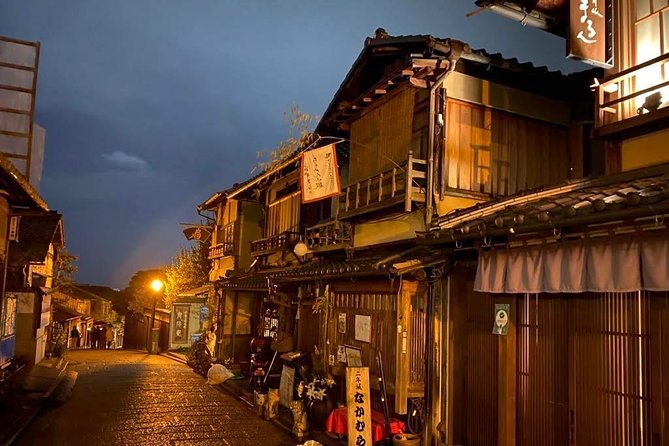
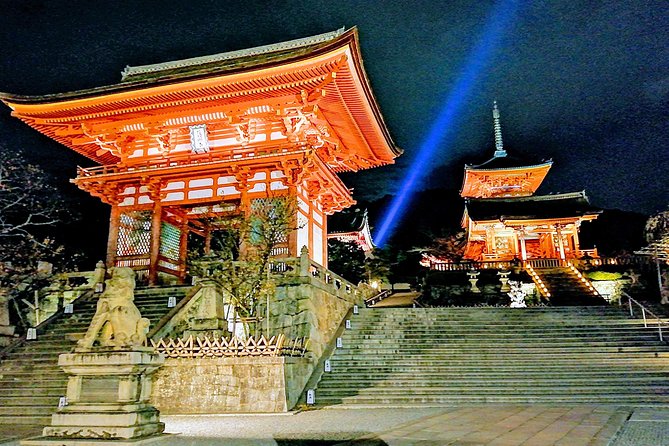
The final listed stop is Kiyomizu-dera Temple, with about 10 minutes set aside. Admission is not included, and the description does not state that the tour enters the temple grounds. You should therefore treat this as a view or stopping point near the temple rather than a full temple visit.
Depending on the season, you may see Kiyomizu-dera lit at night. That seasonal qualification matters. If nighttime illumination is central to your plans, check the current schedule separately instead of assuming it will be operating on your date.
Ten minutes is enough for a quick look and a few photographs. It is not enough for a detailed visit to one of Kyoto’s major temple complexes. I like the stop as the walk’s closing image, but I would return during daylight if you want to explore Kiyomizu-dera properly.
The activity ends back at the original meeting point rather than at the temple. That return adds walking and may make the tour feel more active than its 90-minute label suggests.
What Hiro adds beyond the route
The route itself includes places you can visit without a guide. The reason to pay $35 per person is the way Hiro links them together and helps you notice details you might otherwise pass by.
His strongest contribution is local conversation. He explains customs and history in clear English, adds humorous facts, and answers questions without making the walk feel like a classroom. Several people also appreciated his restaurant suggestions, including ramen, Japanese barbecue, gyoza, and Kobe beef.
That food advice can be useful after a night walk. You may finish hungry and unsure which restaurant fits your budget or mood. Hiro has sometimes gone beyond a recommendation by helping with directions, walking people toward a restaurant, or assisting with special reservations. Those extras are not guaranteed, but they show the kind of practical help he may offer.
The photo service is unusual at this price. Hiro has sent photos promptly in some cases, though the supplied details do not promise a fixed number of pictures or a specific delivery method. Ask him directly if receiving the photos matters to you.
There is one serious warning in the feedback supplied for this activity. One group reported a late start, little explanation, and a guide who seemed unfamiliar with the area. The operator apologized and said it would prevent a repeat. Nearly all of the other supplied feedback praises Hiro, but this complaint is worth noting because the tour’s value depends heavily on the person leading it.
The guide’s name appears as Hiro in most of the material, with Hero used in some places. If you are concerned about meeting the correct person, use the booking confirmation and contact details to clarify the meeting arrangements before the evening begins.
Is $35 a fair price?
At $35 per person, the walk is reasonably priced for a private Kyoto activity, especially for a couple or family that values personal attention. You are paying for roughly 90 minutes, a private guide, local explanations, help with photos, and a route that can include quieter lanes.
The calculation changes if you are traveling alone. A solo visitor pays the full per-person amount, so the cost is higher relative to the time involved. Still, solo visitors may appreciate having company in an unfamiliar district and getting good photos without asking someone else.
There are no included admission tickets to Yasaka Shrine or Yasakanoto Pagoda because those stops are free. Kiyomizu-dera admission is not included, and the information does not confirm entry. The price is therefore not an attraction pass. It is a guided walk.
I consider it good value if you want a friendly introduction, cultural explanation, and practical food advice during your first night in Kyoto. It is less compelling if you already know Gion well, plan to visit Kiyomizu-dera at length, or want a formal, highly detailed history tour.
Who will enjoy this evening walk
I would choose this tour for:
- Couples who want night photos together
- Families who prefer a private pace
- Solo visitors who want company and local help
- First-time Kyoto visitors getting oriented
- People who enjoy neighborhood atmosphere more than long museum-style talks
- Anyone who wants restaurant suggestions after sightseeing
Families have found the format easy to enjoy, including children who liked the photo stops and varied streets. The private setup also lets you ask Hiro to slow down, shorten the route, or spend more time on a point that interests your group.
You should think twice if you dislike walking, need guaranteed step-free access, or want a full interior visit to Kiyomizu-dera. Most people can participate, service animals are allowed, and the meeting point is near public transportation, but the route includes slopes and a fair amount of time on foot.
Good weather is required. If poor weather causes cancellation, you are offered another date or a full refund. Otherwise, you can cancel for a full refund up to 24 hours before the start time. Changes or cancellations made less than 24 hours ahead are not accepted for a refund.
Tips for making the most of the 90 minutes
Arrive at Minamiza a little early. The meeting point is specific, and beginning in front of the theatre is easier than trying to locate the group after wandering through Gion.
Wear comfortable shoes. This is the most useful practical tip because the route continues through slopes and lanes toward the Kiyomizu-dera area. Comfortable clothing also makes it easier to enjoy the stops instead of watching the clock.
Bring questions. Hiro’s best quality is his willingness to discuss Japanese culture, customs, food, and Kyoto life. A short private walk becomes much more useful when you tell him what interests you.
Schedule the tour early in your stay if possible. You can use his restaurant advice afterward, and you will have a better mental map for later independent walks through Gion.
Keep expectations realistic about the quiet district and Kiyomizu-dera. Some parts are meant to be walked silently, and the temple stop is brief with admission extra. This is a night introduction, not a complete religious-sites tour.
Should you book the Gion night walk?
Book it if you want a relaxed private introduction to Gion, especially if photos, friendly conversation, and local food tips matter to you. At $35 per person, the combination is appealing, and the route covers several of Kyoto’s most recognizable night scenes in a short period.
I would be especially keen to book it for a first evening in Kyoto or for a family that wants help finding attractive streets without planning every turn. Hiro’s personal style, photo help, and restaurant suggestions add value that a self-guided map cannot provide.
Skip it if you want extensive temple interiors, a long historical lecture, or a completely flat route. Also remember that Kiyomizu-dera entry is not included and seasonal illumination is not guaranteed.
For most people seeking atmosphere and orientation rather than a formal lesson, this is a sensible way to meet Gion after dark.
FAQ
How long does the Kyoto Gion night walk last?
The activity lasts approximately 1 hour and 30 minutes.
Where does the tour begin?
It begins in front of the Minamiza Kabuki Theatre at 194 Kawabatacho, Higashiyama Ward, Kyoto, 605-0075, Japan.
Where does the tour finish?
The activity ends back at the meeting point.
Is this a private tour?
Yes. Only your group participates in the private activity.
How much does the tour cost?
The listed price is $35 per person.
Is a mobile ticket available?
Yes. The activity includes a mobile ticket.
Which main sights are included?
The walk includes Yasaka Shrine, the stone-wall district, Yasakanoto Pagoda, a famous slope in the Yasaka area, and the Kiyomizu-dera area.
Are admission tickets included?
Yasaka Shrine and Yasakanoto Pagoda are listed with free admission. Admission to Kiyomizu-dera is not included.
Can the tour include night views of Kiyomizu-dera?
You may see Kiyomizu-dera lit up, depending on the season. Night illumination is not guaranteed.
Can I cancel for a full refund?
You can cancel at least 24 hours before the start time for a full refund. Cancellations or changes made less than 24 hours before the activity are not accepted for a refund. If poor weather causes cancellation, you are offered another date or a full refund.
More Kyoto Evenings
- Kyoto Night Foodie Tour in Gion (9+ dishes + 6 Sake tastings)
★ 5.0 · 1,762 reviews - Kyoto Ghost Tour: Dark Tales, Urban Legends, Bamboo Forest Night
★ 5.0 · 625 reviews - Kyoto Night All-Inclusive Eats and Streets, Gion and Beyond
★ 4.7 · 601 reviews - Gion Walking Tour by Night
★ 4.5 · 429 reviews
More Walking Tours in Kyoto
- Kyoto Gion Geisha District Walking Tour – The Stories of Geisha
★ 5.0 · 1,441 reviews - Nishiki Market Brunch Walking Tour (7 Tastings + Brunch)
★ 5.0 · 1,355 reviews - Kyoto Arashiyama Walking Tour: Bamboo, Monkeys, Gardens & Secrets
★ 5.0 · 1,216 reviews - Kyoto Gion: 2-Hour Geisha Culture & History Walking Tour
★ 5.0 · 1,186 reviews
Recently added around Kyoto
- Higashiyama | Kyoto: Sakura Season Private Rickshaw Tour★ 5.0 · 3 reviews
- Kyoto Kimono Rental CHAMATSU|Kimono/Yukata Rental FamilyPlan★ 5.0 · 3 reviews
- Kyoto: Half-Day Private Guided Tour to the Old Town of Gion★ 4.4 · 3 reviews
- Nara Private Customizable Half Day Tour★ 5.0 · 3 reviews
- Kansai Region Hiking Adventure in Nara Kobe Kyoto and More★ 5.0 · 3 reviews
- Full Day Nara Deer, Temple, Shrine, Activities & Tea Ceremony★ 5.0 · 3 reviews
- Nara: Essential Private Tour with Deer Park and Temples★ 5.0 · 3 reviews
- Hiking Tour for Sacred Sites in Kyoto with a Guide★ 5.0 · 3 reviews
Gion Geisha District Tours, compared.

Kyoto Geisha Walking Tour: Gion District & Hidden Gems
Read our review →
Gion Magical Night Walking Tour with Geisha Trivia
Read our review →
Gion Geisha District Walking Tour – Stories of Geisha
Read our review →
Best of Kyoto: Gion, Geisha, Pagodas & Cobblestones
Read our review →

Kyoto Night Foodie Tour in Gion (9+ dishes + 6 Sake tastings)
Read our review →
Kyoto Gion Geisha District Walking Tour – The Stories of Geisha
Read our review →
Kyoto Gion: 2-Hour Geisha Culture & History Walking Tour
Read our review →Browse the lists this tour appears in