
REVIEW · GION GEISHA DISTRICT TOURS
Kyoto Night All-Inclusive Eats and Streets, Gion and Beyond
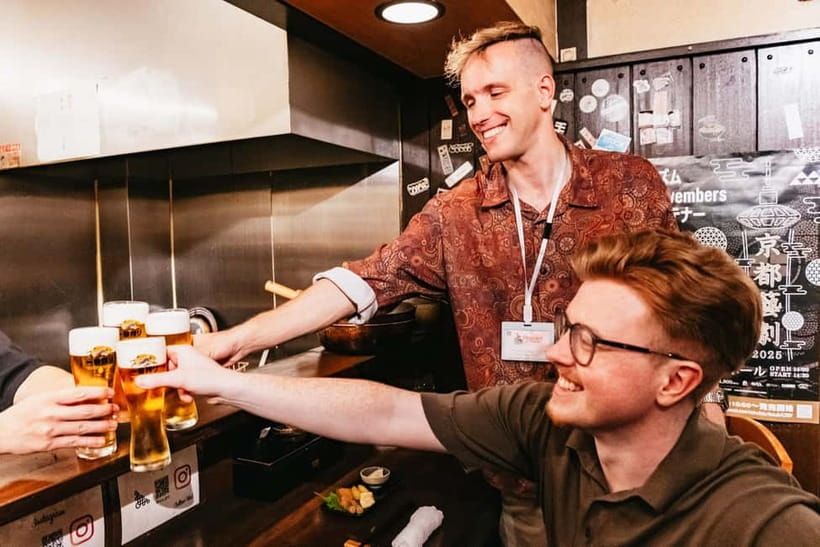
Kyoto after dark is best understood on foot, and this three-hour tour gives you a tasty route through the city’s old entertainment quarters. You’ll see Yasaka Shrine at night, walk through Gion and Ponto-cho, and sit down at two local restaurants for a broad spread of Japanese dishes and two drinks.
I like the small group limit of six, which makes the evening feel more like going out with a well-informed local than joining a moving crowd. I also like the mix of food and place: guides such as Jamie, Hugo, Laura, and Ferdinand have been praised for making geisha customs, shrine traditions, and local dining rules easy to understand.
The main caution is the food format. Most dishes arrive as shared small plates, and one stop may allow indoor smoking. If you want a large, single-sitting dinner or smoke-free dining, ask about current restaurant arrangements before booking.
In This Review
- Key points at a glance
- Starting beneath Minamiza Theater
- Yasaka Shrine after sunset
- Gion, geisha traditions, and evening etiquette
- Along the Kamo River and Kiyamachi
- The first restaurant: small plates and a first drink
- Ponto-cho by night
- The second restaurant and a fuller taste of Kyoto
- What the $92 price really covers
- Who will enjoy this evening most
- Should you book Kyoto Night All-Inclusive Eats and Streets?
- FAQ
- Where does the tour start and finish?
- How long does the experience last?
- What food and drinks are included?
- Is the dinner a full meal or small plates?
- Can I request a vegetarian or restricted diet menu?
- Is the tour available in languages other than English?
- Is the tour suitable for children or people with mobility impairments?
Key points at a glance
- Two restaurant stops: Your dinner is spread across two local eateries, with many shared dishes rather than one main course.
- Nighttime Yasaka Shrine: The shrine’s evening appearance gives the walking portion a calm, atmospheric start.
- Gion and Ponto-cho together: You see both Kyoto’s traditional geisha quarter and its modern dining streets.
- Up to six people: The small group size leaves room for questions, conversation, and individual attention.
- Two included drinks: Choose alcoholic or non-alcoholic drinks, with extra drinks available at your own cost.
- Optional Kobe beef: A Kobe or nearby-sourced beef option can be added when booked at least 10 hours ahead.
Starting beneath Minamiza Theater
The tour begins in front of Minamiza Theater, directly at street level by exit 6 of Gion Shijo Station. This is a practical meeting point in the heart of the entertainment district, though you should arrive with a few minutes to spare so you can find the theater and guide without a last-minute scramble.
From here, you are already in a useful part of Kyoto for an evening walk. The route stays centered around Gion, the Kamo River, Kiyamachi, and Ponto-cho, so the tour does not lose time to buses or taxis. You walk from place to place, which helps you notice the narrow lanes, entrances, signs, and changes in atmosphere that are easy to miss from a vehicle.
Wear comfortable shoes. The route includes several walking segments, and this is not a sit-down food tasting with a short stroll between courses. The activity is not suitable for people with mobility impairments, and children under 18 cannot join.
More evenings in Gion:
- Kyoto Geisha Walking Tour: Gion District & Hidden Gems
★ 4.7 · 3,273 reviews - Kyoto: Gion Magical Night Walking Tour with Geisha Trivia
★ 4.9 · 2,393 reviews - Kyoto: Gion Geisha District Walking Tour – Stories of Geisha
★ 4.7 · 2,187 reviews
Yasaka Shrine after sunset
The first formal stop is Yasaka Shrine, with about 15 minutes for a guided visit. In daylight, this is one of Kyoto’s major sights. At night, the setting takes on a different feel, with the shrine’s architecture and grounds offering a quieter opening to the evening.
I like placing the shrine near the start rather than treating it as a quick photo stop at the end. Your guide can explain Shinto customs and the meaning of the site before the group moves into Gion’s dining streets. One particularly useful part of the experience is the contrast between the shrine’s religious setting and the entertainment district just beyond it.
The shrine visit is not a long lecture. Guides such as Laura, Damien, and Ferdinand have been praised for keeping the explanations clear and entertaining while covering Japanese customs, beliefs, and the relationship between Shinto and Buddhist traditions. The exact amount of detail depends on your guide and the questions your group asks, but the small format gives you a good chance to speak up.
Gion, geisha traditions, and evening etiquette
The walk continues through Gion, where your guide explains the area’s geisha traditions and the way the district functions today. Gion is not simply an old-fashioned theater set. It is also a working entertainment quarter, with restaurants, bars, private establishments, and narrow streets where local customs matter.
This is one of the tour’s strongest features. A guide can explain why some places are difficult for first-time visitors to enter, how geisha districts developed, and which behaviors are considered respectful. You get context without having to turn your evening into a formal history class.
Guides named in the feedback include Jamie, Lito, Maya, Andres, Bryan, Hugo, Kota, Diogo, and Ferdinand. Their strengths vary, but the consistent pattern is a personable, conversational approach. Jamie was singled out for explaining why local customs developed as they did, while Andres was praised for getting the group talking and making the historical walk feel relaxed.
You should not expect a guaranteed geisha sighting. The focus is on the district, its traditions, and its social rules, not on tracking down performers. That distinction matters. It keeps the tour grounded and avoids treating a living culture as a spectacle.
Along the Kamo River and Kiyamachi
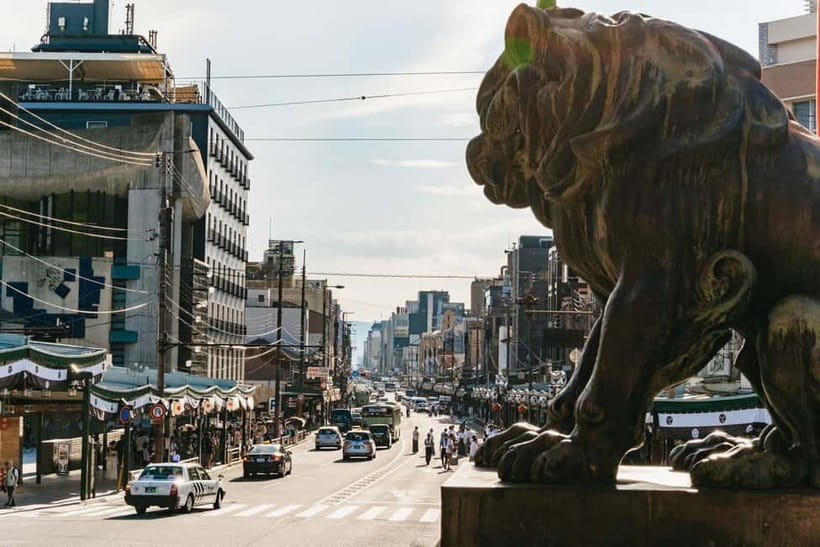
The route passes the Kamo River and continues through Kiyamachi, one of the central nightlife areas in this part of Kyoto. The river gives you a brief change of pace from the close lanes of Gion, while Kiyamachi shows the city’s modern side, with restaurants, bars, and evening activity.
The walking sections are useful because they connect the food stops into a larger picture. You are not only tasting dishes in isolated restaurants. You are seeing how Kyoto’s old quarters, riverfront streets, commercial lanes, and nighttime entertainment fit together.
The guide’s local perspective matters here. Several guides were praised for pointing out places and streets that visitors might not find on their own. You may pass small venues and side lanes without entering them, but the explanations help you understand what you are seeing and why the area changes from one block to the next.
The pace is described as relaxed and well balanced. Still, keep in mind that three hours is a short period for both walking and two meals. The schedule works best if you are ready to move between stops and do not need long breaks.
More Kyoto evenings:
- Night Walk in Gion: Kyoto’s Geisha District
★ 4.5 · 2,003 reviews - Kyoto Night Foodie Tour in Gion (9+ dishes + 6 Sake tastings)
★ 5.0 · 1,762 reviews - Kyoto Gion Night Walk & Geisha District Guided Tour
★ 5.0 · 786 reviews - Kyoto Ghost Tour: Dark Tales, Urban Legends, Bamboo Forest Night
★ 5.0 · 625 reviews
The first restaurant: small plates and a first drink
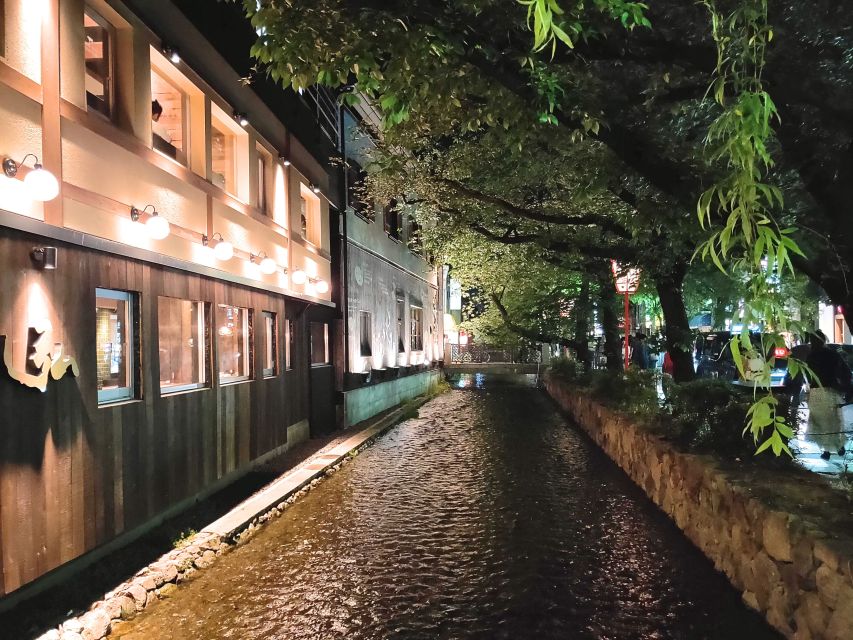
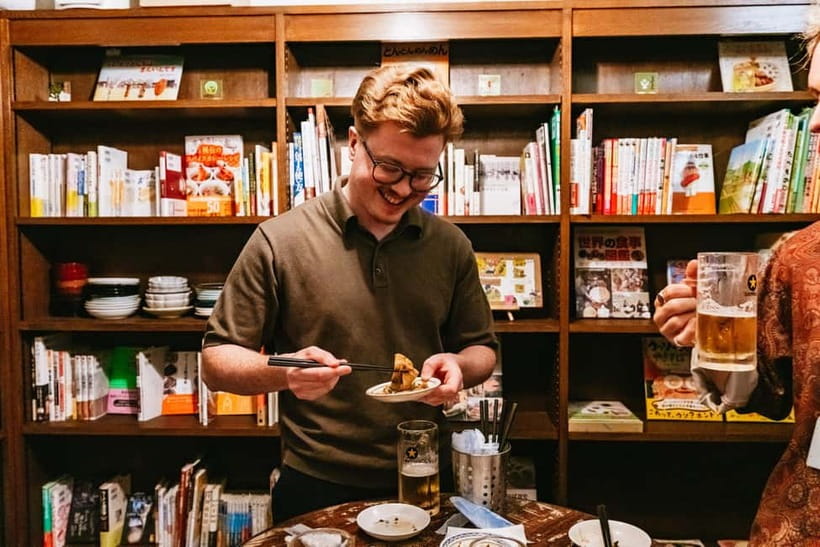
The first restaurant stop lasts about 45 minutes and includes dinner plus a beer, cocktail, or spirit. The meal is designed around many small portions, similar to a Japanese tapas-style spread. Depending on the season and the restaurants operating that evening, you might try a range of local dishes rather than one familiar entrée.
This format is ideal if you want to sample. It lets you try foods that may not appear on a standard tourist menu, and your guide can explain what you are eating, how it is usually served, and which flavors or textures to notice. Ann described the food as obscure, local, and delicious, while other diners praised the variety and quality.
The portions deserve a realistic explanation. Some people leave feeling full, especially because the two restaurants together provide plenty of food. Others find the individual servings small and more like tasting portions. I would treat the meal as a progressive dinner: do not expect a large bowl or steak at the first stop, and do not fill up before the second restaurant.
The guide helps order and share the dishes, which is a major benefit if you are unfamiliar with Japanese menus. Vegetarian alternatives have been provided, and one dining group received food suited to dietary restrictions. You should still communicate restrictions when booking or at the start, since the menu changes and the exact arrangements are not guaranteed.
Indoor smoking is the most important dining warning. At least one of the small restaurants or bars used on some evenings has allowed smoking inside, and this has bothered people who do not smoke. If you are pregnant, have respiratory concerns, or strongly dislike smoke, contact the provider before committing to the tour.
Ponto-cho by night
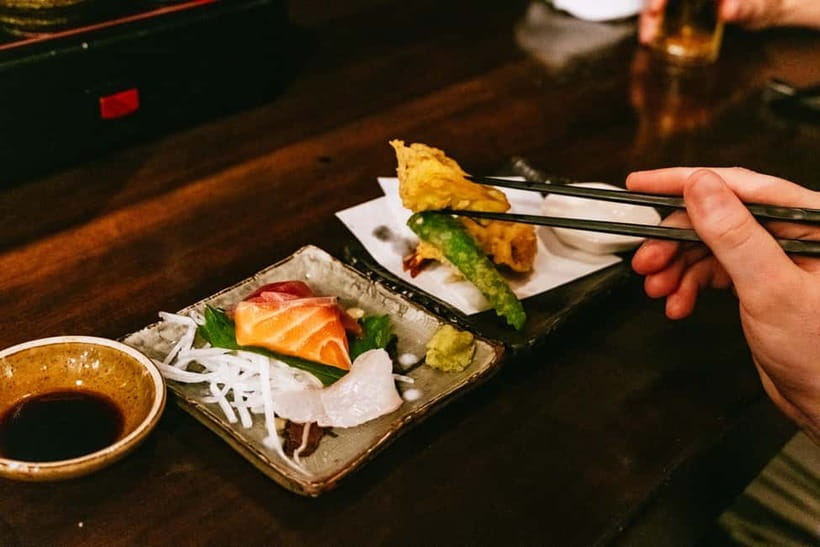
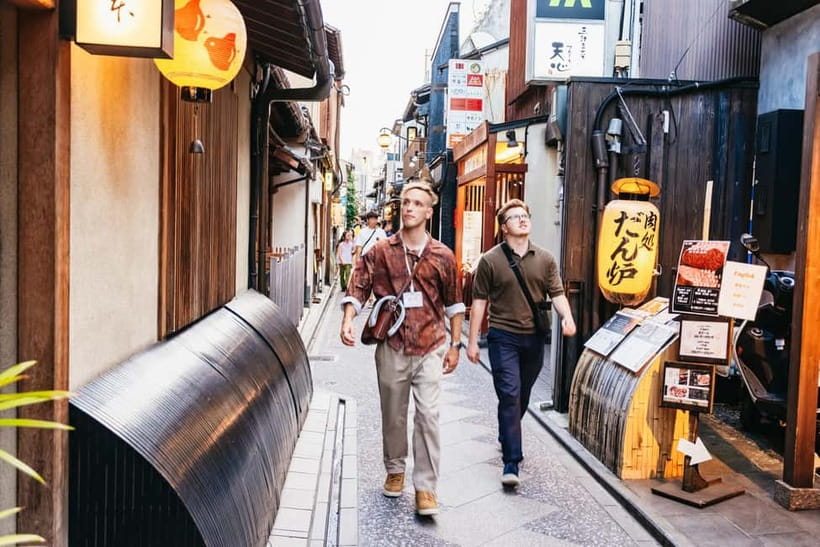
After the first meal, you walk for about 30 minutes toward Ponto-cho. This narrow dining lane is one of Kyoto’s best-known evening areas, and its compact scale makes it a fine place to explore with someone who understands the neighborhood.
Ponto-cho is close to the Kamo River but feels distinct from the broader streets around the station. You pass entrances to restaurants and bars, some easy to miss if you are walking alone. The guide can point out the difference between places aimed at casual dining, formal entertainment, and local nightlife.
This section is not a separate attraction with a ticket or long stop. Its value comes from interpretation and timing. By now, you have learned something about Gion’s older traditions and have eaten in a local setting. Ponto-cho then adds a more contemporary side of Kyoto, helping you compare the two districts rather than seeing only one polished version of the city.
The group size makes a difference here. A group of six can stay together in narrow lanes more easily than a large tour, and you can ask questions without shouting. Several people described the social side as especially good, with the small group quickly becoming friendly over the shared meal.
The second restaurant and a fuller taste of Kyoto
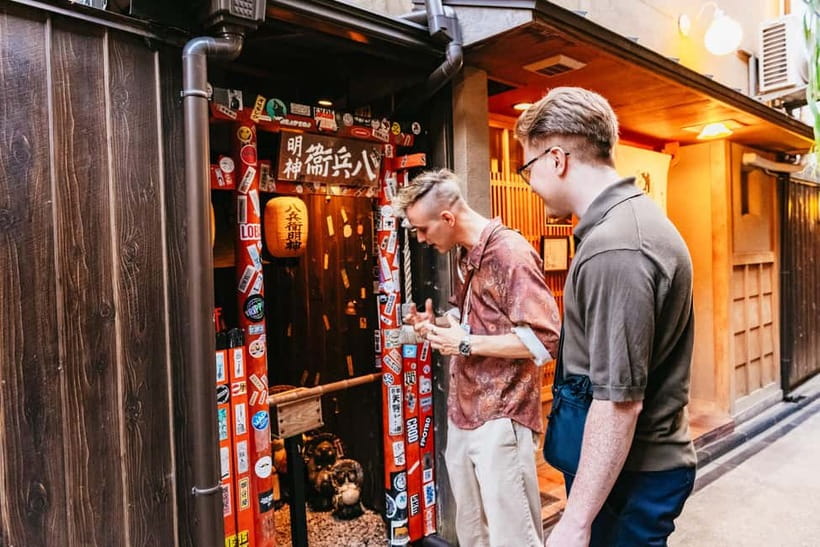
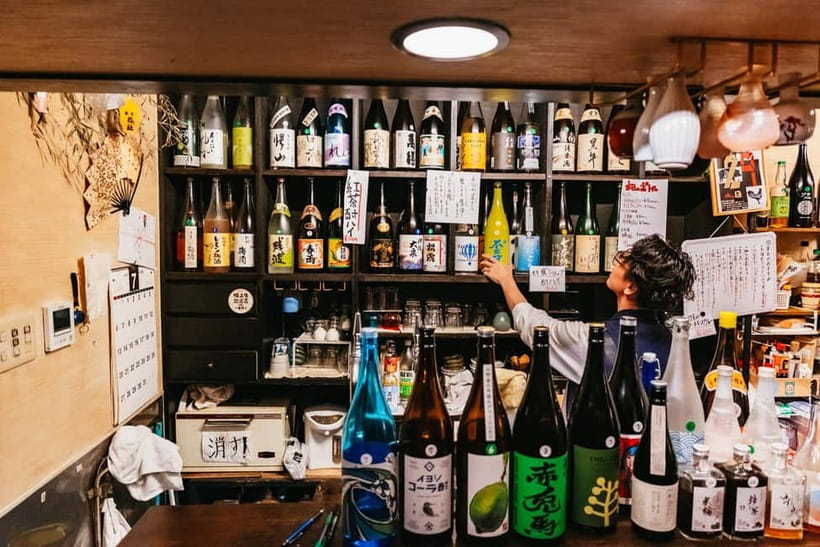
The final dining stop lasts about 30 minutes. You receive more shared dishes and your second included drink, alcoholic or non-alcoholic. The two-stop plan gives the evening a pleasant rhythm: walk, eat, walk, eat, then return to the starting point at Minamiza Theater.
The restaurants may differ in style. One group visited a small bar followed by a more traditional eatery, while another described two tiny restaurants away from the main tourist circuit. The exact venues and menu depend on availability and the season, so you should not book this expecting a fixed list of dishes.
That uncertainty is also part of the appeal. You are not being sent to a single standardized dining room with a set plate prepared for every date. Your guide can steer you toward places that fit the evening’s operation and introduce you to food you might not order independently.
The meal has received especially strong praise for its quality and range. People have enjoyed Japanese dishes, Kyoto-style foods, sake, beer, cocktails, and other drinks. At the same time, tastes differ, and not every unfamiliar dish will suit everyone. I see that as a fair trade for trying a wider selection instead of ordering only the foods you already know.
If the Kobe beef option interests you, arrange it at least 10 hours before the tour. It is an add-on, not part of the standard price, and may involve Kobe or beef sourced from nearby. Ask for the current cost and serving details when booking.
What the $92 price really covers
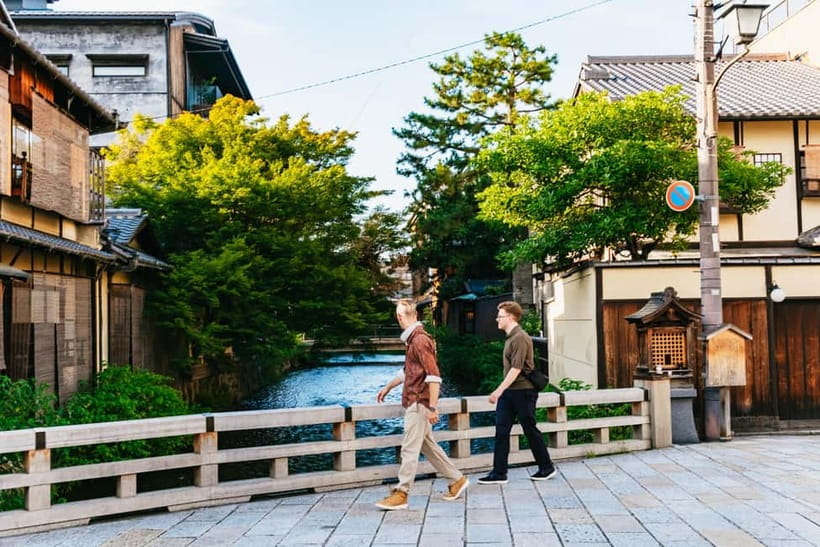
At $92 per person, the tour is not the cheapest way to eat in Kyoto. The value comes from combining dinner, drinks, guiding, neighborhood orientation, and restaurant access in one evening.
You receive a full dinner divided between two restaurants, two drinks, and gratuities. Tipping is not customary in Japan, so there is no need to budget an extra tip at the end. You also avoid the uncertainty of ordering several unfamiliar dishes on your own, where a small group can easily spend more than expected.
The price makes the most sense for your first night or two in Kyoto. You get a quick introduction to Gion, Ponto-cho, Kiyamachi, local food, and Japanese dining customs, then you can return to the areas later with a better sense of where you are.
The value is weaker if you already know Kyoto’s nightlife well, prefer to choose every dish yourself, or want a large premium meal at one restaurant. The small-plate format offers variety, but it does not guarantee a single substantial main course.
Who will enjoy this evening most
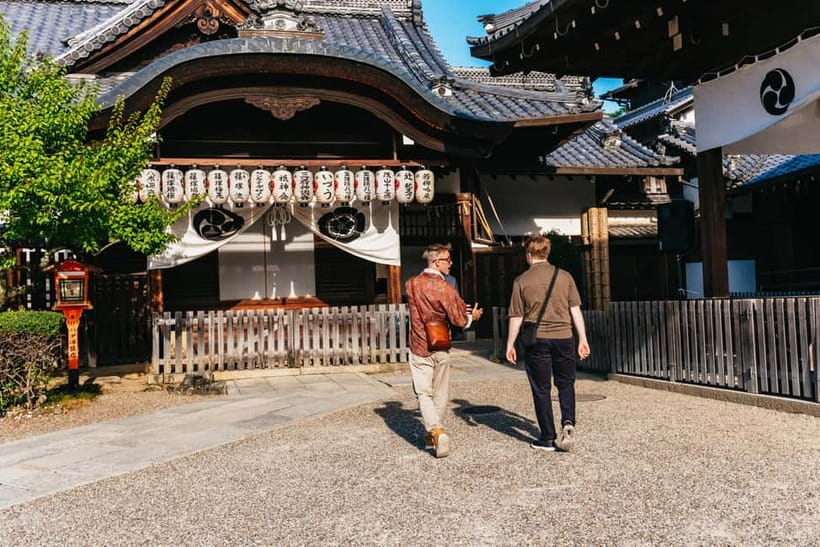
I would recommend this tour to you if you want help navigating Kyoto’s dining culture without spending weeks learning how the neighborhoods work. It suits first-time visitors, solo diners, couples, and people who enjoy meeting a few other people over shared food.
It is also a good fit if you want cultural explanation without a stiff academic tone. The guides are expected to speak English, French, or Spanish fluently, and the strongest feedback describes them as funny, warm, and easy to talk with.
You may want another type of food tour if you need strict smoke-free dining, have mobility limits, are under 18, or want a vegetarian-only menu. Dietary alternatives have been arranged in some cases, but the menu is seasonal and restaurant availability can change.
Private groups are available as well as small shared groups. If you choose a private option, confirm the price and exact conditions before booking, since the standard advertised amount is $92 per person for the regular experience.
Free cancellation is available up to 24 hours before the start time, and you can reserve now and pay later. Starting times vary, so check availability for your date.
Should you book Kyoto Night All-Inclusive Eats and Streets?
I would book this if you want one well-organized evening that combines Kyoto food with a useful introduction to Gion and Ponto-cho. The strongest reasons are the small group, two carefully chosen dining stops, included drinks, and guides such as Jamie, Laura, Hugo, Maya, and Ferdinand who make the cultural side approachable.
Go in expecting shared tasting plates, not a formal banquet. Ask about indoor smoking and dietary needs before you pay, and arrange the Kobe beef option at least 10 hours ahead if that matters to you. For most adults who enjoy walking, conversation, and trying unfamiliar dishes, the $92 price is fair for the amount of food, guiding, and local orientation packed into three hours.
FAQ
Where does the tour start and finish?
The tour starts in front of Minamiza Theater, at street level by exit 6 of Gion Shijo Station. It returns to Minamiza Theater after the second restaurant.
How long does the experience last?
The tour lasts three hours. Starting times vary, so you need to check availability for your chosen date.
What food and drinks are included?
You receive dinner across two local restaurants and two drinks. Drinks may be alcoholic or non-alcoholic. Extra drinks are not included.
Is the dinner a full meal or small plates?
The dinner is spread across two restaurants and includes many shared small plates. The exact dishes depend on the season and restaurant availability. Some people find the overall amount filling, while others consider the servings closer to tapas.
Can I request a vegetarian or restricted diet menu?
Dietary alternatives have been provided on some tours, but the menu changes. Tell the provider about your restrictions before booking or as early as possible.
Is the tour available in languages other than English?
Live guides are available in English, French, and Spanish.
Is the tour suitable for children or people with mobility impairments?
No. The experience is not suitable for children under 18 or people with mobility impairments. Comfortable walking shoes are recommended.
Recently added around Kyoto
- Higashiyama | Kyoto: Sakura Season Private Rickshaw Tour★ 5.0 · 3 reviews
- Kyoto Kimono Rental CHAMATSU|Kimono/Yukata Rental FamilyPlan★ 5.0 · 3 reviews
- Kyoto: Half-Day Private Guided Tour to the Old Town of Gion★ 4.4 · 3 reviews
- Nara Private Customizable Half Day Tour★ 5.0 · 3 reviews
- Kansai Region Hiking Adventure in Nara Kobe Kyoto and More★ 5.0 · 3 reviews
- Full Day Nara Deer, Temple, Shrine, Activities & Tea Ceremony★ 5.0 · 3 reviews
- Nara: Essential Private Tour with Deer Park and Temples★ 5.0 · 3 reviews
- Hiking Tour for Sacred Sites in Kyoto with a Guide★ 5.0 · 3 reviews
Gion Geisha District Tours, compared.

Kyoto Geisha Walking Tour: Gion District & Hidden Gems
Read our review →
Gion Magical Night Walking Tour with Geisha Trivia
Read our review →
Gion Geisha District Walking Tour – Stories of Geisha
Read our review →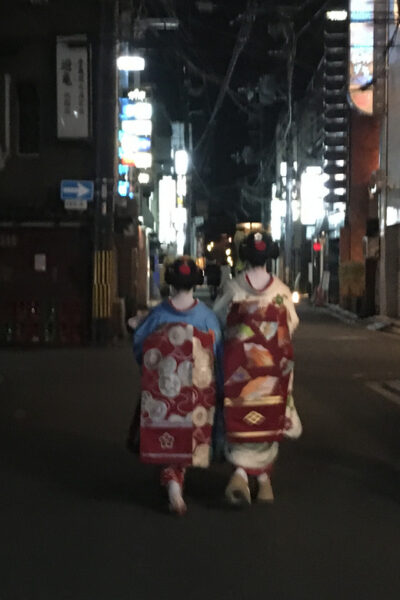
Best of Kyoto: Gion, Geisha, Pagodas & Cobblestones
Read our review →

Kyoto Night Foodie Tour in Gion (9+ dishes + 6 Sake tastings)
Read our review →
Kyoto Gion Geisha District Walking Tour – The Stories of Geisha
Read our review →
Kyoto Gion: 2-Hour Geisha Culture & History Walking Tour
Read our review →Browse the lists this tour appears in