
REVIEW · GION GEISHA DISTRICT TOURS
Kyoto: Foodie Night Tour in Gion with 9 dishes + 6 Sake
Kyoto’s best food experiences often happen in small places that are easy to miss. This evening tour pairs nine dishes with six Kyoto sake tastings, then winds through Gion and Pontocho, giving you a taste of the city’s night-time customs along with dinner.
I like the mix of food and neighborhood walking, and I like that you share the table with a local guide rather than simply receiving a plate and a fact sheet. Guide Rika has been praised for getting the group talking, while the first restaurant has earned especially warm comments for its local feel.
The main caution is value. At $361 per person, this is a costly evening, and the food can be uneven from one stop to the next. The tour is also a poor fit if you have serious mobility limits, strict allergies, or high expectations for an expensive wagyu-style meal.
In This Review
- Key points to know before booking
- Meeting Izumo-no-Okuni in Gion
- First dinner: Kyoto cooking in a tucked-away restaurant
- Six Kyoto sake samples, explained at the table
- Walking through Pontocho Alley
- The second dinner stop can be less predictable
- Dessert in a traditional Pontocho building
- What the guide adds to the price
- Price, value, and who should pay for it
- Dietary needs, walking, and seasonal comfort
- Should you book this Kyoto food tour?
- FAQ
- Where does the tour meet?
- How long does the experience last?
- How many dishes and drinks are included?
- Which neighborhoods does the tour visit?
- Is the tour conducted in English?
- Can people under 20 drink sake?
- Can I request a dietary change or allergy-safe meal?
Key points to know before booking
- Nine dishes, two drinks, and six sake samples are included, with alcohol and non-alcohol choices available.
- Obanzai, oden, and yuba offer a useful introduction to Kyoto’s everyday cooking.
- Gion and Pontocho provide the setting, with old wooden buildings and narrow lanes between food stops.
- Rika has received specific praise for keeping conversation flowing and helping the group connect.
- The food is not equally strong at every stop, so the experience is better viewed as a guided food walk than a luxury dinner.
- Dietary requests must be made by the day before, and allergy-free meals cannot be guaranteed.
Meeting Izumo-no-Okuni in Gion
The evening begins at the statue of Izumo-no-Okuni outside Exit 5 of Gion Shijo Station. This is a practical meeting place because the statue is easy to identify, but give yourself enough time to get out of the station and find the correct exit.
From there, you walk through Gion, Kyoto’s famous geisha district. The appeal is not a formal sightseeing lecture or a long list of monuments. Instead, your guide explains how locals use the area at night as you pass old Kyoto-style buildings and quiet lanes.
You may see a geisha passing by, but that is luck, not part of the promised program. Keep your expectations polite and realistic. Gion is a working neighborhood, not a stage set, and the most useful part of this walk is learning how to look around without treating local streets like a show.
The tour is conducted in English and lasts 210 minutes, or three and a half hours. That gives you enough time to eat at a relaxed pace, walk between stops, and ask questions without rushing through every course.
More evenings in Gion:
- Kyoto Geisha Walking Tour: Gion District & Hidden Gems
★ 4.7 · 3,273 reviews - Kyoto: Gion Magical Night Walking Tour with Geisha Trivia
★ 4.9 · 2,393 reviews - Kyoto: Gion Geisha District Walking Tour – Stories of Geisha
★ 4.7 · 2,187 reviews
First dinner: Kyoto cooking in a tucked-away restaurant
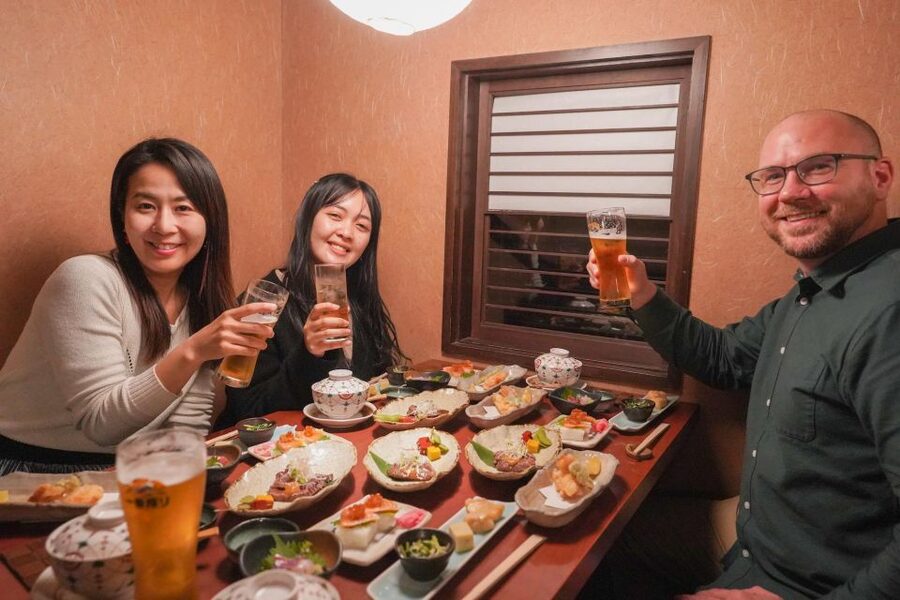
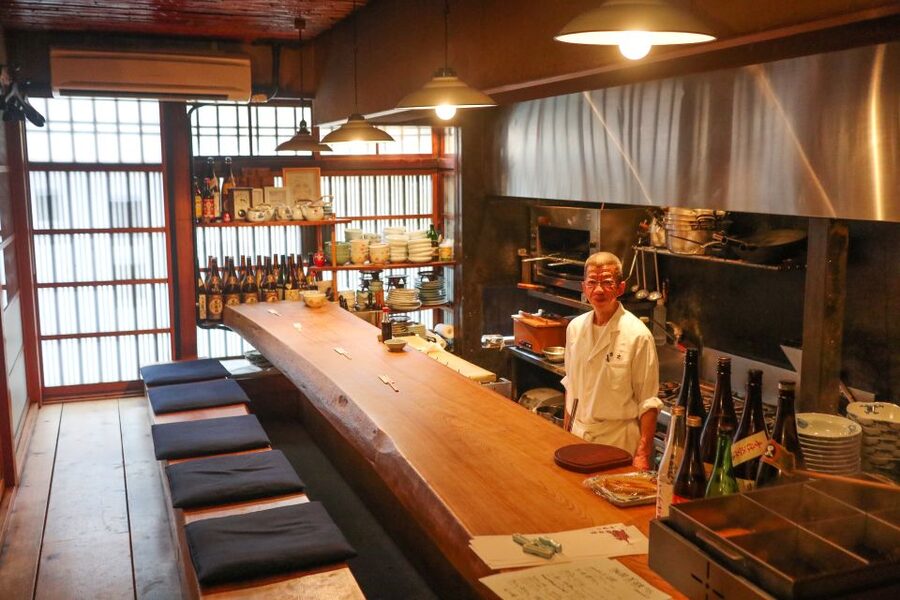
The first food stop is the heart of the experience. You enter a traditional restaurant that is difficult to find unless someone familiar with the area leads you there. The setting matters here. A small, traditional dining room gives you a better sense of Kyoto than a large restaurant designed mainly for passing customers.
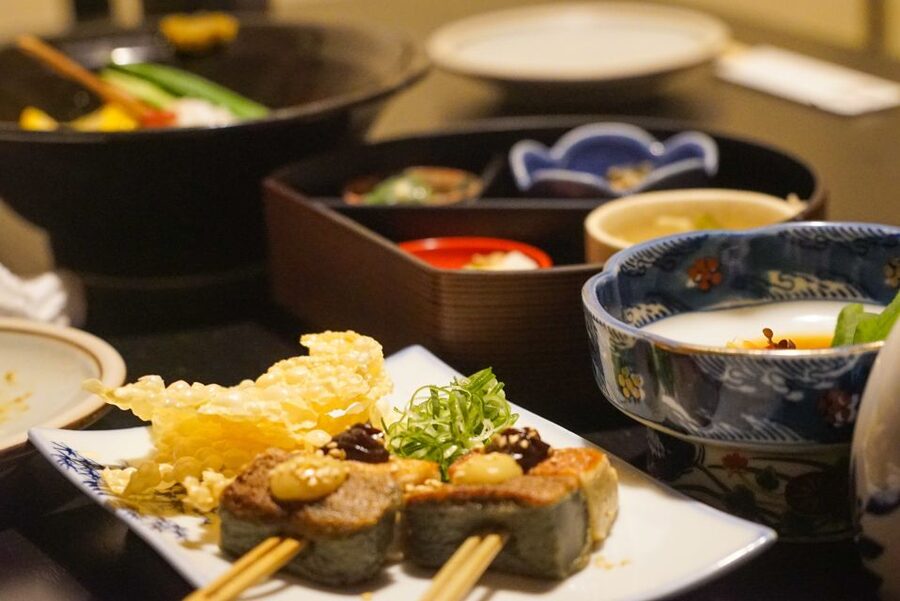
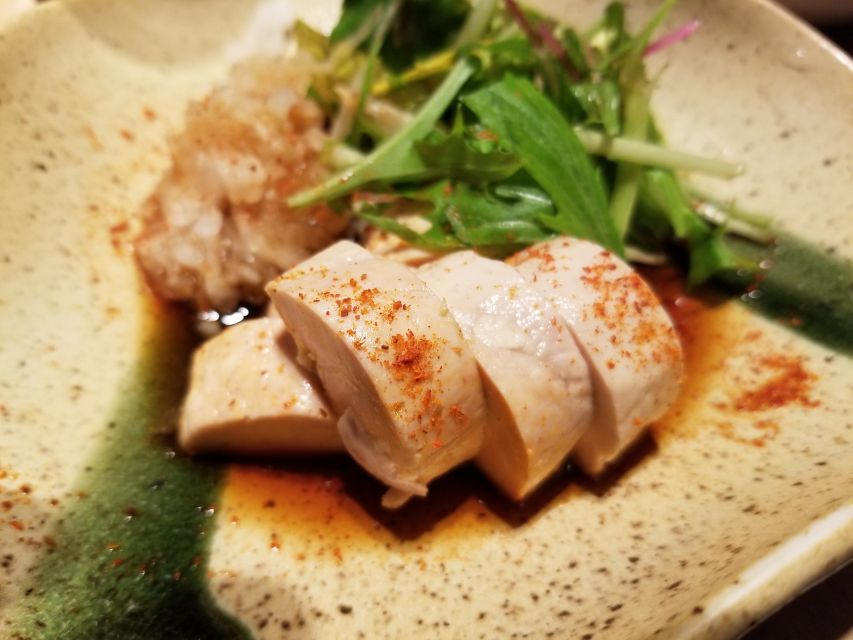
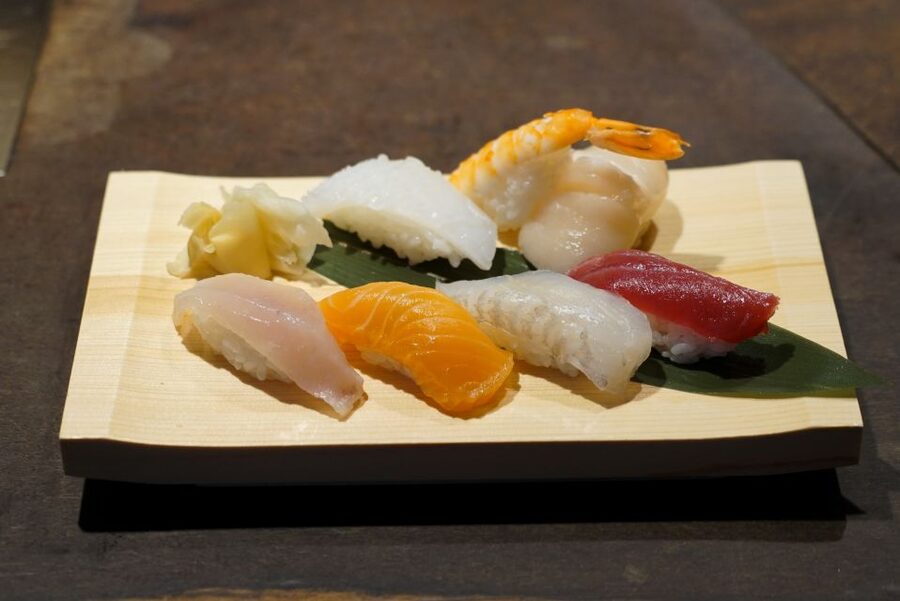
The menu centers on simple Kyoto dishes. You might receive obanzai, a broad term for home-style Kyoto cooking, along with oden, a Japanese stew, or yuba, the delicate skin that forms on simmering soy milk.
These foods are not flashy. That is part of their value. Obanzai shows how Kyoto cooking uses carefully seasoned vegetables and small portions, while oden brings a warm, comforting style of food that is easy to share. Yuba has a soft, subtle character and may be unfamiliar even if you have eaten tofu before.
This first meal also gives the guide something useful to explain. Rather than rushing from one famous dish to another, you can learn how seasoning, texture, and local ingredients fit into Kyoto’s food culture.
The strongest praise attached to this experience focuses on the first dinner. One account described it as excellent, while another specifically called the food spots local and authentic. That makes the first stop a good reason to book if you want a traditional setting and dishes that are not always obvious to first-time visitors.
Still, the meal is not presented as a fixed luxury menu with every dish spelled out in advance. The exact selection can vary, so you should think of the food as a seasonal and local introduction rather than a guaranteed tasting menu of famous specialties.
Six Kyoto sake samples, explained at the table
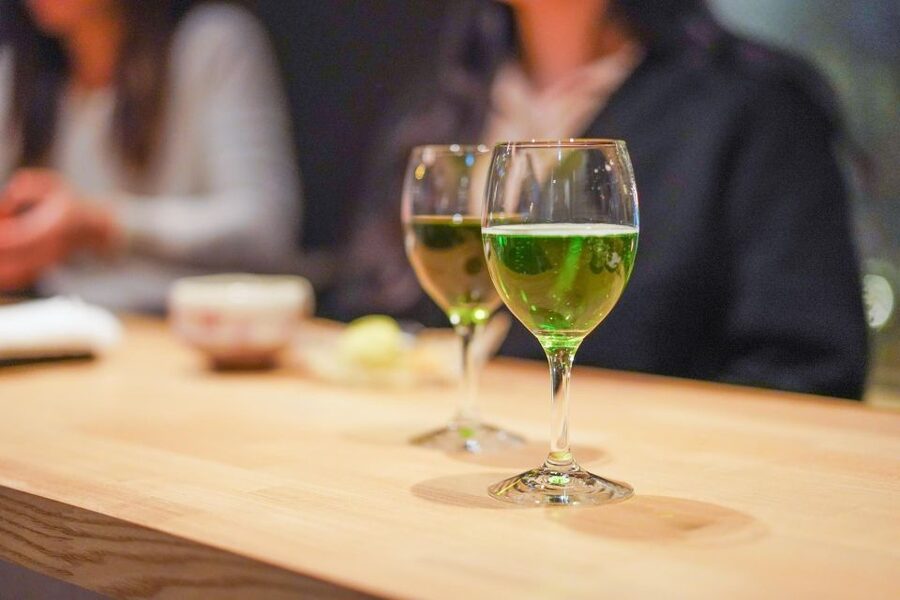
The sake portion uses Kiki sake, with six kinds of sake available for tasting during the course. The information provided also describes three different Kyoto-produced sakes, so the tasting is designed to show contrast rather than give you one large serving of a single drink.
This is a smart format for you if sake is new. Small samples let you compare styles without committing to a full bottle or spending the evening guessing what you are drinking. Your guide explains the samples while you eat, giving the drinks context instead of treating them as an afterthought.
Two drinks are included in the wider meal package, and both alcoholic and non-alcoholic options are available. Alcoholic drinks are restricted to people over 20 under Japanese law. If you do not drink, you can still take part in the meal and choose non-alcoholic beverages, though the six sake samples will not be relevant to you.
The value of a sake tasting depends heavily on the guide’s explanations. A good guide can help you notice differences in flavor and serving style without making the subject feel like a classroom. Rika has been singled out for encouraging conversation, which is helpful when the table includes people who do not know one another.
Bring cash for food, drinks, and extras. The information for this experience warns that many bars do not accept credit cards, so a quick stop at an ATM before meeting the guide is sensible.
Walking through Pontocho Alley
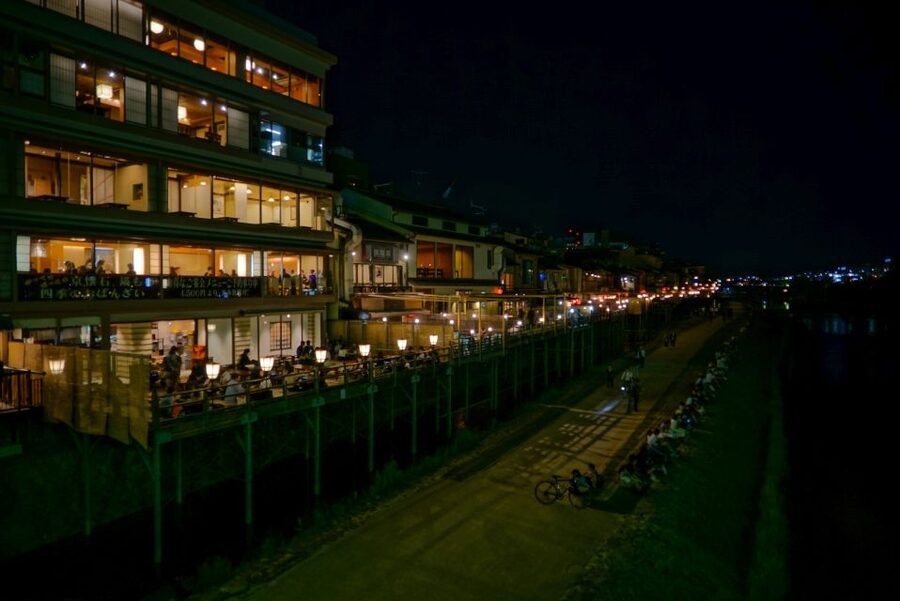
After the first food stop, the route continues through Pontocho. This narrow dining lane is one of Kyoto’s most atmospheric night streets, with traditional buildings and restaurants packed close together.
The walk is short enough to connect the meals, but it also gives you a chance to see the contrast between Gion and Pontocho. Gion is known for its older residential and entertainment streets, while Pontocho is a concentrated dining area where the evening energy comes from restaurants and bars.
Do not expect a detailed historical walking tour. One useful criticism of the experience is that more information about Gion and Pontocho would have improved the evening. If neighborhood history is your main goal, you may want a separate daytime walking tour or time to explore these areas on your own.
For this food tour, the route works best as a bridge between meals. You are not only being moved from restaurant to restaurant. You are seeing how Kyoto’s night districts connect, and you have a guide available to point out details that you might otherwise pass without noticing.
The activity description calls the group a private group, but the important practical information also says this is not a private tour. Read that as a guided group experience rather than an exclusive booking just for you and your companions.
More Kyoto walks after dark:
- Night Walk in Gion: Kyoto’s Geisha District
★ 4.5 · 2,003 reviews - Kyoto Gion Night Walk & Geisha District Guided Tour
★ 5.0 · 786 reviews - Kyoto Bar Hopping Night Tour
★ 5.0 · 613 reviews - Kyoto Foodie Night Tour
★ 5.0 · 376 reviews
The second dinner stop can be less predictable
The itinerary allows about an hour at the second food stop in Pontocho. This is where you should keep your expectations flexible.
The meal includes nine dishes in total across the dinner portion, followed by dessert. Exact dishes can change, and the provided examples focus on traditional Kyoto foods rather than a guaranteed list. One account praised the first dinner but found the second stop quite poor, describing the difference between the two meals as dramatic.
That unevenness is the biggest quality concern. A food tour can be enjoyable even when every bite is not a favorite, but a high price makes inconsistency harder to accept. If you are paying mainly for a refined meal, this may disappoint you. If you are paying for a local guide, several tastings, and access to traditional places, the evening may make more sense.
A separate complaint involved a wagyu serving that did not meet expectations. The practical lesson is simple: do not book this experience assuming you are buying a premium steak dinner. The tour description emphasizes Kyoto dishes, sake, atmosphere, and local guidance. Those are the things you are actually purchasing.
The second stop may still be useful because it broadens the tasting. You get another look at how Kyoto restaurants serve food in the evening, and you can compare the two locations. Just do not assume that the second meal will match the first in quality or atmosphere.
Dessert in a traditional Pontocho building
The final food stop is a Kyoto cafe in a traditional building around Pontocho. Dessert follows the savory dishes, giving the three-and-a-half-hour route a clear finish rather than ending after another plate of dinner food.
The exact dessert is not specified, only that it is a local Kyoto sweet. That leaves some room for surprise, but it also means you should not book based on a particular dessert you have seen elsewhere.
The cafe setting is part of the appeal. After walking through Gion and Pontocho and eating at traditional restaurants, a quieter sweet course makes the evening feel complete. It is also a chance to sit down, talk with the guide, and let the food settle before walking back to the station.
The tour returns to the Izumo-no-Okuni statue. This makes the route easy to understand, especially if you are staying near Gion Shijo or using the station to continue elsewhere in Kyoto.
What the guide adds to the price
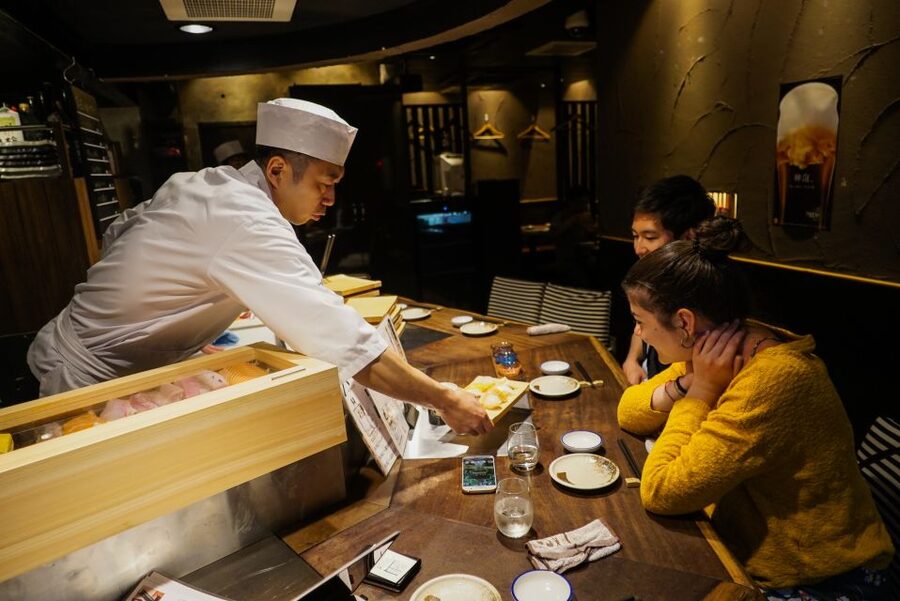
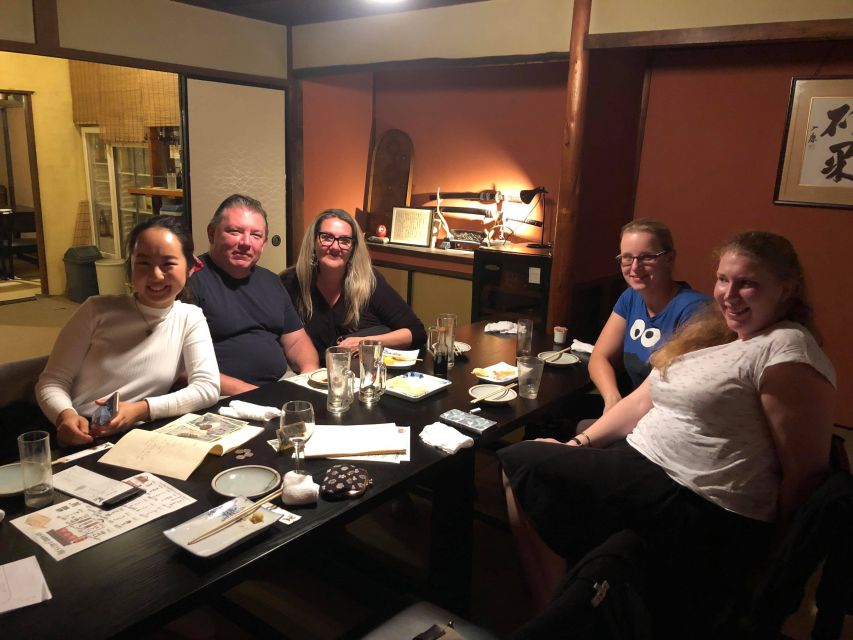
The guide is not just there to lead you through the streets. You share the table with the guide, ask questions, receive explanations about the sake, and learn how local people enjoy the district at night.
That personal contact is the strongest argument for the price. Rika has been praised for creating good conversation among the group, which can make a large difference during a meal. A quiet table of strangers can feel awkward, while an attentive guide can turn it into a social evening.
The experience is conducted in English. No other languages are listed, so book it only if English works for everyone in your party.
The guide also handles the practical side of entering places that may be hard to locate. That does not guarantee every restaurant will be your favorite, but it saves you from wandering through Gion and choosing at random.
The weaker side is the limited cultural detail noted above. You receive some insight into Gion, Pontocho, Kyoto food, and sake, but the tour should not be treated as a full historical tour of either district.
Price, value, and who should pay for it
The listed price is $361 per person. That is a serious amount for an evening meal in Kyoto, even with nine dishes, two drinks, six sake samples, dessert, a guide, and tour photos included.
I would consider the price reasonable only if you value the whole package. You are paying for several food stops, a guided route through two famous night districts, access to places you might not locate alone, and an English-speaking host who explains the drinks and helps the group connect.
I would not call it good value if you mainly want the best possible food. The mixed meal quality and the disappointing second stop described above make the price hard to defend for a committed food enthusiast who is comfortable choosing restaurants independently.
The experience suits first-time Kyoto visitors who want an organized evening and do not want to spend time researching where to eat. It also fits solo visitors or couples who enjoy meeting other people at a shared table. The guide’s role gives the evening more structure than simply walking into a bar on your own.
You may want to skip it if you are a serious diner with firm expectations, a tight budget, or a short list of dishes you must try. Kyoto has many restaurants, and independent dining can give you more control over menu, price, and quality.
Dietary needs, walking, and seasonal comfort
Any dietary request must be made by the day before. Requests made on the day cannot be accepted.
The operator cannot guarantee allergy-free food because the meals are prepared in kitchens it does not control. Substitutions may not be possible at every stop, though efforts may be made to compensate at another stop. If you have a serious allergy, this limitation is important enough to decide the booking.
The route is not recommended for people with mobility issues. Some locations are not accessible to wheelchairs or strollers, and the experience involves walking through Gion and Pontocho between meals.
Summer in Japan can be very hot and humid. Bring water and wear a hat during the warmer months. Even though much of the evening involves indoor dining, you still spend time outside walking through the streets.
Cancellation is free up to 24 hours before the start time, and you can reserve now and pay later. Those policies help if your Kyoto plans are still changing, but they do not alter the central question of value.
Should you book this Kyoto food tour?
Book it if you want a guided night in Gion and Pontocho, enjoy trying several small dishes, and like the idea of tasting Kyoto sake with explanations at the table. The first restaurant, the traditional buildings, and the chance to share the evening with a local guide are the main reasons to choose it.
Think twice if $361 feels high for a meal or if you need guaranteed food quality at every stop. The experience has received an overall rating of 4.4 from 26 ratings, but the sharp difference between enthusiastic praise and strong criticism tells you that expectations matter.
My advice is to book this as a food-and-neighborhood evening, not as a luxury tasting menu. Make your dietary needs clear by the day before, carry cash, wear comfortable shoes, and arrive ready for a social group setting. If that sounds like your kind of night, the mix of sake, Kyoto dishes, and old streets can be worthwhile. If you want precise dishes and premium meat, spend the money on a restaurant you select yourself.
FAQ
Where does the tour meet?
Meet the guide in front of the Izumo-no-Okuni statue outside Exit 5 of Gion Shijo Station.
How long does the experience last?
The tour lasts 210 minutes, or three and a half hours.
How many dishes and drinks are included?
The package includes a dinner course with dessert totaling nine dishes, two drinks with alcoholic and non-alcoholic options, and six sake tastings.
Which neighborhoods does the tour visit?
The route includes Gion and Pontocho Alley. It begins and ends at the Izumo-no-Okuni statue near Gion Shijo Station.
Is the tour conducted in English?
Yes. The tour includes a live English-speaking guide.
Can people under 20 drink sake?
No. Only people over 20 may drink alcohol because of Japanese law.
Can I request a dietary change or allergy-safe meal?
Dietary requests must be made by the day before. Allergy-free meals cannot be guaranteed, and substitutions may not be available at every stop.
More Food Tours in Kyoto
- Kyoto: Insider Sake Brewery Tour with Sake and Food Pairing
★ 5.0 · 704 reviews - Kyoto Sake Brewery & Tasting Walking Tour
★ 5.0 · 623 reviews - Kyoto Nishiki Market Food and Culture Walking Tour
★ 5.0 · 412 reviews - Kyoto: Gion Food Tour 13 Dishes at 4 Eateries
★ 5.0 · 408 reviews
More Drinking Tours in Kyoto
- Kyoto Night Foodie Tour in Gion (9+ dishes + 6 Sake tastings)
★ 5.0 · 1,762 reviews - 3-Hour Kyoto Insider Sake Brewery Tour with Tastings & Pairings
★ 5.0 · 917 reviews - Arashiyama Bamboo, Temple, Monkeys, or Secret Sake Brewery
★ 4.8 · 886 reviews - Kyoto: Izakaya Bars Guided Walking Tour
★ 4.9 · 815 reviews
Recently added around Kyoto
- Higashiyama | Kyoto: Sakura Season Private Rickshaw Tour★ 5.0 · 3 reviews
- Kyoto Kimono Rental CHAMATSU|Kimono/Yukata Rental FamilyPlan★ 5.0 · 3 reviews
- Kyoto: Half-Day Private Guided Tour to the Old Town of Gion★ 4.4 · 3 reviews
- Nara Private Customizable Half Day Tour★ 5.0 · 3 reviews
- Kansai Region Hiking Adventure in Nara Kobe Kyoto and More★ 5.0 · 3 reviews
- Full Day Nara Deer, Temple, Shrine, Activities & Tea Ceremony★ 5.0 · 3 reviews
- Nara: Essential Private Tour with Deer Park and Temples★ 5.0 · 3 reviews
- Hiking Tour for Sacred Sites in Kyoto with a Guide★ 5.0 · 3 reviews
Gion Geisha District Tours, compared.

Kyoto Geisha Walking Tour: Gion District & Hidden Gems
Read our review →
Gion Magical Night Walking Tour with Geisha Trivia
Read our review →
Gion Geisha District Walking Tour – Stories of Geisha
Read our review →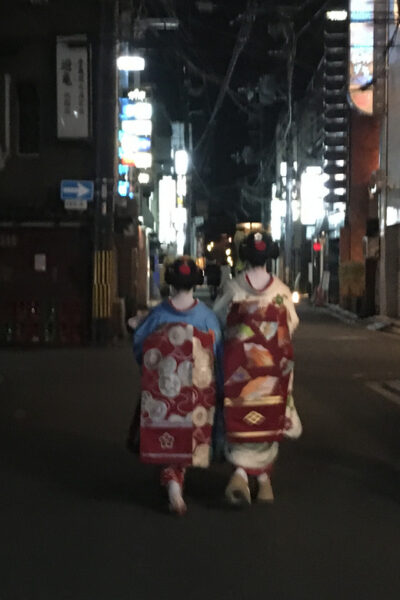
Best of Kyoto: Gion, Geisha, Pagodas & Cobblestones
Read our review →

Kyoto Night Foodie Tour in Gion (9+ dishes + 6 Sake tastings)
Read our review →
Kyoto Gion Geisha District Walking Tour – The Stories of Geisha
Read our review →
Kyoto Gion: 2-Hour Geisha Culture & History Walking Tour
Read our review →Browse the lists this tour appears in