
REVIEW · KYOTO KIMONO RENTALS
Kyoto: Samurai Sword & Kimono Action Filming Experience
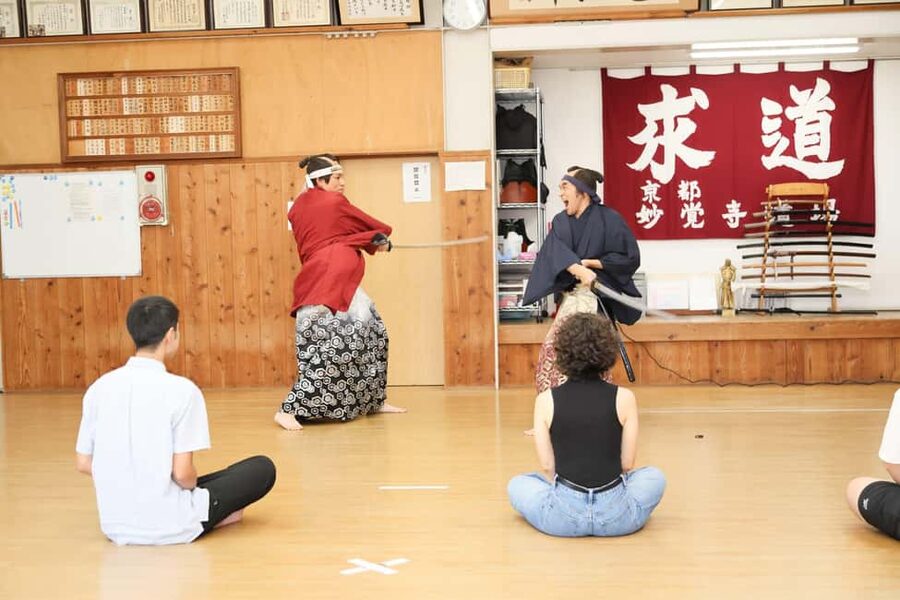
At Myokaku-ji Temple, you do more than pose with a sword. You learn a short sequence of Japanese screen fighting, put on a kimono, watch professional chambara actors demonstrate the moves, then perform your own scene for the camera. The temple setting, linked with Sengoku-era warlords such as Oda Nobunaga, gives the 70-minute session a memorable sense of place.
I like the small group limit of six, since instructors can correct your stance and keep the action moving. I also like that the kimono rental, filming with your camera, and photo download service are included, so the $127 price buys more than a costume photo. The main consideration is physical: this is a hands-on activity with movement, so it is not suitable for young children, pregnant women, or people with back or other medical problems.
In This Review
- Key points at a glance
- Why this Kyoto activity feels different
- Entering Myokaku-ji Temple and finding the dojo
- Learning the sword movements step by step
- The kimono portion adds more than a costume
- Watching professional chambara actors
- Filming your own samurai action scene
- What the $127 price includes
- Who will enjoy it most
- Timing, language, and what to bring
- A practical look at the drawbacks
- Booking flexibility and final advice
- FAQ
- Where does the samurai sword and kimono experience take place?
- How long does the experience last?
- What does the $127 price include?
- Do I need to bring a camera?
- Is transportation to Myokaku-ji Temple included?
- What languages are available?
- How many people can join the session?
- Who should not take part?
Key points at a glance
- Train inside a historic Kyoto temple: Myokaku-ji is associated with Sengoku warlords, including Oda Nobunaga.
- Learn named sword movements: Instruction includes techniques such as makkogiri and kesagiri.
- Wear a traditional kimono: Kimono rental and the dressing portion are included in the price.
- Watch working period-drama actors: The instructors demonstrate chambara skills shaped by professional screen experience.
- Film your own samurai scene: Bring a camera, or use the recording service with your device, then download the finished memories.
- Keep the group personal: No more than six participants take part, with instruction in Japanese and English.
Why this Kyoto activity feels different
Kyoto offers plenty of ways to look at Japan’s past. You can visit a temple, admire a kimono, or watch a stage show. This session combines all three ideas, then adds a practical bit of playacting.
The key difference is that you are not simply handed a costume and sent in front of a backdrop. You receive instruction in holding and wielding a sword, practice several stylized attacks, and then use those movements in a filmed scene. The sword is a fake one, as it should be for this kind of activity, but the gestures are based on chambara, the dramatic sword-fighting style used in Japanese period films.
That makes the experience a good match for you if you enjoy doing something active and slightly theatrical. It is less suited to anyone who wants a quiet temple visit or a serious martial-arts lesson. The session is built around performance, timing, and having fun with the role.
More kimono and yukata rentals:
- Kimono Tea Ceremony at Kyoto Maikoya, NISHIKI
★ 5.0 · 911 reviews - Kyoto: Kimono Rental with Hairstyling and Accessories
★ 4.8 · 653 reviews - Kyoto: Kimono Tea Ceremony at Orizuruya Gion
★ 4.9 · 618 reviews
Entering Myokaku-ji Temple and finding the dojo
Your meeting point is the Myokaku-ji Dojo, just to the left after you enter the temple’s main gate. Transportation to the temple is not included, so you need to arrange your own way there and allow enough time to find the gate and dojo.
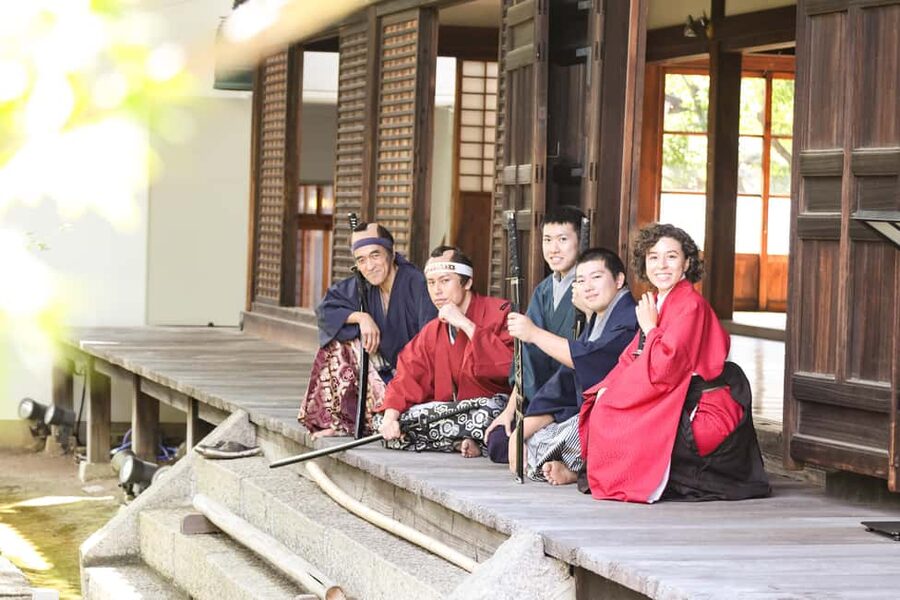
The setting matters. Myokaku-ji is presented as a rare place in Japan where visitors can try chambara inside a historic temple. The site is also connected with Sengoku warlords who stayed there, including Oda Nobunaga around 400 years ago. You are not simply practicing in a modern rental studio, and that gives the short session a stronger connection to Kyoto’s past.
One useful detail is the separate entrance for this activity, which helps you avoid a long public queue if one is present. Still, the meeting instructions are specific enough that you should not arrive at the temple gate and stop looking. Go inside, turn left, and find the dojo.
Learning the sword movements step by step
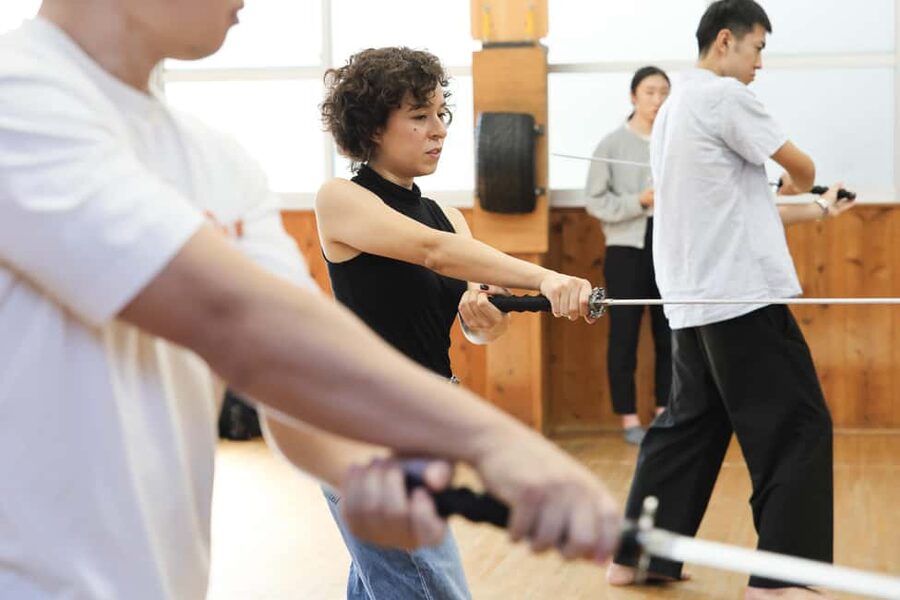
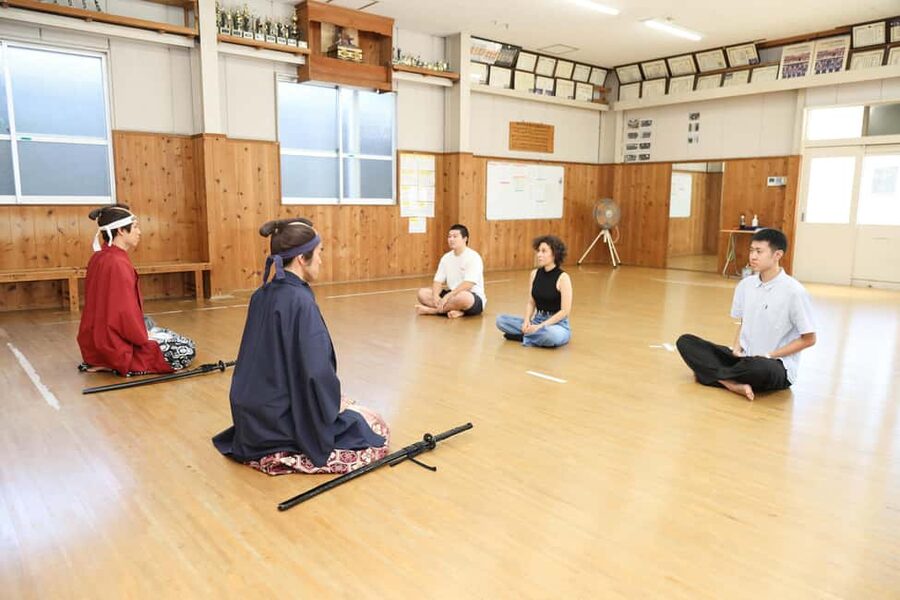
The training begins with the basics: how to hold the sword, how to move it safely, and how to make each gesture readable on camera. You learn techniques identified as makkogiri and kesagiri. The aim is not to turn you into a martial artist in 70 minutes. It is to give you a short set of movements that you can perform with control.
This is where the small group helps. With a maximum of six people, the instructors have room to watch individual participants and offer corrections. That is especially useful if you have never handled a sword before or if you are unsure how much force to use.
The instructors include Japanese and English speakers. Kesuke Irie and Kazuya Naito are identified as professional actors who have appeared in Japanese films and television dramas. Their screen background adds practical value because they know how to make an action move look clear, timed, and dramatic rather than merely fast.
You should expect the lesson to be physical, but not presented as a real combat class. Wear comfortable clothing that allows movement. The instructions specifically warn against joining if you are pregnant, have back problems, have a pre-existing medical condition, or are under five. People over 95 are also excluded.
The kimono portion adds more than a costume
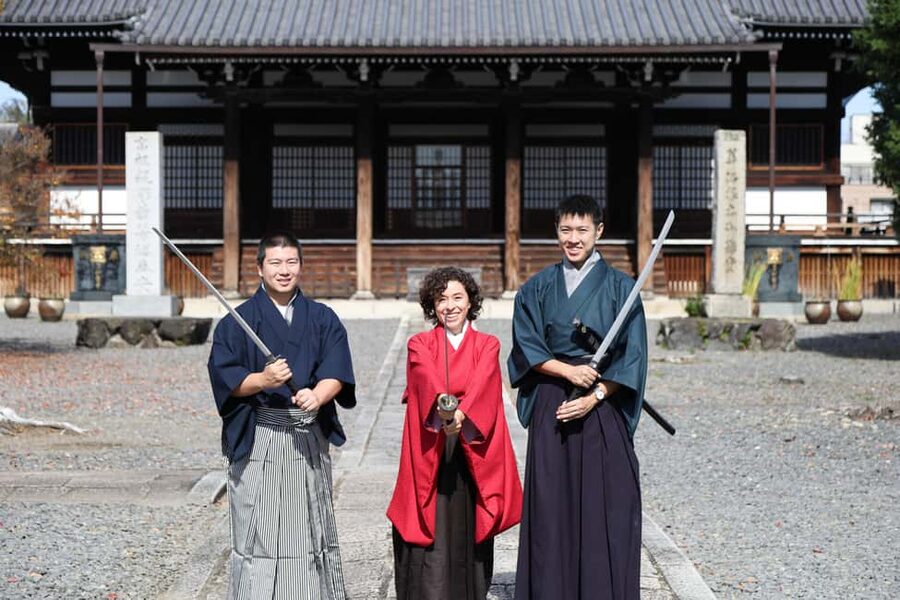
The kimono element is included rather than charged as an extra. You learn about traditional kimono dressing and get to wear one during the activity. That makes the session feel more complete, since the costume is part of the character you are playing, not just a quick photo prop.
Dressing in a kimono can also change how you move. You become more aware of posture, arm position, and the way the fabric affects your actions. That is useful when the sword sequence begins, since the goal is to make the movements look deliberate and period appropriate.
The practical point is to wear comfortable clothes underneath. The activity asks you to come prepared for physical movement, and restrictive clothing would make the costume and sword work less pleasant. The supplied information does not specify a range of kimono sizes or styles, so you should contact the provider if fit is an important concern.
More samurai and sword sessions:
- Kyoto Samurai Experience
★ 5.0 · 1,294 reviews - Kyoto: Kendo and Samurai Experience with Uniform and Gear
★ 4.9 · 815 reviews - Kyoto: Samurai Sword Class by Experts in Traditional Arts
★ 4.9 · 657 reviews - Skip the lines Basic Ticket at SAMURAI NINJA MUSEUM KYOTO
★ 4.5 · 632 reviews
Watching professional chambara actors
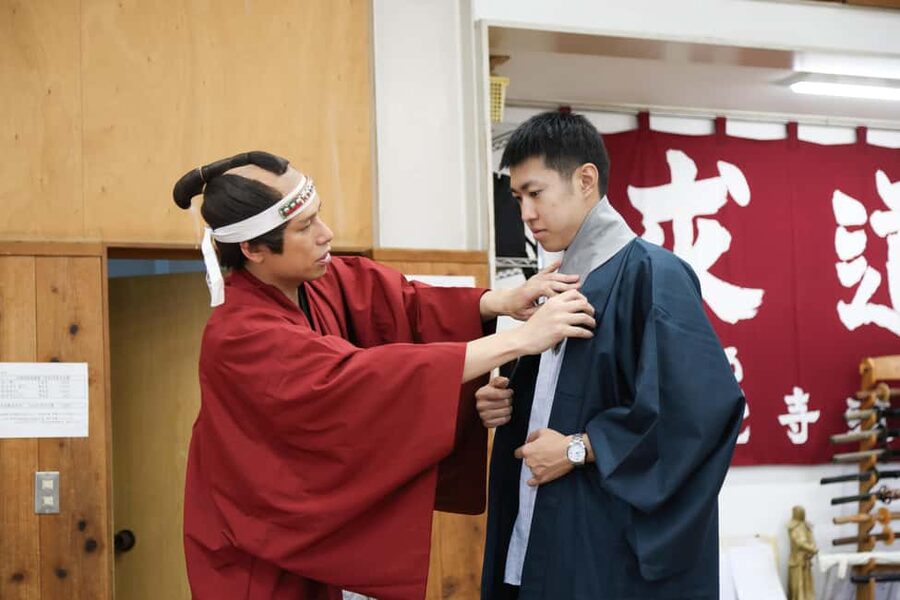
Before your filmed sequence, you watch a professional chambara performance by the instructors. This demonstration gives you a visual model for the movements you have just been learning.
It also helps put the lesson in context. Bushido, the traditional samurai code often linked with discipline and conduct, is part of the cultural frame used by the instructors. The performance is not a lecture on Japanese military history, but it shows the control and timing that screen swordplay requires.
The actors’ training is one of the strongest parts of this activity. You are not being taught by someone who only knows how to hold a prop sword for photographs. You are working with performers who use these techniques in period dramas, then adapting the material for visitors who may be complete beginners.
That distinction matters. A first-time participant will probably not produce polished swordplay, and the session does not pretend otherwise. The fun comes from learning enough to stage a recognizable scene, with guidance that keeps the action safe and understandable.
Filming your own samurai action scene
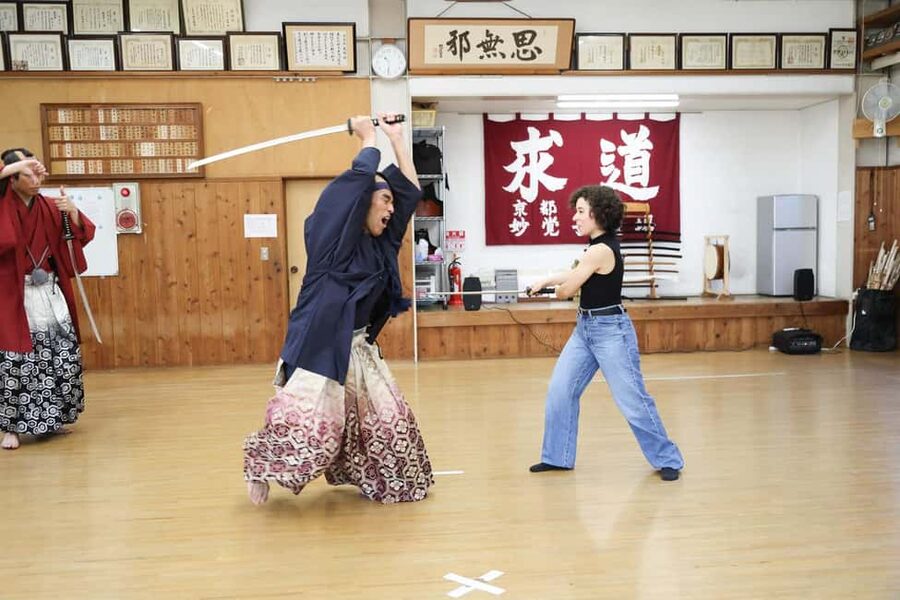
After the instruction and demonstration, you perform the techniques yourself. The swordplay session becomes a small movie shoot, with you acting out the choreographed moves while someone records the scene.
You are welcome to use your own camera, and photography and video recording with a customer’s camera are included. Bring the device you want to use and make sure it is ready before the action begins. The supplied information does not promise a particular camera, editing package, or filming format, so think of this as recorded performance footage rather than a fully produced film.
The filming is where the experience turns from a lesson into a personal souvenir. You get to see how the practice moves work in sequence, and the result gives you something more distinctive than a standard holiday portrait. Several participants especially valued the chance to create funny, dramatic footage to share at home.
You do need to commit to the role. The activity works best if you are willing to exaggerate your movements, follow the timing, and accept that the finished scene may be more playful than flawless. If you stand back and treat it like a formal demonstration, you may miss the best part.
What the $127 price includes
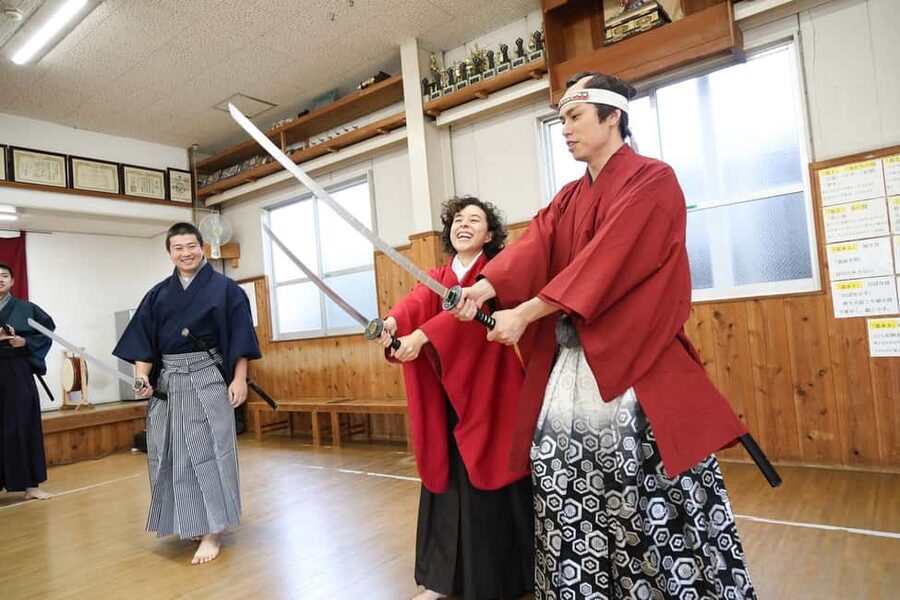
At $127 per person, this is not a cheap drop-in photo opportunity. It is a compact, guided session that combines a temple setting, sword instruction, kimono rental, a professional demonstration, filming, and photo downloads.
The value depends on what you want from Kyoto. If your priority is seeing as many historic sites as possible, 70 minutes and $127 may feel like a large commitment. If you want an interactive memory, the price is easier to justify because several costs are bundled together.
Included items are:
- Kimono rental
- Sword instruction and performance
- Photography and video recording with your camera
- Photo download service
- Indemnity insurance specified by the provider
Meals and transportation are not included. You also should not assume that every piece of filming equipment or a professionally edited video comes with the booking. The information promises recorded material and downloadable photos, so bring your own camera if you want to control the footage you receive.
Who will enjoy it most
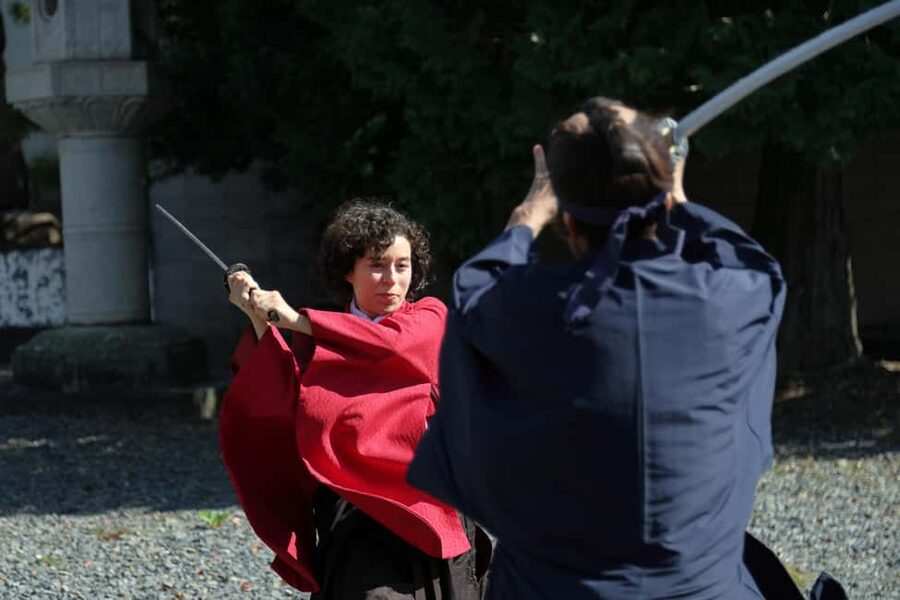
This is a strong choice for couples, families with older children, friends, and solo visitors who like taking part rather than only watching. The small group format is also helpful if you want a little personal attention without booking a private session.
Teenagers can be a particularly good fit. The activity gives them a costume, a physical challenge, and a finished video instead of asking them to stand quietly beside another temple gate. Adults who enjoy Japanese cinema or samurai stories will also understand the appeal of performing a short period-drama scene.
It can work well for a parent and child, but the age and health limits matter. Children under five cannot participate, and the activity is not suitable for people with back problems, pregnancy, pre-existing medical conditions, or those over 95.
You should also be comfortable with a light performance. The instructors are there to teach and guide you, but you still need to swing the prop sword, follow directions, and appear on camera. If that sounds embarrassing, remember that the session is designed around beginners and humor, not perfect technique.
Timing, language, and what to bring
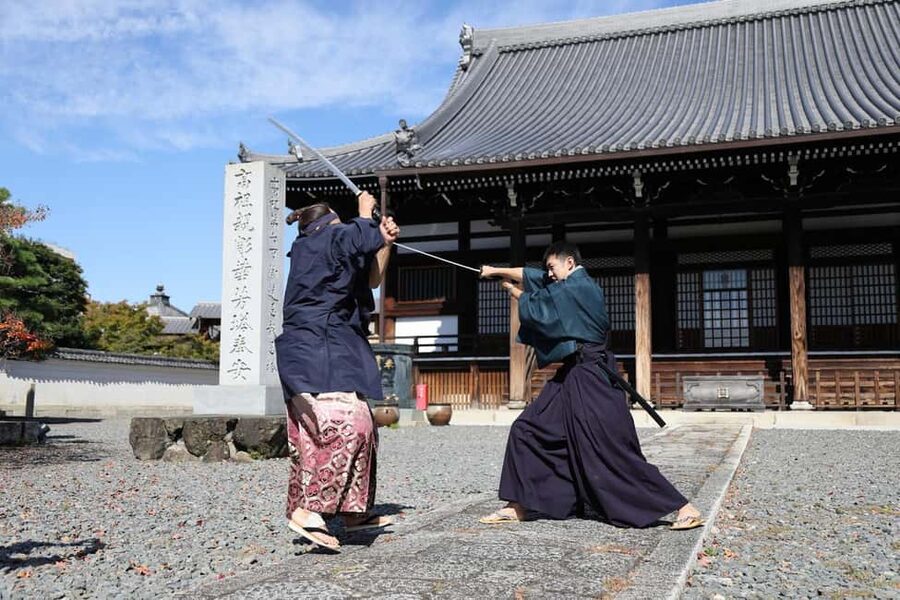
The activity lasts 70 minutes. That is long enough for dressing, instruction, a demonstration, and filming, but short enough to fit around other Kyoto plans.
Because the session has a set sequence, arriving late could be especially awkward. You need to find the Myokaku-ji Dojo after entering through the main gate, so allow time for your journey and temple arrival.
Instruction is offered in Japanese and English. The maximum group size is six, which should make it easier to follow the demonstrations and hear corrections.
Bring:
- A camera for recording
- Comfortable clothes suitable for physical activity
Smoking, alcohol, and drugs are not allowed. You are welcome to take photos and videos during the experience, provided you follow the instructors’ directions and keep the activity moving.
A practical look at the drawbacks
The strongest selling point, the filmed sword scene, is also the reason this activity will not suit everyone. You must participate physically, and the session is not appropriate for several health conditions. Read those restrictions carefully rather than treating them as routine fine print.
The temple setting may also create expectations that the session is a full historical tour. It is not. You get the atmosphere of Myokaku-ji and a temple tour may form part of the experience, but the main focus is sword instruction, dressing, acting, and filming.
The price is another consideration. At $127, you are paying for a short, specialized activity. It makes more sense if you value the personal footage and the chance to learn from working actors. If you only want to put on a kimono for a photo, less involved options may suit you better.
Finally, your results depend partly on your willingness to play along. The instructors can teach timing and technique, but they cannot supply your energy. Go in ready to laugh at imperfect swordplay, and the session is likely to feel much more rewarding.
Booking flexibility and final advice
You can cancel up to 24 hours before the activity for a full refund, and you can reserve now and pay later. That is useful when your Kyoto schedule is still shifting, though you should still check the available start times before building the rest of your day around it.
I would book this if you want a lively Kyoto memory that combines place, costume, instruction, and a video you can take home. I would skip it if you prefer a quiet cultural visit, dislike being filmed, or cannot comfortably take part in physical movement.
For the right person, the appeal is clear: you learn a few real-looking sword sequences, wear a kimono inside a historic temple, work with actors such as Kesuke Irie and Kazuya Naito, and leave with footage of yourself in a samurai scene. It is playful rather than solemn, but that is exactly why it can become one of the most memorable short activities in Kyoto.
FAQ
Where does the samurai sword and kimono experience take place?
It takes place at Myokaku-ji Temple in Kyoto, on Honshu, Japan. Meet at the Myokaku-ji Dojo, to the left after entering through the temple’s main gate.
How long does the experience last?
The activity lasts 70 minutes. Starting times vary, so check availability when booking.
What does the $127 price include?
The price includes kimono rental, sword instruction, the chambara performance, photography and video recording with your camera, photo downloads, and indemnity insurance specified by the provider.
Do I need to bring a camera?
You should bring a camera if you want to record the activity with your own device. Photography and video recording with the customer’s camera are included, and a photo download service is also provided.
Is transportation to Myokaku-ji Temple included?
No. Transportation to and from Myokaku-ji Temple is not included.
What languages are available?
The instructors speak Japanese and English.
How many people can join the session?
It is a small-group activity limited to six participants.
Who should not take part?
The activity is not suitable for children under five, pregnant women, people with back problems, people with pre-existing medical conditions, or people over 95. Wear comfortable clothes suitable for physical activity.
Recently added around Kyoto
- Higashiyama | Kyoto: Sakura Season Private Rickshaw Tour★ 5.0 · 3 reviews
- Kyoto Kimono Rental CHAMATSU|Kimono/Yukata Rental FamilyPlan★ 5.0 · 3 reviews
- Nara Private Customizable Half Day Tour★ 5.0 · 3 reviews
- Kyoto: Half-Day Private Guided Tour to the Old Town of Gion★ 4.4 · 3 reviews
- Kansai Region Hiking Adventure in Nara Kobe Kyoto and More★ 5.0 · 3 reviews
- Full Day Nara Deer, Temple, Shrine, Activities & Tea Ceremony★ 5.0 · 3 reviews
- Nara: Essential Private Tour with Deer Park and Temples★ 5.0 · 3 reviews
- Hiking Tour for Sacred Sites in Kyoto with a Guide★ 5.0 · 3 reviews
Kyoto Kimono Rentals, compared.
KYOTO Tea Ceremony with kimono near by Imamiya Jinjya Shrine
Read our review →
Kimono and Tea Ceremony Experience at Cultural Asset
Read our review →
Family-Friendly Kimono & Yukata Experience at WARGO
Read our review →Browse the lists this tour appears in