
REVIEW · GION GEISHA DISTRICT TOURS
Kyoto Samurai and Geisha Town Private Walking Tour
Kyoto’s samurai story comes alive on this seven-hour private walk, which links the shogun’s castle, a golden Zen temple, and the old geisha quarter. You move through several eras in one day, from the Ashikaga shogunate to the Tokugawa period and the traditions still visible in Gion.
I like the early 8 a.m. start, since it gives you a better shot at enjoying Kyoto’s major sights before the streets fill up. I also like the private format: your guide can explain details at your pace, and one past guest found the route efficient without feeling rushed, with a few less obvious sights added along the way.
The main drawback is the length and walking demand. Seven hours is a full morning and afternoon on foot, with public transportation between stops, so you should have a moderate fitness level and plan to buy your own food and drinks.
In This Review
- Key points to know before booking
- Kyoto’s samurai story starts at Nijo Castle
- Kinkakuji brings samurai-era Zen culture into view
- Gion explains Kyoto’s living geisha tradition
- Kennin-ji adds a quieter Zen finish
- Why the private format makes a difference
- Seven hours requires sensible planning
- Is $135.59 per person a fair price?
- Who should book this Kyoto walking tour?
- Should you book it?
- FAQ
- How long is the Kyoto Samurai and Geisha Town Private Walking Tour?
- What time does the tour start?
- Where does the tour begin?
- Where does the tour end?
- Which places are visited?
- Are admission fees included?
- Is public transportation included?
- Is food included?
- Is this a private tour?
- Can I cancel for a full refund?
Key points to know before booking
- Four major stops tell one connected story: Nijo Castle, Kinkakuji, Gion, and Kennin-ji cover samurai power, Zen Buddhism, and Kyoto’s performing arts.
- The 8 a.m. departure matters: You begin early to limit crowd pressure at some of Kyoto’s most visited places.
- Your group stays private: Only your party takes part, allowing the guide to adjust explanations and pacing.
- Admission and transit are included: You do not need to pay separately for the listed sites or public transportation.
- Gion is more than a photo stop: The walk introduces Kyoto’s kagai system and the role of geishas as trained professional performers.
- The tour has a practical limitation: Food and drinks are not included, and the activity is not stroller accessible.
Kyoto’s samurai story starts at Nijo Castle
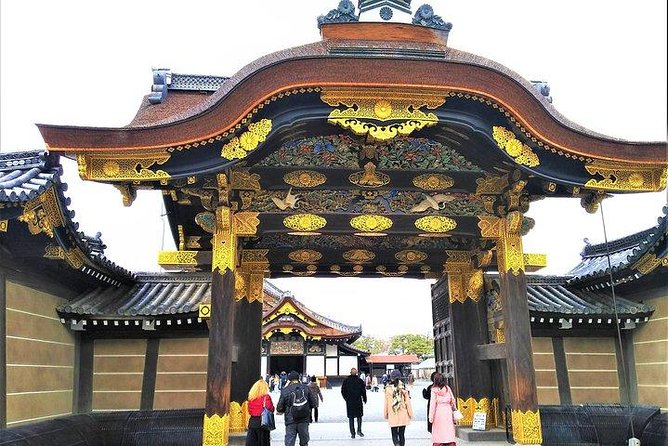
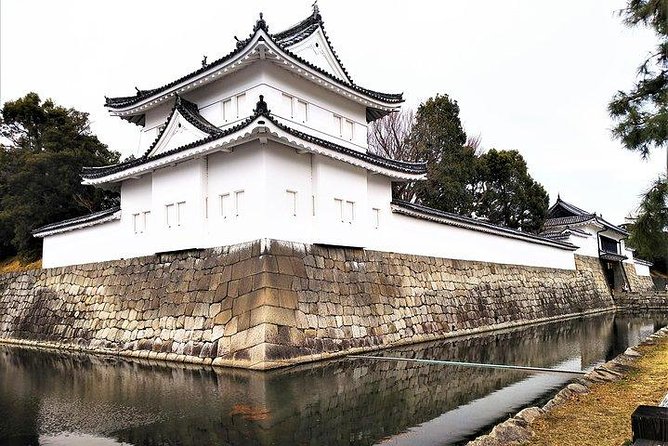
Nijo Castle is a strong first stop because it gives the day a political center. Built in 1603, it served as the Kyoto residence for the shogun when he came from Edo, present-day Tokyo. That detail helps explain Kyoto’s unusual place in Japanese history: it was the imperial capital, but samurai rulers also needed a base here.
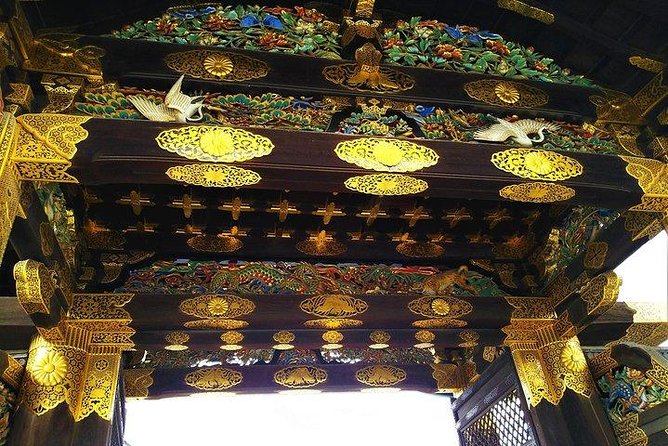
You have about one hour at the castle, with admission included. Inside, the castle is known for more than 1,000 richly decorated features, so this is not simply a quick look at an old military building. The setting shows how political power was displayed through architecture, ceremony, and luxury.
I would pay close attention to the contrast between the castle’s defensive purpose and its refined interior. Nijo Castle was made for a military ruler, yet the rooms also had to project authority in the imperial city. That contrast is one of the best reasons to place this stop near the beginning of the tour.
The one-hour visit is useful for keeping the day moving, but it also means you will not have unlimited time to study every room or detail. If castles are your main interest, you may want to return independently. For a broad introduction to Kyoto’s samurai connections, though, this stop earns its place.
More evenings in Gion:
- Kyoto Geisha Walking Tour: Gion District & Hidden Gems
★ 4.7 · 3,273 reviews - Kyoto: Gion Magical Night Walking Tour with Geisha Trivia
★ 4.9 · 2,393 reviews - Kyoto: Gion Geisha District Walking Tour – Stories of Geisha
★ 4.7 · 2,187 reviews
Kinkakuji brings samurai-era Zen culture into view
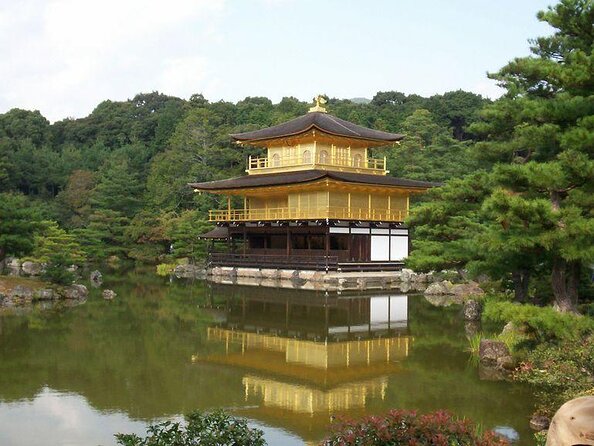
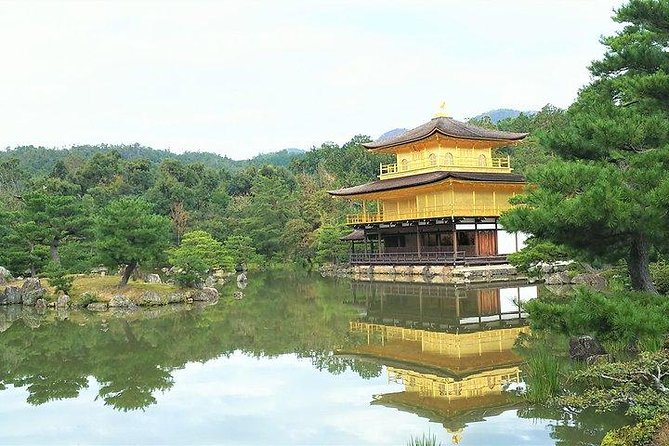
The next major stop is Kinkakuji, the famous Golden Pavilion. The temple was built in 1397 by the third shogun of the Ashikaga shogunate, making it a direct link to another period of samurai rule.
You have about one hour here, and admission is included. The familiar view is the pavilion shining beside its pond, with the reflection creating the image that appears in so many photographs. The visual appeal is obvious, but the historical connection matters just as much. This is not only a pretty temple. It reflects the close relationship between powerful samurai leaders, Zen institutions, and artistic culture.
I like the way Kinkakuji broadens the theme of the tour. Nijo Castle presents the shogun as a political and military figure. Kinkakuji shows how samurai power also supported religious buildings, gardens, and formal beauty.
Expect this to be one of the day’s most popular locations. The early departure should help, but it cannot guarantee a quiet visit. The tour is also focused on the main experience rather than a long, slow garden visit. If you want extensive time for photographs or careful garden study, the one-hour allocation may feel short.
Still, for a first Kyoto visit, Kinkakuji is difficult to skip. The stop gives you a clear visual memory and a useful explanation of how samurai culture shaped more than battlefields and castles.
Gion explains Kyoto’s living geisha tradition
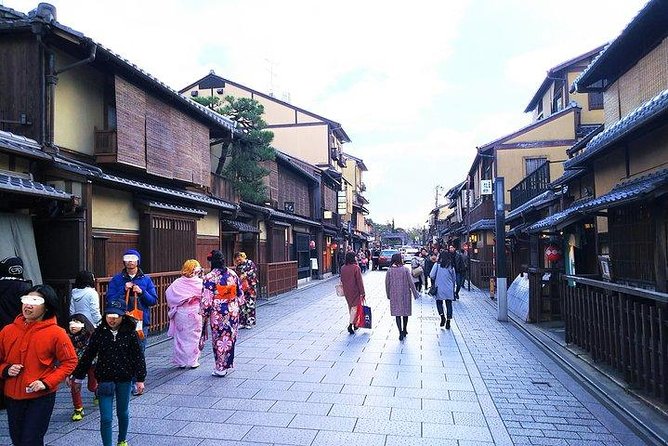
After the two major historic sites, the tour shifts toward Kyoto’s traditional urban culture. Gion is the largest of Kyoto’s five kagai, or geisha districts, and the walking portion lasts about 40 minutes.
This is where the tour moves from the power of shoguns to the professional arts associated with old Kyoto. Geishas are trained performers and important successors of traditional Japanese culture. A walk through Gion helps you understand that the district is not simply a collection of attractive streets. It is tied to a working tradition of music, dance, hospitality, and formal training.
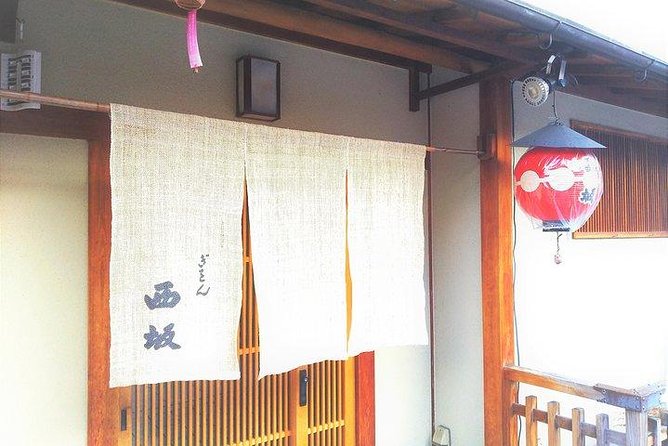
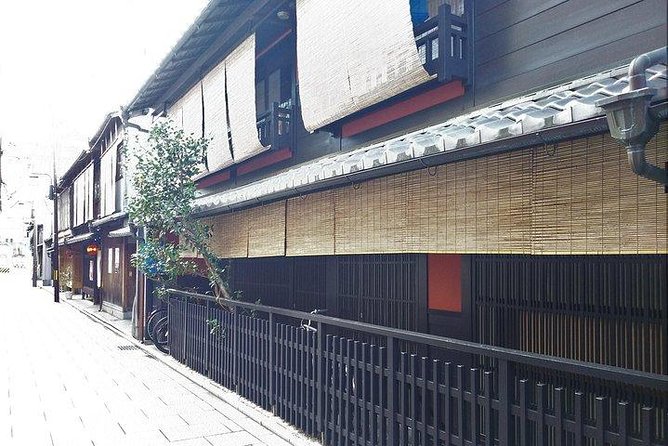
The shorter time here is sensible. Gion is best approached as an area to observe and understand, not as a museum with a fixed line of exhibits. You can look at the traditional town houses and get a feel for how Kyoto’s older streets have been preserved.
I would keep expectations realistic. A 40-minute visit does not promise a geisha performance or a private encounter, and the tour information does not include one. It gives you an introduction to the district and its customs. You should also remember that Gion is a real neighborhood, so respectful behavior and quiet observation matter.
This stop works especially well after Nijo Castle and Kinkakuji. You have already seen how rulers shaped Kyoto from above. In Gion, you see the city’s cultural traditions at street level.
Kennin-ji adds a quieter Zen finish
Kennin-ji Temple is located in the Gion area, making it a practical final stop. Founded in 1202 by the third shogun of the Kamakura shogunate, it is described as the first Zen temple in Kyoto.
The visit lasts about 40 minutes, with admission included. Two features are highlighted here: the dry garden design and another major temple sight that is not fully specified in the available details. Even with a short visit, Kennin-ji gives the day a calmer close after the famous pavilion and the streets of Gion.
The temple is valuable because it places Zen Buddhism in a longer timeline. Kinkakuji represents the Ashikaga period, while Kennin-ji reaches back to the Kamakura era. Nijo Castle then connects you to the Tokugawa shogunate. Taken together, the stops create a useful sequence rather than four unrelated attractions.
Forty minutes is enough for an introduction, but not for a leisurely temple visit. If you prefer to sit quietly in gardens or inspect every artistic detail, you may wish for more time. The benefit is that the tour does not spend the whole day in one kind of place.
More samurai and sword sessions:
- Kyoto Samurai Experience
★ 5.0 · 1,294 reviews - Kyoto: Kendo and Samurai Experience with Uniform and Gear
★ 4.9 · 815 reviews - Kyoto: Samurai Sword Class by Experts in Traditional Arts
★ 4.9 · 657 reviews - Skip the lines Basic Ticket at SAMURAI NINJA MUSEUM KYOTO
★ 4.5 · 632 reviews
Why the private format makes a difference
This is a private activity, so only your group participates. That changes the feel of a long walking day. You are not tied to a large group’s questions, photo breaks, or pace, and the guide can spend more time on the subjects that interest you.
The available details do not provide a guide’s name, so you should not book this expecting a particular named guide. What is clear is the role the guide plays: explaining the links between Kyoto, the emperors, the shoguns, the castles, temples, and traditional neighborhoods.
One especially useful feature is the possibility of learning small details that are easy to miss on a standard sightseeing route. A past participant described the guide as moving efficiently without making the day feel rushed, and noted that the route included some less familiar sights. That is the kind of benefit a private tour can provide when the guide reads your interests well.
The tour begins and ends at Kyoto Station Building, at 901 Higashishiokoji-cho in Shimogyo Ward. Public transportation is included, which is helpful because the four stops are spread across the city. You still need to be ready for walking between stations, platforms, entrances, and the sights themselves.
Seven hours requires sensible planning
The scheduled duration is about seven hours, starting at 8 a.m. That makes this a substantial part of your day, not a short orientation walk. The early start is both an advantage and a commitment.
You should eat before meeting the guide or bring a plan for food later. Food and drinks are not included. The tour information does not specify a meal break, so do not assume lunch is built into the schedule.
Wear comfortable shoes and expect a moderate physical effort. The experience is near public transportation and is listed as accessible for people with limited eyesight and limited mobility, but it is not stroller accessible. The best approach is to ask the provider about your specific mobility needs before booking, especially because the route combines walking, public transportation, castles, temples, and an old neighborhood.
The activity requires good weather. If poor weather causes cancellation, you are offered another date or a full refund. For your own planning, keep the weather condition in mind if this is one of only a few days you have in Kyoto.
Animals or pets are listed as allowed, while the information also says the experience is not suitable for pets. That wording is worth clarifying directly with KAMNAVI Tours before you arrive with an animal.
Is $135.59 per person a fair price?
At $135.59 per person, this is not the cheapest way to see Kyoto’s famous sights. The price makes more sense if you value a private guide, included admissions, and public transportation rather than simply checking four places off a list.
Admission is included for Nijo Castle, Kinkakuji, and Kennin-ji. Gion has no admission fee. Public transportation and the guide’s fare are also included, while food and drinks are extra.
The real value is the interpretation and structure. Without a guide, you can see the Golden Pavilion, walk through Gion, and enter a temple. You may not connect those places through the three major shogunate eras or understand how samurai rule, Zen culture, and geisha traditions fit into Kyoto’s story.
The price is easier to justify for first-time visitors, couples, families with older children, or small groups who want a private day and do not want to manage the route themselves. Group discounts may improve the per-person cost for larger private parties, though the exact discount is not provided.
If you are comfortable using Kyoto’s public transportation and already know the history, you could visit the sites on your own for less. You would then need to pay the individual admission fees and spend time planning the route. The tour is aimed at people who prefer context, a ready-made schedule, and a guide who can add details along the way.
Who should book this Kyoto walking tour?
I would recommend it to you if you want a clear introduction to Kyoto’s samurai connections without spending the whole day at one castle or temple. The route gives you four different settings and a story that moves from military authority to religion and traditional performance culture.
It also suits you if you want a private experience rather than a large group. The reported strength of the tour is not speed or spectacle. It is the guide’s ability to keep the route efficient, explain details beyond the usual facts, and include sights you might otherwise pass.
You may want another option if you dislike early mornings, have difficulty walking for several hours, or want a slow photographic visit at each site. The one-hour stops at Nijo Castle and Kinkakuji are useful, but they are not long enough for every corner. The 40-minute visits to Gion and Kennin-ji are introductions rather than extended explorations.
Should you book it?
Book this tour if you want Kyoto’s major sights tied together by the story of the shoguns and the city’s traditional culture. The combination of included admissions, public transit, a private guide, and an early start gives you a practical day with plenty of historical range.
Skip it if your priority is the lowest possible cost or complete freedom to linger. At $135.59 per person, you are paying for structure and explanation. For a first visit, that can be worthwhile, especially if you want to understand why Kyoto’s castles, temples, Zen gardens, and geisha districts belong in the same conversation.
FAQ
How long is the Kyoto Samurai and Geisha Town Private Walking Tour?
The tour lasts approximately seven hours.
What time does the tour start?
It starts at 8 a.m.
Where does the tour begin?
The meeting point is Kyoto Station Building, 901 Higashishiokoji-cho, Shimogyo Ward, Kyoto, 600-8216, Japan.
Where does the tour end?
The activity ends back at the meeting point.
Which places are visited?
The route includes Nijo Castle, Kinkakuji Temple, Gion, and Kennin-ji Temple.
Are admission fees included?
Yes. Admission fees for the included attractions are covered.
Is public transportation included?
Yes. Public transportation is included in the tour price.
Is food included?
No. Food and drinks are not included.
Is this a private tour?
Yes. Only your group participates in the activity.
Can I cancel for a full refund?
Yes, if you cancel at least 24 hours before the experience’s start time. Changes or cancellations made less than 24 hours in advance are not accepted for a refund. If poor weather causes cancellation, you are offered another date or a full refund.
More Walking Tours in Kyoto
- Night Walk in Gion: Kyoto’s Geisha District
★ 4.5 · 2,003 reviews - Kyoto Gion Geisha District Walking Tour – The Stories of Geisha
★ 5.0 · 1,441 reviews - Nishiki Market Brunch Walking Tour (7 Tastings + Brunch)
★ 5.0 · 1,355 reviews - Kyoto Arashiyama Walking Tour: Bamboo, Monkeys, Gardens & Secrets
★ 5.0 · 1,216 reviews
Recently added around Kyoto
- Higashiyama | Kyoto: Sakura Season Private Rickshaw Tour★ 5.0 · 3 reviews
- Kyoto Kimono Rental CHAMATSU|Kimono/Yukata Rental FamilyPlan★ 5.0 · 3 reviews
- Kyoto: Half-Day Private Guided Tour to the Old Town of Gion★ 4.4 · 3 reviews
- Nara Private Customizable Half Day Tour★ 5.0 · 3 reviews
- Kansai Region Hiking Adventure in Nara Kobe Kyoto and More★ 5.0 · 3 reviews
- Full Day Nara Deer, Temple, Shrine, Activities & Tea Ceremony★ 5.0 · 3 reviews
- Nara: Essential Private Tour with Deer Park and Temples★ 5.0 · 3 reviews
- Photo Shoot with a Private Vacation Photographer in KYOTO, JAPAN★ 5.0 · 3 reviews
Gion Geisha District Tours, compared.

Kyoto Geisha Walking Tour: Gion District & Hidden Gems
Read our review →
Gion Magical Night Walking Tour with Geisha Trivia
Read our review →
Gion Geisha District Walking Tour – Stories of Geisha
Read our review →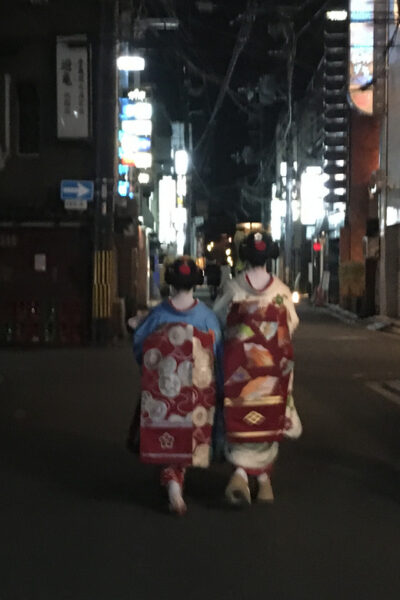
Best of Kyoto: Gion, Geisha, Pagodas & Cobblestones
Read our review →

Kyoto Night Foodie Tour in Gion (9+ dishes + 6 Sake tastings)
Read our review →
Kyoto Gion Geisha District Walking Tour – The Stories of Geisha
Read our review →
Kyoto Gion: 2-Hour Geisha Culture & History Walking Tour
Read our review →Browse the lists this tour appears in