
REVIEW · KYOTO SUSHI EXPERIENCES
Kyoto Making Wagyu Sushi experience
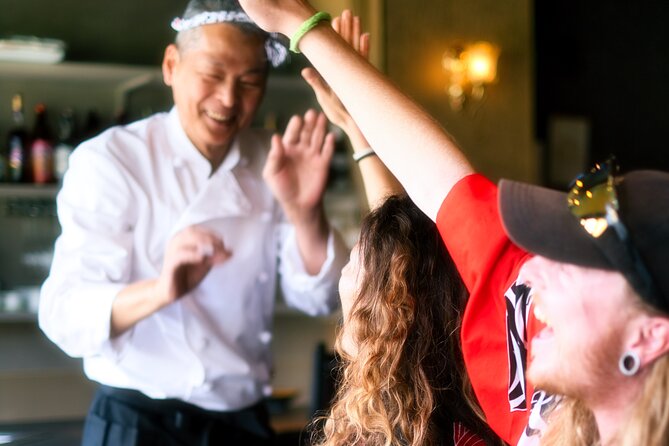
Kyoto’s wagyu sushi class turns lunch into a hands-on meal. You wash your hands, shape nigiri rice, add toppings and wasabi, roll maki sushi, and make gunkan rolls before sitting down to eat what you made. Chef Yoshi selects fresh ingredients, and the session can feel especially personal when the group is small.
I like the mix of practical sushi skills and a proper Japanese lunch, not just a quick demonstration. I also like that children can take part, making this a useful family activity rather than a lesson aimed only at serious food fans. The main drawback is finding the entrance: Google Maps may get you to the right area, but the correct elevator in the building is not immediately obvious.
In This Review
- Key points to know before booking
- Making wagyu sushi in Kyoto’s Pontocho district
- The first lesson: rice, toppings, and wasabi
- Rolling maki and building gunkan sushi
- The lunch that follows your work
- Why the small group and fresh ingredients help
- A good choice for families and food-focused dates
- Timing, meeting details, and the awkward part
- Is $70 a fair price?
- Who should book this Kyoto lunch?
- FAQ
- Where does the wagyu sushi experience take place?
- What time does the activity start?
- How long does the experience last?
- Where does the activity end?
- How many people can join?
- What types of sushi will I make?
- What food is included with lunch?
- Can children participate?
- What should I do if I have an egg or shrimp allergy?
- What happens if poor weather cancels the activity?
Key points to know before booking
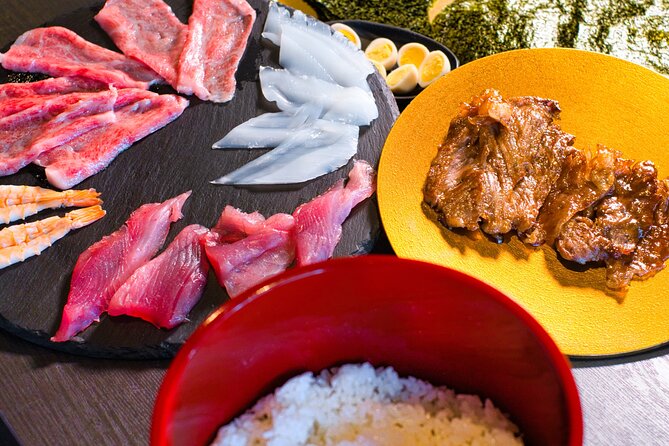
- Wagyu is the star ingredient: You make sushi at a Kyoto steak restaurant using Japanese beef.
- Three sushi styles are included: Prepare nigiri, rolled maki sushi, and gunkan rolls.
- Lunch comes after the lesson: Eat your sushi with chef-made tempura, red miso soup, pickles, and a soft drink.
- Chef Yoshi may select the day’s ingredients: The experience includes fresh choices made that morning.
- Small groups matter: The maximum is 10 people, and some bookings may feel like a private session.
- Allow 1 hour and 15 minutes: The activity starts at noon and ends back at the restaurant.
Making wagyu sushi in Kyoto’s Pontocho district
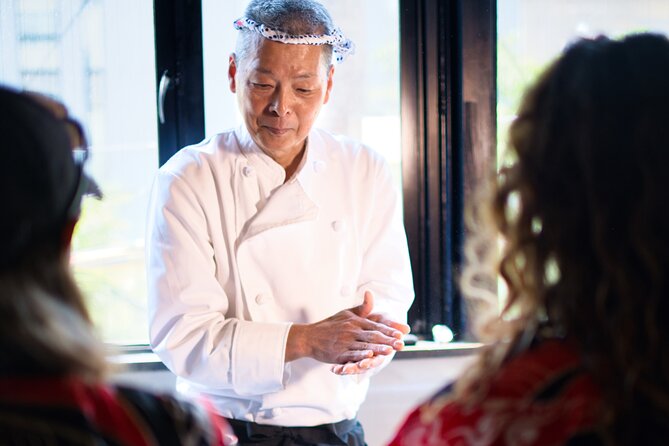
The experience takes place at Cocotte Alpha Premium Wagyu Teppanyaki Kyoto Pontocho, a steak restaurant on the third floor of the Kyoto Golden Building at 175 Zaimokucho, Nakagyo Ward. You meet there at 12:00 p.m., and the activity ends at the same place.
That setting gives the class a useful twist. You are not making ordinary supermarket sushi in a generic cooking room. The restaurant’s focus is steak and wagyu, so the meal connects sushi technique with one of Japan’s most famous ingredients.
I would give yourself extra time to find the entrance. Google Maps can bring you close to the building, but it may not make the elevator choice clear. The building has more than one possible approach, and the elevator visible from the street may not be the one you need. Look carefully for the building and restaurant details before heading upstairs rather than rushing in at noon.
The location is near public transportation, which helps if you are planning this between sightseeing stops. Still, Pontocho’s narrow streets and busy restaurant fronts can make a precise meeting point harder to spot than a large street-level shop. Keep the mobile ticket ready on your phone.
More sushi counters and classes:
- Sushi Making in Kyoto! Same-day bookings welcome!
★ 5.0 · 713 reviews - The Original Small-Group Sushi Making Class in Kyoto
★ 5.0 · 436 reviews - Kyoto: Small-Group Authentic Sushi Making Workshop
★ 5.0 · 137 reviews
The first lesson: rice, toppings, and wasabi
The class begins with hand washing, then moves into nigiri sushi. You learn how to make the rice portion, place the topping, and add wasabi according to your taste. The process sounds simple, but the small steps matter. Rice that is too loose will fall apart, while rice pressed too tightly loses the light texture you want in sushi.
You then place the topping on the rice to complete each piece. The exact ingredients can vary, but wagyu is central to the experience. Chef Yoshi is noted for choosing fresh ingredients in the morning, so the lesson has a daily element rather than a fixed set of ingredients presented the same way every time.
This is a good format for beginners because you are not expected to arrive with knife skills or sushi-making experience. The focus is on shaping, placing, and assembling. You get enough instruction to understand why a piece holds together, then you can adjust the amount of wasabi and the look of your sushi.
For children, the tactile work is the best part. They can handle the rice and toppings and see a finished piece come together quickly. Adults should keep expectations sensible: this is a short introduction, not professional sushi training. You will pick up useful tricks, but you will not become a sushi chef in 75 minutes.
Rolling maki and building gunkan sushi
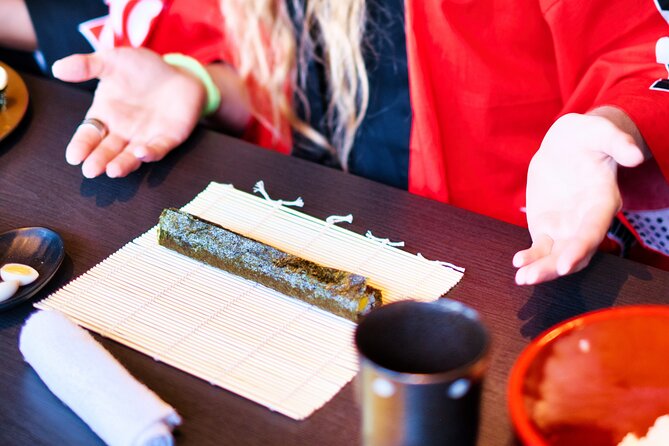
After nigiri, you move to maki sushi. You place the ingredients, roll the sushi, and then hand the finished roll to the chef to cut. That last step is important because slicing a tightly rolled maki cleanly is harder than it looks. The chef handles the knife work, giving you a neat result without turning the class into a lesson in blade control.
The session also includes gunkan sushi, the boat-shaped style wrapped with seaweed. The seaweed size changes for each type of sushi, so you learn that sushi assembly is not just about adding rice and filling. The shape and amount of nori help support the ingredients.
I like this progression. Nigiri teaches control and proportion, maki adds rolling, and gunkan shows how the seaweed can be adapted to hold a different topping. You get three recognizable forms of sushi in one sitting, each with a slightly different method.
The class is also social without requiring a large group. The maximum is 10 people, and a booking for two may sometimes be handled as a private session. That is not something I would assume for every date, but the small capacity makes a quieter lesson possible. It is a better fit for a date or family outing than a crowded demonstration where you can barely see the instructor.
The lunch that follows your work
Once the sushi is arranged, everyone sits down for itadakimasu, the Japanese phrase said before eating. The meal includes the sushi you prepared, tempura made by the chef, red miso soup, pickles, and a soft drink.
This matters when you judge the price. At $70 per person, you are paying for instruction, ingredients, a restaurant setting, and a full lunch rather than a quick craft activity. The tempura and soup add substance, while the pickles and drink round out the meal. You also get the satisfaction of eating the food you shaped yourself.
The chef-made tempura is a particularly helpful addition. Sushi alone can leave some people wanting more, especially after a morning of sightseeing. Here, the meal has several parts, and the red miso soup gives it a distinctly Japanese lunch feel.
The food is not described as an unlimited meal, so I would book this for the experience and the included lunch, not as a bargain dining deal. If your main goal is to eat a large amount of premium wagyu, a dedicated restaurant meal may suit you better. If you want food, instruction, and a memory you helped create, the value is easier to see.
More wagyu dinners:
- Kyoto Food Tour of 10 Tastings with Wagyu, Mochi & More Surprises
★ 5.0 · 85 reviews - Private Wagyu Beef Tour with a Local Guide
★ 5.0 · 6 reviews - Wagyu & Seafood Yakiniku Dinner Course at Kyo Kurozakura Restaurant, Kyoto
★ 4.5 · 4 reviews
Why the small group and fresh ingredients help
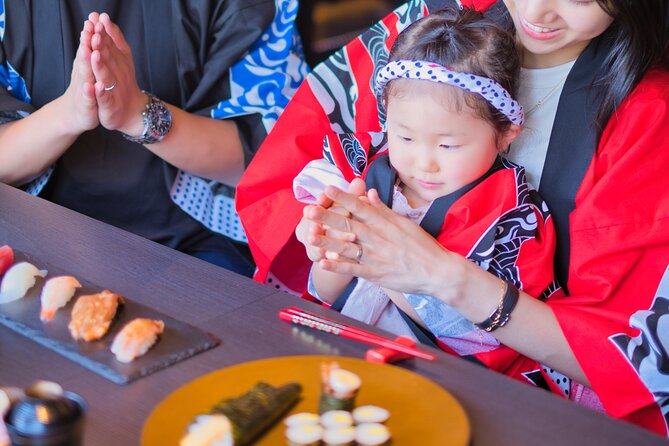
A 10-person maximum keeps the lesson manageable. You should be able to follow the stages without waiting behind a large crowd, and the chef can keep an eye on the basic techniques. A smaller class also helps children stay involved rather than losing interest while other people take their turns.
The fresh ingredient selection adds another point of interest. Chef Yoshi chooses the ingredients that morning, so the menu has some connection to what is available that day. That gives the class a more personal feel, though it also means you should not expect every booking to look exactly the same.
A special happi coat is provided for the activity. The traditional-style garment adds a bit of ceremony and makes the occasion feel different from an ordinary lunch. It is a small detail, but it works well for family photographs and for children who enjoy dressing for the part.
The tone should remain relaxed. You are there to learn a few useful techniques, enjoy a meal, and spend time together. This is not the place to worry about producing perfect restaurant-quality sushi. The chef’s tips are meant to help you make good-looking pieces, but the fun comes from taking part.
A good choice for families and food-focused dates
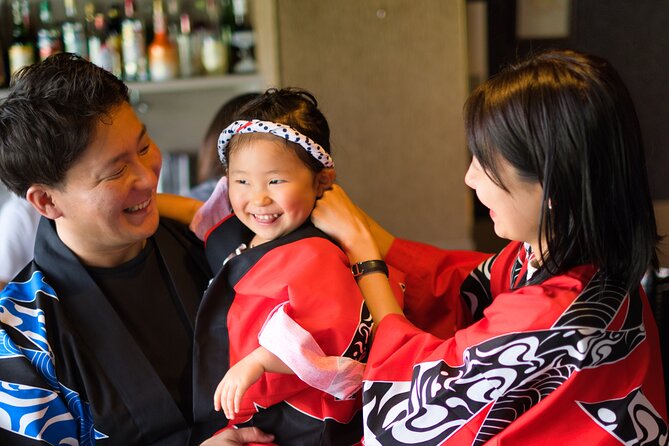
Families with children can get a lot from this activity because the tasks are short, clear, and hands-on. Kids can make sushi, watch the chef cut the maki, and then eat lunch soon after. The class is also short enough to fit into a busy Kyoto day without taking an entire afternoon.
For a couple, the experience offers more to do than sitting across a table for lunch. The small setting may give you a private session, depending on the booking, and the shared work creates an easy rhythm. Chef Yoshi’s ingredient choices and the restaurant setting add a sense of occasion without requiring a formal culinary background.
Food lovers will appreciate the chance to compare the three sushi styles. You can pay attention to how the rice feels in nigiri, how tightly the maki holds together, and how gunkan uses nori differently. The class is basic enough for a first-timer but still gives an experienced home cook a few details to practice later.
I would be less likely to recommend it to someone who dislikes seafood, seaweed, rice, or structured group activities. The menu includes sushi, and the experience centers on making it. You should also contact the provider ahead of time if you have an egg or shrimp allergy.
Timing, meeting details, and the awkward part
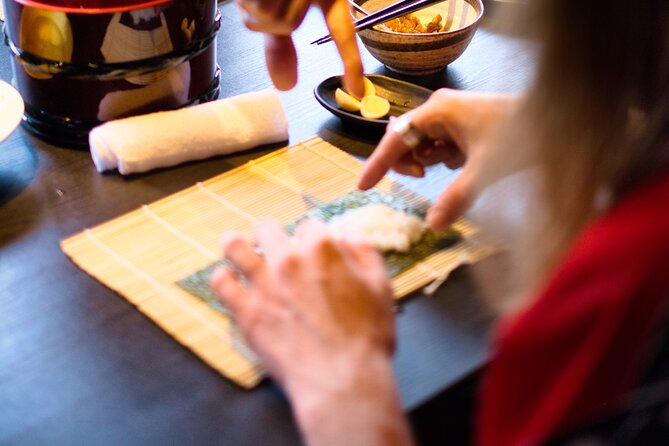
The class lasts about 1 hour and 15 minutes. Since it begins at noon and includes lunch, it works best as a midday plan rather than a late-morning snack followed by another restaurant reservation.
You meet at Cocotte Alpha Premium Wagyu Teppanyaki Kyoto Pontocho, Kyoto Golden Building, third floor, 175 Zaimokucho, Nakagyo Ward, Kyoto 604-8017. The activity returns to this meeting point, so you do not need to arrange transport from a separate finishing location.
The most practical warning is the building entrance. One family using the experience found the location difficult to identify even after Google Maps brought them to the right area. The elevator visible from the street may not be the correct one, so check the restaurant name and building details before you arrive.
Your booking confirmation is issued at the time of booking, and the ticket is mobile. That keeps the process simple, but your phone should be charged and easy to access. The experience is listed as requiring good weather. If poor weather causes cancellation, you are offered another date or a full refund.
The booking itself is non-refundable and cannot be changed for any reason. That makes it important to choose your date carefully, especially since the experience is often reserved around 40 days ahead. If your Kyoto schedule is still shifting, this strict policy deserves more weight than it might for a flexible restaurant reservation.
Is $70 a fair price?
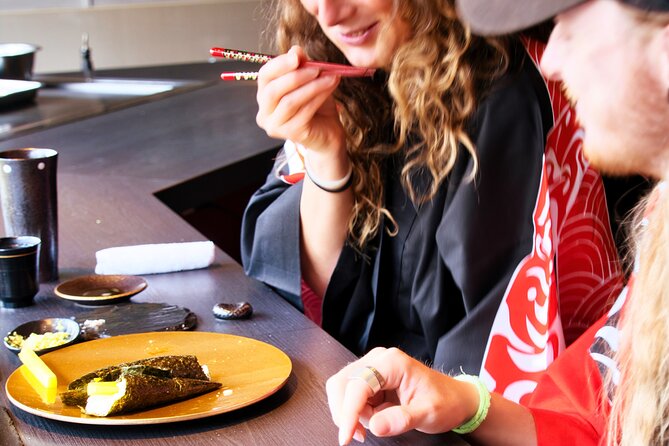
The $70 cost is reasonable if you value the full package: a hands-on lesson, wagyu, several sushi styles, chef-made tempura, soup, pickles, a soft drink, and a special restaurant setting. You are also paying for the time and guidance needed to make the food, not just for the ingredients on the plate.
The value is strongest for families and couples who would otherwise pay for lunch and look for an activity separately. One booking for two worked well as a lunch date, and the small group can make the session feel more personal than the price might suggest.
The value is weaker if you only want to eat premium beef. You will spend part of the hour shaping sushi, listening to instructions, and assembling food. That is the point of the activity, but it is not the most efficient way to buy a wagyu lunch.
The high rating and positive comments fit the experience’s strongest features: the family-friendly format, the personal feel of a small group, and the chef’s fresh ingredient choices. I would treat those strengths as reasons to book, while keeping the entrance and strict cancellation terms in mind.
Who should book this Kyoto lunch?
Book it if you want a short, practical food activity with lunch included. It suits first-time sushi makers, families with children, couples looking for an unusual midday date, and anyone curious about wagyu beyond a standard steak dinner.
You should also book if you enjoy learning by doing. The class gives you several techniques to try, and the finished food is served soon after. That makes the experience easy to understand, even if you know little about sushi.
Skip it if your priority is a long chef-led cooking course, a large wagyu meal, or a flexible booking. The class is brief, the cancellation policy is strict, and the meeting point can take a little patience to locate.
For most food-focused visitors, I would choose this as a memorable lunch in Kyoto, especially when booked well ahead and paired with nearby Pontocho sightseeing.
FAQ
Where does the wagyu sushi experience take place?
It takes place at Cocotte Alpha Premium Wagyu Teppanyaki Kyoto Pontocho, Kyoto Golden Building, third floor, 175 Zaimokucho, Nakagyo Ward, Kyoto 604-8017, Japan.
What time does the activity start?
The start time is 12:00 p.m.
How long does the experience last?
The activity lasts about 1 hour and 15 minutes.
Where does the activity end?
It ends back at the meeting point, at Cocotte Alpha Premium Wagyu Teppanyaki Kyoto Pontocho.
How many people can join?
The maximum group size is 10 people.
What types of sushi will I make?
You will make nigiri sushi, maki or rolled sushi, and gunkan sushi.
What food is included with lunch?
Lunch includes the sushi you make, tempura prepared by the chef, red miso soup, pickles, and a soft drink.
Can children participate?
Yes. The experience is suitable for children, so families can take part together.
What should I do if I have an egg or shrimp allergy?
You should tell the provider in advance if you have an egg or shrimp allergy.
What happens if poor weather cancels the activity?
If the activity is canceled because of poor weather, you are offered a different date or a full refund. The normal booking is non-refundable and cannot be changed for another reason.
Recently added around Kyoto
- Higashiyama | Kyoto: Sakura Season Private Rickshaw Tour★ 5.0 · 3 reviews
- Kyoto Kimono Rental CHAMATSU|Kimono/Yukata Rental FamilyPlan★ 5.0 · 3 reviews
- Kyoto: Half-Day Private Guided Tour to the Old Town of Gion★ 4.4 · 3 reviews
- Nara Private Customizable Half Day Tour★ 5.0 · 3 reviews
- Kansai Region Hiking Adventure in Nara Kobe Kyoto and More★ 5.0 · 3 reviews
- Full Day Nara Deer, Temple, Shrine, Activities & Tea Ceremony★ 5.0 · 3 reviews
- Nara: Essential Private Tour with Deer Park and Temples★ 5.0 · 3 reviews
- Hiking Tour for Sacred Sites in Kyoto with a Guide★ 5.0 · 3 reviews
Kyoto Sushi Experiences, compared.
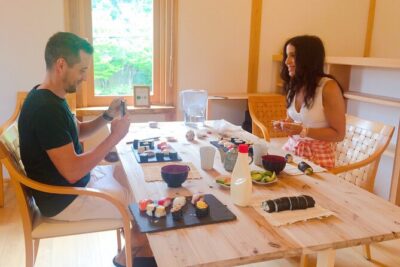
The Original Small-Group Sushi Making Class in Kyoto
Read our review →
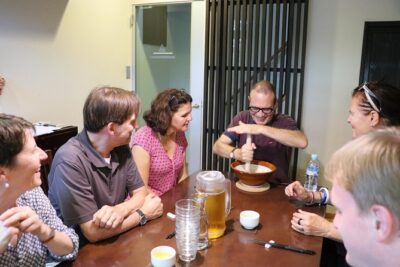
Sushi – Authentic Japanese Cooking Class – the best souvenir from Kyoto!
Read our review →
Private Kyoto Sushi Cooking Class & Tea Ceremony with Emika
Read our review →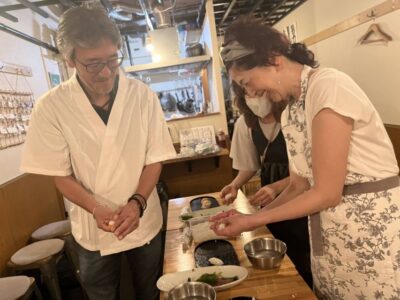
Enjoy Sushi & Market Tour! Best for Family & Couple!
Read our review →
Sushi or Traditional Japanese Cuisine in a Kyoto Home with Emika
Read our review →Browse the lists this tour appears in