
REVIEW · GION GEISHA DISTRICT TOURS
Kyoto: Gion Geisha District & Yasaka Shrine Walking Tour
Gion is best understood on foot, where a narrow lane, wooden townhouse, or quiet canal can tell you more than a quick photograph ever will. I like the way this private 90-minute walk joins Gion’s famous streets with the less obvious back lanes, and I like that it explains geiko and maiko traditions instead of treating the district like a stage set.
The main consideration is time. Ninety minutes gives you a useful introduction, but not a full tour of Kyoto’s old quarter. You’ll also need to reach the meeting point yourself, and that point can change with the option you book.
In This Review
- Key points to know before booking
- Why Gion makes a better walking tour than a quick photo stop
- Hanamikoji Street and the world of machiya
- Shirakawa Canal, willow trees, and quiet Kyoto details
- Yasaka Shrine and Gion’s spiritual center
- What the private format changes
- Daylight, weather, and the right expectations
- How much value do you get for $38?
- Who should book this Gion walk
- My call: a strong short introduction to Gion
- FAQ
- How long does the Gion walking tour last?
- How much does the tour cost?
- Is the tour private?
- What languages are available?
- Which places are included on the walk?
- Does the tour include a visit to a geisha or maiko performance?
- Is food included?
- Is transportation to the meeting point included?
- Can the meeting point change?
- Can I cancel the tour for a refund?
Key points to know before booking
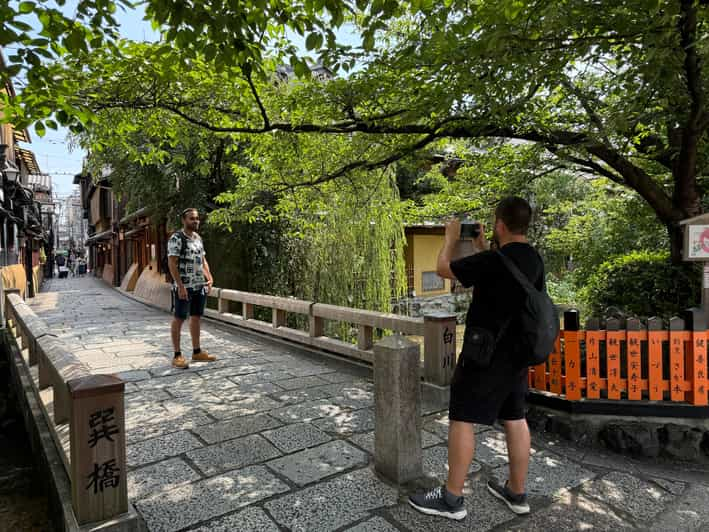
- Shirakawa Canal: Willow trees, small bridges, and preserved wooden facades create the prettiest part of the route.
- Hanamikoji Street: See traditional machiya townhouses and ochaya tea houses while learning how Gion’s entertainment district developed.
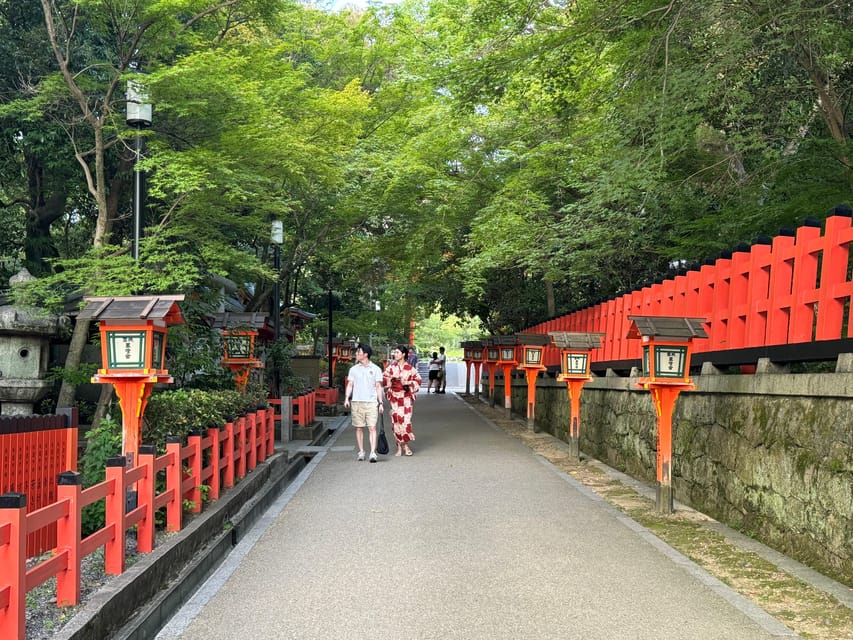
- Yasaka Shrine: Visit one of Kyoto’s major Shinto sites and learn about its connection to the Gion Matsuri.
- Cultural context: The guide explains the work and traditions of geiko and maiko with care, rather than promising sightings.
- Private format: Your group has a dedicated English or Japanese speaking guide, which allows for questions and a pace suited to the group.
- Helpful guides: Peco and Yozo are named in particularly positive feedback, with Yozo noted for patient pacing, photos, and practical help.
Why Gion makes a better walking tour than a quick photo stop
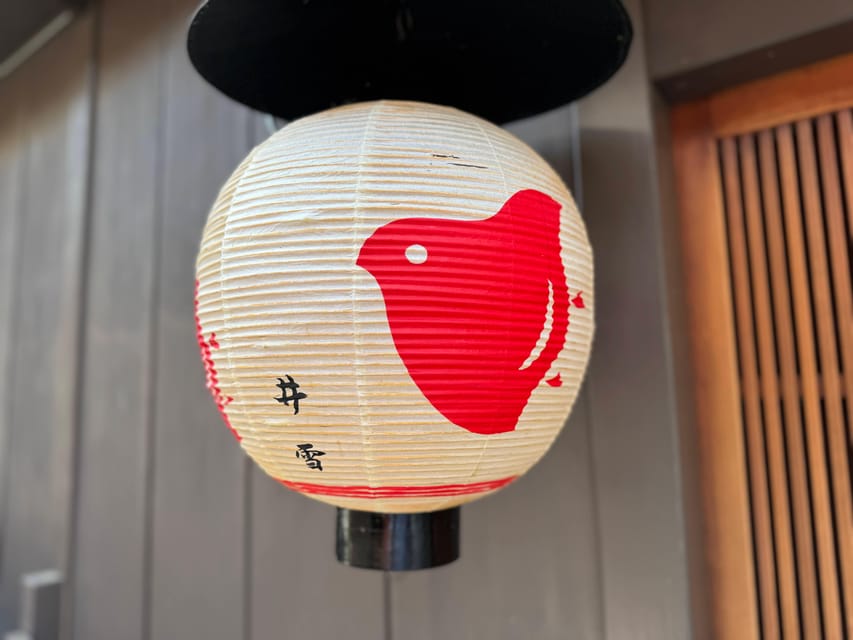
Gion is one of those Kyoto districts that can look simple at first glance. You see old wooden buildings, stone lanes, paper lanterns, and people taking pictures. But the neighborhood makes more sense when someone explains what you are looking at.
The district grew around Yasaka Shrine and became closely linked with tea houses, music, dance, and formal hospitality. The women who work in these arts are called geiko in Kyoto, while younger apprentices are called maiko. Their world is built on years of training, from dance and music to dress, manners, and conversation.
That context matters. Without it, you may see a maiko’s elaborate hairstyle and bright kimono only as a striking image. With a guide, you can better understand the discipline behind the appearance and why respectful behavior matters in Gion.
I appreciate that this walk focuses on the district’s traditions instead of making the entire outing depend on spotting a geiko or maiko. Sightings cannot be promised, and chasing them would make for a poor cultural experience anyway. The better reward is learning how architecture, religion, and the performing arts fit together.
The tour costs $38 per person. For a private group, that is a fair price if you want a short orientation with room for questions. It is less appealing if you simply want to wander without a guide or if you expect a long, detailed historical tour.
More evenings in Gion:
- Kyoto Geisha Walking Tour: Gion District & Hidden Gems
★ 4.7 · 3,273 reviews - Kyoto: Gion Magical Night Walking Tour with Geisha Trivia
★ 4.9 · 2,393 reviews - Kyoto: Gion Geisha District Walking Tour – Stories of Geisha
★ 4.7 · 2,187 reviews
Hanamikoji Street and the world of machiya
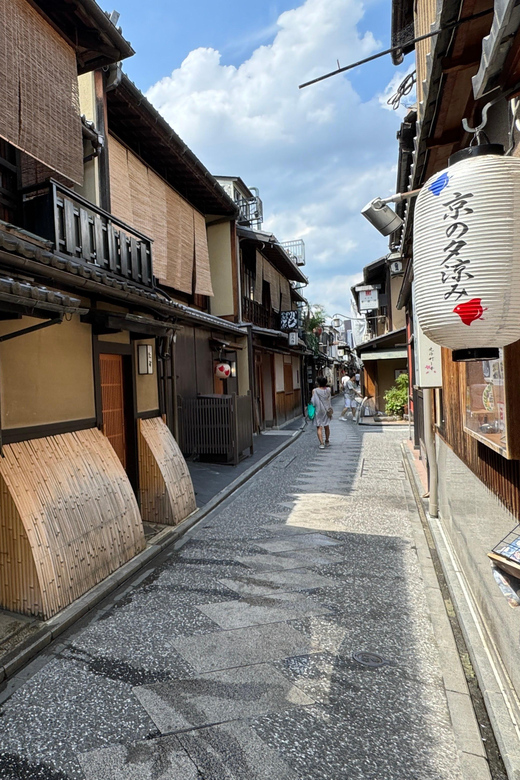
Hanamikoji Street is one of the best-known roads in Gion. Its appeal comes from the row of traditional wooden machiya townhouses and the ochaya tea houses that give the district its refined look.
A machiya is more than an old facade. These narrow buildings reflect the way Kyoto’s traditional townhouses were shaped by limited urban space and commercial life. From the street, you may notice dark wood, carefully arranged entrances, tiled roofs, and restrained decoration. The details are easy to miss when you are hurrying toward a famous sight.
Your guide can help you read the street. You’ll hear how tea houses function within Kyoto’s traditional entertainment culture and how geiko and maiko fit into that setting. The point is not to enter private establishments, since this is a walking tour, but to understand the role these buildings play in the character of Gion.
Hanamikoji is also where the district can feel most exposed to sightseeing pressure. It is a popular place for photographs, and the narrow street can encourage people to stop suddenly or crowd around an interesting doorway. A guide helps you keep moving and observe the area with better manners.
I would bring a small camera, but I would not make photography your main goal. Look up at the rooflines, down the side streets, and across the entrances. Gion’s charm often appears in small design choices rather than in one grand monument.
Shirakawa Canal, willow trees, and quiet Kyoto details
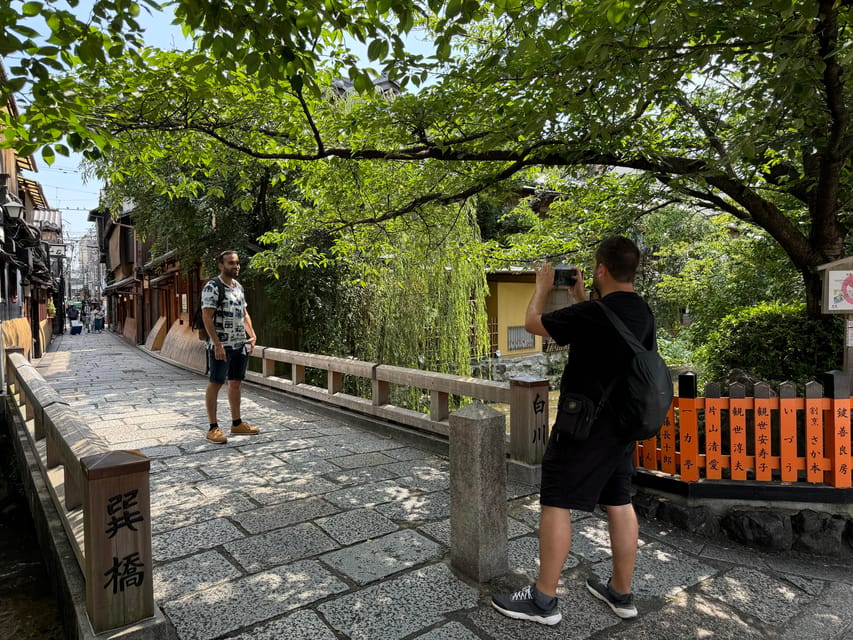
The walk continues to the Shirakawa Canal, one of Gion’s most pleasing stretches. The waterway is lined with willow trees, small bridges, and carefully preserved facades. It offers a softer mood than Hanamikoji Street, with water and greenery breaking up the close urban setting.
This is the part of the route where daylight helps. In the evening, lanterns and shadows can make Gion feel theatrical. During the day, you can see the woodwork, roof tiles, bridges, and canal edges more clearly. If you care about architecture, daytime is the stronger choice.
The canal also shows how Gion’s beauty depends on restraint. There is no need for a large monument here. The scene works through proportion, quiet water, old buildings, and the repeated rhythm of bridges and willow branches.
One useful feature of a private walk is the chance to ask about details that catch your eye. You might want to know why a building has a certain entrance, how the canal relates to the street, or how the district is used today. The supplied tour information does not promise a fixed script beyond the main sights, so the quality of your questions can help shape the experience.
The route includes back streets that you might otherwise miss. That is important because Gion is not just its best-known road. Side lanes reveal a calmer side of the quarter, though you should still remember that this is a living neighborhood, not an open-air museum.
Keep your voice low and avoid blocking entrances. Do not photograph people closely without permission. These habits are simple, but they help protect the atmosphere you came to see.
Yasaka Shrine and Gion’s spiritual center
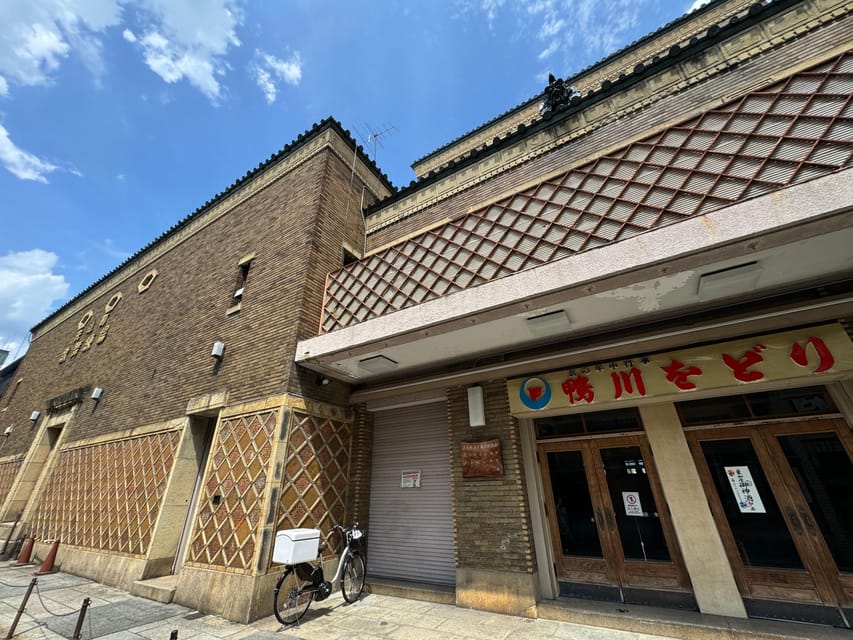
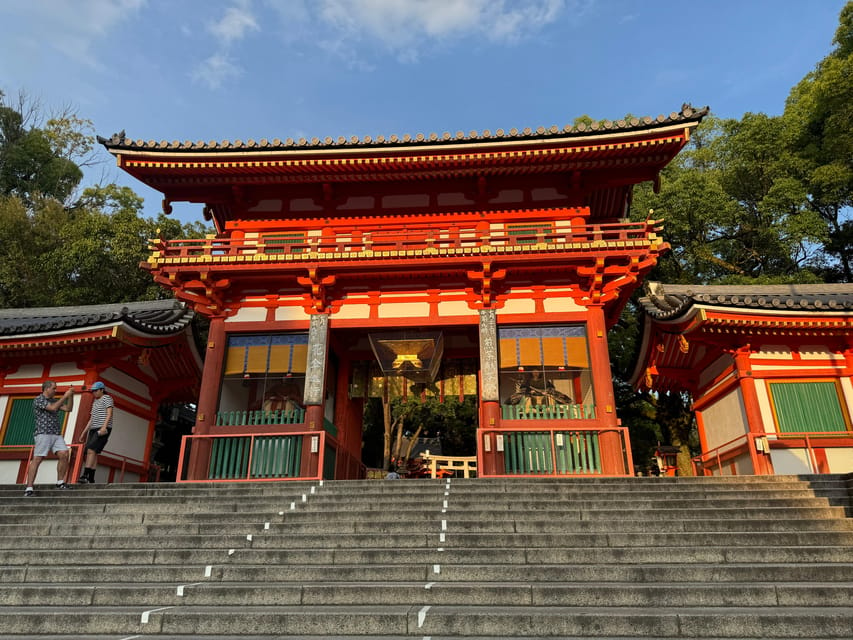
Yasaka Shrine gives the walk a wider frame. It is one of Kyoto’s important Shinto sites, with more than a thousand years of history, and it has long been tied to the development of Gion.
The shrine is also linked with the Gion Matsuri, one of Kyoto’s major festivals. That connection helps explain why Gion cannot be understood only as a geisha district. Religion, seasonal celebrations, local neighborhoods, and traditional performing arts have shaped one another here for centuries.
At Yasaka Shrine, the mood changes again. The canal feels quiet and intimate. Hanamikoji feels formal and architectural. The shrine brings a public religious space into the picture, with gates, worship areas, and a sense of movement between the city and the sacred grounds.
A guide’s explanation is especially useful here because visitors can easily treat a shrine as a collection of attractive structures. You’ll get more from the stop if you understand how it connects with local festivals and the surrounding district.
The tour does not include food, drinks, or transportation, so Yasaka Shrine is not a meal stop or a break from walking. Think of it as the historical and spiritual anchor of the route. If you want time for a slow shrine visit, extra photographs, or private prayer, you may need to return on your own after the 90-minute tour.
More Kyoto shrines:
- KYOTO Tea Ceremony with kimono near by Imamiya Jinjya Shrine
★ 5.0 · 343 reviews - Kyoto: 3-Hour Fushimi Inari Shrine Hidden Hiking Tour
★ 4.9 · 270 reviews - E-Bike Nara Highlights – Todaiji, Knives, Deer, Shrine
★ 4.8 · 186 reviews - Kyoto Magical Night English Tour: Gion & Fushimi Inari Shrine
★ 5.0 · 97 reviews
What the private format changes
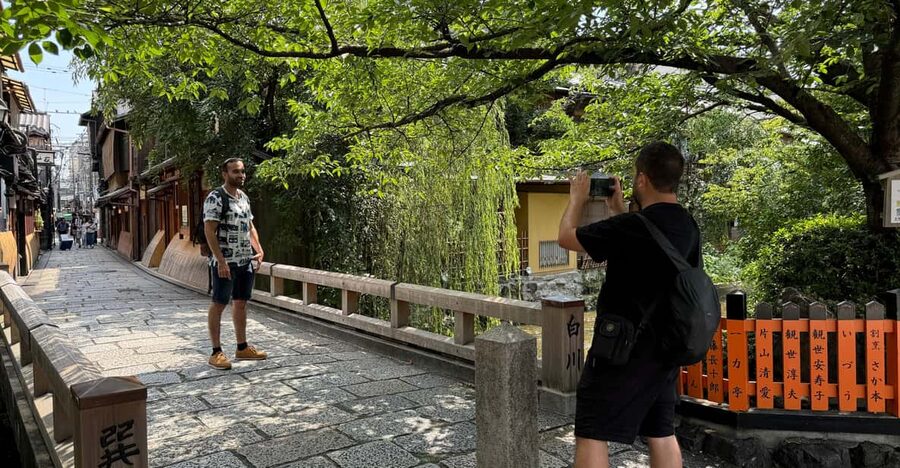
This is a private group experience, not a large shared walk. That makes the $38 price easier to judge. You are paying not just for access to Gion, which is free to enter, but for a guide focused on your group and able to explain the district as you move.
A private format can also make the pace more comfortable. Barbara from Australia described a guide named Yozo adjusting the walking speed for a group that included seniors and a person using a walking stick. Yozo also carried a bag for another group member and took photographs when asked.
Those details are useful because Gion’s streets are generally manageable, but the experience is still on foot. There is no vehicle between stops, and you may spend much of the 90 minutes standing or walking on paved streets. If someone in your party needs a slower pace, say so at the start.
The same account noted that Yozo arrived at the specified meeting point on time and communicated well in English. Another guide, Peco, was praised for being friendly and clear about the places visited. The guide assigned to your booking may be different, but these examples suggest the private format can provide a personal touch beyond a memorized explanation.
The tour offers live guiding in English or Japanese. Confirm your preferred language when booking, especially if your group includes people with different language needs.
Daylight, weather, and the right expectations
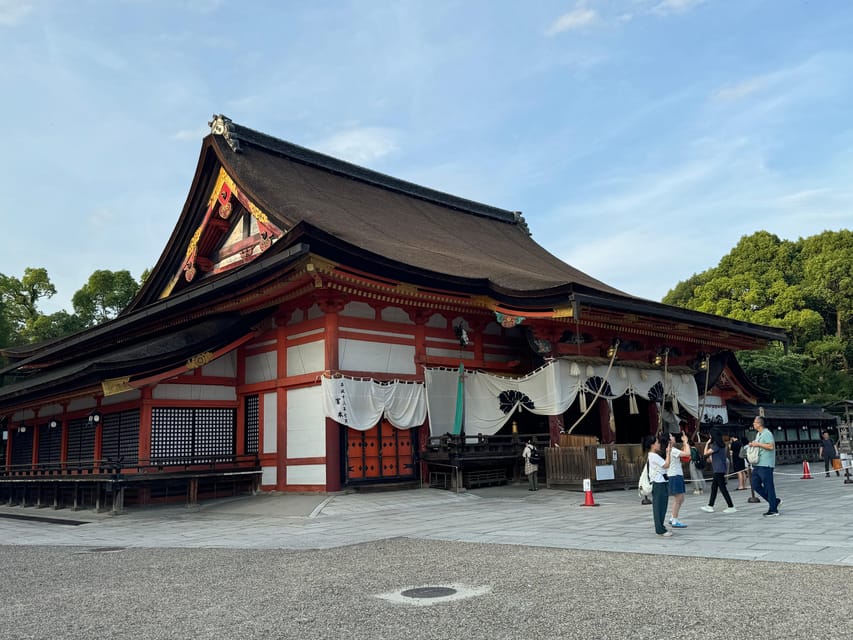
The experience is described as a daytime walking tour, and daylight suits its strongest features. You can inspect the wooden buildings, see the canal’s setting clearly, and understand the shrine without relying on evening lighting.
One booking took place in the rain, yet the group continued through the back streets and found the walk worthwhile. That does not mean wet weather is ideal. Rain can make photography harder and may slow the pace, but it should not erase the main value of the tour, which is the guide’s explanation and the district itself.
Wear shoes you can walk in comfortably. The supplied information does not give a specific distance, so I would not assume a strenuous route, but you should still plan for continuous movement through Gion. A compact umbrella or rain layer is sensible in uncertain weather.
The meeting point can vary depending on the option booked. Check the exact location before setting out and allow time to reach it. Transportation to and from the meeting point is not included.
The tour lasts 90 minutes, so timing matters. It works well as a first look at Gion before a longer independent visit. It can also fit neatly into a day built around Yasaka Shrine and nearby Kyoto sights. It is not long enough to cover every lane, enter cultural venues, or provide a full day of historical study.
How much value do you get for $38?
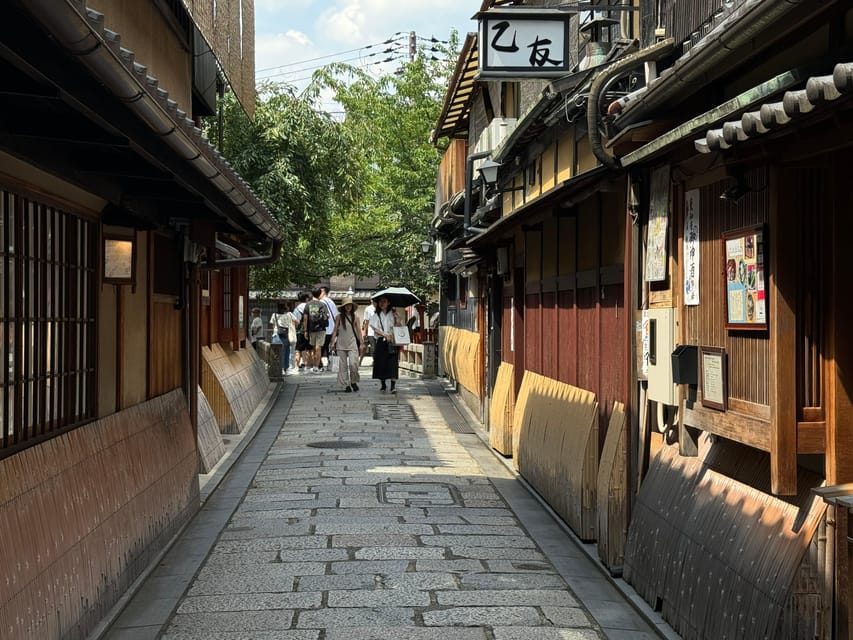
At $38 per person, this walk sits in the reasonable range for a private cultural introduction. The value is strongest for a first visit to Kyoto, for anyone unsure how to behave in Gion, or for a group that wants a guide who can answer questions as they go.
The price is less compelling for independent walkers who already know Kyoto’s history and prefer to read signs or explore at their own pace. Gion itself does not require an admission ticket, and you can walk along Hanamikoji Street, the Shirakawa Canal, and the public areas of Yasaka Shrine without paying for this tour.
Still, the guide adds something difficult to get from a map. You learn why the district looks as it does, how geiko and maiko traditions fit into Kyoto society, and why Yasaka Shrine matters to Gion. That connection between visible details and local meaning is the main thing you are buying.
Because the group is private, the cost may feel better when shared by a small party. Solo visitors should consider how much they value personal explanation over independent wandering. The booking terms also allow you to reserve now and pay later, with free cancellation up to 24 hours before the start for a full refund.
Who should book this Gion walk
I would recommend it to first-time visitors who want a calm introduction to Kyoto’s traditional quarters. It is also a good match for families, older adults, and small groups that benefit from a flexible pace.
The tour suits you if you want cultural background without committing to a half-day program. Ninety minutes is enough to cover the main character of Gion while leaving time for lunch, another sight, or an independent return to the shrine.
It is especially useful if you are curious about geiko and maiko but want the subject handled with respect. The guide’s role is to explain the traditions, not to promise a performance or a sighting.
I would hesitate if you want food, shopping, entry to a tea house, or a night-focused atmosphere. None of those are included. The walk also may feel short if your main interest is detailed architecture or Kyoto’s religious history.
My call: a strong short introduction to Gion
Book this tour if you want more than attractive streets and need a clear explanation of how Gion’s shrine, townhouses, canal, and performing arts connect. The private group format, local guide, and manageable 90-minute length make it a practical first step into Kyoto’s old quarter.
The best reason to choose it is not the chance of seeing a geiko or maiko. Choose it for the chance to look at Gion properly, with someone pointing out what the buildings and traditions mean. If you already know the district well, save the $38 and walk independently. For most first visits, the added context is worth the price.
FAQ
How long does the Gion walking tour last?
The tour lasts 90 minutes.
How much does the tour cost?
The listed price is $38 per person.
Is the tour private?
Yes. The experience is offered for a private group.
What languages are available?
Live guiding is available in English and Japanese.
Which places are included on the walk?
The route includes Hanamikoji Street, the Shirakawa Canal, and Yasaka Shrine, along with streets in Kyoto’s Gion district.
Does the tour include a visit to a geisha or maiko performance?
No performance is listed as part of the experience. The guide explains the traditions and cultural roles of geiko and maiko.
Is food included?
No. Food and drinks are not included.
Is transportation to the meeting point included?
No. You are responsible for transportation to and from the meeting point.
Can the meeting point change?
Yes. The meeting point may vary depending on the option booked, so check your booking details carefully.
Can I cancel the tour for a refund?
You can cancel up to 24 hours in advance for a full refund. The activity also offers reserve now and pay later booking.
More Walking Tours in Kyoto
- Night Walk in Gion: Kyoto’s Geisha District
★ 4.5 · 2,003 reviews - Kyoto Gion Geisha District Walking Tour – The Stories of Geisha
★ 5.0 · 1,441 reviews - Nishiki Market Brunch Walking Tour (7 Tastings + Brunch)
★ 5.0 · 1,355 reviews - Kyoto Arashiyama Walking Tour: Bamboo, Monkeys, Gardens & Secrets
★ 5.0 · 1,216 reviews
Recently added around Kyoto
- Higashiyama | Kyoto: Sakura Season Private Rickshaw Tour★ 5.0 · 3 reviews
- Kyoto Kimono Rental CHAMATSU|Kimono/Yukata Rental FamilyPlan★ 5.0 · 3 reviews
- Kyoto: Half-Day Private Guided Tour to the Old Town of Gion★ 4.4 · 3 reviews
- Nara Private Customizable Half Day Tour★ 5.0 · 3 reviews
- Kansai Region Hiking Adventure in Nara Kobe Kyoto and More★ 5.0 · 3 reviews
- Full Day Nara Deer, Temple, Shrine, Activities & Tea Ceremony★ 5.0 · 3 reviews
- Nara: Essential Private Tour with Deer Park and Temples★ 5.0 · 3 reviews
- Hiking Tour for Sacred Sites in Kyoto with a Guide★ 5.0 · 3 reviews
Gion Geisha District Tours, compared.

Kyoto Geisha Walking Tour: Gion District & Hidden Gems
Read our review →
Gion Magical Night Walking Tour with Geisha Trivia
Read our review →
Gion Geisha District Walking Tour – Stories of Geisha
Read our review →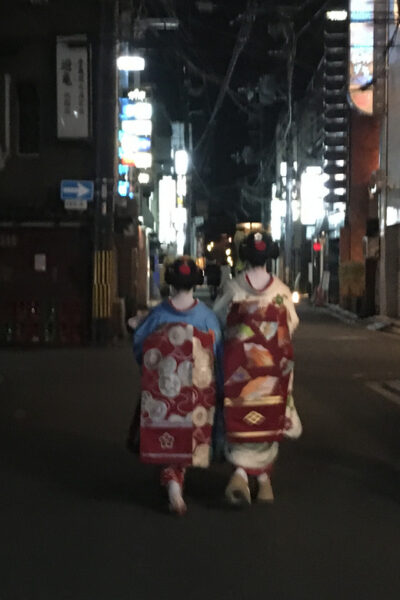
Best of Kyoto: Gion, Geisha, Pagodas & Cobblestones
Read our review →

Kyoto Night Foodie Tour in Gion (9+ dishes + 6 Sake tastings)
Read our review →
Kyoto Gion Geisha District Walking Tour – The Stories of Geisha
Read our review →
Kyoto Gion: 2-Hour Geisha Culture & History Walking Tour
Read our review →Browse the lists this tour appears in