
REVIEW · FUSHIMI INARI SHRINE TOURS
Kyoto: Fushimi Inari Taisha Shrine Walking Tour with Guide
Fushimi Inari Taisha is famous for its endless-looking rows of orange Torii gates, but this tour adds something many quick visits miss: a certified Kyoto guide who explains the customs behind the shrine and leads you to Sekiho-ji Temple. You begin at Kyoto Station, use public transport, and finish with a quieter Zen garden and unusual Jizo statues.
I like the practical way this tour connects a major sight with a less obvious temple. I also like the chance to ask about etiquette, local life, and Kyoto traditions while walking through the neighborhood. The main drawback is simple: this is a walking tour of about two hours, and train fare is not included.
In This Review
- Key points to know before booking
- Why pair Fushimi Inari with Sekiho-ji Temple?
- Starting at Kyoto Station with a local guide
- Taking the train to Fushimi Inari
- Walking beneath the Senbon Torii gates
- Finding a quieter side of the area at Sekiho-ji
- What the guide adds to a familiar sight
- Is $34 a fair price?
- Timing, dates, and the end of the walk
- Who will enjoy this tour most?
- My booking advice
- FAQ
- Where does the tour begin?
- How can I find Kyo-Navi inside Kyoto Station?
- What language is the tour conducted in?
- How long does the walking tour take?
- Is the train fare included?
- Are hotel pickup and drop-off included?
- Is entry to Sekiho-ji Temple included?
- Can children join for free?
- Does the tour run every day in October 2025?
Key points to know before booking
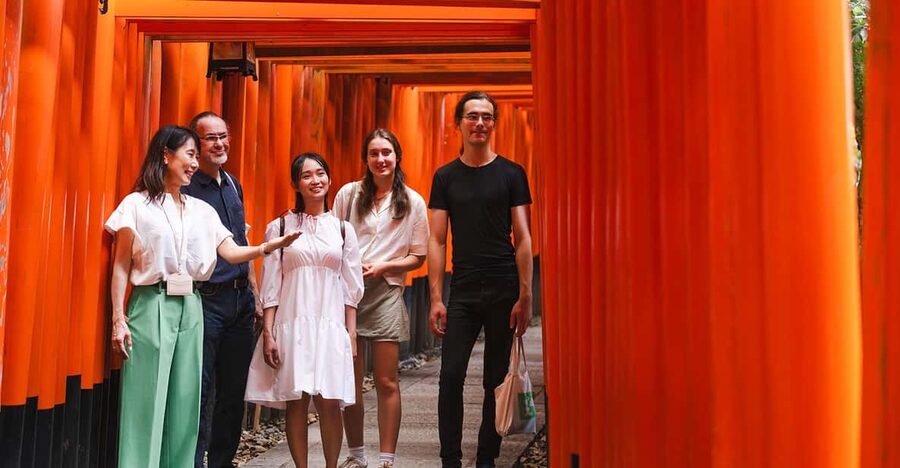
- Senbon Torii gates: Walk through Fushimi Inari Taisha’s famous rows of orange shrine gates with a guide who can explain their purpose and local customs.
- Sekiho-ji Temple: Visit a quieter temple with distinctive Jizo statues and a Zen garden.
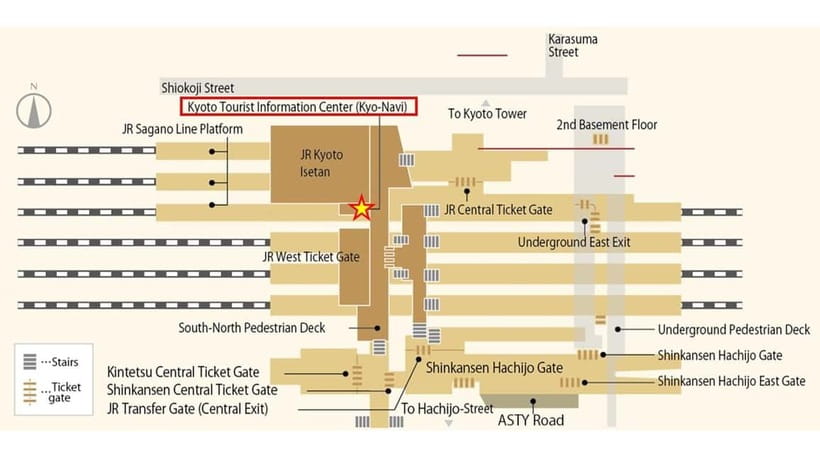
- Kyoto Station start: Meet at the Kyo-Navi Kyoto Tourist Information Center on the station’s second floor.
- Public transport format: The tour uses the train rather than a private vehicle, so you pay your own train fare and support a lower-impact way to sightsee.
- English guidance: The tour is conducted only in English, with Kyoto city certified guides such as Junko leading the walk.
- Limited 2025 dates: It runs from October 6 through October 31, 2025, on weekdays only.
Why pair Fushimi Inari with Sekiho-ji Temple?
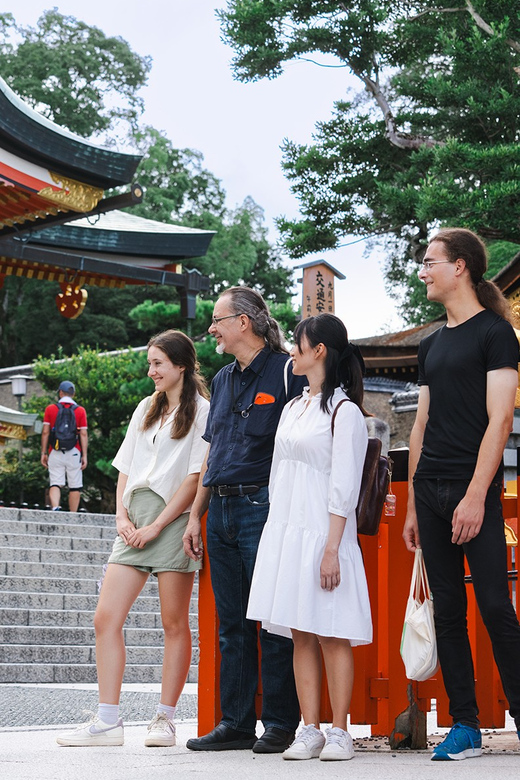
Fushimi Inari Taisha can feel like two different places in one. Near the entrance, you have grand shrine buildings, crowds, bright vermilion gates, and plenty of photo stops. Farther along, the paths can feel more reflective, with trees, stone, and the repeating rhythm of the Torii gates.
A guide helps you look beyond the color and spectacle. You can ask about shrine customs, how to behave at sacred sites, and the meaning of the objects and practices you see. That matters in Kyoto, where a little cultural context can turn a quick stop into a more thoughtful visit.
The second half at Sekiho-ji Temple changes the pace. Instead of another major landmark, you visit a quieter sanctuary with Jizo statues and a Zen garden. The Jizo figures are especially memorable because they have a gentle, human quality that contrasts with the grand scale of Fushimi Inari.
I like this pairing because it gives you both sides of the area. You see Kyoto’s most recognizable shrine sight, then step into a calmer religious setting. If you visit Fushimi Inari alone, you may spend the whole time following the Torii gates. This route gives you a reason to pause and notice the smaller details.
More ways to walk Fushimi Inari:
- Kyoto: Fushimi Inari, Kinkakuji, Bamboo Grove 1 Day Bus Tour
★ 4.8 · 4,316 reviews - Fushimi Inari Hidden Hiking Tour (Private Option Available)
★ 5.0 · 1,750 reviews - Kyoto/Osaka: Nara, Fushimi Inari Taisha, Arashiyama Bus Tour
★ 4.7 · 1,275 reviews
Starting at Kyoto Station with a local guide
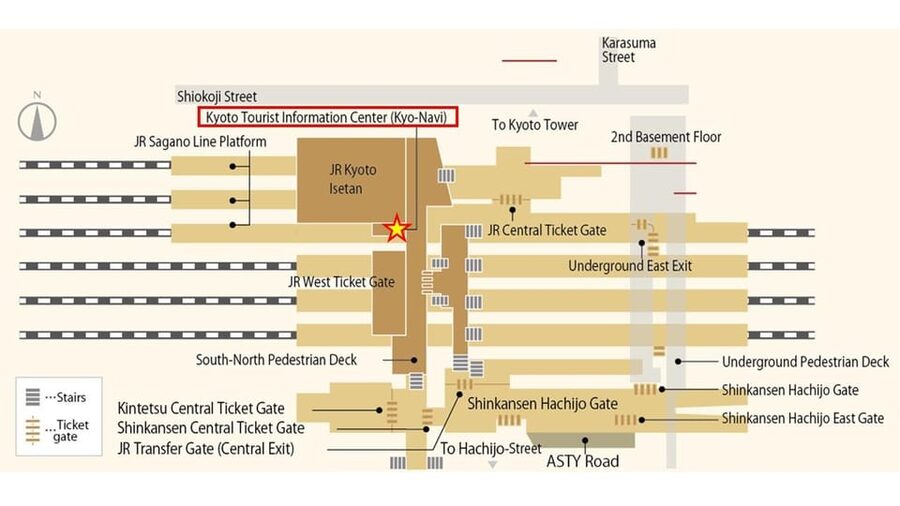
The meeting point is Kyo-Navi, the Kyoto Tourist Information Center inside Kyoto Station. Find it on the second-floor pedestrian walkway on the north side of the station, next to the south side of Kyoto JR Isetan department store.
Kyoto Station is large and easy to misunderstand, especially if you arrive by a different train line or come up from street level. Give yourself extra time. If you get turned around, ask for Kyo-Navi, also written as 京なび, rather than trying to describe the whole meeting point.
The guide is a Kyoto city official certified guide, and the tour is offered in English. The role is more useful than simply pointing out buildings. You are encouraged to ask questions about customs, traditions, and daily etiquette, so come prepared with a few things you want to understand.
Junko is one guide associated with this experience, and her style is described as engaging and helpful, with interesting insights and clear answers. You should not assume Junko will lead every departure, but the guide-led format is a central part of the tour.
Arrive well before the start time. If you are not present when the tour begins, you cannot join later. That rule is especially important here because the group leaves Kyoto Station together by train.
Taking the train to Fushimi Inari
The train ride is part of the design, not an inconvenience added to the itinerary. You travel by public transportation with the guide, who can point out local customs and help you understand how Kyoto’s transport system fits into daily life.
Your train fare is not included in the $34 price. Keep a little cash or a ready transport payment method available, though the exact fare and payment arrangements are not specified. The important point is to budget separately for the train.
I like this arrangement for two reasons. First, it keeps the tour focused on the places rather than on a private vehicle. Second, it lets you practice moving around Kyoto as you will for the rest of your trip. A private car can be easier, but it teaches you less about getting around independently.
The tradeoff is that public transportation requires you to stay with the group and follow the guide’s instructions. It may also be less comfortable if you have heavy luggage. The tour does not include hotel pickup or drop-off, so you must reach Kyoto Station on your own.
Walking beneath the Senbon Torii gates
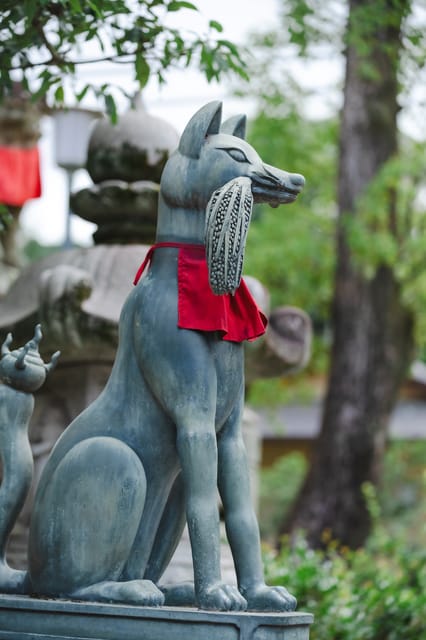
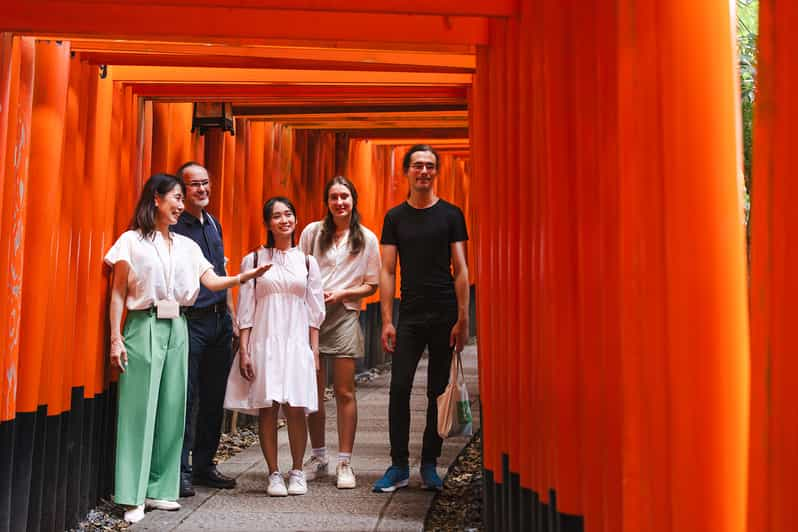
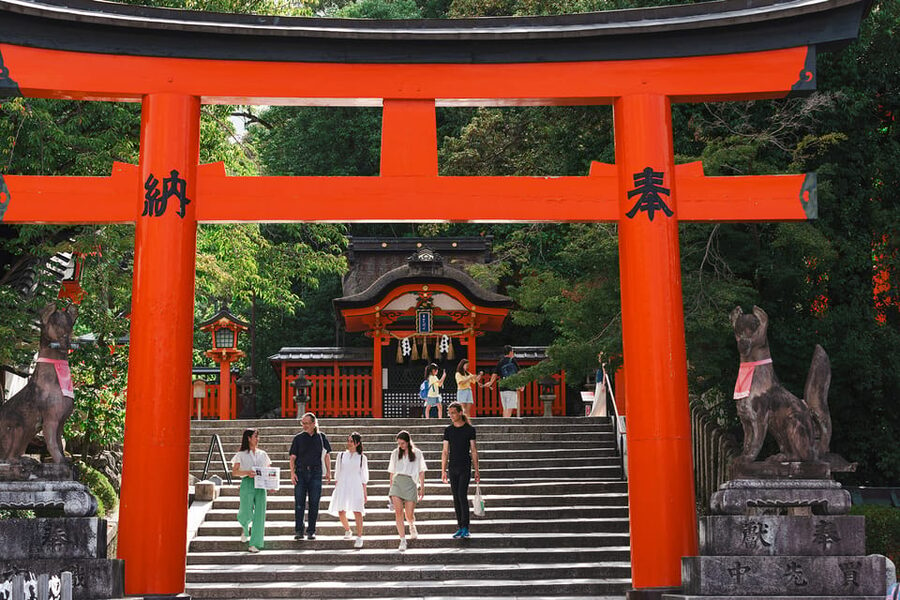
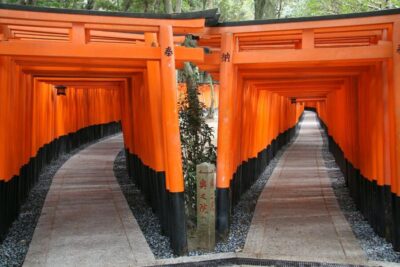
Fushimi Inari Taisha is best known for the Senbon Torii, the long series of orange Torii gates that climb through the wooded grounds. The gates create a striking corridor, with changing light and repeated lines that make the walk feel almost dreamlike.
The tour presents the shrine as more than a backdrop for photographs. Your guide explains the customs and traditions that shape a visit, helping you recognize that this is an active religious site rather than only a sightseeing stop.
Expect to walk for roughly two hours across the full experience. The route includes the shrine grounds, the path beneath the gates, the temple visit, and the Zen garden. The supplied information does not specify how far along the mountain route the group goes, so do not book this assuming you will complete the entire Fushimi Inari hike.
That uncertainty is worth keeping in mind. If your main goal is a long hike to the higher viewpoints, ask for route details before booking. If you want a guided introduction to the shrine combined with another nearby religious site, the two-hour format is more manageable.
Wear shoes you can comfortably walk in. The tour is not a sit-down sightseeing activity, and the guide cannot remove the need for walking. You will get more from it if you are happy to move at an easy but steady pace.
More Kyoto shrines:
- KYOTO Tea Ceremony with kimono near by Imamiya Jinjya Shrine
★ 5.0 · 343 reviews - Kyoto: 3-Hour Fushimi Inari Shrine Hidden Hiking Tour
★ 4.9 · 270 reviews - E-Bike Nara Highlights – Todaiji, Knives, Deer, Shrine
★ 4.8 · 186 reviews - Kyoto Magical Night English Tour: Gion & Fushimi Inari Shrine
★ 5.0 · 97 reviews
Finding a quieter side of the area at Sekiho-ji
Sekiho-ji Temple provides the tour’s strongest contrast. After the scale and visual repetition of Fushimi Inari, the temple offers a more restrained setting with Jizo statues and a Zen garden.
The Jizo statues are described as a hidden sanctuary within the visit. That does not mean you should expect a secret place that only locals know. It means the stop is less obvious than the Torii gates and gives you a quieter subject to consider.
Jizo is a familiar figure in Japanese Buddhist culture, often associated with protection and care. The tour’s supplied details do not explain the individual statues, so your guide’s interpretation will matter here. Ask questions if you want more context about the figures, the temple, or the garden.
Entry to Sekiho-ji Temple is included. This helps justify part of the tour price, since you are not simply paying for directions between public locations. You are also receiving access to a temple stop that adds a different mood and focus.
The Zen garden may appeal most if you prefer calm observation to constant sightseeing. It is also the place where the tour’s pace seems most likely to slow down. One review specifically praised the local neighborhood walk and Zen garden, which tells you what kind of detail this experience handles well: not just headline attractions, but the spaces between them.
What the guide adds to a familiar sight
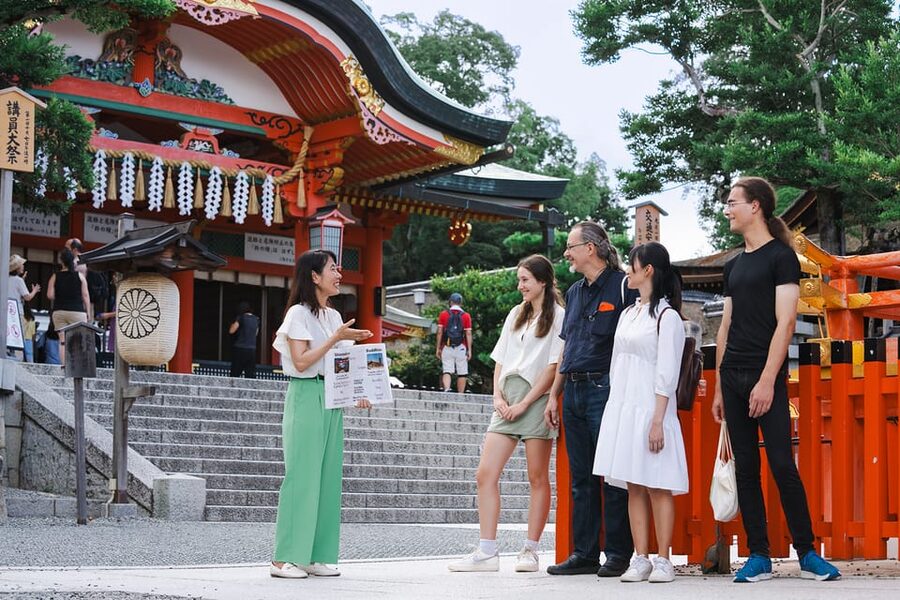
You can visit Fushimi Inari without a guide. The gates are easy to recognize, and the shrine grounds are accessible on your own. The question is what you want from the visit.
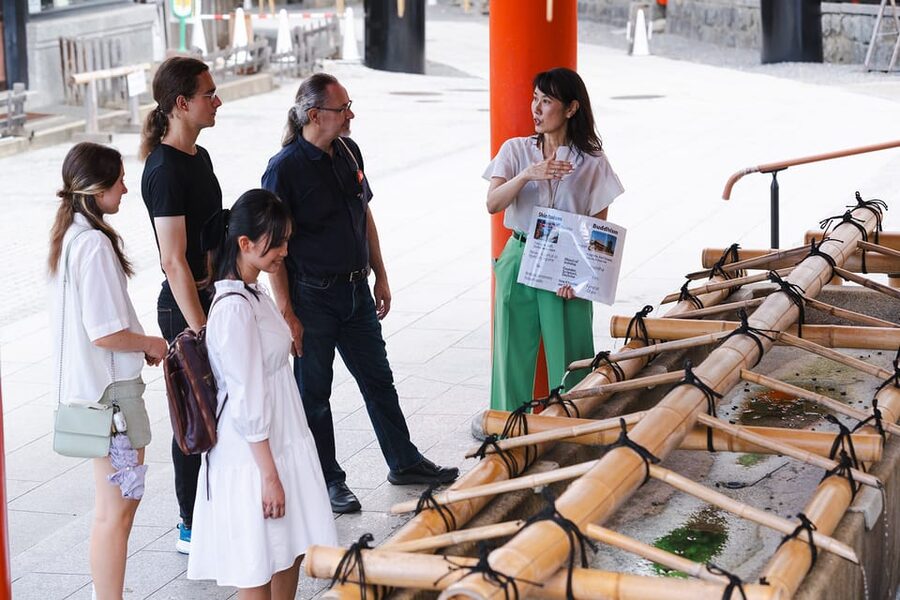
A guide is most valuable if you want answers as you go. Why are the gates there? How should you behave at a shrine? What customs should you follow? Which details are worth noticing? Those questions are hard to answer from a quick internet search while you are walking.
The strongest praise for this tour focuses on the guide’s communication and willingness to answer questions. One participant singled out a guide called Junko for her engaging manner and useful insights. Another praised the guide for explaining things that would otherwise have gone unnoticed.
That does not mean the tour is a lecture. The format is a walking tour, so expect information in short pieces as you move. This suits you if you like learning through conversation. It may be less suitable if you want a long, formal explanation at every stop.
The English-only format is clear and important. If you are comfortable following spoken English while walking, you should be able to take part fully. If you need another language, this is not the right choice.
Is $34 a fair price?
At $34 per person, this tour sits in the reasonable range for a short guided Kyoto outing. The price includes an official Kyoto city certified guide and entry to Sekiho-ji Temple, but not the train fare, food, drinks, or transportation to and from your hotel.
The value depends on how much you want interpretation. If you only want to see the Torii gates, you can visit Fushimi Inari independently and avoid the tour fee. If you want to combine the shrine with Sekiho-ji Temple and understand Kyoto etiquette along the way, the price is easier to defend.
The tour also saves you from working out the route between the shrine and temple yourself. That is useful on a short Kyoto visit, when you may not want to spend part of the morning comparing maps and transport options.
I would not book it for the included admission alone. I would book it for the local explanation and carefully linked route. The public transport format is also a plus if you want a more grounded way to move through the city rather than a private transfer.
Remember that each paid adult can bring one child aged six or younger at no extra charge. The child must stay with an adult throughout the tour. A second child, or any additional child beyond that allowance, needs an adult ticket. If a free child uses the luggage service, a service fee applies.
Timing, dates, and the end of the walk
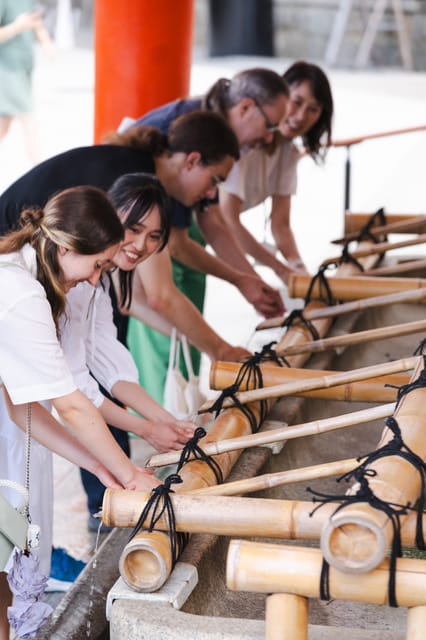
This experience is available only from October 6 through October 31, 2025, and it does not run on Saturdays or Sundays. That makes it a narrow seasonal option, so check your weekday plans before getting attached to the idea.
The activity takes about two hours. That is long enough to visit the main stops without consuming half a day, but short enough to fit around another Kyoto plan. Avoid scheduling a tight appointment immediately afterward. Public transport, walking pace, and the group’s time at the temple can affect the finish.
The end point needs a little attention when you book. The route description says the walk concludes in the Fushimi Inari area or at JR Tofukuji Station, while the meeting information also states that the activity ends back at the meeting point. Since those details do not perfectly match, check the final confirmation email or ask the operator which end point applies to your departure.
You may also want local suggestions for the rest of your day. The guide can provide recommendations before you leave the Fushimi Inari area or JR Tofukuji Station. This is a useful bonus, particularly if you have not planned your next stop.
Who will enjoy this tour most?
I would recommend it to first-time Kyoto visitors who want help with shrine etiquette and local customs. It also fits you if you have already seen major Japanese temples but prefer a guide who can explain the difference between a shrine visit and a temple visit.
The tour works well for:
- People who want Fushimi Inari with more context than a self-guided visit
- Visitors who enjoy walking through local neighborhoods
- Travelers interested in Zen gardens and Jizo statues
- Families with one young child aged six or younger per paid adult
- Visitors who prefer public transportation and a lower-impact touring style
- Anyone who values a chance to ask questions in English
It may not suit you if you dislike walking, need hotel pickup, want a private vehicle, or hope to spend many hours hiking the full Fushimi Inari route. It is also not suitable for unaccompanied minors.
My booking advice
Book this tour if you want a compact, guided introduction to Fushimi Inari with a quieter temple visit built in. The guide’s role is the main reason to pay, especially if customs, traditions, and the meaning behind what you see matter to you.
Skip it if you are comfortable visiting Fushimi Inari alone and your only goal is to photograph the Torii gates. You will need to pay your own train fare, arrive early at Kyoto Station, and spend about two hours walking, so the tour rewards prepared and curious visitors.
For the best fit, choose a weekday between October 6 and 31, 2025, wear comfortable shoes, arrive early at Kyo-Navi, and confirm the final stopping point. If those conditions work for you, this is a sensible way to see a famous Kyoto shrine without letting the famous part be the whole story.
FAQ
Where does the tour begin?
Meet at Kyo-Navi, the Kyoto Tourist Information Center, on the second floor of Kyoto Station. It is on the north side of the pedestrian walkway, next to the south side of Kyoto JR Isetan.
How can I find Kyo-Navi inside Kyoto Station?
Look for the second-floor pedestrian walkway leading to the Kyoto Tourist Information Center. Ask for Kyo-Navi, also written as 京なび, if you cannot find it.
What language is the tour conducted in?
The tour is conducted only in English.
How long does the walking tour take?
The walking tour takes approximately two hours.
Is the train fare included?
No. Train fare to Fushimi Inari Taisha Shrine is not included in the tour price.
Are hotel pickup and drop-off included?
No. You must make your own way to the Kyoto Station meeting point, and hotel pickup and drop-off are not included.
Is entry to Sekiho-ji Temple included?
Yes. Entry tickets to Sekiho-ji Temple are included.
Can children join for free?
Each paid participant can bring one child aged zero to six for free. The child must be accompanied by an adult. Any additional child must purchase an adult ticket, and a luggage service fee applies if the free child uses that service.
Does the tour run every day in October 2025?
No. It runs from October 6 through October 31, 2025, except on Saturdays and Sundays.
More Walking Tours in Kyoto
- Kyoto Geisha Walking Tour: Gion District & Hidden Gems
★ 4.7 · 3,273 reviews - Kyoto: Gion Magical Night Walking Tour with Geisha Trivia
★ 4.9 · 2,393 reviews - Kyoto: Gion Geisha District Walking Tour – Stories of Geisha
★ 4.7 · 2,187 reviews - Night Walk in Gion: Kyoto’s Geisha District
★ 4.5 · 2,003 reviews
Recently added around Kyoto
- Higashiyama | Kyoto: Sakura Season Private Rickshaw Tour★ 5.0 · 3 reviews
- Kyoto Kimono Rental CHAMATSU|Kimono/Yukata Rental FamilyPlan★ 5.0 · 3 reviews
- Kyoto: Half-Day Private Guided Tour to the Old Town of Gion★ 4.4 · 3 reviews
- Nara Private Customizable Half Day Tour★ 5.0 · 3 reviews
- Kansai Region Hiking Adventure in Nara Kobe Kyoto and More★ 5.0 · 3 reviews
- Full Day Nara Deer, Temple, Shrine, Activities & Tea Ceremony★ 5.0 · 3 reviews
- Nara: Essential Private Tour with Deer Park and Temples★ 5.0 · 3 reviews
- Hiking Tour for Sacred Sites in Kyoto with a Guide★ 5.0 · 3 reviews
Fushimi Inari Shrine Tours, compared.
Fushimi Inari, Kinkakuji, Bamboo Grove 1 Day Bus Tour
Read our review →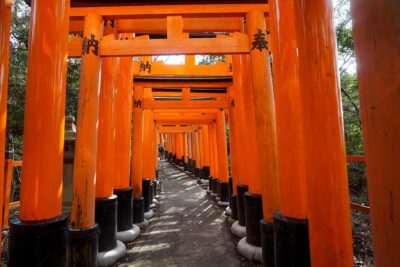
Fushimi Inari Hidden Hiking Tour (Private Option Available)
Read our review →
Kyoto/Osaka: Nara, Fushimi Inari Taisha, Arashiyama Bus Tour
Read our review →
Nijo, Kinkaku-ji, Arashiyama, Kiyomizu & Fushimi Inari
Read our review →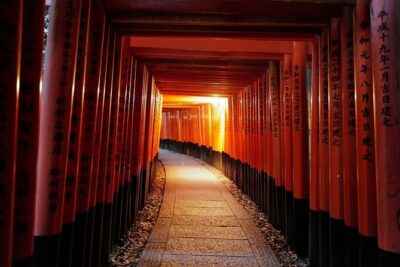

Kyoto Early Bird English Tour: Fushimi-Inari and Arashiyama
Read our review →
Fushimi, Arashiyama – Bamboo, Monkey, Torii & Secrets
Read our review →Browse the lists this tour appears in