
REVIEW · KYOTO EARLY MORNING TOURS
Kyoto Early Morning Private Tour with Government-Licensed Guide
Kyoto is at its best before the day’s crowds arrive. This four-hour private tour lets you start as early as 6:30 or 7 a.m., when Fushimi Inari’s red gates and Kiyomizu-dera’s temple grounds can feel calm rather than jammed.
I like the freedom to pick two or three sights instead of racing through a fixed route. I also like the human touch: guides such as Rie, Yasu, Tomy, Mayumi, Bell, Nabet, Yoshi, and Kay have helped visitors shape the morning around temples, gardens, food, photography, or basic Kyoto orientation.
The catch is that this is a walking tour, not a chauffeured sightseeing trip. Transport, entry fees, lunch, and personal costs are extra, and trying to link far-flung stops such as Arashiyama and Fushimi Inari in four hours can make the morning feel rushed.
In This Review
- Key points before you book
- Why an early start makes such a difference
- Choosing your two or three Kyoto sights
- Fushimi Inari and its thousands of red gates
- Kiyomizu-dera for views and tradition
- Gion and Higashiyama for old Kyoto atmosphere
- Arashiyama, the Bamboo Forest, and Tenryu-ji
- Kinkaku-ji, Ryoan-ji, and Ninna-ji
- Markets, palaces, and central Kyoto
- What your guide adds to the morning
- Walking, transport, and the real cost
- The tour’s main weakness: too many tempting choices
- Service record and booking caution
- Who should book this private Kyoto morning?
- Should you book it?
- FAQ
- How long is the Kyoto Early Morning Private Tour?
- How many sights can I choose?
- Is transportation included?
- Are admission fees included?
- Where does the guide meet me?
- Can I cancel for a full refund?
Key points before you book
- Start as early as 6:30 or 7 a.m. for a quieter visit to Kyoto’s famous sights.
- Choose two or three stops from a long menu that includes Fushimi Inari, Kiyomizu-dera, Gion, Arashiyama, and Kinkaku-ji.
- Meet your guide on foot within the designated Kyoto pickup area.
- Use public transport or taxis at your own cost, since no private vehicle is supplied.
- Get a local orientation, including advice on Kyoto neighborhoods, food, culture, and how to continue sightseeing afterward.
- Expect a strong overall record, with a 4.8 rating from 23 ratings and 96 percent recommendation, but confirm your guide before the start because one booking had a serious no-show problem.
Why an early start makes such a difference
Kyoto’s major temples are not secret. By midmorning, the best-known gates, paths, and photo spots can fill quickly. An early departure gives you a better chance to walk at your own pace, hear your guide, and take pictures without constantly waiting for a gap in the crowd.
The timing also helps in warmer months. One guide, Yasu, specifically advised starting early because Kyoto can become hot and busy. That is practical advice, not sales talk. A 6:30 or 7 a.m. start may sound painful from a hotel bed, but it can leave you with a much more pleasant morning.
The private format matters here. You are not waiting for a large group to catch up or stopping for explanations that do not interest you. If your group cares about Japanese religious customs, architecture, local food, or photography, you can steer the conversation in that direction.
The four-hour limit requires discipline. This is best treated as a focused introduction, not a grand tour of Kyoto. Select two nearby areas, or at most three stops with sensible travel time between them. Fushimi Inari, Kiyomizu-dera, and Gion can work together better than Fushimi Inari, Kinkaku-ji, and Arashiyama, which sit in different parts of the city.
More early starts before the crowds:
- Kyoto Early Morning Tour with English-Speaking Guide
★ 5.0 · 1,427 reviews - Kyoto: Early Morning Tour with English-Speaking Guide
★ 4.9 · 1,128 reviews - Nara Early Morning Tour (Kyoto or Osaka Departure Available)
★ 5.0 · 676 reviews
Choosing your two or three Kyoto sights
The tour offers a long list of possible stops. That sounds generous, but it is also where you need to make a smart plan. Your guide can recommend a route, or you can name two or three attractions that matter most to you.
Here is what each main choice offers.
Fushimi Inari and its thousands of red gates
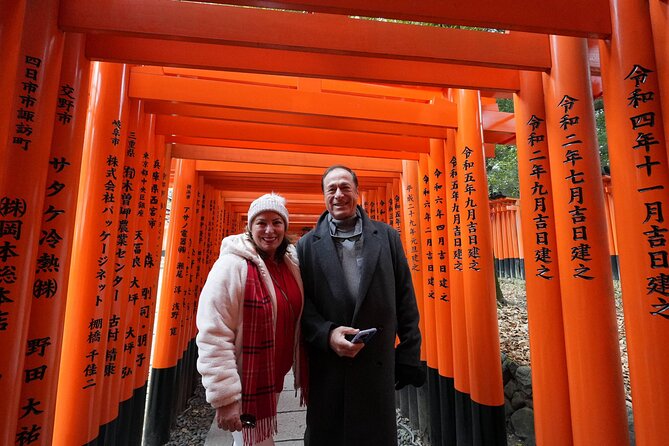
Fushimi Inari-taisha is the obvious early-morning choice. Its bright vermilion torii gates climb the wooded hillside behind the shrine, creating one of Kyoto’s most recognizable scenes.
The important point is that Fushimi Inari is more than a quick photo beneath the first gates. Your guide can explain the shrine’s stories, the meaning of the fox figures, and why so many gates were donated. The supplied tour details specifically point out that many people stop after a scenic view, missing the wider cultural story.
You do not need to cover every path for the visit to work. A guide can help you decide how far to walk within the time available. If this is your top priority, say so before the tour begins.
Kiyomizu-dera for views and tradition
Kiyomizu-dera is one of Kyoto’s essential temples, perched on the eastern hills above the old city. Its broad wooden stage, temple buildings, and surrounding streets make it a strong choice for first-time visitors.
An early visit has a clear advantage. One guide reported starting at 6:30 a.m. and finding Kiyomizu-dera and Fushimi Inari nearly empty. Another guide took a group to Kiyomizu-dera by taxi around 8 a.m. during cherry blossom season and found the visit went smoothly.
Entry is not included, so add the admission cost to your budget. The temple is also reached through historic Higashiyama streets, where uneven surfaces and slopes can make the walk tiring. The guide can help put the buildings and customs into context, which is useful when the temple complex feels too large to absorb on your own.
A few more Kyoto experiences worth comparing
- From Kyoto: Nara Guided Morning Tour
★ 4.6 · 335 reviews - Kyoto Morning Tour from Kyoto or Osaka
★ 4.0 · 281 reviews - Kyoto: Morning Japanese Bento Cooking Class
★ 5.0 · 149 reviews - Kyoto: Arashiyama Bamboo Forest Morning Tour by Bike
★ 5.0 · 115 reviews
Gion and Higashiyama for old Kyoto atmosphere
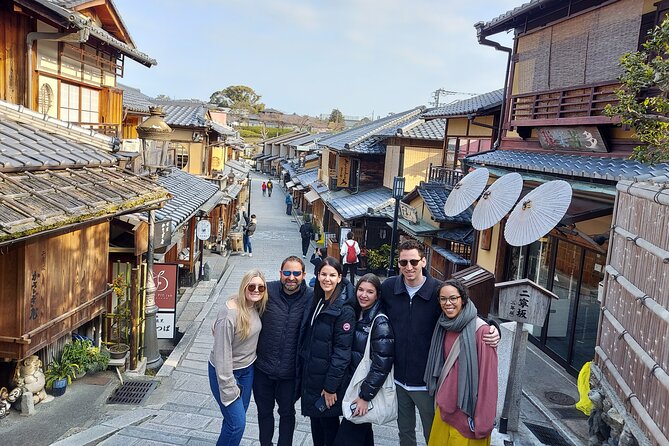
Gion is Kyoto’s traditional entertainment district, with narrow lanes, tea houses, restaurants, and carefully preserved wooden buildings. Higashiyama extends the experience with old streets and temple approaches along the lower eastern mountains.
These districts are especially good if you want to understand how Kyoto feels beyond its famous postcard views. Your guide can help you navigate the lanes and explain local etiquette. You should also remember that Gion is a living neighborhood, not a stage set. Walk quietly, avoid blocking entrances, and do not treat people working in the area as photo props.
Gion pairs naturally with Kiyomizu-dera. The two areas let you combine a major temple with traditional streets without spending the whole morning crossing the city.
Arashiyama, the Bamboo Forest, and Tenryu-ji
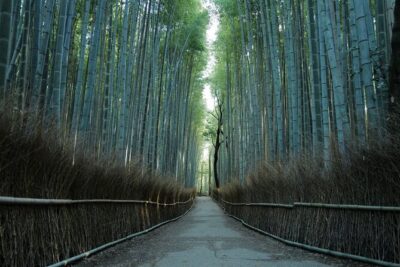
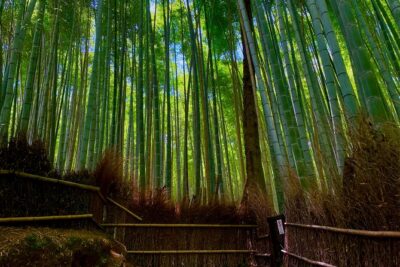
Arashiyama is a popular district in western Kyoto, known for the Togetsukyo Bridge, the Bamboo Forest, Tenryu-ji Temple, and nearby hillside temples.
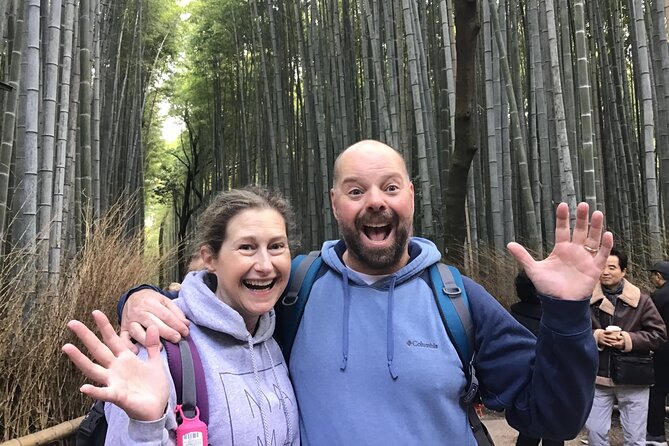
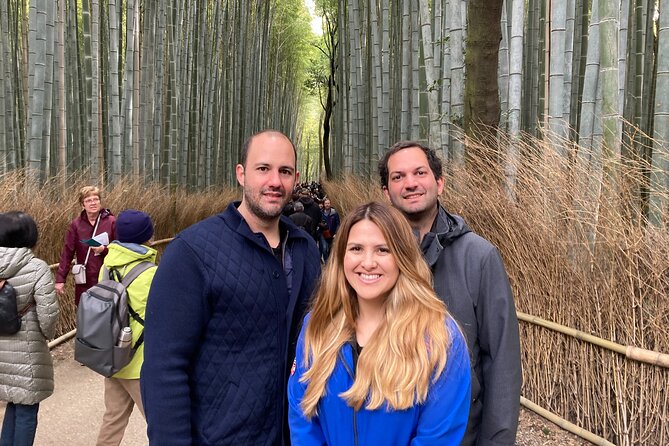
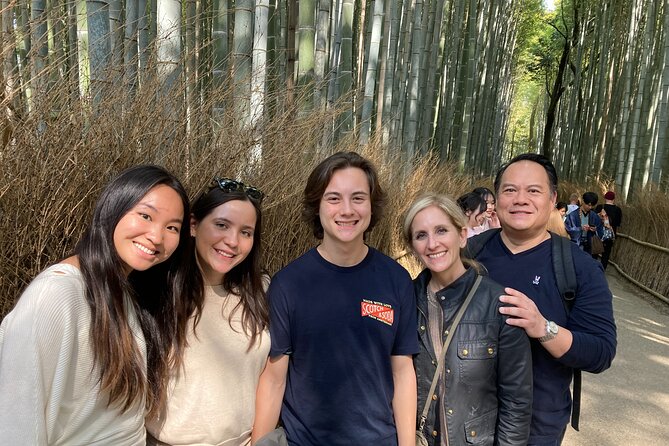
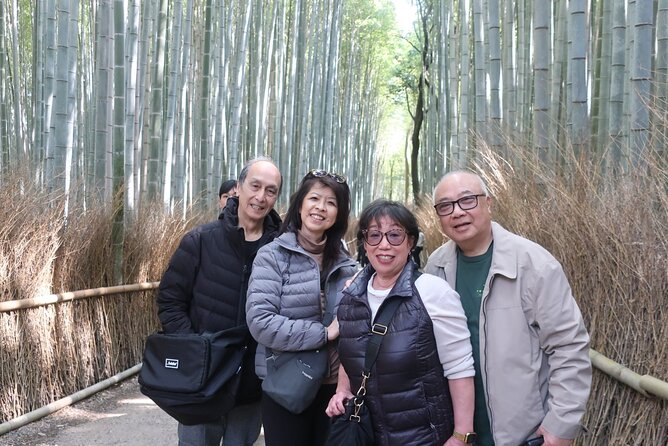
The Bamboo Forest is most rewarding early. One guide, Kay, took a group there in the morning and also visited Fushimi Inari. The quiet bamboo paths and tall stalks are particularly pleasant when a light breeze moves through them.
Do not reduce Arashiyama to one short walk. Tenryu-ji is the district’s major Zen temple, while Okochi Sanso Garden offers a more carefully maintained garden visit for an extra fee. Jojakko-ji, Nison-in, Gio-ji, Adashino Nenbutsu-ji, and Otagi Nenbutsu-ji offer quieter alternatives, though they require more time and walking.
The drawback is distance. Arashiyama is not a sensible add-on to every eastern Kyoto route. If you choose the Bamboo Forest, make Arashiyama the main focus and limit the other stops.
Kinkaku-ji, Ryoan-ji, and Ninna-ji
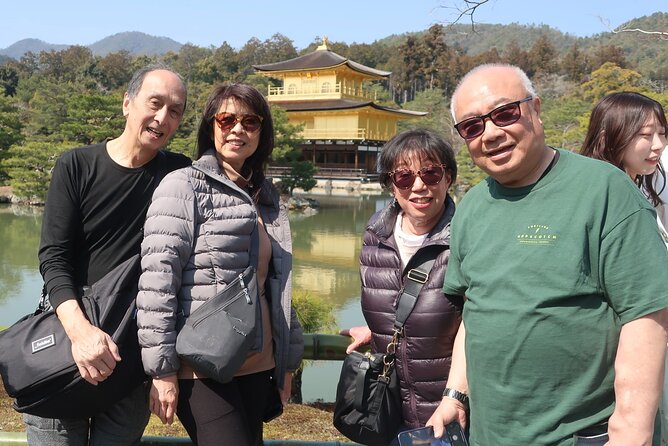
Kinkaku-ji, the Golden Pavilion, is one of Kyoto’s most famous sights. Its upper floors are covered in gold leaf, and the building reflects across a pond in a carefully arranged garden.
It is visually powerful, but the visit can be brief and crowded later in the day. Entry is extra, and the experience follows a set visitor path rather than an open-ended temple visit. Pairing Kinkaku-ji with nearby Ryoan-ji or Ninna-ji makes more sense than combining it with Fushimi Inari.
Ryoan-ji is home to Japan’s best-known rock garden. Its restrained design gives your guide a chance to explain Zen ideas, but you may find the garden less immediately dramatic than the Golden Pavilion. Ninna-ji is a World Heritage temple with imperial connections and a broader set of buildings and grounds.
Markets, palaces, and central Kyoto
Nishiki Market is a narrow, five-block shopping street known as Kyoto’s Kitchen. It is a useful stop if you care more about food and daily life than temple collecting.
Keep in mind that a market visit is better later in the morning, when more shops and food stalls are operating. It may not fit the earliest portion of a tour as well as Fushimi Inari or Kiyomizu-dera.
The Kyoto Imperial Palace offers broad grounds and a look at the former home of Japan’s Imperial Family before the capital moved to Tokyo in 1868. Pontocho, the narrow dining lane beside the Kamo River, is atmospheric but is more rewarding around meal times than at dawn.
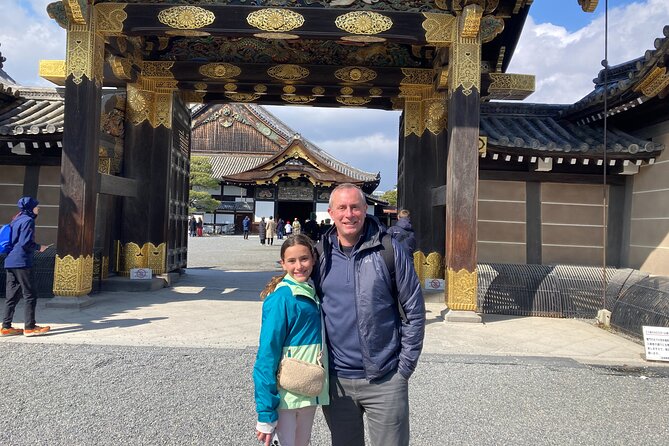
Nijo Castle provides a different angle on Kyoto. Built in 1603 as Tokugawa Ieyasu’s Kyoto residence, it connects the city to the shoguns of the Edo Period. Admission is extra, and the castle deserves enough time to appreciate its rooms, gardens, and famous nightingale floors.
What your guide adds to the morning
The strongest reason to book a private guide is not simply finding the entrance. Kyoto’s temples and shrines can be confusing when you do not know what you are looking at or how to behave.
A licensed English-speaking guide can explain how Shinto shrines differ from Buddhist temples, what to do at a purification fountain, and why certain structures or offerings matter. The tour also gives you room to ask ordinary questions about life in Japan, food, customs, and neighborhoods.
Guide personalities vary, but the names attached to this experience include Rie, Tomy, Yasu, Kay, Bell, Mayumi, Nabet, Yoshi, and Yoji. Rie contacted her group well before the trip and again during the week of the tour. Mayumi adjusted the pace and added another half hour when one participant had ankle trouble.
That does not mean an extra half hour is guaranteed. It does show the value of telling the operator about your needs and interests ahead of time. If you want photography stops, fewer stairs, a food focus, or a particular temple, say so before the morning begins.
The guide may also help with the rest of your trip. Bell gave advice on how to reach later sights, while Yasu used public transport to take a group of four around Kyoto. That orientation can save you time during the next few days.
Walking, transport, and the real cost
The listed price is $101.82 per person. For a private tour with a licensed local English-speaking guide, that can be fair value, especially for a small group that wants a tailored route rather than a standard group outing.
The price is not all-inclusive. You pay for transportation, temple and castle admissions, lunch, and other personal expenses. There is no private vehicle, so the tour may involve trains, buses, taxis, and walking, with fares paid separately.
That setup has both good and bad points. Public transport gives you a more useful feel for moving around Kyoto, and a guide can show you how the city connects. On the other hand, a taxi may be the practical choice for a tight route or for anyone dealing with sore knees, heat, or steep temple approaches.
Pickup is on foot within the designated Kyoto area. Do not read pickup offered as hotel-to-hotel transport by car. Confirm the meeting point and allow enough time to reach it before an early start.
Admission costs also affect your final bill. Fushimi Inari, Gion, Nishiki Market, Pontocho, the Bamboo Forest, and Togetsukyo Bridge do not list an admission charge. Kiyomizu-dera, Nijo Castle, Kinkaku-ji, Ryoan-ji, Tenryu-ji, Okochi Sanso, and several other temples list admission as not included.
The tour’s main weakness: too many tempting choices
The menu includes more than 30 possible places, from central temples to northern mountain sites such as Kibune, Kurama-dera, and Shugakuin Imperial Villa. That range is useful for planning, but it can create unrealistic expectations.
You cannot sensibly see all of these in four hours. Even three stops may be ambitious if they are spread across Kyoto. A strong plan is built around one area:
- Fushimi Inari, Tofuku-ji, and perhaps Toji for southeastern Kyoto
- Kiyomizu-dera, Higashiyama, and Gion for eastern Kyoto
- Kinkaku-ji, Ryoan-ji, and Ninna-ji for northwestern Kyoto
- Arashiyama, Tenryu-ji, and the Bamboo Forest for western Kyoto
The Imperial Villas and mountain sites deserve special caution. Shugakuin Imperial Villa, Katsura Imperial Villa, Kibune, and Kurama can require more time and careful transport planning. Ask the guide what is realistic before committing to a distant route.
Service record and booking caution
The overall score is strong: 4.8 from 23 ratings, with 96 percent recommending the experience. The praise centers on flexible planning, early access, clear English, cultural explanations, and help with photography and later navigation.
Several guides receive especially warm individual mentions. Tomy is described as excellent and well informed. Yasu helped a family group move around by public transport. Nabet was praised for explaining each activity clearly. Yoshi made a short tour feel memorable through conversation about Japanese life and culture.
There is also one serious warning. A honeymoon booking had a guide who did not appear, followed by a long wait for a refund. The provider said the guide had fallen ill and that a refund request had been made, but the delay still caused real frustration.
That single incident does not erase the strong overall record, but it is worth taking seriously. Confirm the meeting details and keep the provider’s contact information handy. If you do not hear from the guide before the tour, reach out rather than assuming everything is set.
Free cancellation is available up to 24 hours before the local start time. Changes or cancellations inside that window are not accepted for a refund.
Who should book this private Kyoto morning?
I would choose this tour if you have limited time in Kyoto, want help with cultural details, or prefer a private conversation over a large group. It also suits families and mixed-age groups because the guide can adjust the pace and focus.
It is a good fit for first-time visitors who want a quick city orientation. After four hours with a guide, you should have a clearer sense of which neighborhoods to revisit and how to reach them.
It is less suitable if you want a relaxed full-day outing, private car service, or guaranteed entry to every major temple. It is also not ideal if your group cannot walk comfortably or if you want to linger at each stop without watching the clock.
Should you book it?
Book it if you can start early and are willing to choose a sensible cluster of two or three sights. I would put Fushimi Inari and Kiyomizu-dera near the top for a first visit, or choose Arashiyama alone if the Bamboo Forest is your main goal.
At $101.82 per person, the value comes from the guide’s time, route planning, cultural explanation, and practical help, not from included transport or admissions. Make your choices before the morning, confirm the meeting details, and treat the four hours as a sharp introduction to Kyoto rather than a checklist race.
FAQ
How long is the Kyoto Early Morning Private Tour?
The tour lasts approximately four hours.
How many sights can I choose?
The tour includes a customizable visit to two or three sites from the listed choices.
Is transportation included?
No. The tour does not include a private vehicle or transportation fees. The experience is a walking tour, and public transport or taxis may be used at your own cost.
Are admission fees included?
No. Entrance fees, lunch, and personal expenses are not included. Several listed places also specifically show admission as not included.
Where does the guide meet me?
The guide meets your group on foot within the designated pickup area of Kyoto. Pickup is not provided by private vehicle.
Can I cancel for a full refund?
Yes. You can cancel at least 24 hours before the local start time for a full refund. Cancellations or changes made less than 24 hours before the start are not accepted for a refund.
Recently added around Kyoto
- Higashiyama | Kyoto: Sakura Season Private Rickshaw Tour★ 5.0 · 3 reviews
- Kyoto Kimono Rental CHAMATSU|Kimono/Yukata Rental FamilyPlan★ 5.0 · 3 reviews
- Kyoto: Half-Day Private Guided Tour to the Old Town of Gion★ 4.4 · 3 reviews
- Nara Private Customizable Half Day Tour★ 5.0 · 3 reviews
- Kansai Region Hiking Adventure in Nara Kobe Kyoto and More★ 5.0 · 3 reviews
- Full Day Nara Deer, Temple, Shrine, Activities & Tea Ceremony★ 5.0 · 3 reviews
- Nara: Essential Private Tour with Deer Park and Temples★ 5.0 · 3 reviews
- Hiking Tour for Sacred Sites in Kyoto with a Guide★ 5.0 · 3 reviews
Kyoto Early Morning Tours, compared.
Kyoto Early Morning Tour with English-Speaking Guide
Read our review →Early Morning Tour with English-Speaking Guide
Read our review →
Nara Early Morning Tour (Kyoto or Osaka Departure Available)
Read our review →
Arashiyama Bamboo Forest & Hidden Gems Bike Tour (Early Bird)
Read our review →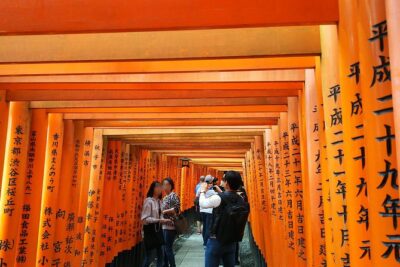
Kyoto Early Bird English Tour: Fushimi-Inari and Arashiyama
Read our review →
Nara Early Bird Tour (Kyoto Departure Option Available)
Read our review →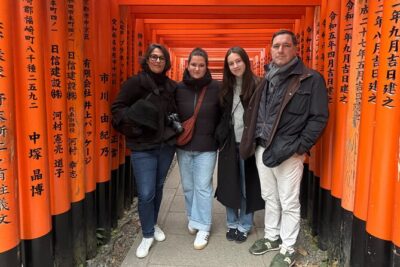
Kyoto Early Bird English Tour: Fushimi Inari & Gion(Private opt)
Read our review →Browse the lists this tour appears in