
REVIEW · FUSHIMI INARI SHRINE TOURS
Gion and Fushimi Inari Shrine Kyoto Highlights with Government-Licensed Guide
Fushimi Inari’s endless vermilion torii and Gion’s quiet lanes make an unusual pair. One gives you Kyoto’s most famous shrine views, while the other brings you into a district shaped by tea houses, geiko, maiko, and old wooden streets. I like the small group of up to 10 and the chance to walk in places cars cannot reach. I also like the clear cultural focus, especially the explanations of the difference between maiko and geiko.
The main caution is the tour’s broad six-hour plan. Fushimi Inari, Gion, Yasaka Shrine, Kiyomizu-dera, and Kennin-ji are spread across Kyoto, yet no private vehicle is included. Confirm exactly how the group moves between distant stops, and remember that admission to Kiyomizu-dera and Kennin-ji is not covered.
In This Review
- Key points at a glance
- Why this Kyoto route is appealing
- Starting at Tatsumi Daimyojin
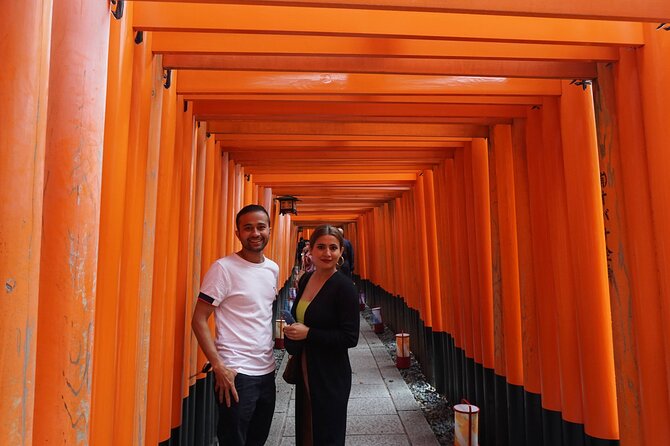
- One hour beneath Fushimi Inari’s torii
- Gion’s lanes, canals, and tea houses
- The Shirakawa Area and a quieter Gion
- Yasaka Shrine, Kyoto’s Gion gateway
- Kiyomizu-dera on the Higashiyama hills
- Kennin-ji and the temple grounds near Hanamikoji
- What the guide adds
- Six hours on foot: who will manage it well
- Is $154.37 a fair price?
- Should you book this Kyoto walk?
- FAQ
- How long does the tour last?
- Where does the tour start?
- Where does the tour end?
- Is transportation included?
- What is the maximum group size?
- Is admission to Fushimi Inari Shrine included?
- Are Kiyomizu-dera and Kennin-ji admission fees included?
- Does the tour include a geisha show?
Key points at a glance
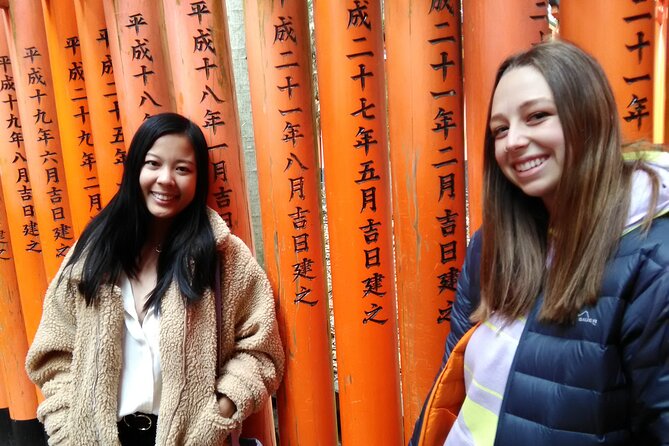
- Fushimi Inari’s torii gates: You get about an hour at Kyoto’s best-known Shinto shrine, with free admission.
- Gion after dark: A guide helps you handle narrow lanes, tea-house districts, and local etiquette with more confidence.
- Maiko and geiko context: The tour explains the training and roles behind Kyoto’s geisha culture.
- Small walking group: The maximum of 10 people makes it easier to hear the guide and ask questions.
- Several historic stops: Yasaka Shrine, Tatsumi Daimyojin, Kiyomizu-dera, and Kennin-ji add variety.
- Paid temple entries: Kiyomizu-dera and Kennin-ji admission costs extra, so add those fees to the advertised price.
Why this Kyoto route is appealing
This experience tries to solve a common Kyoto problem: the city’s most interesting areas are easy to reach, but not always easy to understand. Gion can feel like a maze of lanes and private tea houses. Fushimi Inari is simple to find, yet a guide can explain why the shrine matters and how to make better use of your time there.
The route also gives you several different faces of Kyoto. Fushimi Inari is a major Shinto site with thousands of orange-red torii gates. Gion brings old streets, canals, restaurants, and tea houses. Kiyomizu-dera offers a major Buddhist temple on the Higashiyama hills, while Kennin-ji provides calmer temple grounds close to Gion’s main streets.
That variety is the tour’s greatest strength. You do not spend six hours looking at one type of attraction. You move from a famous shrine to traditional neighborhoods and then to major temples.
The experience is listed at $154.37 per person. That is a serious price for a group tour, so value depends on what you want from a guide. You are paying for an English-speaking, government-licensed local guide, route planning, cultural explanation, and the convenience of seeing several important places in one outing.
The price looks less attractive if you mainly want photographs and already understand Kyoto’s layout. It becomes more reasonable if you value explanations about geiko and maiko, want help with Gion’s lanes, and prefer a compact group instead of a large coach tour.
More ways to walk Fushimi Inari:
- Kyoto: Fushimi Inari, Kinkakuji, Bamboo Grove 1 Day Bus Tour
★ 4.8 · 4,316 reviews - Fushimi Inari Hidden Hiking Tour (Private Option Available)
★ 5.0 · 1,750 reviews - Kyoto/Osaka: Nara, Fushimi Inari Taisha, Arashiyama Bus Tour
★ 4.7 · 1,275 reviews
Starting at Tatsumi Daimyojin
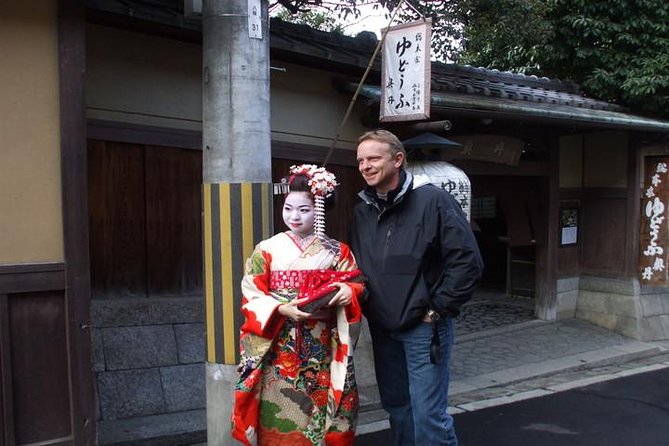
The meeting point is Tatsumi-jinja Shrine, also called Tatsumi Daimyojin, at Motoyoshicho in Kyoto’s Higashiyama Ward. This small shrine sits near the Shirakawa part of Gion, an area associated with traditional tea houses and geisha activity.
Starting here gives the tour a more atmospheric beginning than meeting beside a large station. You are already inside the old Gion district, close to narrow streets and the canal. The tradeoff is simple: you must reach the meeting point yourself. Pick-up and drop-off are on foot, and no private vehicle is included.
Tatsumi Daimyojin itself is a brief stop, listed at about 10 minutes. Its story is not always clear, which can make the guide’s explanation especially useful. Do not expect a major shrine complex. Think of it as a small cultural marker in one of Kyoto’s most traditional neighborhoods.
The tour ends back at the meeting point. Since the group includes several distant sites, ask for the day’s transport plan before setting out. The supplied details clearly identify a walking tour, but they do not explain how the group travels between Fushimi Inari and the Gion area. That matters when you are budgeting time, energy, and possible fares.
One hour beneath Fushimi Inari’s torii
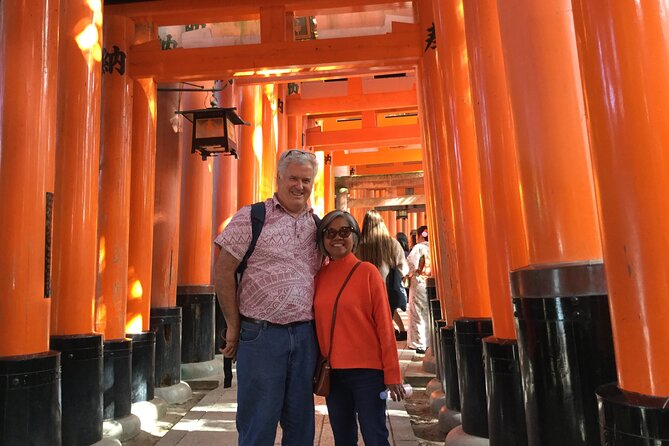
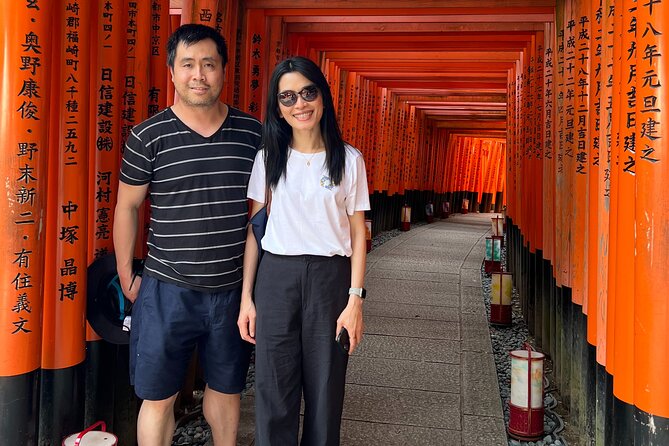
Fushimi Inari-taisha is the tour’s most instantly recognizable stop. Its trails pass through thousands of vermilion torii gates donated by individuals and businesses. The gates form long shaded corridors that climb behind the main shrine buildings.
You have about one hour here, with free admission. That is enough to see the lower shrine area and walk through part of the torii route, but it is not enough to cover every trail on the mountain. If you want to reach the highest points, you would need far more time and a willingness to climb.
A guide can help you understand what you are seeing instead of treating the shrine as a succession of photo stops. Fushimi Inari is an important Shinto shrine in southern Kyoto, and the gates are not simply decoration. The tour’s short visit favors a first look rather than a full exploration.
Wear comfortable shoes. This entire experience is on foot, and Fushimi Inari’s paths include stairs and uphill sections. The free entry is helpful, but the time limit means you should stay aware of the meeting arrangements.
Gion’s lanes, canals, and tea houses

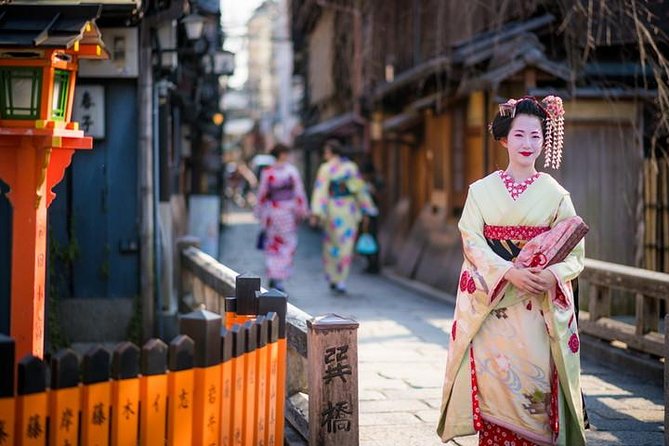
Gion is Kyoto’s best-known geisha district, stretching around Shijo Avenue between Yasaka Shrine and the Kamo River. Its streets contain shops, restaurants, and ochaya, the traditional tea houses where geiko and maiko entertain private clients.
The value of a guide is strongest here. Many lanes are narrow, quiet, and not designed for cars. A local guide can point out the difference between public streets and more private areas, explain the district’s customs, and help you avoid treating working neighborhoods like a stage set.
You may see maiko or geiko, but you should not book this tour expecting a guaranteed sighting. One evening may bring an unexpected encounter, while another may not. A positive account of the tour described spotting several maiko and geiko, while another evening produced no such sighting. The sensible reason to join is the explanation of the district, not a promised photograph.
The guide also covers the path of study and training involved in becoming a geisha. You can learn how maiko and geiko differ, which adds meaning to what you see in the streets. Mari-san was praised for making this subject informative and enjoyable, and another guide was described as helpful in explaining Gion’s distinctive atmosphere.
Use respectful behavior here. Keep your distance, do not block lanes, and follow the guide’s instructions around tea houses. The tour is more valuable when you see Gion as a living neighborhood rather than a backdrop.
More evenings in Gion:
- Kyoto Geisha Walking Tour: Gion District & Hidden Gems
★ 4.7 · 3,273 reviews - Kyoto: Gion Magical Night Walking Tour with Geisha Trivia
★ 4.9 · 2,393 reviews - Kyoto: Gion Geisha District Walking Tour – Stories of Geisha
★ 4.7 · 2,187 reviews - Best of Kyoto: Gion, Geisha, Pagodas & Cobblestones
★ 4.9 · 2,058 reviews
The Shirakawa Area and a quieter Gion
The Shirakawa Area follows the Shirakawa Canal parallel to Shijo Avenue. Willow trees line the water, and traditional restaurants and ochaya face the lane. Some of these establishments have rooms overlooking the canal.
This part of Gion is especially suited to a walking tour because its appeal comes from small details: the canal, the old facades, the narrow paths, and the contrast between public streets and discreet entrances. Cars cannot give you the same view.
The area can also be quiet and restrained. Do not expect a long list of major monuments. You are here for atmosphere and context, with the guide connecting the scenery to Kyoto’s entertainment traditions.
This is one reason a small group helps. A group of 10 or fewer can stay together in narrow lanes without creating a large moving crowd. It is also easier to hear a guide when the street is quiet and the subject is subtle.
Yasaka Shrine, Kyoto’s Gion gateway
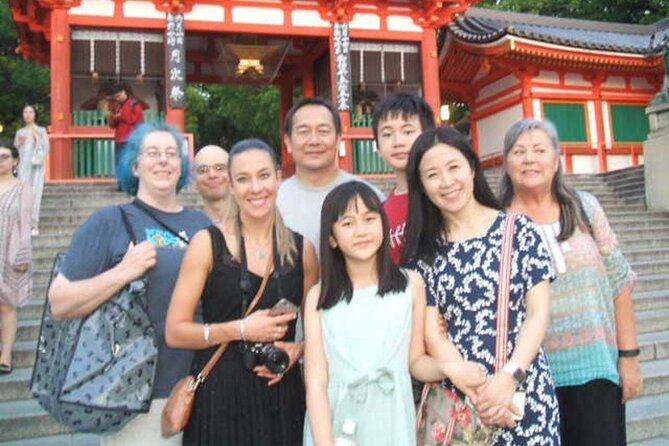
Yasaka Shrine, also called Gion Shrine, sits between Gion and the Higashiyama district. It was founded more than 1,350 years ago and remains one of Kyoto’s best-known Shinto shrines.
The scheduled stop is about 10 minutes, so expect a quick orientation rather than a full visit. Your guide can explain the shrine’s place in Kyoto and show how it connects Gion with the wider Higashiyama area.
The short timing is both useful and limiting. It gives you a sense of the site without letting one stop consume the evening, but you will not have much time for a slow look at every building or ceremony. If Yasaka Shrine is a personal priority, plan to return independently.
Because admission is free, this stop adds value without another entry charge. Its location also makes it a practical bridge between the entertainment district and the temple streets farther east.
Kiyomizu-dera on the Higashiyama hills
Kiyomizu-dera is one of Kyoto’s major temples, founded more than 1,250 years ago. It sits partway up Mt. Otowa in the Higashiyama range, so reaching and exploring the temple involves walking on sloping streets and busy approaches.
The scheduled visit lasts about an hour. That gives you enough time for a useful introduction and a look around, though not necessarily a leisurely examination of every corner. The temple grounds are large, and the surrounding streets can take time to cross.
Admission is not included. This is an important cost detail because the tour price already sits above many short neighborhood walks. Ask the guide how entry is handled and have payment ready so you do not lose time.
Kiyomizu-dera adds scale to the tour. After small shrines and narrow lanes, you get a major temple with a long history and a hillside setting. The drawback is pace. A one-hour visit may feel brief if you want photographs, temple details, and time in the surrounding Higashiyama streets.
Kennin-ji and the temple grounds near Hanamikoji
Kennin-ji is close to Hanamikoji and Shijo streets, yet its grounds offer a calmer break from the surrounding city. The temple is known for expansive grounds and two dry gardens, which give you a different experience from the torii paths and Gion lanes.
The listed stop is only one minute, which is plainly too short for a meaningful temple visit. This may be a brief orientation point, a pass-by, or a timing error in the published schedule. You should ask the guide at the start how much time is actually planned here.
Admission is not included. That makes the brief scheduled visit worth clarifying before you decide how much value to assign it. If you care about Kennin-ji’s gardens, you may prefer to return independently with enough time to look around.
Still, its location makes sense in the route. Kennin-ji sits very close to the parts of Gion covered on foot, and the temple grounds offer a change of mood without requiring a long transfer.
What the guide adds
The guide is the main reason to choose this experience instead of visiting the same places on your own. A licensed English-speaking local guide can connect shrine customs, temple traditions, Gion’s history, and the working world of geiko and maiko.
The strongest praise centers on clear explanations and a pleasant small-group pace. One guide, Mari-san, was singled out for making the evening informative and enjoyable. Another guide was appreciated for explaining the training involved in becoming a geisha and for adding a brief taste of local sweets.
That small sweets stop is not guaranteed as a formal feature, so do not book for food. It does show the kind of local detail that can make a neighborhood walk feel more personal.
The tour does not include a geisha show. This point matters because one poor account appears to describe a different program entirely, including a show and a Starbucks stop. The operator states that this experience is only a guided walking program and does not include those elements.
Six hours on foot: who will manage it well
The experience lasts about six hours and is designed for most participants. Service animals are allowed, and the meeting point is near public transportation. Still, this is a walking tour, so comfortable footwear and a sensible pace matter.
You should be prepared for shrine paths, temple approaches, narrow streets, and possible stairs. Fushimi Inari and Kiyomizu-dera alone can make the day physically active. The route may suit you if you want several major Kyoto sights without planning every turn yourself.
It may be less suitable if you dislike long walks, need frequent seated breaks, or want to explore each temple at your own speed. The maximum group size of 10 is modest, but it is still a group experience. You cannot combine multiple tour groups, and there is no private vehicle.
The tour is also better for first-time Kyoto visitors than for repeat visitors with a carefully planned Gion itinerary. A guide helps you get oriented quickly and supplies cultural context that is easy to miss when you are moving from one photo spot to the next.
Is $154.37 a fair price?
At $154.37 per person, this is not a cheap introduction to Kyoto. The price needs to cover more than admission, since several stops are free and two listed temple entries are extra.
I would judge the value by your priorities. The cost is easier to justify if you want a licensed English-speaking guide, a small group, and a broad route that combines Fushimi Inari with Gion and Higashiyama. It is harder to justify if you only want a one-hour Gion walk or if you plan to use public transit and guide yourself.
Group discounts may improve the price for parties booking together. Free cancellation is available up to 24 hours before the start time, which gives you some flexibility if your Kyoto schedule changes.
The fact that the experience is often booked 89 days ahead suggests that you should not leave it until the last moment if this exact route fits your plans. Still, check the current price and available dates before treating that booking pattern as a guarantee.
Should you book this Kyoto walk?
Book it if you want a guided first look at Gion, need help understanding maiko and geiko culture, and like the idea of combining Kyoto’s famous torii gates with traditional streets and major temples. The small group and local guide are the strongest reasons to pay more.
Think twice if you want long visits at every site, a guaranteed geisha sighting, a geisha performance, or private transport. The six-hour route covers a lot, and the one-minute Kennin-ji timing needs clarification.
Before paying, confirm three things: how the group travels between Fushimi Inari and Gion, the actual time allowed at Kennin-ji, and the additional admission fees for Kiyomizu-dera and Kennin-ji. If those details suit your pace, this can be a useful way to get your Kyoto bearings while learning what lies behind the city’s most famous streets.
FAQ
How long does the tour last?
The experience lasts approximately six hours.
Where does the tour start?
It starts at Tatsumi-jinja Shrine, also called Tatsumi Daimyojin, at Motoyoshicho in Kyoto’s Higashiyama Ward.
Where does the tour end?
The activity ends back at the meeting point.
Is transportation included?
No private vehicle is included. Pick-up and drop-off are on foot, and the meeting point is near public transportation.
What is the maximum group size?
The tour accepts a maximum of 10 travelers.
Is admission to Fushimi Inari Shrine included?
Yes. Fushimi Inari-taisha Shrine has free admission.
Are Kiyomizu-dera and Kennin-ji admission fees included?
No. Admission to Kiyomizu-dera and Kennin-ji is not included.
Does the tour include a geisha show?
No. This experience does not include a geisha show. It provides guided walking and explanations about Gion, maiko, and geiko culture.
More Shrines in Kyoto
- KYOTO Tea Ceremony with kimono near by Imamiya Jinjya Shrine
★ 5.0 · 343 reviews - Kyoto: 3-Hour Fushimi Inari Shrine Hidden Hiking Tour
★ 4.9 · 270 reviews - E-Bike Nara Highlights – Todaiji, Knives, Deer, Shrine
★ 4.8 · 186 reviews - Kyoto Magical Night English Tour: Gion & Fushimi Inari Shrine
★ 5.0 · 97 reviews
Recently added around Kyoto
- Higashiyama | Kyoto: Sakura Season Private Rickshaw Tour★ 5.0 · 3 reviews
- Kyoto Kimono Rental CHAMATSU|Kimono/Yukata Rental FamilyPlan★ 5.0 · 3 reviews
- Kyoto: Half-Day Private Guided Tour to the Old Town of Gion★ 4.4 · 3 reviews
- Nara Private Customizable Half Day Tour★ 5.0 · 3 reviews
- Kansai Region Hiking Adventure in Nara Kobe Kyoto and More★ 5.0 · 3 reviews
- Full Day Nara Deer, Temple, Shrine, Activities & Tea Ceremony★ 5.0 · 3 reviews
- Nara: Essential Private Tour with Deer Park and Temples★ 5.0 · 3 reviews
- Photo Shoot with a Private Vacation Photographer in KYOTO, JAPAN★ 5.0 · 3 reviews
Fushimi Inari Shrine Tours, compared.
Fushimi Inari, Kinkakuji, Bamboo Grove 1 Day Bus Tour
Read our review →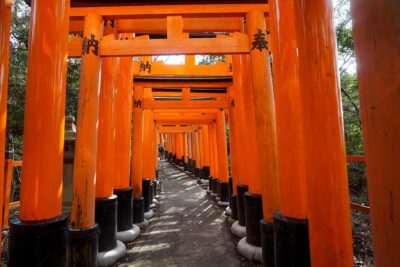
Fushimi Inari Hidden Hiking Tour (Private Option Available)
Read our review →
Kyoto/Osaka: Nara, Fushimi Inari Taisha, Arashiyama Bus Tour
Read our review →
Nijo, Kinkaku-ji, Arashiyama, Kiyomizu & Fushimi Inari
Read our review →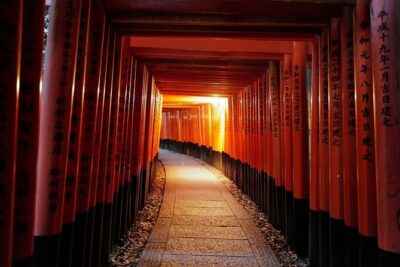
Kyoto Early Bird English Tour: Fushimi-Inari and Arashiyama
Read our review →
Fushimi, Arashiyama – Bamboo, Monkey, Torii & Secrets
Read our review →Browse the lists this tour appears in