
REVIEW · FUSHIMI INARI SHRINE TOURS
Fushimi Inari Shrine: Explore the 1,000 Torii Gates on an audio walking tour
Fushimi Inari is famous for its long tunnel of red torii gates, but the most striking part of this self-guided audio walk is the meaning behind what you are seeing. The route begins by Inari Station, passes fox statues and ritual spaces, then leads into the Senbon Torii and onward to a shrine deep in the forest.
I like the freedom to pause whenever you want, and I like that the tour explains small details many people hurry past, especially the hand-washing ritual, the fox imagery, and the Heavy-Light Stone. At $5.99, it is an inexpensive way to add context to a major Kyoto sight.
The catch is that you must bring your own smartphone and headphones, download the audio and map before arriving, and follow the route yourself. There is no live guide to answer questions or keep you on schedule, and the experience is non-refundable once booked.
In This Review
- Key points to know before you go
- Why the torii gates are only the beginning
- Starting at Inari Station and the fox statue
- Hand water and the basic Shinto rituals
- The main hall and the idea of wabi-sabi
- Entering the Senbon Torii
- Okusha Shrine and the Heavy-Light Stone
- The Root up Pine Tree and the final pond
- How the self-guided format works
- Is $5.99 good value in Kyoto?
- Who will enjoy this walk most?
- Practical details for a smoother visit
- Should you book the Fushimi Inari audio tour?
- FAQ
- Where does the audio tour start?
- Where does the tour end?
- How long does the tour take?
- What app do I need?
- Is the tour available offline?
- Is the tour in English?
- Do I need to bring headphones?
- Are shrine entrance tickets included?
- Is transportation included?
- Can I cancel or change the booking?
Key points to know before you go

- Start by the fox statue at Inari Station: The meeting point is easy to identify, opposite the station and at the entrance to Fushimi Inari Taisha.
- Listen offline: Download the VoiceMap app content, audio, map, and geodata before reaching the shrine.
- Learn the meaning behind the gates: The route explains Shinto practices, fox statues, wabi-sabi, and the purpose of the torii.
- Expect about 45 minutes to one hour: The route ends at Kumataka Shrine beside a pond, with the option to continue exploring.
- Walk through the Senbon Torii: The famous red gates are the visual center of the tour, but the audio gives you more than a photo stop.
- Pay $5.99 for flexibility: This suits independent sightseers who want a short introduction without joining a group.
Why the torii gates are only the beginning
The famous gates are reason enough to visit Fushimi Inari, but they are not the whole story. The shrine has influenced worshippers for more than 1,300 years, and the audio route helps you read the site as a place of living Shinto practice rather than a backdrop for photographs.
You begin opposite Inari Station, in front of a fox statue. This is a useful starting point because it puts you close to the shrine entrance and gives you an immediate clue about one of Fushimi Inari’s defining themes. Fox statues appear throughout the grounds and are closely linked with Inari worship.
The first audio segments set up the basic significance of the shrine. That context matters here. Without it, the gates can seem like one long red corridor. With it, you have a reason to notice the offerings, statues, buildings, and rituals along the way.
The experience is built for a small private party, but in practice it is a private audio tour for your own group. You are not tied to a guide’s pace or to a set departure time. That makes it easy to stop for a photograph, replay a section, or take a short break.
More ways to walk Fushimi Inari:
- Kyoto: Fushimi Inari, Kinkakuji, Bamboo Grove 1 Day Bus Tour
★ 4.8 · 4,316 reviews - Fushimi Inari Hidden Hiking Tour (Private Option Available)
★ 5.0 · 1,750 reviews - Kyoto/Osaka: Nara, Fushimi Inari Taisha, Arashiyama Bus Tour
★ 4.7 · 1,275 reviews
Starting at Inari Station and the fox statue
The start point is the fox statue at the entrance to Fushimi Inari Taisha, opposite Inari Station in Kyoto’s Fushimi Ward. The shrine is near public transportation, so you do not need to arrange a separate transfer as part of this activity.
Your first task is simply to identify the statue and open the VoiceMap app. Since the tour begins in a public shrine complex, a downloaded map is important. Internet access can be unreliable or inconvenient, and the audio tour specifically includes offline access to its map, audio, and location data.
The opening stop introduces the setting and the role of the fox statues. You will see these figures in different parts of the shrine, so hearing about them near the start gives you a useful thread to follow. It also makes the walk feel more connected, rather than a series of unrelated stops.
This is a good place to check your phone battery and headphones. The tour does not provide either one. You also need to bring your own food and drink if you want refreshments along the way, since those are not included.
Hand water and the basic Shinto rituals
The next part turns to the significance of the shrine, followed by an explanation of a ritual called Hand Water. This is one of the more practical sections because it helps you understand what people are doing at the shrine instead of treating the ritual area as scenery.
The audio format works well for this kind of explanation. You can stand to one side, listen, and watch the movement around you without needing to crowd around a live guide. You can also pause if the area feels busy or if you want a moment to take in the details.
The route does not charge an entrance fee for the shrine itself, and the tour has no museum or attraction tickets included because none are needed for the basic walk. The $5.99 price is therefore mainly paying for the app route, recorded interpretation, map, and the convenience of having the explanation in your pocket.
For a short Kyoto activity, that is fair value. It costs far less than a live private guide, though it cannot offer personal answers or adjust the content in real time.
The main hall and the idea of wabi-sabi
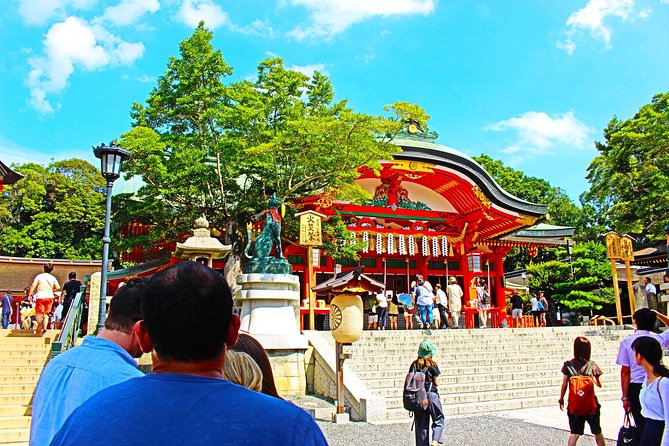
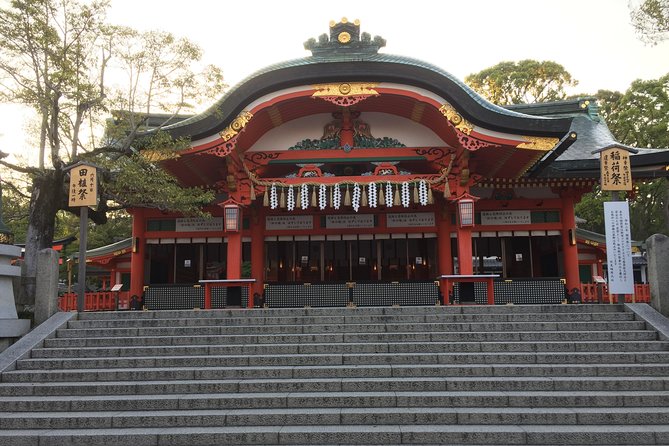
A later stop brings you to the beautiful main hall. This gives you a chance to shift from small ritual details to the shrine’s central architecture and atmosphere.
The audio then discusses wabi-sabi, a Japanese idea often associated with simplicity, imperfection, age, and the passing of time. The tour uses the shrine as a place to consider that idea, rather than treating the main hall as a quick photograph before rushing onward.
This portion may appeal most to people who want more than a checklist of famous sights. You are not simply told where to stand for the best picture. You are encouraged to look at the place with a little more patience and notice how ritual, weather, materials, and quiet spaces shape the experience.
That said, the walk is still short. You should think of it as an introduction, not an exhaustive study of Fushimi Inari’s religious traditions or architecture. The audio gives you a clear framework for the visit, but you will need more time if you want to explore the entire shrine complex.
More Kyoto shrines:
- KYOTO Tea Ceremony with kimono near by Imamiya Jinjya Shrine
★ 5.0 · 343 reviews - Kyoto: 3-Hour Fushimi Inari Shrine Hidden Hiking Tour
★ 4.9 · 270 reviews - E-Bike Nara Highlights – Todaiji, Knives, Deer, Shrine
★ 4.8 · 186 reviews - Kyoto Magical Night English Tour: Gion & Fushimi Inari Shrine
★ 5.0 · 97 reviews
Entering the Senbon Torii

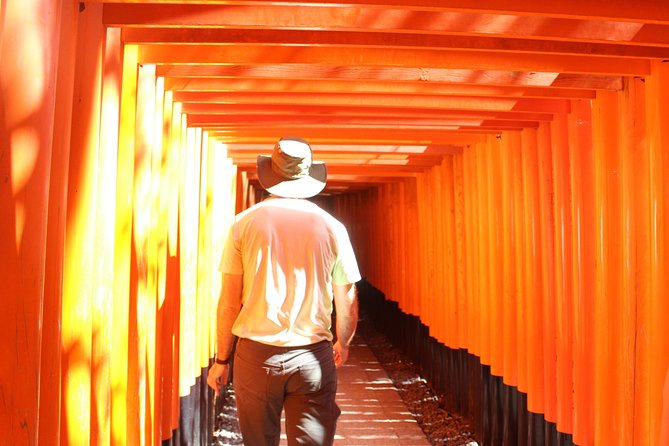
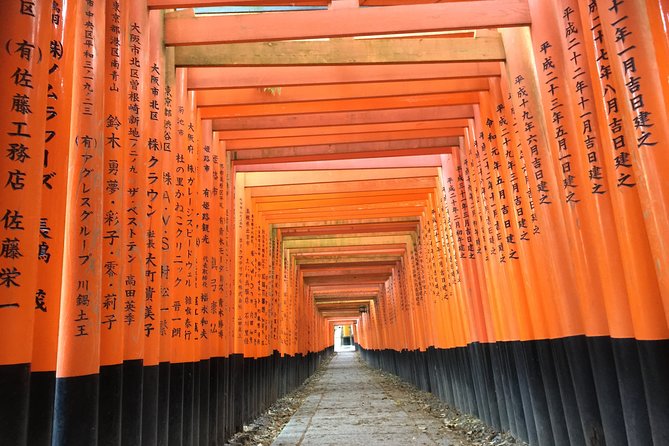
The main visual event arrives when you pass through the Senbon Torii, the 1,000 torii gates. This is the section most people come to see, and the audio gives it a stronger sense of purpose than a simple walk-through.
The gates form a bright red passage through the wooded slopes of the shrine. Their repetition creates the famous view, but it can also make the route feel similar from one stretch to the next. Listening as you walk helps break up that repetition and gives you details to notice.
You will want to allow time for photographs, even though the stated tour length is about 45 minutes to one hour. The audio may fit within that window, but your actual visit can take longer if you stop often. The route is self-paced, so this is not a problem unless you have a tight schedule.
The route description includes two stops associated with the Senbon Torii. Treat that as a sign that the gates are not one single moment. There is an initial passage into the famous corridor and another point where the tour continues the explanation as you move farther along.
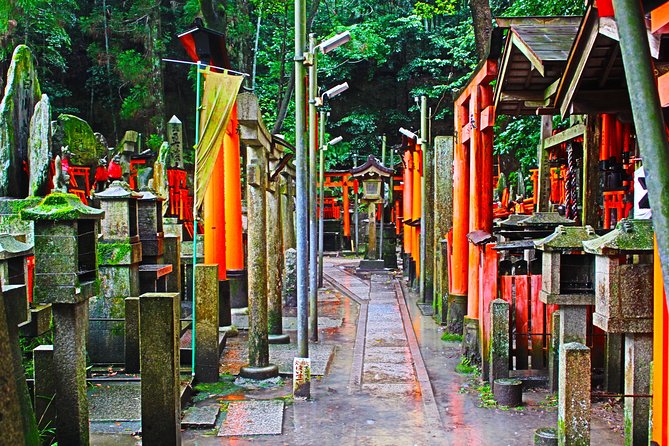
The forest setting is part of the appeal. You are walking through a shrine environment that changes as you leave the busy entrance areas behind. The audio points you toward the spiritual meaning of the place, while the path itself gives you the quieter experience promised by the route.
Okusha Shrine and the Heavy-Light Stone
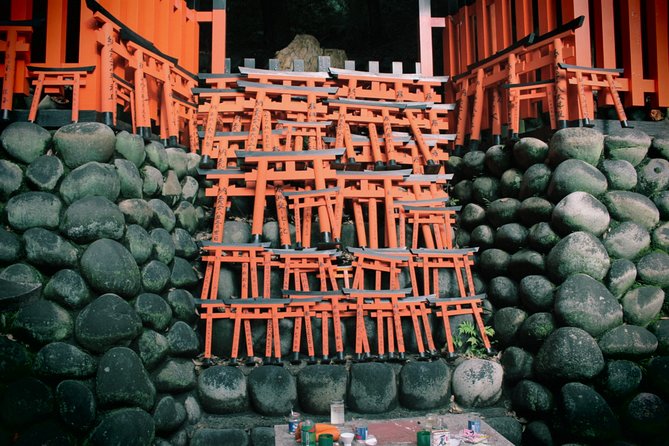
After the torii gates, the audio directs you toward the Okusha shrine. This stop helps show that Fushimi Inari is more than its entrance buildings and most photographed corridor. The shrine continues into the wooded complex, and the route takes you farther into that setting.
The Heavy-Light Stone is one of the tour’s most distinctive stops. Here, you have the opportunity to make a wish by lifting or testing the stone, according to the shrine tradition explained during the walk. The tour presents it as a hands-on point of interest, not just another object to pass.
This is exactly the kind of detail that adds value to a short audio tour. You can find the red gates in countless photographs, but a ritual object such as the Heavy-Light Stone gives you something specific to look for and a reason to slow down.
Keep in mind that the experience does not promise a private moment at each stop. Fushimi Inari is one of Kyoto’s most popular shrines, and the route takes place in a public setting. The self-guided format gives you control over timing, but it cannot remove other people from the path.
The Root up Pine Tree and the final pond
A brief stop by the Root up Pine Tree adds another unusual point of interest. The audio explains more about the tree, giving you one last example of how the route draws attention to features you might otherwise miss.
The tour ends at Kumataka Shrine, beside a lovely pond deeper in the shrine complex. This is a sensible finishing point. You can pause there, take a break, or continue exploring on your own rather than being led straight back to the entrance.
The end point is not the same as the starting point. That matters if you are meeting someone, catching transport, or planning another activity immediately afterward. The tour does not include transportation back to Inari Station, so leave yourself time to orient yourself after the audio ends.
The ending also gives the walk a little flexibility. You are not forced to stop the moment the recording finishes. If you still have energy, you can keep exploring the shrine. If the heat, crowds, or uphill walking have worn you down, the pond offers a natural place to pause before deciding what comes next.
How the self-guided format works
The tour uses the VoiceMap app on Android and iOS. Your purchase includes lifetime access to the English audio tour, along with offline access to the map and geodata.
I would download everything before leaving your hotel. One of the strongest practical tips from the available feedback is simple: do not wait until you reach the shrine. A fully downloaded tour means you are not depending on mobile data while standing at the entrance.
You should also bring charged headphones and a smartphone. Those are not provided, and the audio format is much easier to use if you can hear each stop clearly while keeping the phone in your hand or pocket.
The app format lets you move at your own speed. You can stop the audio, take pictures, or replay a section. It also means you are responsible for starting at the correct fox statue, following the route, and staying aware of your surroundings.
The activity is described as suitable for most people. Still, the walk takes place through a large shrine complex with forest paths and a route that continues beyond the main entrance. The available information does not specify a detailed accessibility plan, so you should check directly if you need particular assistance.
Is $5.99 good value in Kyoto?
At $5.99 per person, this is a low-cost add-on to a Kyoto visit. The shrine itself does not require a ticket for the basic visit, so you are paying for interpretation and structure rather than admission.
I see the best value for someone visiting Fushimi Inari independently who wants a clear introduction but does not want to book a live guide. The tour covers the fox statues, hand water, main hall, wabi-sabi, Senbon Torii, Okusha shrine, Root up Pine Tree, and Heavy-Light Stone in less than an hour.
A live guide can respond to your questions and change the route around your interests. This audio tour cannot do that. On the other hand, a live tour usually costs more and fixes your pace. Here, you can take a break or continue listening when it suits you.
The price is especially reasonable if you plan to spend extra time at the shrine after the recording ends. You get a short guided framework, then the freedom to explore without paying for additional commentary.
The main financial risk is the strict cancellation rule. The experience is non-refundable and cannot be changed for any reason. Only book once your Kyoto plans are firm.
Who will enjoy this walk most?
I would choose this tour if you like to sightsee independently, want English explanations, and prefer a quiet audio guide to a fixed group. It is also useful if a previous visit to Fushimi Inari felt rushed and you want to return with more time for the shrine’s smaller details.
It suits first-time Kyoto visitors who know the torii gates are famous but are unsure what else to look for. It can also work well as a short first activity in the city, giving you an introduction to Shinto customs and Japanese aesthetic ideas before a larger day of sightseeing.
You may want a different option if you strongly prefer personal interaction, dislike wearing headphones, or need a guide to handle navigation for you. The app gives you freedom, but that freedom comes with a little responsibility.
The tour is in English only. It is a private activity for your own group in the sense that you are not sharing an audio guide with other participants, but the shrine itself remains a public place.
Practical details for a smoother visit
Plan for 45 minutes to one hour of listening and walking, then add extra time for photographs, pauses, and any exploration after the final stop. The route is available every day, and the shrine is listed as open around the clock, though the audio tour still depends on your ability to reach the starting point and use your phone.
Begin at the fox statue opposite Inari Station. Confirm the starting location before you go because the end point is at Kumataka Shrine, by a pond farther inside the complex.
Wear comfortable shoes and carry water, since the route moves through the shrine grounds rather than staying in one compact courtyard. Food and drink are not included, and transportation is not part of the activity.
Most important, download the tour before arrival. Install the VoiceMap app, save the audio and map for offline use, and bring headphones. These small steps prevent the most avoidable problems.
Should you book the Fushimi Inari audio tour?
Book it if you want the famous red gates with a little more meaning, and if you value the freedom to walk without a group. The fox statues, hand-water ritual, wabi-sabi explanation, Heavy-Light Stone, and final pond give you more to notice than the standard entrance-and-photo visit.
Skip it if you only want a quick look at the gates, already have a full guide arranged, or need a flexible cancellation policy. For $5.99, this is a modest gamble, but the no-refund rule makes preparation important.
My call: this is a practical, good-value choice for an independent Kyoto visit. Download it first, allow more than an hour if you take your time, and treat the audio as a thoughtful introduction rather than a complete tour of the entire shrine.
FAQ
Where does the audio tour start?
It starts at the fox statue opposite Inari Station, at the entrance to Fushimi Inari Taisha Shrine in Kyoto’s Fushimi Ward.
Where does the tour end?
It ends at Kumataka Shrine, beside a pond deeper inside the shrine complex.
How long does the tour take?
The estimated duration is 45 minutes to one hour.
What app do I need?
You need the VoiceMap app, which is available for Android and iOS devices.
Is the tour available offline?
Yes. The tour includes offline access to the audio, map, and geodata. Download the material before arriving at the shrine.
Is the tour in English?
Yes. The purchase includes lifetime access to the English version of the audio tour.
Do I need to bring headphones?
Yes. A smartphone and headphones are not included, so you need to provide your own.
Are shrine entrance tickets included?
There are no tickets or entrance fees included for museums or other attractions along the route. The supplied details do not list a separate ticket for the shrine walk itself.
Is transportation included?
No. Transportation is not included. You are responsible for reaching the starting point and arranging your onward journey after the tour ends.
Can I cancel or change the booking?
No. The experience is non-refundable and cannot be changed for any reason after booking.
More Self-Guided Tours in Kyoto
- One Day Private Customized Self-Guided Tour in Kyoto
★ 4.2 · 11 reviews - Kyoto/Osaka: Nara Customizable Self-Guided Tour with Driver
★ 5.0 · 5 reviews
More Walking Tours in Kyoto
- Kyoto Geisha Walking Tour: Gion District & Hidden Gems
★ 4.7 · 3,273 reviews - Kyoto: Gion Magical Night Walking Tour with Geisha Trivia
★ 4.9 · 2,393 reviews - Kyoto: Gion Geisha District Walking Tour – Stories of Geisha
★ 4.7 · 2,187 reviews - Night Walk in Gion: Kyoto’s Geisha District
★ 4.5 · 2,003 reviews
Recently added around Kyoto
- Higashiyama | Kyoto: Sakura Season Private Rickshaw Tour★ 5.0 · 3 reviews
- Kyoto Kimono Rental CHAMATSU|Kimono/Yukata Rental FamilyPlan★ 5.0 · 3 reviews
- Kyoto: Half-Day Private Guided Tour to the Old Town of Gion★ 4.4 · 3 reviews
- Nara Private Customizable Half Day Tour★ 5.0 · 3 reviews
- Kansai Region Hiking Adventure in Nara Kobe Kyoto and More★ 5.0 · 3 reviews
- Full Day Nara Deer, Temple, Shrine, Activities & Tea Ceremony★ 5.0 · 3 reviews
- Nara: Essential Private Tour with Deer Park and Temples★ 5.0 · 3 reviews
- Hiking Tour for Sacred Sites in Kyoto with a Guide★ 5.0 · 3 reviews
Fushimi Inari Shrine Tours, compared.
Fushimi Inari, Kinkakuji, Bamboo Grove 1 Day Bus Tour
Read our review →
Fushimi Inari Hidden Hiking Tour (Private Option Available)
Read our review →
Kyoto/Osaka: Nara, Fushimi Inari Taisha, Arashiyama Bus Tour
Read our review →
Nijo, Kinkaku-ji, Arashiyama, Kiyomizu & Fushimi Inari
Read our review →

Kyoto Early Bird English Tour: Fushimi-Inari and Arashiyama
Read our review →
Fushimi, Arashiyama – Bamboo, Monkey, Torii & Secrets
Read our review →Browse the lists this tour appears in