
REVIEW · KYOTO TEA CEREMONY EXPERIENCES
The Art of Mindful Living: Tea Ceremony in Kyoto
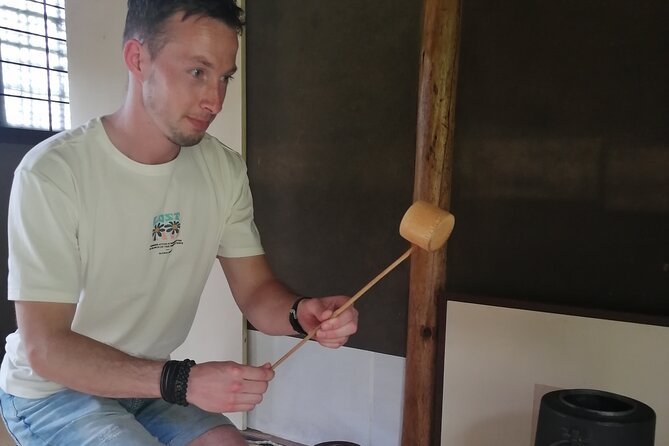
Kyoto’s tea ceremony is at its best when it feels personal rather than staged. At Kaze no Wa, Naomi welcomes you into an old Japanese residence, explains the meaning behind the ritual, serves organic Uji matcha and sweets, then lets you make your own tea. The setting includes a tea room and a peaceful garden where you can take photos.
I like the clear cultural explanation, which covers tea ceremony customs, matcha’s effects, types of Japanese tea, and proper drinking technique. I also like the practical touches: vegan and allergy-friendly sweets, chairs for those who prefer not to sit traditionally, and cocoa for children instead of matcha.
The main drawback is location. Kaze no Wa is in western Kyoto, in the direction of Kinkakuji and Arashiyama, and it is not close to the downtown sights. The one-hour session is good value at $44.42 per person, but you should allow extra travel time and check the route before booking.
In This Review
- Key points to know before booking
- Entering an old Kyoto residence for tea
- What Naomi explains before the tea is served
- Matcha, sweets, and the rhythm of the ceremony
- Making your own bowl of matcha
- The garden is part of the experience
- Adding a kimono, hakama, or child’s outfit
- Why the location matters in a Kyoto day plan
- Group size, private sessions, and communication
- Is $44.42 good value for one hour?
- Who should book this tea ceremony?
- Booking and cancellation details
- My recommendation
- FAQ
- How long does the tea ceremony last?
- Where does the activity start and end?
- How much does the tea ceremony cost?
- How many people can join a regular session?
- Is a private tea ceremony available?
- Is kimono rental available?
- Are hair styling and makeup included with kimono rental?
- Can the experience accommodate vegan diets and food allergies?
- Can children have something other than matcha?
- Is the tea ceremony suitable for someone who cannot sit on the floor?
- Can I take photographs during the activity?
- What happens if the experience is canceled because of weather?
- What is the cancellation deadline?
Key points to know before booking
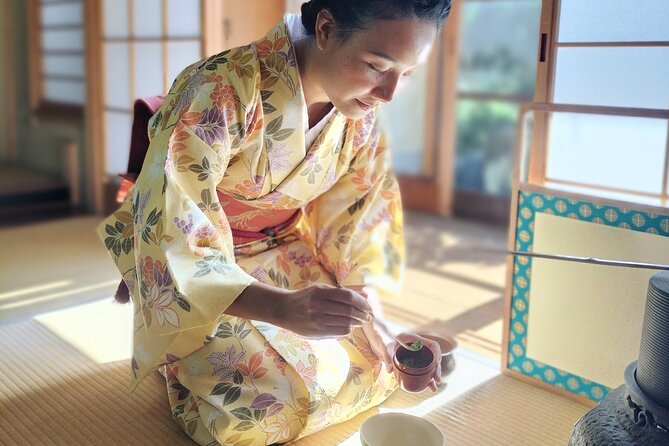
- A real hands-on tea session: You watch Naomi perform the ceremony, then whisk matcha yourself.
- An old house and garden: The tea room gives the activity a traditional setting, while the garden provides a calm place for photographs.
- Organic Kyoto Uji matcha: The tea comes from Uji, the area near Kyoto famous for matcha production.
- Flexible food and seating options: Vegan choices, allergy accommodations, chairs, and cocoa for children are available.
- Optional kimono photography: Kimono rental costs ¥4,000, with hakama rental at ¥8,000 and a baby romper-style kimono at ¥600.
- A quieter western Kyoto location: The address works well alongside Kinkakuji or Arashiyama, but less well for a quick stop from central Kyoto.
Entering an old Kyoto residence for tea
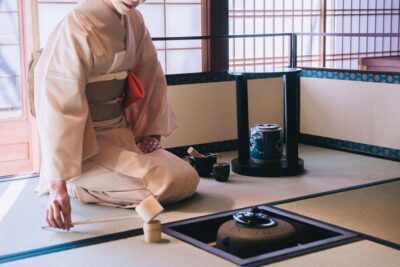
The appeal begins before the first sip. You meet at Kaze no Wa, a Japanese old house in Utanokitanoincho, Ukyo Ward. Inside, there is a dedicated tea ceremony room and a garden at the back. This is a more intimate setting than a large cultural show, and the small scale helps the ceremony feel focused.
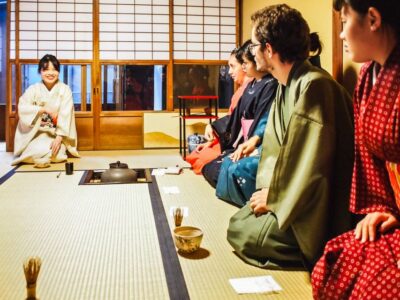
The group limit is six people for a standard session. That matters because tea ceremony has many small movements, and you can see more when the room is not crowded. Larger groups may be accommodated, but you should ask in advance rather than assume the regular format applies.
Naomi leads the session and explains the customs in clear English. Her approach combines demonstration with conversation, so you are not simply sitting quietly while someone performs a formal ritual. She explains what you are seeing and why it matters, which makes the ceremony easier to follow even if this is your first contact with Japanese tea culture.
Chairs are provided. That small detail is important. Traditional tea rooms often involve sitting on the floor, but this session does not require you to manage a formal kneeling position for an hour. You can focus on the ceremony instead of worrying about stiff legs.
More tea ceremonies in Kyoto:
- Kyoto: Tea Ceremony in a Traditional Tea House in Kiyomizu
★ 4.9 · 3,519 reviews - Kyoto: Tea Ceremony Ju-An at Jotokuji Temple
★ 4.9 · 3,207 reviews - Kyoto: 45-Minute Tea Ceremony Lesson Experience
★ 4.3 · 2,378 reviews
What Naomi explains before the tea is served
The opening explanation covers several useful subjects. You learn about the history of the tea ceremony, the effects of matcha, different kinds of matcha and Japanese tea, and the correct way to drink matcha.
This background gives the ritual a clear shape. Bowing, turning the bowl, holding it properly, and drinking at the right point can seem mysterious if you only watch. Once Naomi explains the ideas behind these actions, they feel less like rules to memorize and more like a way of showing care toward the person who prepared the tea.
The session also gives you a chance to understand the difference between simply drinking powdered green tea and taking part in a tea ceremony. Matcha has a strong flavor and a fine texture, so learning how to approach it helps. The ceremony asks you to slow down, notice the bowl and sweets, and pay attention to the person serving you.
This is where the experience works well for families. Children may not want a full bowl of matcha, and cocoa can be served instead. Adults can still take part in the ritual while younger children have a gentler drink.
Matcha, sweets, and the rhythm of the ceremony
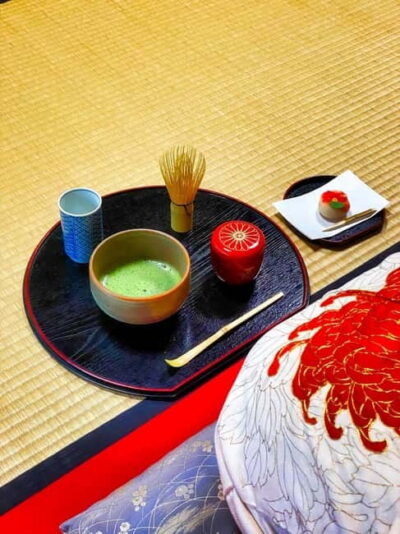
During the formal part, Naomi serves organic Uji matcha made in Kyoto. Uji matcha is a fitting choice for a Kyoto tea ceremony because Uji is closely linked with Japanese tea production. The tea is not presented as a famous brand, but the focus is on quality and taste.
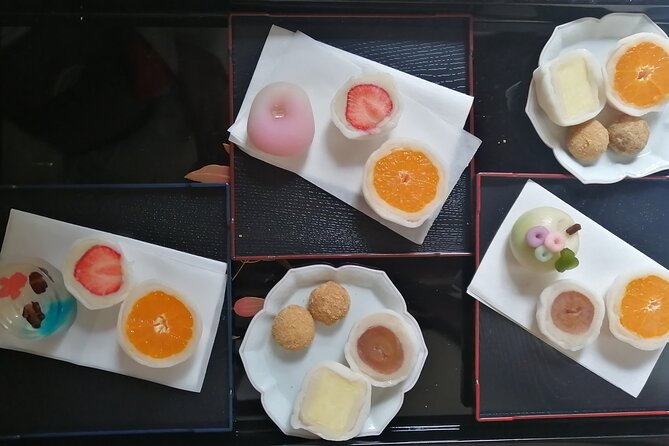
One Japanese sweet is included in the price. You can choose a traditional bean-paste sweet or a fresh-fruit daifuku. The fruit daifuku offers a softer, lighter option, while the bean-paste choice gives you a more classic flavor pairing for matcha.
The sweet is not just a snack on the side. Japanese tea ceremony traditionally uses food to prepare the palate for the tea. The sweetness helps balance matcha’s bitter, grassy edge. For many first-time drinkers, this pairing makes the tea easier to appreciate.
If you want to try both sweet options, you can pay an additional ¥500 per person. That is a reasonable extra only if tasting the difference matters to you. For most people, the included sweet is enough for a one-hour session.
Food allergies and vegan requirements can be accommodated. You should share those needs when arranging the experience, rather than waiting until you arrive. The available choices make this a more practical pick for mixed groups with different diets.
Making your own bowl of matcha
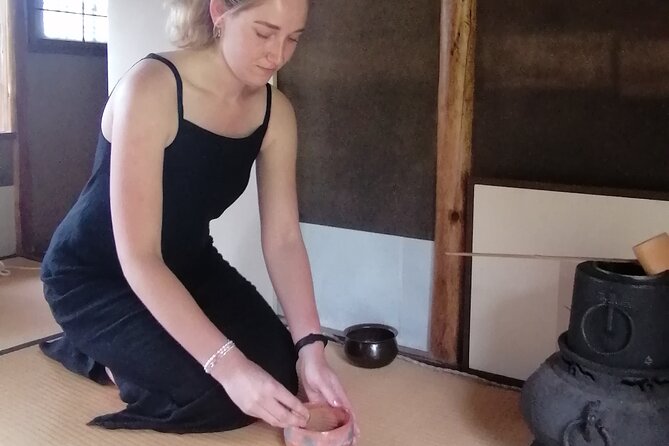
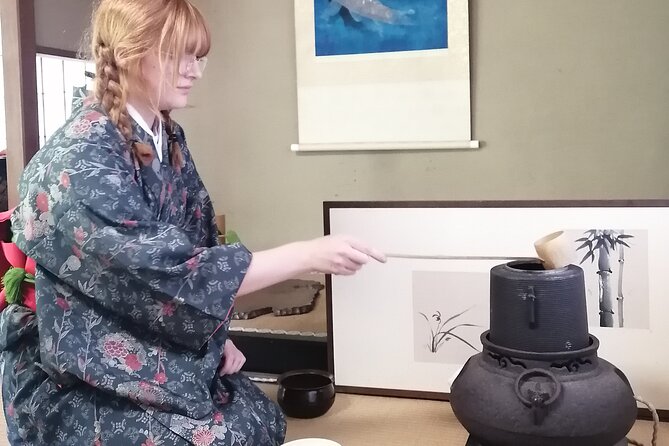
The most useful part of the session comes after the demonstration. You get to prepare matcha yourself.
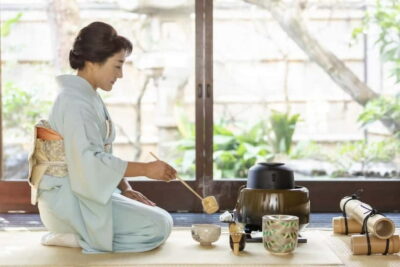
This turns the activity from a performance into a lesson. You can see how the powder is handled, how water is added, and how the tea is whisked. The result may not look as polished as Naomi’s bowl, and that is part of the value. You learn by trying rather than by watching from the edge of the room.
The hands-on portion also gives you a better sense of the care involved. Whisking matcha is simple in principle, but the texture changes with the technique. A few minutes of practice helps you understand why the preparation is treated as a careful craft.
I would choose this experience over a ceremony where you only sit and observe. The formal demonstration gives you the cultural context, while making tea lets you carry a small practical memory away with you. You might even prepare matcha more calmly at home afterward, though the session does not include equipment to take with you.
A completely different side of Kyoto:
- PERFECT KYOTO 1-Day Bus Tour
★ 5.0 · 13,518 reviews - Kyoto: Fushimi Inari, Kinkakuji, Bamboo Grove 1 Day Bus Tour
★ 4.8 · 4,316 reviews - Kyoto Geisha Walking Tour: Gion District & Hidden Gems
★ 4.7 · 3,273 reviews - Kyoto: Gion Magical Night Walking Tour with Geisha Trivia
★ 4.9 · 2,393 reviews
The garden is part of the experience
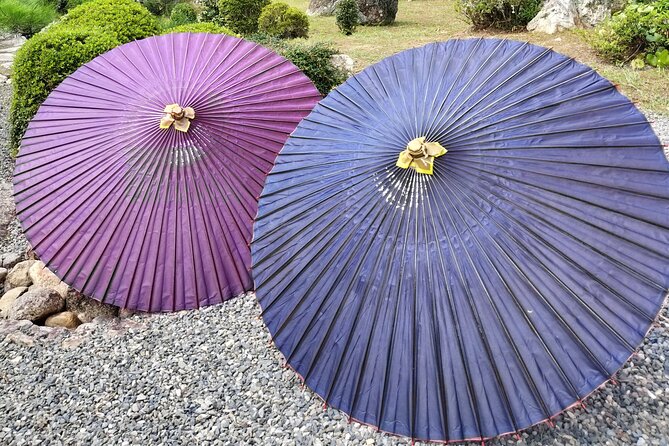
The garden at the back adds more than decoration. It gives you a quiet outdoor space before the ceremony and a natural setting for photographs.
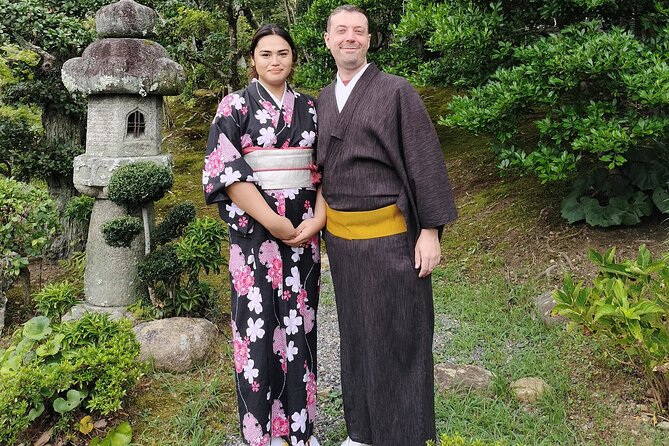
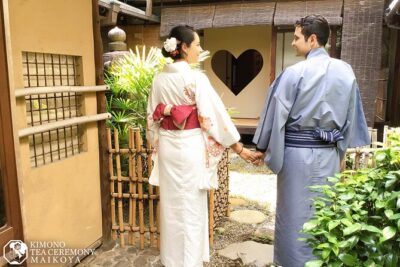
You can take photos during the tea ceremony and in the garden before it begins. The garden is especially useful if you rent a kimono. The traditional clothing, old house, tea room, and garden all belong to the same visual setting, so your photographs feel connected to the activity rather than like a separate costume stop.
Rain does not automatically ruin the photo opportunity. You can take pictures while holding a Japanese umbrella. If you are wearing a kimono, the staff asks you to use an umbrella in wet weather rather than stand outside and get soaked. You cannot take outdoor kimono photos in the rain without one.
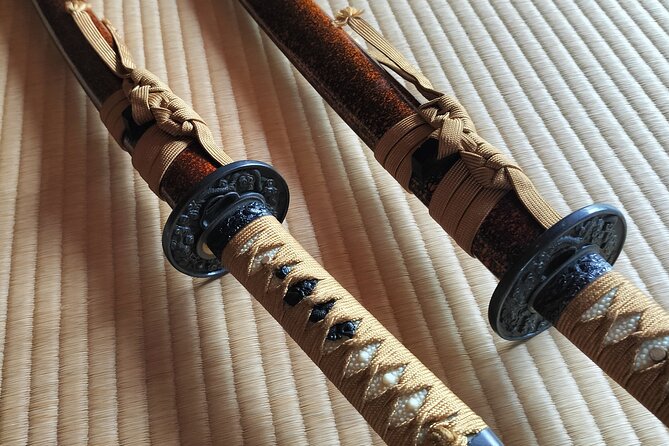
Private sessions have an extra photography option. You can use a traditional Japanese umbrella and an imitation sword for pictures. The sword is only for photographs, not a part of the ceremony, and the private format must be arranged before booking.
Adding a kimono, hakama, or child’s outfit
Kimono rental costs ¥4,000 during the tea ceremony. Hakama rental costs ¥8,000, and a baby romper-style kimono costs ¥600. An undershirt rental is ¥200.
The rental option can make the visit feel more special, especially if you want photographs in the garden. It also adds time. Putting on a kimono takes longer than changing into ordinary clothes, and one of the supplied comments specifically noted that the process can affect the schedule.
Hair styling and makeup are not included. The staff does provide hair accessories that you can use freely with a rented kimono. Keep your expectations practical: this is a tea ceremony with clothing rental, not a full beauty or portrait package.
For that reason, I would add the kimono only if you have enough room in your day and care about the photographs. If you mainly want to learn about tea, the basic $44.42 session is the better value. If you want a traditional dress-up memory and garden pictures, the ¥4,000 upgrade is easier to justify.
Why the location matters in a Kyoto day plan
Kaze no Wa is near public transportation, but it is not in central Kyoto. The address is in western Kyoto, toward Kinkakuji Temple and Arashiyama. That means the location can work well as part of a sightseeing day in that area.
It is less convenient if you are staying near Kyoto Station, Gion, or downtown and want to fit in a quick activity between other central stops. The one-hour ceremony is short, but the journey can make the total commitment much longer.
I would pair it with western Kyoto rather than cross the city for the session alone. You can plan the tea ceremony around Kinkakuji or Arashiyama, then avoid retracing your route. Check your transportation plan carefully because the meeting point is not near the main downtown cluster.
The premises can be entered with a stroller, but the stroller cannot be taken inside the building. Families with babies should be ready to leave it outside the interior area and use the child’s rental outfit only if that arrangement suits them.
Group size, private sessions, and communication
The normal maximum is six people. A small group helps preserve the quiet mood and gives each person a chance to make tea and ask questions.
Private sessions are available, but you need to contact the provider before booking. Do not assume a standard reservation includes private use of the room or garden. Ask about the added price and exact arrangements before you pay for any upgrade.
Clear communication matters here because optional services include private ceremonies, kimono rental, hakama rental, and extra sweets. One person had confusion about upgrade payment, so I recommend confirming every added cost in writing before the session.
Naomi has strong English communication, which makes the lesson accessible to international visitors. She also appears to keep the tone relaxed rather than overly solemn. That balance is helpful because the ceremony has formal elements, but you are still there to learn and enjoy yourself.
Is $44.42 good value for one hour?
At $44.42 per person, this is not the cheapest way to drink matcha in Kyoto. You can find tea and sweets at ordinary cafés for much less.
The comparison is not quite fair, though. This price includes instruction, a cultural explanation, a formal serving of matcha, a Japanese sweet, and the chance to make your own tea in an old residence. You are paying for the setting and teaching as much as the drink.
I see good value here if you want context and participation. The price is harder to justify if you only want a quick bowl of matcha or a short photo stop. The activity is also more worthwhile for people who enjoy learning how things work, not just collecting a picture.
The optional costs can change the total. Kimono rental is ¥4,000, hakama is ¥8,000, and trying both sweets adds ¥500 per person. These extras are not necessary for the core experience, so you can keep the visit close to the advertised price.
Who should book this tea ceremony?
I would recommend it to first-time visitors who want a calm cultural activity with clear instruction. It suits couples, families, and small groups that want to do something more focused than another major sightseeing stop.
It is also a good choice if you have dietary needs. Vegan and allergy-friendly food can be arranged, and cocoa gives children an alternative to matcha. Chairs make the activity easier for people who do not want to sit on the floor.
You may want to skip it if your Kyoto schedule is packed with central sights and you do not want to spend time reaching western Kyoto. You should also think twice about the kimono option if you only have a narrow time window, since changing takes additional time.
The overall rating is 4.9 from 16 ratings, with 100 percent recommending the activity. The strongest pattern is clear: the host, calm atmosphere, garden, explanations, and chance to prepare tea are the main reasons to book. The one practical concern is the out-of-the-way location, not the ceremony itself.
Booking and cancellation details
Confirmation is sent within 48 hours, subject to availability. The experience normally lasts about one hour and returns to the same meeting point.
You can cancel for a full refund up to 24 hours before the start time. Cancellations or changes made less than 24 hours ahead are not accepted for a refund. The local Kyoto time applies.
The activity requires good weather and a minimum number of participants. If poor weather or low enrollment forces a cancellation, you can choose another date or receive a full refund.
My recommendation
Book this tea ceremony if you want more than a sweet drink and a quick costume photo. Naomi’s explanations, the chance to whisk your own matcha, and the old house setting give the hour real substance. The garden and optional kimono add a pleasant visual side without replacing the cultural lesson.
Plan it alongside Kinkakuji or Arashiyama, confirm any upgrades before booking, and tell the host about dietary needs in advance. If you can handle the western Kyoto location, this is a thoughtful, small-scale way to slow down and understand one of Japan’s most recognizable traditions.
FAQ
How long does the tea ceremony last?
The experience lasts approximately one hour.
Where does the activity start and end?
It starts at Kaze no Wa, 14 Utanokitanoincho, Ukyo Ward, Kyoto, 616-8201, Japan. The activity ends back at the same meeting point.
How much does the tea ceremony cost?
The listed price is $44.42 per person.
How many people can join a regular session?
The standard maximum is six participants. Larger groups may be accommodated, but you should contact the provider in advance.
Is a private tea ceremony available?
Yes. Private sessions are available, but you must contact the provider before booking to arrange one.
Is kimono rental available?
Yes. Kimono rental costs ¥4,000. Hakama rental costs ¥8,000, and a baby romper-style kimono costs ¥600. An undershirt rental costs ¥200.
Are hair styling and makeup included with kimono rental?
No. Hair styling and makeup are not provided. Hair accessories are available for guests to use freely.
Can the experience accommodate vegan diets and food allergies?
Yes. Vegan options and food allergy accommodations are available. Tell the provider about your needs in advance.
Can children have something other than matcha?
Yes. Cocoa can be provided for children instead of matcha.
Is the tea ceremony suitable for someone who cannot sit on the floor?
Yes. Chairs are provided.
Can I take photographs during the activity?
Yes. You can take photos during the ceremony and in the garden. In rainy weather, kimono photographs outside require an umbrella.
What happens if the experience is canceled because of weather?
You will be offered a different date or a full refund if poor weather causes the cancellation.
What is the cancellation deadline?
You must cancel at least 24 hours before the start time for a full refund. Changes or cancellations made less than 24 hours in advance are not refunded.
Recently added around Kyoto
- Higashiyama | Kyoto: Sakura Season Private Rickshaw Tour★ 5.0 · 3 reviews
- Kyoto Kimono Rental CHAMATSU|Kimono/Yukata Rental FamilyPlan★ 5.0 · 3 reviews
- Kyoto: Half-Day Private Guided Tour to the Old Town of Gion★ 4.4 · 3 reviews
- Nara Private Customizable Half Day Tour★ 5.0 · 3 reviews
- Kansai Region Hiking Adventure in Nara Kobe Kyoto and More★ 5.0 · 3 reviews
- Full Day Nara Deer, Temple, Shrine, Activities & Tea Ceremony★ 5.0 · 3 reviews
- Nara: Essential Private Tour with Deer Park and Temples★ 5.0 · 3 reviews
- Hiking Tour for Sacred Sites in Kyoto with a Guide★ 5.0 · 3 reviews
Kyoto Tea Ceremony Experiences, compared.
Tea Ceremony in a Traditional Tea House in Kiyomizu
Read our review →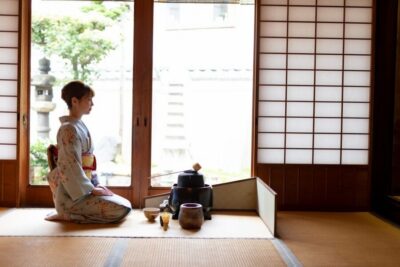
Tea Ceremony in 100-year-old Kyo-Machiya Townhouse
Read our review →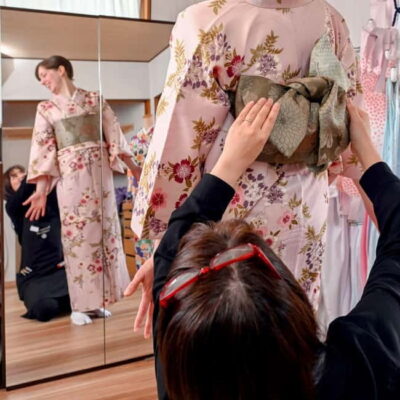
Browse the lists this tour appears in