
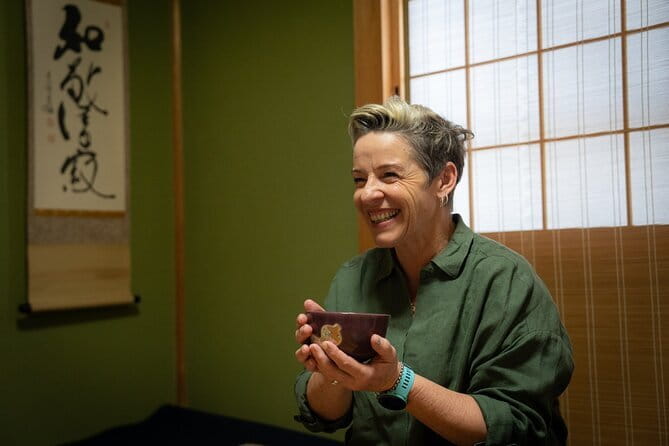
REVIEW · KYOTO TEA CEREMONY EXPERIENCES
Tea Ceremony Experience in Kyoto
The best part of this Kyoto tea ceremony is that you are not only watching. With guidance from Chisato, you can prepare your own matcha, learning how whisking, posture, and careful movements fit into the ritual. It is a friendly way to meet Japanese tea culture without needing prior experience.
I like the small maximum group of six, which gives you room to ask questions and receive help. I also like the calm setting and the teacher’s long experience, more than 30 years in tea ceremony. The main consideration is that English instruction can require simple questions at times, and the venue is not wheelchair accessible.
In This Review
- Key Points
- Learning Matcha in a Quiet Kyoto Setting
- What Happens During the One-Hour Ceremony
- Chisato’s Teaching Style and English Communication
- Why Making Your Own Tea Matters
- Matcha and Wagashi: A Simple but Important Pairing
- Location Near Kamogawa Delta and Demachiyanagi
- Is $39.09 a Fair Price?
- Who Will Enjoy This Tea Ceremony Most?
- Practical Planning for Your Kyoto Day
- My Verdict on the Chisato Tea Ceremony
- FAQ
- How long does the Kyoto tea ceremony last?
- Where does the tea ceremony begin and end?
- Is matcha included in the price?
- Can I make my own matcha?
- Is the experience conducted in English?
- Is the tea ceremony wheelchair accessible?
Key Points
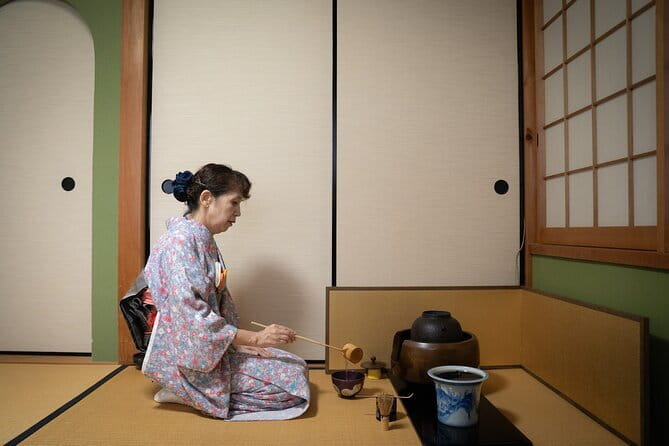
- Make your own matcha: Learn the basic steps of whisking powdered tea under the teacher’s guidance.
- Meet Chisato: Your host explains tea etiquette, cultural respect, and the meaning of being present.
- Taste two Japanese staples: Matcha and wagashi, a traditional sweet, are included.
- Small Kyoto group: The session accepts no more than six people, making it easier to follow the demonstration.
- Useful location: The meeting point is about a 15-minute walk from Kamogawa Delta and Demachiyanagi Station.
- One calm hour: This is a compact cultural activity that fits neatly into a Kyoto sightseeing day.
Learning Matcha in a Quiet Kyoto Setting
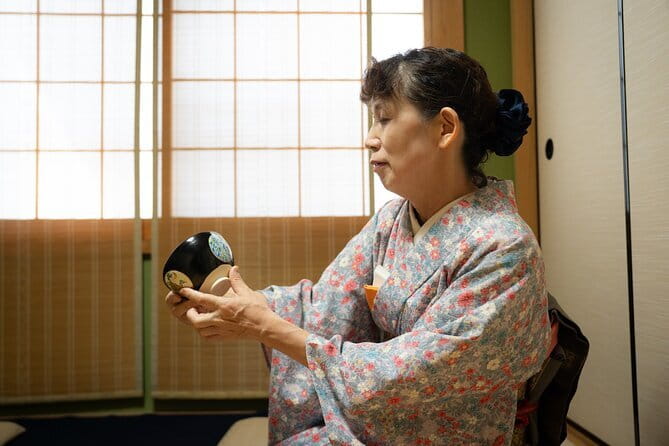
A tea ceremony can look formal from the outside. Bowing, utensils, exact movements, and unfamiliar manners may make you wonder if you will do something wrong. This session takes a gentler approach. The goal is to explain the customs while allowing you to enjoy the moment.
The teacher has more than 30 years of experience, and Chisato leads the activity in English. The lesson is intended for complete beginners as well as people who have seen a tea ceremony before. You are not expected to arrive with knowledge of Japanese tea schools or a practiced understanding of etiquette.
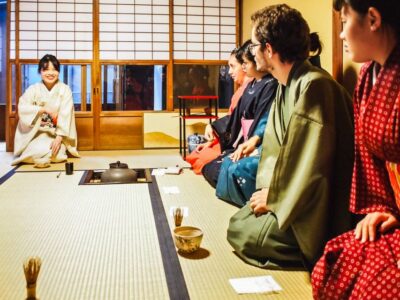
That welcoming approach matters. A short cultural activity works best when you can ask questions without feeling that you are interrupting. With a maximum of six people, the group should remain small enough for the instructor to watch your movements and offer help.
The ceremony lasts about one hour. That is long enough to learn the main ideas and prepare a bowl of matcha, but short enough to fit between visits to Kyoto’s shrines, gardens, and shopping streets.
More tea ceremonies in Kyoto:
- Kyoto: Tea Ceremony in a Traditional Tea House in Kiyomizu
★ 4.9 · 3,519 reviews - Kyoto: Tea Ceremony Ju-An at Jotokuji Temple
★ 4.9 · 3,207 reviews - Kyoto: 45-Minute Tea Ceremony Lesson Experience
★ 4.3 · 2,378 reviews
What Happens During the One-Hour Ceremony
The session begins with an introduction to the tea ceremony and the customs surrounding it. Chisato explains how to approach the experience with respect and attention, including the importance of being present rather than rushing through the steps.
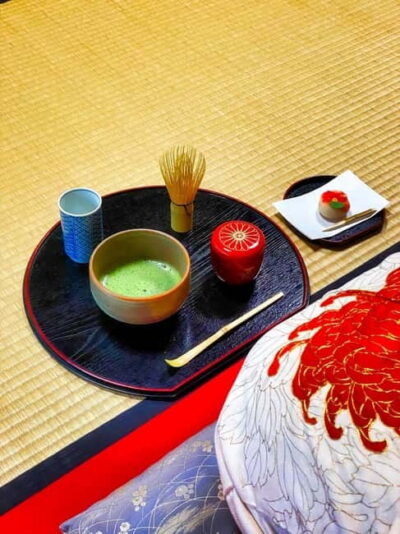
You then watch the preparation of matcha. The powdered tea is mixed with hot water and whisked until ready to drink. The motions are simple in principle, but the ceremony gives them purpose. How you handle the bowl, how you whisk, and how you move all form part of the experience.
The teacher explains the steps as you go. If you have never used a bamboo whisk, you will receive guidance before trying it yourself. You can take part in making your own tea if you wish, so you are free to focus on observation if that feels more comfortable.
This choice is useful for families and mixed groups. One person may want to try every step, while another may prefer to watch and taste. The activity can accommodate both approaches.
You also receive wagashi, a Japanese traditional sweet served with matcha. The sweet balances the tea’s sharper, more earthy taste. It is not an extra purchase or an afterthought, but part of the way the tea is enjoyed.
The focus is not on drinking a large amount of tea. It is on understanding the care behind one bowl. You leave with a better sense of why the ceremony values quiet movements, respect, and concentration.
Chisato’s Teaching Style and English Communication
Chisato is described as kind, patient, and accommodating, including with small children. That makes this a sensible pick for families who want a cultural activity without a stiff or intimidating tone.
The teaching is conducted in English. You should be prepared to phrase questions simply at times. This is not a reason to avoid the activity, but it is useful to know if you want a long, detailed discussion about tea history or technical distinctions between schools.
The strongest benefit is the direct instruction. You are not simply given a set of rules to copy. Chisato explains the respect behind the actions and helps you understand the purpose of the ritual.
That difference can shape your experience. If you see tea ceremony only as a series of gestures, it may feel like a performance. If you understand the care and attention involved, the hour becomes more meaningful.
The published rating is 4.8 from six ratings, with particular praise for the calm mood, kind instruction, delicious matcha and sweets, and patient support for children. The feedback also points to a detailed explanation of the preparation process.
Why Making Your Own Tea Matters
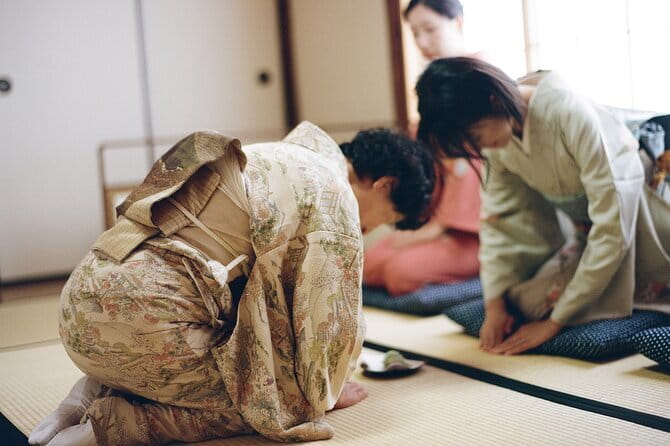
Watching a tea ceremony gives you a view of the tradition. Making the tea gives you a small part in it.
Whisking matcha requires attention. You need to follow the teacher’s instructions, handle the utensils carefully, and notice the texture of the tea as it changes. The action is not difficult, but it encourages you to slow down.
That is a useful contrast to sightseeing in Kyoto. You may spend much of your day walking between busy attractions, checking directions, and trying to see as much as possible. This hour asks you to do less and pay closer attention.
You should not expect to become a tea expert in one session. The value is more immediate: you learn the basic sequence, taste the finished drink, and gain a clearer understanding of the attitude behind the ceremony.
The activity also avoids a common problem with cultural demonstrations. You are not kept at a distance from the tradition. You can participate, make mistakes, and ask for help in a controlled setting.
A completely different side of Kyoto:
- PERFECT KYOTO 1-Day Bus Tour
★ 5.0 · 13,518 reviews - Kyoto: Fushimi Inari, Kinkakuji, Bamboo Grove 1 Day Bus Tour
★ 4.8 · 4,316 reviews - Kyoto Geisha Walking Tour: Gion District & Hidden Gems
★ 4.7 · 3,273 reviews - Kyoto: Gion Magical Night Walking Tour with Geisha Trivia
★ 4.9 · 2,393 reviews
Matcha and Wagashi: A Simple but Important Pairing
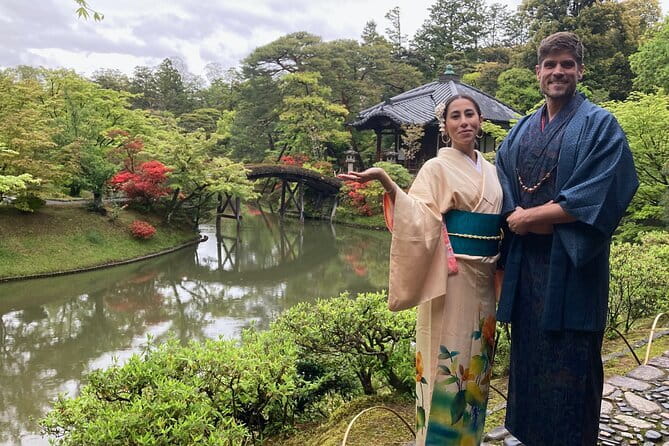
Matcha is powdered green tea with a distinct taste. It can be unfamiliar if you normally drink lighter teas, so the wagashi provides a sweet counterpoint.
The included sweet is part of the ceremony’s food pairing. Its role is not simply to add a snack. The sweetness prepares your palate for the matcha and makes the drink easier to appreciate.
The food is modest, but that suits the activity. This is not a tea tasting with many varieties or a meal with several courses. You receive matcha, wagashi, and instruction in the ceremony itself.
If your main goal is to sample different Japanese teas, this may feel limited. If you want to understand the preparation and manners connected with matcha, the focused format works well.
Location Near Kamogawa Delta and Demachiyanagi
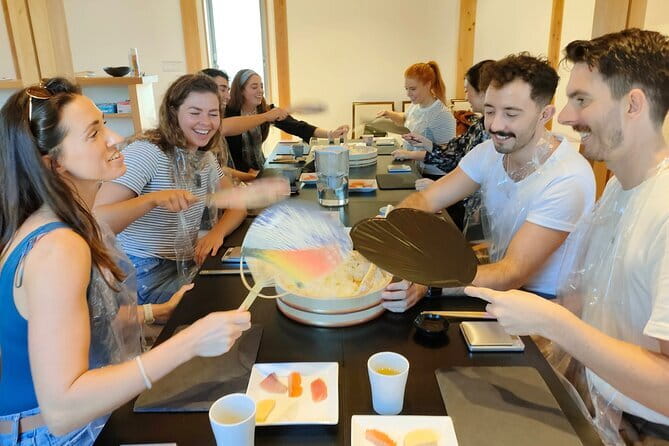
The meeting point is at Tea Ceremony Experience Chisato, at 67-23 Shimogamo Matsunokicho in Sakyo Ward, Kyoto. It is about a 15-minute walk from the Kamogawa Delta, a pleasant riverside area where you can pause before or after the session.
The venue is also about a 15-minute walk from Demachiyanagi Station. That makes it useful alongside plans in northern and northeastern Kyoto. Demachiyanagi is also described as a starting point for trips toward Kibune Shrine and Rurikou Temple.
You can pair the ceremony with a riverside walk, or use it as a quiet break before continuing to another sight. Allow time for the walk from the station and check the address carefully before setting out.
The activity begins and ends at the same meeting point. There is no separate drop-off location to arrange, which keeps the logistics simple.
The location is convenient, but not central to every Kyoto itinerary. If your day is centered on Gion, Kyoto Station, or Arashiyama, you will need to account for the journey across the city. It works best when combined with the Kamogawa Delta, Demachiyanagi, or northern Kyoto plans.
Is $39.09 a Fair Price?
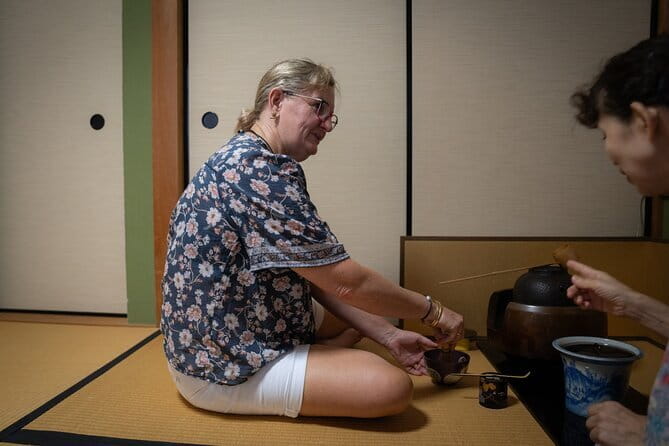
At $39.09 per person, this is a reasonable price for a private-feeling cultural lesson lasting about an hour. The fee includes the matcha, wagashi, and guide, so you are paying for instruction and participation rather than only a cup of tea.
The small group limit improves the value. A maximum of six people gives the teacher a better chance to help each person, especially during the whisking practice. For a family or a pair who want direct attention, that is more useful than a large demonstration.
The price does not include a kimono. That is worth noting because some Kyoto tea experiences are sold with costume rental or dressing. Here, the focus is the ceremony itself, not a photo session in traditional clothing.
Tips are also not included. You should treat gratuity as optional and separate from the listed price.
This experience is good value if you want cultural context and a chance to participate. It is less suitable if you are looking for an elaborate meal, a long formal ceremony, several types of tea, or kimono hire.
Who Will Enjoy This Tea Ceremony Most?
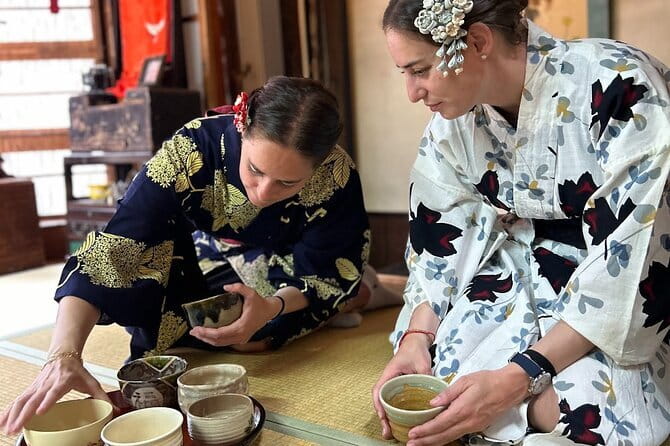
I would recommend it to first-time visitors who want a manageable introduction to Japanese tea culture. The one-hour length is easy to fit into a busy Kyoto schedule, and the teacher’s approach is designed for people with no prior experience.
Families may also find it appealing. The activity is described as accommodating to small children, and the chance to whisk tea gives younger participants something active to do. Still, children need to be comfortable sitting, listening, and handling tea equipment carefully.
It suits couples, solo visitors, and small groups who prefer personal instruction over a large event. The six-person maximum keeps the mood more focused.
You should think twice if wheelchair access is essential, because the activity is not wheelchair accessible. You may also want a different option if you need fully detailed English discussion at an advanced level, since questions sometimes need to be kept simple.
The session is also a good fit for anyone who values the meaning behind a custom. Chisato explains cultural respect and presence, not just the mechanics of whisking. That makes the activity more than a quick drink and a photograph.
Practical Planning for Your Kyoto Day
The meeting point is in Shimogamo Matsunokicho, and the activity ends where it begins. Confirmation is provided when you book, and you receive a mobile ticket.
Plan to arrive with enough time to locate the address. The walk from Demachiyanagi Station takes about 15 minutes, and the same is true from Kamogawa Delta. The exact route and walking pace may vary, so avoid scheduling another activity immediately after the ceremony.
You do not need to arrange a kimono for this experience. Traditional clothing is not included, and the supplied details do not require it. Wear something comfortable that allows you to sit and move your hands easily.
The ceremony is a quiet activity, so it pairs well with a relaxed part of your day. A riverside walk at Kamogawa Delta before or after it is a natural match. You could also plan it around a visit toward Kibune Shrine or Rurikou Temple.
Free cancellation is available if you cancel at least 24 hours before the start time. Cancellations made less than 24 hours in advance are not refunded, and late changes are not accepted. The cut-off follows Kyoto local time.
My Verdict on the Chisato Tea Ceremony
Book this experience if you want to understand matcha in a calm, personal setting and prefer to take part rather than sit through a performance. The chance to make your own tea, the small group size, and Chisato’s patient manner give the hour real purpose.
I would be comfortable recommending it to beginners, families, and anyone building a Kyoto day around the Kamogawa Delta or Demachiyanagi. The price is fair for the instruction, tasting, and small-group format.
Skip it if you need wheelchair access, want kimono included, or expect a long formal ceremony with a large food component. For everyone else, this is a compact and thoughtful way to add a quieter side of Kyoto to your itinerary.
FAQ
How long does the Kyoto tea ceremony last?
The experience lasts approximately one hour.
Where does the tea ceremony begin and end?
It begins at Tea Ceremony Experience Chisato, 67-23 Shimogamo Matsunokicho, Sakyo Ward, Kyoto, 606-0816, Japan. It ends back at the same meeting point.
Is matcha included in the price?
Yes. Matcha is included, along with wagashi, a Japanese traditional sweet, and a guide.
Can I make my own matcha?
Yes. You can prepare your own tea if you wish, with guidance from the teacher.
Is the experience conducted in English?
Yes. The experience is conducted in English. Questions may need to be phrased simply at times.
Is the tea ceremony wheelchair accessible?
No. The experience is not wheelchair accessible.
Recently added around Kyoto
- Higashiyama | Kyoto: Sakura Season Private Rickshaw Tour★ 5.0 · 3 reviews
- Kyoto Kimono Rental CHAMATSU|Kimono/Yukata Rental FamilyPlan★ 5.0 · 3 reviews
- Kyoto: Half-Day Private Guided Tour to the Old Town of Gion★ 4.4 · 3 reviews
- Nara Private Customizable Half Day Tour★ 5.0 · 3 reviews
- Kansai Region Hiking Adventure in Nara Kobe Kyoto and More★ 5.0 · 3 reviews
- Full Day Nara Deer, Temple, Shrine, Activities & Tea Ceremony★ 5.0 · 3 reviews
- Nara: Essential Private Tour with Deer Park and Temples★ 5.0 · 3 reviews
- Hiking Tour for Sacred Sites in Kyoto with a Guide★ 5.0 · 3 reviews
Kyoto Tea Ceremony Experiences, compared.
Tea Ceremony in a Traditional Tea House in Kiyomizu
Read our review →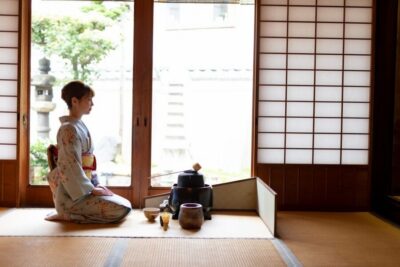
Tea Ceremony in 100-year-old Kyo-Machiya Townhouse
Read our review →
Browse the lists this tour appears in