
REVIEW · KYOTO TEA CEREMONY EXPERIENCES
Tea ceremony by the tea master in Kyoto SHIUN AN
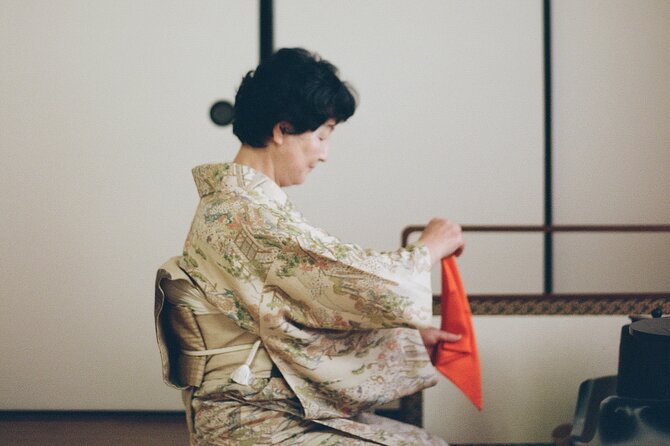
The most memorable part of this Kyoto experience is not simply drinking matcha. It is seeing how much care goes into every movement, from the placement of the tea bowl to the hanging scroll and flowers in the room. I like the small-group format, with up to six people most of the year, and I like that you get to make your own bowl after watching the tea master.
The main drawback is the location. SHIUN AN sits in a quiet residential area north of central Kyoto, not in the Gion district, and the final walk and stairs may take more effort than expected. Leave extra time, use a map, and ask for help if sitting on the floor is difficult.
In This Review
- Key points to know before booking
- A tea lesson beside Kyoto’s Zen quarter
- What happens when you enter the tea room
- Watching the tea master prepare matcha
- Making your own bowl of matcha
- Why Daitoku-ji gives the experience more meaning
- Getting to the residential meeting point
- Floor seating, stairs, and comfort
- Group size and the feel of the session
- What the $33.03 price includes
- Who will enjoy SHIUN AN most
- How to plan the rest of your day
- Booking, cancellation, and final practical checks
- Should you book this Kyoto tea ceremony?
- FAQ
- How long does the tea ceremony last?
- Where does the experience begin?
- Where does the activity end?
- How many people can join each session?
- Is transportation included?
- Is the tea ceremony near Daitoku-ji?
- How close is Kinkaku-ji?
- Do I make my own matcha?
- Are food and equipment included?
- Can I cancel for a refund?
Key points to know before booking
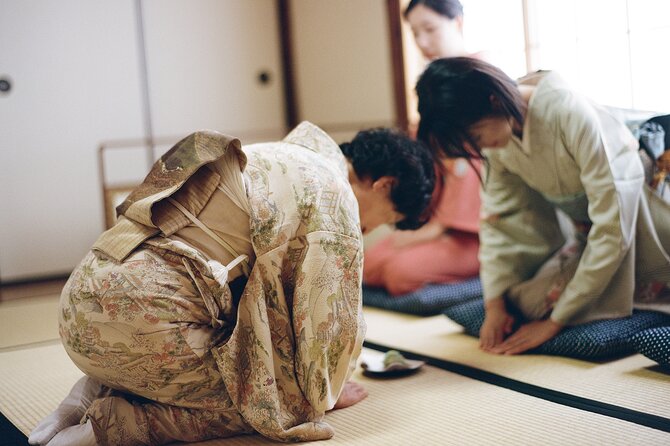
- Two bowls of matcha: You watch a formal serving, then prepare your own bowl with the supplied whisk and scoop.
- Near Daitoku-ji: The setting connects the ceremony with one of Kyoto’s important Zen temple areas.
- Small, intimate sessions: The usual maximum is six people, rising to eight during busy seasons.
- English help is available: A translator explains the ceremony, utensils, customs, and answers questions.
- Traditional floor seating: White socks and a fold fan are supplied, but stairs and floor sitting may be challenging.
- Good value at $33.03: The price includes instruction, equipment, two sweets, and two servings of matcha.
A tea lesson beside Kyoto’s Zen quarter
SHIUN AN gives you a close look at the Japanese tea ceremony without turning it into a large, hurried performance. The activity takes place near Daitoku-ji, a major Zen Buddhist temple complex with a long connection to tea culture. That setting matters. You are not learning matcha as a passing food trend. You are seeing it within the religious and artistic traditions that shaped Japanese culture.
The session is held in a small tea room in a quiet residential neighborhood. That calm setting is part of the appeal. You leave the busy sightseeing routes and enter a space where the pace slows down, the room becomes important, and small details receive attention.
The tea master has a Tea Name, a title associated here with full professor-level qualification in the tea tradition. The host leads the ceremony, while an English translator helps explain the meaning behind the actions. This combination works well for first-time visitors because you can watch the ritual and still understand what is happening.
The activity is listed as about 45 minutes. In practice, you should allow roughly an hour, especially if you arrive early, ask questions, or take time with the hands-on portion.
More tea ceremonies in Kyoto:
- Kyoto: Tea Ceremony in a Traditional Tea House in Kiyomizu
★ 4.9 · 3,519 reviews - Kyoto: Tea Ceremony Ju-An at Jotokuji Temple
★ 4.9 · 3,207 reviews - Kyoto: 45-Minute Tea Ceremony Lesson Experience
★ 4.3 · 2,378 reviews
What happens when you enter the tea room
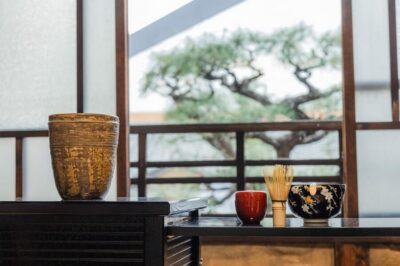
The session begins before the first bowl is served. The host brings you into the tea room and points out the hanging scroll and flower arrangement. These are not random decorations. The room changes with the season, and its contents help set the mood for the gathering.
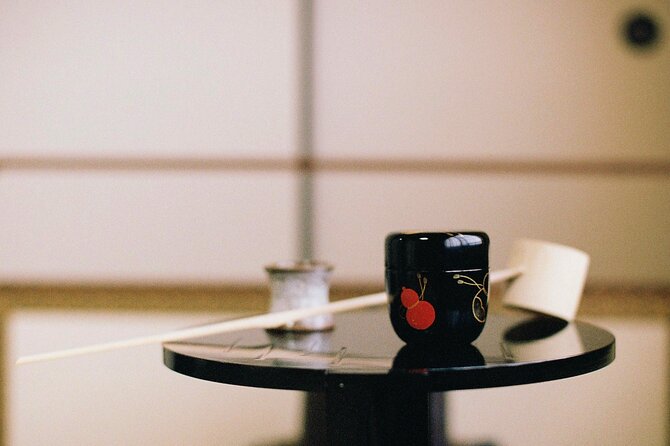
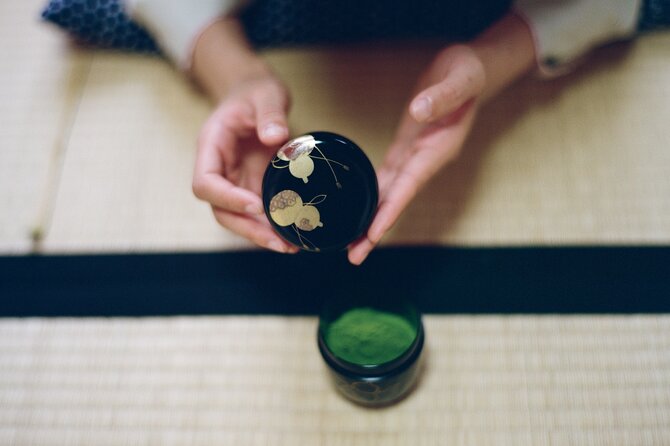
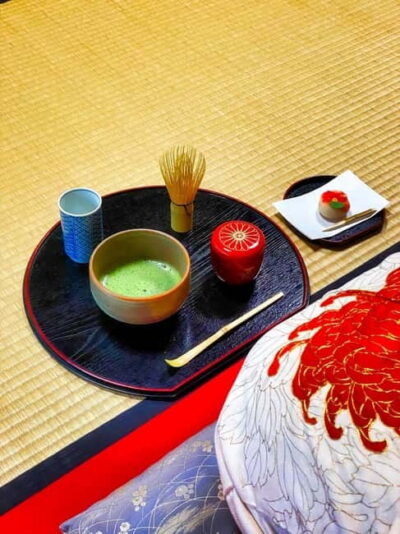
You also learn about the layout of the room and the utensils used in the ceremony. The tea container, bowl, scoop, and whisk each have a role. The explanation gives you a better way to watch the formal preparation because you know what to notice.
This opening is especially helpful if you have seen a tea ceremony before but never understood the details. The movements can look simple at first. Once someone explains the purpose of each tool and gesture, you begin to see the precision involved.
The ceremony is connected to Zen ideas about learning through direct experience. You are not asked to treat the event as a religious service, but the quiet focus is clear. The lesson is partly about tea and partly about attention, patience, and respect for the moment.
Watching the tea master prepare matcha
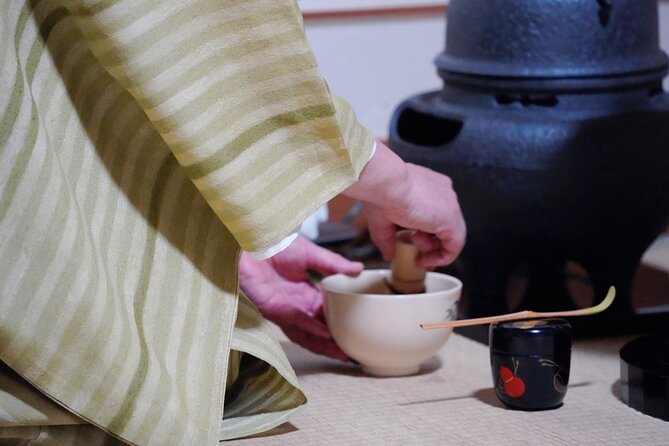
The tea master performs the tea preparation while you watch. The service follows traditional steps, and the host’s experience is easy to appreciate in the controlled rhythm of the process. This is not a casual demonstration where someone quickly stirs powder into hot water.
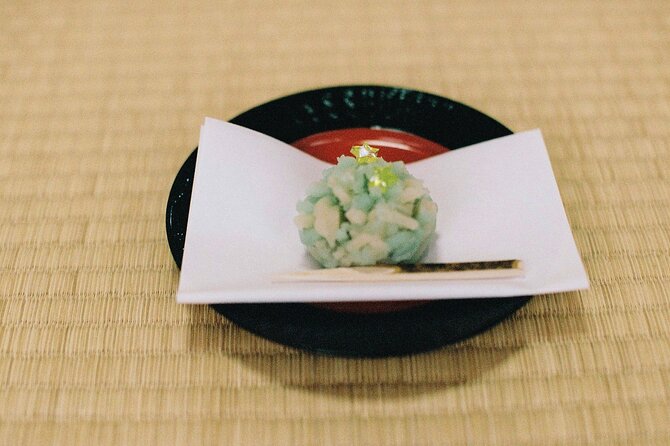
You receive a seasonal Japanese sweet with the tea. The sweet is meant to be enjoyed with the matcha, and the contrast helps explain why Japanese tea gatherings traditionally include carefully chosen confections. You also receive two kinds of Japanese sweets during the full experience.
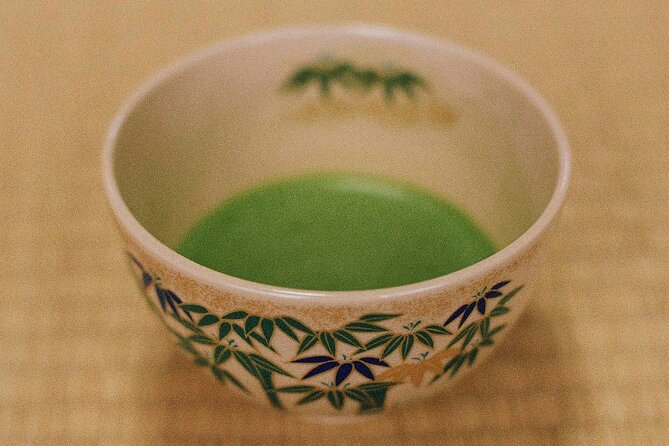
The matcha itself can be strong and slightly bitter if you are used to sweetened drinks. That is part of the point. The sweet balances the tea, and you get a chance to notice how the flavor changes when the matcha is prepared by the tea master compared with your own first attempt.
The translator adds useful context as the ceremony progresses. You can ask questions about the utensils, customs, history, and steps rather than simply sitting silently through a ritual you do not understand.
Making your own bowl of matcha
The hands-on portion is where the activity becomes more than a demonstration. After watching the tea master, you receive the equipment and learn how to prepare your own bowl. You use a tea container, scoop, bowl, and whisk supplied by SHIUN AN.
You will not need to bring special equipment. White socks and a fold fan are also supplied for use during the ceremony. These details help you take part in the setting without packing anything extra.
The tea master guides you through the basics. Do not expect to match the host’s smooth technique immediately. The difference between your bowl and the tea master’s bowl is part of the lesson. You can feel how practice affects the texture, movement, and finish of the drink.
This activity suits people who prefer to learn by doing. You get the cultural explanation, watch the formal service, taste the tea, and then try the method yourself. Children and younger participants can enjoy the practical part, though the ceremony still requires quiet attention and respectful behavior.
A completely different side of Kyoto:
- PERFECT KYOTO 1-Day Bus Tour
★ 5.0 · 13,518 reviews - Kyoto: Fushimi Inari, Kinkakuji, Bamboo Grove 1 Day Bus Tour
★ 4.8 · 4,316 reviews - Kyoto Geisha Walking Tour: Gion District & Hidden Gems
★ 4.7 · 3,273 reviews - Kyoto: Gion Magical Night Walking Tour with Geisha Trivia
★ 4.9 · 2,393 reviews
Why Daitoku-ji gives the experience more meaning
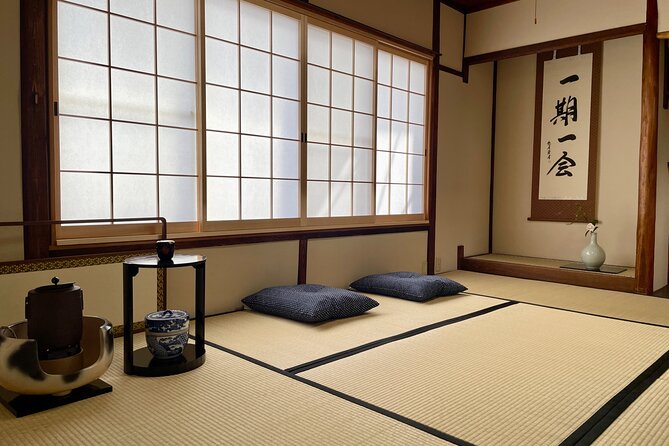
Daitoku-ji is not just a nearby landmark used to describe the address. The temple area has a close relationship with Zen and tea ceremony culture. Many important priests studied there, and the complex has influenced Japanese arts and customs over time.
You do not visit Daitoku-ji as part of this activity, so you should treat the tea ceremony and temple visit as separate plans. Still, the location gives you a useful way to pair the two. You can visit Daitoku-ji before or after the session if your schedule allows.
The Golden Pavilion, Kinkaku-ji, is also relatively close by Kyoto standards. It is described as four bus stops away, making it possible to combine both sights with careful planning. Do not cram the schedule too tightly, though. Kyoto buses can take time, and finding a small residential address is less simple than reaching a major temple gate.
The neighborhood itself is a welcome change from Kyoto’s most crowded sightseeing streets. You might find the quiet arrival helps you shift into the slower mood of the ceremony.
Getting to the residential meeting point
The meeting point is 955-1 Idacho, Kamigyo Ward, Kyoto, postal code 602-8302. The activity begins and ends there, with no pickup or drop-off included.
This is the practical weakness you should plan around. SHIUN AN is not near Gion, and the address can be tricky to locate because it is in a residential area rather than beside a large tourist attraction. One useful approach is to take local public transportation toward the area, then use a taxi or ride service for the final stretch if needed.
A taxi from a nearby station has been described as costing about 1,000 yen, though your exact fare will depend on where you start. Google Maps can help, but leave early. Arriving late to a tea ceremony is more awkward than arriving early because the activity follows a set sequence.
The listing describes the experience as near public transportation. Even so, you should check the route on the day and allow time for the final walk. The Golden Pavilion is four bus stops away, but that does not mean the tea house is right beside a major transport hub.
Floor seating, stairs, and comfort
The ceremony takes place in a traditional room, so floor seating is part of the experience. Some participants have found it difficult to remain in the preferred sitting position for the full period. The host has also accommodated someone who could no longer sit on the floor, helping that person remain included.
That flexibility is encouraging, but you should tell the operator about mobility concerns before arrival. One account specifically points out difficult stairs, so this is not the best choice if you need step-free access.
The supplied white socks are useful on the tatami floor. Wear comfortable clothing that allows you to sit and move easily. You do not need formal clothing to take part, and the tea master or assistants may wear kimono, adding to the traditional atmosphere.
Service animals are allowed. If you have food allergies, notify SHIUN AN in advance because Japanese sweets are included.
Group size and the feel of the session
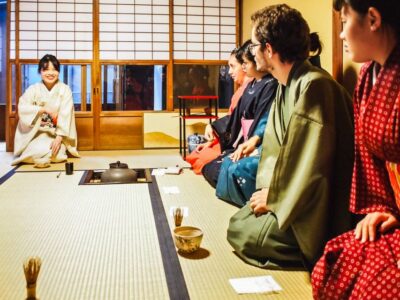
The normal maximum is six people. During peak periods, the group may increase to eight. That is still small enough for direct instruction, though the quieter feel is likely to be strongest in a session with only a few participants.
A small group also gives you a better chance to ask questions. The translator can explain the ceremony without trying to address a large room, and the tea master can watch as you make your own matcha.
There is some variation from session to session. One person may attend alone, while another group may fill the available places. If you want the most private atmosphere, choose a less busy date if your schedule permits, but the activity is not advertised as a private tour.
The setting is intimate rather than theatrical. You are not entering a large cultural show built for crowds. That makes the experience feel more personal, but it also means you should respect the quiet nature of the room.
What the $33.03 price includes
At $33.03 per person, this is a reasonable price for a short cultural activity in Kyoto. You are paying for more than a cup of matcha. The fee includes the tea master’s demonstration, instruction, equipment, two bowls of matcha, two kinds of sweets, white socks, and a fold fan.
The hands-on lesson improves the value. A cheaper tasting might let you drink matcha, but it would not necessarily explain the tea room, utensils, seasonal display, or preparation method. Here, you take away a basic skill and a better understanding of the ceremony.
The 45-minute duration also makes it easy to fit into a day of sightseeing. The trade-off is that the session is an introduction, not a full study of tea practice. You will learn the basic steps, but not become proficient in the tradition in one visit.
For a first encounter with Japanese tea ceremony, the balance is strong. You get enough explanation to understand the ritual, enough tasting to enjoy the flavors, and enough practice to remember the experience.
Who will enjoy SHIUN AN most
I would recommend this activity to you if you want a traditional Kyoto experience with real explanation rather than a quick photo opportunity. It is especially suitable for:
- First-time visitors who have never attended a tea ceremony
- Matcha drinkers who want to learn how the tea is made
- Families with older children who can stay quiet and follow instructions
- Couples looking for a calm cultural activity
- Visitors interested in Zen, Japanese arts, and seasonal customs
- Anyone who prefers a small group to a large performance
It may not suit you if you want a central Kyoto location, dislike sitting on the floor, have trouble with stairs, or want a private ceremony guaranteed for your party.
The activity is also a good choice for someone who has already seen a tea ceremony but found the customs hard to follow. The translation and question period add context that can turn a formal display into a lesson you remember.
How to plan the rest of your day
Because the meeting point is near Daitoku-ji and within reach of Kinkaku-ji, you can build a northern Kyoto day around the ceremony. Visit a nearby temple before the session, attend the tea experience, then continue toward the Golden Pavilion if transportation and opening times work for you.
Do not assume every nearby sight is a quick walk. Kyoto’s northern temple area covers more ground than a map may suggest, and buses can be slow. If your schedule includes a timed reservation, keep the plan simple and leave a generous buffer.
The activity ends back at the meeting point. That gives you a clear starting point for the next part of your day, but you must arrange your own transportation afterward.
Booking, cancellation, and final practical checks
You receive confirmation at booking, and the ticket is mobile, so you can keep the reservation on your phone. Free cancellation is available up to 24 hours before the local start time. Changes or cancellations inside that period are not accepted for a refund.
The experience needs a minimum number of participants. If SHIUN AN cancels because that minimum is not met, you will be offered another date or experience, or receive a full refund.
Before booking, check three things: your route to Idacho, your ability to manage stairs and floor seating, and any food allergies. Those details matter more here than they would on a standard sightseeing walk.
Should you book this Kyoto tea ceremony?
Book SHIUN AN if you want a calm, hands-on introduction led by a qualified tea master, with translation and a genuine traditional setting. The strongest reasons are the small group size, the chance to prepare your own matcha, the two servings and sweets, and the connection to Daitoku-ji’s Zen and tea culture.
Think twice if convenience is your top priority. The residential location takes planning, and the stairs and floor seating may be uncomfortable. For most visitors who can manage those points, the $33.03 price offers a thoughtful way to understand Kyoto beyond its famous temple photographs.
FAQ
How long does the tea ceremony last?
The activity is listed as approximately 45 minutes. Some sessions may take closer to an hour, especially if you ask questions or spend extra time making your own matcha.
Where does the experience begin?
It begins at 955-1 Idacho, Kamigyo Ward, Kyoto, 602-8302, Japan.
Where does the activity end?
The experience ends back at the same meeting point.
How many people can join each session?
The usual maximum is six people. During peak seasons, the group may increase to eight.
Is transportation included?
No. Pickup and drop-off are not included, so you must make your own way to and from SHIUN AN.
Is the tea ceremony near Daitoku-ji?
Yes. SHIUN AN is located near Daitoku-ji Temple in northern Kyoto.
How close is Kinkaku-ji?
The Golden Pavilion, also called Kinkaku-ji, is described as four bus stops away.
Do I make my own matcha?
Yes. After watching the tea master, you receive instruction and prepare your own bowl using the provided tea bowl, container, scoop, and whisk.
Are food and equipment included?
Yes. The price includes tea bowls, tea containers, tea scoops, tea whisks, white socks, a fold fan, matcha, and Japanese sweets. You receive two bowls of matcha and two kinds of sweets.
Can I cancel for a refund?
Yes, if you cancel at least 24 hours before the experience start time. Cancellations or changes made less than 24 hours before the start time are not refunded or accepted.
Recently added around Kyoto
- Higashiyama | Kyoto: Sakura Season Private Rickshaw Tour★ 5.0 · 3 reviews
- Kyoto Kimono Rental CHAMATSU|Kimono/Yukata Rental FamilyPlan★ 5.0 · 3 reviews
- Kyoto: Half-Day Private Guided Tour to the Old Town of Gion★ 4.4 · 3 reviews
- Nara Private Customizable Half Day Tour★ 5.0 · 3 reviews
- Kansai Region Hiking Adventure in Nara Kobe Kyoto and More★ 5.0 · 3 reviews
- Full Day Nara Deer, Temple, Shrine, Activities & Tea Ceremony★ 5.0 · 3 reviews
- Nara: Essential Private Tour with Deer Park and Temples★ 5.0 · 3 reviews
- Hiking Tour for Sacred Sites in Kyoto with a Guide★ 5.0 · 3 reviews
Kyoto Tea Ceremony Experiences, compared.
Tea Ceremony in a Traditional Tea House in Kiyomizu
Read our review →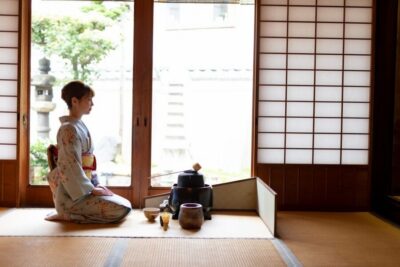
Tea Ceremony in 100-year-old Kyo-Machiya Townhouse
Read our review →
Browse the lists this tour appears in