
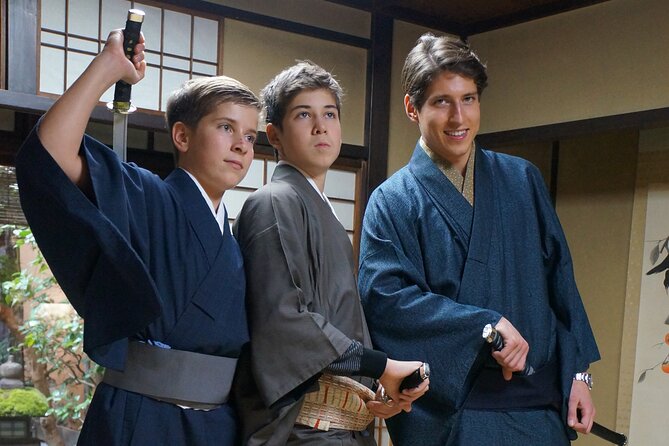
REVIEW · KYOTO TEA CEREMONY EXPERIENCES
Tea ceremony and kimono experience at Kyoto, Tondaya
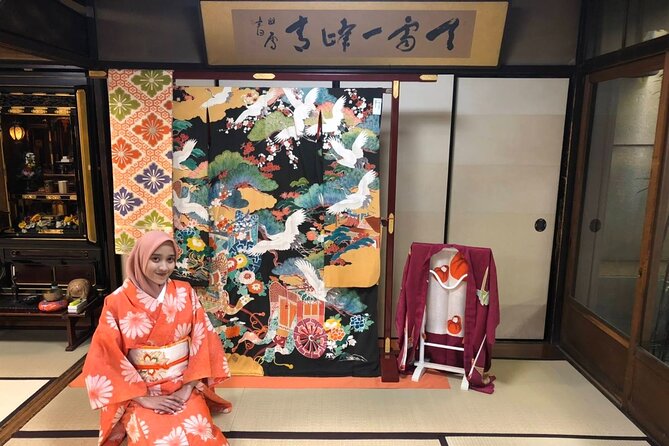
Tondaya gives you something many Kyoto activities cannot: a traditional kimono inside a genuine Meiji-period machiya, followed by tea in a historic home rather than a modern studio. You can take photos in the rooms and garden, then watch the ritual and learn the proper way to drink matcha.
I like the beautifully preserved house and the kind, careful kimono dressing. I also like the chance to see a quieter side of Kyoto in Nishijin, away from the best-known tourist streets. The main concern is value in the group session. If too many people are present, the ceremony can feel rushed, hot, and hard to see or hear.
In This Review
- Key points to know before booking
- Entering Tondaya, a Kyoto house easy to miss
- The kimono fitting is the most dependable highlight
- Photographing the rooms and garden
- Touring a 140-year-old machiya
- What the tea ceremony actually includes
- Group size can change the whole mood
- Is $178.34 a fair price?
- Who will enjoy Tondaya most
- Timing, clothing, and small practical details
- How to make the most of the visit
- Should you book the Tondaya tea ceremony?
- FAQ
- Where does the tea ceremony take place?
- How long does the experience last?
- Is the kimono included?
- Are makeup, hair styling, or geta included?
- Should I bring socks?
- Is this a private tea ceremony?
- Can I cancel for a full refund?
Key points to know before booking
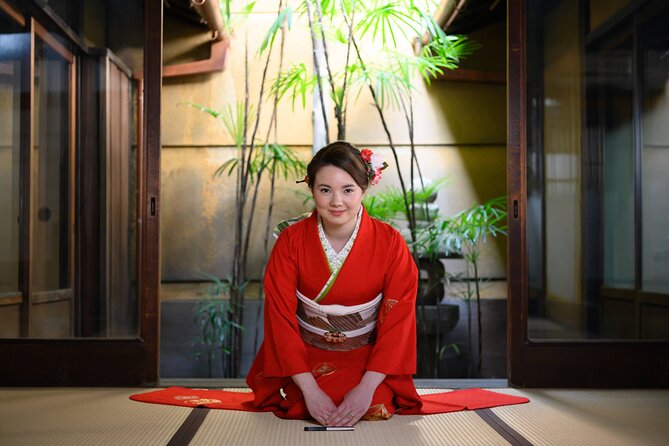
- Kimono fitting comes first: You wear an authentic silk kimono over your own clothing, but makeup, hairstyling, and geta sandals are not included.
- The house is the star: Tondaya is a historic wooden townhouse with traditional rooms, furnishings, and gardens.
- The tea ceremony is brief: Some sessions offer clear explanations, while others provide only a short demonstration and basic instructions for drinking tea.
- Group size matters: The stated maximum is 20 people, though some reported sessions felt far larger and crowded.
- Bring socks: You need socks to help protect the historic floors and cultural furnishings.
- Book private if the ritual matters most: The private option is the safer choice if you want peace, a clear view, and more time for questions.
Entering Tondaya, a Kyoto house easy to miss
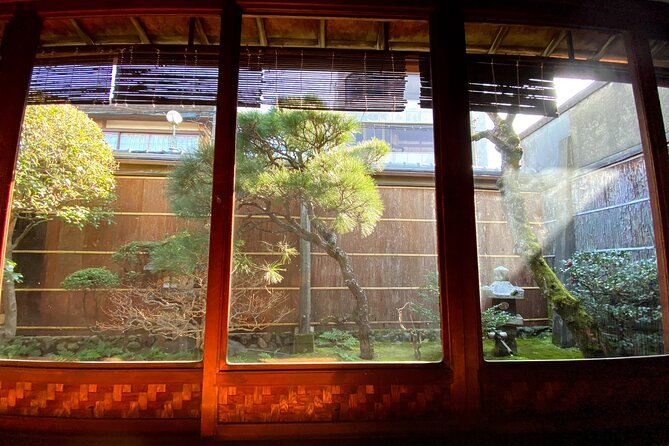
Tondaya, also called the Nishijin Japanese Cultural Experience Museum, sits at 697 Ishiyakushicho in Kyoto’s Kamigyo Ward. It is not a large museum with a bold modern entrance. You are looking for a traditional Japanese house, and the signage can be poor.
I would use GPS and allow extra time. The building may be easy to walk past, especially if you arrive before opening. A taxi has worked well for some visitors, but the venue is also near public transportation. Once you find it, the plain exterior is part of the appeal. You are entering a working piece of old Kyoto, not a purpose-built attraction.
The experience begins and ends at Tondaya. There is no separate city tour or transfer between sites, so the 90 minutes are spent inside the house and its immediate surroundings.
More tea ceremonies in Kyoto:
- Kyoto: Tea Ceremony in a Traditional Tea House in Kiyomizu
★ 4.9 · 3,519 reviews - Kyoto: Tea Ceremony Ju-An at Jotokuji Temple
★ 4.9 · 3,207 reviews - Kyoto: 45-Minute Tea Ceremony Lesson Experience
★ 4.3 · 2,378 reviews
The kimono fitting is the most dependable highlight
The first major activity is dressing. Staff fit you in an authentic silk kimono over your own clothes. The process is practical rather than a full fashion or beauty makeover, but it gives you the pleasure of feeling properly dressed for the setting.
The women who assist with the kimono fitting are often described as respectful, patient, and skilled. The fitting must be done efficiently because several people may be getting ready at once. You choose colors, then the staff arrange the layers and accessories. This is not a private styling appointment, and there is no makeup or hairstyling included.
You should also know what is not included. Geta, the traditional wooden sandals, are not provided. You remain in your own footwear unless you arrange something else, and the activity specifically asks you to bring socks. You can buy socks at the venue if needed, but bringing your own is easier and avoids one more purchase.
The kimono is worn for the tour, photos, and ceremony. Since you are dressed over your existing clothing, the process is more convenient than changing into a complete costume from scratch. Still, loose, comfortable clothing underneath will make the fitting easier.
Photographing the rooms and garden
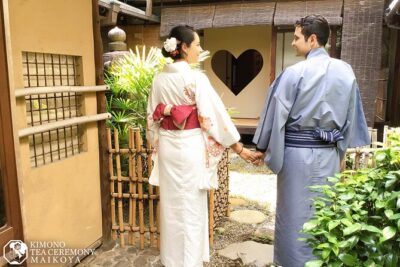
After dressing, you can take photos around the house. This is one of the strongest parts of the experience because the setting gives your pictures a sense of place that a rental shop or photo studio cannot match.
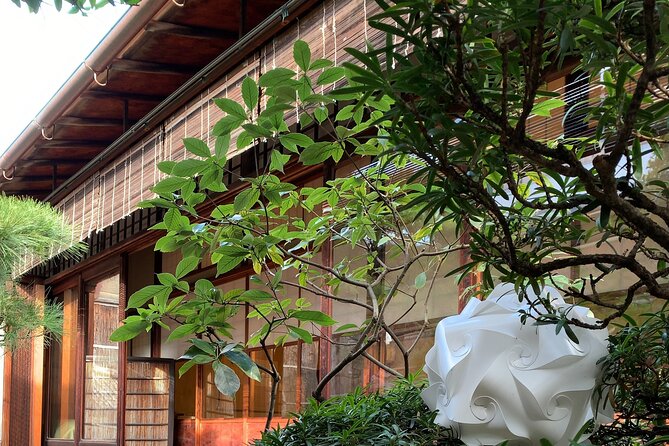
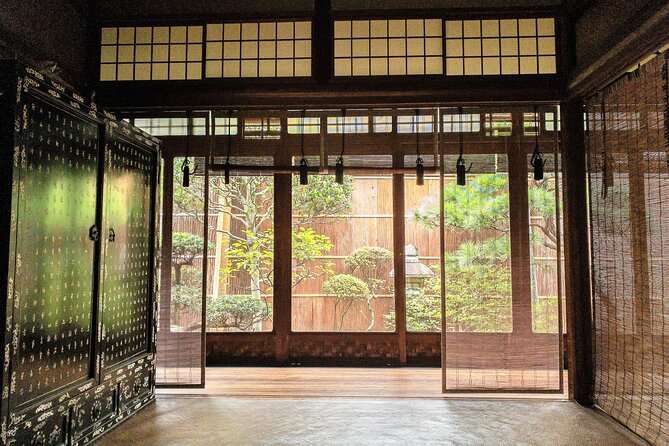
Tondaya was originally built during the Meiji period, and the house retains traditional rooms, furnishings, and small architectural details. You may notice the way air moves through the wooden structure and the changing feel of the rooms as you pass through them. Gardens and interior spaces provide several backdrops, and props may be available for photographs.
The photo time is informal. It is not presented as a professional portrait session, so you should not expect a makeup artist, formal photographer, or carefully staged individual shoot. Bring a phone or camera, and ask someone in your group to help with pictures.
You can also photograph parts of the tea ceremony and its equipment. That is useful if you want to remember the tools and gestures, not just the kimono.
Touring a 140-year-old machiya
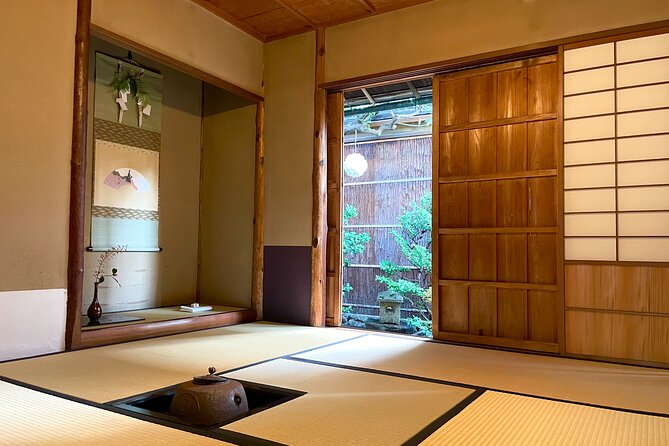
The house gives the activity its strongest cultural setting. A machiya is a traditional urban townhouse, built for both family life and work. Here, the age of the building and the preservation of its rooms help explain how Japanese customs developed in an actual domestic environment.
The tour may include rooms, furniture, flowers, and objects connected with tea and daily life. The house itself is not large, so movement can become awkward when several groups are using the stairs and narrow spaces at the same time. People who prefer a calm, slow visit should consider the private option.
A good guide can make this portion much more meaningful. Several sessions have included clear explanations of the rooms, furnishings, and tea equipment. One highly praised guide was a young woman from Holland living in Japan, who explained the experience well and even waited with the group after the activity while transportation was arranged.
The quality of the explanation may vary. English delivery has sometimes been difficult to follow, and some visitors received only a short history of the house. If you want to learn, ask questions early, while the guide is showing you the rooms. Do not assume that every detail will be explained without prompting.
More kimono and yukata rentals:
- Kimono Tea Ceremony at Kyoto Maikoya, NISHIKI
★ 5.0 · 911 reviews - Kyoto: Kimono Rental with Hairstyling and Accessories
★ 4.8 · 653 reviews - Kyoto: Kimono Tea Ceremony at Orizuruya Gion
★ 4.9 · 618 reviews - KYOTO Tea Ceremony with kimono near by Imamiya Jinjya Shrine
★ 5.0 · 343 reviews
What the tea ceremony actually includes
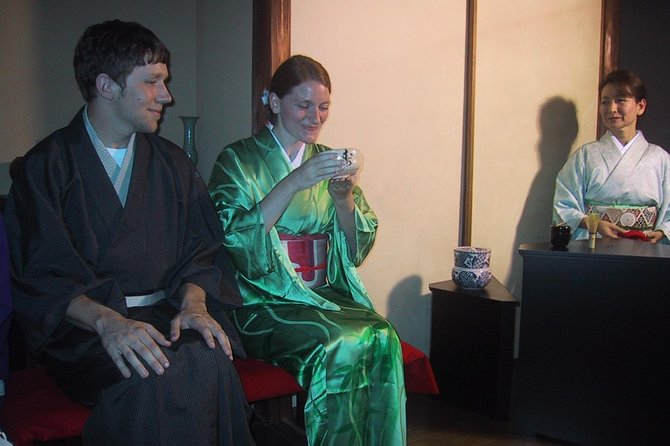
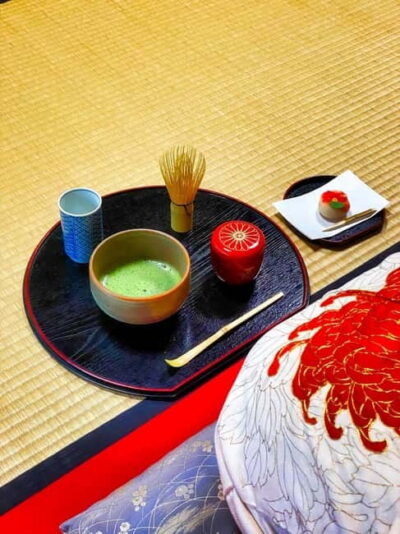
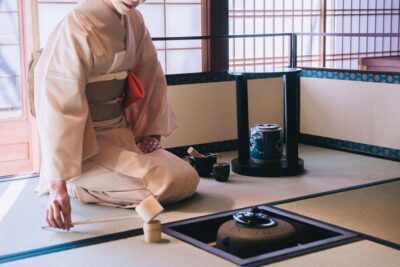
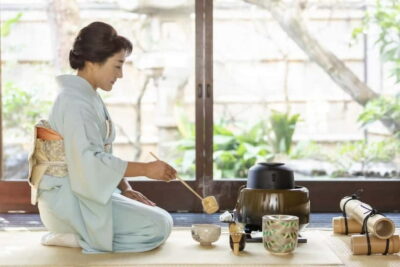
The tea ceremony follows the kimono fitting and house tour. You sit in a traditional room and watch tea being prepared and served. You receive matcha and a Japanese sweet, then learn the proper way to drink it.
The ceremony is a performance and introduction rather than a long formal lesson. In a smooth session, the host explains why the tea is prepared in a particular way, how the utensils are used, and how guests should receive the bowl. Some guides also explain the meaning of flowers, the room, and the sequence of movements.
The strongest sessions give you a useful picture of the custom. You see the whisking, serving, and exchange between host and guest. You learn that the ritual is not simply about drinking a cup of tea, but about attention to the room, the season, the utensils, and the people sharing the moment.
The weaker sessions are much shorter. The tea may be prepared in a back room if the group is too large, then brought out on a tray. The ceremony itself may last only a few minutes, with little explanation of the history or reasons behind the gestures. Some people found the matcha cold or the packaged sweet dry, though others enjoyed both.
This variation matters. If you are mainly looking for a first taste of matcha and a chance to wear kimono, the short format may be enough. If your main goal is to understand Japanese tea culture, a large shared session may leave you wanting more.
Group size can change the whole mood
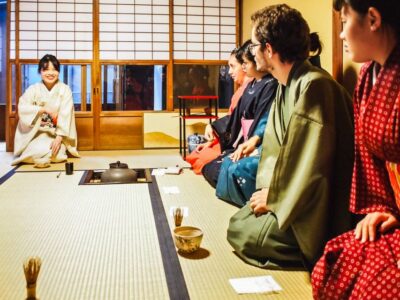
The activity is advertised as a group experience with a maximum of 20 participants. That is already a fairly large group for a quiet tea room. Some accounts describe sessions that felt much larger, with 30 to 50 people crowded into small spaces. That conflicts with the stated maximum, but it is important enough to verify directly before booking.
A group of 20 may still work well if it is divided between rooms or if everyone can see the host. A crowded room creates different problems. You may sit behind other people, struggle to hear the English explanation, or watch the ceremony from several rows away. Narrow stairs and small rooms make the house feel congested quickly.
Heat is another concern. A packed tea room can become uncomfortable, especially when you are wearing several kimono layers. One session ended early for some participants because the room was hot and crowded.
Late arrivals can delay the start, since dressing several people takes time. Other activity groups may also pass through the house while your explanation or ceremony is underway. That can break the quiet mood you may expect from a tea ceremony.
For this reason, I would choose the private experience if the ceremony itself is the priority. You pay more for privacy, but you gain a better chance of seeing the preparation, hearing the explanation, and asking questions. The shared option is more suitable if you are flexible and mainly want the house and kimono.
Is $178.34 a fair price?
At $178.34 per person, this is not a bargain tea tasting. You are paying for the kimono fitting, entrance to a historic home, the house tour, the tea ceremony, and the convenience of having these elements arranged in one visit.
The price makes more sense if you value the building and the clothing as much as the tea. Tondaya offers a setting with age and character, and the silk kimono is more substantial than a quick costume rental. You can take photos, see traditional rooms, and receive a small cultural introduction without spending half a day on a formal course.
The price feels harder to justify when the group is crowded or the ceremony is reduced to a few minutes. In that case, you may spend most of the visit getting dressed, waiting, and moving through the house, then receive only a small cup of tea and a packaged sweet.
I would compare this experience with your priorities. If you want the most detailed tea education for the money, look for a smaller lesson focused on the ceremony itself. If you want a historic Kyoto house, kimono photos, and a short introduction in one package, Tondaya may be worth the premium.
Who will enjoy Tondaya most
I would recommend this experience to:
- First-time visitors who want an easy introduction to Japanese customs
- Couples, families, and friends who want memorable kimono photographs
- People interested in traditional homes and old Kyoto neighborhoods
- Anyone who values atmosphere and architecture as much as instruction
- Visitors who are comfortable with a short, shared cultural demonstration
I would be more cautious if you:
- Have already attended a formal tea ceremony
- Need detailed instruction about every gesture and utensil
- Dislike crowded rooms or warm indoor spaces
- Expect professional hair, makeup, or photography
- Want to wear geta as part of a complete outfit
- Consider $178.34 high for a one-and-a-half-hour activity
The activity is suitable for most people, and confirmation is provided at booking. It is near public transportation, and the stated maximum is 20 participants. The historic house does have narrow rooms and stairs, so anyone needing specific access arrangements should ask the provider before reserving.
Timing, clothing, and small practical details
The maximum visit is about 1 hour and 30 minutes, but the exact length can change with crowding. Allow your schedule some breathing room rather than booking a tight appointment immediately afterward.
Wear comfortable clothing that staff can dress over easily. Bring socks, even if you are wearing sandals. You will want your phone charged because the house and kimono provide plenty of photo opportunities.
There is no lunch included, and the activity does not include makeup, hairstyling, or geta. Tea and a sweet are part of the ceremony, but this is not a meal.
If you are traveling with someone who does not want to wear a kimono, that person may still be present in a group session, but the visual effect and atmosphere can feel less unified. A private booking may be the better fit for a group that wants everyone to take part in the same way.
How to make the most of the visit
Arrive early enough to find the house without rushing. The entrance can be easy to miss, and a calm arrival helps you begin the fitting in a better mood.
Bring a camera, but do not let the photo session crowd out the house tour. Look closely at the rooms, garden, furniture, and tea tools. Those details are what separate this visit from a basic kimono rental.
During the ceremony, sit where you can see the host and ask about the steps you do not understand. Questions about the tea bowl, sweet, flowers, or order of service can turn a short demonstration into a more useful lesson.
If you want a quiet room and a fuller explanation, select the private option. If you book the group session, keep your expectations realistic: you are receiving a cultural introduction, not an intensive study of chanoyu.
Should you book the Tondaya tea ceremony?
Book it if your ideal Kyoto afternoon includes a historic machiya, a silk kimono, photos in traditional rooms, and a short matcha ceremony. The house, the staff who dress you, and the chance to see Nishijin from the inside are the most appealing parts.
Think twice if the tea ceremony itself is your main reason for booking. At this price, a crowded or rushed session can feel disappointing, especially if you cannot hear the explanation or see the preparation.
My practical choice would be the private option for anyone treating this as a special Kyoto occasion. Choose the shared experience only if you are happy to trade quiet and depth for a convenient introduction in a beautiful old house.
The cancellation terms are flexible if your plans change: you can receive a full refund when you cancel at least 24 hours before the start time. Last-minute cancellations and changes are not accepted.
FAQ
Where does the tea ceremony take place?
It takes place at Tondaya, the Nishijin Japanese Cultural Experience Museum, at 697 Ishiyakuchicho, Kamigyo Ward, Kyoto, 602-8226, Japan.
How long does the experience last?
The maximum activity time is approximately 1 hour and 30 minutes. The exact length can vary depending on how crowded the visit is.
Is the kimono included?
Yes. An authentic silk kimono fitting and kimono experience are included. The kimono is fitted over your own clothing.
Are makeup, hair styling, or geta included?
No. Makeup, hair styling, and geta, which are traditional Japanese wooden sandals, are not included.
Should I bring socks?
Yes. Socks are required to help protect the cultural property. You can bring your own or buy a pair at the venue.
Is this a private tea ceremony?
The standard activity is conducted in a group, with a stated maximum of 20 participants. A private experience is available as a separate option.
Can I cancel for a full refund?
Yes, if you cancel at least 24 hours before the experience start time. Cancellations or changes made less than 24 hours in advance are not accepted for a refund.
Recently added around Kyoto
- Kyoto Kimono Rental CHAMATSU|Kimono/Yukata Rental FamilyPlan★ 5.0 · 3 reviews
- Higashiyama | Kyoto: Sakura Season Private Rickshaw Tour★ 5.0 · 3 reviews
- Kyoto: Half-Day Private Guided Tour to the Old Town of Gion★ 4.4 · 3 reviews
- Nara Private Customizable Half Day Tour★ 5.0 · 3 reviews
- Kansai Region Hiking Adventure in Nara Kobe Kyoto and More★ 5.0 · 3 reviews
- Full Day Nara Deer, Temple, Shrine, Activities & Tea Ceremony★ 5.0 · 3 reviews
- Nara: Essential Private Tour with Deer Park and Temples★ 5.0 · 3 reviews
- Hiking Tour for Sacred Sites in Kyoto with a Guide★ 5.0 · 3 reviews
Kyoto Tea Ceremony Experiences, compared.
Tea Ceremony in a Traditional Tea House in Kiyomizu
Read our review →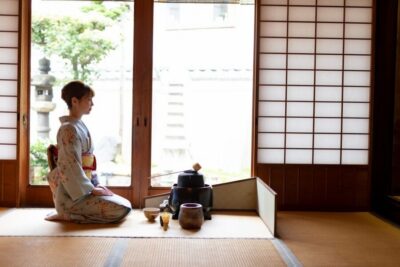
Tea Ceremony in 100-year-old Kyo-Machiya Townhouse
Read our review →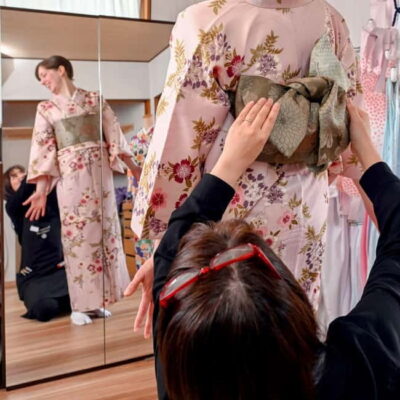
Browse the lists this tour appears in