
REVIEW · WALKING TOURS
Private Guided Half-Day Walking Tour in Yoshinoyama
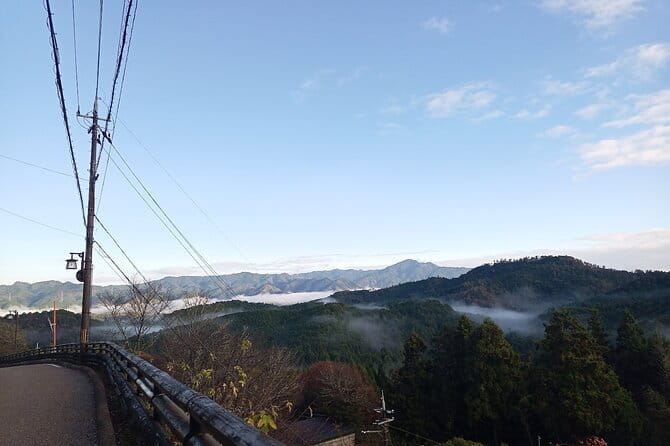
Yoshinoyama is more than a famous cherry blossom spot. It is a sacred mountain district where temple roofs, old pilgrimage paths, forest views, and Shugendo practice meet. This private half-day tour gives you a guide for the parts that are easy to miss, from the bronze Kane no Torii Gate to the huge Zao-do Hall.
I like the custom route and the chance to enter Kinpusen-ji Temple with context instead of simply taking a photo outside. I also like that your guide can adjust the outing for a full uphill walk, a bus or ropeway ride, or a gentler route through the Kami-senbon grove. The main drawback is the climb: the full version gains about 400 meters, and Yoshinoyama becomes extremely crowded during cherry blossom season.
In This Review
- Key points to know before you book
- Why Yoshinoyama deserves more than a quick photo stop
- Starting at Yoshino Station at 10:30 am
- Kane no Torii, a gate between ordinary life and sacred ground
- Kinpusen-ji and the giant Zao-do Hall
- Walking through the Kami-senbon cherry grove
- What the private format adds
- Finishing near Koyama Shrine
- Lunch, transport, and the real cost
- The best season for this walking tour
- Who will get the most from this experience
- Should you book the Yoshinoyama half-day tour?
- FAQ
- How long does the Yoshinoyama walking tour last?
- Where does the tour begin?
- Where does the tour finish?
- Is transportation included?
- How difficult is the walk?
- Is lunch included?
- What happens if bad weather cancels the tour?
Key points to know before you book
- Sacred mountain setting: Visit a 1,348 CE bronze torii gate and the historic Kinpusen-ji Temple.
- Private guiding: Only your group takes part, so the pace and route can be adjusted.
- Flexible transport: Walk from Yoshino Station, or request bus and ropeway help to reduce the uphill effort.
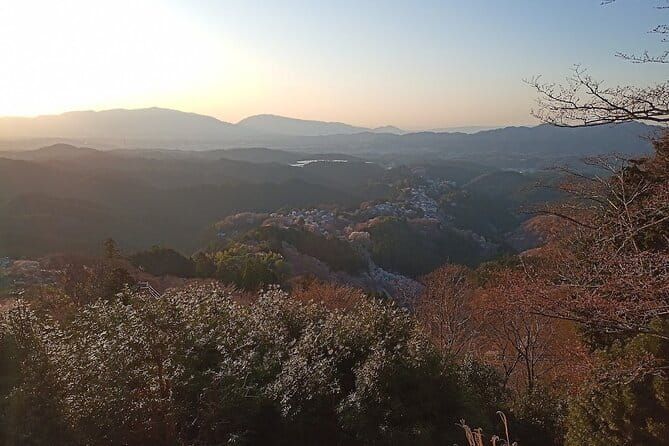
- Seasonal scenery: Kami-senbon offers cherry blossoms in spring and autumn color later in the year.
- Useful finish point: The tour ends near Koyama Shrine, close to town and nearby bus stops.
- Plan lunch carefully: Food costs about 1,000 to 2,000 yen, and seating can be scarce in blossom season.
Why Yoshinoyama deserves more than a quick photo stop
Yoshinoyama sits in Yoshino, Nara Prefecture, and is centered on a mountain temple district with about 1,300 years of religious history. Its fame comes partly from the thousands of cherry trees that cover the slopes, but the place has a stronger character than a seasonal flower display.
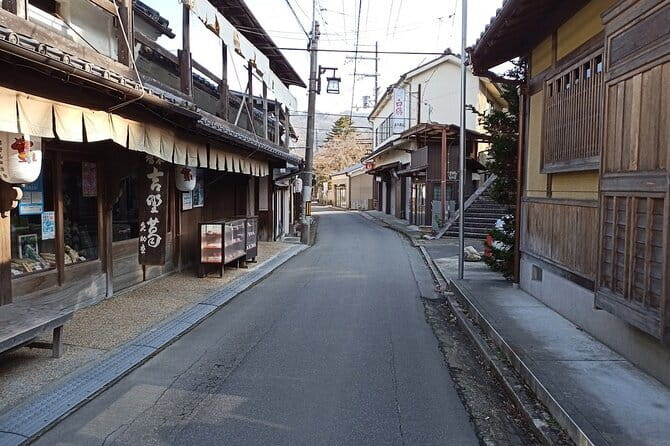
The mountain is tied to Shugendo, an indigenous Japanese tradition built around mountain asceticism. Here, the route itself matters. You move through gates, temple grounds, forest paths, shops, restaurants, and viewpoints as you rise toward the sacred upper reaches.
That is where a private guide helps. Without one, you can still enjoy the scenery, but it is harder to understand why a bronze gate matters, why cherry blossoms are linked to the deity worshipped at Kinpusen-ji, or how the temple district connects with the wider mountain route toward Mt. Omine.
I also like the way this tour leaves you time after the guided portion. You get a four-hour introduction, then you can continue exploring Yoshinoyama, eat, shop, or move on to your next stop without committing to a full-day program.
More walking tours in Kyoto:
- Kyoto Geisha Walking Tour: Gion District & Hidden Gems
★ 4.7 · 3,273 reviews - Kyoto: Gion Magical Night Walking Tour with Geisha Trivia
★ 4.9 · 2,393 reviews - Kyoto: Gion Geisha District Walking Tour – Stories of Geisha
★ 4.7 · 2,187 reviews
Starting at Yoshino Station at 10:30 am
The tour begins at Yoshino Station at 10:30 am. This is a practical meeting point because it puts you at the lower end of the route and lets your guide shape the day around your energy, interests, and the season.
If you want a proper walking outing, you can go uphill from the station. The full route involves roughly 400 meters of elevation gain, so do not treat this as a flat village stroll. Comfortable shoes are important, and you should be ready for a steady climb along mountain streets and trails.
If that sounds too demanding, tell the operator before the tour. A bus or ropeway option can make the course easier. The ropeway costs 450 yen one way and is not included in the tour price. The route through the higher Kami-senbon area can also be changed if you do not want to hike that section.
This flexibility is one of the strongest reasons to choose a private outing instead of a fixed group walk. You can still see the key religious and scenic sites without turning the day into a test of endurance.
Kane no Torii, a gate between ordinary life and sacred ground
One of the first meaningful stops is the Kane no Torii Gate near Kinpusen-ji Temple. Built in 1348, this bronze torii rises about 7.6 meters above the route.
It is one of four traditional torii gates passed by Shugendo practitioners on the way toward Mt. Omine, about 24 kilometers south of Yoshinoyama. Passing through the gate represents a move from the everyday world into a sacred mountain realm connected with gods and ascetic practice.
You spend about 10 minutes here, which is enough time to look closely at the structure and hear the religious background. On your own, you might register it as an impressive old gate. With a guide, you get the idea behind it, which gives the whole uphill route a clearer purpose.
This is a short stop, not a major indoor visit, so it will appeal most to you if you enjoy historical meaning as much as visual spectacle. If your main goal is cherry blossom photography, the temple and grove will likely hold your attention longer.
Kinpusen-ji and the giant Zao-do Hall
The centerpiece of the tour is Kinpusen-ji Temple, believed to have been founded around 1,300 years ago by the mountain ascetic En no Gyoja. Its main building, Zao-do Hall, dates to 1592 and is said to be the second-largest wooden temple structure in Japan.
The scale is striking because the building sits on a mountain ridge and uses huge trees from the surrounding forest as pillars. This is not a delicate little hillside temple. It has a strong, heavy presence, fitting the demanding religious tradition practiced here.
The tour includes entry to Zao-do Hall, with about 30 minutes inside. Your guide explains Shugendo and the role of Zao-gongen, the deity honored at Kinpusen-ji. The deity’s sacred symbol is the cherry blossom, giving the spring scenery a religious link rather than treating it as decoration alone.
I value this part of the experience most. Yoshinoyama can easily become a procession of viewpoints and souvenir shops, especially in spring. Going inside the hall gives you a reason to pause and understand the place as a living religious center.
The entrance fee is included, though it rises during the usual cherry blossom period from late March to mid-April. You should also expect more people around the temple at that time.
A few more Kyoto experiences worth comparing
- Kyoto Arashiyama Bamboo forest & Garden Half-Day Walking Tour
★ 5.0 · 413 reviews - Half-Day Private Walking Tour in Kyoto
★ 5.0 · 57 reviews - Kyoto top must-see Golden pavilion and Bamboo forest half-day Private tour
★ 5.0 · 52 reviews - Perfect Nara Park Half-Day Bus Tour with English Speaking Guide
★ 5.0 · 49 reviews
Walking through the Kami-senbon cherry grove
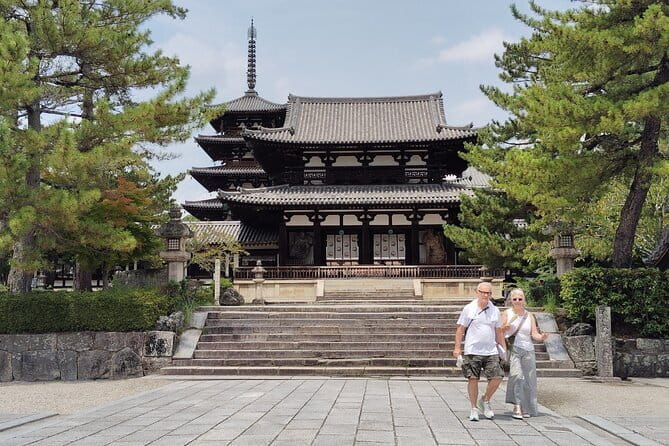
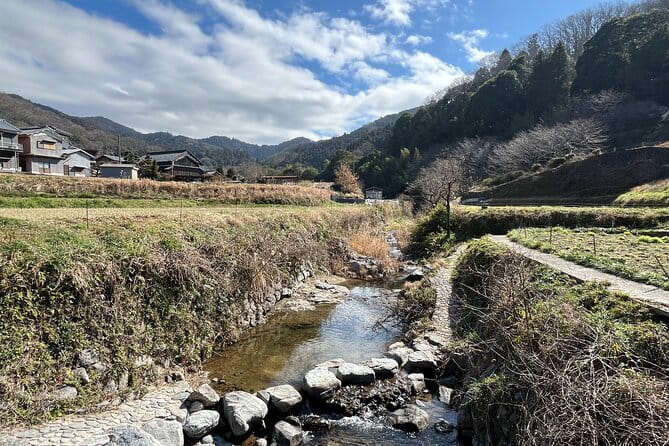
The route continues toward Kami-senbon, described as the third-highest sacred cherry tree grove on the mountain. This section follows a mountain trail and opens to broad views over the surrounding scenery.
In spring, the cherry trees can create the image Yoshinoyama is famous for, with blossoms appearing to fall like snow. But the grove is not only a spring destination. Autumn brings strong red and gold color, while other seasons offer a quieter forest setting and changing mountain views.
The exact Kami-senbon route is flexible. If you want the full walking challenge, this is where the uphill effort becomes important. If you prefer an easier day, ask for transport or an alternate route.
The timing of your visit matters here. The main blossom period usually runs from the end of March through the middle of April, but exact bloom dates change. Peak season brings the best chance of seeing the famous display and the worst chance of enjoying empty paths, easy restaurant seating, or a calm temple visit.
I would choose a shoulder-season date if you care more about space and a relaxed pace than about seeing every tree in flower. The guide can still show you how the mountain changes through the year.
What the private format adds
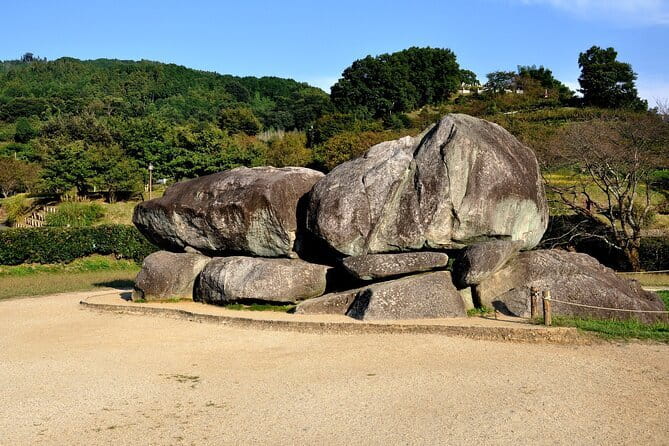
This is a private activity, so only your group takes part. That matters on a route where people may have very different ideas about a good half-day.
You might want to walk every uphill section and stop often for photographs. Someone else may prefer the ropeway, a shorter route, and more time inside Kinpusen-ji. A private guide can respond to that difference instead of moving the whole group at one fixed speed.
The tour has been led by guides including Nathan. On this route, the guide’s role is more than pointing out buildings. You can ask about Shugendo, the meaning of the torii gates, the connection between the temple and cherry blossoms, or the way the mountain is organized into different viewing areas.
A private format also helps if you have limited time in Yoshino. The planned activity lasts about four hours, but the course can finish at another point within the time limit. That gives you a better chance of ending near the part of town you want to explore next.
Finishing near Koyama Shrine

The recommended finish is Koyama Shrine, at 2054 Yoshinoyama. From here, you have easier access to the town and nearby bus stations.
Walking down to Yoshino Station takes about 40 minutes, so keep that in mind when planning a train connection. The tour itself does not end back at the station, and that is useful for some schedules but inconvenient if you expected a simple loop.
You can also request a different finish within the tour time. I would discuss this at the start, especially if you need to catch a train, want lunch in a certain area, or plan to continue toward another part of Yoshinoyama.
Lunch, transport, and the real cost
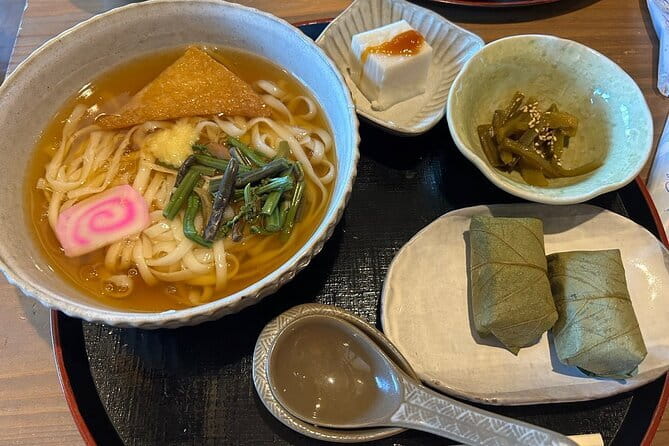
The listed price is $99.76 per person. For a private four-hour tour with a local guide and Kinpusen-ji entrance included, I see the value in the personal route planning and historical explanation, not simply in the number of stops.
Lunch is not included. Meals in Yoshinoyama generally cost about 1,000 to 2,000 yen, depending on the restaurant. During cherry blossom season, finding a seat can be very difficult, so bringing your own lunch is sensible. Your guide can find a suitable place to eat.
The ropeway is optional and costs 450 yen one way. Bus transportation is also an option, but its price is not specified here. Ask about the transport plan before setting out so you know what extra costs to expect.
Group discounts are available, which may improve the per-person value for a family or small party. The price can also rise slightly during cherry blossom season because demand and the Kinpusen-ji entrance fee increase.
The best season for this walking tour
Spring is the obvious choice if Yoshinoyama’s cherry trees are your main goal. The usual season runs from late March to mid-April, but the mountain becomes extremely busy during this period. Crowds can affect the pace, restaurant options, temple visit, and general feeling of the tour.
Autumn gives you fiery color without the same stated pressure of blossom crowds. The Kami-senbon trail remains worthwhile because the scenery changes with the season, not just with cherry flowers.
If you want the quietest possible outing, avoid the peak blossom weeks. You will give up the famous pink display, but you may gain more space on the paths and more time to listen to the guide without constant interruptions.
The tour requires good weather. If poor conditions force a cancellation, you can choose a different date or receive a full refund. For your own comfort, check the forecast and bring suitable walking gear, especially if you plan to take the full uphill route.
Who will get the most from this experience
I would recommend this tour to you if you want Yoshinoyama to make sense, not just look pretty. It suits people who enjoy temples, mountain traditions, seasonal scenery, and the freedom to ask questions along the way.
It is also a good fit for a small private group with mixed fitness levels. One person can request a more active walk, while another can ask for transport or a gentler course. The guide can adapt the route rather than forcing everyone into the same version of Yoshinoyama.
You should think twice if you dislike uphill walking and do not want to use the bus or ropeway. The full route is not casual, and the 400-meter climb may feel substantial in warm weather or during a busy spring day.
Families and older visitors may appreciate the transport choices, but each group should be honest about its walking ability. The tour asks for moderate physical fitness unless you arrange an easier plan.
Should you book the Yoshinoyama half-day tour?
Book it if you want a private introduction to the religious heart of Yoshinoyama, especially if you are curious about Shugendo and want more than a quick visit to the cherry groves.
The strongest plan is to reserve this for a clear day, decide in advance how much uphill walking you want, and bring lunch during blossom season. Choose spring for the famous flowers, autumn for colorful mountain scenery and a less pressured visit, and the ropeway or bus if the climb would get in the way of enjoying the temples.
Skip it if you want an entirely self-guided, flat walk or if your schedule cannot allow for a finish near Koyama Shrine. For everyone else, the private format, adjustable route, and included Zao-do Hall visit make this a practical way to see Yoshinoyama with context and time left for your own exploring.
FAQ
How long does the Yoshinoyama walking tour last?
The tour lasts approximately four hours.
Where does the tour begin?
The meeting point is Yoshino Station in Yoshino, Nara Prefecture. The start time is 10:30 am.
Where does the tour finish?
The recommended finish is Koyama Shrine. It has access to the town and nearby bus stations. Walking from there down to Yoshino Station takes about 40 minutes.
Is transportation included?
Walking is the main option. Bus or ropeway transportation can be arranged to make the route easier, but transportation is not included. The optional ropeway costs 450 yen one way.
How difficult is the walk?
The full uphill route involves roughly 400 meters of elevation gain and requires moderate physical fitness. You can request bus or ropeway transport, or ask for an alternative to the uphill walk through Kami-senbon.
Is lunch included?
Lunch is not included. Restaurant meals in Yoshinoyama generally cost about 1,000 to 2,000 yen. During cherry blossom season, bringing your own lunch is advised because restaurant seating may be difficult to find.
What happens if bad weather cancels the tour?
The experience requires good weather. If it is canceled due to poor weather, you will be offered another date or a full refund. Free cancellation is available up to 24 hours before the start time.
Recently added around Kyoto
- Higashiyama | Kyoto: Sakura Season Private Rickshaw Tour★ 5.0 · 3 reviews
- Kyoto Kimono Rental CHAMATSU|Kimono/Yukata Rental FamilyPlan★ 5.0 · 3 reviews
- Kyoto: Half-Day Private Guided Tour to the Old Town of Gion★ 4.4 · 3 reviews
- Nara Private Customizable Half Day Tour★ 5.0 · 3 reviews
- Kansai Region Hiking Adventure in Nara Kobe Kyoto and More★ 5.0 · 3 reviews
- Full Day Nara Deer, Temple, Shrine, Activities & Tea Ceremony★ 5.0 · 3 reviews
- Nara: Essential Private Tour with Deer Park and Temples★ 5.0 · 3 reviews
- Hiking Tour for Sacred Sites in Kyoto with a Guide★ 5.0 · 3 reviews
Walking Tours, compared.

Kyoto Geisha Walking Tour: Gion District & Hidden Gems
Read our review →
Gion Magical Night Walking Tour with Geisha Trivia
Read our review →
Gion Geisha District Walking Tour – Stories of Geisha
Read our review →
Kyoto Gion Geisha District Walking Tour – The Stories of Geisha
Read our review →
Kyoto Arashiyama Walking Tour: Bamboo, Monkeys, Gardens & Secrets
Read our review →
Kyoto Gion: 2-Hour Geisha Culture & History Walking Tour
Read our review →
Nara Half Day Trip Walking Tour (Private Option Available)
Read our review →Browse the lists this tour appears in