
REVIEW · FUSHIMI INARI SHRINE TOURS
Private eBike Tour Exploring Fushimi with Torii Red Gate Ride
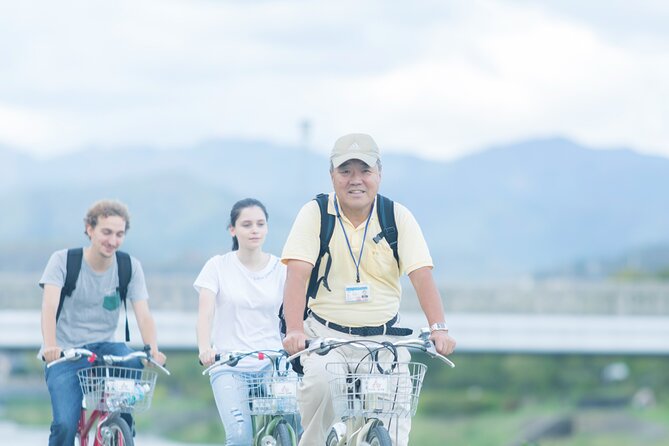
Fushimi Inari’s endless red torii gates are Kyoto’s big visual show, but reaching them by eBike makes the experience feel far less like a checklist. You’ll leave Kyoto Station on quieter streets, stop at Sanjusangen-do and Tofuku-ji, then approach the shrine by bicycle before walking beneath the gates.
I like the way this tour links three very different sacred places in one outing. I also like the private format, with two to six people per guide, since guides such as Kaz, Yuichi, Tibor, JJ, and Y Yagyu can adjust the pace, answer questions, and take photos.
The main consideration is that this is still a road-cycling tour. You need to ride safely without help, and the tour operates in rain, so bring clothes that can handle wet weather. At $111.05 per person, it offers good value if you want transport, guiding, and several sights in one compact morning or afternoon.
In This Review
- Key points to know before you book
- Why the eBike makes sense in Kyoto
- Starting beside Kyoto Station and the Nintendo building
- Sanjusangen-do and its thousand statues
- A brief look at Tofuku-ji Temple
- Entering Fushimi Inari through the red gates
- Returning beside the Kamo River
- Guide quality and the private format
- What the $111.05 price buys you
- Who should book this ride
- Practical details that affect your day
- Should you book the Fushimi eBike tour?
- FAQ
- How long does the private eBike tour last?
- Where does the tour begin and end?
- What is the price of the tour?
- What is included in the price?
- Are snacks included?
- How many people can join a private group?
- Can children join the tour?
- Does the tour operate in rainy weather?
- Can a solo person book the tour?
- Is the tour refundable if I cancel?
Key points to know before you book
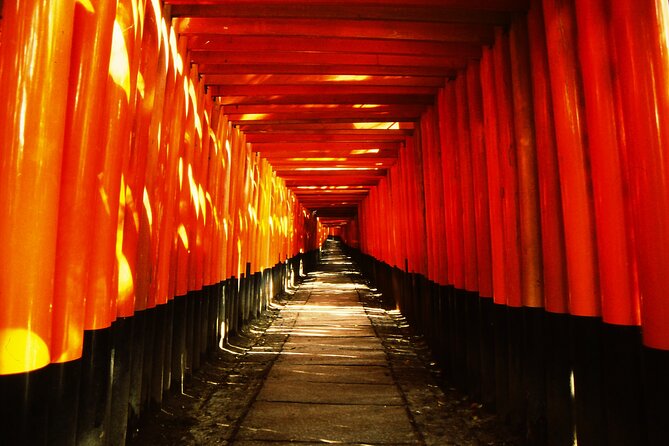
- Fushimi Inari by bicycle: Ride through Kyoto’s side streets, then walk the famous thousand-gate paths at the shrine.
- Sanjusangen-do included: Spend about an hour inside the temple with your guide, where a hall filled with 1,000 Buddha statues provides the tour’s quietest moment.
- Private group of two to six: You avoid a large group and can keep a more personal pace.
- Kamo River return route: The final ride follows a peaceful embankment with nature and wildlife.
- Rain or shine operation: Ponchos are supplied, but you should still dress for changing weather.
- Children need to meet clear requirements: Participants must be at least 10 years old, at least 145 centimeters tall, and able to ride safely on the road without help.
Why the eBike makes sense in Kyoto
Kyoto looks compact on a map, but its temples and shrines are spread across a broad city. Walking between them takes time, while buses can be crowded and slow. A bicycle gives you another option, especially on the smaller streets and alleys that link the major sights.
The eBike matters because this tour covers several stops in only three and a half hours. You are not racing across town, but you are also not wasting much time waiting for transport. The electric assistance should make the ride more manageable, though you still need basic road confidence and control.
The private setup makes the cycling more pleasant. Your guide can keep an eye on the group, explain what you are seeing, and pause when you need a breather. The group limit is two to six people per guide. For seven to twelve people, an additional guide can be arranged without an extra fee.
I would choose this tour early in a Kyoto visit if I wanted a quick sense of how the city fits together. You see residential streets, major religious sites, an old company building, and the Kamo River in one outing. It gives you a useful first look before you return to favorite areas on foot.
More ways to walk Fushimi Inari:
- Kyoto: Fushimi Inari, Kinkakuji, Bamboo Grove 1 Day Bus Tour
★ 4.8 · 4,316 reviews - Fushimi Inari Hidden Hiking Tour (Private Option Available)
★ 5.0 · 1,750 reviews - Kyoto/Osaka: Nara, Fushimi Inari Taisha, Arashiyama Bus Tour
★ 4.7 · 1,275 reviews
Starting beside Kyoto Station and the Nintendo building
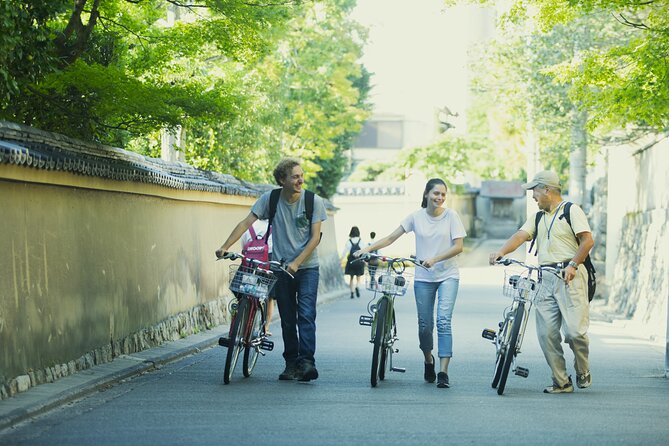
The meeting point is the Kyoto Cycling Tour Project at the Kyoto Station Cycle Terminal, located at 552-13 Higashiaburanokōjichō in Shimogyo Ward. The station area is served by public transport, so you can reach the start without a long side trip.
After fitting your bicycle and helmet, you cycle past the former offices of Nintendo. This is a short photo stop rather than a museum visit, with about ten minutes allowed. The building offers a fun piece of modern Kyoto context: the city is not only temples and wooden lanes, but also the birthplace of one of the world’s best-known entertainment companies.
Do not expect a full Nintendo history lesson here. The value is in seeing an ordinary-looking place connected to a remarkable local success story. It also helps set the tone for the tour, which mixes famous sights with small details you could easily miss from a bus.
Sanjusangen-do and its thousand statues
Sanjusangen-do receives the longest stop, about one hour, and for good reason. Your guide accompanies you inside and explains the temple’s meaning and history while you move through its old corridors.
The main attraction is the hall of 1,000 Buddha statues. The repeated figures create a calm, almost dreamlike effect, especially after the movement and traffic of the bike ride. This is a place where you should slow down and let the room work on you rather than trying to hurry through for a few photographs.
I especially like this stop because it gives the tour a quiet center. Fushimi Inari is visually dramatic, but Sanjusangen-do is more inward and still. Guides have also been praised for allowing time to sit and relax here, which makes the visit feel less like a rapid temple survey.
The temple admission is included. Since this is the only stop with a full hour and guided interior visit, listen closely to the explanation. The context will help you understand why the hall feels so important, rather than seeing it as simply a large room full of statues.
A brief look at Tofuku-ji Temple
The ride continues to Tofuku-ji, where you have about fifteen minutes for photographs. This is a short stop, so think of it as a visual pause rather than a full temple tour.
Tofuku-ji is a quiet and imposing Zen temple. Its scale and architecture give you a different impression from the long, statue-filled hall at Sanjusangen-do. The brief visit also keeps the tour moving toward Fushimi Inari, the main goal of the ride.
If Tofuku-ji is high on your personal Kyoto list, you may want to return later with more time. The tour gives you a useful introduction and a chance to take photos, but fifteen minutes does not allow for a detailed exploration of the grounds.
More bike days around Kyoto:
- Hidden Kyoto E-Biking tour
★ 5.0 · 1,843 reviews - Bike Tour Exploring North Kyoto plus Lunch
★ 5.0 · 1,087 reviews - Arashiyama Bamboo Forest & Hidden Gems Bike Tour (Early Bird)
★ 5.0 · 613 reviews - 5 Top Highlights of Kyoto Full Day Bike Tour (E-bike option)
★ 5.0 · 511 reviews
Entering Fushimi Inari through the red gates
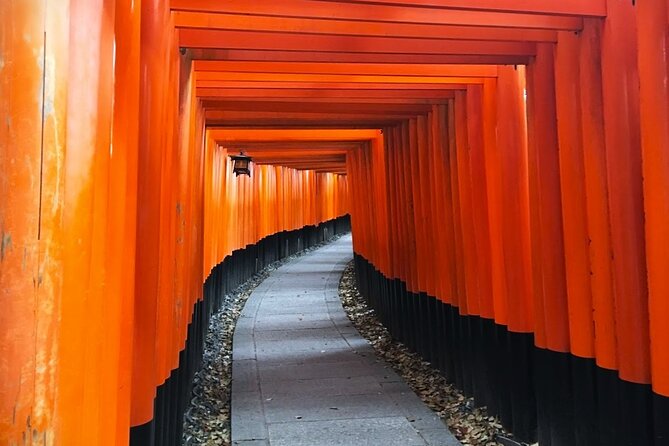
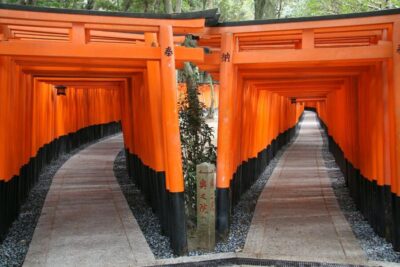
Fushimi Inari-taisha is the centerpiece. After arriving by bike, your guide takes you along the paths beneath the famous torii gates and explains the shrine. The gates form long corridors of red and orange, climbing through the wooded shrine grounds.
You do not simply stop at the entrance, take one photograph, and leave. The walking portion lets you experience the repeated gates as a changing passage, with light and shadow shifting as you move. The tour description calls these the thousand-gate paths, though you should not expect to walk every path on the mountain during this schedule.
The bicycle approach is a smart part of the design. The shrine area can draw large crowds, particularly around the main entrance. Cycling the surrounding streets helps you avoid spending the whole outing in congested traffic, while the walking section gives you time at the shrine itself.
Your guide’s role matters here. Fushimi Inari has plenty of visual impact, but without context it can become a sequence of red gates and quick snapshots. A guide can point out the meaning of the shrine and help you understand why the gates were placed there. Names associated with this experience include Kaz, Yuichi, Tibor, JJ, Kay, Kas, and Y Yagyu, though the guide assigned to you depends on availability.
The stop lasts about one hour. Wear shoes that are comfortable for walking, since you leave the bicycles for the torii paths. The provided helmet is useful on the road, but it will not make the shrine’s steps or walking surfaces any easier, so keep your footing in mind.
Returning beside the Kamo River
After Fushimi Inari, you get back on the bikes and head toward Kyoto Station along the Kamo River. This is one of the tour’s nicest changes of pace. The shrine is full of color and people, while the river route offers open views, quieter riding, and chances to notice birds and other wildlife.
The route follows the peaceful embankment. It is not presented as a formal nature tour, so do not book this expecting a long wildlife outing. Still, the river ride gives you breathing room after the temples and torii gates, and it shows a softer side of Kyoto.
I like that the return is part of the experience rather than a simple trip back to the rental shop. You finish with scenery instead of immediately joining station traffic. The activity ends where it begins, at the Kyoto Station Cycle Terminal.
Guide quality and the private format
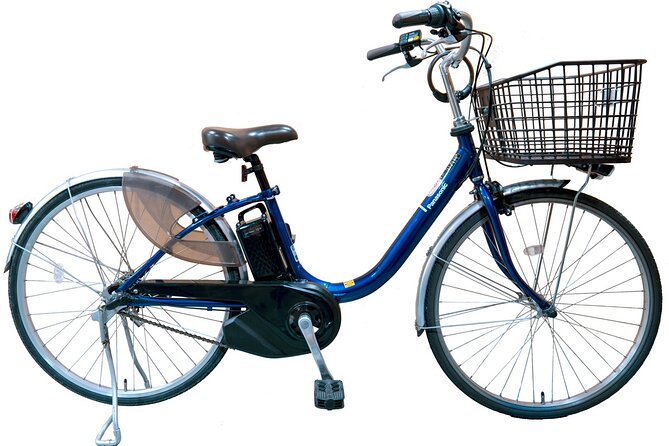
The strongest part of this experience is the guide-led format. The guide is licensed or certified and speaks English, so you can ask questions as you ride and at the temples. The guides named in the feedback are repeatedly described as warm, patient, funny, and good at bringing local history to life.
Kaz is noted for combining local information, humor, and energy. Yuichi is praised for keeping the ride relaxed, taking photos, and finding time for a peaceful temple visit. Tibor is described as patient with children and willing to answer their questions. JJ and Y Yagyu receive especially warm praise for their kindness and regional knowledge.
One particularly useful detail is that JJ helped with a medical emergency for two hours, assisting with the local health-care system. That is not something you should expect to need, but it says something useful about the human side of a small private tour. A guide who stays calm and helpful can make a real difference when a trip takes an unexpected turn.
The private format also gives you more control than a standard group ride. You can ask for explanations, take photos, and settle into the pace without trying to keep up with a large pack. The tour still has a planned route and fixed stops, so private does not mean completely custom, but it should feel more personal.
What the $111.05 price buys you
At $111.05 per person, this is not the cheapest way to see Fushimi Inari. You can reach the shrine by train and explore it without a guide. You can also rent a bicycle separately, though that leaves you to plan the route, manage navigation, and arrange temple visits yourself.
The price includes the bicycle, helmet, rain poncho, accident insurance, original cycling map, and English-speaking guide. Admission to Sanjusangen-do is included as well. Snacks are not included, so plan to buy something around the shrine or eat before and after the ride.
I see the value in the combination. You are paying for a private group, local route planning, transport between several sights, cultural explanations, and the convenience of returning to the same location. If you already know Kyoto well and prefer independent sightseeing, the cost may feel high. If you have limited time or want a guide to handle the cycling route, it is easier to justify.
The average booking lead time is 24 days. That suggests you should not leave this until the final day of a busy Kyoto visit, especially if you need a particular date or guide. Confirmation is sent within 48 hours, subject to availability.
Who should book this ride
I would recommend this tour to active couples, families with older children, and small groups who want to cover several Kyoto sights without spending the day on buses. It also suits you if you enjoy learning through conversation rather than reading every temple panel on your own.
Children must be at least 10 years old and 145 centimeters or taller. They also need to ride safely on the road without assistance. That rule is important. This is not a child seat or beginner lesson, and the group should be comfortable cycling in city conditions.
You should also be happy riding for much of the three-and-a-half-hour schedule. The stated duration includes the time spent cycling between locations, so the total temple time is less than three and a half hours. That makes the tour efficient, but it also means you will not get a long, unhurried visit at every stop.
The tour operates in rain, and a poncho is provided. I would still bring quick-drying clothing and protect anything valuable in your bag. Bad weather may make the river section less pleasant and the roads more demanding, even if the tour continues.
Practical details that affect your day
The minimum group size is two people. A solo participant cannot book this activity alone. At the other end, one guide can take two to six people, while seven to twelve people can be split between two guides without an added guide fee.
You meet and finish at the Kyoto Cycling Tour Project near Kyoto Station. The end point is useful if you are staying nearby or have a train to catch, but leave some spare time after the scheduled finish rather than booking an immediate connection.
The tour includes accident insurance, but that should not replace ordinary care. Follow your guide’s instructions, keep control of the bicycle, and tell the guide if you need to slow down. The ride is described as leisurely, but leisurely does not mean risk-free.
Cancellation terms require careful attention. The supplied information gives conflicting signals: one section says you may receive a refund if you cancel at least three days before the tour date by 18:00 Japan time, while another says the experience is non-refundable and cannot be changed. Confirm the current policy before paying, especially since the booking is subject to availability.
Should you book the Fushimi eBike tour?
Book it if you want Fushimi Inari plus two important temples, and you like the idea of seeing Kyoto from a bicycle rather than from a bus window. The private guide, small group size, included equipment, and Kamo River return make the $111.05 price reasonable for a well-organized half-day outing.
Skip it if you dislike cycling in city streets, need a fully flexible schedule, or want to spend several hours hiking high up through Fushimi Inari. The tour gives you a thoughtful sample of the shrine and nearby Kyoto, not an exhaustive visit to every corner.
For most active first-time visitors, I think the balance is strong. You get the famous torii gates, a remarkable hall of Buddha statues, a quiet Zen temple, a modern Kyoto footnote, and a calm river ride, all with a guide who can turn the connections between them into a coherent story.
FAQ
How long does the private eBike tour last?
The tour lasts approximately 3 hours and 30 minutes, including the time spent cycling between locations.
Where does the tour begin and end?
It begins and ends at the Kyoto Cycling Tour Project, Kyoto Station Cycle Terminal, at 552-13 Higashiaburanokōjichō, Shimogyo Ward, Kyoto.
What is the price of the tour?
The listed price is $111.05 per person.
What is included in the price?
The price includes bicycle use, a helmet, a rain poncho, accident insurance, an original cycling map, and a licensed or certified English-speaking guide. Admission to Sanjusangen-do Temple is also included.
Are snacks included?
No. Snacks are not included in the tour price.
How many people can join a private group?
A guide can accept a minimum of two and a maximum of six people. Groups of seven to twelve can have an additional guide arranged without an extra fee.
Can children join the tour?
Children must be at least 10 years old, at least 145 centimeters tall, and able to ride a bicycle safely on the road without assistance.
Does the tour operate in rainy weather?
Yes. The tour operates in rain, and a rain poncho is available for use.
Can a solo person book the tour?
No. The activity requires at least two participants per guide.
Is the tour refundable if I cancel?
The supplied booking information includes both a three-day refund condition and a non-refundable condition. Check the current cancellation terms before booking, since the applicable policy should be confirmed at the time of purchase.
More E-Bikes in Kyoto
- E-Bike Tours of the highlights of Kyoto!!!
★ 5.0 · 291 reviews - Kyoto: City Secrets eBike Tour
★ 4.9 · 196 reviews - Pedal Adventure Kyoto’s iconic landmarks on an e-bike tour
★ 5.0 · 189 reviews - Kyoto: Hidden Gems E-Bike Tour with Local Japanese Guide
★ 4.9 · 189 reviews
Recently added around Kyoto
- Higashiyama | Kyoto: Sakura Season Private Rickshaw Tour★ 5.0 · 3 reviews
- Kyoto Kimono Rental CHAMATSU|Kimono/Yukata Rental FamilyPlan★ 5.0 · 3 reviews
- Kyoto: Half-Day Private Guided Tour to the Old Town of Gion★ 4.4 · 3 reviews
- Nara Private Customizable Half Day Tour★ 5.0 · 3 reviews
- Nara: Essential Private Tour with Deer Park and Temples★ 5.0 · 3 reviews
- Kansai Region Hiking Adventure in Nara Kobe Kyoto and More★ 5.0 · 3 reviews
- Full Day Nara Deer, Temple, Shrine, Activities & Tea Ceremony★ 5.0 · 3 reviews
- Hiking Tour for Sacred Sites in Kyoto with a Guide★ 5.0 · 3 reviews
Fushimi Inari Shrine Tours, compared.
Fushimi Inari, Kinkakuji, Bamboo Grove 1 Day Bus Tour
Read our review →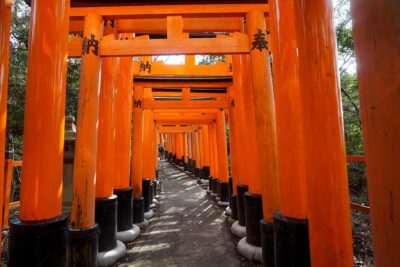
Fushimi Inari Hidden Hiking Tour (Private Option Available)
Read our review →
Kyoto/Osaka: Nara, Fushimi Inari Taisha, Arashiyama Bus Tour
Read our review →
Nijo, Kinkaku-ji, Arashiyama, Kiyomizu & Fushimi Inari
Read our review →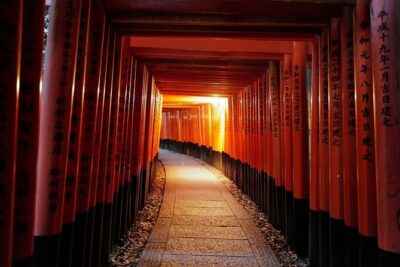
Kyoto Early Bird English Tour: Fushimi-Inari and Arashiyama
Read our review →
Fushimi, Arashiyama – Bamboo, Monkey, Torii & Secrets
Read our review →Browse the lists this tour appears in