
REVIEW · KYOTO TEA CEREMONY EXPERIENCES
Oboro | Mindful Tea Ceremony in a 100-Year-Old Kyoto Teahouse
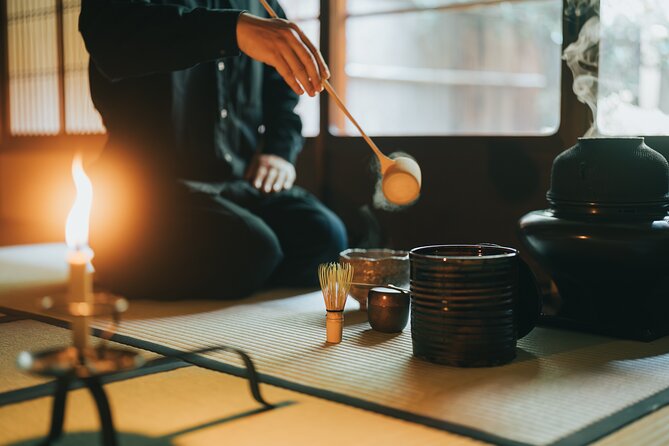
The most striking part of Oboro’s tea ceremony is its setting: a candlelit, minimally decorated teahouse where the soft light makes every movement feel deliberate. You watch the host clean the utensils, prepare the bowl, and whisk matcha one serving at a time rather than treating tea as a quick café drink.
I like the small maximum of eight people, which gives you room to see the ritual and ask questions. I also like the English guidance, especially with hosts such as Taku and Naoki, who explain the meaning behind the gestures without turning the ceremony into a lecture. The main consideration is the strict arrival rule: after 10 minutes, you cannot join.
In This Review
- Key points at a glance
- Entering Oboro’s candlelit Kyoto teahouse
- The first tea, sweets, and a change of pace
- Watching the utensils cleaned and matcha whisked
- Tasting matcha one bowl at a time
- The meaning behind a ritual more than 1,200 years old
- A peaceful pause from Kyoto’s busy sightseeing days
- What the handmade candle adds
- How the English guidance affects the experience
- Is $45.98 a fair price?
- Who should book this tea ceremony?
- Practical details before you reserve
- Should you book Oboro?
- FAQ
- How long does the Oboro tea ceremony last?
- Where does the tea ceremony begin and end?
- Is an English-speaking guide included?
- How large is the group?
- What is included in the experience?
- What is the cancellation policy?
Key points at a glance
- A 100-year-old Kyoto teahouse: The old Japanese house gives the ceremony a sense of place that a modern café cannot match.
- Candlelight and quiet: The low light and sparse room help you slow down and pay attention to the bowl, aroma, movement, and taste.
- English-speaking guidance: Taku, Naoki, and the other hosts explain the ritual and answer questions through English.
- Small groups: The experience allows no more than eight people, with some sessions having six or fewer.
- More than matcha: You begin with tea and sweets, and black tea is available for someone who does not want matcha.
- A thoughtful final token: You leave with a small handmade candle as a reminder of the calm, not just a souvenir.
Entering Oboro’s candlelit Kyoto teahouse
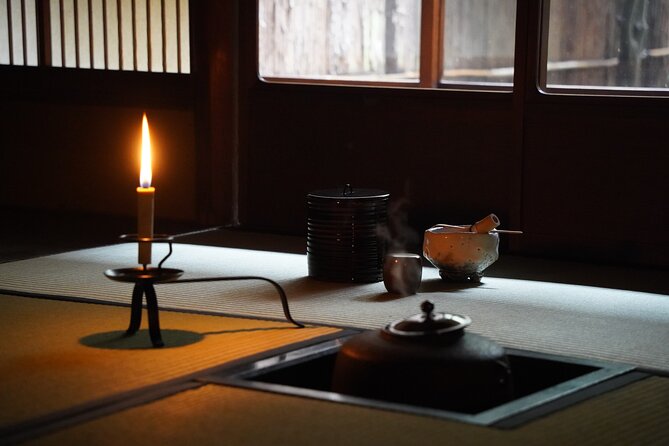
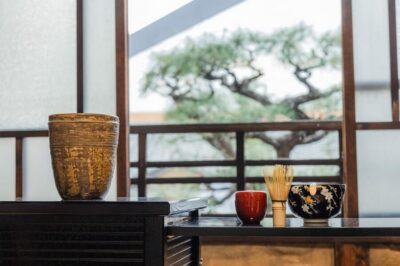
Oboro offers a different kind of tea ceremony. It is not built around a grand performance or a long set of rules. Instead, the room is quiet, lightly decorated, and lit by handmade candles. That simplicity matters because it keeps your attention on the ritual itself.
The experience takes place at 237 Nakaogawachō in Kyoto’s Kamigyo Ward. It is near public transportation, but you should still allow time to find the address. The late-arrival rule is firm: if you arrive more than 10 minutes after the start, you will not be admitted.
That rule may feel strict, but it protects the ceremony’s quiet rhythm. You are not walking into a restaurant where the staff can simply seat you between courses. Arrive early enough to settle in, silence your phone, and make the shift from sightseeing to stillness.
The space is a major part of the value. Kyoto has plenty of places where you can order matcha, but this experience gives you a traditional room, a host who prepares the tea in front of you, and a slower pace. The setting feels designed for attention rather than consumption.
More tea ceremonies in Kyoto:
- Kyoto: Tea Ceremony in a Traditional Tea House in Kiyomizu
★ 4.9 · 3,519 reviews - Kyoto: Tea Ceremony Ju-An at Jotokuji Temple
★ 4.9 · 3,207 reviews - Kyoto: 45-Minute Tea Ceremony Lesson Experience
★ 4.3 · 2,378 reviews
The first tea, sweets, and a change of pace
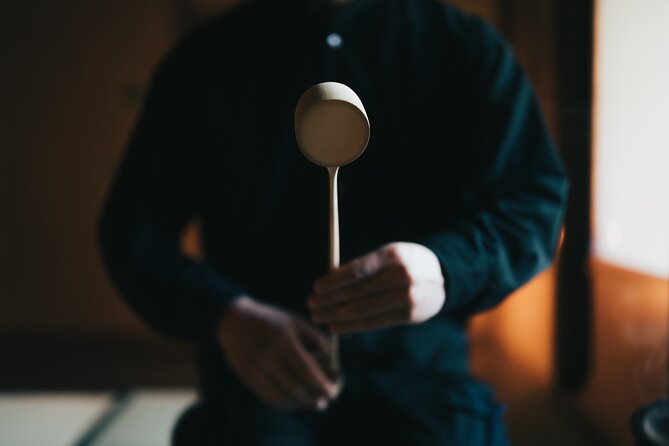
The ceremony begins with a welcome tea and a small sweet. This opening gives you time to settle before the main preparation begins. It also helps explain why tea ceremony is not simply about the drink.
You are encouraged to notice the room, the sound of the host’s movements, the feel of the cup, and the flavor of the tea. The sweet provides a small contrast to the matcha that follows. It is a modest touch, but it gives the opening a clear shape.
I especially like this part for first-time visitors. If you arrive in Kyoto after a morning of temples, markets, and crowded streets, your mind may still be racing. The welcome tea gives you a few minutes to stop taking pictures and start paying attention.
The experience is not presented as a formal test. You do not need prior knowledge of tea ceremony, and the English-speaking guide helps explain what is happening. The atmosphere remains polite and traditional, but it is also friendly enough for questions.
Watching the utensils cleaned and matcha whisked
The main ceremony begins when the host moves into the tearoom and prepares the utensils. Cleaning each item is part of the ceremony, not a bit of housekeeping before the real event. The careful motions show respect for the tea, the room, and the people sharing it.
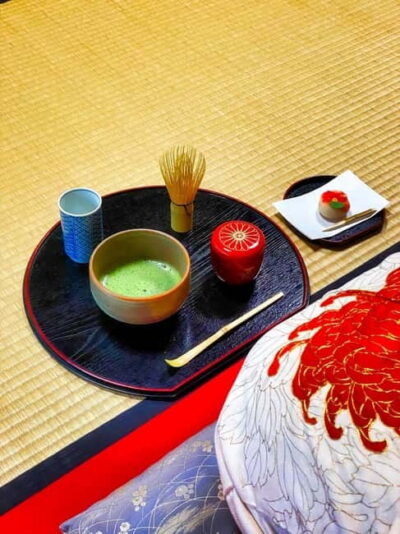
You watch the host handle the bowl, scoop, whisk, and other tools with care. Then a rare organic green tea is whisked and served one bowl at a time. That serving order helps preserve the feeling of a personal ritual, even when you are sitting with a small group.
This is where the experience differs most from having matcha at a restaurant. In a café, the finished drink is the main point. At Oboro, you see how the drink comes together, and the preparation becomes as important as the flavor.
The hosts explain what you are seeing, so the quiet does not become confusing. Taku has been praised for speaking excellent English and for making the ceremony informative without losing its calm mood. Naoki is described as soft-spoken, which suits the reflective tone of the room.
You can also ask questions. That is useful because some gestures may seem mysterious if you have never seen a tea ceremony before. The explanations give you cultural context while leaving enough silence for the ceremony to breathe.
Tasting matcha one bowl at a time
When your bowl arrives, you are invited to focus on simple details: the warmth of the bowl in your hands, the surface of the tea, its texture, and its taste. The point is not to gulp it down. You have time to notice what is happening.
The matcha is described as very good, and several comments praise both the tea and the care of the preparation. Still, taste is personal. Matcha can have a grassy, bitter, or slightly sweet character, and anyone expecting a sugary café drink should adjust expectations.
If you do not care for matcha, this may still be worth doing. One family group included someone who chose black tea while another person enjoyed the matcha. The experience is about the preparation and the ceremony as much as the drink, so a dislike of matcha does not automatically rule it out.
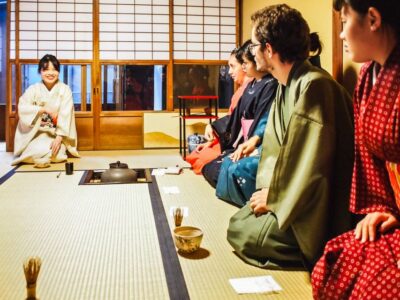
The small group makes this tasting more comfortable. With a maximum of eight people, you are less likely to lose sight of the host’s hands. You also have a better chance to hear the explanations and ask a question without interrupting a large tour.
Some sessions may feel especially intimate when the group is six people or fewer. That can be a real advantage if you want a calm cultural experience rather than a busy demonstration. The tradeoff is that the format may feel too quiet for anyone looking for a lively, hands-on class.
A completely different side of Kyoto:
- PERFECT KYOTO 1-Day Bus Tour
★ 5.0 · 13,518 reviews - Kyoto: Fushimi Inari, Kinkakuji, Bamboo Grove 1 Day Bus Tour
★ 4.8 · 4,316 reviews - Kyoto Geisha Walking Tour: Gion District & Hidden Gems
★ 4.7 · 3,273 reviews - Kyoto: Gion Magical Night Walking Tour with Geisha Trivia
★ 4.9 · 2,393 reviews
The meaning behind a ritual more than 1,200 years old
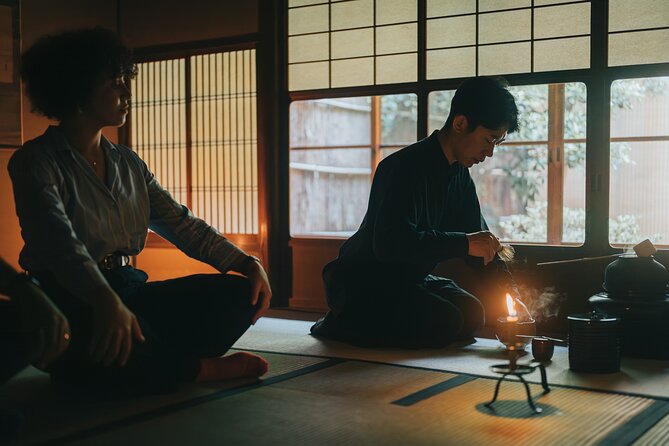
One part of the experience connects the ceremony to the long history of tea in Japan. The tea tradition itself reaches back more than 1,200 years, while the house used for Oboro’s ceremony is about 100 years old. Those are different details, but together they give the ritual a useful sense of time.
You are not simply watching someone make a beverage. You are seeing an art form built around respect, focus, hospitality, and shared attention. The host’s movements may look slow, but that pace is the lesson. Tea ceremony asks you to give ordinary actions enough care that they no longer feel ordinary.
That idea is easy to understand even if you know little about Japanese culture. You can see it in the way the host cleans the utensils, serves each bowl, and handles the space. It is also why the ceremony can appeal to someone who does not normally drink tea.
The experience avoids making the ritual feel inaccessible. You are not expected to know every rule or perform the full ceremony yourself. Instead, you watch, listen, taste, and gain a clearer sense of why the tradition has lasted.
A peaceful pause from Kyoto’s busy sightseeing days
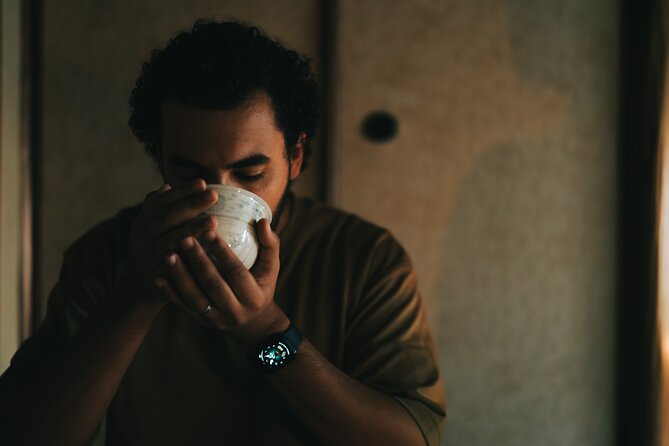
Kyoto rewards early starts and full days, but its famous sights can leave you tired. Oboro works best as a pause between more active plans. The candlelight, gentle sounds, and limited decoration create a noticeable break from streets, trains, and temple crowds.
I like the fact that the mood is not created through a long sales pitch. The room does most of the work. Once the candles are lit and the utensils are being prepared, the ceremony’s pace becomes clear.
You should not book this expecting entertainment in the usual sense. The appeal is quiet observation. One of the strongest descriptions of the experience compares the ritual to something hypnotic, and that is a useful way to understand its rhythm. The repeated movements can feel absorbing when you allow yourself to watch without rushing.
This calm setting may not suit every schedule. At 50 minutes, the activity is short, but you still need to protect the time around it because arriving late means missing the ceremony. It is best placed in an itinerary with some breathing room, not squeezed between two distant attractions.
What the handmade candle adds
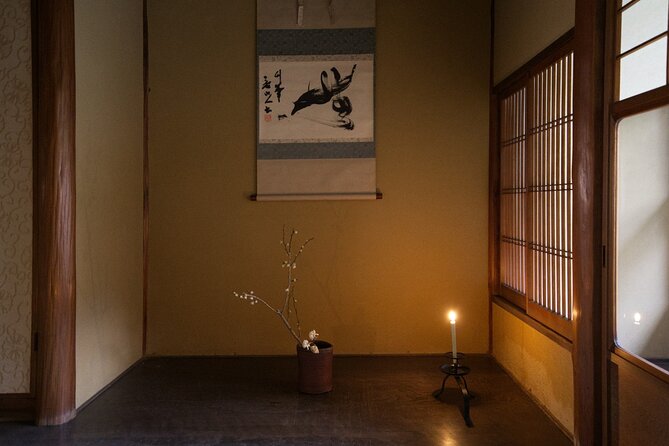
The ceremony ends with a small handmade candle. It is a simple gift, but it fits the experience better than a generic souvenir would. The candle recalls the low light of the room and gives you a physical reminder of the quiet pause you have just taken.
Do not expect a large take-home item or a shopping stop. The candle is a small token, and its meaning comes from the ceremony. It suggests that mindfulness is not meant to end when you leave the teahouse.
This final touch also helps the experience feel complete. You begin by leaving daily routines behind, watch the tea being prepared, taste it slowly, and depart with something connected to the atmosphere. The sequence feels carefully shaped without becoming overly formal.
How the English guidance affects the experience
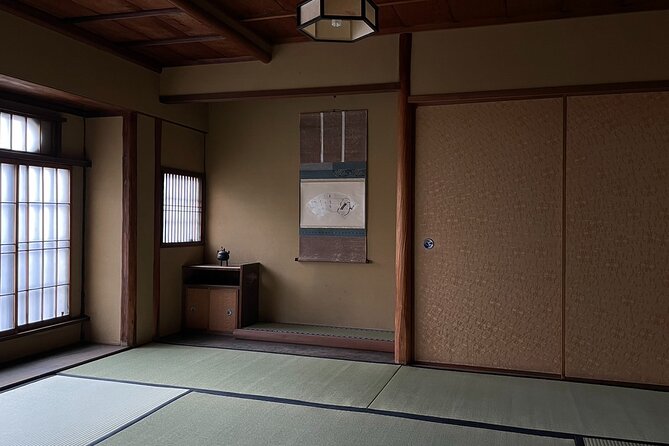
An English-speaking guide is included, and that makes a real difference. Tea ceremony can be beautiful to watch, but without explanation you may miss why certain actions matter. Translation lets you understand the ceremony while it is happening.
Taku has been praised for clear English and for combining information with a warm, entertaining manner. Naoki’s soft-spoken approach has also been appreciated for matching the reflective setting. The provider is Taku Okamoto, and the exact host may vary by session.
The hosts are described as patient, polite, and happy to answer questions. That matters for families and first-time visitors who may want more explanation. It also helps prevent the ceremony from feeling like a display that you simply watch from a distance.
At the same time, translation cannot turn every moment into conversation. Quiet is part of the design. You will get useful explanations, but you should also expect stretches where the best thing to do is watch.
Is $45.98 a fair price?
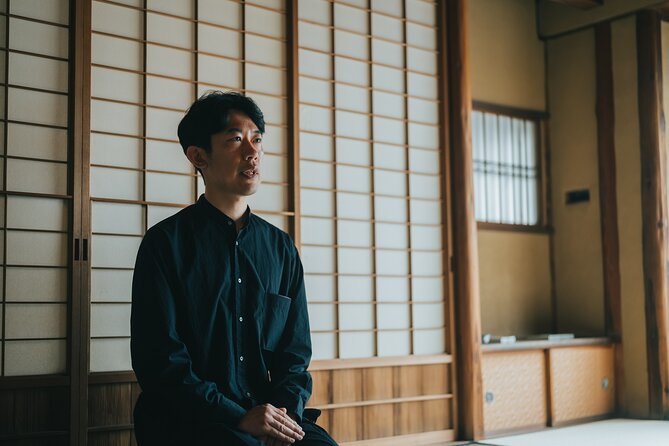
At $45.98 per person, Oboro costs more than buying a bowl of matcha. That comparison misses the main point. You are paying for roughly 50 minutes in a traditional teahouse, a guided ceremony, welcome tea, sweets, matcha or another tea option, a small group, and the host’s explanations.
The small group is important to the value. A large demonstration might be cheaper, but you could struggle to see the utensils or hear the guide. With no more than eight people, the ceremony has a more personal scale.
The price is easiest to justify if you want cultural context and atmosphere, not just a drink. If your main goal is to sample matcha cheaply, a café will cost less. If you want to understand the ritual and enjoy a calm hour in an old Kyoto house, this offers more.
There are no gratuities included, so plan for that if you normally tip guides. The activity uses a mobile ticket, and confirmation is provided when you book. Free cancellation is available up to 24 hours before the start time. Changes or cancellations inside that window are not refunded.
The experience also depends on a minimum number of participants and has a stated good-weather requirement. If the provider cancels for those reasons, you are offered another date or experience, or a full refund.
Who should book this tea ceremony?
I would point first-time visitors toward Oboro, especially those who want a cultural activity that does not take half a day. The short duration makes it easy to fit into a Kyoto plan, while the setting gives it more depth than a quick tea stop.
It also suits couples, families, and small groups who prefer a quiet activity. The English explanations make it approachable, and the room offers a rare chance to sit still during a busy trip.
You should also consider it if you are interested in Japanese design, hospitality, or ritual. You do not need to be a tea expert. In fact, the experience may be most useful when you arrive with simple questions and an open mind.
I would hesitate only if you dislike quiet, formal observation or want a fully hands-on workshop. The supplied details focus on watching the host prepare and serve the tea, not on having each participant conduct a complete ceremony.
Practical details before you reserve
The experience lasts about 50 minutes and begins and ends at 237 Nakaogawachō in Kyoto’s Kamigyo Ward. It is near public transportation, but the strict 10-minute cutoff means you should not rely on a last-minute arrival.
Wear something that lets you sit comfortably and quietly. The setting is traditional and peaceful, so keep bulky bags and loud distractions to a minimum when possible. No special tea knowledge is required.
The maximum group size is eight. Coffee and tea are included, as is an English-speaking guide. Tips and gratuities are not included.
Oboro’s overall rating is 4.9 from 19 ratings, with 100 percent recommending the experience. That strong response matches the features that matter most here: the serene room, friendly hosts, clear explanations, good tea, and the sense of stepping away from Kyoto’s noise.
Should you book Oboro?
Book it if you want a short, calm, well-explained introduction to Japanese tea ceremony in an old Kyoto house. The candlelight, small group, English guidance, and handmade candle give it a clear identity, and the $45.98 price is reasonable for a full cultural experience rather than a simple cup of tea.
Skip it if you want a fast tasting, a large-scale show, or a highly active class. For everyone else, especially first-time visitors and anyone who enjoys thoughtful cultural experiences, Oboro is a strong choice. Arrive early, accept the quiet, and let the ritual do the talking.
FAQ
How long does the Oboro tea ceremony last?
The experience lasts approximately 50 minutes.
Where does the tea ceremony begin and end?
It begins at 237 Nakaogawachō, Kamigyo Ward, Kyoto, 602-0053, Japan, and ends back at the same meeting point.
Is an English-speaking guide included?
Yes. An English-speaking guide is included, and the host explains the ceremony and translates for you.
How large is the group?
The activity allows a maximum of eight participants.
What is included in the experience?
Tea or coffee and an English-speaking guide are included. Tips and gratuities are not included.
What is the cancellation policy?
You can cancel up to 24 hours before the start time for a full refund. Cancellations or changes made less than 24 hours before the start are not refunded. If the provider cancels because of weather or because the minimum number of participants is not met, you can choose another date or experience, or receive a full refund.
Recently added around Kyoto
- Higashiyama | Kyoto: Sakura Season Private Rickshaw Tour★ 5.0 · 3 reviews
- Kyoto Kimono Rental CHAMATSU|Kimono/Yukata Rental FamilyPlan★ 5.0 · 3 reviews
- Kyoto: Half-Day Private Guided Tour to the Old Town of Gion★ 4.4 · 3 reviews
- Nara Private Customizable Half Day Tour★ 5.0 · 3 reviews
- Kansai Region Hiking Adventure in Nara Kobe Kyoto and More★ 5.0 · 3 reviews
- Full Day Nara Deer, Temple, Shrine, Activities & Tea Ceremony★ 5.0 · 3 reviews
- Nara: Essential Private Tour with Deer Park and Temples★ 5.0 · 3 reviews
- Hiking Tour for Sacred Sites in Kyoto with a Guide★ 5.0 · 3 reviews
Kyoto Tea Ceremony Experiences, compared.
Tea Ceremony in a Traditional Tea House in Kiyomizu
Read our review →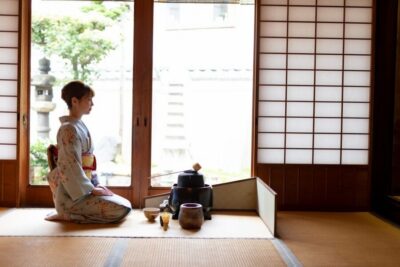
Tea Ceremony in 100-year-old Kyo-Machiya Townhouse
Read our review →
Browse the lists this tour appears in