
REVIEW · GION GEISHA DISTRICT TOURS
KYOTO: Tempio Kiyomizu Pagode Gion “Geisya” (Guida Italiana)
Kiyoto’s famous eastern districts make much more sense when someone explains the details hiding behind the pretty streets. This five-hour Italian-language tour links Kiyomizu-dera, Sannenzaka, Ninenzaka, Gion, and Pontocho, so you get both major sights and the old lanes between them.
I like two things right away: transport and planned entrance fees are included, and the guide can adjust the route or timing when possible. I also like the attention given to questions. Guide Omae is described as warm, quick, careful, and especially good at explaining Japanese culture in Italian.
The main consideration is pace. You cover several famous areas in five hours, mostly on foot after the bus ride, and Kiyomizu’s approach streets can be crowded and full of shops. This is a good orientation tour, but not a slow, private study of every temple and lane.
In This Review
- Key points at a glance
- Why this route works for a first Kyoto day
- Meeting at Kyoto Station without a wrong turn
- Kiyomizu-dera: the main temple visit
- Sannenzaka and Ninenzaka: the walk between the sights
- Gion: context instead of a promise of spectacle
- Minami-za Theatre and the finish at Pontocho
- What the $117 price really covers
- Group or individual touring in Italian
- Who will get the most from this experience
- Timing, flexibility, and what to bring
- My verdict: a strong choice for Italian-speaking Kyoto visitors
- FAQ
- Where does the tour begin?
- How can I recognize the meeting point?
- What language is the guided tour in?
- How long does the experience last?
- Is transportation included?
- Are entrance tickets included?
- Is the tour wheelchair accessible?
- Can I cancel or pay later?
Key points at a glance
- Italian guide Omae: Expect explanations about Kyoto’s history, culture, and religious customs in fluent Italian.
- Kiyomizu-dera included: The tour spends about one hour at Kyoto’s best-known Buddhist temple.
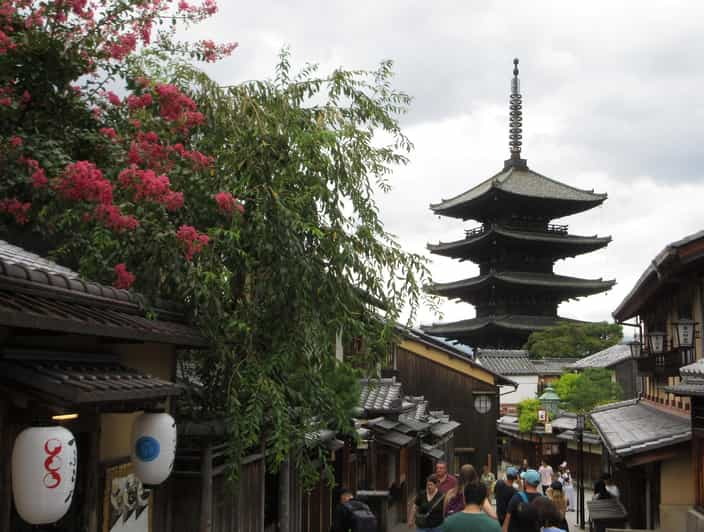
- Classic eastern Kyoto walk: Sannenzaka and Ninenzaka connect the temple with Gion through old pilgrimage routes and shopping streets.
- Gion and Pontocho finish: See two of Kyoto’s most famous entertainment districts, with a pass by Minami-za Theatre.
- Transport and entry covered: The listed bus or coach ride and scheduled monument entrance fees are included in the $117 price.
- Flexible support: Itineraries and times can be adjusted on request as far as possible, and wheelchair access is available.
Why this route works for a first Kyoto day
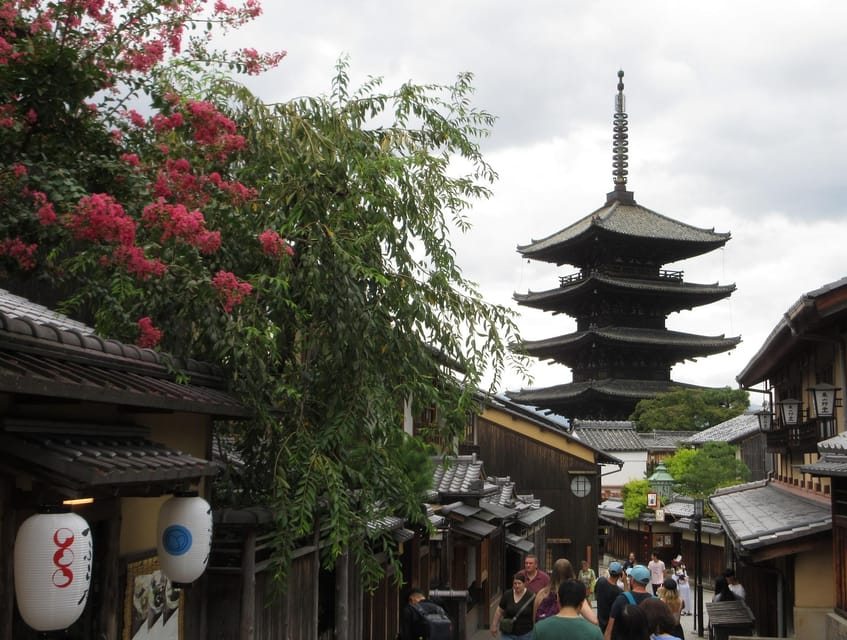
This experience follows one of Kyoto’s most useful sightseeing lines. You begin at Kyoto Station, ride toward the eastern hills, visit Kiyomizu-dera, then walk downhill through Sannenzaka and Ninenzaka toward Gion and Pontocho.
That order matters. Kiyomizu-dera is the major landmark at the top of the route. Afterward, the tour moves through streets that developed around the temple and its pilgrimage traffic. You are not simply ticking off unrelated sights. The route shows how worship, commerce, theatre, food, and nightlife grew together over centuries.
The tour lasts five hours, but only about an hour is assigned to Kiyomizu-dera and about 30 minutes to Gion. The rest is spent moving between places and seeing the streets along the way. I would treat this as a guided introduction to eastern Kyoto, not as a full examination of every building.
The Italian language is the central reason to choose this experience. Kyoto can be hard to read from signs and surfaces alone. A guide who can answer questions in Italian gives you a better chance to understand why a ritual matters, what a temple space represents, and how Kyoto changed over time.
More evenings in Gion:
- Kyoto Geisha Walking Tour: Gion District & Hidden Gems
★ 4.7 · 3,273 reviews - Kyoto: Gion Magical Night Walking Tour with Geisha Trivia
★ 4.9 · 2,393 reviews - Kyoto: Gion Geisha District Walking Tour – Stories of Geisha
★ 4.7 · 2,187 reviews
Meeting at Kyoto Station without a wrong turn
The meeting point is outside the central north entrance of Kyoto Station, also called the Karasuma-Guchi side. Go to the space between the four escalators in front of the taxi terminal, not the bus terminal.
There is a useful visual clue. From the meeting area, Kyoto Tower should be in front of you, toward the upper left of your view, not the right. That detail may save you a needless station circuit, especially because Kyoto Station is large and the taxi and bus areas are easy to confuse.
You receive an email by the day before with confirmation and further meeting-point details. Still, I would arrive with enough time to find the correct exit. The tour begins with a bus or coach ride of about 15 minutes, so a late arrival could affect the group from the start.
Kiyomizu-dera: the main temple visit
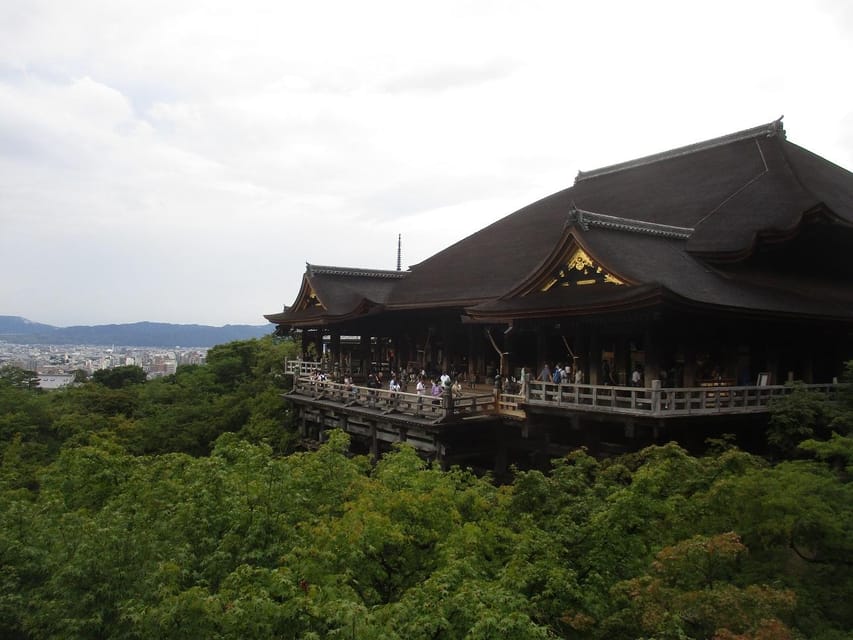
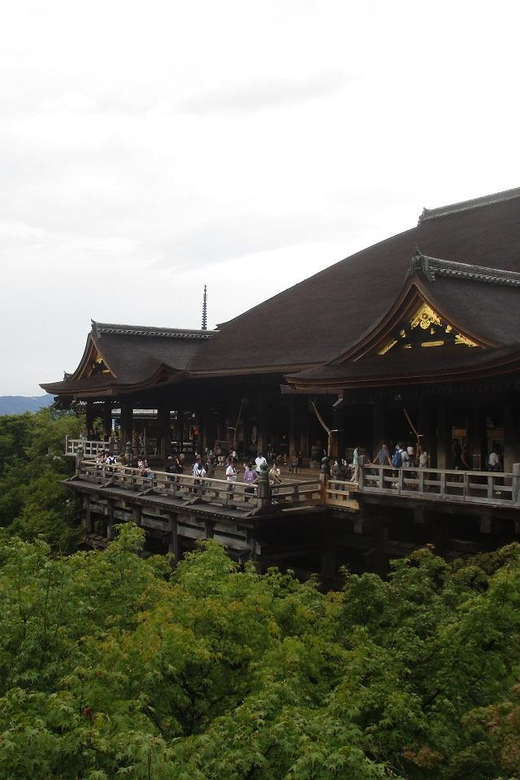
The first major stop is Kiyomizu-dera, with roughly one hour for a guided visit and sightseeing. The temple sits above Kyoto’s eastern districts, and reaching it by the old approach gives the visit a sense of progression rather than making it feel like a quick stop beside a parking area.
Kiyomizu-dera is a Buddhist temple, and the approach belongs to an old pilgrimage route. Your guide can connect the temple to the growth of this part of Kyoto from the eighth century onward, while also explaining religious details that are easy to miss if you only come for photographs.
The one-hour allocation is useful for a focused visit. You have enough time for an explanation and an overview, but you should not expect to inspect every corner at leisure. Kiyomizu-dera is one of Kyoto’s major sights, so the time can pass quickly, particularly if you want photographs and pauses along the way.
The entrance fee for scheduled monuments is included. That makes the day easier to manage, since you do not need to stop and work out each payment while following the route.
Sannenzaka and Ninenzaka: the walk between the sights
After Kiyomizu-dera, the route continues on foot to Sannenzaka and Ninenzaka. The listed walking sections are short, but the overall transition through these lanes is one of the most enjoyable parts of the experience.
These streets developed around the pilgrimage traffic heading to Kiyomizu-dera. Today, they are lined with souvenir shops, sweets, cafés, and places designed for visitors of all ages. That commercial side is part of the reality here. You will see plenty of Kyoto-themed goods and snacks, not an untouched medieval village.
I like having a guide in this section because the lanes can look like a series of attractive facades unless someone explains the connection between the temple, the pilgrimage route, and the surrounding businesses. You can ask about the cultural meaning of what you are seeing instead of treating the walk as a shopping break.
The route is also a practical choice for mixed-age groups. You can pause at shops and cafés, and the guide can offer assistance as needed. At the same time, the old streets are not a flat modern promenade. Anyone concerned about mobility should contact the provider in advance, even though the activity is listed as wheelchair accessible.
More visits to Kiyomizu-dera:
- Kyoto: Tea Ceremony in a Traditional Tea House in Kiyomizu
★ 4.9 · 3,519 reviews - Kyoto: Nijo Castle, Kiyomizu & Fushimi Inari Guided Tour
★ 4.7 · 700 reviews - Kyoto: Nijo, Kinkaku-ji, Arashiyama, Kiyomizu & Fushimi Inari
★ 5.0 · 699 reviews - Kyoto Tea Ceremony & Kiyomizu-dera Temple Walking Tour
★ 5.0 · 115 reviews
Gion: context instead of a promise of spectacle
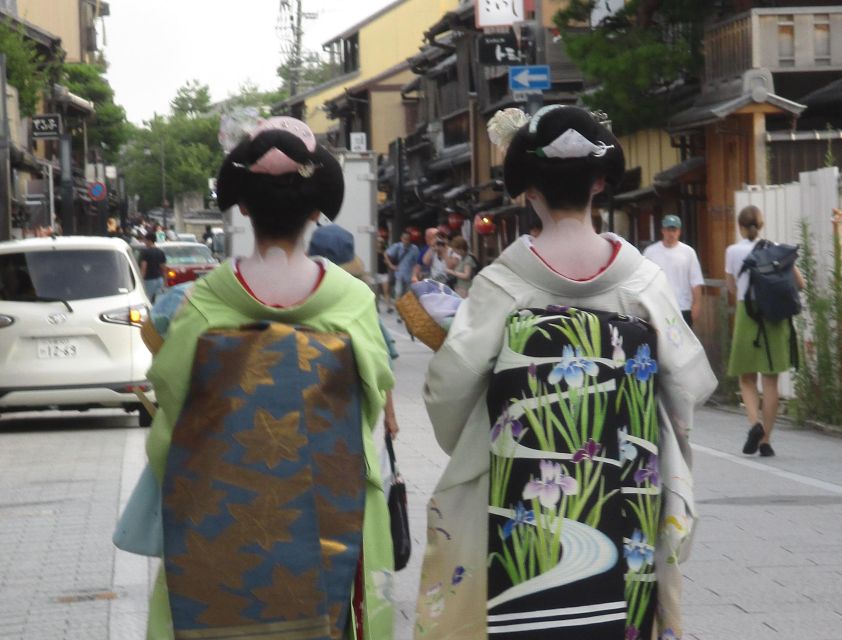
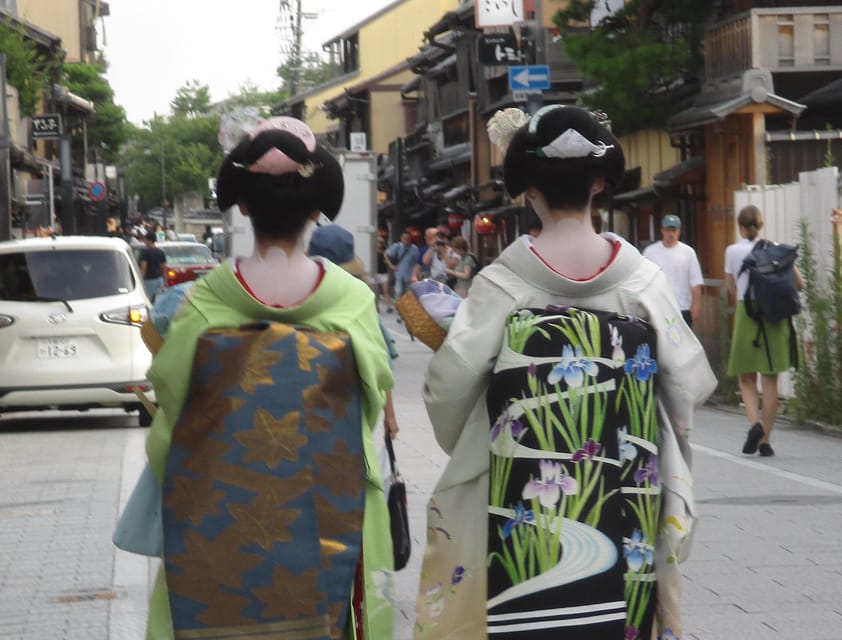
The walk continues toward Gion, where you have about 30 minutes for a guided visit and sightseeing. Gion is one of Kyoto’s best-known traditional entertainment districts, and its name is closely linked with geisha culture.
The useful point is to come here for the setting and the explanation, not to expect a guaranteed encounter. The experience provides a guided visit to Gion, but it does not promise a performance or a geisha sighting. Your guide can help you understand the area’s cultural role and point out details that may otherwise pass unnoticed.
Thirty minutes is enough for an introduction. It is not a long Gion walk, and the schedule may feel brief if you want extensive photographs or a slow look at every lane. That short stop makes sense because the tour also includes Kiyomizu-dera, Sannenzaka, Ninenzaka, and the route to Pontocho.
The supplied feedback places strong emphasis on Omae’s manner as a guide. The comments describe him as friendly, lively, accurate, well prepared, and ready to answer questions. One recurring theme is that his Italian and attention to small details make the historic areas easier to understand. For this tour, those qualities matter more than a rehearsed speech.
Minami-za Theatre and the finish at Pontocho
After Gion, you pass by Kyoto Minami-za, the city’s well-known kabuki theatre. The schedule allows only a brief exterior look, about three minutes, so this is a landmark to notice rather than a full theatre visit.
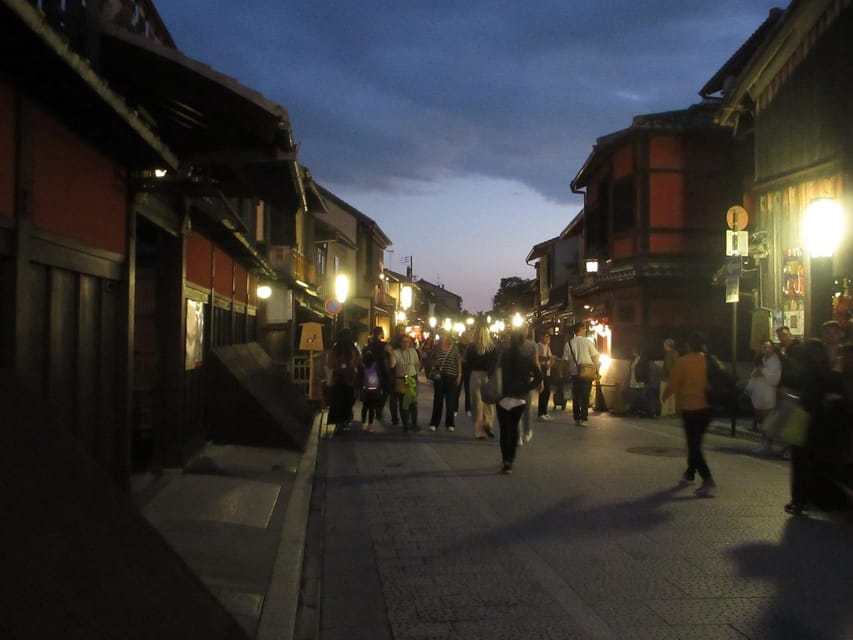
The final walk takes you to Pontocho. Like Gion, Pontocho is associated with Kyoto’s traditional dining and entertainment life. Ending here is convenient if you want to continue exploring, find a meal, or simply remain near the central evening districts.
Pontocho is a finish point rather than a guided dinner. Food, drinks, and additional activities are not listed as included, so plan to pay for anything you do after the tour. The location is useful because it leaves you in one of Kyoto’s most atmospheric central areas instead of returning you to the station.
What the $117 price really covers
At $117 per person, this is not a bargain walking tour. The value comes from the combination of an Italian-speaking guide, a five-hour route, transport, and entrance fees for scheduled monuments.
If you already speak another common tour language and are comfortable handling buses, temple payments, and cultural questions yourself, a self-guided day will cost less. Kyoto’s eastern districts can be visited independently, though you will need to organize the route and interpret what you see.
For an Italian-speaking visitor, the comparison is different. You are paying for clear communication and help with the practical side of the day. The guide can answer questions as they arise, assist participants during the route, and adjust the itinerary or schedule when possible. That can be especially useful on a first visit or for anyone who does not want to manage every detail alone.
The price also protects your time. A five-hour guided route joins several major districts without requiring you to work out how Kiyomizu-dera connects with Gion and Pontocho. Just keep your expectations realistic: the tour gives you a well-planned overview, not unlimited time at each stop.
Group or individual touring in Italian
The activity is available as a group or individual tour, with a live Italian-speaking guide. The information does not specify a fixed group size, so you should confirm the format and availability before booking if that affects your decision.
A private or individual arrangement should give you more room to request changes, although all adjustments are subject to what can be arranged. A group format may offer less control over pauses and pace, but the five-hour plan still provides a clear route through the city.
Omae’s praised qualities are important here. The strongest positive details focus on his preparation, humor, Italian, attention to detail, and willingness to answer questions. Those are exactly the traits that help a guided tour feel useful rather than like a person reading dates from a card.
Who will get the most from this experience
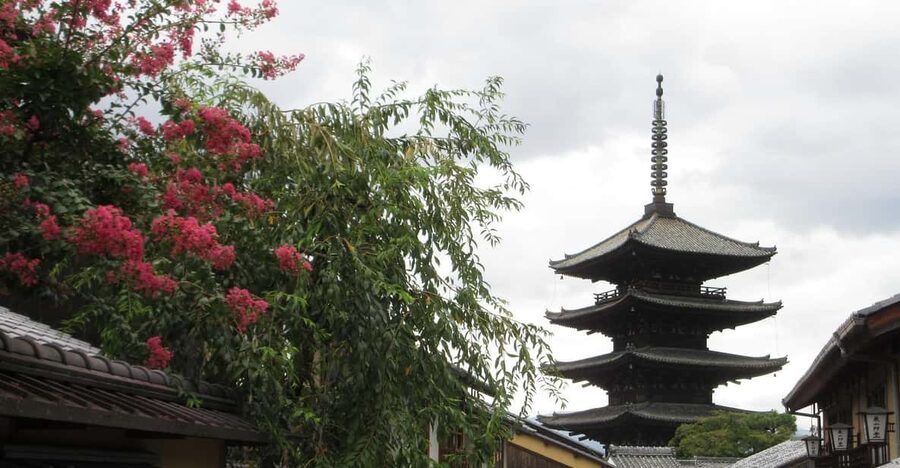
I would recommend this tour to:
- Italian-speaking visitors who want cultural explanations without a language barrier
- First-time Kyoto visitors who want the main eastern districts arranged in a sensible order
- People who value help with transport, entrances, and questions
- Families or mixed-age groups that benefit from assistance during a long sightseeing route
- Visitors with limited Kyoto time who want Kiyomizu-dera, Gion, and the old lanes in one half-day
I would be more cautious if you prefer long, unstructured visits. The route includes several stops, and the scheduled time at Kiyomizu-dera and Gion is limited. You may also prefer independent sightseeing if your main aim is shopping, eating, or taking photographs without a guide setting the rhythm.
The activity is wheelchair accessible, but the route includes historic pilgrimage streets and walking segments. Since the available information does not describe the exact street surfaces or any step-free details at each stop, ask for practical guidance before you commit.
Timing, flexibility, and what to bring
The tour runs for five hours, with starting times available according to the date and schedule. It begins at Kyoto Station and includes an approximately 15-minute bus or coach ride before the temple visit.
You should wear comfortable shoes. Most of the route after the bus ride is on foot, even though individual listed sections are short. The old shopping streets are worth taking slowly, and you will enjoy the day more if you are ready for pauses, questions, and some time on your feet.
Flexible itineraries and schedules can be requested as far as possible. That is helpful, but it is not a guarantee that every preferred stop or time can be added. Ask early if you have a particular need.
You can cancel up to 24 hours before the activity for a full refund. A reserve-now, pay-later option is also available, which lets you hold a place without paying immediately. These terms make the booking less rigid, but the meeting point and start time still deserve careful attention.
My verdict: a strong choice for Italian-speaking Kyoto visitors
Book this tour if you want Kyoto’s most famous eastern sights explained in Italian and arranged into one practical half-day. The best part is not simply seeing Kiyomizu-dera or walking through Gion. It is having Omae connect the temple, pilgrimage roads, shopping lanes, religious customs, and entertainment districts while answering your questions in your own language.
Skip it if you want a slow private visit, extensive time in each temple, or a guaranteed geisha-related activity. The route is full, and Gion is an introduction rather than a complete evening experience.
At $117, the tour earns its price through language support, included transport, scheduled entrance fees, and personal assistance. For an Italian-speaking visitor making a first Kyoto visit, that is a fair trade for a clear route and useful cultural context.
FAQ
Where does the tour begin?
It begins at Kyoto Station, at the north central entrance, also called Karasuma-Guchi. Meet in the space between the four escalators in front of the taxi terminal, not the bus terminal.
How can I recognize the meeting point?
Kyoto Tower should be in front of you and toward the upper left from the meeting area. An email sent by the day before the tour confirms and details the meeting point.
What language is the guided tour in?
The live tour guide speaks Italian. The activity is intended for group or individual touring with an Italian-speaking guide.
How long does the experience last?
The total duration is five hours. Starting times depend on availability.
Is transportation included?
Yes. The listed transport, including the approximately 15-minute bus or coach ride from Kyoto Station, is included in the price.
Are entrance tickets included?
Yes. Entrance fees for the scheduled monuments visited during the itinerary are included.
Is the tour wheelchair accessible?
Yes, the activity is listed as wheelchair accessible. Since the route includes historic streets and walking sections, you should request any specific accessibility guidance before booking.
Can I cancel or pay later?
You can cancel up to 24 hours before the tour for a full refund. A reserve-now, pay-later option is also available.
Recently added around Kyoto
- Higashiyama | Kyoto: Sakura Season Private Rickshaw Tour★ 5.0 · 3 reviews
- Kyoto Kimono Rental CHAMATSU|Kimono/Yukata Rental FamilyPlan★ 5.0 · 3 reviews
- Kyoto: Half-Day Private Guided Tour to the Old Town of Gion★ 4.4 · 3 reviews
- Nara Private Customizable Half Day Tour★ 5.0 · 3 reviews
- Kansai Region Hiking Adventure in Nara Kobe Kyoto and More★ 5.0 · 3 reviews
- Full Day Nara Deer, Temple, Shrine, Activities & Tea Ceremony★ 5.0 · 3 reviews
- Nara: Essential Private Tour with Deer Park and Temples★ 5.0 · 3 reviews
- Hiking Tour for Sacred Sites in Kyoto with a Guide★ 5.0 · 3 reviews
Gion Geisha District Tours, compared.

Kyoto Geisha Walking Tour: Gion District & Hidden Gems
Read our review →
Gion Magical Night Walking Tour with Geisha Trivia
Read our review →
Gion Geisha District Walking Tour – Stories of Geisha
Read our review →
Best of Kyoto: Gion, Geisha, Pagodas & Cobblestones
Read our review →
Kyoto Night Foodie Tour in Gion (9+ dishes + 6 Sake tastings)
Read our review →
Kyoto Gion Geisha District Walking Tour – The Stories of Geisha
Read our review →
Kyoto Gion: 2-Hour Geisha Culture & History Walking Tour
Read our review →Browse the lists this tour appears in