
REVIEW · KYOTO TEA CEREMONY EXPERIENCES
Kyoto Private Tea Ceremony with Tea Master at Home
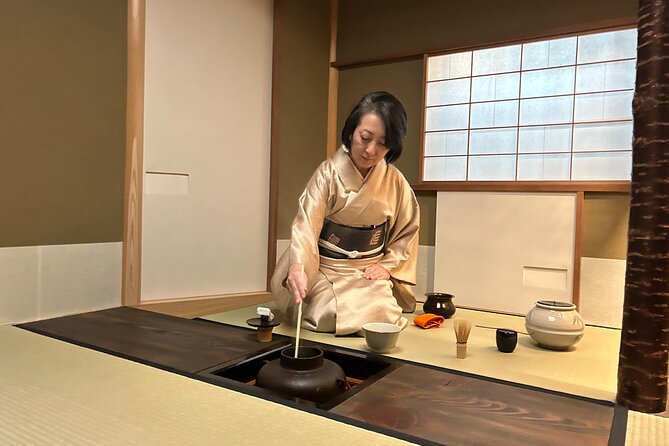
The most memorable part of this Kyoto experience is its setting: you enter a real local home, remove your shoes, and sit in a traditional tea room with a licensed tea instructor. Aya Ito, known as Aya-sensei, explains not only what to do, but why each movement, bowl, sweet, and pause matters.
I like the small private format, which gives you room to ask questions and practice without being lost in a crowd. I also like the care given to the food and tea: three seasonal sweets from a long-established Kyoto confectioner and two bowls of an original Uji matcha blend.
The main drawback is the short one-hour schedule. It offers a clear introduction rather than a full apprenticeship, and the traditional rules are firm: children 13 and under cannot attend, late arrivals may be turned away, and you need socks plus suitable clothing.
In This Review
- Key points to know before booking
- Entering a Kyoto home near Nijo Castle
- The one-hour ceremony, step by step
- Three wagashi, two bowls of Uji matcha
- Why a private group changes the experience
- The tea bowls and the room deserve attention
- What to wear and how to sit
- Is $99.08 a fair price for one hour?
- Who will enjoy this most?
- Practical booking advice for Kyoto
- Should you book the Sakura tea ceremony?
- FAQ
- How long does the private tea ceremony last?
- Where does the tea ceremony take place?
- Is the tea ceremony private?
- What is included in the price?
- Are children allowed to join?
- What should I wear to the tea ceremony?
Key points to know before booking
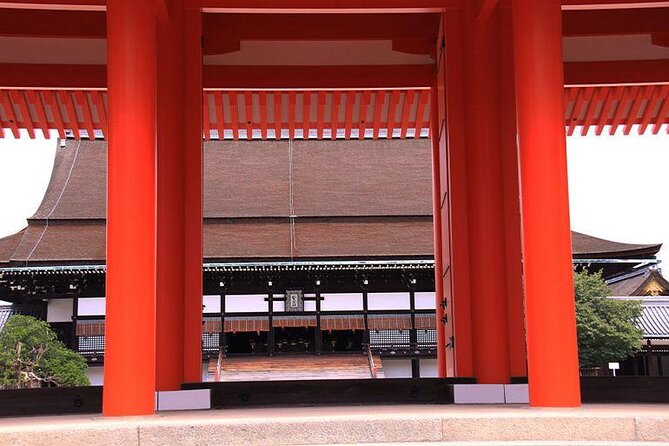
- A real home near Nijo Castle: The ceremony takes place at Sakura Experience Japanese Culture, about a six-minute walk from Hotel Mitsui according to one visitor’s directions.
- Aya Ito leads the session: She speaks excellent English and guides you through both the meaning and physical steps of the ceremony.
- You prepare your own matcha: The session includes a demonstration, hands-on whisking, and two bowls of matcha made with tea from Uji.
- Three seasonal wagashi are included: The sweets are vegan and gluten-free, making this a useful choice for many dietary needs.
- Traditional dress rules apply: Wear socks, long trousers or a long skirt, and a sleeved top. Kimono rental is not included.
- The group is private: Only your own party takes part, so the pace can remain calm and personal.
Entering a Kyoto home near Nijo Castle
This is not a large cultural show staged for a busload of people. The meeting point is Sakura Experience Japanese Culture Nijo Home at 660 Izumicho, Nakagyo Ward, Kyoto, 604-0015, near Nijo Castle and public transportation.
That location matters. Nijo Castle is one of Kyoto’s major sights, so you can place the ceremony before or after a visit there. You finish where you began, with no extra transportation arranged as part of the activity.
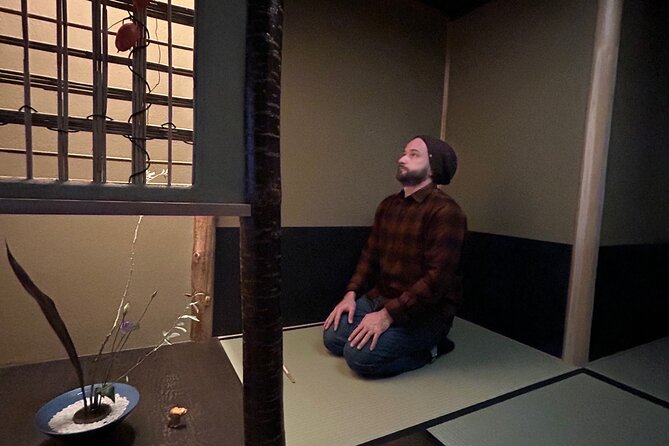
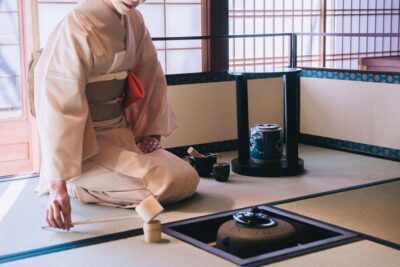
The setting is a private Kyoto residence with traditional tea rooms called Koma and Hiroma. The rooms are arranged for quiet attention, not casual sightseeing. You will encounter tatami mats, carefully chosen utensils, tea bowls, and the restrained visual style that gives tea ceremony much of its force.
The home has also welcomed dignitaries, cultural figures, and museum professionals. That does not turn the class into a formal lecture, but it helps explain the serious care given to the rooms and objects.
You should arrive on time. If you are more than 15 minutes late, you may not be allowed to join and no refund is provided. Kyoto’s narrow streets and unfamiliar addresses can slow you down, so I would leave extra time rather than plan to arrive at the last possible minute.
More tea ceremonies in Kyoto:
- Kyoto: Tea Ceremony in a Traditional Tea House in Kiyomizu
★ 4.9 · 3,519 reviews - Kyoto: Tea Ceremony Ju-An at Jotokuji Temple
★ 4.9 · 3,207 reviews - Kyoto: 45-Minute Tea Ceremony Lesson Experience
★ 4.3 · 2,378 reviews
The one-hour ceremony, step by step
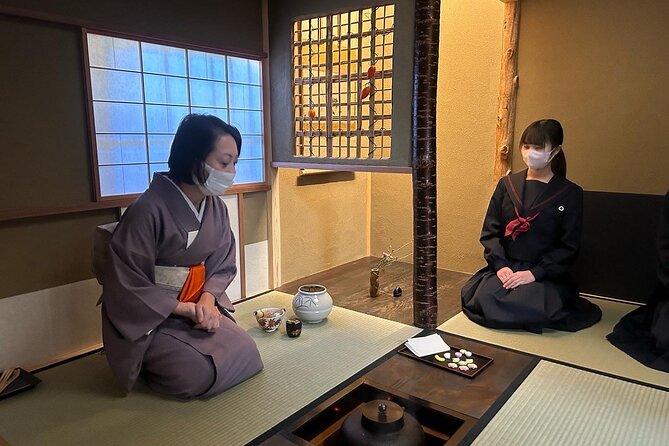
The experience begins with an introduction to the tea room and the basic spirit of Japanese tea. Aya explains the background and etiquette in English, then shows you how guests should enter, sit, receive a bowl, appreciate the tea, and move through the ceremony.
The details are not empty rules. Bowing, turning a bowl, handling a sweet, and waiting for the right moment all show respect for the host, the other people in the room, and the objects being used.
Aya’s teaching style is one of the strongest reasons to choose this activity. She is patient, warm, and comfortable answering questions from international visitors. The ceremony remains formal, but you are not expected to know the customs before you arrive.
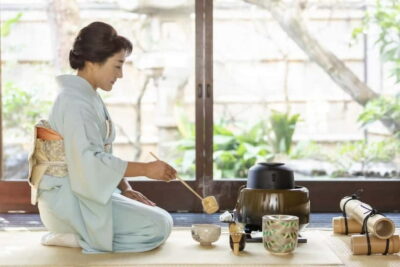
Next comes the formal preparation. You watch Aya use the bamboo whisk and other traditional tools, with her movements explained in a calm, clear way. The visual appeal is easy to understand, but the important lesson is that tea ceremony is not simply a method for making a drink. It is a carefully ordered meeting between host and guest.
You then prepare matcha yourself. This hands-on section gives the hour a practical purpose. Instead of only watching an expert, you handle the whisk and take part in the process. Your result may not look as polished as Aya’s, but that is part of the fun and the learning.
The tea is an original blended matcha sourced from Uji, the area near Kyoto known for high-quality green tea. Two bowls are included, so you have the chance to taste the tea in the formal setting and then experience the drink again after practicing the preparation.
Three wagashi, two bowls of Uji matcha
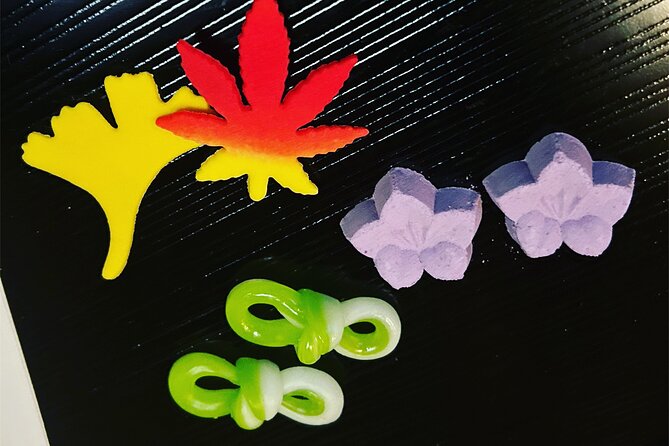
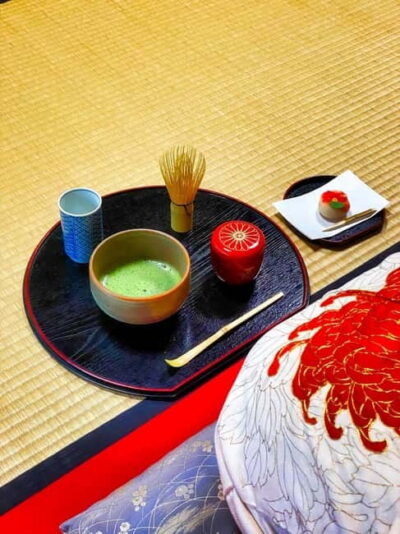
The sweets are more than a small snack between explanations. Seasonal wagashi are designed to complement the tea and reflect the time of year through their shape, color, texture, or ingredients.
You receive three different handcrafted sweets from a long-established Kyoto confectioner. They are vegan and gluten-free, which removes a common concern for people who need to avoid dairy, eggs, or wheat. You should still communicate any serious allergies when booking, since the provided information does not promise an allergen-free kitchen.
The sweets also give you a useful lesson in balance. Matcha can taste grassy, bitter, and strong on its own. Wagashi provide sweetness before or alongside the tea, preparing your palate for the drink.
I appreciate that the food is treated as part of the ceremony rather than as an unrelated refreshment. The sweets help you notice how Japanese hospitality joins taste, season, presentation, and timing.
The tea itself comes from Uji through the experience’s original blend. You drink two bowls, and the preparation is part demonstration and part practice. If you already enjoy matcha, you will have a chance to pay attention to texture and bitterness. If matcha is new to you, the sweets make the introduction easier.
Why a private group changes the experience
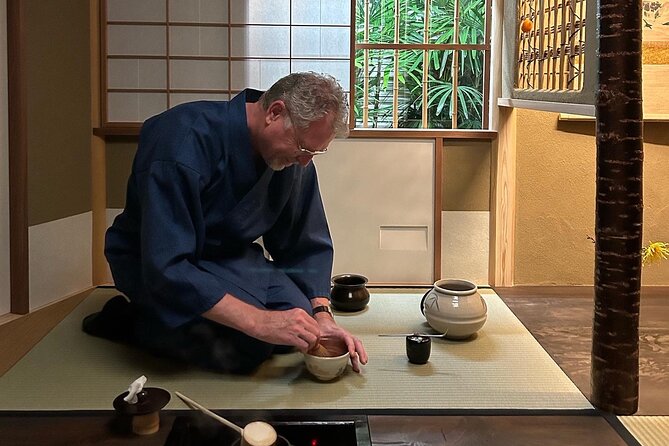
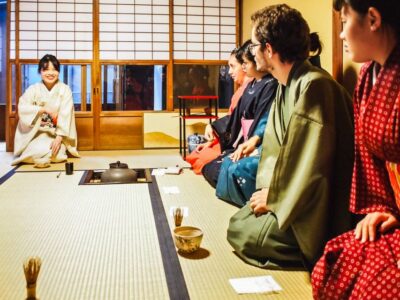
Private booking is the heart of this activity. Only your party participates, so Aya can respond to your questions and adjust the explanation to your level of interest.
That makes a difference in a tea room. The room is quiet by design, and a large class would make it harder to hear, observe small movements, or ask about the objects in front of you. A private setting also feels more like being welcomed into someone’s cultural practice than attending a general demonstration.
Several visitors found the intimacy especially valuable compared with a much larger class elsewhere. One person contrasted this private ceremony with a class of about 20 colleagues in Tokyo, noting that the smaller format felt more personal even though both taught useful material.
The private structure does not mean the session is unstructured. You still follow traditional etiquette, and the ceremony has a set rhythm. The benefit is that you can understand the rhythm instead of simply trying to keep up.
Some visitors also received photographs taken during the experience by Aya’s husband, Manabu, and sent while they were still there. Photography support is not listed as a guaranteed inclusion, so you should not book solely for pictures. Still, the possibility can be a welcome extra, especially if you want a record of your first attempt at making matcha.
A few more Kyoto experiences worth comparing
- Fushimi Inari Hidden Hiking Tour (Private Option Available)
★ 5.0 · 1,750 reviews - Private Kyoto Tour with a Local, Highlights & Hidden Gems, Personalised
★ 5.0 · 1,543 reviews - Kyoto 6hr Private Tour with Government-Licensed Guide
★ 5.0 · 1,369 reviews - 10 Must-see Spots in Kyoto One Day Private Tour (up to 7 people)
★ 5.0 · 1,108 reviews
The tea bowls and the room deserve attention
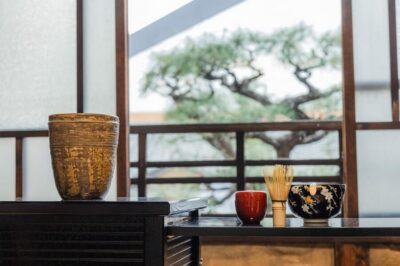
The bowls are not disposable props. The experience uses custom-made tea bowls commissioned from Kiyomizu and Raku potters, and the host has a collection of beautiful bowls chosen for use in the ceremony.
That is important because tea ceremony trains you to look closely. You may notice the shape of a bowl, the glaze, the feel of its rim, or the way it is presented. These small observations help connect the ceremony to Kyoto’s craft traditions.
The room itself is also part of the lesson. A tea room is intentionally spare, which lets the season, the flowers, the utensils, and the tea bowl carry more weight. You are not rushing from one display to another. You are given time to notice a few objects properly.
If you prefer fast sightseeing and a long list of attractions, the quiet pace may feel slow. If you like crafts, design, food traditions, and the meaning behind everyday gestures, the same pace will likely feel refreshing.
What to wear and how to sit
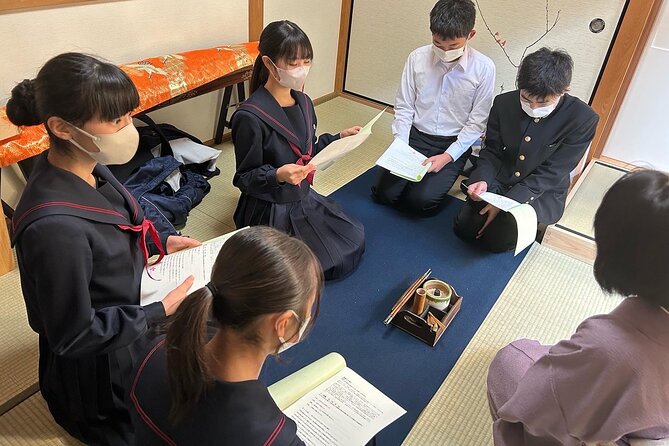
The dress rules are practical, not decorative. Wear socks because bare feet are not permitted on the tatami. If you forget, socks are available for purchase on site.
Choose long trousers or a long skirt and a top with sleeves. Shorts, mini skirts, and sleeveless tops are not allowed. Perfume, including musk-based scents, should be avoided because fragrance can interfere with the tea room’s atmosphere. You may be asked to remove strong fragrance before entering.
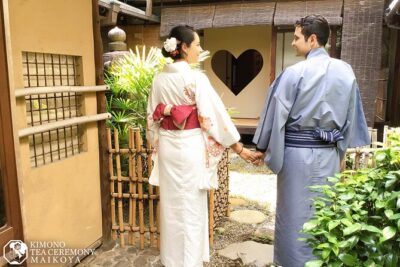
You do not need to rent a kimono. In fact, kimono rental is not included, and the experience has moved away from offering kimono in favor of teaching the culture and ceremony more directly.
That is worth knowing before you book. If your main goal is a kimono photo session, choose another activity. If you want to understand tea ceremony without turning it into a costume event, the simpler dress policy fits the purpose.
Traditional floor seating may be difficult for some people. Small chairs are available, but you should tell the provider in advance. The age policy is also strict: children aged 13 and under cannot attend, and arriving with an unannounced child means you cannot take part or receive a refund.
Is $99.08 a fair price for one hour?
At $99.08 per person, this is not the cheapest way to drink matcha in Kyoto. You can find a cup of tea and a sweet for far less. The price makes more sense when you count the private instruction, the traditional room, the tea master’s guidance, the hands-on preparation, three seasonal wagashi, two bowls of matcha, and the booklet you take home.
The private format is the key value. You are paying for personal attention and cultural explanation, not just the beverage. A larger group class might cost less per person, but it may give you less time to ask questions or practice.
Group discounts are available, which can improve the value for families with eligible older children, couples traveling with friends, or small groups. Remember that the minimum age is 14, and the class is still intended for people who can respect a quiet traditional setting.
The booklet is a modest but useful souvenir. It gives you a concise guide to the spirit and etiquette of tea, so the lesson does not vanish as soon as you leave the home. One visitor also bought a tea cup afterward, but that purchase is separate and not part of the stated inclusions.
Who will enjoy this most?
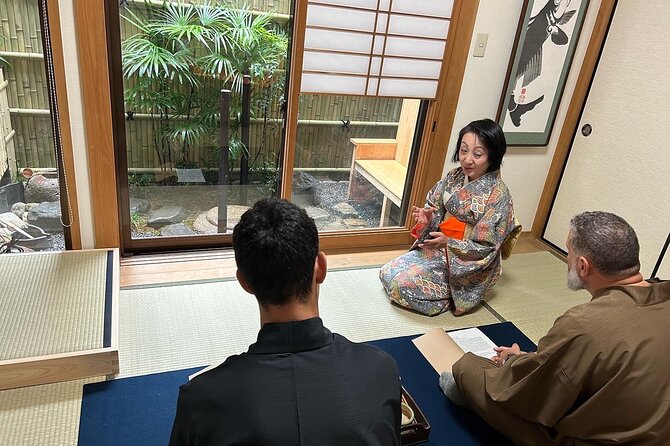
I would choose this for someone who wants a cultural activity with real participation. You watch Aya, but you also prepare matcha, taste the sweets, and practice the etiquette. That combination gives the hour more substance than a short performance.
It suits couples, families with teenagers, and small private groups. A teenager who enjoys food, art, or learning by doing can get more from this than from a simple sightseeing stop. The experience has been used successfully with a teen daughter, but children 13 and under are not allowed.
It is also a good choice for visitors who are unsure how to approach Japanese customs. Aya explains the procedures and the reasons behind them, so you do not have to guess when to bow, how to hold the bowl, or what to do with the sweet.
You should think twice if you dislike sitting quietly, following etiquette, or avoiding perfume and casual clothing. This is not a loud, flexible class where you can arrive late and wander in and out.
Practical booking advice for Kyoto
The experience lasts about one hour, so it fits neatly into a morning or afternoon sightseeing plan. Nijo Castle is close enough to pair with the ceremony, and the meeting point is near public transportation.
Plan to arrive early. The 15-minute late-arrival limit is strict, and Kyoto navigation can take longer than expected. Keep the address available in Japanese as well as English: さくら日本文化体験 二条城教室, Sakura Experience Japanese Culture Nijo Home.
Confirmation is provided when you book, and mobile tickets are available. Free cancellation applies if you cancel at least 24 hours before the start time. Changes or cancellations inside that window are not accepted and are not refundable.
The activity ends at the same home where it begins. No kimono, transportation, or other add-ons are included. The core package is the tea lesson, two bowls of matcha, three sweets, and the booklet.
Should you book the Sakura tea ceremony?
I would book it if you want a quiet, personal introduction to Kyoto tea culture and value explanation over spectacle. Aya Ito’s English, patient instruction, and ability to guide beginners make the ceremony approachable, while the home setting and carefully chosen bowls keep it rooted in tradition.
The strongest reasons to go are the private attention, the chance to whisk your own matcha, and the thoughtful pairing of Uji tea with seasonal wagashi. The main limits are the one-hour duration, strict clothing and punctuality rules, and the lack of kimono rental.
Book this as a focused cultural lesson, not as a general Kyoto attraction. If that sounds like your kind of hour, the $99.08 price is reasonable for a private session with a tea master, especially when a group discount applies.
FAQ
How long does the private tea ceremony last?
The experience lasts approximately one hour.
Where does the tea ceremony take place?
It takes place at Sakura Experience Japanese Culture Nijo Home, 660 Izumicho, Nakagyo Ward, Kyoto, 604-0015, Japan, near Nijo Castle and public transportation.
Is the tea ceremony private?
Yes. Only your own group participates in the activity.
What is included in the price?
The experience includes three seasonal handcrafted wagashi, an original tea ceremony booklet, a demonstration and hands-on matcha preparation, and two bowls of matcha made with an original Uji blend.
Are children allowed to join?
Children aged 13 and under are not permitted. Participants must be at least 14 years old.
What should I wear to the tea ceremony?
Wear socks, long trousers or a long skirt, and a top with sleeves. Shorts, mini skirts, sleeveless tops, bare feet, and perfume are not permitted. Kimono rental is not included.
Recently added around Kyoto
- Higashiyama | Kyoto: Sakura Season Private Rickshaw Tour★ 5.0 · 3 reviews
- Kyoto Kimono Rental CHAMATSU|Kimono/Yukata Rental FamilyPlan★ 5.0 · 3 reviews
- Kyoto: Half-Day Private Guided Tour to the Old Town of Gion★ 4.4 · 3 reviews
- Nara Private Customizable Half Day Tour★ 5.0 · 3 reviews
- Kansai Region Hiking Adventure in Nara Kobe Kyoto and More★ 5.0 · 3 reviews
- Full Day Nara Deer, Temple, Shrine, Activities & Tea Ceremony★ 5.0 · 3 reviews
- Nara: Essential Private Tour with Deer Park and Temples★ 5.0 · 3 reviews
- Hiking Tour for Sacred Sites in Kyoto with a Guide★ 5.0 · 3 reviews
Kyoto Tea Ceremony Experiences, compared.
Tea Ceremony in a Traditional Tea House in Kiyomizu
Read our review →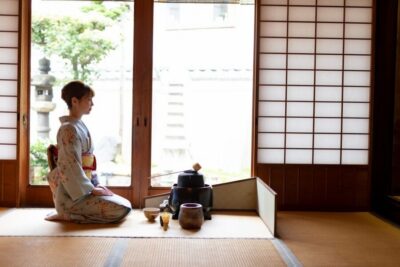
Tea Ceremony in 100-year-old Kyo-Machiya Townhouse
Read our review →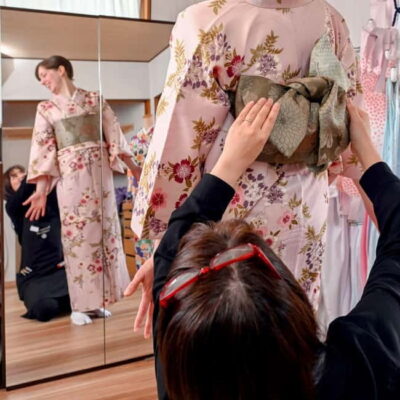
Browse the lists this tour appears in