
REVIEW · KYOTO TEA CEREMONY EXPERIENCES
Kyoto Private Tea Ceremony at a Japanese Inns
Kyoto’s famous temples close at night, but this private tea ceremony keeps the city’s cultural life going after sunset. Inside a traditional ryokan, you’ll enter a candlelit 20-tatami banquet room normally closed to the public, dress in formal Japanese costumes, and learn how matcha is prepared and served. Matsuda and Mayumi lead the evening with warmth and plenty of help.
I especially like the private group format, limited to two to six people, and the thoughtful mix of activities. You are not only watching a tea ceremony: you get kimono photographs, a short meditation, a demonstration, and your own chance to whisk matcha. The main consideration is price. At $97.98 per person, this is a special-occasion activity rather than a quick cup of tea, and the full program lasts only about 59 minutes.
In This Review
- Key points to know
- A candlelit Kyoto setting after the temples close
- The first 15 minutes: kimono, props, and photographs
- Four minutes of Zen before the tea
- Twenty minutes watching a traditional tea gathering
- Twenty minutes making your own matcha
- What the ¥15,000 adult price includes
- Who will enjoy this evening most
- Practical details that can shape your choice
- Should you book ZEN Tea Ceremony Experience in Kyoto?
- FAQ
- Where does the tea ceremony take place?
- How long does the experience last?
- How many people can join?
- Is Japanese language ability required?
- What is included in the tea ceremony?
- Can children participate?
- What is the cancellation policy?
Key points to know
- A private candlelit room: Your group uses a 20-tatami banquet hall inside a long-established Kyoto inn.
- More than a tea tasting: The hour includes costumes, photos, Zen meditation, a ceremony demonstration, and hands-on matcha making.
- Excellent for families: Children under 15 are listed at ¥3,000, and translator devices help children ask questions in their own language.
- Personal guidance: Matsuda and Mayumi assist with the ceremony, costumes, and photography.
- Small groups only: The experience is designed for two to six participants, not a large public class.
- Flexible communication: Translation devices are provided, so Japanese ability is not required.
A candlelit Kyoto setting after the temples close
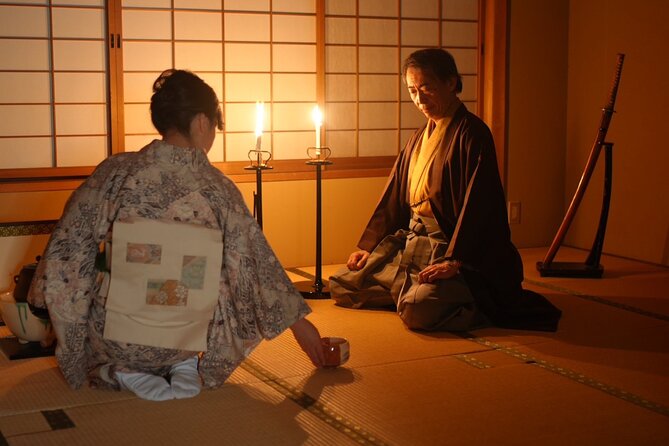
The clever idea here is timing. Kyoto’s best-known temples are daytime stops, and once Kinkaku-ji, Ginkaku-ji, and Kiyomizu-dera close, many visitors simply return to their hotel. This experience gives you a planned cultural activity for the evening without asking you to visit another major sightseeing site.
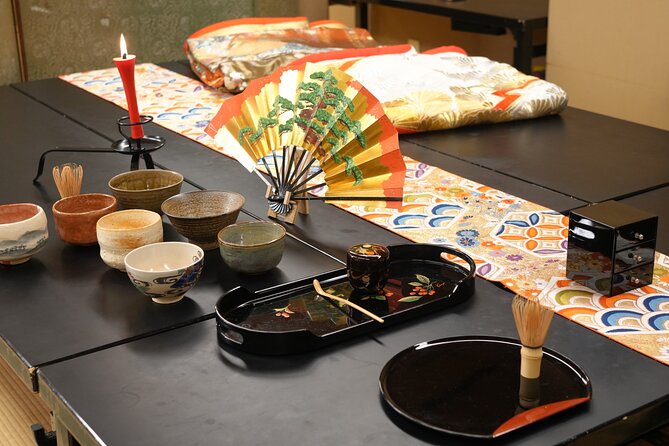
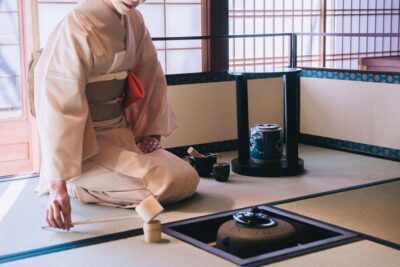
The setting does much of the work. You meet at ZEN: Tea Ceremony Experience in Kyoto, located at Ryofuso, 4th floor, 490 Kanayacho, Shimogyo Ward, Kyoto 600-8323. The ceremony takes place in a traditional inn, where a 20-tatami banquet room is normally closed to the public. Tatami mats, low seating, candles, and darkness create a much quieter mood than you’ll find on a busy sightseeing street.
This is not presented as a casual café tea service. The room and evening schedule are designed to slow you down. The candlelight is atmospheric, but it also means the experience is more theatrical than a daytime tea class. If you want to see every utensil in bright detail or study the formal movements from a distance, the low light may not be ideal. If you want a memorable evening with photographs and a sense of occasion, it makes good sense.
The activity ends where it begins, which keeps the logistics simple. It is near public transportation, but the supplied information does not give a specific station or walking time, so you should check the route before setting out.
More tea ceremonies in Kyoto:
- Kyoto: Tea Ceremony in a Traditional Tea House in Kiyomizu
★ 4.9 · 3,519 reviews - Kyoto: Tea Ceremony Ju-An at Jotokuji Temple
★ 4.9 · 3,207 reviews - Kyoto: 45-Minute Tea Ceremony Lesson Experience
★ 4.3 · 2,378 reviews
The first 15 minutes: kimono, props, and photographs
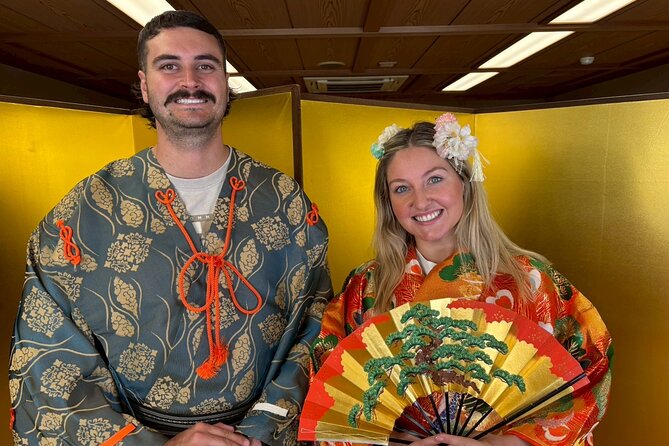
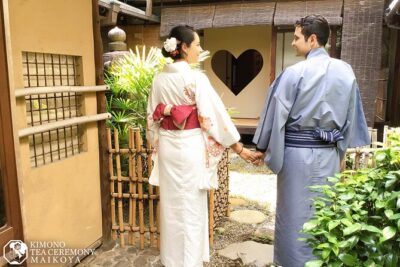
The evening begins with dressing and a photo session lasting about 15 minutes. You may wear a bridal uchikake or a men’s haori, depending on the participants in your group. Props include folding fans and swords, and professional lighting is used for the photographs.
This opening gives the experience a playful edge before the quieter tea ceremony begins. The costumes also help you understand how much presentation matters in Japanese cultural traditions. You are not simply handed a bowl of tea and sent on your way. You first take part in a visual introduction to formal Japanese dress.
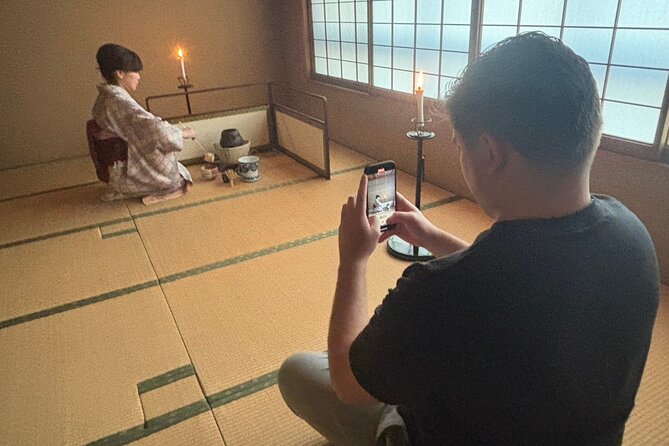
Photography is welcome throughout the activity, and the staff assist with taking pictures. That is useful for couples and families, since nobody has to sit out of the photographs. It also matters in a dimly lit room, where professional lighting can produce better results than a quick phone snapshot.
I would allow a little patience during this part. Costume changes, arranging props, and getting several people into position can take time, especially with children. The schedule is tight, though, so the staff need to keep the session moving. The goal is a set of fun, polished memories rather than a full kimono lesson.
For families, this may be the most immediately engaging part of the evening. Children can pose with fans or swords, then shift into a calmer activity. The listed child price, ¥3,000 for those under 15, also makes the experience more practical for a family than charging every person the adult rate.
Four minutes of Zen before the tea
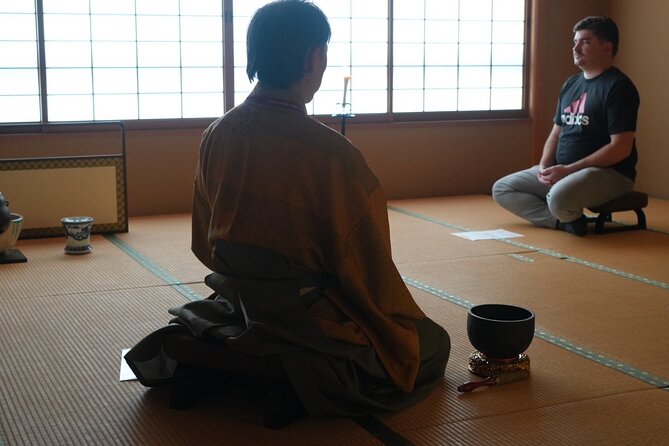
After the photographs, you spend about four minutes in Zen meditation. That is short by design. You do not need previous meditation experience, special clothing, or a strong interest in Buddhism to take part.
The meditation acts as a reset. The costumes and photography are lively, while the tea ceremony asks you to pay attention to small gestures. Four quiet minutes help make that change in mood clear. In a candlelit room, even a brief pause can feel useful.
I would not book this expecting a full Zen teaching session. The meditation is one segment of a one-hour program, not a standalone retreat. Its value is in preparing you for the tea ceremony and giving the evening a little structure.
The short duration is also good for younger participants. A longer meditation could be difficult for children or anyone with a packed sightseeing day behind them. Here, you get a taste of quiet without committing a large part of your evening to it.
Twenty minutes watching a traditional tea gathering
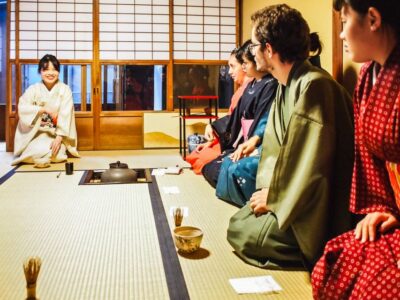
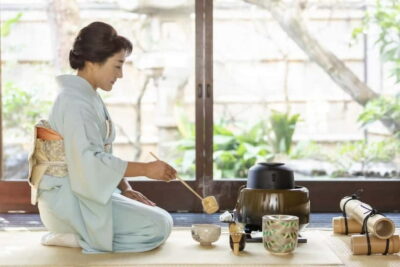
The central demonstration lasts about 20 minutes. You are welcomed as a guest, observe the preparation and presentation of matcha, and receive a bowl of tea and Japanese sweets.
This is the part that gives the activity its cultural weight. Matcha is not treated as a quick beverage. The pace, the utensils, the host’s movements, and the way the tea is received all form part of the gathering. A demonstration lets you see the order of the ceremony before you try making tea yourself.
The private format helps here. With only two to six people, you should have a clear view and room to ask questions. The translator devices are an important practical detail, especially since the ceremony includes customs that may not be obvious from watching alone. You do not need Japanese, and the hosts can communicate across language barriers.
Matsuda and Mayumi are the hosts named for this experience. Their role goes beyond performing the ceremony. They assist with the costumes, help with photographs, guide you through the tea ritual, and use translation devices to answer questions. That personal contact is a major part of the evening’s appeal.
You should keep your expectations in check. This is a compact introduction, not an advanced study of tea ceremony. The 20-minute demonstration cannot cover every school, rule, historical detail, or regional variation. It does, however, give you a clear look at the rhythm and courtesy of a formal tea gathering.
The included matcha and sweets add value, but the tea itself is only one part of what you are paying for. The room, private attention, costumes, photography help, translation, and guided presentation make up the larger experience.
A few more Kyoto experiences worth comparing
- Fushimi Inari Hidden Hiking Tour (Private Option Available)
★ 5.0 · 1,750 reviews - Private Kyoto Tour with a Local, Highlights & Hidden Gems, Personalised
★ 5.0 · 1,543 reviews - Kyoto 6hr Private Tour with Government-Licensed Guide
★ 5.0 · 1,369 reviews - 10 Must-see Spots in Kyoto One Day Private Tour (up to 7 people)
★ 5.0 · 1,108 reviews
Twenty minutes making your own matcha
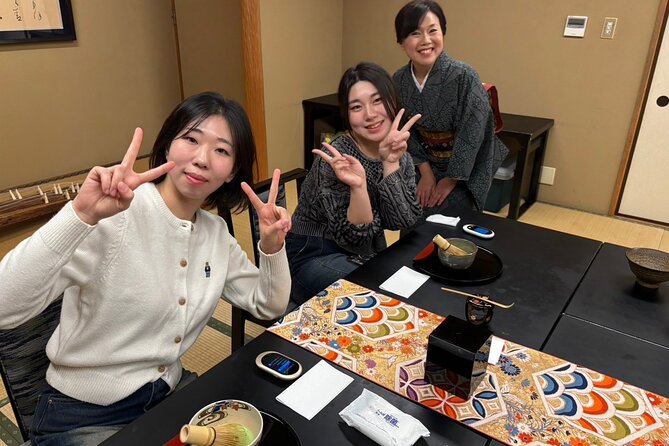
The final major segment lasts about 20 minutes and gives you a chance to whisk your own matcha. This hands-on step changes your role from spectator to participant.
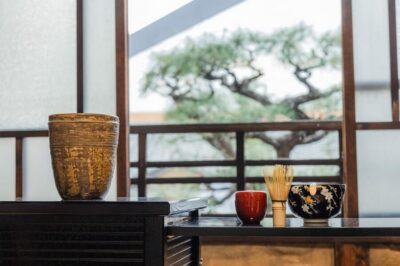
You’ll use the tea ceremony utensils and follow the staff’s guidance. Making matcha is simple in principle, but the whisking motion and consistency take a little practice. That small challenge gives you something concrete to remember after the demonstration ends.
I like this format because it avoids a common problem with cultural activities: watching something beautiful without understanding how it feels to perform it. Once you handle the whisk and prepare your own bowl, you gain a better sense of the care behind the finished drink.
The activity also works well for mixed-age groups. Adults can focus on the method and etiquette, while children can enjoy the movement and the satisfaction of making something themselves. The supplied information specifically notes that translator devices can let children who do not speak English ask questions in their own language.
Do not expect to become a matcha expert in 20 minutes. Your first bowl may not look exactly like the host’s, and that is part of the point. The emphasis is on taking part, not producing a perfect cup.
Photos remain welcome during the session, but you should be ready to put your phone aside at times. The best part of whisking is paying attention to the instructions and the texture of the tea.
What the ¥15,000 adult price includes
The listed adult price is ¥15,000, while the tour price supplied for booking is $97.98 per person. Currency conversion can change, so check the amount shown at the time you reserve.
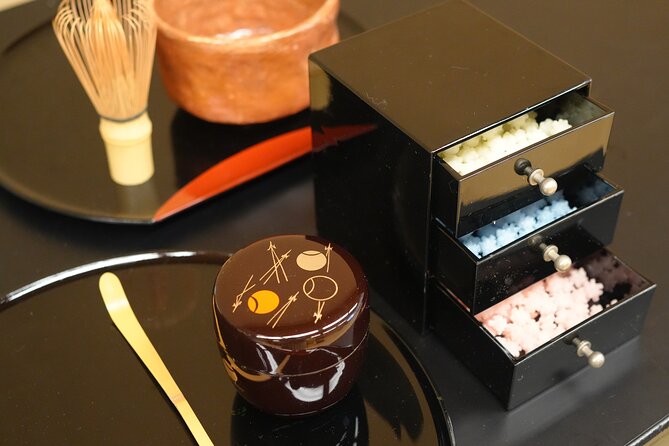
That price is high for a one-hour tea activity if you measure value only by the amount of matcha you drink. It becomes more reasonable when you count the full package: a private room, traditional costumes, a photo session with staff assistance, meditation, a guided ceremony, sweets, tea utensils, translator devices, a licensed guide, and hands-on preparation.
A public tea demonstration may cost less, but it may not include a private 20-tatami room or costume photographs. A kimono photo session booked separately could also take up part of your day. This experience combines several short activities into one evening, which may suit you if your Kyoto schedule is already full.
The private booking is especially helpful for couples, families, and small friend groups. You are not sharing the room with a large crowd, and the hosts can adjust their explanations through the translation devices. The drawback is that solo visitors cannot book alone under the stated group size, since the activity is for two to six people.
Children under 15 are listed at ¥3,000. That is a significant difference from the adult price and makes the program easier to justify for families. Still, the experience moves through several stages in less than an hour, so younger children should be comfortable with changing clothes, sitting quietly for a short meditation, and listening during the demonstration.
Who will enjoy this evening most
I would recommend this experience to you if you want a compact introduction to several parts of Japanese culture in one private setting. It suits first-time visitors who want something beyond temples and gardens, and it works well on an evening when the major sights are closed.
It is also a good choice for:
- Couples looking for a quiet cultural date
- Families who want costume photographs and an activity for children
- Small groups who prefer private instruction
- Visitors who do not speak Japanese
- Anyone interested in matcha but unsure about attending a formal ceremony
- People who want a planned evening activity near public transportation
You may want to skip it if you are looking for a long, highly formal tea ceremony with extensive historical explanation. The one-hour schedule is intentionally compact. You get a sampler of several connected experiences rather than one extended lesson.
It may also be less suitable if you dislike dressing up, sitting on tatami, or taking part in structured activities. The program is interactive and guided from start to finish. You are not simply dropping in for a drink.
Practical details that can shape your choice

The full duration is approximately 59 minutes. The schedule is neatly divided into 15 minutes for dressing and photographs, four minutes of meditation, 20 minutes for the demonstration, and 20 minutes for making matcha. That leaves almost no spare time, so arrive ready to begin.
Advance reservation is required, and confirmation is provided when you book. Since the activity is often reserved about eight days ahead, booking around a week in advance is sensible if your Kyoto dates are fixed.
The ticket is mobile, which is convenient for an evening activity. Keep the ticket easy to access on your phone, and check the exact meeting instructions before leaving your hotel.
The cancellation policy allows a full refund if you cancel at least 24 hours before the start time. Changes or cancellations inside that window are not accepted and are not refunded. The activity also lists a good-weather requirement. If poor weather causes cancellation, you are offered another date or a full refund. A minimum number of participants is required as well, and if that condition is not met, you are offered another date or experience, or a full refund.
The weather rule may seem unusual for an indoor tea ceremony, so I would confirm the status if rain or other poor conditions are expected. The available information does not explain why weather affects the booking.
Should you book ZEN Tea Ceremony Experience in Kyoto?
Book it if you want a private, photo-friendly evening that combines formal tea, costumes, meditation, and matcha making in a traditional inn. The strongest reasons to choose it are the small group size, the candlelit 20-tatami room, and the kind personal guidance from Matsuda and Mayumi.
The program earns especially high marks for its welcoming hosts and easy communication. Translation devices remove much of the worry about language, and the staff help with photographs rather than leaving you to manage everything yourself.
Skip it if your main goal is a long and technically detailed study of tea ceremony, or if nearly $100 feels too much for an hour. For everyone else, especially families and small groups, it offers a well-organized way to experience Kyoto after dark without adding another crowded sightseeing stop.
FAQ
Where does the tea ceremony take place?
It takes place at ZEN: Tea Ceremony Experience in Kyoto, inside Ryofuso at 490 Kanayacho, Shimogyo Ward, Kyoto 600-8323. The activity uses a private 20-tatami room in a traditional Kyoto inn.
How long does the experience last?
The experience lasts approximately 59 minutes. The schedule includes 15 minutes of kimono dressing and photographs, four minutes of Zen meditation, 20 minutes of tea ceremony demonstration, and 20 minutes of matcha whisking.
How many people can join?
This is a private activity for groups of two to six people. Only your group participates.
Is Japanese language ability required?
No. Translator devices are available, so you can communicate with the hosts regardless of language.
What is included in the tea ceremony?
The experience includes matcha green tea, sweets, tea ceremony utensils, costumes, a katana, staff assistance with photography, and a licensed guide.
Can children participate?
Yes. Children under 15 are listed at ¥3,000. The translation devices can also help children ask questions in their own language.
What is the cancellation policy?
You can cancel at least 24 hours before the start time for a full refund. Cancellations or changes made within 24 hours are not accepted and are not refunded. If the activity is canceled because of poor weather or because the minimum number of participants is not reached, you are offered another date or experience, or a full refund.
Recently added around Kyoto
- Higashiyama | Kyoto: Sakura Season Private Rickshaw Tour★ 5.0 · 3 reviews
- Kyoto Kimono Rental CHAMATSU|Kimono/Yukata Rental FamilyPlan★ 5.0 · 3 reviews
- Kyoto: Half-Day Private Guided Tour to the Old Town of Gion★ 4.4 · 3 reviews
- Nara Private Customizable Half Day Tour★ 5.0 · 3 reviews
- Kansai Region Hiking Adventure in Nara Kobe Kyoto and More★ 5.0 · 3 reviews
- Full Day Nara Deer, Temple, Shrine, Activities & Tea Ceremony★ 5.0 · 3 reviews
- Nara: Essential Private Tour with Deer Park and Temples★ 5.0 · 3 reviews
- Hiking Tour for Sacred Sites in Kyoto with a Guide★ 5.0 · 3 reviews
Kyoto Tea Ceremony Experiences, compared.
Tea Ceremony in a Traditional Tea House in Kiyomizu
Read our review →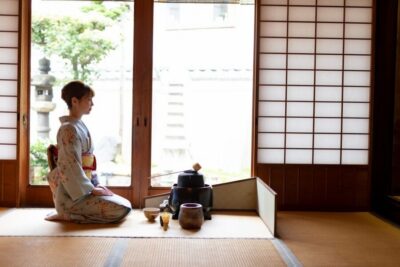
Tea Ceremony in 100-year-old Kyo-Machiya Townhouse
Read our review →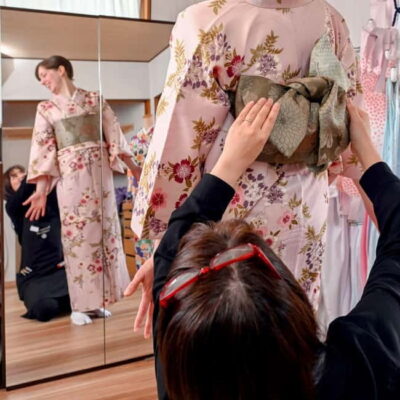
Browse the lists this tour appears in