
REVIEW · WALKING TOURS
Kyoto Private & Personalized Half-Day Walking Tour with a Local
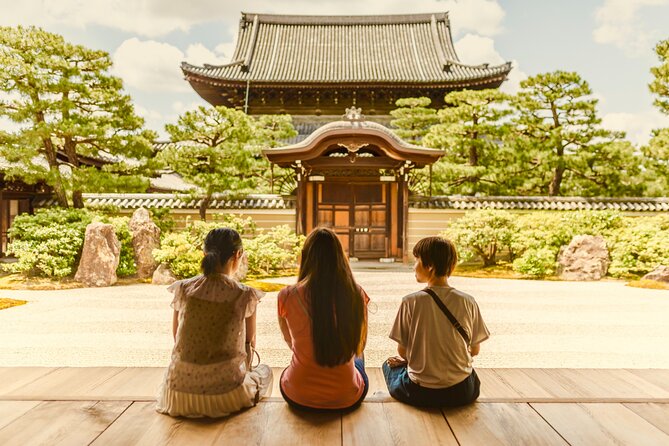
Kyoto is easier to enjoy when someone else handles the first round of decisions. This private walking tour lets you choose your interests, then pairs you with a local host who can lead you through Sanjo, Gion, Yasaka Shrine, Heian Shrine, or Nijo Castle without making you wrestle with maps and train stations.
I like the personal planning before the walk and the fact that the route can suit young children, grandparents, history fans, food lovers, or shoppers looking for Kyoto crafts. I also like the practical help: guides such as Mai have helped with crowded stations and photos, while Ada has assisted with phone calls in Japanese. The main catch is time. Three to four hours goes quickly, and entrance fees, food, taxis, and public transport cost extra.
In This Review
- Key points to know before booking
- A private introduction to Kyoto, not a fixed checklist
- Sanjo and the Kamogawa River
- Gion lanes and Tatsumi Bridge
- Yasaka Shrine and the Gion Matsuri
- Heian Shrine and imperial connections
- Nijo Castle and the age of the shoguns
- What the local host adds
- Walking pace, transport, and the real cost
- Who will get the most from this experience
- Booking details that matter
- Should you book this Kyoto walking tour?
- FAQ
- How long does the Kyoto private walking tour last?
- Where does the tour begin and end?
- Is transportation included?
- Are attraction tickets and food included?
- Can I choose what to see?
- Is this a private tour?
Key points to know before booking
- Your route is built around your interests: Choose history, food, markets, artisans, temples, shrines, or quieter streets.
- The tour is private: Only your group takes part, so the guide can adjust the pace and stops.
- Several classic Kyoto areas fit the plan: Sanjo, the Gion district, Yasaka Shrine, Heian Shrine, and Nijo Castle are among the possible sights.
- The meeting point is central: Start at the Starbucks beside Sanjo-ohashi Bridge, with the walk ending back there.
- The guide can help beyond sightseeing: Expect local advice, navigation support, photo help, and, in some cases, assistance with Japanese phone calls.
- Budget for extras: Food, drinks, attraction tickets, and any public transport or taxi rides are not included.
A private introduction to Kyoto, not a fixed checklist
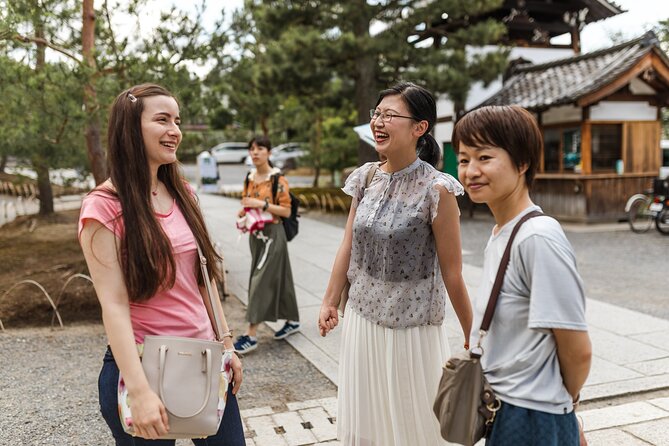
This experience is best understood as a guided first look at Kyoto rather than a standard sightseeing route. After booking, you fill out a short questionnaire describing your interests, pace, and must-sees. Your host then contacts you to shape the plan.
That matters in Kyoto. The city spreads across a wide area, and its famous sights do not all sit within an easy walk of one another. A private guide can help you spend your half-day in one or two connected areas instead of losing precious time deciding where to go next.
You might spend the morning around Sanjo and Gion, or focus on imperial and samurai Kyoto with Heian Shrine and Nijo Castle. You can also ask for markets, family-run shops, local food, or places away from the busiest paths. The exact route depends on your answers and the time available.
The private format is useful for families and mixed-age groups. One booking was adjusted for young children and grandparents, which is a good sign if your party does not move at one speed. You are not trying to keep up with a large group or waiting for a stranger who wants a longer stop at every temple.
More walking tours in Kyoto:
- Kyoto Geisha Walking Tour: Gion District & Hidden Gems
★ 4.7 · 3,273 reviews - Kyoto: Gion Magical Night Walking Tour with Geisha Trivia
★ 4.9 · 2,393 reviews - Kyoto: Gion Geisha District Walking Tour – Stories of Geisha
★ 4.7 · 2,187 reviews
Sanjo and the Kamogawa River
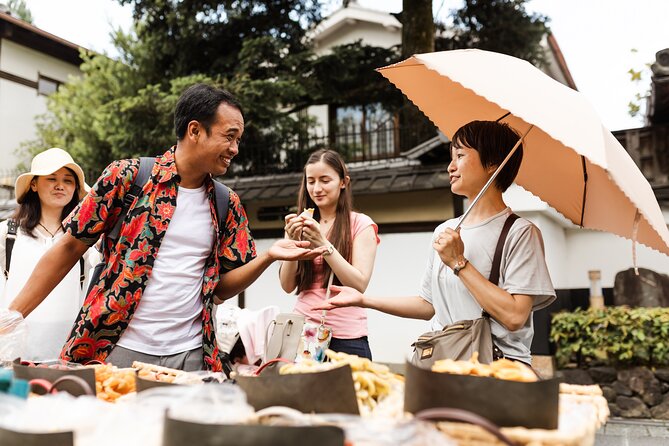
Sanjo offers a useful introduction to everyday Kyoto. The area includes old family-run shops and specialty stores, so the walk is not limited to grand religious buildings. Your host can explain how local businesses and traditions fit into the city’s modern life.
The Kamogawa River adds breathing room to the route. Walking beside the water gives you a chance to get your bearings while your guide explains Kyoto customs and local stories. This is also a practical place to ask questions about restaurants, shopping, neighborhoods, and the rest of your stay.
I like this part for first-time visitors because it gives you more than a parade of famous structures. You see a working city, not only its postcard views. If your main aim is temples and castles, Sanjo may feel less dramatic, but it can make the tour feel more grounded.
Sanjo-ohashi Bridge is also the meeting point. You start at the Starbucks on the bridge’s Kyoto side, at 113 Nakajimacho, Nakagyo Ward. Confirm the exact spot with your host before setting out, especially if you are arriving by train or taxi.
Gion lanes and Tatsumi Bridge
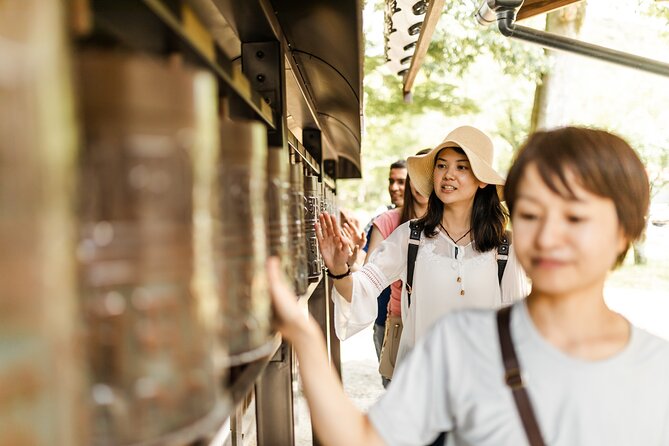
The Gion portion brings you into Kyoto’s traditional entertainment district. Expect narrow lanes, wooden townhouses, teahouses, and refined restaurants. Your guide can explain the difference between simply looking at an old street and understanding how the district functions.
Crossing Tatsumi Bridge gives the walk a scenic pause. The area is atmospheric, but it can also be crowded and easy to photograph without noticing the people who live and work there. A good host helps you move respectfully and points out details you might otherwise pass.
The benefit of seeing Gion with a local is context. A guide can explain local traditions and the role of the district without turning the walk into a hunt for staged encounters. The experience is about streets, buildings, customs, and stories, not a promise that you will see geisha.
Gion is also a strong choice if you want a classic Kyoto introduction in a short time. The drawback is that it can feel busy, especially around popular lanes. If quiet streets are your priority, tell your host clearly. Andy, for example, has taken people to less crowded parts of the city, so that preference can shape the route.
Yasaka Shrine and the Gion Matsuri
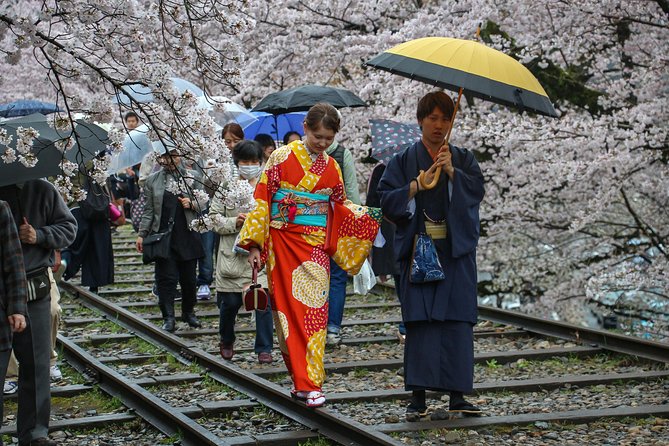
Yasaka Shrine has watched over Kyoto for more than 1,350 years. Its architecture and location make it an easy pairing with Gion, and your host can explain its role as a guardian shrine and its connection to the Gion Matsuri.
The Gion Matsuri is one of Japan’s best-known festivals. Even if you visit outside the festival season, learning about it gives the shrine more meaning. You begin to see the site as part of an ongoing local tradition rather than just another ornate stop for photographs.
Yasaka works well for a first visit because it is visually striking and culturally important. It also fits naturally into a walking route through Gion. Still, remember that this is an outdoor walking tour. Bring suitable clothing for the forecast. One outing took place on a cold Kyoto day, and the guest had not prepared well for the weather.
A few more Kyoto experiences worth comparing
- Kyoto Arashiyama Bamboo forest & Garden Half-Day Walking Tour
★ 5.0 · 413 reviews - Half-Day Private Walking Tour in Kyoto
★ 5.0 · 57 reviews - Kyoto top must-see Golden pavilion and Bamboo forest half-day Private tour
★ 5.0 · 52 reviews - Perfect Nara Park Half-Day Bus Tour with English Speaking Guide
★ 5.0 · 49 reviews
Heian Shrine and imperial connections
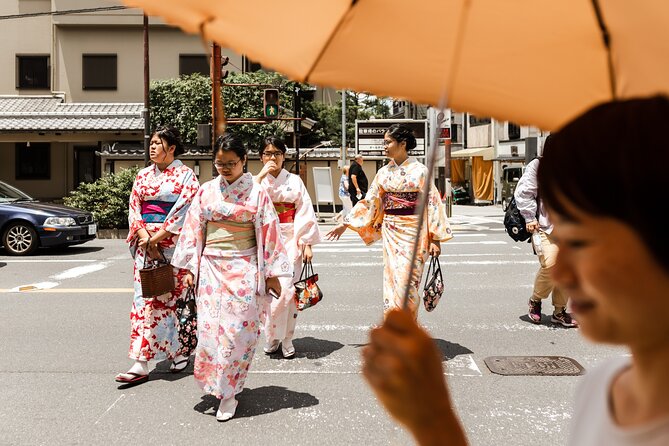
Heian Shrine offers a different look at Kyoto. Its large torii gate and broad approach create a sense of scale, while the shrine itself dates from 1895, making it much newer than Yasaka Shrine.
Your host can explain the shrine’s connection to Kyoto’s founding and the emperors honored there. That background helps you understand why a relatively modern shrine holds such importance in a city filled with older sites.
This stop makes sense for people interested in religion, imperial history, or grand architecture. It is also a useful contrast with Gion’s narrow lanes and small wooden buildings. You move from intimate streets to a broad ceremonial setting.
The tradeoff is distance and time. Since the walk lasts only three to four hours, Heian Shrine may need to be the main focus of your route rather than one quick addition to several other districts. Ask your host how much travel time is needed before committing to a long list of sights.
Nijo Castle and the age of the shoguns
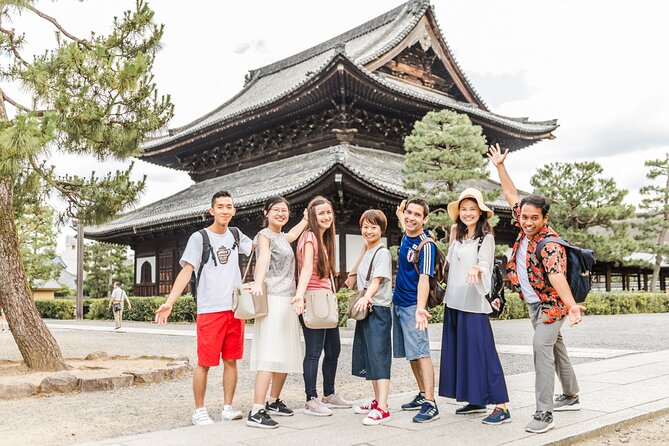
Nijo Castle brings samurai and Tokugawa history into the walk. The fortress was built to display the power of Tokugawa Ieyasu, and its grounds offer a change from shrine architecture and neighborhood streets.
Your guide can tell stories about shoguns, samurai, and Kyoto’s political past while you walk through the castle grounds. This is particularly useful if you want historical explanation rather than a quick look at walls and gates.
Nijo Castle is a strong choice for visitors who want a major landmark with a clear historical theme. It may also appeal to families, since stories of rulers and warriors can make the past easier to follow. The practical issue is admission. Attraction tickets are not included, so you need to budget for entry if the castle becomes part of your plan.
Do not assume that every named stop fits into one half-day. Sanjo, Gion, Yasaka Shrine, Heian Shrine, and Nijo Castle represent possible building blocks. Your host will need to narrow the plan to one or two neighborhoods, with public transport or a taxi sometimes needed between areas.
What the local host adds
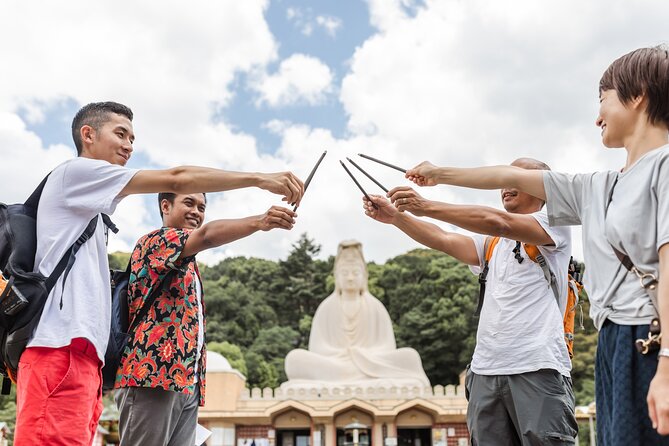
The strongest part of this experience is the human help. You are not simply hiring someone to recite dates. You are getting a local contact who can answer practical questions and adjust the day around your priorities.
Woohee has planned routes around temples, shrines, markets, and geisha districts. Mai has helped people move through crowded train stations, taken photos, and continued offering suggestions after the walk. Ada has coordinated in advance and helped with Japanese phone calls. These details show the range of support you might value most.
Other guides bring different strengths. Cici has set an easy pace and included the Imperial Palace gardens during cherry blossom season. Taiga has provided a fast-paced introduction for someone with very limited time. Nehal has combined popular places with less familiar stops and explained the stories behind them. Kenya has focused on friendly conversation and shared life experiences.
Guide quality can vary because you are matched with an individual host. That is normal for a personalized service, but it makes the pre-tour questionnaire important. Be specific. Say if you want fewer temples, more food, quieter streets, artisan shops, help with transport, or a slow pace.
One particularly useful approach is to ask for local crafts. Alexi Tsubasa prepared a map before the walk and took a guest to shops featuring Kyoto artisans, along with a sukiyaki meal. Food itself is not included, but your host can still help you choose where to eat or shop.
Walking pace, transport, and the real cost
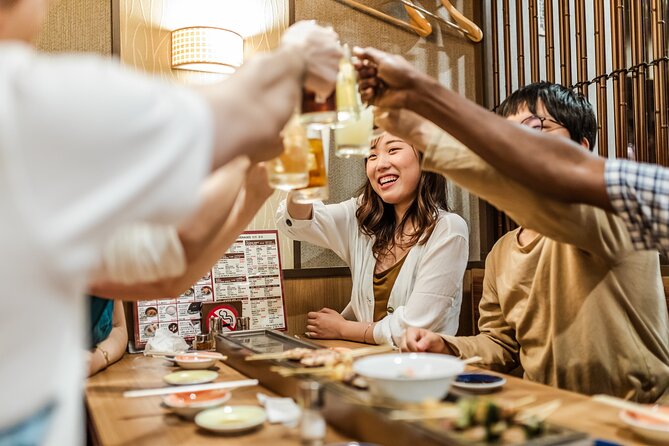
The listed price is $137.74 per person. For a private three to four-hour experience, that can be fair if you value planning, personal attention, and help with Kyoto’s complex geography. It is less attractive if you only want a low-cost stroll past a few sights.
Your payment covers the private walking experience, flexible start time, pre-tour planning, and direct communication with your host. It does not cover meals, drinks, admission tickets, public transport, or local taxis. Ask about expected transport costs once your route is set.
The tour is primarily on foot, so wear comfortable shoes and prepare for changing weather. A walking route through Gion and Sanjo may feel manageable, while a plan that adds Heian Shrine or Nijo Castle could require transfers and more time on your feet.
The experience ends back at the meeting point. That return is convenient if you have dinner plans nearby, but it also means you should not assume the guide will drop you at your hotel. Confirm the end point and any transport needs before the tour begins.
Who will get the most from this experience
This tour suits first-time Kyoto visitors who want a calm start and a local point of contact. It is also a good match for people who dislike fixed group itineraries or who have a short stay and need help choosing what matters most.
Families may appreciate the adjustable pace. Older relatives may benefit from a route with fewer steep sections and planned breaks. Ask about this in advance rather than hoping the guide will guess.
It works well for special interests, too:
- History fans can request Nijo Castle, imperial sites, and stories of shoguns.
- Food-focused visitors can ask for markets, local dishes, and restaurant guidance.
- Shoppers can request artisan workshops and specialty stores.
- Culture fans can focus on Gion, Yasaka Shrine, and local traditions.
- Repeat visitors can ask for quieter streets and places beyond the standard circuit.
This is not the best choice if you need a vehicle, want a packed list of major attractions, or expect all admissions and meals to be included. It is also not ideal for someone who prefers to explore alone with a guidebook and public transport app.
Booking details that matter
You can choose a preferred start time when booking, which helps fit the walk around jet lag, meals, or a later train. After booking, complete the questionnaire promptly so your host has time to plan.
Confirmation is provided at booking. The meeting point is near public transport, and service animals are allowed. Most people can take part, but the experience remains a walking activity, so discuss mobility concerns and desired pace with your host beforehand.
The tour is private, and group discounts are available. Free cancellation applies if you cancel at least 24 hours before the local start time. Changes made inside that 24-hour window are not accepted, and the amount paid is not refunded.
Should you book this Kyoto walking tour?
Book it if you want a flexible first day in Kyoto, practical help with navigation, and a route shaped around your own interests. The best value comes from using the host as a local adviser, not simply as someone who walks you to famous buildings.
Before you commit, decide what you want from the three to four hours. Ask for Gion and Yasaka if you want classic Kyoto atmosphere. Choose Nijo Castle for samurai history. Request Sanjo for shops and city life. Add Heian Shrine if its imperial setting matters to you, but do not try to force every stop into one short outing.
At $137.74 per person, it is a personal service rather than a bargain tour. For first-time visitors, families, and people nervous about language or transport, that support may be worth the cost. If you already know Kyoto well and prefer independent wandering, spend the money on admissions, meals, or a longer self-guided day instead.
FAQ
How long does the Kyoto private walking tour last?
The experience lasts approximately 3 to 4 hours. The route is planned around your interests, pace, and preferred neighborhoods.
Where does the tour begin and end?
The tour begins at the Starbucks Coffee beside Sanjo-ohashi Bridge in Kyoto’s Nakagyo Ward. It ends back at the same meeting point.
Is transportation included?
No. The experience is mainly on foot. Public transport or local taxis may be used between sites, but those costs are extra and can be discussed with your host after booking.
Are attraction tickets and food included?
No. Food, drinks, and tickets to attractions such as Nijo Castle are not included in the tour price.
Can I choose what to see?
Yes. You receive a questionnaire after booking to share your interests, preferences, and must-sees. Your host then contacts you to help shape the itinerary.
Is this a private tour?
Yes. Only your group takes part, and the guide can adjust the route and pace to suit your party.
Recently added around Kyoto
- Higashiyama | Kyoto: Sakura Season Private Rickshaw Tour★ 5.0 · 3 reviews
- Kyoto Kimono Rental CHAMATSU|Kimono/Yukata Rental FamilyPlan★ 5.0 · 3 reviews
- Kyoto: Half-Day Private Guided Tour to the Old Town of Gion★ 4.4 · 3 reviews
- Nara Private Customizable Half Day Tour★ 5.0 · 3 reviews
- Kansai Region Hiking Adventure in Nara Kobe Kyoto and More★ 5.0 · 3 reviews
- Full Day Nara Deer, Temple, Shrine, Activities & Tea Ceremony★ 5.0 · 3 reviews
- Nara: Essential Private Tour with Deer Park and Temples★ 5.0 · 3 reviews
- Hiking Tour for Sacred Sites in Kyoto with a Guide★ 5.0 · 3 reviews
Walking Tours, compared.

Kyoto Geisha Walking Tour: Gion District & Hidden Gems
Read our review →
Gion Magical Night Walking Tour with Geisha Trivia
Read our review →
Gion Geisha District Walking Tour – Stories of Geisha
Read our review →

Kyoto Gion Geisha District Walking Tour – The Stories of Geisha
Read our review →
Kyoto Arashiyama Walking Tour: Bamboo, Monkeys, Gardens & Secrets
Read our review →
Kyoto Gion: 2-Hour Geisha Culture & History Walking Tour
Read our review →
Nara Half Day Trip Walking Tour (Private Option Available)
Read our review →Browse the lists this tour appears in