
REVIEW · NISHIKI MARKET FOOD TOURS
Kyoto Nishiki Market & Depachika: 2-hours Food Tour with a Local
Kyoto’s best food discoveries are often small, unfamiliar, and easy to miss. This two-hour tour pairs Daimaru Kyoto’s underground depachika with Nishiki Market, then finishes at Nishiki Tenmangu Shrine. You get a guided introduction to foods such as yuba sashimi, soy milk donuts, gyoza, and tempura without having to guess what to order.
I like the contrast between the polished department-store food hall and the old market street. I also like the small group limit of nine, plus guides such as Jasmine, Mao, Boris, and Ai, who have been praised for warmth, food advice, and help with local customs. The main drawback is that the included food may feel light if you arrive hungry, and the tour can be more flexible than a fixed tasting menu.
In This Review
- Key points at a glance
- Starting at Daimaru Kyoto’s depachika
- Working through Nishiki Market
- Why the local guide makes a difference
- Finishing at Nishiki Tenmangu Shrine
- What the $48 price really buys
- Timing, group size, and meeting details
- Who will enjoy this food walk most
- Should you book the Nishiki Market tour?
- FAQ
- How long is the Kyoto Nishiki Market food tour?
- Where does the tour begin?
- Where does the tour end?
- What food tastings are included?
- Are meals and drinks included?
- How many people can join the tour?
- Is the tour near public transportation?
- Can most people participate?
- What is the cancellation policy?
Key points at a glance
- Two very different food stops: Compare Daimaru’s refined basement food hall with the traditional stalls of Nishiki Market.
- Four stated tastings included: Try yuba sashimi, a soy milk donut, Nishiki gyoza, and Uoriki tempura.
- Guides shape the experience: Jasmine, Mao, Boris, Ai, Alex, and Katz have all led tours, with strong praise for friendly explanations and personal recommendations.
- A compact Kyoto introduction: The two-hour route suits families and leaves you near Kawaramachi Station for your next stop.
- Flexible tasting style: You may receive suggestions and help choosing food rather than following a rigid list of every dish.
- Small maximum group: The tour is limited to nine people, though one booking became a private tour for two.
Starting at Daimaru Kyoto’s depachika
The tour starts outside Apple Kyoto, at 83-1 Tachiuri Nakanocho. From there, your guide takes you to the basement food hall at Daimaru Kyoto.
In Japan, a department-store basement food hall is not just a place to grab a sandwich. It can be a display of carefully prepared sweets, seafood, prepared dishes, gifts, and regional specialties. The attraction here is seeing how Japanese food is presented when appearance matters as much as taste.
This first stop lasts about 30 minutes. That is enough time to get your bearings and see a different side of Kyoto food culture before entering Nishiki Market. I especially like this pairing because Nishiki can feel crowded and confusing on a first visit, while Daimaru gives you a calmer introduction to the range of foods available.
Your guide may point out products you would probably walk past on your own. Katz was praised for making the department-store portion a highlight, and one family returned to Daimaru several times after learning how interesting the food hall was. That is useful advice: do not treat this stop as filler. It may be one of the most memorable parts for anyone curious about Japanese food shopping.
The tasting list includes yuba sashimi and a soy milk donut. Yuba is tofu skin, a delicate food made from the thin layer that forms on the surface of heated soy milk. It has a mild flavor and soft texture, making it a good example of a Kyoto specialty that may not be obvious to first-time visitors.
The donut offers a sweeter, easier introduction. If your group includes children or cautious eaters, having both savory and sweet foods helps keep the tasting comfortable. Still, the experience is not presented as a full meal. I would eat a light breakfast or lunch beforehand, then use the market afterward to buy anything else that catches your eye.
More food walks through Nishiki Market:
- Nishiki Market Brunch Walking Tour (7 Tastings + Brunch)
★ 5.0 · 1,355 reviews - Kimono Tea Ceremony at Kyoto Maikoya, NISHIKI
★ 5.0 · 911 reviews - Kyoto Nishiki Market Food and Culture Walking Tour
★ 5.0 · 412 reviews
Working through Nishiki Market
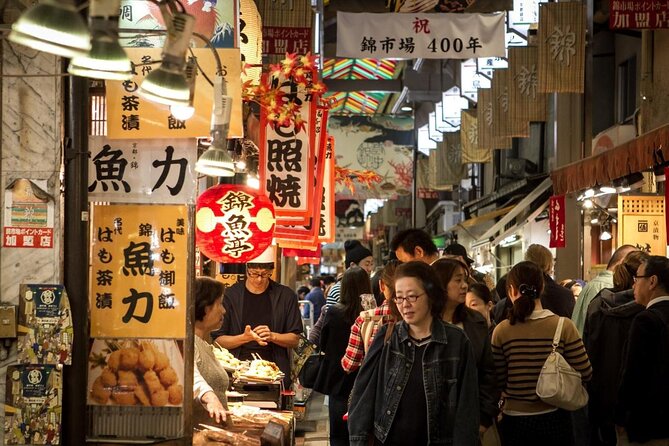
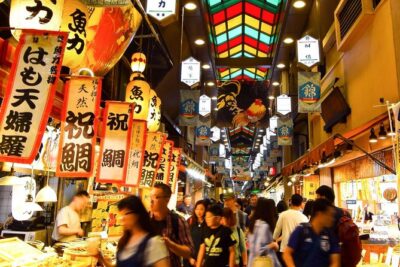
The main market visit takes about one hour. Nishiki Market is known as Kyoto’s Kitchen, and the name fits its range. You may see seasonal foods, produce, Kyoto specialties, knives, cookware, seafood, sweets, and prepared snacks packed into a narrow indoor shopping area.
The value of a guide here is not simply finding food. It is knowing what a stall sells, understanding how an item is eaten, and choosing portions that make sense during a walk. One guide ordered food for a family, while others helped people select products based on their tastes. That kind of assistance matters when menus are unfamiliar or when you want to sample several things without buying too much.
The stated tastings include Nishiki gyoza and Uoriki tempura. You may also be offered other foods during the walk, depending on the guide and the group’s interests. Past routes have included beef, shrimp, desserts, and other market snacks. The experience is flexible, so you should tell your guide early if you have foods you want to try or avoid.
That flexibility is both a strength and a point to understand before booking. Some people prefer a set menu with a guaranteed number of tastings. This tour appears to work more like a guided food walk, where the guide recommends items and may adjust choices for the group. One couple enjoyed the freedom to try what appealed to them, but wished the booking description had made this approach clearer.
You should also be ready for foods that may seem unusual. One route included pieces of live octopus, which one participant could not eat. You are not required to enjoy every item, and the guides have been praised for looking after personal tastes. Still, this is not a tour designed only around familiar dishes such as noodles and fried chicken.
The market itself can be busy. A small group limit of nine helps, but you will still be moving through a shopping area rather than sitting in one restaurant. Keep your belongings close, stay near the guide, and expect a walking pace that allows for stops at several stalls.
Why the local guide makes a difference
The strongest reason to book this experience is the guide. Several named guides received warm praise for their personality and food knowledge, including Jasmine, Mao, Boris, Ai, Alex, and Katz.
Jasmine was praised for patiently explaining different dishes, helping with product choices, and adjusting food to personal tastes. Mao was singled out for explaining Japanese customs and traditions alongside the food. Boris was described as especially helpful, including assisting when a taxi passenger had trouble finding the meeting point.
Ai was praised for knowing the market well, explaining the history of shops, and pointing out good places to eat. Alex received credit for giving background information while guiding the group through the stalls. Katz was noted for making the Daimaru portion particularly useful.
These details suggest that the quality of your outing depends heavily on who leads it. The provider does not promise a particular guide, so you should not assume Jasmine, Mao, Boris, or Ai will be assigned to your group. If you have a chance to request a guide, it may be worth asking, but the available information does not guarantee that request.
The best guides appear to do more than buy snacks. They explain what you are seeing, help you order, and connect food with everyday customs. One weaker experience involved a guide who was friendly but offered limited explanation about the market and dishes. That is a fair warning: the tour is worthwhile when the guide tells the story behind the food, not when the guide simply carries you from stall to stall.
Finishing at Nishiki Tenmangu Shrine
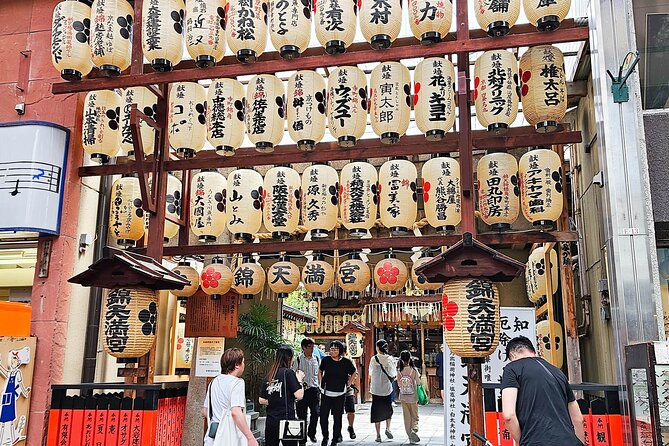
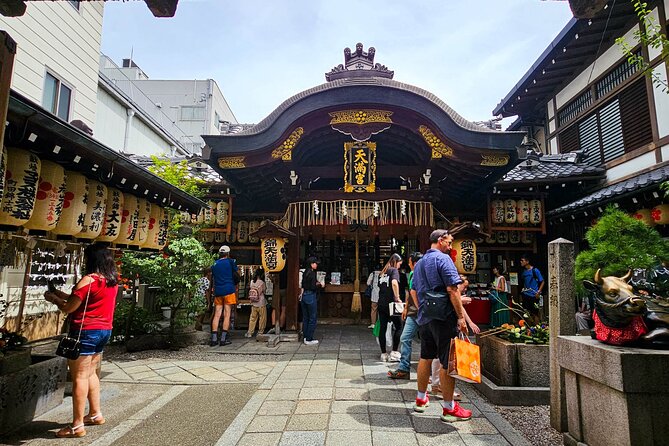
After the market, the group visits Nishiki Tenmangu Shrine for about 15 minutes. The shrine is dedicated to the deity of learning and offers a quiet pause near the market.
This is a short visit, not a full shrine tour. Its value is the change of pace. After an hour of food stalls and shopping, you get a brief look at a religious site and a chance to connect the market area with Kyoto’s broader customs and traditions.
The shrine also helps give the tour a clean ending. Instead of stopping suddenly after the last tasting, the route moves from food to culture. If you are interested in Japanese etiquette, ask your guide about customs while you are there. Mao, in particular, was praised for including that kind of explanation.
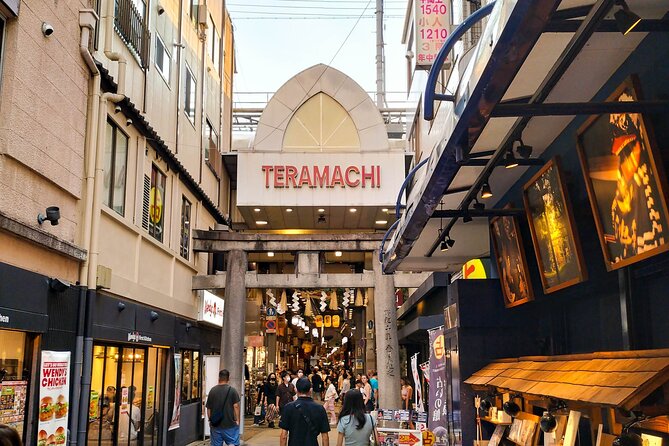
The tour ends at Kyoto-Kawaramachi Station. Your guide can help you work out where to go next, which is useful if this is your first time in the area. You are well placed to continue shopping, find a meal, or connect with another part of Kyoto.
More food tours in Kyoto:
- Kyoto Night Foodie Tour in Gion (9+ dishes + 6 Sake tastings)
★ 5.0 · 1,762 reviews - 3-Hour Kyoto Insider Sake Brewery Tour with Tastings & Pairings
★ 5.0 · 917 reviews - Arashiyama Bamboo, Temple, Monkeys, or Secret Sake Brewery
★ 4.8 · 886 reviews - Kyoto: Insider Sake Brewery Tour with Sake and Food Pairing
★ 5.0 · 704 reviews
What the $48 price really buys
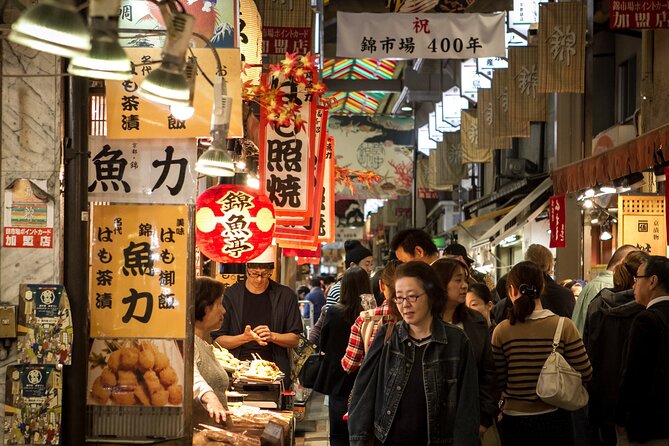
At $48 per person, the price is reasonable if you value guidance and food selection, but it is not a bargain meal. The listed inclusions are a guide in your selected language, the food tour, and tastings of yuba sashimi, a soy milk donut, Nishiki gyoza, and Uoriki tempura.
Other meals, drinks, and personal purchases are not included. You should budget extra if you want to buy snacks, cookware, knives, gifts, or additional market food. Nishiki Market is exactly the sort of place where you may want to keep eating after the tour ends.
The price makes the most sense for first-time visitors who feel unsure about ordering. Your guide can help identify foods, explain unfamiliar ingredients, and point out products worth revisiting. It is also useful for families, couples, and small groups who want an organized start before exploring independently.
The value is weaker if you already feel comfortable reading Japanese food displays, choosing market snacks, and navigating Kyoto on your own. One person felt the tour could have been done independently, especially because some dishes resembled food found on tours in Tokyo and Osaka.
I would judge the cost by your goals. If you want a meal replacement, it may disappoint. If you want a short orientation with several tastings and practical advice, the fee is easier to justify.
Timing, group size, and meeting details
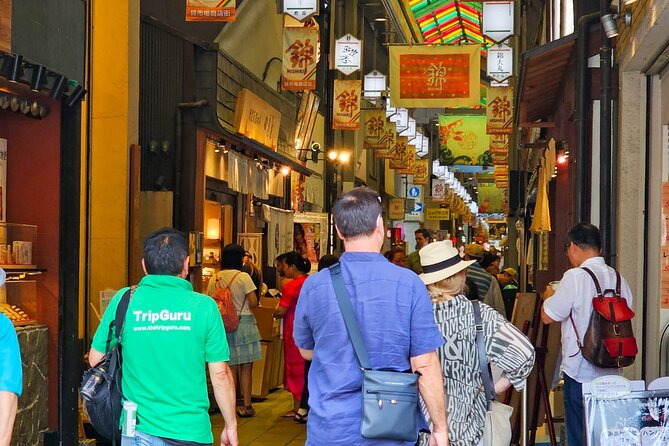
The total duration is about two hours. The rough schedule is 30 minutes at Daimaru Kyoto, one hour in Nishiki Market, and 15 minutes at Nishiki Tenmangu Shrine, with the remaining time used for walking and food stops.
The group maximum is nine people. That is small enough for questions and easier movement than a large coach group. At least one booking ended up being private for two people, but you should not count on a private tour.
The meeting point is Apple Kyoto, 83-1 Tachiuri Nakanocho, in Kyoto’s Shimogyo Ward. The tour ends at Kawaramachi Station, and the guide helps with the next destination. The route is near public transportation, and most people can take part.
The directions to the starting point have been described as clear, but allow time to find the guide. If you are taking a taxi, keep the meeting details handy. One participant had a driver get lost and needed help from the guide before arriving.
Free cancellation is available when you cancel at least 24 hours before the start time. Changes or cancellations inside that window are not accepted for a refund, and cut-off times use Kyoto local time.
Who will enjoy this food walk most
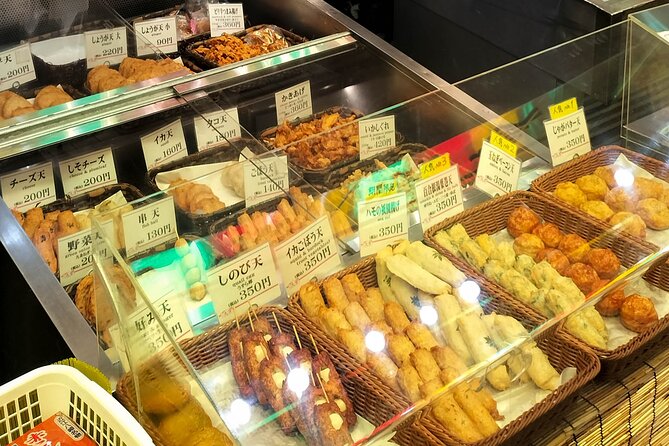
I would choose this tour if you are visiting Nishiki Market for the first time and want help making sense of it. It is also a good fit if you enjoy tasting unfamiliar foods but do not want to commit to a formal multi-course meal.
Families may appreciate the two-hour length. One account described it as a good amount of time with young people, and the mix of sweets, fried foods, seafood, and savory dishes gives cautious eaters several chances to find something they like.
It also suits visitors with limited time in Kyoto. The route provides food, shopping, a shrine, and transport advice in a compact session. Ending near Kawaramachi Station makes it easy to continue your day.
I would think twice if you want a long historical talk about Nishiki Market or a guaranteed large quantity of food. The experience can vary with the guide, and not every guide may offer the same level of storytelling. It is best understood as a guided introduction, not an exhaustive culinary tour.
Should you book the Nishiki Market tour?
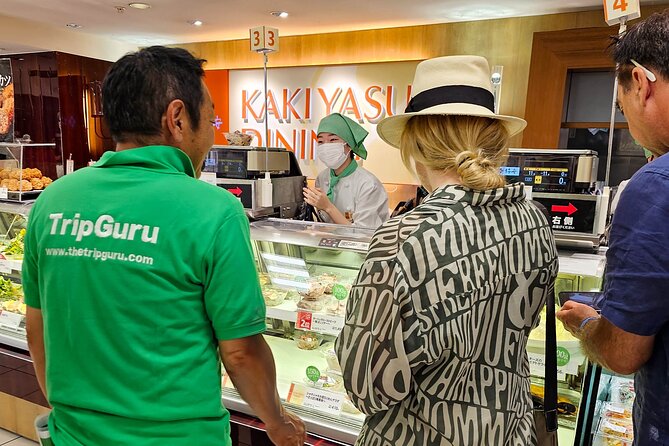
Book it if you want a friendly local guide to steer you through Kyoto’s food culture, especially if Daimaru’s depachika is new to you. The combination of yuba, donut, gyoza, tempura, market browsing, and a shrine visit gives you more range than a simple snack stop.
Go in with realistic expectations. Eat something beforehand, carry money for extra purchases, and tell the guide about your tastes. If your main goal is a full meal or a tightly scripted tasting menu, spend the $48 elsewhere.
For most first-time visitors who want a short, practical introduction to Nishiki Market, I think this is a sensible choice. The best outcome is not just the included food. It is leaving with enough confidence to return to the market and choose your own next bite.
FAQ
How long is the Kyoto Nishiki Market food tour?
The experience lasts approximately two hours.
Where does the tour begin?
It begins at Apple Kyoto, located at 83-1 Tachiuri Nakanocho, Shimogyo Ward, Kyoto, 600-8006, Japan.
Where does the tour end?
The tour ends at Kyoto-Kawaramachi Station. The guide can help you with directions to your next destination.
What food tastings are included?
The stated tastings are yuba sashimi, which is tofu skin, a soy milk donut, Nishiki gyoza, and Uoriki tempura.
Are meals and drinks included?
The listed tastings are included, but other meals and drinks are not included.
How many people can join the tour?
The maximum group size is nine people.
Is the tour near public transportation?
Yes. The experience is listed as being near public transportation, and it ends at Kawaramachi Station.
Can most people participate?
Yes. The tour information states that most travelers can participate.
What is the cancellation policy?
You can cancel at least 24 hours before the experience start time for a full refund. Cancellations or changes made less than 24 hours before the start time are not accepted for a refund.
More Shopping Tours in Kyoto
- Kyoto: Nishiki Market Tour with a Local Foodie & Tastings
★ 4.5 · 67 reviews - Nishiki Market Lunch Tour
★ 5.0 · 47 reviews - Nishiki Market Food Tour with Cooking Class
★ 4.9 · 42 reviews - Kyoto Nishiki Market Tour
★ 5.0 · 32 reviews
More Markets in Kyoto
- Kyoto: Nishiki Market Tea Ceremony with Koto Performance
★ 4.8 · 294 reviews - Kyoto: Nishiki Market Brunch Walking Tour-7 Tastings+Brunch
★ 4.8 · 197 reviews - Kyoto: Local Food Tasting Tour at the Nishiki Market
★ 4.7 · 135 reviews - Kyoto: Nishiki Market and Depachika Food Tour with a Local
★ 4.7 · 76 reviews
Recently added around Kyoto
- Higashiyama | Kyoto: Sakura Season Private Rickshaw Tour★ 5.0 · 3 reviews
- Kyoto Kimono Rental CHAMATSU|Kimono/Yukata Rental FamilyPlan★ 5.0 · 3 reviews
- Nara Private Customizable Half Day Tour★ 5.0 · 3 reviews
- Kyoto: Half-Day Private Guided Tour to the Old Town of Gion★ 4.4 · 3 reviews
- Kansai Region Hiking Adventure in Nara Kobe Kyoto and More★ 5.0 · 3 reviews
- Full Day Nara Deer, Temple, Shrine, Activities & Tea Ceremony★ 5.0 · 3 reviews
- Nara: Essential Private Tour with Deer Park and Temples★ 5.0 · 3 reviews
- Hiking Tour for Sacred Sites in Kyoto with a Guide★ 5.0 · 3 reviews
Nishiki Market Food Tours, compared.
Kyoto Nishiki Market Food and Culture Walking Tour
Read our review →
Nishiki Market Tea Ceremony with Koto Performance
Read our review →
Nishiki Market Brunch Walking Tour-7 Tastings+Brunch
Read our review →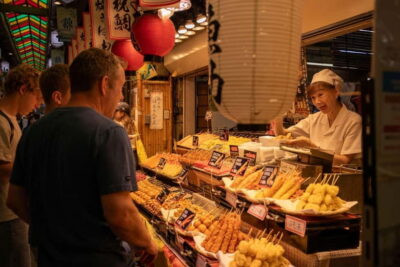
Kimono Tea Ceremony Experience at Kyoto Oritzuruya, Nishiki
Read our review →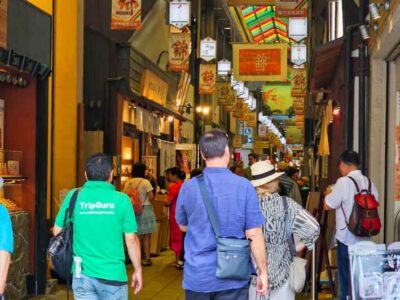
Nishiki Market and Depachika Food Tour with a Local
Read our review →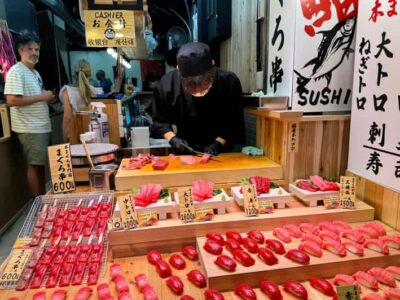
Nishiki Market Tour with a Local Foodie & Tastings
Read our review →Browse the lists this tour appears in