
REVIEW · GION GEISHA DISTRICT TOURS
Kyoto Nighttime All-Inclusive Eats and Streets, Gion and Beyond
Kyoto after dark is less about grand monuments and more about what happens behind narrow doors. This three-hour walk links Gion’s geiko culture with modern hostess clubs, then takes you to two small restaurants for regional food and drinks. I like the mix of street life and cultural explanation, and I like that guides such as Laura, Hugo, Joshua, and Jamie often add personal Kyoto tips along the way. The main caution is that the food stops can vary, and one stop may allow smoking.
I also like the small group size, limited to six people in normal circumstances, and the practical route from Gion Shijo Station to Kyoto-Kawaramachi Station. You should expect plenty of walking, close seating, and a night built around local atmosphere rather than polished fine dining.
In This Review
- Key points at a glance
- Why Kyoto nightlife makes more sense on foot
- Starting at Minamiza Theater at 6:30pm
- Gion, geiko, maiko, and modern hostesses
- First restaurant at about 7:30pm
- Pontocho and Kiyamachi show another side of Kyoto
- Second restaurant at about 9pm
- What $119 buys you
- Which guide style suits this evening
- Who should book this Kyoto night tour
- Should you book it?
- FAQ
- Where does the tour start?
- Where does the tour end?
- How long does the experience last?
- How many people can join?
- Are drinks included?
- Can vegetarians participate?
- What is the minimum age?
- What happens if the weather is poor?
Key points at a glance
- Gion after dark: Learn about geiko, maiko, Kabuki, and the changing evening economy of Kyoto.
- Two local food stops: Try several regional dishes at small bars or restaurants, with one included drink at each.
- Small-group format: The tour is limited to six people, with groups of up to eight allowed when booked together.
- Guides with different strengths: Guides named in guest experiences include Laura, Hugo, Joshua, Maya, Jamie, Jaime, Brian, Lin, Rin, and Bryan.
- Walking-heavy evening: The route covers Gion, Pontocho, Kiyamachi, and the Kawaramachi area.
- Good dietary flexibility: Vegetarian, pescetarian, and gluten-free needs have been accommodated when provided in advance.
Why Kyoto nightlife makes more sense on foot
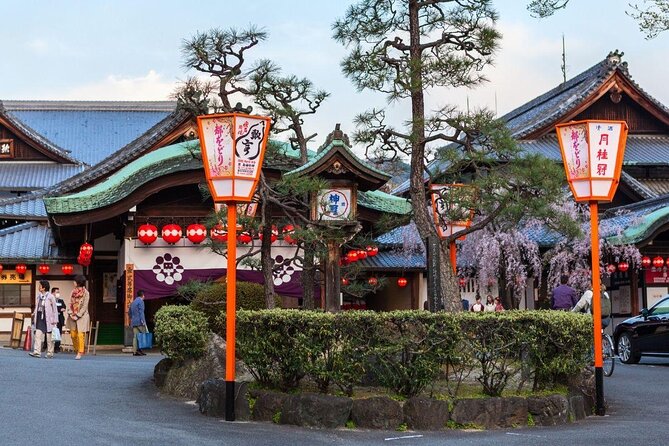
Kyoto’s famous sights often close before dinner, but the city’s evening character is just getting started. This tour gives you a useful bridge between the daytime Kyoto of shrines and gardens and the nighttime Kyoto of lanterns, narrow lanes, bars, restaurants, and entertainment districts.
The first hour is an interpretive walk through Gion, on the east side of the Kamogawa River. You learn why Kyoto uses the term geiko rather than the more familiar geisha, along with the role of maiko and the traditions connected with evening entertainment. The guide also explains how older forms of entertainment relate to today’s hostess clubs.
That subject can sound sensational if handled poorly. Here, the tour is described as an anthropological look at the nighttime economy, not a hunt for celebrity sightings or access to private clubs. It is suitable for participants aged 13 and older, so the discussion is intended to remain appropriate for teenagers.
I find this framing useful because Gion is easy to misread. A quiet lane, a curtained doorway, and a woman in traditional dress can mean very different things depending on the setting. A good guide helps you observe respectfully and understand that this is a working neighborhood, not a stage set.
More evenings in Gion:
- Kyoto Geisha Walking Tour: Gion District & Hidden Gems
★ 4.7 · 3,273 reviews - Kyoto: Gion Magical Night Walking Tour with Geisha Trivia
★ 4.9 · 2,393 reviews - Kyoto: Gion Geisha District Walking Tour – Stories of Geisha
★ 4.7 · 2,187 reviews
Starting at Minamiza Theater at 6:30pm
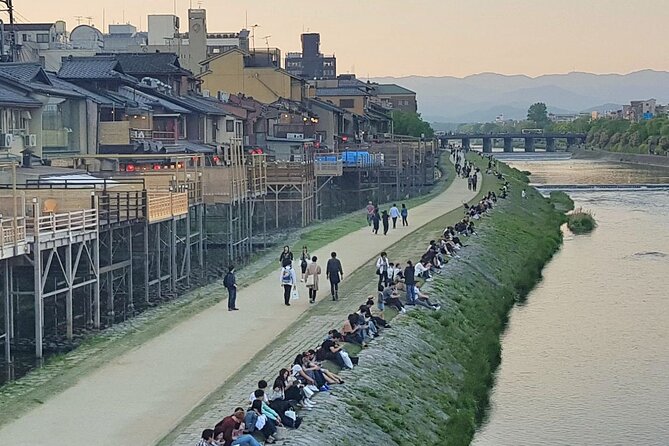
The meeting point is at the Minamiza Theater, near Gion Shijo Station, on the east side of the Kamogawa River. The theater address is 198 Nakanocho, Higashiyama Ward, and the meeting location is on the second-floor west lobby.
Give yourself time to find the exact meeting spot. The area can have several tours gathering at once, and identifying the correct group may take a little care. Look for the tour guide or confirm the booking details before setting off.
The 6:30pm start gives you a useful transition into the evening. You have time to finish daytime sightseeing, rest briefly, and arrive without rushing from a distant attraction. One practical limitation is that the walk begins after sunset or close to it, so this is not the best choice if your main goal is photography of Gion’s architecture in daylight.
The route is near public transportation, which helps at both ends. You finish around 9:30pm at Kyoto-Kawaramachi Station, in the Kawaramachi area. That makes it easy to continue your evening independently or return by train.
Gion, geiko, maiko, and modern hostesses
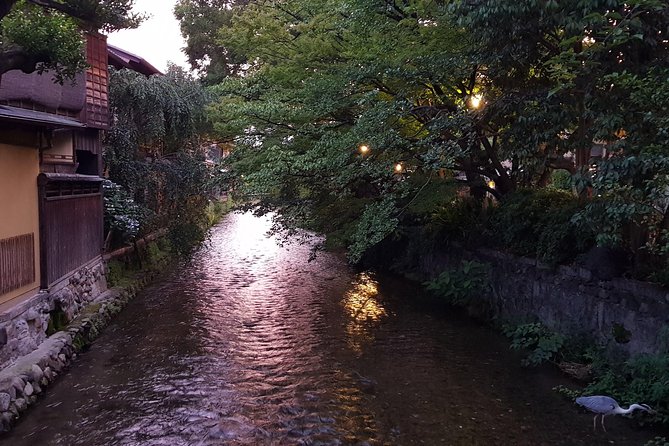
The Gion section is the heart of the cultural side of the experience. You walk through the district while your guide explains the local entertainment traditions, the geiko and maiko system, and the way Kyoto protects older customs while still supporting modern nightlife.
Several guide-led experiences have included explanations of Kabuki, Shinto shrines, and Buddhist temples as part of the walk. The exact sights can vary, but the route may include a shrine or temple along with the entertainment streets. That added context helps you tell the difference between Kyoto’s religious spaces and its commercial nightlife.
You may see a geiko or maiko moving through the neighborhood, but no sighting is promised. Treat that possibility as luck, not as the purpose of the tour. If you do see one, the proper approach is to give her space and avoid blocking the lane or taking intrusive photographs.
The discussion of hostess clubs gives the walk a modern counterpoint. Kyoto is not frozen in its historic image. Alongside preserved wooden facades and traditional arts, you find businesses aimed at present-day nightlife. The guide’s job is to explain the social and economic connection between these worlds without turning either into a cartoon.
Guides such as Laura, Hugo, and Bryan have been praised for making this material lively and easy to follow. A guide’s personality matters here. The streets themselves can be quiet and understated, so the quality of the explanation shapes much of what you take away.
First restaurant at about 7:30pm
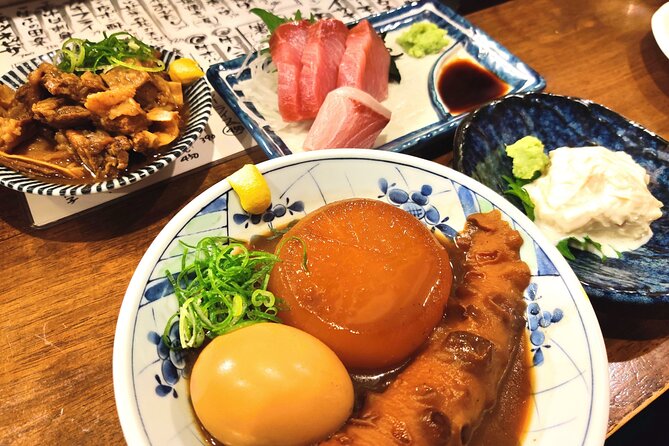
After roughly an hour of walking, the group stops for food and a drink. The first venue is described as a standing bar or small local restaurant, with several regionally representative dishes to share or sample.
This is not a formal, course-by-course restaurant meal. Think of it as a chance to try different small dishes while learning how locals eat and drink in compact evening establishments. Depending on the stop, you may choose beer, sake, shochu, or a non-alcoholic drink.
One alcoholic or non-alcoholic beverage is included at this first restaurant. Any drinks beyond the two included in the full tour cost extra and are paid directly to the restaurant.
The food portions are intended to satisfy without leaving you uncomfortably full. That makes sense for an evening with a second food stop still ahead. You get variety instead of one oversized plate, and you can ask about dietary needs.
Vegetarians are accommodated, and specific experiences have also worked well for pescatarians and people avoiding gluten. Still, send your requirements when booking rather than waiting until you sit down. The food is selected from small local venues, so advance notice gives the guide and restaurants a better chance to adjust.
There is one real uncertainty. The restaurants are not fixed public attractions with identical menus every night. Stops can change, and one may permit smoking, which is still common in Japan. If you are very sensitive to smoke, ask the operator about current arrangements before booking.
A completely different side of Kyoto:
- PERFECT KYOTO 1-Day Bus Tour
★ 5.0 · 13,518 reviews - Kyoto: Fushimi Inari, Kinkakuji, Bamboo Grove 1 Day Bus Tour
★ 4.8 · 4,316 reviews - Kyoto: Tea Ceremony in a Traditional Tea House in Kiyomizu
★ 4.9 · 3,519 reviews - Kyoto: Tea Ceremony Ju-An at Jotokuji Temple
★ 4.9 · 3,207 reviews
Pontocho and Kiyamachi show another side of Kyoto
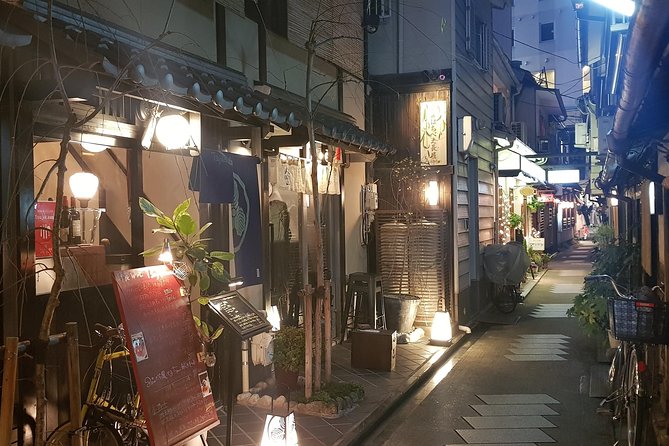
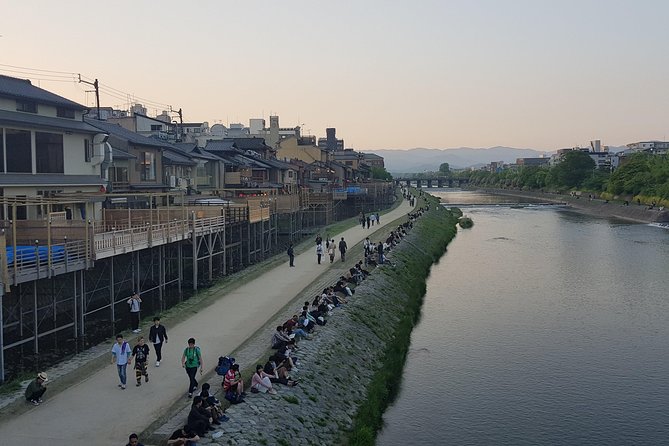
After eating, you cross to the west side of the Kamogawa River and walk through Pontocho, Kiyamachi, and the Kawaramachi Street area. This part of the route gives you a helpful visual comparison with Gion.
Pontocho is known for its narrow old lane and traditional facades. The street is compact, atmospheric, and easy to miss if you do not know where to look. You may find restaurants and bars tucked behind modest entrances, with little indication from the street of what lies inside.
Kiyamachi and Kawaramachi provide a younger contrast a few streets away. The point is not that one district is better than another. The value is seeing how Kyoto preserves old forms while making room for current tastes, businesses, and nightlife.
This walk also helps with basic orientation. Kyoto’s nightlife districts sit close together, but their mood changes quickly from one lane to the next. With a guide, you can connect the names on a map with actual streets and get a better sense of where you might return later.
Expect more walking than the food-tour label alone may suggest. The full experience lasts about three hours and includes several neighborhood changes. Comfortable shoes are a must, and wet weather can make the pavement less pleasant.
Second restaurant at about 9pm
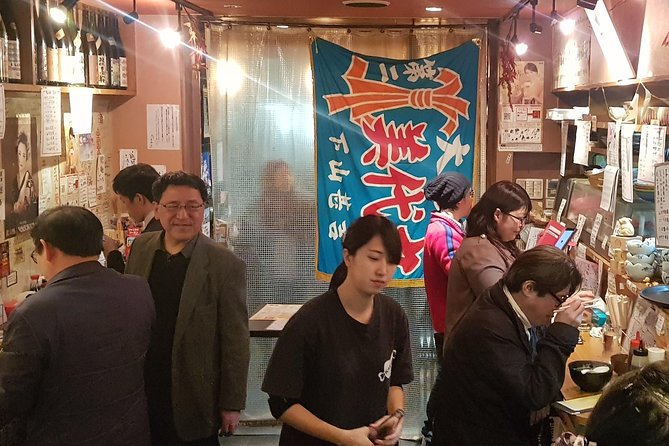
The second restaurant is the final food stop and usually provides another set of local dishes with the second included drink. The format can feel more substantial than the first stop, though the precise menu and venue depend on the evening.
This is where the all-inclusive price becomes easier to judge. You are not simply paying for two drinks and a few tastings. The fee also covers a guide who handles the route, explains cultural details, manages restaurant communication, and helps you order food that may be unfamiliar.
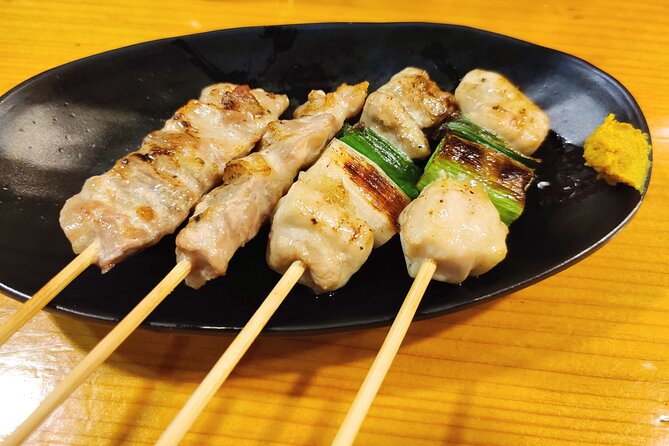
The experience has included wagyu beef for some bookings, including a case where the restaurant made extra effort to source it after a same-day reservation. That does not mean wagyu is guaranteed on every tour, so do not book solely for that dish. It does show the kind of flexibility that can make a small-group food tour worthwhile.
Seating may be close. One account described the second restaurant’s bar seating as making group conversation harder, even though the food was good. Small Kyoto venues often trade space for character, so you should prefer this tour if you enjoy informal settings more than roomy tables.
The food quality can also be uneven from night to night. Strong experiences have included delicious, plentiful dishes and friendly owners, but some diners found one restaurant disappointing. The operator says venues are selected from locally owned places and may change. That variety is part of the appeal, but it also means the tour cannot promise a perfect meal at every stop.
What $119 buys you
At $119 per person, this is not the cheapest way to eat in Kyoto. You can spend far less at a casual restaurant, especially if you already know where to go and can order comfortably in Japanese.
The value here is the combination. You receive dinner across two stops, two alcoholic or non-alcoholic drinks, a three-hour guided walk, and an explanation of Kyoto’s nightlife that is difficult to get from a map alone. You also avoid the stress of choosing a tiny restaurant when menus and signs may not be easy to read.
The small group improves the economics of the experience. With up to six participants, the guide can usually answer questions and help adjust the food choices. Groups of up to eight are allowed when everyone is part of the same reservation, which suits a family or group of friends.
I would call the price fair for a first night in Kyoto if you want food, orientation, and cultural background in one booking. I would be less quick to recommend it to an experienced Japan visitor who already has favorite izakaya and a clear understanding of Gion.
Group discounts may be available, and the ticket is mobile, which makes the booking simple. Free cancellation is available until 24 hours before the start time. Changes or cancellations inside that window are not accepted for a refund, and poor weather can lead to a rescheduled tour or full refund.
Which guide style suits this evening
The guide can shape the balance between history, humor, and food. Joshua has been noted for strong local explanations and an easygoing manner, while Laura has been praised for energy, clear English, and personal attention. Hugo has been appreciated for combining area knowledge with humor and helping first-time visitors feel at ease.
Maya has handled dietary requests, including gluten-free needs, while Jamie and Jaime have been praised for adapting the plan for vegetarian and pescetarian diners. Brian and Rin have also been associated with clear cultural explanations and good restaurant choices. Bryan has led very small, personal outings that included discussion of geiko, maiko, Kabuki, shrines, and temples.
You cannot choose a particular guide unless the operator confirms one, so treat these names as examples of the range of guiding styles. The important point is that the experience depends heavily on the person leading it. A warm, prepared guide can make an ordinary lane or simple dish meaningful. A less organized evening can feel less satisfying.
Who should book this Kyoto night tour
I would suggest this experience for first-time Kyoto visitors who want to get their bearings after dark. It is especially useful if you are unsure how to approach small bars and restaurants, or if you want someone else to handle the route and ordering.
It also suits curious eaters who prefer several modest portions to one formal meal. Vegetarians can join, and other dietary needs may be handled with advance notice. People aged 13 and older can participate, but the nightlife subject matter may be more interesting for teenagers and adults than for young children.
You should skip it if you dislike walking, cannot tolerate close restaurant seating, or want a guaranteed menu and fixed restaurant list. It is also not ideal if your priority is seeing Gion in daylight or taking carefully composed photographs.
The drinking age in Japan is 20. Non-alcoholic drinks are available, so you do not need to drink alcohol to take part.
Should you book it?
Book this tour if you want context with your dinner, not just a list of dishes. The best version of the evening gives you a working understanding of Gion, a look at Pontocho and Kiyamachi, two local food stops, and useful advice for the rest of your Kyoto visit.
Go in with realistic expectations. The restaurants are small and can change, the walking is substantial, and the food may be stronger at one stop than the other. If those tradeoffs sound acceptable, $119 buys a friendly introduction to the parts of Kyoto that are easiest to pass without understanding.
FAQ
Where does the tour start?
The tour starts at 6:30pm at Minamiza Theater, near Gion Shijo Station. The listed meeting location is on the second-floor west lobby.
Where does the tour end?
The tour ends at Kyoto-Kawaramachi Station at about 9:30pm.
How long does the experience last?
The tour lasts approximately three hours.
How many people can join?
The usual maximum is six participants. Groups of up to eight are welcome when the entire group is covered by the same reservation.
Are drinks included?
Two alcoholic or non-alcoholic beverages are included, with one drink served at each restaurant. Additional drinks cost extra and are paid directly to the restaurants.
Can vegetarians participate?
Yes. Vegetarians are accommodated. Pescetarian and gluten-free requests have also been handled, so provide all dietary requirements when booking.
What is the minimum age?
All participants must be at least 13 years old. The minimum drinking age in Japan is 20, and non-alcoholic drinks are available.
What happens if the weather is poor?
The experience requires good weather. If the operator cancels because of poor weather, you will be offered another date or a full refund.
Recently added around Kyoto
- Higashiyama | Kyoto: Sakura Season Private Rickshaw Tour★ 5.0 · 3 reviews
- Kyoto Kimono Rental CHAMATSU|Kimono/Yukata Rental FamilyPlan★ 5.0 · 3 reviews
- Kyoto: Half-Day Private Guided Tour to the Old Town of Gion★ 4.4 · 3 reviews
- Nara Private Customizable Half Day Tour★ 5.0 · 3 reviews
- Kansai Region Hiking Adventure in Nara Kobe Kyoto and More★ 5.0 · 3 reviews
- Full Day Nara Deer, Temple, Shrine, Activities & Tea Ceremony★ 5.0 · 3 reviews
- Nara: Essential Private Tour with Deer Park and Temples★ 5.0 · 3 reviews
- Hiking Tour for Sacred Sites in Kyoto with a Guide★ 5.0 · 3 reviews
Gion Geisha District Tours, compared.

Kyoto Geisha Walking Tour: Gion District & Hidden Gems
Read our review →
Gion Magical Night Walking Tour with Geisha Trivia
Read our review →
Gion Geisha District Walking Tour – Stories of Geisha
Read our review →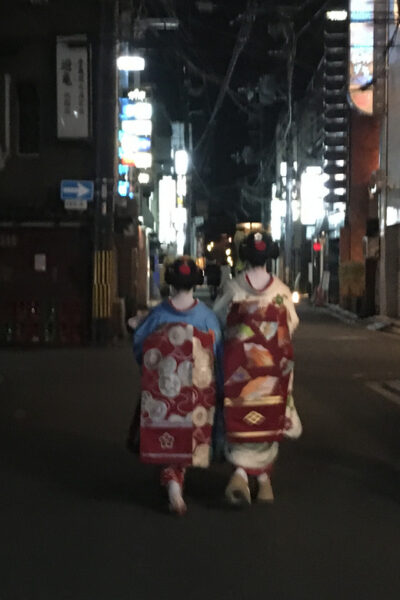
Best of Kyoto: Gion, Geisha, Pagodas & Cobblestones
Read our review →

Kyoto Night Foodie Tour in Gion (9+ dishes + 6 Sake tastings)
Read our review →
Kyoto Gion Geisha District Walking Tour – The Stories of Geisha
Read our review →
Kyoto Gion: 2-Hour Geisha Culture & History Walking Tour
Read our review →Browse the lists this tour appears in