
REVIEW · KYOTO TEA CEREMONY EXPERIENCES
Kyoto: Newly Opened Tea Ceremony – Sanjo Chasuian
Kyoto’s Sanjo Chasuian tea ceremony gives you more than a cup of matcha. In one calm hour, you learn why the host turns a bowl, how each utensil matters, and what the low crawl-in doorway means before making tea yourself. It is a useful introduction for first-time visitors, not a ceremony you merely watch from the sidelines.
I like the two-bowl format: the first serving lets you observe the host’s careful movements, while the second shows how much concentration goes into your own whisking. I also like the seasonal wagashi, made by a Kyoto confectioner with more than a century of history.
The main consideration is the strict timing. Entry is allowed only from five minutes before the start, and the door is locked once the session begins. You’ll also need to sit in a traditional tea-room setting, although chairs are available, and the experience is not suitable for wheelchair users.
In This Review
- Key Points at a Glance
- A Calm Introduction to Kyoto Tea Culture
- Entering Through the Nijiriguchi
- The First Bowl: Watch the Host’s Movements
- The Second Bowl: Make Your Own Matcha
- Why the One-Hour Length Works
- Location Near Karasuma Oike Station
- Group Size, Seating, and Language
- Optional Uchikake Experience
- Is $31 Good Value?
- Who Will Enjoy Sanjo Chasuian Most?
- Final Verdict: Book It for a Hands-On First Taste
- FAQ
- Where is Sanjo Chasuian located?
- How long does the tea ceremony last?
- How much does the experience cost?
- How many bowls of matcha are included?
- Is the matcha-making hands-on?
- Is a Japanese sweet included?
- Is the experience conducted in English?
- What should I bring?
- Can children or wheelchair users join?
Key Points at a Glance
- Two servings of matcha: One bowl is prepared by the host, and the second is whisked by you or your companion.
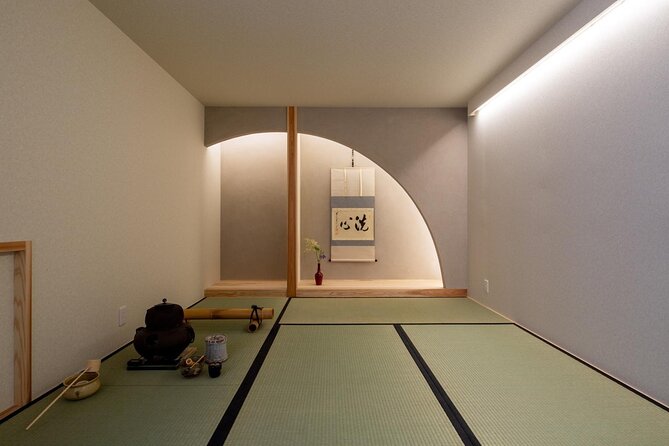
- A real nijiriguchi: You enter through the low crawl-in doorway, a small but meaningful part of the tea-room design.
- Seasonal Kyoto wagashi: A traditional sweet from a confectioner with more than 100 years of history accompanies the tea.
- English instruction: Hosts such as Yuko and Reina explain the customs, history, and movements in clear English.
- Central Kyoto location: The facility is about a five-minute walk from Subway Karasuma Oike Station.
- Small shared group: The Shared Plan allows up to 10 participants, so you learn with other international visitors.
A Calm Introduction to Kyoto Tea Culture
The Japanese tea ceremony, or chanoyu, is not simply a demonstration of how to make matcha. It is a carefully shaped meeting in which the host prepares tea, presents food, handles utensils, and creates a quiet setting for the person receiving it.
Sanjo Chasuian explains this idea before the formal movements begin. That preparation matters. Without it, the ceremony can look like a series of graceful but mysterious gestures. With the background, you can follow the rhythm and see how respect, cleanliness, attention, and seasonality fit together.
The session is designed for international visitors, with all guidance in English. Hosts named in the experience feedback include Yuko, Reina, and Renna. The strongest part of the teaching is its mix of explanation and practice. You learn the meaning first, then watch it happen, then try a piece of it yourself.
That approach suits a first visit to Japan. You do not need prior knowledge of tea ceremony etiquette, and you are encouraged to ask questions during the explanatory portion. Once the ceremony begins, the room becomes quieter, allowing you to watch without constant conversation.
More tea ceremonies in Kyoto:
- Kyoto: Tea Ceremony in a Traditional Tea House in Kiyomizu
★ 4.9 · 3,519 reviews - Kyoto: Tea Ceremony Ju-An at Jotokuji Temple
★ 4.9 · 3,207 reviews - Kyoto: 45-Minute Tea Ceremony Lesson Experience
★ 4.3 · 2,378 reviews
Entering Through the Nijiriguchi
One of the most distinctive details here is the nijiriguchi, the low entrance found in traditional tea rooms. Its name is often connected with the idea of entering by crouching or crawling, and the design makes you lower yourself before entering the room.
This is not just a quirky photo opportunity. The small doorway changes your posture and your mood. You leave the ordinary street outside and enter a room where status and daily distractions are meant to be set aside. Even if the modern facility is easy to reach, the doorway gives the experience a physical link to older tea-room customs.
You should expect to remove or adjust your footwear as needed and wear socks. Socks are specifically required, so pack a pair even if you are wearing sandals during a summer day in Kyoto.
Chairs are available for people who prefer them, which helps if sitting on the floor is difficult. Still, the experience is not suitable for wheelchair users, and the low entrance may be uncomfortable for anyone with limited mobility. If that could affect your visit, ask before booking rather than assuming the chair option solves every access issue.
The First Bowl: Watch the Host’s Movements
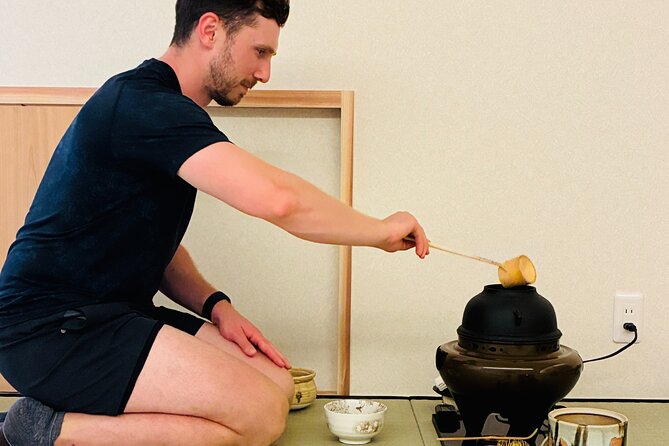
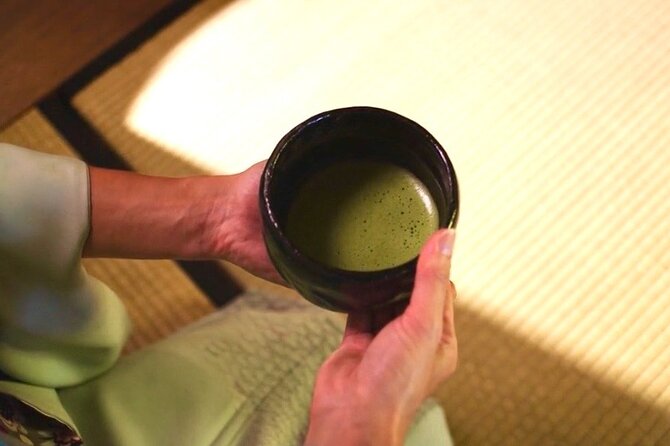
After the introduction, the host prepares a bowl of matcha for you. This is the moment to slow down and watch details that are easy to miss in a quick cultural demonstration.
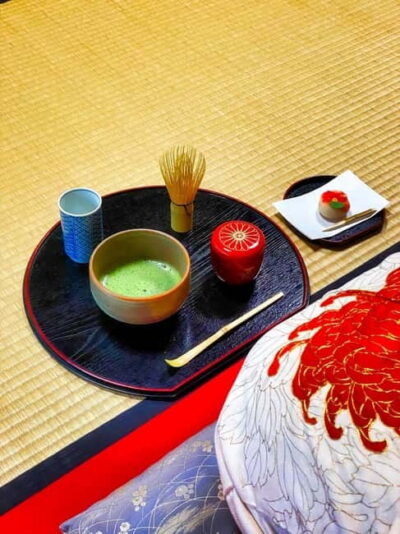
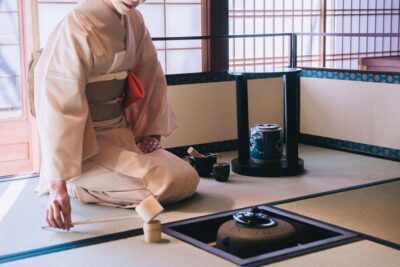
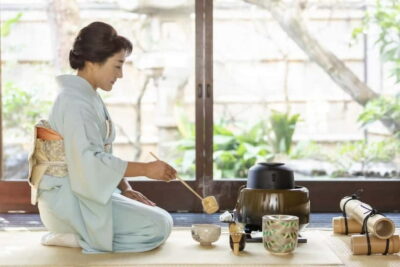
The host’s movements are deliberate. The tea bowl, bamboo whisk, scoop, and other items are handled with care. The order of actions is part of the experience, and the quiet makes the process feel more like a practiced form of hospitality than a cooking lesson.
You’ll receive a seasonal Japanese sweet with the tea. In Japanese tea practice, the sweet balances the bitterness of matcha, and it also brings a visual sense of the season into the room. The wagashi included here comes from a Kyoto confectioner with more than 100 years of history, giving this small course a stronger local connection than a packaged snack.
The matcha itself is prepared with hot water and whisked into a frothy drink. Its flavor can be grassy, savory, and bitter, especially if you are used to sweetened tea. Eating the wagashi before drinking helps soften the bitterness and gives you a better feel for the traditional pairing.
You are not expected to understand every gesture at once. The host explains the background beforehand, so during the actual preparation you can simply observe. That balance is one reason this short session works well: it has enough instruction to make the quiet meaningful, but not so much information that the ceremony becomes a lecture.
The Second Bowl: Make Your Own Matcha
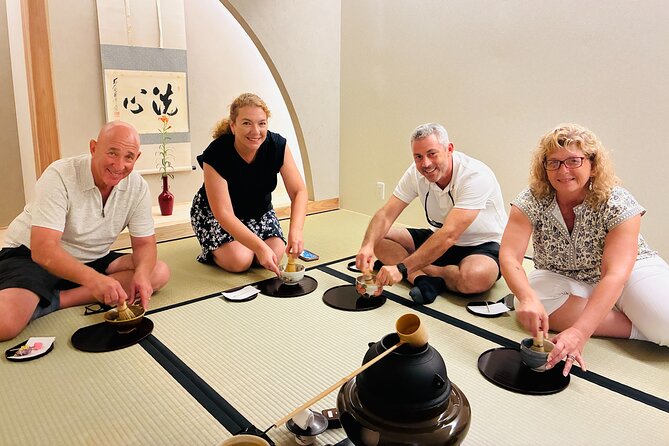
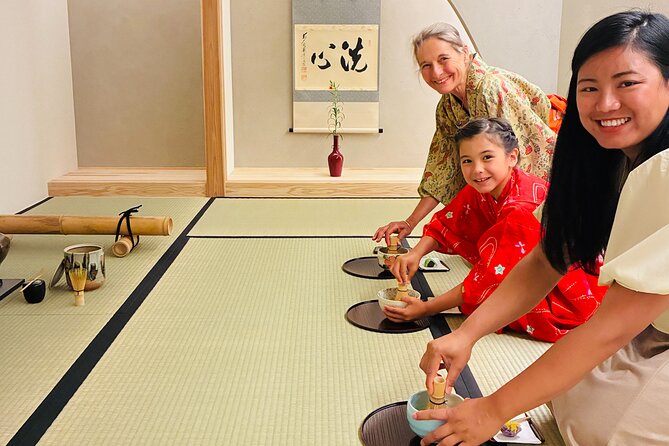
The hands-on portion is the practical heart of the hour. You choose a tea bowl, add matcha and hot water with guidance, and whisk it yourself. Depending on your booking, you can make the second bowl yourself or prepare it with a companion.
Whisking looks simple until you try it. You need a quick, controlled motion with the bamboo chasen, and it takes focus to create the right texture without splashing. The host demonstrates the technique, then watches and helps as you work.
This part is valuable because it strips away any illusion that the ceremony is effortless. The host may make the process look like an elegant dance, but your own bowl shows the skill behind those smooth movements. Your tea does not need to be perfect. The point is to take part, notice the method, and understand the care involved.
The hosts also take photographs and videos while you prepare the matcha. That is a useful touch, especially because you may not want to interrupt the quiet session by handling your phone. Ask about this at the start if you want a particular photo or short video, but keep the focus on the activity rather than treating it as a photo stop.
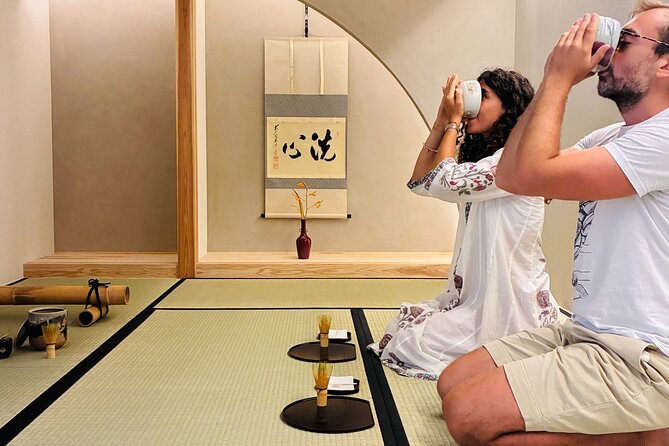
You then drink the matcha you made. It may taste different from the host’s bowl because your whisking technique, water amount, and foam will vary. That contrast makes the second serving more than a repeat. It lets you compare watching with doing.
A completely different side of Kyoto:
- PERFECT KYOTO 1-Day Bus Tour
★ 5.0 · 13,518 reviews - Kyoto: Fushimi Inari, Kinkakuji, Bamboo Grove 1 Day Bus Tour
★ 4.8 · 4,316 reviews - Kyoto Geisha Walking Tour: Gion District & Hidden Gems
★ 4.7 · 3,273 reviews - Kyoto: Gion Magical Night Walking Tour with Geisha Trivia
★ 4.9 · 2,393 reviews
Why the One-Hour Length Works
One hour is enough time to provide structure without taking a large part of your Kyoto day. You receive an introduction, watch the host prepare tea, enjoy the sweet and matcha, make your own bowl, and have room for explanations and questions.
I would schedule it early in a Kyoto visit. The activity gives you useful context for matcha, wagashi, tea bowls, and Japanese hospitality before you encounter them elsewhere. It can also be a welcome pause after several crowded sights, since the experience is built around stillness rather than movement.
Several people have found it a good break from a packed Japan schedule. That is exactly how I would use it. Put it between sightseeing plans, before dinner, or during a slower afternoon rather than squeezing it into a frantic transfer between distant attractions.
The strict start time requires planning. You may enter only from five minutes before the session, and even one minute of lateness means you cannot join and will not receive a refund. Karasuma Oike Station makes arrival simple, but you still need to allow time to find the building and the large Sanjo Chasuian logo plate.
Location Near Karasuma Oike Station
The facility is about a five-minute walk from Subway Karasuma Oike Station, placing it in a convenient part of central Kyoto. You arrange your own way to the venue, as hotel pickup and transfers are not included.
At the address, look for a large plate showing the Sanjo Chasuian logo and name. Open the door, and staff will be waiting to welcome you. This is a small but useful instruction because the experience takes place inside a dedicated facility rather than at a major temple gate or obvious sightseeing landmark.
The central location makes it easy to combine with other Kyoto plans. One booking note places it not far from Nijo Castle, although you should allow extra time if you are walking from another attraction. The station access is the more reliable planning point.
The venue also offers sake tasting experiences, and matcha, tea bowls, and selected tea items are available to buy. Shopping is optional, and the experience does not require a purchase. If you want to take home a bowl or tea set, you can browse after the ceremony rather than building extra shopping time into the hour.
Group Size, Seating, and Language
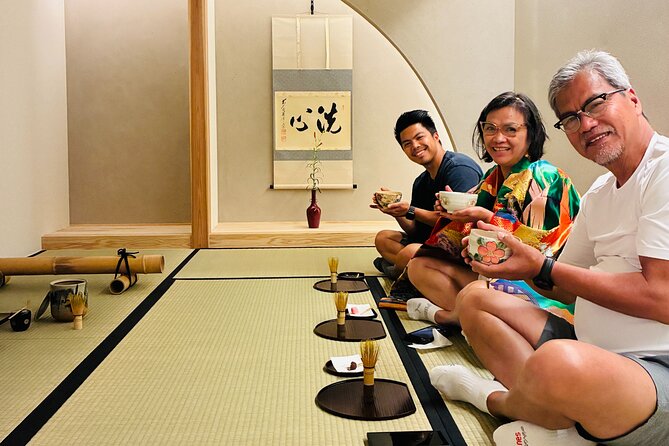
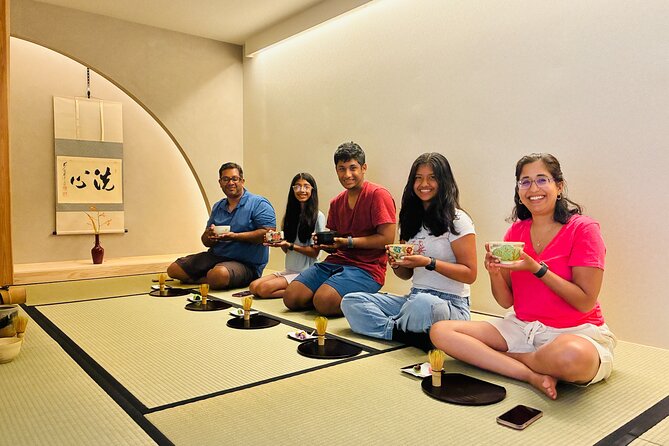
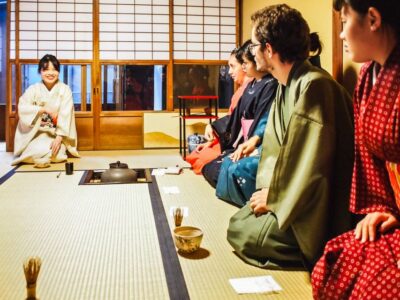
The Shared Plan is a group session with up to 10 participants. That is small enough for personal instruction while still giving the activity a social element. You will not have the room entirely to yourself, and the pace may depend on how many people are attending.
A shared session is a good fit for solo visitors and couples who like learning alongside others. It may be less suitable if you want complete privacy, need a custom pace, or are traveling with very young children. Children under 5 and people who require an interpreter must book the Private Plan. If they book the Shared Plan by mistake, participation and refunds are not possible.
The instruction is in English. Most of the available feedback praises the hosts for clear explanations and patient answers. One person found an English pronunciation somewhat difficult to follow, so you should allow for minor differences in accent. The session remains usable for English speakers, but if you need an interpreter, choose the private option as required by the facility.
The no-children-under-6 rule is worth noting. The activity calls for quiet attention, and the host may lock the door once the session starts. Families should not assume that a short one-hour duration makes it suitable for small children.
Optional Uchikake Experience
Sanjo Chasuian does not offer standard kimono rental or dressing services. You can, however, ask about an optional uchikake, a coat-style kimono experience, for ¥1,500 including tax.
This option costs extra and cannot be reserved in advance. Quantities are limited, so you should ask staff on the day if you are interested. It is not part of the tea ceremony itself, and you should not book this activity expecting a full kimono dressing service.
The arrangement is best treated as an added visual touch, not the reason to choose the experience. The tea lesson, two bowls of matcha, wagashi, and nijiriguchi are included in the main price.
Is $31 Good Value?
At $31 per person, this is a reasonable price for a one-hour cultural activity in central Kyoto. The value comes from the combination of an English explanation, a host-prepared bowl, a hands-on bowl, seasonal wagashi, a traditional room feature, and a small group capped at 10 people.
A cheaper tea stop may give you matcha and a sweet, but it may not explain the ceremony or let you whisk your own bowl. A longer formal ceremony might offer more ritual detail, but it could also demand more time and etiquette from first-time visitors.
The two servings make the price easier to justify. You are not paying only to watch someone else prepare tea. You receive instruction, participate, and taste the difference between the host’s technique and your own.
The experience originally offered a grand opening discount through September 15. Since that date may have passed, check the current rate before booking rather than counting on the discount. The reservation terms allow cancellation up to 24 hours before the start for a full refund, and a reserve-now, pay-later option is available.
Who Will Enjoy Sanjo Chasuian Most?
I would recommend this for first-time visitors who want a clear introduction to Japanese tea ceremony without committing half a day. It also suits couples, solo visitors, and small groups who enjoy quiet cultural activities with a hands-on element.
You will get the most from it if you are curious about why the ceremony is performed in a certain way. The hosts explain the purpose behind the movements, so this is better suited to people who want cultural context rather than only a costumed photo.
It is also a good match for anyone needing a calm hour during a busy Kyoto itinerary. The atmosphere asks you to put your phone away for a while, watch carefully, and work at a slower pace.
I would choose another plan if you need wheelchair access, cannot wear socks, want a full kimono rental, or are traveling with children under 6. I would also avoid booking the shared session if you require an interpreter or need a private setting.
Final Verdict: Book It for a Hands-On First Taste
Sanjo Chasuian is a strong choice for a concise, English-language introduction to Kyoto tea ceremony. Its best features are practical: two bowls of matcha, clear teaching, seasonal wagashi, a real nijiriguchi, and a central location near Karasuma Oike Station.
Book it if you want to understand the ceremony before trying it, and if you like the idea of making your own matcha rather than only watching. The one-hour format and $31 price make it easy to fit into a sightseeing day.
Skip it if you want a long formal ceremony, full kimono dressing, or wheelchair access. For most first-time visitors who can arrive on time and sit comfortably, this offers a thoughtful, well-paced way to meet one of Kyoto’s most recognizable traditions.
FAQ
Where is Sanjo Chasuian located?
Sanjo Chasuian is in Kyoto on Honshu, about a five-minute walk from Subway Karasuma Oike Station.
How long does the tea ceremony last?
The experience lasts one hour. Starting times vary, so check availability when you book.
How much does the experience cost?
The listed price is $31 per person. A grand opening discount was offered through September 15, so check the current price before booking.
How many bowls of matcha are included?
Two bowls are included. The host prepares the first, and you make the second yourself or with a companion.
Is the matcha-making hands-on?
Yes. You choose a tea bowl and whisk your own matcha after watching the host demonstrate the process.
Is a Japanese sweet included?
Yes. A seasonal traditional Japanese confectionery from a Kyoto sweet shop with more than 100 years of history is included.
Is the experience conducted in English?
Yes. The guidance and explanations are provided in English.
What should I bring?
You must bring or wear socks. Hotel transfers and transport to the venue are not included.
Can children or wheelchair users join?
The experience is not suitable for wheelchair users or children under 6. Children under 5 and people who need an interpreter must book the Private Plan rather than the Shared Plan.
Recently added around Kyoto
- Higashiyama | Kyoto: Sakura Season Private Rickshaw Tour★ 5.0 · 3 reviews
- Kyoto Kimono Rental CHAMATSU|Kimono/Yukata Rental FamilyPlan★ 5.0 · 3 reviews
- Kyoto: Half-Day Private Guided Tour to the Old Town of Gion★ 4.4 · 3 reviews
- Nara Private Customizable Half Day Tour★ 5.0 · 3 reviews
- Kansai Region Hiking Adventure in Nara Kobe Kyoto and More★ 5.0 · 3 reviews
- Full Day Nara Deer, Temple, Shrine, Activities & Tea Ceremony★ 5.0 · 3 reviews
- Nara: Essential Private Tour with Deer Park and Temples★ 5.0 · 3 reviews
- Hiking Tour for Sacred Sites in Kyoto with a Guide★ 5.0 · 3 reviews
Kyoto Tea Ceremony Experiences, compared.
Tea Ceremony in a Traditional Tea House in Kiyomizu
Read our review →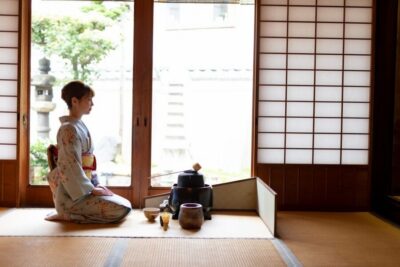
Tea Ceremony in 100-year-old Kyo-Machiya Townhouse
Read our review →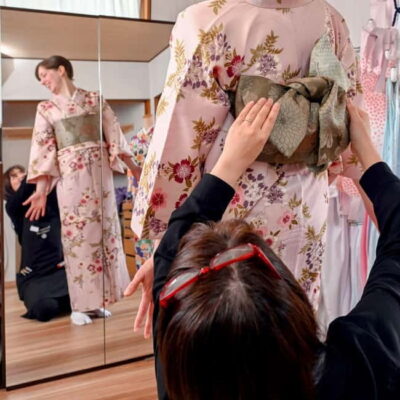
Browse the lists this tour appears in