
REVIEW · GION GEISHA DISTRICT TOURS
Kyoto: Kiyomizudera, Sanjusangendo, Kodaiji, and Gion.
Kyoto’s traditional core comes together neatly on this seven-hour walking tour. You begin with the calm precision of Sanjusangendo’s 1,001 Kannon statues, then move through Kiyomizudera, the old lanes of Higashiyama, Kodaiji’s bamboo grove, Yasaka Shrine, and Gion.
I like the route for two clear reasons: it links major temples with the streets between them, and the group is capped at 10 people. The Spanish-speaking guide, Manuel, has also earned praise for making the day personal, explaining sites clearly, and helping with a good place to eat.
The main catch is stamina. You will walk for much of the day, use buses, climb temple approaches, and cover several busy sights in one stretch. If you prefer slow temple visits or quiet corners, this schedule may feel full.
In This Review
- Key points to know before booking
- Why this route captures old Kyoto well
- Sanjusangendo and its remarkable hall of statues
- Kiyomizudera and the famous wooden terrace
- Sannenzaka, Ninenzaka, and Yasaka Pagoda
- Kodaiji and its smaller bamboo forest
- Yasaka Shrine and the road into Gion
- What the seven-hour pace feels like
- Spanish guidance and the human side of the tour
- Is $86 a fair price?
- Who should book this Kyoto tour?
- Should you book it?
- FAQ
- Where does the tour begin?
- Where does the tour finish?
- How long does the experience last?
- What language is the live tour conducted in?
- Who is the named guide?
- How large is the group?
- Which temples and shrines are included?
- Does the tour visit Gion?
- Should I bring money for transport?
- What should I wear and bring?
Key points to know before booking
- 1,001 Kannon statues: Sanjusangendo gives you an unusual first stop, with a long wooden hall filled with rows of Buddhist figures.
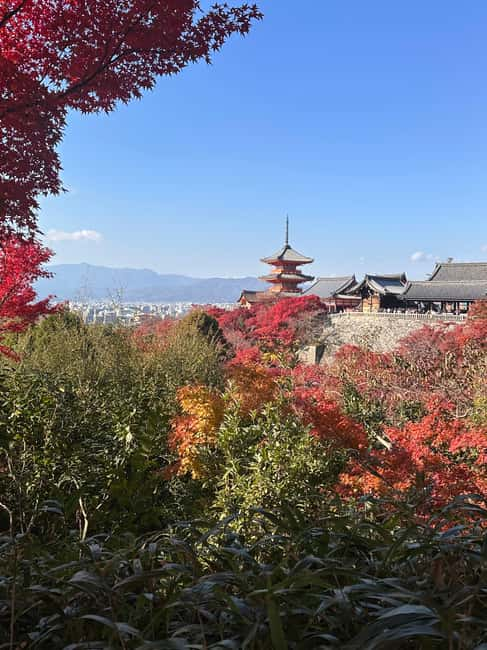
- Kiyomizudera terrace views: The temple’s famous wooden platform provides one of the tour’s broadest views over Kyoto.
- Higashiyama on foot: Sannenzaka and Ninenzaka bring you through old-style lanes lined with wooden buildings and craft shops.
- Kodaiji’s bamboo grove: This smaller temple visit adds a peaceful green section to a day otherwise centered on major landmarks.
- Spanish and small-group format: The tour runs in Spanish for no more than 10 participants, with Manuel named as the guide.
- Bring 230 yen: Local buses are part of the route, so carry cash or use an ICOCA, SUICA, or PASMO card.
Why this route captures old Kyoto well
Many Kyoto sightseeing days force you to choose between famous temples and traditional streets. This tour does both. It stays in and around Higashiyama, one of the city’s most rewarding areas for seeing temples, shrines, preserved lanes, and the old entertainment district in one connected outing.
The route also has a sensible visual rhythm. Sanjusangendo begins indoors with a remarkable line of statues. Kiyomizudera shifts the focus to height and views. The walk down through Sannenzaka and Ninenzaka brings you into Kyoto’s shop-lined old town, while Kodaiji offers gardens and bamboo before the final move into Yasaka Shrine and Gion.
That variety matters. You are not looking at six similar temple compounds in a row. Each stop gives you a different way to understand Kyoto: religious art, hillside architecture, neighborhood streets, family history, shrine customs, and geisha culture.
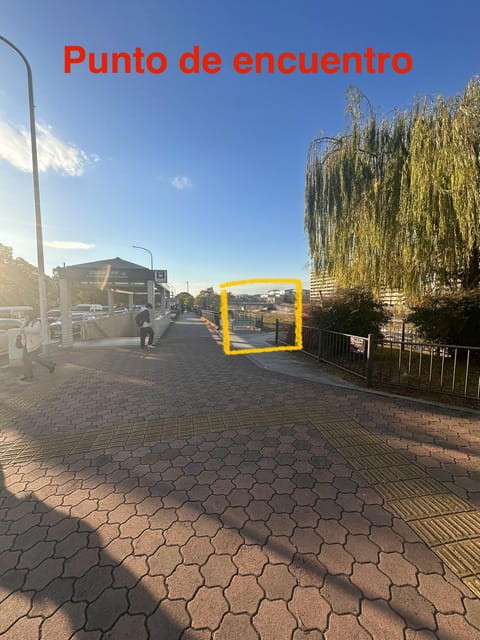
The meeting point is Shichijo Station, Exit 1, at 9:00 a.m. The tour finishes in Higashiyama rather than returning to the station, which is useful if you want to keep exploring Gion or the nearby shopping streets afterward.
More evenings in Gion:
- Kyoto Geisha Walking Tour: Gion District & Hidden Gems
★ 4.7 · 3,273 reviews - Kyoto: Gion Magical Night Walking Tour with Geisha Trivia
★ 4.9 · 2,393 reviews - Kyoto: Gion Geisha District Walking Tour – Stories of Geisha
★ 4.7 · 2,187 reviews
Sanjusangendo and its remarkable hall of statues
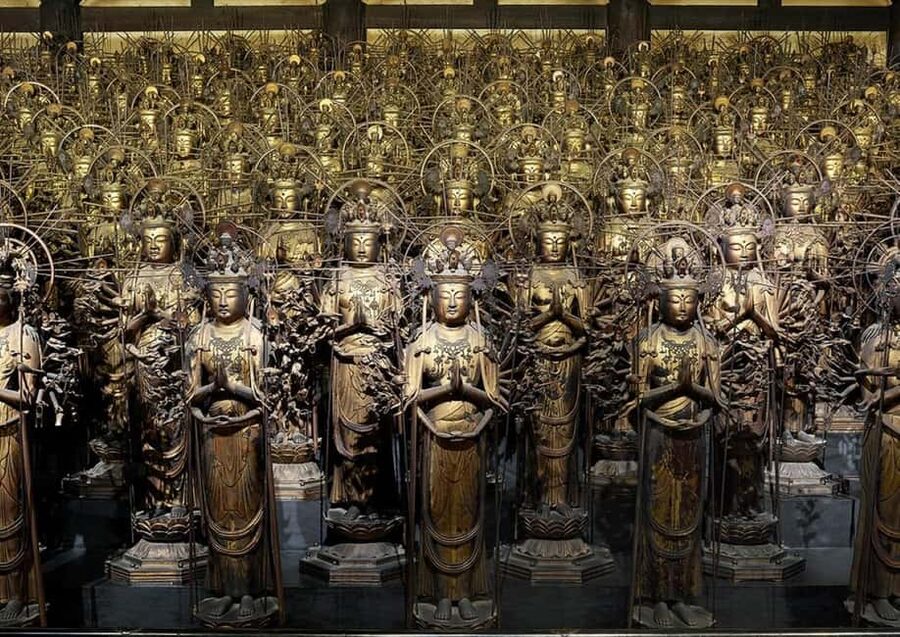
Sanjusangendo is a strong place to begin because it feels different from Kyoto’s better-known outdoor temples. Its main hall stretches about 120 meters and contains 1,001 statues of Kannon, the Buddhist goddess of mercy.
The scale is the first thing you notice. Instead of one central image competing for attention, the hall presents row after row of figures. A guide can help you understand what you are seeing and why the arrangement matters, rather than leaving you with only the impression of a long wooden building full of statues.
The planned hour here should give you enough time for an explanation and a proper look. Still, remember that this is a guided visit, not a private meditation session. Your pace will be shaped by the group and the rest of the day.
I like placing Sanjusangendo first. You see one of Kyoto’s great indoor religious spaces before the streets grow more crowded and before your legs have done much work. It is also a useful counterpoint to Kiyomizudera, where the setting and outward views take center stage.
Kiyomizudera and the famous wooden terrace
From Sanjusangendo, the group walks for about 20 minutes before reaching Kiyomizudera. This short transfer is important: you are not simply being moved from one ticketed sight to another. You begin to see how Kyoto’s temple district fits together at street level.
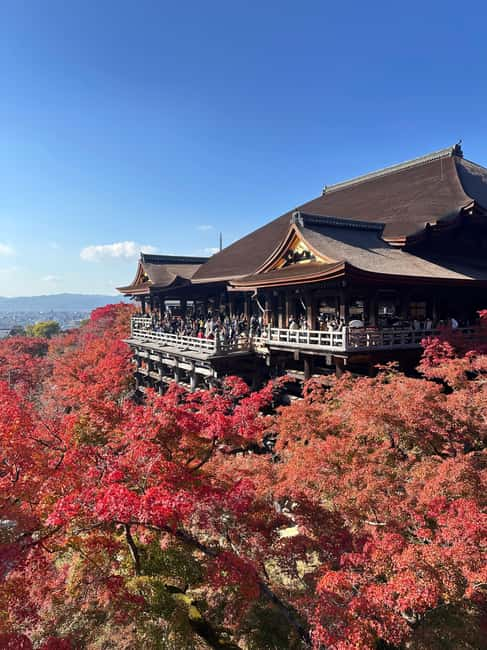
Kiyomizudera is famous for its large wooden terrace built out over the hillside. From here, you can look across Kyoto and see how the low city spreads below the surrounding hills. The terrace is the visual high point of the tour, but the temple grounds are also worth your attention.
Expect an approach with a noticeable uphill feel and plenty of people around the main route. Comfortable shoes are not a minor suggestion here. The day includes temple steps, paved lanes, and uneven sections through the Higashiyama area, so light clothing and supportive footwear will make the experience much easier.
The one-hour guided visit gives the site structure. Without a guide, it is easy to take a few pictures from the terrace and move on. With an explanation, you can pay attention to the temple’s position on the hillside, its wooden construction, and the religious setting around it.
The busiest moments are likely to be around the main terrace and approach. If you want a quiet Kiyomizudera experience, this tour is not designed around solitude. Its strength is that you see the temple as part of a larger Kyoto route.
Sannenzaka, Ninenzaka, and Yasaka Pagoda
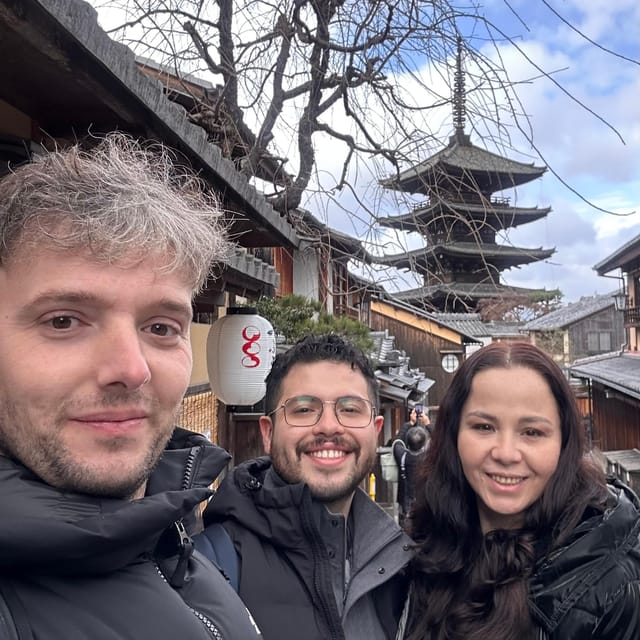
After Kiyomizudera, the tour spends about an hour sightseeing in Higashiyama. This is where the day shifts from major religious buildings to the old streets that make Kyoto feel distinctive.
Sannenzaka and Ninenzaka are cobbled lanes bordered by traditional wooden houses, small craft shops, and other old-style storefronts. They are attractive, but they are not museum pieces sealed away from modern life. You will find plenty of shopping and foot traffic, along with the preserved facades that make the area so photogenic.
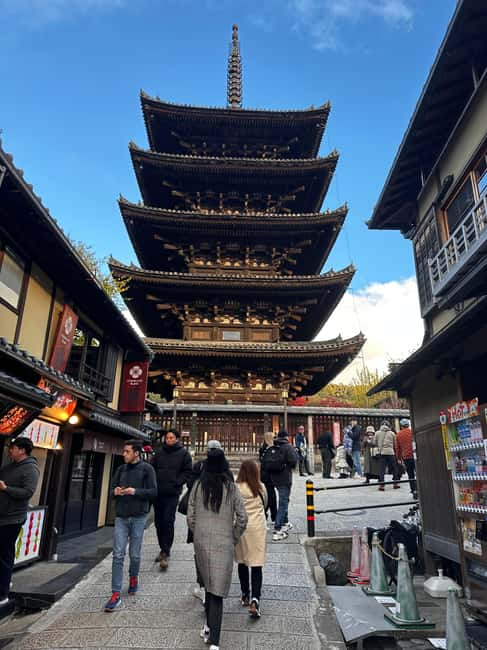
The walking route also brings you to Yasaka Pagoda, formally Hōkan-ji. Its tall profile rises among the traditional buildings, creating one of Kyoto’s most recognizable street scenes. The guided 30-minute visit here helps you place the pagoda in the neighborhood rather than treating it as a quick photo stop.
This section is ideal for slowing down your eyes, even if the timetable keeps your feet moving. Look up at tiled roofs, notice the narrow lanes, and watch how the pagoda changes shape as you approach it. You may find the area crowded, especially around the most photographed corners, but the setting remains one of the clearest examples of old Kyoto architecture on this route.
Keep your hands free if you can. You may want to browse shops, but the group will continue on schedule, and the route includes more walking ahead.
A completely different side of Kyoto:
- PERFECT KYOTO 1-Day Bus Tour
★ 5.0 · 13,518 reviews - Kyoto: Fushimi Inari, Kinkakuji, Bamboo Grove 1 Day Bus Tour
★ 4.8 · 4,316 reviews - Kyoto: Tea Ceremony in a Traditional Tea House in Kiyomizu
★ 4.9 · 3,519 reviews - Kyoto: Tea Ceremony Ju-An at Jotokuji Temple
★ 4.9 · 3,207 reviews
Kodaiji and its smaller bamboo forest
Kodaiji adds a different mood. The temple was dedicated to the Toyotomi family, one of the important families in Japanese history, and its grounds include a bamboo forest.
This is not presented as a separate Arashiyama-style bamboo excursion. It is a smaller bamboo section within the temple grounds, and that distinction matters. If your main goal is a long bamboo walk, this tour does not replace a dedicated Arashiyama visit. If you want a compact bamboo setting woven into a temple visit, Kodaiji fits the bill.
The scheduled guided visit lasts about an hour. That gives you time to understand the temple’s connection to the Toyotomi family and to appreciate the contrast between formal temple spaces and the tall bamboo stems nearby.
Kodaiji is one of the reasons I like this tour’s mix. The day could easily become a parade of famous viewpoints, but this stop brings the focus back to grounds, atmosphere, and quieter details. Depending on the pace of the group, you may have time to pause for photographs, but do not expect an open-ended garden visit.
The route is already physically demanding by this point. Kodaiji comes after Kiyomizudera and several streets on foot, so the temple may be more rewarding if you treat it as a change of pace rather than another sight to rush through.
Yasaka Shrine and the road into Gion
Yasaka Shrine follows Kodaiji, with about 30 minutes set aside for a guided visit. The shrine is a natural bridge between Higashiyama’s temple district and Gion’s historic streets.
Here, the guide can explain the difference between a Buddhist temple and a Shinto shrine, a useful bit of context when several religious sites appear in one day. The visit is fairly short, so you should expect an introduction to the shrine and its setting rather than a long, unhurried exploration of every feature.
The final hour takes place in Gion. This is Kyoto’s best-known geisha district, with traditional streets and buildings connected to the city’s performance and entertainment culture. The tour focuses on the culture and history of geisha, helping you understand the district beyond the common hope of spotting someone in formal dress.
That distinction is important. Gion is a living neighborhood, not a stage set. You should walk quietly, avoid blocking narrow streets, and respect privacy if you happen to see a geisha or maiko. The tour’s value here is the explanation of the district’s role and customs, not a promise of a sighting.
Finishing in Gion gives you flexibility. You can stay in Higashiyama for more food and shopping, or make your own way elsewhere. Since the tour does not finish back at Shichijo Station, plan your onward route before the day begins.
What the seven-hour pace feels like
The listed schedule adds up to a full day: one hour at Sanjusangendo, a 20-minute walk, one hour at Kiyomizudera, an hour in Higashiyama, 30 minutes at Yasaka Pagoda, one hour at Kodaiji, 30 minutes at Yasaka Shrine, and one hour in Gion.
Those blocks do not include every transfer, bus ride, pause, or meal break. In practice, you should think of this as a full seven-hour outing with very little spare time. The route is not a relaxed wander where you decide when to leave each temple.
Buses are used during the day. Bring 230 yen in cash, or use an ICOCA, SUICA, or PASMO card. The information provided does not specify exactly which bus segments are used, so having the fare ready keeps the group moving and avoids a small but needless scramble.
A baby carriage is not allowed, another sign that the route is built for narrow lanes, temple steps, and a compact walking group. Families with older children may find the sights engaging, but the length and walking deserve an honest look before booking.
The small-group limit of 10 is a real advantage. It should make it easier to hear explanations and ask questions than on a large coach outing. It does not guarantee a private tour, though one booking had only its own party, creating a private-tour feel. Your group may be larger.
Spanish guidance and the human side of the tour
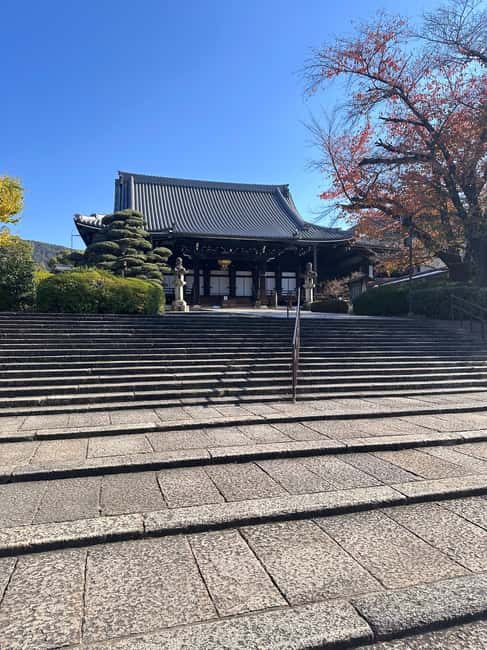
The live guide language is Spanish. If you want detailed explanations without relying on a translation app, that is the clearest reason to choose this outing over a general English-language tour.
Manuel is the named guide, and the strongest praise connected to the experience focuses on his manner. He is described as attentive, clear, and good at making the day personal. One family member booked the experience for relatives and later heard that Manuel kept the tour engaging and helped them learn a great deal.
One particularly useful detail is that Manuel took a group to a good place to eat. Treat that as a possible local recommendation or stop, not as a meal included in the $86 price, since meals are not listed among the inclusions.
The available feedback is uniformly positive, with five five-star ratings. That is encouraging, especially because the comments repeatedly point to personalization, clear explanations, and Manuel’s care. It is also a small sample, so I would use it as a helpful signal rather than a guarantee that every group will have the same private feel.
Is $86 a fair price?
At $86 per person, this tour is priced as a guided cultural day rather than a simple walk around free streets. You are paying for seven hours of planning, a Spanish-speaking guide, a small group capped at 10, and a route that connects several major Kyoto sights without requiring you to work out every transfer yourself.
The value is strongest if you want context. Sanjusangendo’s statues, Kiyomizudera’s terrace, Kodaiji, Yasaka Shrine, and Gion can all be visited independently, but you would need to organize transport, opening times, directions, and explanations on your own.
Check exactly which admission tickets are included before you pay. The supplied information identifies the sites and the price but does not state the ticket policy. Also confirm meal arrangements, since food is not listed as included.
I would call the price reasonable for someone who values Spanish guidance and an efficient route. It is less compelling if you already know Kyoto well, prefer to linger, or are happy using a guidebook and public transport independently.
Who should book this Kyoto tour?
I would choose this tour if you have one day for traditional Kyoto and want a clear route through the city’s best-known Higashiyama sights. It suits first-time visitors, Spanish-speaking couples and families, and anyone who wants cultural explanation rather than a string of photo stops.
It also works well if you want to finish near Gion with the rest of the day still open. The small group and the possibility of a personal style from Manuel add to its appeal.
I would look elsewhere if your priority is Arashiyama’s larger bamboo grove, Fushimi Inari, or a slower, photography-first schedule. Those places are not part of this route. I would also think twice if long walks and temple steps are difficult for you.
Should you book it?
Book this experience if you want traditional Kyoto in one focused day, with Spanish explanations and a manageable group size. The route is broad but coherent, and it covers the temples, lanes, shrine, and geisha district that many visitors hope to see.
Skip it if you want quiet temples, a dedicated food tour, or a deep visit to one neighborhood. For most first-time Spanish-speaking visitors, though, the combination of Sanjusangendo, Kiyomizudera, Higashiyama, Kodaiji, and Gion offers strong value at $86, provided you are ready for a full day on your feet.
FAQ
Where does the tour begin?
It begins at Shichijo Station, Exit 1, at 9:00 a.m.
Where does the tour finish?
The tour finishes in Kyoto’s Higashiyama Ward.
How long does the experience last?
The tour lasts seven hours.
What language is the live tour conducted in?
The live guide language is Spanish.
Who is the named guide?
Manuel is the named guide for this experience.
How large is the group?
The group is limited to 10 participants.
Which temples and shrines are included?
The route includes Sanjusangendo, Kiyomizudera, Kodaiji, and Yasaka Shrine.
Does the tour visit Gion?
Yes. The final part of the tour visits Gion and covers geisha culture and history.
Should I bring money for transport?
Yes. Buses are used during the tour, so bring 230 yen in cash or use an ICOCA, SUICA, or PASMO transport card.
What should I wear and bring?
Wear comfortable clothes and shoes. Baby carriages are not allowed.
Recently added around Kyoto
- Higashiyama | Kyoto: Sakura Season Private Rickshaw Tour★ 5.0 · 3 reviews
- Kyoto Kimono Rental CHAMATSU|Kimono/Yukata Rental FamilyPlan★ 5.0 · 3 reviews
- Kyoto: Half-Day Private Guided Tour to the Old Town of Gion★ 4.4 · 3 reviews
- Nara Private Customizable Half Day Tour★ 5.0 · 3 reviews
- Kansai Region Hiking Adventure in Nara Kobe Kyoto and More★ 5.0 · 3 reviews
- Full Day Nara Deer, Temple, Shrine, Activities & Tea Ceremony★ 5.0 · 3 reviews
- Nara: Essential Private Tour with Deer Park and Temples★ 5.0 · 3 reviews
- Hiking Tour for Sacred Sites in Kyoto with a Guide★ 5.0 · 3 reviews
Gion Geisha District Tours, compared.

Kyoto Geisha Walking Tour: Gion District & Hidden Gems
Read our review →
Gion Magical Night Walking Tour with Geisha Trivia
Read our review →
Gion Geisha District Walking Tour – Stories of Geisha
Read our review →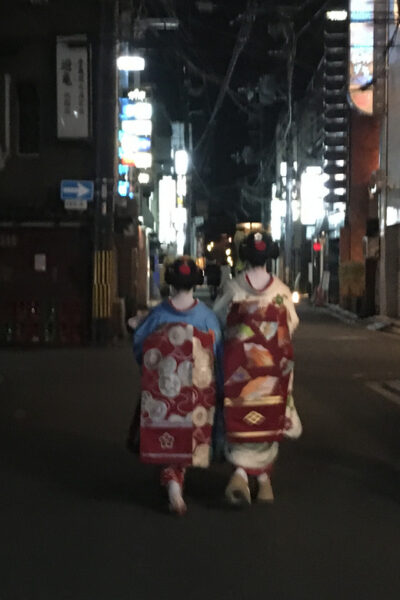
Best of Kyoto: Gion, Geisha, Pagodas & Cobblestones
Read our review →

Kyoto Night Foodie Tour in Gion (9+ dishes + 6 Sake tastings)
Read our review →
Kyoto Gion Geisha District Walking Tour – The Stories of Geisha
Read our review →
Kyoto Gion: 2-Hour Geisha Culture & History Walking Tour
Read our review →Browse the lists this tour appears in