
REVIEW · HISTORICAL TOURS
Kyoto Heritage Run – Venture through historical Kyoto landmarks
Kyoto’s best sights are spread across the city, and this 10-kilometer morning run links many of them in one well-planned route. You begin at Nijo Castle and finish near Gion, seeing the Imperial Palace, Heian Shrine, Yasaka Shrine, Maruyama Park, and the Kamogawa River along the way.
I like the mix of exercise and sightseeing, especially the chance to reach quieter corners that a standard walking tour may skip. I also like the small group size, capped at 12, and the added fitness guidance from Francis and Areo. The main catch is simple: you need a moderate fitness level and must be comfortable jogging for about three hours, with roughly 10 kilometers covered.
In This Review
- Key points to know before you book
- Why this Kyoto run works so well
- Meeting at Nijojo-mae Station at 8:30 am
- Jogging through the Imperial Palace Park
- Crossing the Kamo River
- Heian Shrine and its huge torii gate
- Following the Shirakawa River into Gion
- Maruyama Park and Yasaka Shrine
- Finishing near Gion Shijo and the Kamogawa
- What $97.55 gets you
- Who should book this experience
- Weather, cancellation, and practical planning
- My verdict: a smart Kyoto tour for active sightseers
- FAQ
- Where does the Kyoto Heritage Run start?
- Where does the tour end?
- How long is the activity?
- Which Kyoto sights are included?
- What fitness level do I need?
- Is water or lunch included?
- What happens if the weather is poor?
Key points to know before you book
- A 10-kilometer route through central Kyoto: You cover several major sights in one morning instead of piecing them together by train or on foot.
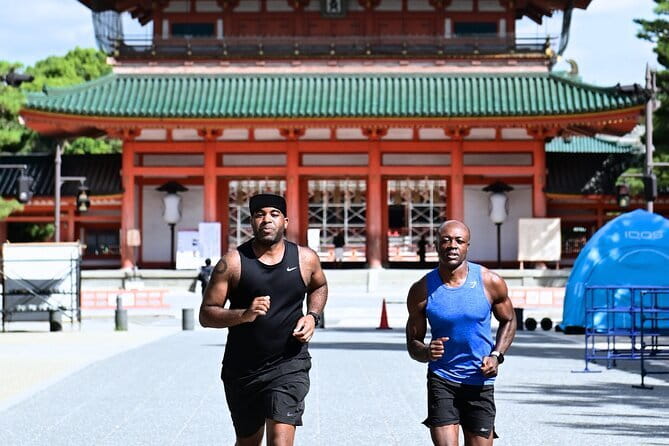
- Fitness and sightseeing share equal billing: The outing includes a warm-up, Tabata-style exercises, jogging, and a closing stretch.
- Start near Nijo Castle at 8:30 am: The early departure helps you see historic areas before the day gets busier.
- A small group of no more than 12 people: This gives the guides a better chance to manage the pace and point out details along the route.
- The finish is not at the starting point: You begin at Nijojo-mae Station and finish near Gion Shijo Station or the eastern bank of the Kamogawa.
- Good value for active sightseers: At $97.55 per person, the price covers the guides and all fees, but not water or food.
Why this Kyoto run works so well
Most Kyoto sightseeing days involve a great deal of walking, waiting, and checking train maps. This tour takes a different approach. You move at a steady jog between famous sites, then pause for short explanations, views, and exercises.
I like that the route has a clear sense of place. It begins near Nijo Castle, the former home of the Tokugawa shoguns, then moves east through the Imperial Palace area and across the Kamo River. From there, you reach Heian Shrine, follow the Shirakawa River, pass through Gion, and finish near Yasaka Shrine and Maruyama Park.
That route gives you a useful first look at Kyoto’s central and eastern districts. You will not have time for full visits inside every site, but you gain a broad picture of how the city fits together. For a first or second full day in Kyoto, that can be a smart way to get oriented.
The pace is the important question. This is not a walking tour with a few optional stretches. The published route covers about 10 kilometers, and the activity includes Tabata-style exercises. You should be able to jog for a sustained period and handle a moderate level of exertion.
More history walks in Kyoto:
- World Heritage Kyoto & Nara Uji Authentic Matcha Experience
★ 5.0 · 1,573 reviews - Kyoto Gion: 2-Hour Geisha Culture & History Walking Tour
★ 5.0 · 1,186 reviews - Kyoto Gion Historical Walking Tour
★ 5.0 · 188 reviews
Meeting at Nijojo-mae Station at 8:30 am
The tour begins at Nijojo-mae Station, opposite Nijo Castle. That is a practical meeting point, since the castle is one of Kyoto’s clearest landmarks and the subway station is easy to identify.
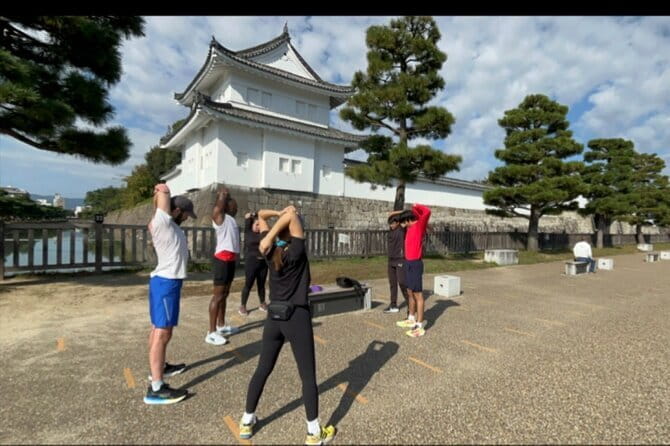
You will meet the guides for a warm-up before setting off. This is useful rather than decorative. A few minutes of preparation gives you a chance to loosen up and settle into the morning pace, especially if you are adjusting to jet lag or have spent the previous day walking around Kyoto.
The guides also give a short introduction to Kyoto’s past and its role as Japan’s imperial capital. That context helps the sights make more sense as you run through them. You are not simply collecting photo stops. You are following the city’s old political and cultural center from west to east.
Nijo Castle itself is viewed from outside. That means you should not book this activity expecting a castle interior visit, palace rooms, or a long stop at the grounds. The value here is the location and the historical starting point, not a full castle tour.
Jogging through the Imperial Palace Park
The first major section leads east toward the Kyoto Imperial Palace. The palace served as the residence of Japan’s emperors during the period when Kyoto was the capital, so this part of the route gives the run a strong connection to the city’s royal past.
The Imperial Palace grounds also help break up the urban feel of the route. You can expect to see lesser-known corners of the park as the guides lead you along, rather than simply stopping at the most familiar entrance. These smaller details are one of the better reasons to go with a local guide instead of following a basic map.
Tabata-style exercises take place in this area. Tabata training uses short bursts of intense activity followed by brief recovery periods, so the exercises add a real workout component. The guide-led format should help you understand what to do, but you still need to know your own limits.
You can think of this stop as the tour’s main fitness section. If you prefer sightseeing at a slow pace, the exercises may feel like an interruption. If you enjoy combining a workout with your morning plans, they make the experience more distinctive than a regular city jog.
Crossing the Kamo River
After leaving the Imperial Palace area, the route heads toward the Kamogawa, also called the Kamo River. The river has played a role in Kyoto’s conflicts and daily life for centuries, and crossing it gives you a natural change of scenery.
This is one of the pleasant parts of the route because the river corridor opens up the view. You can catch your breath, watch the city shift around you, and continue east toward the older streets and shrines.
The run does not treat the river as a long formal stop. It is part of the connecting route, so keep your expectations realistic. You will see it and cross it, but the main purpose is to carry you from the palace district toward Heian Shrine and the Higashiyama area.
A completely different side of Kyoto:
- PERFECT KYOTO 1-Day Bus Tour
★ 5.0 · 13,518 reviews - Kyoto: Fushimi Inari, Kinkakuji, Bamboo Grove 1 Day Bus Tour
★ 4.8 · 4,316 reviews - Kyoto: Tea Ceremony in a Traditional Tea House in Kiyomizu
★ 4.9 · 3,519 reviews - Kyoto Geisha Walking Tour: Gion District & Hidden Gems
★ 4.7 · 3,273 reviews
Heian Shrine and its huge torii gate
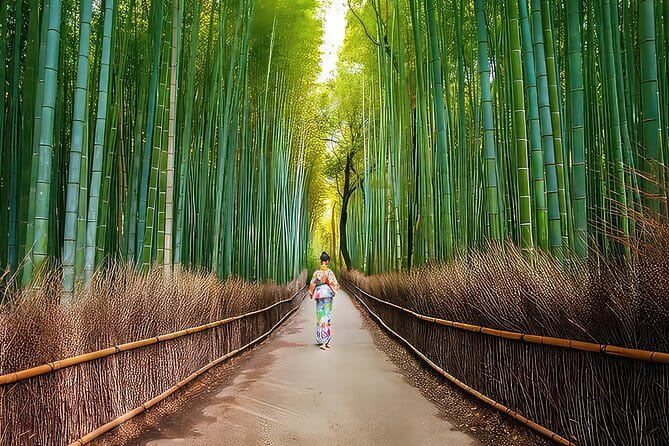
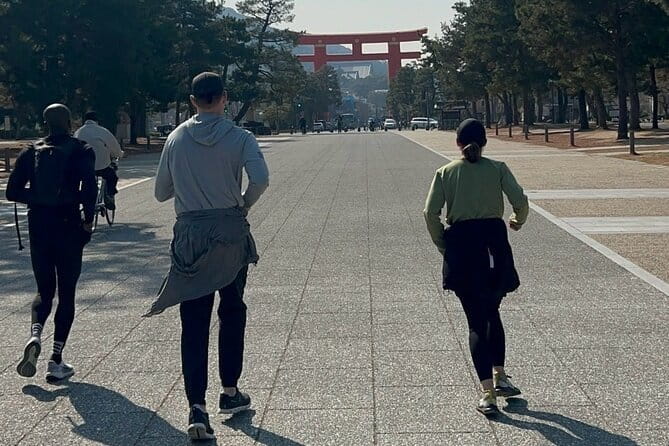
Heian Shrine is one of Kyoto’s most recognizable landmarks. Its large torii gate announces the approach from a distance, and the shrine’s broad approach gives the route a sense of scale after the narrower river paths.
The tour includes a brief stop at the shrine. That is enough to take in the architecture and hear why the site matters, but not enough for an extended visit to every part of the complex. If Heian Shrine is a top priority for you, plan a separate visit later.
The large torii is especially memorable from a running route because you experience it as part of the city rather than as an isolated destination. You pass through the gate and continue along the Shirakawa River, where the mood changes again.
Following the Shirakawa River into Gion
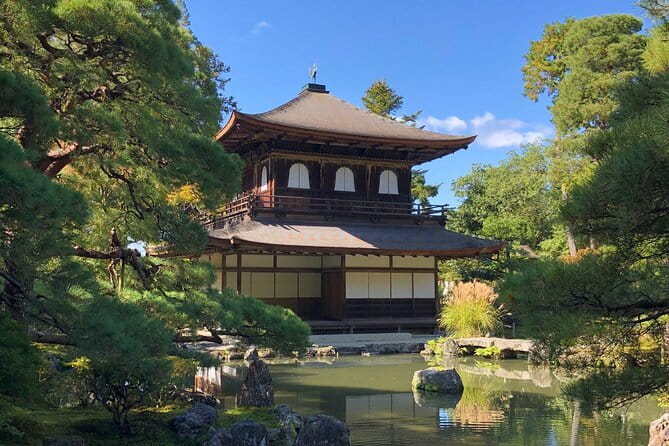
The Shirakawa River section is among the most atmospheric parts of the run. The route follows water lined with weeping willows and small stone bridges, offering a quieter setting than the main roads.
This is also where the tour feels most connected to old Kyoto. The narrow river corridor leads toward Gion, the district associated with geisha arts and traditional entertainment. You may find that the running pace gives you a better sense of the district’s layout than a quick taxi ride or a single photo stop.
Still, this is an active outing, not a dedicated Gion culture tour. The guides can point out the area and you will pass through it, but there is no stated performance, tea ceremony, or extended explanation of geisha customs. Book it for the route and atmosphere, not for a full cultural program.
Maruyama Park and Yasaka Shrine
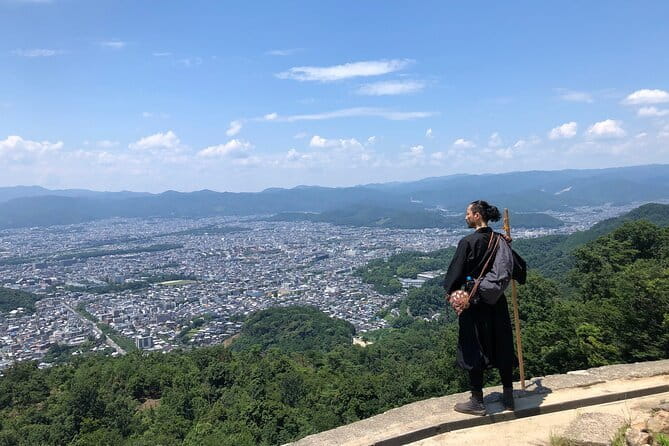
The route continues to Maruyama Park, one of Kyoto’s best-known green spaces, and Yasaka Shrine. These two sights work well together. The park gives you room to slow down, while the shrine adds another major piece of Kyoto’s religious and cultural identity.
Maruyama Park is a natural place to wind down after the longer running sections. Yasaka Shrine, at the park’s edge, is a fitting stop before the final stretch toward the river. You will see the major features of both places, though the three-hour schedule does not allow for a leisurely park visit or a detailed shrine tour.
I like this section because it shows Kyoto beyond its palace and imperial buildings. The route moves through public green space, a major shrine, older streets, and the Gion district. You get several different sides of the city in a single morning.
Finishing near Gion Shijo and the Kamogawa
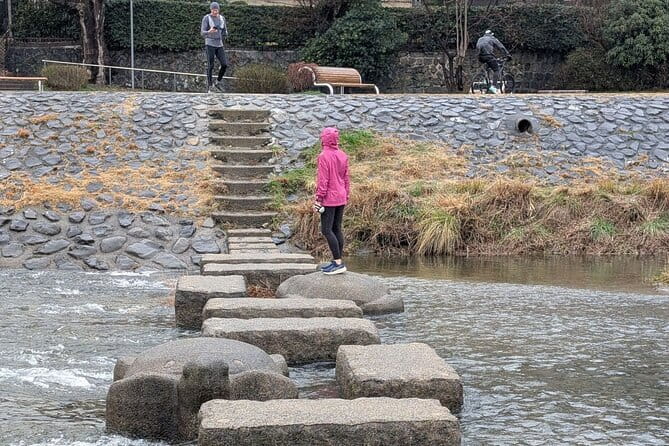
The official details describe the ending near Gion Shijo Station and the eastern bank of the Kamogawa. The finish is not the same as the starting point at Nijojo-mae Station, so plan your next step accordingly.
The last part includes stretching beside the river. That is a sensible finish after a 10-kilometer route and makes the activity feel like a complete workout rather than a jog that simply stops at the final sight.
Because the tour ends in the Gion Shijo area, you are well placed to continue sightseeing, find breakfast or lunch, or explore central Kyoto on your own. The activity does not include lunch or bottled water, so bring water with you and make a food plan before starting.
What $97.55 gets you
The price is $97.55 per person. That is more than you would pay for a self-guided jog, but you are paying for two types of guidance: a fitness professional and an experienced city guide.
The value is strongest if you want structure. You do not have to plan a 10-kilometer route, work out how to connect the Imperial Palace with Heian Shrine, or decide which riverside paths lead toward Gion. The guides handle the route while giving you historical context and directing the exercises.
The small maximum of 12 people also matters. A large running group can be awkward in narrow lanes and difficult to keep together. With no more than 12 people, the guides should have a better chance of keeping the group organized and adjusting the pace when needed.
The price does not include lunch or bottled water. That is not unusual, but it is important here because you are exercising. Bring your own water and do not assume you will receive refreshments along the way.
The activity is often booked about 18 days ahead. That suggests you should reserve before your Kyoto visit if the date matters to you, especially since the small group limit reduces capacity.
Who should book this experience
This is a strong choice for an active person who wants to see Kyoto quickly without spending another full day walking. It also suits couples, friends, and solo visitors who enjoy a social morning with a clear route and a bit of exertion.
I would especially consider it for your second full day in Kyoto. By then, you have likely adjusted to the city and can use the run to get your bearings in areas you may want to revisit later. One direct benefit is that you see several districts before the day’s crowds build.
The outing can also work for runners who want a memorable way to exercise while away from home. The historical stops keep it from feeling like a generic road run, and the river sections add variety.
You should think twice if you want slow photography, detailed shrine visits, or a relaxed walking pace. You also need a moderate fitness level. The tour is not described as a beginner walk, and the 10-kilometer distance is substantial even before adding warm-ups, Tabata exercises, and stops.
Service animals are allowed, and the meeting point is near public transportation. Confirmation is normally sent at booking, though bookings made within one day of departure are confirmed as soon as possible and depend on availability.
Weather, cancellation, and practical planning
The tour requires good weather. If poor weather causes cancellation, you are offered another date or a full refund.
You can cancel for a full refund up to 24 hours before the scheduled start time. Changes or cancellations made less than 24 hours before the start are not accepted for a refund, so check the local Kyoto time carefully.
Wear clothing suitable for jogging and exercises. The supplied details do not specify storage for bags or changing facilities, so arrive ready to run and keep your belongings manageable. Since the tour starts at 8:30 am and lasts about three hours, eat and hydrate before meeting the group.
Remember that the starting and ending points differ. Begin at Nijojo-mae Station by Nijo Castle, then expect to finish near Gion Shijo Station or the eastern bank of the Kamogawa. That is convenient for continuing your day, but it is not a return-to-start outing.
My verdict: a smart Kyoto tour for active sightseers
You should book the Kyoto Heritage Run if you want to cover a lot of central Kyoto in one morning and genuinely enjoy jogging. The route links Nijo Castle, the Imperial Palace, Heian Shrine, the Shirakawa River, Maruyama Park, Yasaka Shrine, Gion, and the Kamogawa in a way that feels purposeful rather than rushed.
I like the combination of local history, small-group guidance, hidden corners, and real exercise. Francis and Areo are named as guides, and the experience is designed to give you both route knowledge and fitness direction.
Skip it if you would rather linger inside each landmark or if 10 kilometers sounds like too much. For the right person, though, $97.55 buys more than a run. It buys a well-connected introduction to Kyoto, with the added benefit of starting your sightseeing day already energized.
FAQ
Where does the Kyoto Heritage Run start?
It starts at Nijojo-mae Station, opposite Nijo Castle, at 8:30 am.
Where does the tour end?
The tour ends near Gion Shijo Station, on the eastern bank of the Kamogawa. The end point is not the same as the starting point.
How long is the activity?
The experience lasts approximately three hours and covers about 10 kilometers.
Which Kyoto sights are included?
The route includes the Kyoto Imperial Palace area, Heian Shrine, Yasaka Shrine, Maruyama Park, Gion, and the Kamogawa River. You also pass Nijo Castle from outside and follow the Shirakawa River.
What fitness level do I need?
You should have a moderate physical fitness level and be comfortable jogging about 10 kilometers. The activity also includes a warm-up, Tabata-style exercises, and stretching.
Is water or lunch included?
No. Lunch and bottled water are not included. All fees and taxes are included.
What happens if the weather is poor?
If the activity is canceled because of poor weather, you will be offered a different date or a full refund. Free cancellation is available up to 24 hours before the start time.
Recently added around Kyoto
- Higashiyama | Kyoto: Sakura Season Private Rickshaw Tour★ 5.0 · 3 reviews
- Kyoto Kimono Rental CHAMATSU|Kimono/Yukata Rental FamilyPlan★ 5.0 · 3 reviews
- Kyoto: Half-Day Private Guided Tour to the Old Town of Gion★ 4.4 · 3 reviews
- Nara Private Customizable Half Day Tour★ 5.0 · 3 reviews
- Kansai Region Hiking Adventure in Nara Kobe Kyoto and More★ 5.0 · 3 reviews
- Full Day Nara Deer, Temple, Shrine, Activities & Tea Ceremony★ 5.0 · 3 reviews
- Nara: Essential Private Tour with Deer Park and Temples★ 5.0 · 3 reviews
- Hiking Tour for Sacred Sites in Kyoto with a Guide★ 5.0 · 3 reviews
Historical Tours, compared.
World Heritage Kyoto & Nara Uji Authentic Matcha Experience
Read our review →
Kyoto Gion: 2-Hour Geisha Culture & History Walking Tour
Read our review →
Nijo Castle World Heritage Guided Tour with Admission
Read our review →
Nara History Guided Half Day Bus Tour with Lunch
Read our review →
Browse the lists this tour appears in