
REVIEW · HISTORICAL TOURS
Kyoto: Private 2.5 Hour Historical Walking Tour
Kyoto’s past comes into focus on this walk from Yasaka Shrine to Kiyomizu-dera. Instead of rushing between famous sights, you learn how Shinto shrines, Buddhist temples, samurai rule, imperial power, and everyday customs fit together. The most memorable stop is Entoku-in, a quiet Zen temple with dry gardens, painted sliding doors, and traditional rooms.
I like the private format and the guide’s hand-drawn maps and pictures, which make difficult Japanese history much easier to follow. I also like the route itself: it links major sights with narrow lanes, Maruyama Park, Nene-no-michi, and a pagoda photo stop. The main consideration is cost at $80 per group of up to five, plus temple admission, and the walk includes hills, steps, and Kyoto crowds.
In This Review
- Key points
- Starting beneath Yasaka Shrine’s red gate
- Maruyama Park and Nene-no-michi
- The quiet rooms and dry gardens of Entoku-in
- Koshin-do and the Yasaka-no-to pagoda
- The final climb to Kiyomizu-dera
- Why the private format works well
- The history lesson is the real reason to book
- Timing, weather, and practical preparation
- Who will get the most from this walk
- Should you book the Yasaka Shrine to Kiyomizu-dera walk?
- FAQ
- Where does the tour meet?
- Where does the tour finish?
- How long does the tour last?
- What language is the tour conducted in?
- Is the tour private?
- Are temple admission fees included?
- What should I bring?
- Can I cancel for a full refund?
Key points
- A private walk for up to five people: You get a personal guide rather than a large group, with time for questions and photos.
- Entoku-in’s Zen gardens: This is the calmest part of the route, with dry gardens, sliding-door paintings, and traditional Japanese rooms.
- A useful introduction to shrine customs: Your guide explains how to worship at Yasaka Shrine and how Shinto and Buddhist sites differ.
- Yasaka-no-to pagoda from street level: The five-storied pagoda makes a fine photo stop, though you see it from outside.
- Kiyomizu-dera’s famous wooden stage: The walk ends with broad views, Buddhist statues, Koyasu Pagoda, and the pure-water stream.
- Strong teaching from local guides: Hisako is especially associated with illustrated explanations and careful answers, while Takayuki Ishii has also guided this route.
Starting beneath Yasaka Shrine’s red gate
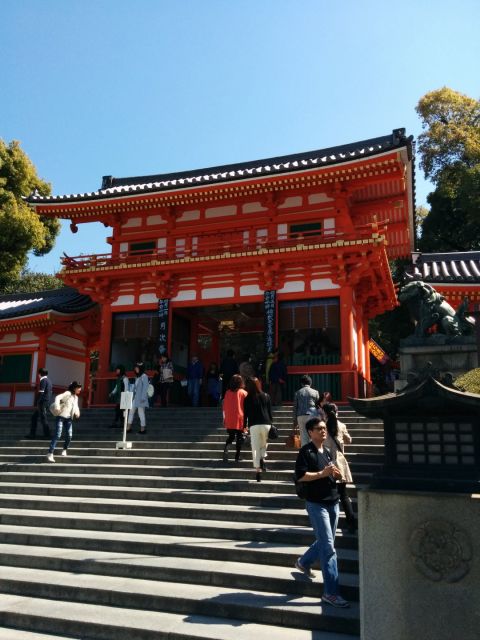
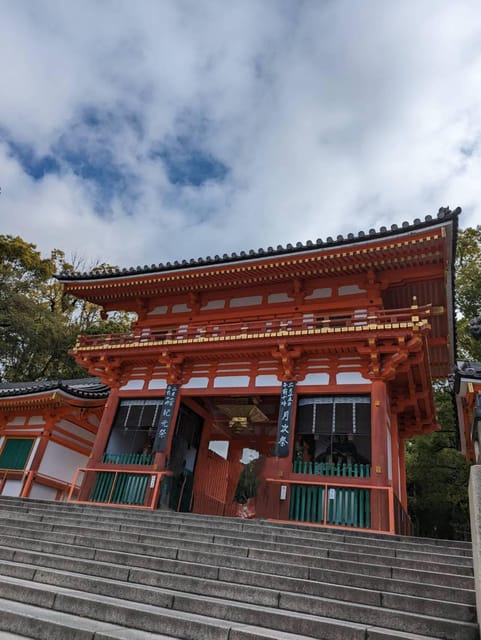
Meet your guide at the west gate, also called the red gate, of Yasaka Shrine. This is a sensible starting point because the shrine gives you an immediate lesson in Kyoto’s religious life and puts you close to the historic Gion area.
The nearest train stations are Gion Shijo on the Keihan Line and Kawaramachi on the Hankyu Line. From either one, walk east along Shijo Street, then climb the stone steps toward the gate. By bus, get off at Gion and look for the steps before the red gate.
Your guide begins with a map of Kyoto. That small detail matters. Kyoto can seem like a string of unrelated temples until you understand how the old city is arranged and why this eastern district became such an important place for worship, entertainment, and political memory.
At Yasaka Shrine, you learn basic Shinto etiquette. The guide explains how to approach the shrine and worship, rather than leaving you to copy the person in front of you. If this is your first shrine visit in Japan, that short explanation will help you feel more comfortable at other shrines later in your trip.
More history walks in Kyoto:
- World Heritage Kyoto & Nara Uji Authentic Matcha Experience
★ 5.0 · 1,573 reviews - Kyoto Gion: 2-Hour Geisha Culture & History Walking Tour
★ 5.0 · 1,186 reviews - Kyoto Gion Historical Walking Tour
★ 5.0 · 188 reviews
Maruyama Park and Nene-no-michi
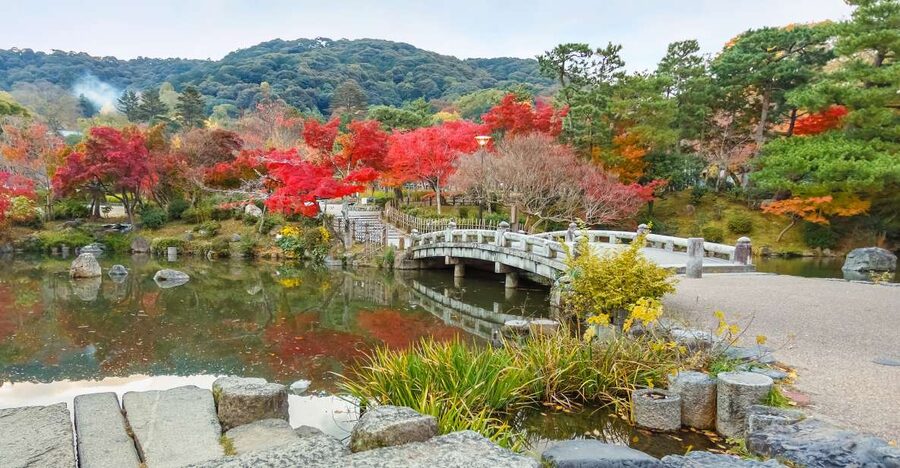
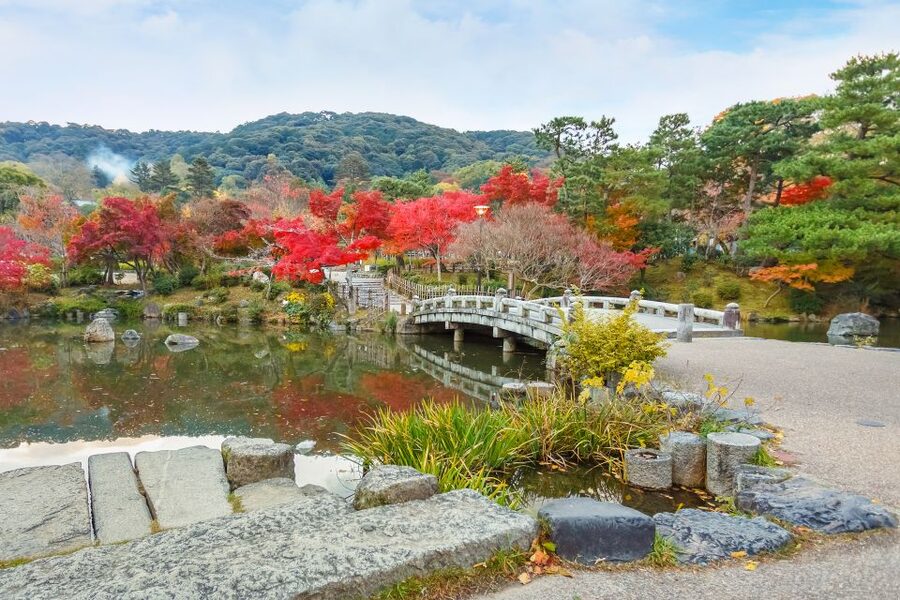
From Yasaka Shrine, the route takes about ten minutes on foot through Maruyama Park. The park sits directly beside the shrine and provides a pleasant change from the stone steps and streets around Gion.
The walk then reaches Nene-no-michi, a well-known lane named for Nene, the wife of Toyotomi Hideyoshi. Hideyoshi was one of the major political leaders of late 16th-century Japan, and Nene’s connection to this area gives the street more meaning than its attractive paving and old-style buildings might suggest.
This is where the guide can connect Kyoto’s physical setting with the people who shaped it. You are not simply looking at a pretty lane. You are hearing why a woman connected to one of Japan’s most powerful rulers is remembered here, and how nearby temples preserve that story.
The route is easy to follow, but it is not a flat city stroll. Kyoto’s temple districts use steps and sloping streets, and the walk continues through areas that can be busy. Wear shoes with good grip, and allow yourself time to pause for photographs.
The quiet rooms and dry gardens of Entoku-in
Entoku-in is the spiritual pause in the middle of the tour. This Zen temple is associated with Nene and is known for dry gardens, painted sliding doors, and traditional Japanese rooms.
The gardens use stones, gravel, and carefully arranged space rather than ponds or large beds of flowers. Your guide can help you look at the design instead of merely taking a picture and moving on. The quiet atmosphere is part of the visit, so this stop works best when you give yourself a moment to sit, look, and let the room become less strange.
The traditional rooms are another reason this temple is worth including. Japanese architecture can be difficult to read at first. The open rooms, sliding doors, and restrained decoration may seem simple, but a guide can point out how the design controls views and creates a sense of calm.
One guide, Hisako, is known for carrying her own folder of drawings, colored-pencil illustrations, and notes. Other guides on this experience have also used prepared visual material. It is a useful approach for explaining architecture, religious figures, and historical relationships without turning the visit into a speech full of unfamiliar names.
Plan on about 40 minutes here. That is long enough for an explanation and some quiet viewing, though the admission fee is not included in the tour price. If you already plan to visit many paid temples, add those entrance costs to your day’s budget.
A calligraphy experience has also been part of some visits, but it should not be treated as guaranteed. The advertised highlights are the Zen gardens, temple rooms, and paintings.
Koshin-do and the Yasaka-no-to pagoda
After another ten-minute walk, you reach Yasaka Koshin-do Temple. The stop lasts about 15 minutes and adds a smaller, more local-feeling religious site to a route otherwise built around famous Kyoto landmarks.
The guide explains the site and the customs connected with it. This is a good place to ask questions, especially if you want to understand the difference between a shrine and a temple. The tour focuses on both Shinto and Buddhism, and guides have also answered questions about where these religions began and how to recognize their places of worship.
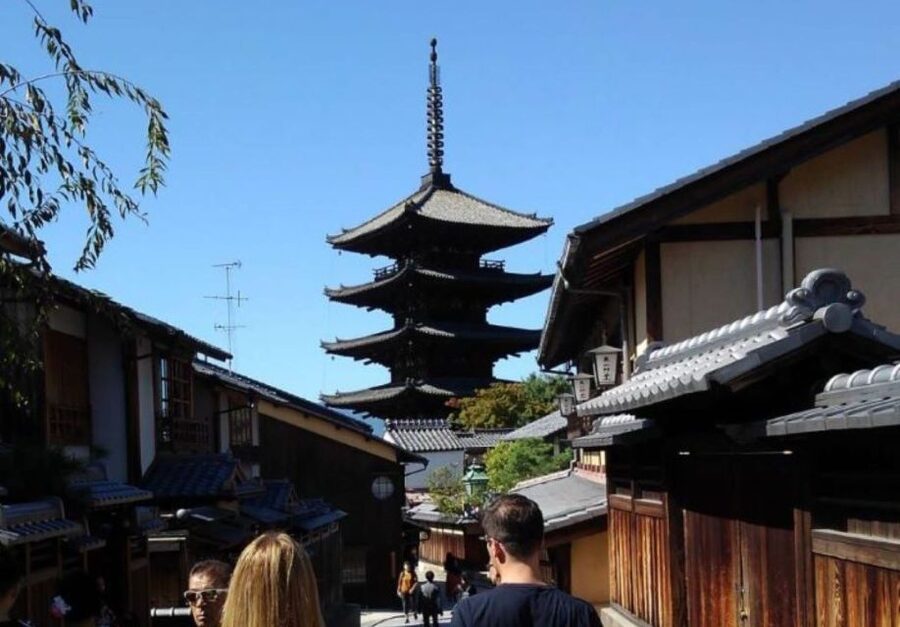
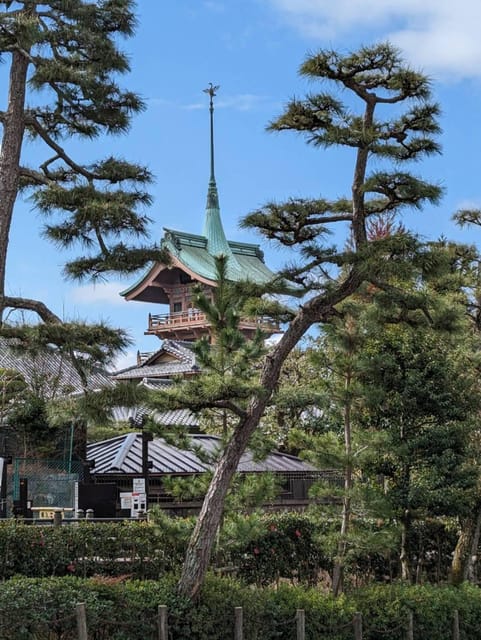
Nearby, Yasaka-no-to rises above the surrounding streets. This five-storied pagoda is one of the area’s most recognizable sights. You view it from outside rather than entering, so the stop is short, but the street nearby offers one of the route’s best photo opportunities.
That limitation is worth knowing before you book. If you want a pagoda interior visit or a long architectural study, this tour does not promise one. If you want a well-placed view and a clear explanation of what you are seeing, the stop does its job.
More walking tours in Kyoto:
- Kyoto Geisha Walking Tour: Gion District & Hidden Gems
★ 4.7 · 3,273 reviews - Kyoto: Gion Magical Night Walking Tour with Geisha Trivia
★ 4.9 · 2,393 reviews - Kyoto: Gion Geisha District Walking Tour – Stories of Geisha
★ 4.7 · 2,187 reviews - Night Walk in Gion: Kyoto’s Geisha District
★ 4.5 · 2,003 reviews
The final climb to Kiyomizu-dera
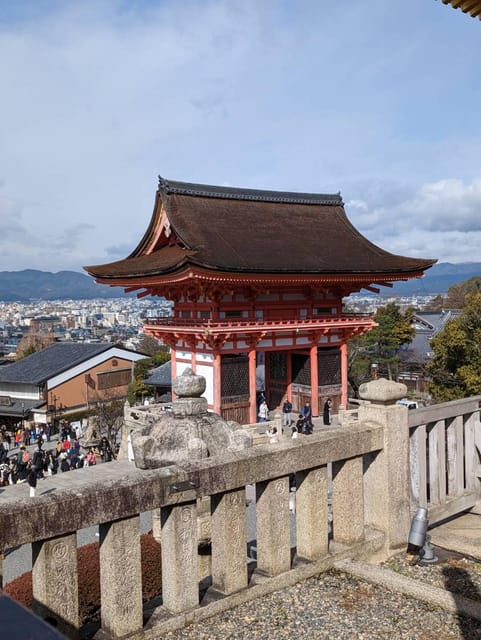
The walk to Kiyomizu-dera takes about 15 minutes. The approach can be busy, with visitors heading toward one of Kyoto’s most popular temples. The guide helps you keep moving while leaving room for pictures and short pauses.
Kiyomizu-dera was originally built in the 8th century, and the temple’s main object of worship is Kannon Bodhisattva. Inside the precincts, you can see Buddhist statues, including Kannon. Your guide explains the religious meaning behind the buildings instead of treating the temple as a backdrop for photographs.
The highlight is the wooden stage attached to the main hall. Its structure uses no nails, an impressive piece of traditional construction. From the stage, you look across the hills and toward Koyasu Pagoda, a three-storied pagoda associated with prayers for an easy birth.
The view is the payoff for the climb, but Kiyomizu-dera is also the busiest point on the route. Five million people visit the temple each year, so do not expect the quiet of Entoku-in here. The experience works best if you see the crowds as part of the place’s long religious importance, then focus your attention on the details your guide points out.
Kiyomizu means pure water. A stream from the mountain behind the temple has continued flowing, and many people line up to drink from it. Your guide explains the custom and the meaning of the water. The precincts also contain an iron stick and iron clogs donated to the temple. The stick is very heavy, and you may try to lift it.
The tour ends after you leave the main hall. Before saying goodbye, your guide explains Jishu Shrine, associated with matchmaking. This gives the final part of the visit a lighter, more personal subject after the earlier discussion of temples, gods, Buddhist figures, and Japanese history.
Why the private format works well
For $80 per group of up to five, the price is reasonable if you fill the group. A family of five pays about $16 per person before admissions, while one or two people pay considerably more per head. The value comes from the guide’s attention, not from included tickets or transportation.
A private tour lets you ask about the subjects that interest you. Past visitors have used the time to discuss religion, imperial family history, nobility, shogunates, gender roles, language, philosophy, and aesthetics. You should not expect all of those topics in a standard script, but the format allows the conversation to follow your questions.
The guides also adjust the pace. Some people need time for photographs or rest, while others want more explanation. Takayuki Ishii has been praised for a clear meeting sign, sensible timing, and a pace that covers the route without hurrying. Hisako and Hiroko have been noted for patient answers and illustrated folders.
English is the listed language. The experience is private, and the guide is included. Transportation to the meeting point, food, drinks, temple admission, and insurance are not included.
The history lesson is the real reason to book
This is not the best choice if you want to tick off as many sights as possible. It visits several important places, but the purpose is to explain what they mean and how they connect.
I would place it early in a Kyoto stay. Once you understand how to worship at a shrine, how to tell Buddhist temples from Shinto shrines, and why certain historical figures matter, later visits become easier to read. You may also receive suggestions for further walks or places to visit in Kyoto and, in some cases, other Japanese cities such as Kanazawa.
The teaching style is a strong point, but it may not suit every child or casual sightseer. Japanese political and religious history includes many unfamiliar names and periods. Families with older children or curious teenagers should benefit most, while younger children may lose interest during the longer explanations.
The route is also a better match for someone who enjoys questions than for someone who wants constant movement. The illustrated maps and drawings help, but this remains a history-focused walk.
Timing, weather, and practical preparation
The experience is advertised as lasting two to two and a half hours. The route itself lists about 40 minutes at Entoku-in, 15 minutes at Koshin-do, 10 minutes at the pagoda viewpoint, and 35 minutes at Kiyomizu-dera, with walking between each stop. The exact finish can vary with questions, photographs, and the pace of your private group.
Comfortable shoes are essential. You will walk between sites and use stone steps, especially around the shrine and temple districts. Summer can be humid, while winter weather can be cold. One guide has offered pocket hand warmers in snowy conditions, but you should still dress for the forecast.
You need to reach Yasaka Shrine on your own. The train and bus directions are straightforward, but give yourself enough time to find the red west gate. The tour finishes at Kiyomizu-dera, not back at Yasaka Shrine, which is useful if you plan to continue exploring the Higashiyama area afterward.
Free cancellation is available up to 24 hours before the start time, and you can reserve now and pay later. Check the available starting times when booking, since the schedule is not fixed in the details provided.
Who will get the most from this walk
Book this tour if you want a personal introduction to Kyoto’s religious sites and political past. It is especially suitable for first-time visitors, couples, families of up to five, and anyone who wants to ask questions without holding up a large group.
It is also a good fit for visitors who appreciate patient teaching. The strongest guide experiences have included clear English, hand-drawn visual aids, local perspective, and suggestions for exploring after the walk.
Think twice if you want extensive free time at every temple, a pagoda interior visit, included admission, or a completely flat route. The experience is short, focused, and educational. It gives you a useful framework for Kyoto, but it is not a full-day tour or a substitute for exploring the city on your own.
Should you book the Yasaka Shrine to Kiyomizu-dera walk?
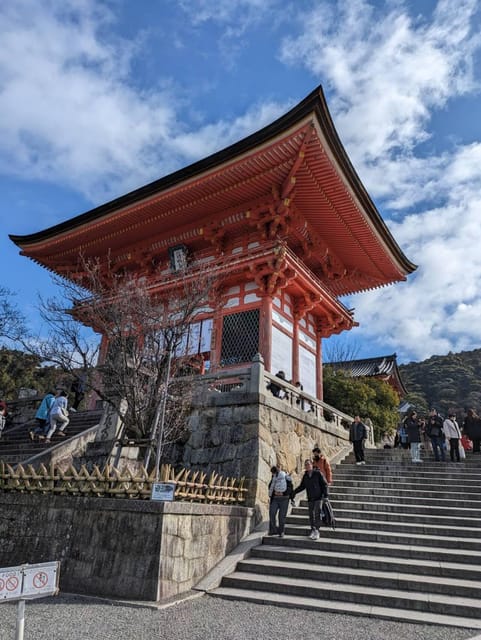
I would book it near the beginning of a Kyoto trip, especially if you are new to Japanese religious customs. Entoku-in’s gardens, the pagoda viewpoint, and Kiyomizu-dera’s wooden stage give you strong visual stops, while the private guide adds the context you are likely to miss alone.
The price is best for a group of three to five, and you should budget separately for temple admissions. If your priority is understanding what you are seeing, rather than collecting quick photographs, this is a thoughtful and well-paced way to begin Kyoto.
FAQ
Where does the tour meet?
The meeting point is the west gate, also called the red gate, of Yasaka Shrine.
Where does the tour finish?
The walk finishes at Kiyomizu-dera, after the visit to the main hall.
How long does the tour last?
The activity is advertised as lasting two hours, while the tour title and route details describe approximately two and a half hours. The timing can vary with walking, questions, and photographs.
What language is the tour conducted in?
The listed language is English.
Is the tour private?
Yes. It is a private group experience for up to five people.
Are temple admission fees included?
No. Admission fees to the temples are not included in the tour price.
What should I bring?
Bring comfortable shoes for walking between the sites and using stone steps.
Can I cancel for a full refund?
Yes. You can cancel up to 24 hours in advance for a full refund. The booking also offers a reserve-now, pay-later option.
Recently added around Kyoto
- Higashiyama | Kyoto: Sakura Season Private Rickshaw Tour★ 5.0 · 3 reviews
- Kyoto Kimono Rental CHAMATSU|Kimono/Yukata Rental FamilyPlan★ 5.0 · 3 reviews
- Kyoto: Half-Day Private Guided Tour to the Old Town of Gion★ 4.4 · 3 reviews
- Nara Private Customizable Half Day Tour★ 5.0 · 3 reviews
- Kansai Region Hiking Adventure in Nara Kobe Kyoto and More★ 5.0 · 3 reviews
- Full Day Nara Deer, Temple, Shrine, Activities & Tea Ceremony★ 5.0 · 3 reviews
- Nara: Essential Private Tour with Deer Park and Temples★ 5.0 · 3 reviews
- Hiking Tour for Sacred Sites in Kyoto with a Guide★ 5.0 · 3 reviews
Historical Tours, compared.
World Heritage Kyoto & Nara Uji Authentic Matcha Experience
Read our review →
Kyoto Gion: 2-Hour Geisha Culture & History Walking Tour
Read our review →
Nijo Castle World Heritage Guided Tour with Admission
Read our review →
Nara History Guided Half Day Bus Tour with Lunch
Read our review →
Private car tour Let’s uncover secrets of majestic Kyoto history
Read our review →Browse the lists this tour appears in