
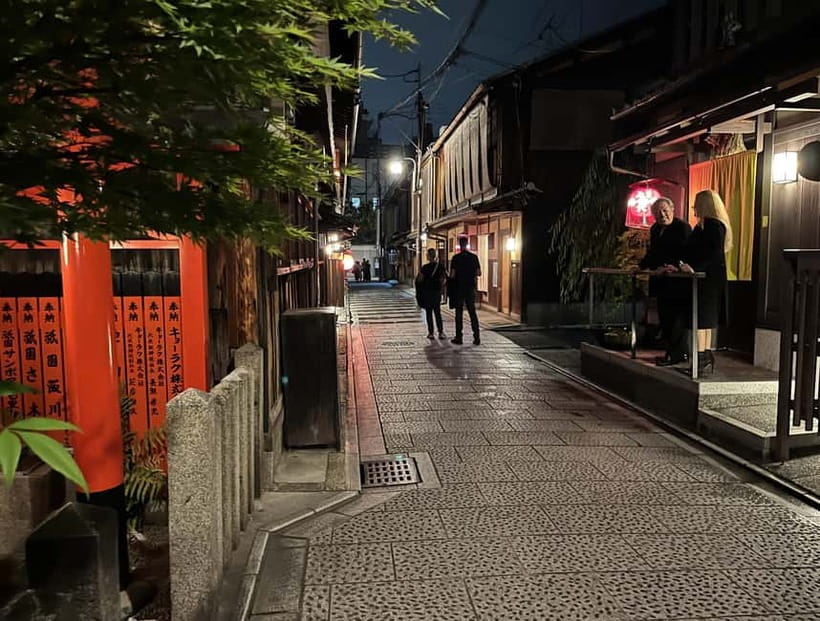
REVIEW · GION GEISHA DISTRICT TOURS
Kioto: Gion Tour, recorrido a pie (Español/Castellano)
Gion is far more than a pretty street lined with wooden houses. In two hours, this Spanish-language walk connects three traditional hanamachi districts with bridges, shrines, statues, theater buildings, and corners many visitors pass without understanding. Guides José and Juan are known for making room for questions and explaining the small details that bring Kyoto into focus.
I like the route’s personal scale, with no more than six participants, and I like that it includes Pontocho, Gion Kobu, and Gion Higashi rather than stopping at the busiest postcard streets. The main consideration is the 3.3-kilometer walk, and Hanamikoji-Dori is not included, so you should book this for context and conversation rather than a guaranteed Geisha sighting or a checklist of famous photo spots.
In This Review
- Key points at a glance
- What this Gion walk is really about
- Meeting beside Disney Kyoto Shijo-Kawaramachi
- Pontocho Alley and the Kamo River
- Gion Kobu and the preserved streets of Gion Shirakawa
- Tatsumi Jinja and Tatsumi Bridge
- Gion Higashi and the district’s changing character
- Yasaka Shrine and the origin of Gion
- How much value do you get for $35?
- Seasonal changes and physical comfort
- Who will enjoy this experience most?
- Should you book the Spanish Gion tour?
- FAQ
- How long does the Gion walking tour last?
- What language is the tour conducted in?
- How large is the group?
- How far does the tour walk?
- Which hanamachi districts are included?
- Is Hanamikoji-Dori included?
- Will I definitely see a Maiko or Geiko?
- Is Yasaka Shrine included?
- What should I bring?
- Where does the tour meet?
Key points at a glance
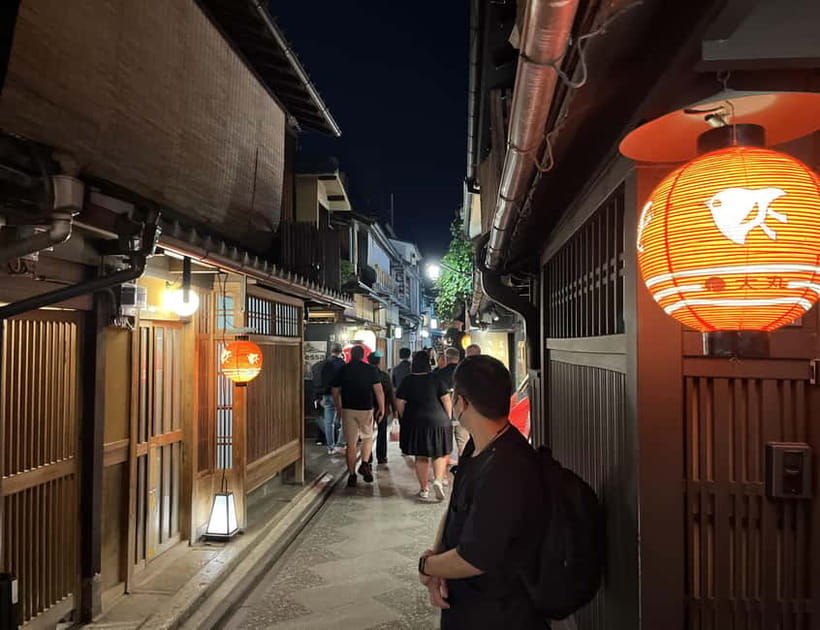
- Three hanamachi in two hours: Visit Pontocho, Gion Kobu, and Gion Higashi, three of Kyoto’s five traditional Geisha districts.
- Spanish-speaking local guidance: José and Juan are among the guides associated with this experience, with explanations shaped around your questions.
- A route beyond Hanamikoji-Dori: The walk focuses on less obvious historic places, including Pontocho Kaburenjo, Tatsumi Jinja, and Gion Shirakawa.
- 3.3 kilometers on foot: Wear comfortable shoes and prepare for sun, rain, and Kyoto’s changing weather.
- Yasaka Shrine and the Gion Festival: If time allows, the route reaches the shrine formerly known as Gion Shrine and explains the festival connected to the district.
- No guaranteed Maiko or Geiko sighting: You learn about their lives and customs, but an actual sighting depends on chance and timing.
What this Gion walk is really about
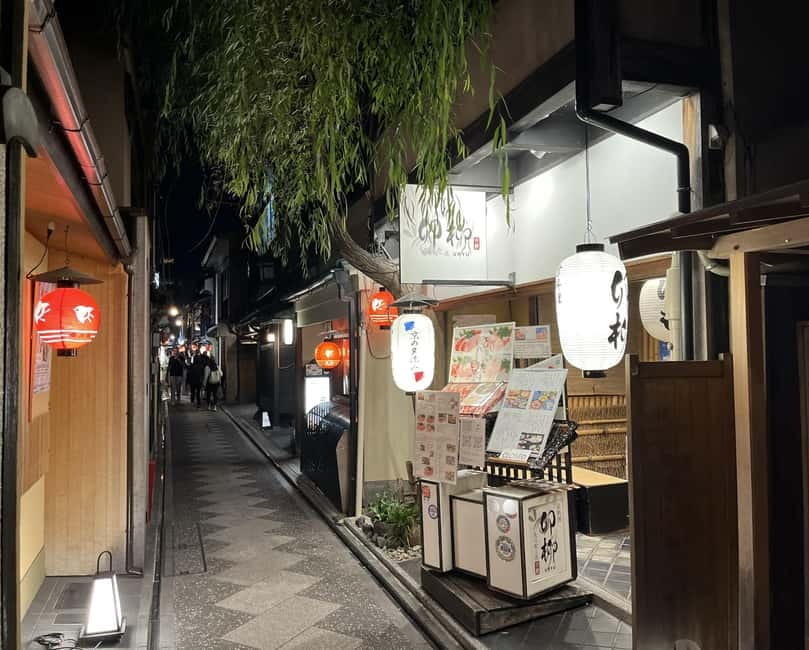
This tour works best as a cultural orientation, not as a hunt for Geisha. You walk through old entertainment quarters, but the guide’s job is to explain what you are seeing: the wooden Machiya houses, the role of the hanamachi, the customs of Maiko and Geiko, and the way Kyoto’s past still shapes daily life.
That distinction matters. Gion can look simple at first glance. You see narrow lanes, lanterns, tiled roofs, and elegant entrances. Without context, it is easy to take a few pictures and move on. With a guide who explains the buildings and the people connected to them, the same streets become easier to read.
The tour is conducted in Spanish, and that makes it especially useful if you want to ask detailed questions without working through a language barrier. The guides also discuss ordinary life in Japan from personal experience, so you can ask about things beyond the formal history of Kyoto.
The experience is designed for a small group of up to six people. That does not mean you are guaranteed a completely private tour in the strict sense, but it does give the guide a better chance to respond to individual interests. If you want to stop and ask why a custom exists, how a district operates, or what a symbol means, this format is more suitable than a large coach tour.
More evenings in Gion:
- Kyoto Geisha Walking Tour: Gion District & Hidden Gems
★ 4.7 · 3,273 reviews - Kyoto: Gion Magical Night Walking Tour with Geisha Trivia
★ 4.9 · 2,393 reviews - Kyoto: Gion Geisha District Walking Tour – Stories of Geisha
★ 4.7 · 2,187 reviews
Meeting beside Disney Kyoto Shijo-Kawaramachi
The meeting point is in front of the Disney store at Kyoto Shijo-Kawaramachi. Kyoto has only one Disney store, so the location should be easy to identify once you reach the shopping area.
Look for the guide sitting in front of the store and holding an iPad showing the Spanish tour title and the scheduled time. This is a useful detail because a busy downtown meeting point can feel confusing, especially if you are arriving from another part of the city.
The listed experience lasts two hours. Starting times vary, so check the available option when booking. The 9:45 and 12:30 departures may include a free visit to the Gion Gallery if you want to extend the outing. That extra visit is optional, and the tour information does not promise a fixed amount of added time, so ask the guide on the day if you are interested.
Bring water, sunscreen, a sun hat, and an umbrella. Kyoto weather can change quickly, and much of this experience takes place outdoors. The walking distance is about two miles, or 3.3 kilometers, which is manageable for most people but still long enough for poor shoes to become a problem.
Pontocho Alley and the Kamo River
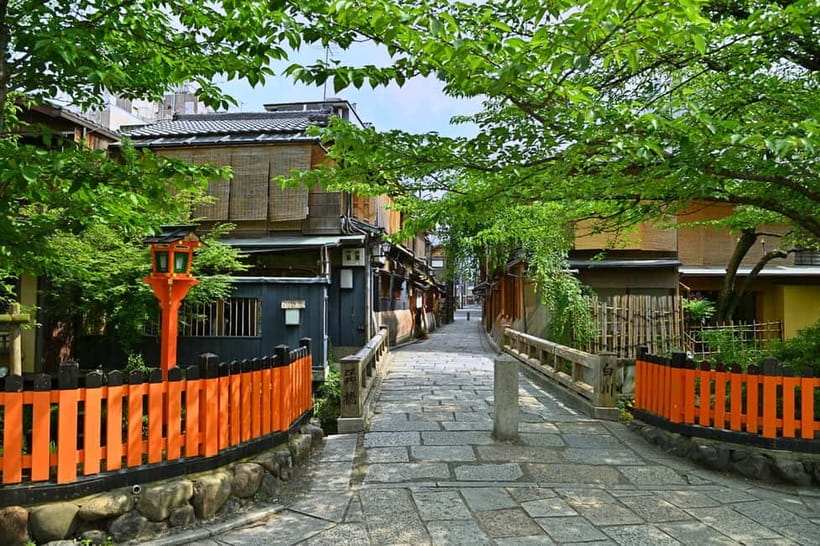
The walk begins in or around Pontocho Alley, one of Kyoto’s best-known traditional entertainment areas. The narrow passage is associated with restaurants, tea houses, and the old world of Kyoto’s performing arts.
Pontocho is not simply a lane for photographs. Its buildings and entrances reflect a district built around hospitality and evening entertainment. Your guide can help explain how this type of quarter differs from an ordinary shopping street and how the hanamachi system fits into Kyoto’s cultural life.
Pontocho Kaburenjo is also on the route. The building is connected with traditional performances by Maiko and Geiko, and it helps give a physical setting to the customs discussed during the walk. You may not enter for a performance, but seeing the building adds useful context.
The route then reaches the Kamo River and the Yagi-san and Kita-san statues. These details may not be familiar to first-time visitors, which is exactly why a guide helps here. Small monuments can be easy to overlook when you do not know their local meaning.
Sanjo Ohashi, the Sanjo Bridge, follows. Bridges in Kyoto are practical crossing points, but they also connect major parts of the old city. From here, the tour moves toward Yamato-Dori and the traditional quarters of Gion.
Gion Kobu and the preserved streets of Gion Shirakawa

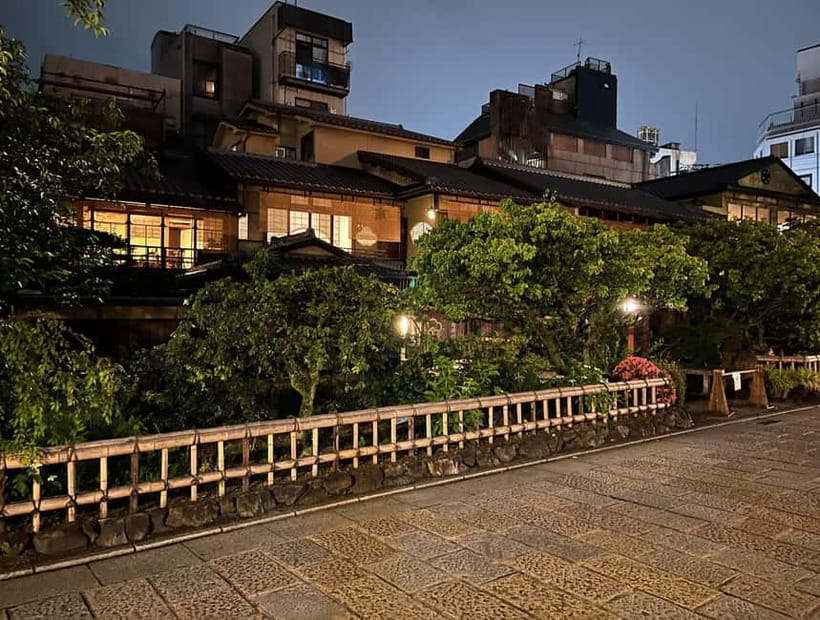
Gion Kobu is the largest and most established of Kyoto’s hanamachi districts. The northern section includes Gion Shirakawa, a particularly scenic area of preserved streets, wooden buildings, and waterways.
This is where the walk’s visual appeal and historical explanation come together. You can admire the old architecture, but the guide also explains how the area functions as a working district rather than a museum. The Machiya houses are not just attractive facades. They are part of the architectural character that gives Gion its sense of continuity.
The route includes Gion Shinbashi-Dori and Gion Shirakawa. These streets are among the places where you may feel the contrast between Kyoto’s modern center and its older neighborhoods. The route is still close to downtown, yet the buildings and narrow lanes create a very different mood.
Your guide discusses Maiko and Geiko routines, activities, training, and professional life. This is valuable because popular images often reduce these roles to costumes and makeup. A good explanation gives you a clearer view of the work, discipline, and traditions involved.
The tour does not guarantee that you will see a Maiko or Geiko. That is an important expectation to set before you go. If one appears, it is a fortunate moment, not the product promised by the ticket. The more dependable experience is learning how the district works and seeing the places connected with its traditions.
A completely different side of Kyoto:
- PERFECT KYOTO 1-Day Bus Tour
★ 5.0 · 13,518 reviews - Kyoto: Fushimi Inari, Kinkakuji, Bamboo Grove 1 Day Bus Tour
★ 4.8 · 4,316 reviews - Kyoto: Tea Ceremony in a Traditional Tea House in Kiyomizu
★ 4.9 · 3,519 reviews - Kyoto: Tea Ceremony Ju-An at Jotokuji Temple
★ 4.9 · 3,207 reviews
Tatsumi Jinja and Tatsumi Bridge
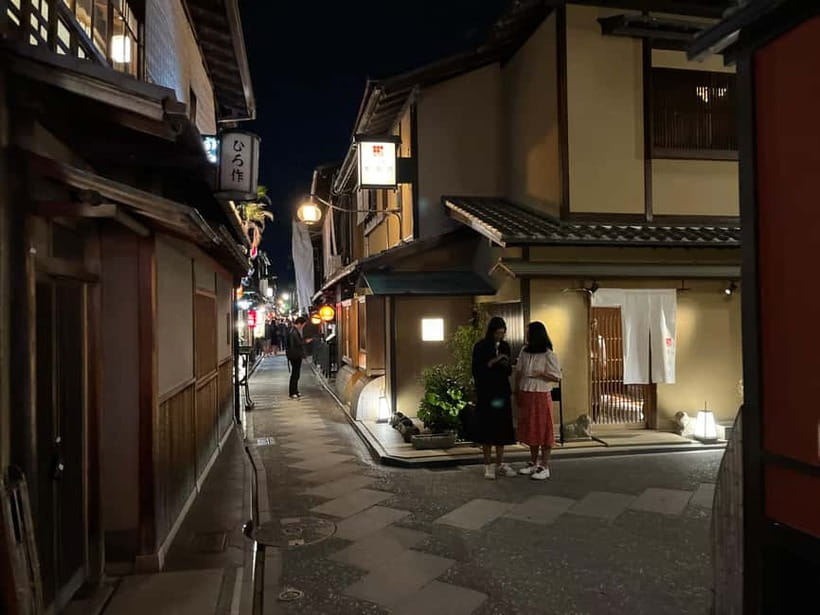
Tatsumi Jinja is another stop that rewards a slower pace. Small shrines can appear almost incidental in Kyoto, tucked beside streets that attract far more attention. Here, the guide can explain the shrine’s place in the local setting and why it matters within the route through Gion.
Tatsumi Bridge follows nearby. These stops help break up the walk and give you more than a single famous street. You are not simply being led from one photo point to another. The sequence shows how shrines, bridges, traditional buildings, and entertainment districts sit alongside one another.
This is also a good part of the tour for questions. The experience is built around an open conversation, and the guide can adjust explanations to what interests you. You might ask about Japanese customs, Kyoto’s neighborhoods, local food, family life, or something you noticed on the way.
The flexibility has been a strong feature of the guiding style. José is described as friendly and willing to explain topics in detail, while Juan is associated with explanations of lesser-known passages and places. One Spanish-language group also included a beginner speaker who could follow the tour well, with English explanations available when needed. The primary language remains Spanish, but that detail may help mixed-language groups decide if the format suits them.
Gion Higashi and the district’s changing character
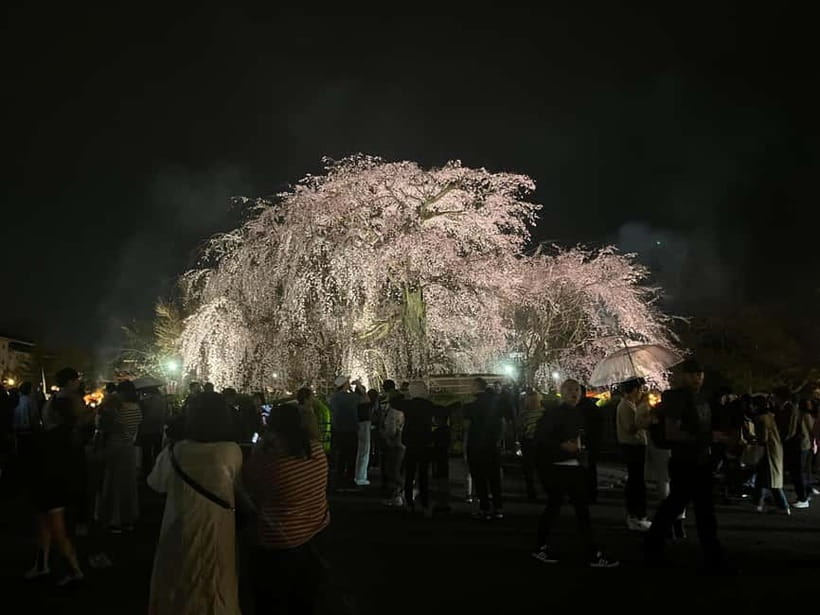
The walk continues into Gion Higashi, another of Kyoto’s five hanamachi. Visiting three districts in one short route gives you a better sense of the area’s variety than staying in one lane.
Gion Higashi is not simply a repeat of Gion Kobu. Each hanamachi has its own history, buildings, institutions, and identity. The guide’s explanations are important because the differences are not always obvious from the street.
This section also reinforces the balance between old customs and modern city life. Gion is located in central Kyoto, close to major commercial streets and busy transport links. Yet the traditional quarters continue to operate with their own rules and rhythms.
The tour can be especially useful in the evening, when lanterns and low light change the mood of the streets. An evening walk may feel atmospheric, but visibility is lower, and the buildings are easier to appreciate when you listen closely to the guide rather than expecting every detail to be obvious.
Remember that Hanamikoji-Dori is not part of this route. Many people associate Gion with that street, so check your expectations before booking. You are paying for a broader route through three districts and several historic sites, not a dedicated walk down Kyoto’s most photographed Gion avenue.
Yasaka Shrine and the origin of Gion

If time permits, the final part includes Yasaka Shrine, formerly called Gion Shrine. The district takes its name from this shrine, which gives the stop particular importance.
Yasaka Shrine also connects the walk to the Gion Festival. The festival has roots reaching back more than 1,100 years and is counted among Japan’s three most famous and important festivals. The tour may explain the festival if time allows, but it does not promise a festival event or special seasonal activity.
This stop helps tie together the religious and cultural story of Gion. The neighborhood is known around the world for its entertainment traditions, yet its name and identity are also linked to a major shrine and long-running religious practices.
Because Yasaka Shrine is included only if time allows, do not treat it as a guaranteed full visit. The guide may need to keep the group moving to complete the main route. If Yasaka Shrine is a top priority, ask at the start how much time is available.
How much value do you get for $35?
At $35 per person, the tour is priced as an accessible small-group walking experience. You are not paying for admission, food, transport, or another added service. The value comes from the guide’s time, the Spanish-language explanation, the route through three hanamachi, and the chance to ask questions in a group limited to six.
I think the price works best for people who would otherwise walk through Gion without understanding what they were seeing. A self-guided visit costs less, but it also leaves you to identify the historic sites, interpret the customs, and connect the districts on your own.
The tour is less useful if your only goal is to take photos or see a Geisha. No sighting is guaranteed, and Hanamikoji-Dori is excluded. In that case, the route may not match your priorities.
Free cancellation up to 24 hours before the start gives you some flexibility, and you can reserve now and pay later. These terms matter if your Kyoto plans are still changing, though you should confirm the exact start time and cancellation conditions when you book.
Seasonal changes and physical comfort
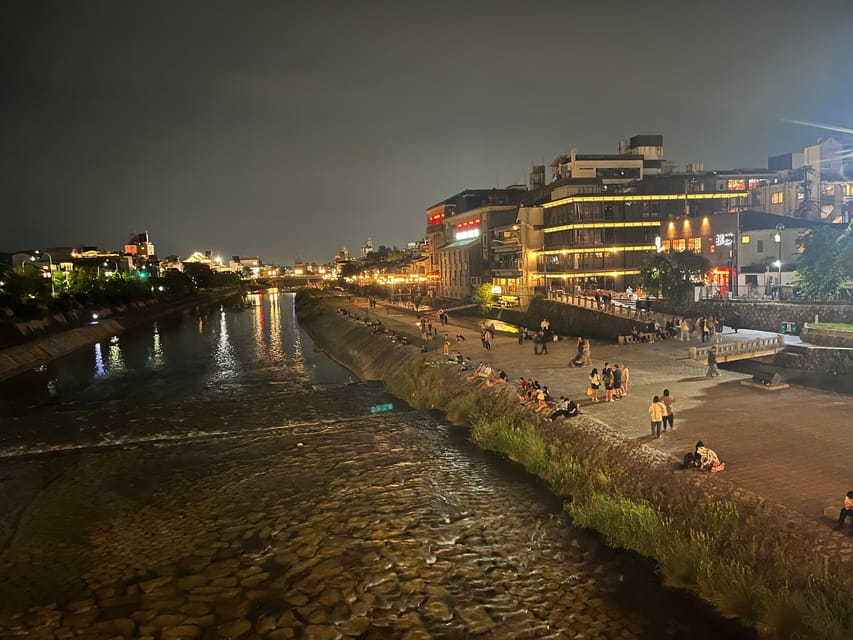
During cherry blossom season, roughly late March through early April, the route changes slightly to show cherry trees around Gion. The exact appearance of blossoms depends on the year, but the route adjustment is intended to include seasonal scenery.
Spring is also one of Kyoto’s busiest periods, so narrow lanes may feel more crowded. A small group helps with communication, but it cannot make busy public streets quiet. Keep close to the guide and be ready to pause rather than block entrances or narrow paths.
The walk covers about 3.3 kilometers. You do not need specialist hiking gear, but comfortable walking shoes are essential. Carry water, and bring an umbrella even if the forecast looks uncertain.
An umbrella and sun protection may sound like minor details, yet they can make a real difference on a two-hour walk. The tour includes outdoor streets, bridges, and shrine areas, with no promise of continuous shelter.
Who will enjoy this experience most?
I would recommend this tour to Spanish-speaking visitors who want history and local explanation in a relaxed setting. It also suits first-time visitors to Kyoto who want to understand Gion before returning on their own.
Families with older children may find the question-friendly format useful, especially if the children are curious about Japanese customs, shrines, or traditional arts. Couples and solo visitors can also benefit from the small group, particularly if they prefer conversation to a formal lecture.
The tour may not suit you if you have difficulty walking 3.3 kilometers, need frequent indoor breaks, or want a fully private tour guaranteed for just your own party. The information describes a personal and private experience, while the group is limited to six, so clarify the arrangement if exclusive use is important.
It is also not the right choice if you want a meal, a performance, transportation, or entry to a major attraction. No additional services are included.
Should you book the Spanish Gion tour?
Book it if you want to see Gion through its neighborhoods, shrines, bridges, and working traditions rather than through one famous street. The combination of Pontocho, Gion Kobu, and Gion Higashi gives you a wider view of Kyoto’s hanamachi culture, and the Spanish-language format makes detailed questions easy.
I would especially choose it early in a Kyoto visit. The explanations can help you make better sense of later walks through the city, and the guide can answer practical questions about Japan from personal experience.
Skip it if a guaranteed Maiko or Geiko sighting is your main goal, or if Hanamikoji-Dori is the one place you most want to visit. For everyone else, $35 is a fair price for a two-hour, small-group introduction led by a guide such as José or Juan, with enough flexibility to make the walk feel personal rather than scripted.
FAQ
How long does the Gion walking tour last?
The tour lasts two hours.
What language is the tour conducted in?
The live tour guide speaks Spanish, also described as Castilian Spanish.
How large is the group?
The group is limited to six participants.
How far does the tour walk?
The route covers about 3.3 kilometers, or two miles.
Which hanamachi districts are included?
The route visits Pontocho, Gion Kobu, and Gion Higashi.
Is Hanamikoji-Dori included?
No. Hanamikoji-Dori is specifically excluded from the route.
Will I definitely see a Maiko or Geiko?
No. A Maiko or Geiko sighting cannot be guaranteed.
Is Yasaka Shrine included?
The route can include Yasaka Shrine, formerly called Gion Shrine, if time allows.
What should I bring?
Bring comfortable shoes, water, sunscreen, a sun hat, and an umbrella.
Where does the tour meet?
Meet in front of the Disney Kyoto Shijo-Kawaramachi store. Look for the guide sitting outside and holding an iPad with the tour title and scheduled time.
Recently added around Kyoto
- Higashiyama | Kyoto: Sakura Season Private Rickshaw Tour★ 5.0 · 3 reviews
- Kyoto Kimono Rental CHAMATSU|Kimono/Yukata Rental FamilyPlan★ 5.0 · 3 reviews
- Kyoto: Half-Day Private Guided Tour to the Old Town of Gion★ 4.4 · 3 reviews
- Nara Private Customizable Half Day Tour★ 5.0 · 3 reviews
- Kansai Region Hiking Adventure in Nara Kobe Kyoto and More★ 5.0 · 3 reviews
- Full Day Nara Deer, Temple, Shrine, Activities & Tea Ceremony★ 5.0 · 3 reviews
- Nara: Essential Private Tour with Deer Park and Temples★ 5.0 · 3 reviews
- Hiking Tour for Sacred Sites in Kyoto with a Guide★ 5.0 · 3 reviews
Gion Geisha District Tours, compared.
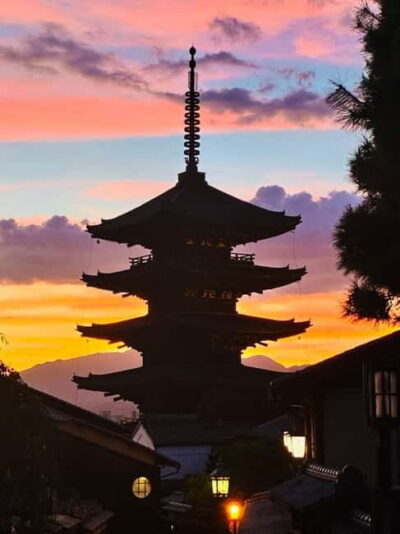
Kyoto Geisha Walking Tour: Gion District & Hidden Gems
Read our review →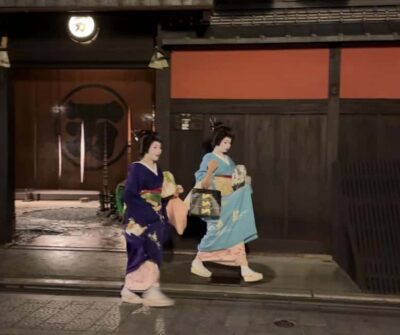
Gion Magical Night Walking Tour with Geisha Trivia
Read our review →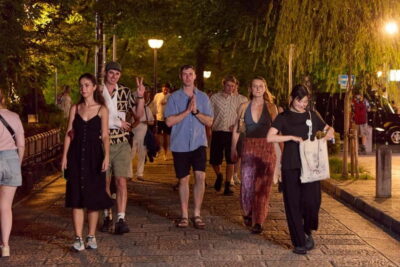
Gion Geisha District Walking Tour – Stories of Geisha
Read our review →
Best of Kyoto: Gion, Geisha, Pagodas & Cobblestones
Read our review →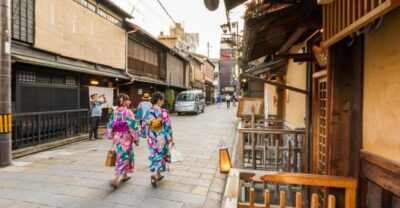

Kyoto Night Foodie Tour in Gion (9+ dishes + 6 Sake tastings)
Read our review →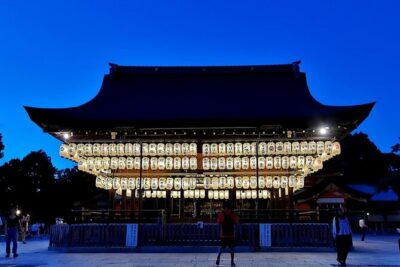
Kyoto Gion Geisha District Walking Tour – The Stories of Geisha
Read our review →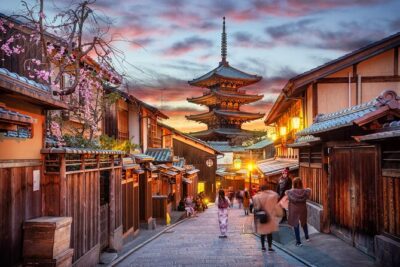
Kyoto Gion: 2-Hour Geisha Culture & History Walking Tour
Read our review →Browse the lists this tour appears in