REVIEW · GUIDED
Guide tour of Japanese bathing culture at Funaoka Onsen
Japanese bathing is not simply about getting clean. At this Kyoto experience, you learn the rules, customs, and health ideas behind the bath before trying them at Funaoka Onsen, one of the city’s best-known public bathhouses. The guide, Atsuki, explains each step and stays available as you get settled.
I like the small group of no more than five, which makes a first bathhouse visit less awkward. I also like the stop at Sarasa Nishijin, a cafe in a converted public bathhouse, because it gives you cultural context before you reach the changing room. The main consideration is simple: you must bathe nude, with men and women separated, so couples will not bathe together.
In This Review
- Key points to know before booking
- Why this Kyoto bathhouse visit feels different
- Sarasa Nishijin, a cafe inside a former bathhouse
- The story behind Funaoka Onsen
- What happens before you enter the baths
- Nude bathing, gender separation, and personal comfort
- The one-hour bath at Funaoka Onsen
- Health limits you should take seriously
- What the $45.72 price buys you
- Timing, meeting point, and cancellation
- Who will get the most from this experience
- Should you book this Funaoka Onsen experience?
- FAQ
- Where does the bathing culture experience take place?
- How long does the experience last?
- Who is the guide?
- Is the bathhouse experience nude?
- Can couples bathe together?
- Is Funaoka Onsen admission included?
- How many people can join?
- Is the experience suitable for everyone?
- Can I join if I have been drinking alcohol?
- What is the cancellation policy?
Key points to know before booking
- The tour teaches you how to bathe properly, including the washing and soaking customs that can make a first visit feel much easier.
- Sarasa Nishijin occupies a former public bathhouse, giving the introduction a fitting setting rather than a plain meeting room.
- Funaoka Onsen is a historic Kyoto bathhouse with a long connection to local bathing culture.
- Guide Atsuki leads the experience, but his English is described as limited, so expect a practical explanation rather than polished interpretation.
- The bathing area requires nudity and separates men and women, which means couples are split up during the soak.
- The experience lasts about 90 minutes and costs $45.72 per person, with a maximum of five participants and a mobile ticket.
Why this Kyoto bathhouse visit feels different
Many first-time visitors approach a Japanese public bath with the same worry: What exactly do I do? You may know that bathing is nude and gender-separated, but still feel unsure about where to wash, when to enter the tub, or how much time to spend soaking.
This experience deals with that uncertainty before you enter Funaoka Onsen. The first part explains the customs and meaning of Japanese bathing. The second lets you put those instructions into practice. I like that order. You are not thrown straight into an unfamiliar public bath and left to copy the person next to you.
The focus is also broader than a hot-water soak. Japanese bathing culture is presented as a social and wellness tradition, much like the way tea ceremony is treated as more than simply drinking tea. You learn why the steps matter, not just which steps to follow.
That makes this a good choice if you want a local custom that feels separate from Kyoto’s famous temples and shrines. It is also useful for anyone planning to visit other public baths or hot springs in Japan, since the guide explains habits that can be used elsewhere.
A few more Kyoto experiences worth comparing
- Kyoto: Hike and Hot Springs in Kurama
★ 5.0 · 49 reviews - Kyoto: Arashiyama Day Tour with Train, Boat, and Onsen
★ 4.9 · 48 reviews
Sarasa Nishijin, a cafe inside a former bathhouse
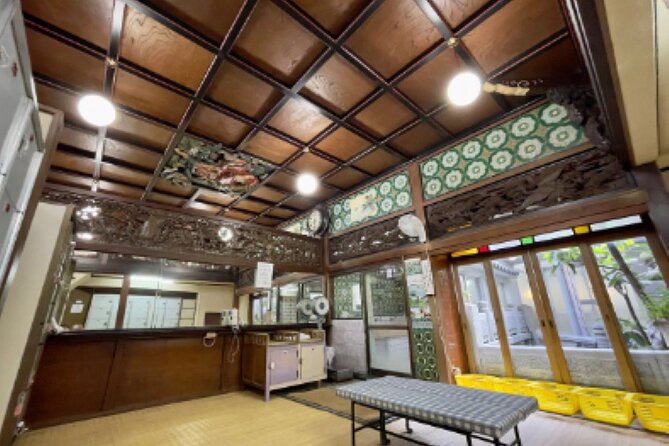
The experience begins at Sarasa Nishijin, a cafe renovated from a public bathhouse. That setting gives the opening talk some character. You are learning about public baths in a space that once functioned as one, rather than hearing a generic talk in a hotel lobby.
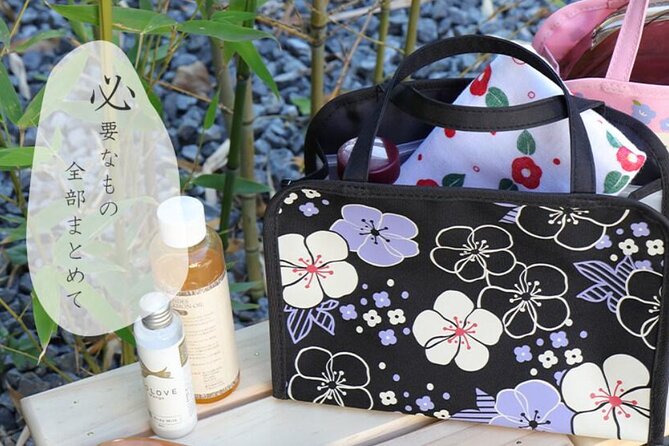
The stop lasts about 15 minutes. While having a drink, you receive an introduction to the history of Japanese public baths and the proper way to bathe. The guide also provides material you can take with you, so the instructions are not limited to what you remember from a short talk.
This is a brief opening, not a full museum visit. You should expect a compact cultural orientation rather than a long historical lecture. Still, it is a smart use of time. In 15 minutes, you can pick up the basic vocabulary of the experience and understand why the next stop matters.
The cafe’s former use is part of the appeal. Public bathhouses have traditionally been places where local people follow familiar routines, and starting in an old bathhouse setting helps connect the information to an actual place.
The description does not specify whether the drink is included in the $45.72 price, so I would confirm that if the cafe stop matters to your budget.
The story behind Funaoka Onsen
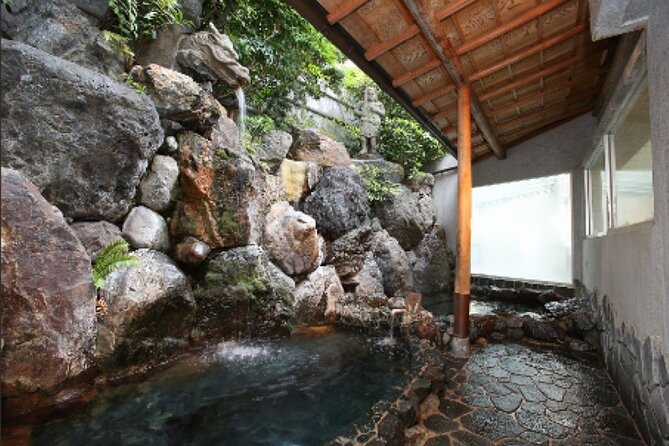
The main stop is Funaoka Onsen, at 82-1 Murasakino Minamifunaokacho in Kyoto’s Kita Ward. It is described as a legendary and beautifully preserved bathhouse that has been used by Kyoto residents for generations.
The guide also discusses the bathhouse’s unusual background. Funaoka Onsen developed in a setting where its founders competed with traditional geothermal hot springs. That detail adds an interesting twist to the usual onsen story. Not every bathing institution depends on natural hot-spring water, and the history here helps explain the place as part of Japan’s wider public-bath tradition.
You are not just visiting a facility chosen for convenience. You are learning why this particular bathhouse matters and how it fits into the history of Japanese bathing.
The experience includes admission to Funaoka Onsen. The bath itself takes about one hour, giving you enough time to follow the instructions without making the visit feel rushed. The tour ends back at the meeting point.
What happens before you enter the baths
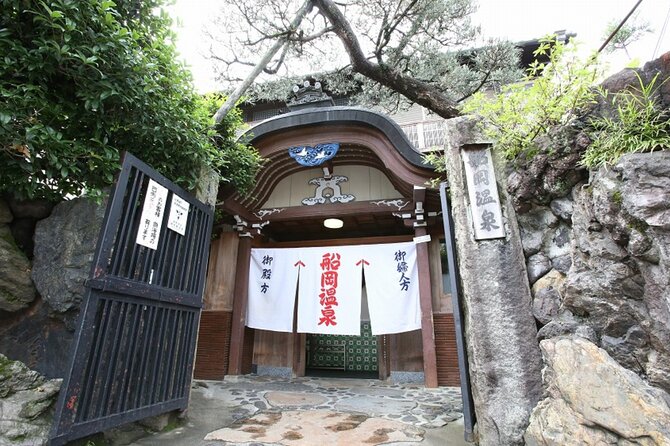
Before you bathe, the guide uses materials to explain the bathing method. This is the practical heart of the experience.
You learn the basic conduct expected in a Japanese bathhouse, including the fact that washing comes before soaking. The purpose is not to carry soap, sweat, or dirt into the shared tubs. You also learn how the bath is meant to be approached as a place for quiet relaxation rather than noisy play.
For a first visit, this preparation has real value. It removes the fear of making a mistake in front of local bathers. One of the strongest features of the experience is that the guide can answer questions before you are standing in the bathhouse trying to remember what you heard.
The guide is Atsuki, a local Japanese guide who specializes in explaining this bathing experience. The information says his English is not very strong. That is worth taking seriously. You should be ready for simple explanations, printed material, gestures, and demonstrations rather than fluent, detailed conversation on every point.
At the same time, the small group helps. With no more than five people, the guide has a better chance of checking that everyone understands the main rules. If you have a specific concern, ask early and clearly.
A completely different side of Kyoto:
- PERFECT KYOTO 1-Day Bus Tour
★ 5.0 · 13,518 reviews - Kyoto: Fushimi Inari, Kinkakuji, Bamboo Grove 1 Day Bus Tour
★ 4.8 · 4,316 reviews - Kyoto: Tea Ceremony in a Traditional Tea House in Kiyomizu
★ 4.9 · 3,519 reviews - Kyoto Geisha Walking Tour: Gion District & Hidden Gems
★ 4.7 · 3,273 reviews
Nude bathing, gender separation, and personal comfort
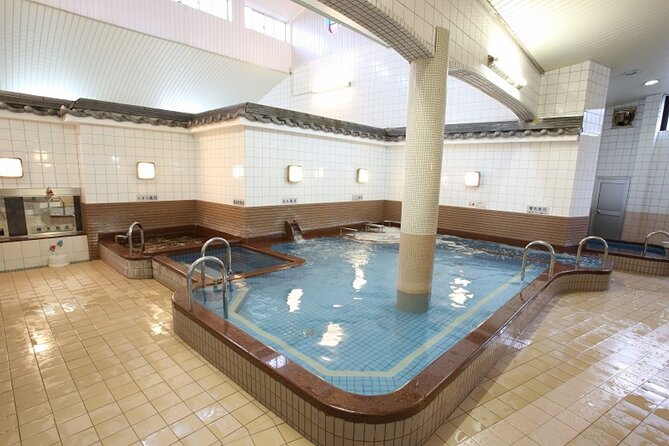
The biggest practical issue is that Funaoka Onsen requires nude bathing. Swimsuits are not used for the bath, and men and women use separate areas.
This means couples will be separated during the actual bathing portion. You can share the cultural introduction, but you will not soak together. That may be a deal-breaker for some people, while others will see it as an essential part of experiencing a traditional Japanese public bath.
You should decide in advance how comfortable you are with that arrangement. The activity is not designed as a private spa treatment or a mixed-gender bathing experience. It follows the rules of a Japanese public bath.
If you are traveling alone, the arrangement may feel simpler. You do not need to coordinate with a partner once you enter your assigned area. If you are new to nude bathing, the guide’s preparation can help, but no orientation can remove the personal question of comfort. Book this only if you are willing to follow the bathhouse custom.
The one-hour bath at Funaoka Onsen
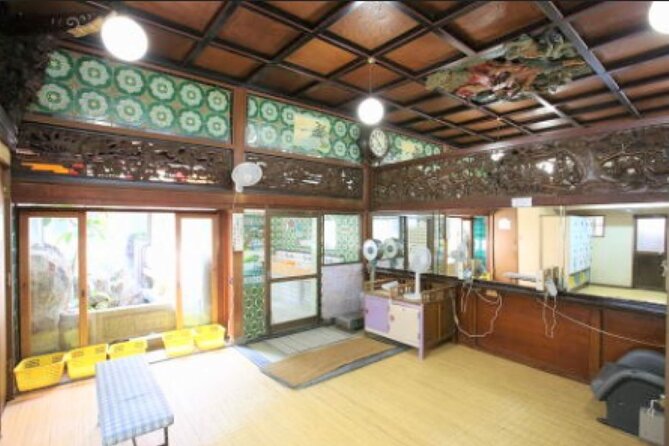
After the explanation, you try the bathing method yourself. The bath portion lasts about one hour, so the pace allows time to wash properly, enter the baths, and relax.
The value here is not a checklist of tubs or facilities. The experience is about learning the rhythm of Japanese bathing. You clean yourself first, then enjoy the shared bath. The guide’s instructions help you avoid the most common errors and let you concentrate on the relaxing part.
Several important customs carry beyond Funaoka Onsen. The same general bathing steps apply at other Japanese hot springs and public baths. If you plan to visit more than one bath during your trip, the $45.72 fee buys more than one afternoon of relaxation. It gives you a set of habits you can reuse.
That said, the time is approximate, and the information does not promise a private bathing area, a spa treatment, or a particular type of water. You are joining a public bathhouse experience. The appeal is authenticity, not luxury.
I would schedule it after a busy day of sightseeing, as the activity is a natural change of pace after temples and shrines. One note of caution: do not arrive after drinking alcohol, and do not join if you have a fever or feel unwell.
Health limits you should take seriously
Hot baths are not right for everyone. The activity specifically excludes people with certain contraindications, including severe heart or lung disease, recent gastrointestinal bleeding, advanced malignant tumors, or severe anemia.
You should also skip the experience if a doctor has advised you not to use hot springs. Alcohol consumption on the day is another reason not to participate. These are not minor formalities. Hot water places stress on the body, and you should treat the warnings as part of the booking decision.
If you are unsure about your health, ask your doctor before booking. The experience provider also says that anyone feeling unwell or running a fever should not join.
The description says most people can participate, but that general statement does not override the medical restrictions. Listen to your body and do not try to push through discomfort for the sake of an authentic experience.
What the $45.72 price buys you
At $45.72 per person, this is more expensive than simply walking into a public bathhouse on your own. The entrance fee alone would not justify the price for someone already familiar with Japanese bathing customs.
The added cost pays for the cultural explanation, the guide’s support, the short introduction at Sarasa Nishijin, the take-home bathing material, and admission to Funaoka Onsen. For a first visit, that can be fair value. You are paying to reduce uncertainty and gain context, not just to sit in hot water.
I would compare it with the cost of making a cultural mistake, feeling uncomfortable, or leaving without understanding what you experienced. If this is your first public bath in Japan, the guidance may be worth more than the entrance ticket.
If you already know Japanese bathing etiquette, speak Japanese comfortably, or have visited several sento and hot springs, the tour may feel less useful. In that case, you might prefer to visit Funaoka Onsen independently and spend the difference elsewhere.
The group limit of five is another value point. This is not a large coach excursion. The small size gives the guide a better chance to provide personal help, especially during the first visit.
Timing, meeting point, and cancellation
The activity lasts about 90 minutes in total: roughly 15 minutes at Sarasa Nishijin and one hour at Funaoka Onsen, with the remaining time used for moving between the two parts and handling the visit.
The listed meeting point is Funaoka Onsen, 82-1 Murasakino Minamifunaokacho, in Kyoto’s Kita Ward. The activity ends back at that meeting point. It is near public transportation, and a mobile ticket is provided. Confirmation is received at booking.
Because the opening stop is Sarasa Nishijin while the listed start and end point is Funaoka Onsen, check the exact meeting instructions before setting out. That small detail matters in Kyoto, where a wrong turn or an unclear station exit can eat into a short activity.
The experience is booked, on average, 34 days ahead. That suggests you should not leave it until the last few days of a popular Kyoto visit, especially if your schedule has limited flexibility.
You can cancel for a full refund up to 24 hours before the local start time. Cancellations and changes made inside that 24-hour window are not accepted for a refund.
Who will get the most from this experience
I would recommend this for a first-time visitor who wants help with a custom that can otherwise feel intimidating. Solo visitors may find the guidance especially useful, since there is no partner to compare notes with before entering the bath.
It also suits people interested in wellness, mindfulness, social customs, and everyday Japanese life. You do not need to be a serious spa fan. The historical explanation and practical instruction give the outing value even if you are more curious about culture than hot water.
The tour may also work well for repeat visitors who have seen Kyoto’s major sights and want a different kind of afternoon. Funaoka Onsen offers a look at local life that you will not get at a shrine or castle.
I would think twice if you strongly dislike communal bathing, require a swimsuit, want to bathe with your partner, or need fluent English guidance. The guide’s limited English may also be a problem if you want long, detailed discussion of Japanese history.
Should you book this Funaoka Onsen experience?
Book it if you want a carefully explained first step into Japanese public bathing and are comfortable with nude, gender-separated bathing. The combination of Sarasa Nishijin, Funaoka Onsen, practical instruction, and a maximum group of five gives the experience a clear purpose.
Skip it if you already know the etiquette or want a private or mixed-gender soak. For everyone else, the $45.72 price is reasonable when you consider the guide, admission, cultural background, and confidence you gain for future baths.
The best reason to choose it is not simply the chance to relax. It is the chance to understand what you are doing, why you are doing it, and how to use the same respectful routine elsewhere in Japan.
FAQ
Where does the bathing culture experience take place?
It takes place in Kyoto, beginning with an introduction at Sarasa Nishijin and continuing at Funaoka Onsen. The listed meeting point and end point are Funaoka Onsen, 82-1 Murasakino Minamifunaokacho, Kita Ward, Kyoto.
How long does the experience last?
The activity lasts approximately 1 hour and 30 minutes. About 15 minutes is spent at Sarasa Nishijin, and about one hour is spent at Funaoka Onsen.
Who is the guide?
The guide is Atsuki, a local Japanese guide. The information states that his English is not very strong, so you should expect simple spoken explanations supported by materials.
Is the bathhouse experience nude?
Yes. Funaoka Onsen requires nude bathing. Men and women use separate bathing areas.
Can couples bathe together?
No. The bathing areas are separated by gender, so couples will be apart during the bath.
Is Funaoka Onsen admission included?
Yes. Admission tickets are included for both Sarasa Nishijin and Funaoka Onsen according to the activity details.
How many people can join?
The maximum group size is five people.
Is the experience suitable for everyone?
Most people can participate, but people with certain medical contraindications should not join. These include severe heart or lung disease, recent gastrointestinal bleeding, advanced malignant tumors, and severe anemia.
Can I join if I have been drinking alcohol?
No. You should not participate if you have consumed alcohol. You should also stay home if you have a fever or feel unwell.
What is the cancellation policy?
You can cancel at least 24 hours before the local start time for a full refund. Cancellations or changes made less than 24 hours before the start time are not accepted for a refund.
Recently added around Kyoto
- Higashiyama | Kyoto: Sakura Season Private Rickshaw Tour★ 5.0 · 3 reviews
- Kyoto Kimono Rental CHAMATSU|Kimono/Yukata Rental FamilyPlan★ 5.0 · 3 reviews
- Kyoto: Half-Day Private Guided Tour to the Old Town of Gion★ 4.4 · 3 reviews
- Nara Private Customizable Half Day Tour★ 5.0 · 3 reviews
- Kansai Region Hiking Adventure in Nara Kobe Kyoto and More★ 5.0 · 3 reviews
- Full Day Nara Deer, Temple, Shrine, Activities & Tea Ceremony★ 5.0 · 3 reviews
- Nara: Essential Private Tour with Deer Park and Temples★ 5.0 · 3 reviews
- Hiking Tour for Sacred Sites in Kyoto with a Guide★ 5.0 · 3 reviews
Guided, compared.
Kyoto Early Morning Tour with English-Speaking Guide
Read our review →
Kyoto 6hr Private Tour with Government-Licensed Guide
Read our review →Early Morning Tour with English-Speaking Guide
Read our review →
Nijo-jo Castle and Ninomaru Palace Guided Tour
Read our review →
Kyoto Gion Night Walk & Geisha District Guided Tour
Read our review →
From Kyoto/Osaka: Kyoto Top Highlights 1-Day Guided Bus Tour
Read our review →