REVIEW · GUIDED
Kyoto 4hr Private Tour with Government-Licensed Guide
Kyoto is too spread out for a rushed checklist, and this private four-hour tour gets around that problem by letting you choose only two or three places. You can focus on Fushimi Inari, Kiyomizu-dera, Gion, and Nishiki Market, or build a quieter day around temples such as Nanzenji, Ginkakuji, and Ryoanji. Guides including Yuka, Nabet, Tomy, and Masa have been praised for shaping the route around each group’s interests.
I like the one-to-one attention, especially when you need help with Kyoto’s trains and buses. I also like the chance to ask direct questions about Japanese religion, castle life, food, and customs instead of receiving a standard speech. The main catch is simple: four hours passes quickly, and admission fees, transport, lunch, and personal costs are extra. Pick too many distant sights and you’ll spend your precious afternoon moving between them.
In This Review
- Key points to know before booking
- What this four-hour format does well
- Start with Fushimi Inari’s red gates
- Explore Gion, Higashiyama, and Kiyomizu-dera
- Taste Kyoto at Nishiki Market
- Step into Tokugawa history at Nijo Castle
- Compare the Golden Pavilion and Silver Pavilion
- Choose a quieter Zen temple route
- Make Arashiyama a full half-day choice
- Consider imperial villas and northern Kyoto
- Go farther to Kibune, Kurama, or Byodoin
- How transportation and walking shape the day
- Price, group size, and what you really receive
- Who should book this Kyoto tour?
- FAQ
- How long is the Kyoto private tour?
- How many sights can I choose?
- Is hotel pickup included?
- Is transportation included in the price?
- Are entrance fees included?
- Is this a private group tour?
- Is the tour suitable for most people?
- What is the cancellation policy?
Key points to know before booking
- Choose two or three sights: The large menu includes temples, shrines, castles, markets, gardens, and historic districts, but this is not a full-city tour.
- Meet at your hotel on foot: Pickup is offered within a designated Kyoto area, with the guide walking to meet you.
- Use local transport: Trains, buses, and taxis are part of the practical plan, but you pay those fares yourself.
- Expect a real walking day: Hills, temple approaches, station corridors, and hot weather can make four hours feel substantial.
- Private means private: Only your own group participates, and groups cannot be combined.
- Guides shape the experience: Names praised in past tours include Yuka, Nabet, Tomy, Masa, Akira, Yuri, and Hiromi.
What this four-hour format does well
A private half-day tour is a smart first step in Kyoto. The city’s major sights sit in different corners, and the route that looks short on a map may involve a train, a bus, a long station walk, and a hill. Your guide can adjust the plan as the day develops and explain how to reach each place.
The strongest feature is flexibility. You can ask for a famous first-time introduction, an eastern Kyoto temple route, a food-focused walk, or a family-friendly outing with breaks. One family guide adjusted the pace when children needed rest, arranged taxis when members of the group tired out, and connected sightseeing stops to a seven-year-old’s interest in samurai.
The guide also helps with the parts of Kyoto that can slow you down. Past outings have included help reading signs, finding train and bus routes, choosing photo spots, and recommending dinner after the tour. If you are not comfortable with Japanese transit, this service may be worth more than a basic sightseeing lecture.
The format suits a port call, a short Kyoto stay, or the first afternoon after arriving. It also works for people who want advice before exploring alone. Just remember that four hours is enough for an introduction, not a grand sweep of the city.
A few more Kyoto experiences worth comparing
- Fushimi Inari Hidden Hiking Tour (Private Option Available)
★ 5.0 · 1,750 reviews - Private Kyoto Tour with a Local, Highlights & Hidden Gems, Personalised
★ 5.0 · 1,543 reviews - Kyoto 6hr Private Tour with Government-Licensed Guide
★ 5.0 · 1,369 reviews
Start with Fushimi Inari’s red gates
Fushimi Inari-taisha is one of Kyoto’s most recognizable sights, with long corridors of vermilion torii gates climbing the wooded mountain. Many people stop near the lower gates for photographs, but a guide can give the shrine more meaning by explaining its stories and the role of Inari worship.
This is a good early stop if it fits your location and schedule. The shrine grounds are free, but the famous image comes with crowds, especially around the lower approach. A private guide can help you move beyond the first photo area, though you should not expect to walk the entire mountain during a four-hour tour.
Fushimi Inari also pairs well with nearby southeastern Kyoto sites such as Tofuku-ji. It pairs less neatly with Kinkaku-ji or Arashiyama, where the travel time can consume much of the afternoon.
Explore Gion, Higashiyama, and Kiyomizu-dera
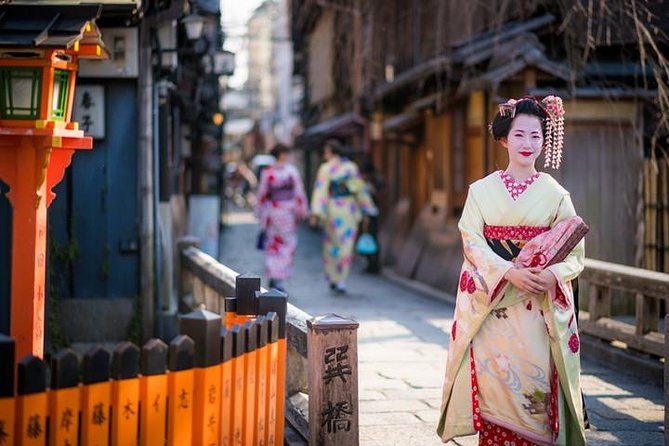
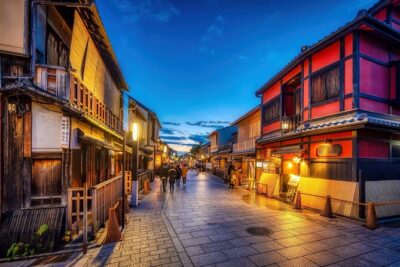
The eastern side of Kyoto gives you the city’s most traditional walking scenery. Gion’s narrow lanes, wooden buildings, and old entertainment streets are best understood with a guide who can explain local customs and the difference between respectful observation and intrusive behavior.
Higashiyama extends this experience along the lower slopes of Kyoto’s eastern mountains. Expect lanes, temple approaches, traditional architecture, and plenty of walking. The area can feel crowded, but a guide can help you understand what you are seeing instead of treating the district as a photo backdrop.
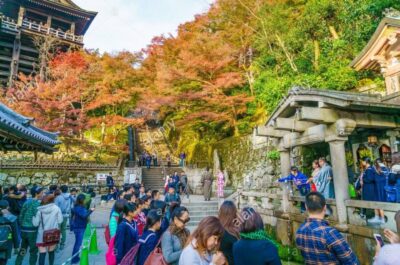
Kiyomizu-dera is the major temple anchor here. Its wooden stage and hillside setting make it one of Kyoto’s essential stops, but the approach involves slopes and busy streets. The temple charges admission, so allow extra cash beyond the tour price.
This eastern route is one of the best choices for a first visit. It gives you a shrine, a temple, old Kyoto streets, and cultural context in one compact part of the city. You may also finish near Gion or Pontocho, useful areas for dinner after the tour.
Taste Kyoto at Nishiki Market
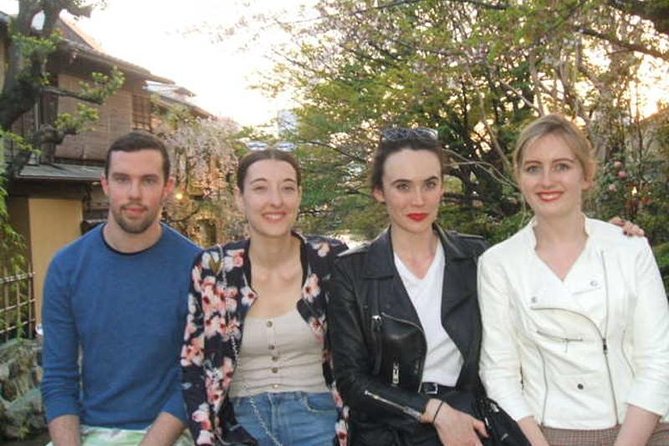
Nishiki Market runs for about five blocks and is known as Kyoto’s Kitchen. More than one hundred shops and restaurants sell food and local goods, making it a practical place to learn about ingredients and eating customs.
A guide adds value here by pointing out what you are looking at and suggesting suitable food stops. The market is free to enter, but anything you eat or buy is your responsibility. Keep in mind that this is a narrow shopping street, so it can be difficult to move quickly when crowded.
Nishiki works well with Gion, Pontocho, or Nijo Castle. It is less sensible to combine it with a distant northern temple unless you are happy to spend time in taxis or on public transport.
A completely different side of Kyoto:
- PERFECT KYOTO 1-Day Bus Tour
★ 5.0 · 13,518 reviews - Kyoto: Fushimi Inari, Kinkakuji, Bamboo Grove 1 Day Bus Tour
★ 4.8 · 4,316 reviews - Kyoto: Tea Ceremony in a Traditional Tea House in Kiyomizu
★ 4.9 · 3,519 reviews - Kyoto Geisha Walking Tour: Gion District & Hidden Gems
★ 4.7 · 3,273 reviews
Step into Tokugawa history at Nijo Castle
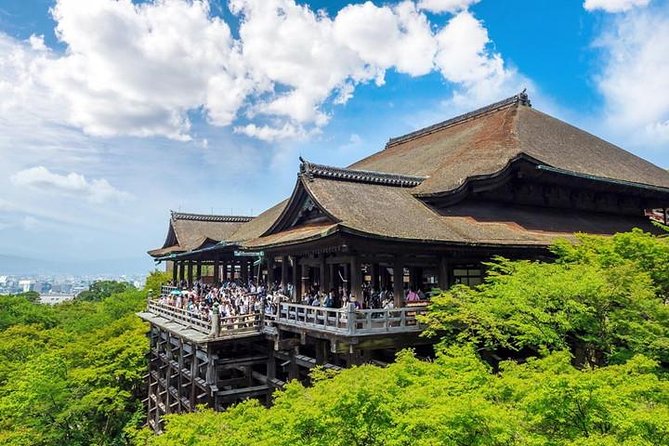
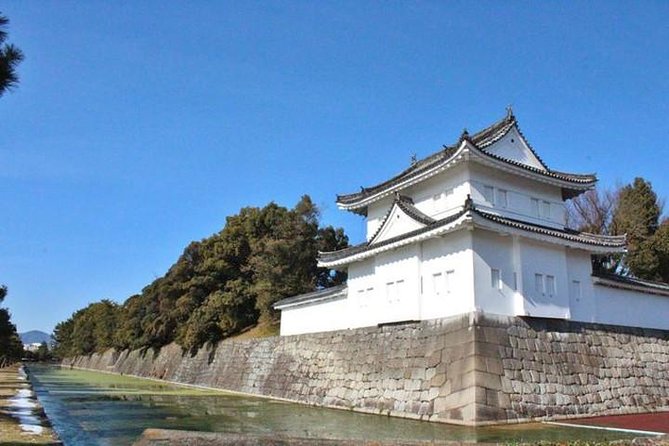
Nijo Castle was built in 1603 as the Kyoto residence of Tokugawa Ieyasu, the first shogun of the Edo period. This gives your guide a clear way to explain the rise of the Tokugawa government and the relationship between military power and the imperial capital.
The castle is a strong choice for visitors who want political history as well as temples. Admission is not included, so confirm the current entry cost when planning your budget. The grounds are also large enough to require walking, even though the site itself is within the central city.
Nijo Castle makes a logical pairing with Nishiki Market or the Imperial Palace. Combining it with Fushimi Inari and Arashiyama would create a far more demanding route.
Compare the Golden Pavilion and Silver Pavilion
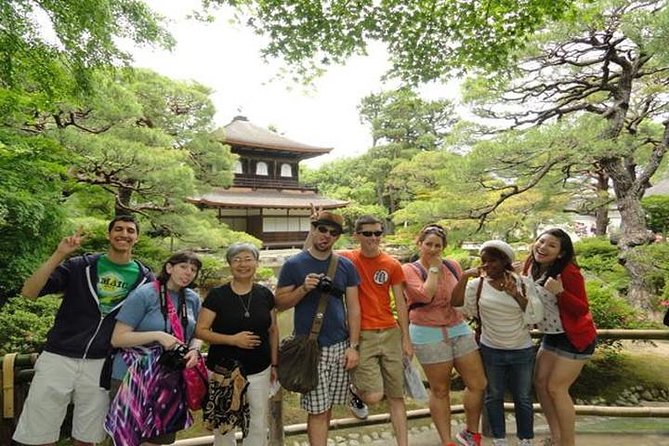
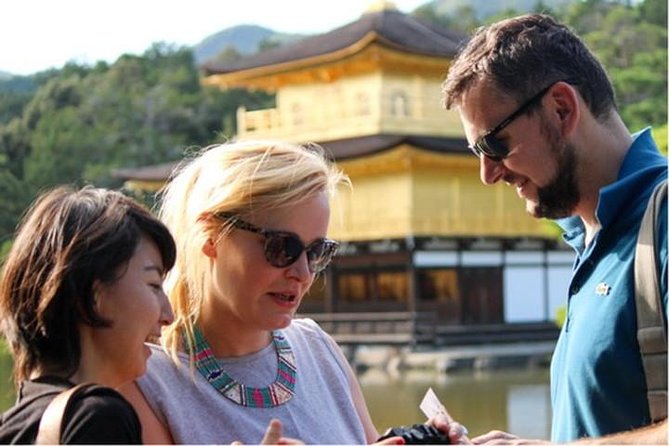
Kinkaku-ji, the Golden Pavilion, is among Kyoto’s most famous sights. Its upper floors are covered in gold leaf, and the building sits beside a garden pond. The usual visit is short, but the image is powerful and easy to understand on a first trip.
The temple charges admission, and the site can be crowded. The tour information allows about 30 minutes here, which is enough for the main view and a walk through the visitor route, but not for a slow garden study.
Ginkakuji, known as the Silver Pavilion, offers a different mood. It began as Ashikaga Yoshimasa’s retirement villa in 1482 and later became a Zen temple. The pavilion was never covered in silver, a useful detail for your guide to explain. Its garden and eastern setting make it a fine companion to Nanzenji or Gion.
You should not try to visit Kinkaku-ji and Ginkakuji in the same four-hour outing unless you accept a rushed schedule. They sit on opposite sides of the city, and transport time matters.
Choose a quieter Zen temple route
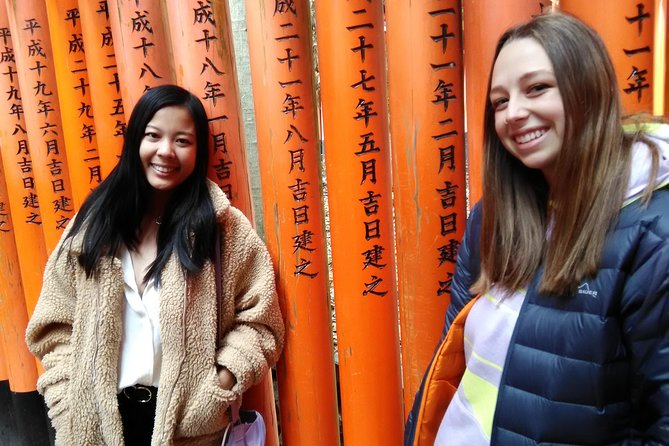
Nanzenji has spacious grounds at the foot of the Higashiyama mountains and is one of Kyoto’s major Zen temples. Its brick aqueduct, Nanzenji Suirokaku, adds an unusual piece of nineteenth-century engineering to a temple visit.
Nearby Tofuku-ji is especially attractive in autumn, when its maple trees change color. It is a large Zen complex in southeastern Kyoto and combines well with Fushimi Inari. The temple charges admission for some areas.
Ryoanji is home to Japan’s best-known rock garden. The garden’s spare design invites quiet attention, though the site can draw large crowds. You pay an entry fee, and a guide can help place the garden within Japanese Zen practice rather than leaving you to wonder what you are supposed to notice.
Toji, the East Temple, dates to the early Heian period, soon after Kyoto became the capital. It offers another angle on the city’s early Buddhist history and may suit you if you want an important temple without committing to the northern route.
Make Arashiyama a full half-day choice
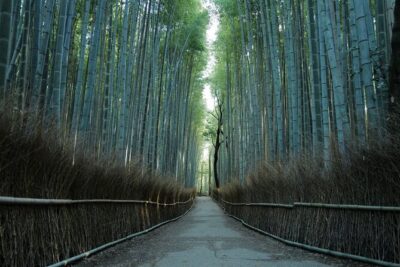
Arashiyama lies on Kyoto’s western edge and includes far more than its famous bamboo grove. The Togetsukyo Bridge, Tenryu-ji Temple, Okochi Sanso Garden, Jojakkoji, Nisonin, Gioji, Adashino Nenbutsuji, and Otagi Nenbutsuji all offer different experiences.
The bridge is the district’s main landmark. The bamboo paths are pleasant, but the well-known section can be crowded, and a short stop may feel more like a photo visit than a peaceful forest walk.
Tenryu-ji is the area’s leading temple and a UNESCO World Heritage site. Okochi Sanso, the former villa of actor Okochi Denjiro, adds gardens and buildings at the far end of the bamboo area. Entry fees apply to the principal temple and garden sites.
The smaller temples provide a quieter route, with moss, maples, thatched roofs, and hillside paths. Otagi Nenbutsu-ji is known for its 1,200 stone rakan figures, each with a different expression. These places are rewarding, but they require time and walking.
For a four-hour tour, choose Arashiyama as the main theme. Do not add Fushimi Inari, Kiyomizu-dera, and central Kyoto unless your goal is to see only the outside of each place.
Consider imperial villas and northern Kyoto
The Kyoto Imperial Palace was the residence of Japan’s Imperial Family until 1868, when the capital moved to Tokyo. Its broad grounds offer a change from crowded lanes and compact temple compounds.
Katsura Imperial Villa is celebrated for its architecture and garden design, while Shugakuin Imperial Villa spreads across Upper, Middle, and Lower Villa areas. Both are managed by the Imperial Household Agency, and entry is not included. These sites require more planning than a casual market stop, so confirm what access arrangements apply before building your day around them.
Northern Kyoto brings Kinkaku-ji, Ninna-ji, and Ryoanji into the picture. Ninna-ji is a World Heritage temple and the head temple of the Omuro school of Shingon Buddhism. The three make a sensible temple-focused route, but the pace will be brisk.
Go farther to Kibune, Kurama, or Byodoin
Kibune and Kurama offer a different Kyoto, in the forested northern mountains. Kibune grew around Kifune Shrine, while Kurama is known for Kurama-dera and its hot spring. Kurama is less than an hour from central Kyoto, but that travel time makes these poor choices for a multi-area sightseeing sprint.
Byodoin Temple is in Uji, within Kyoto Prefecture, and requires extra travel time. Its Phoenix Hall is a National Treasure and part of a UNESCO World Heritage site. It is a worthwhile specialist choice, but not a sensible add-on to a central Kyoto route in only four hours.
How transportation and walking shape the day
The standard arrangement is a walking tour using public transportation or taxis. You pay those fares separately. A private vehicle is available only as an upgrade, so ask about the additional cost if anyone in your group has limited stamina or you want to link distant areas.
The walking can be substantial. One outing reached more than 20,000 steps, and another included hills even with taxis between some stops. Wear comfortable shoes, carry water, and bring cash, since not every place accepts cards.
Kyoto’s weather matters too. Heat made one family group shorten its day and switch some legs to taxis, while another outing continued in rain. The guide can adjust the plan, but the four-hour clock does not stop.
Price, group size, and what you really receive
At $109.43 per person, the value depends heavily on how many people share the booking. For one or two people, it is a fairly substantial spend, but you are buying a private route, a licensed English-speaking guide, hotel meeting service on foot, and help with Kyoto’s transport system.
For a family or larger private group, the per-person cost may look better, especially with group discounts. You still need to budget for train, bus, taxi, temple, castle, villa, food, and shopping costs.
The guide’s role is the real product. Strong guides such as Yuka, Nabet, Akira, Hiromi, and Tomy have been praised for clear explanations, careful timing, transit help, photographs, and food recommendations. English ability can vary by guide, so include your interests and expectations when arranging the tour.
Free cancellation is available up to 24 hours before the start time. Changes or cancellations inside that window are not accepted for a refund.
Who should book this Kyoto tour?
Book it if you have one day in Kyoto, want to avoid transit mistakes, or prefer a private guide who can explain religious sites and local customs. It is especially useful for families, first-time visitors, cruise passengers, and people who want to see two or three carefully chosen sights.
It is also a good choice if you already know your priorities. Ask for an eastern Kyoto route, a northern temple route, Arashiyama, or a food and old-town walk rather than trying to cover everything.
Skip it if you prefer to wander alone, dislike fixed time limits, or want a private car included in the base price. You should also think twice if your main goal is a slow visit to several distant gardens and temples. Four hours will not allow that.
FAQ
How long is the Kyoto private tour?
The tour lasts approximately four hours.
How many sights can I choose?
The tour includes a customizable itinerary focused on two or three sites from the available options.
Is hotel pickup included?
Yes. The guide meets you on foot at the front door of your hotel within the designated Kyoto pickup area.
Is transportation included in the price?
No. Transportation fees are not included. You may use public transportation or taxis, and a private vehicle is available only as an additional upgrade.
Are entrance fees included?
No. Entrance fees are generally extra. Guide entry fees are covered only for sights listed under the tour’s specified options.
Is this a private group tour?
Yes. Only your group participates, and multiple tour groups cannot be combined.
Is the tour suitable for most people?
Most people can participate, and service animals are allowed. It is a walking tour, so expect possible hills and a substantial amount of walking.
What is the cancellation policy?
You can cancel up to 24 hours before the experience start time for a full refund. Cancellations or changes made less than 24 hours ahead are not accepted for a refund.
Recently added around Kyoto
- Higashiyama | Kyoto: Sakura Season Private Rickshaw Tour★ 5.0 · 3 reviews
- Kyoto Kimono Rental CHAMATSU|Kimono/Yukata Rental FamilyPlan★ 5.0 · 3 reviews
- Nara Private Customizable Half Day Tour★ 5.0 · 3 reviews
- Kyoto: Half-Day Private Guided Tour to the Old Town of Gion★ 4.4 · 3 reviews
- Kansai Region Hiking Adventure in Nara Kobe Kyoto and More★ 5.0 · 3 reviews
- Full Day Nara Deer, Temple, Shrine, Activities & Tea Ceremony★ 5.0 · 3 reviews
- Nara: Essential Private Tour with Deer Park and Temples★ 5.0 · 3 reviews
- Hiking Tour for Sacred Sites in Kyoto with a Guide★ 5.0 · 3 reviews
Guided, compared.
Kyoto Early Morning Tour with English-Speaking Guide
Read our review →
Kyoto 6hr Private Tour with Government-Licensed Guide
Read our review →Early Morning Tour with English-Speaking Guide
Read our review →
Nijo-jo Castle and Ninomaru Palace Guided Tour
Read our review →
Kyoto Gion Night Walk & Geisha District Guided Tour
Read our review →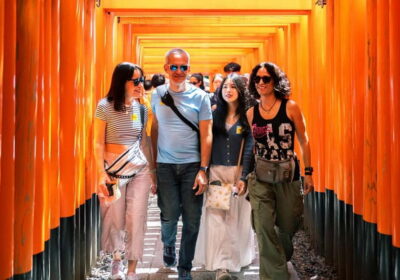
From Kyoto/Osaka: Kyoto Top Highlights 1-Day Guided Bus Tour
Read our review →