
REVIEW · HIKING & TREKKING
Kyoto: Hike and Hot Springs in Kurama
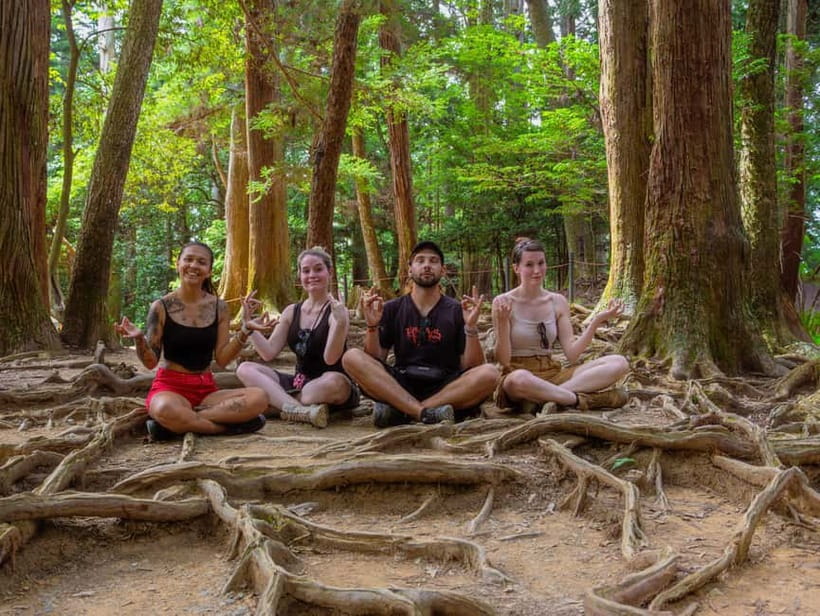
Mount Kurama gives you something Kyoto’s city center cannot: a cedar forest hike threaded with shrines, legends, mountain air, and wide valley views. The Eizan train ride is part of the pleasure, carrying you from Demachiyanagi into the hills before the climb begins.
I like the mix of nature and spiritual sites, and I like that guides such as Philippe, Chris, Kevin, and Salome add local stories rather than simply pointing out buildings. The main caution is clear: this is not a casual stroll. The steps can be hard work, especially in summer, and one past visit found the temple partly hidden by scaffolding.
In This Review
- Kurama and Kibune at a glance
- Why Mount Kurama makes a fine Kyoto escape
- From Demachiyanagi Station into the northern hills
- The forest trail to Kurama Temple
- Kurama Temple and the mountain’s spiritual side
- Kibune Shrine and prayers for good relationships
- Descending to Kurama village
- Why the Kurama Hot Spring is worth planning for
- The guides can shape the entire experience
- How hard is the hike?
- Who should book this half-day outing?
- Should you book Kyoto: Hike and Hot Springs in Kurama?
- FAQ
- Where does the tour meet?
- How long does the activity last?
- What transportation is included?
- Is lunch included?
- Is the hot spring included?
- How difficult is the hike?
- What should I bring?
- What languages are available?
Kurama and Kibune at a glance
- A mountain train from Kyoto: Ride the Eizan Railway from Demachiyanagi into the forested northern hills.
- A 30 to 40 minute climb: Reach Kurama Temple by a steady stairway through an ancient cedar forest.
- Shrines, legends, and a power spot: Hear local stories connected with Mount Kurama, Reiki, Buddhist figures, and mountain worship.
- Kibune Shrine and relationship prayers: Visit a shrine associated with prayers for good relationships.
- A flexible finish in Kurama village: Choose lunch, a village walk, the train back to Kyoto, or an optional hot spring bath.
- A small-group feel: Private and small-group departures are available in English or French.
Why Mount Kurama makes a fine Kyoto escape
Kyoto can fill your day with temples, lanes, buses, and crowds. Mount Kurama changes the pace. The excursion takes you north from the city and into a quieter world of tall trees, mountain villages, and old religious sites.
The experience is sold as four hours, though the final part is flexible. The guided portion concludes in Kurama village, where you receive help choosing lunch, the return train, or the Kurama Hot Spring. If you want the bath, plan your time carefully rather than treating it as an automatic part of the tour.
At $80 per person, the price is reasonable if you value a guide who can explain the spiritual side of the mountain and lead you through the route without guesswork. Your fee covers the guide, temple admission, and transportation during the activity. Lunch, the hot spring fee, and transportation back to the meeting point are extra.
That last point matters. You are not simply paying for a ticket and a marked path. The value depends heavily on the guide. Philippe received especially warm praise for his humor, patience, cultural explanations, and knowledge of the forest route. Chris was also singled out for taking guests to less obvious places. Your guide may be someone else, but the tour is at its best when the person leading it brings the mountain to life.
A few more Kyoto Prefecture experiences worth comparing
- Fushimi Inari Hidden Hiking Tour (Private Option Available)
★ 5.0 · 1,750 reviews - Kyoto: 3-Hour Fushimi Inari Shrine Hidden Hiking Tour
★ 4.9 · 270 reviews - Kyoto Hiking Tour: The Nature and Legends of Kurama and Kibune
★ 5.0 · 75 reviews
From Demachiyanagi Station into the northern hills
The meeting point is Exit 7 at Demachiyanagi Station, in front of the Eizan Railway. This is a useful starting point because the train is not just transport. It begins the change from urban Kyoto to rural northern Kyoto.
The ride takes you through the mountains toward the Kurama area, with the scenery becoming more wooded as you leave the city behind. One account especially praised the train ride up the gorge. It is a pleasant warm-up before the walking begins, though you should not confuse the train journey with a long scenic rail excursion. The real work starts once you reach the trail.
Transportation during the tour is included, but the return to the original meeting point is not. You finish in Kurama village, and the guide explains your choices there. You can take the train back, stay for food, or continue to the hot spring if your schedule allows.
The forest trail to Kurama Temple
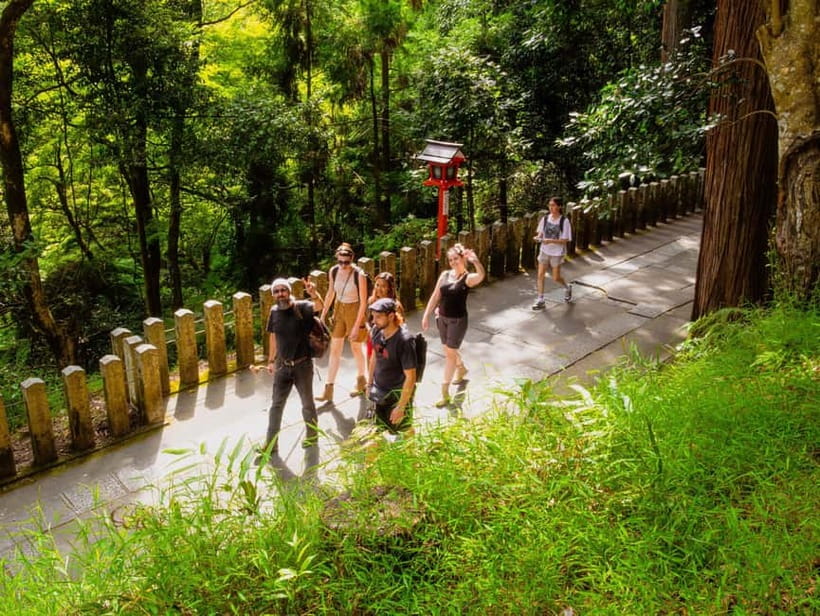
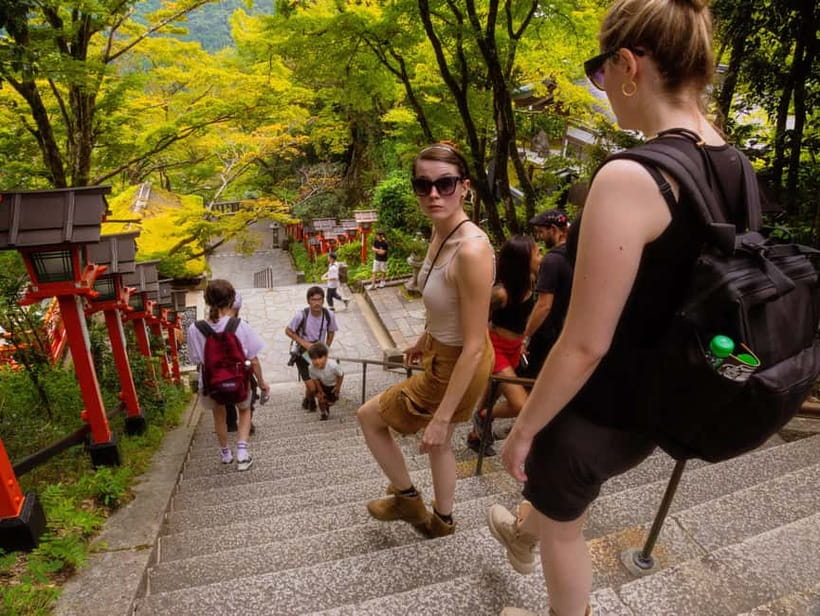
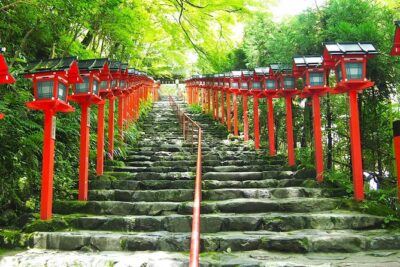
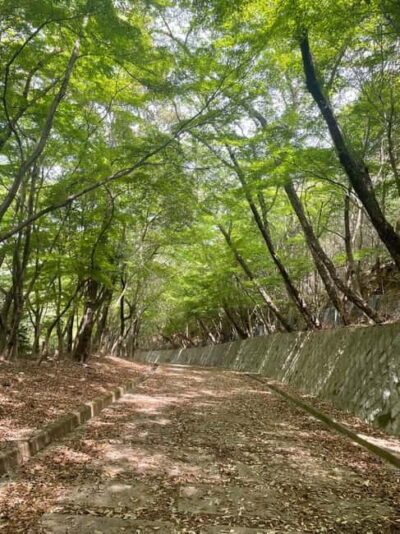
After a short visit at the starting shrine area, you head onto the hiking course. The path climbs by steps through an old forest, with towering cedars creating shade and a sense of separation from the city.
The top can be reached in roughly 30 to 40 minutes, but that estimate does not mean the climb is effortless. The route requires a decent level of fitness, and the supplied guidance specifically says it is not suited to people without hiking experience. Several details point to the same practical truth: the climb is manageable for a regular walker, but it is not a flat temple visit with a short approach.
You will want comfortable shoes with good grip. Bring water, and wear long pants if you want to reduce the chance of bug bites. Summer heat can make the steps feel much tougher. In cooler weather, the climb should be more comfortable, though winter conditions can change the feel of the trail.
The best part of having a guide here is the rhythm. You can stop at points along the way, catch your breath, and take in the trees rather than racing uphill. Philippe was praised for being patient with slower climbers, and that matters on a route where a small group may have different walking speeds.
The forest also gives the tour its mood. You are not only counting steps to the top. You are moving through a place tied to old legends and religious practice, with small features along the trail that are easy to miss if you are focused only on reaching the temple.
Kurama Temple and the mountain’s spiritual side
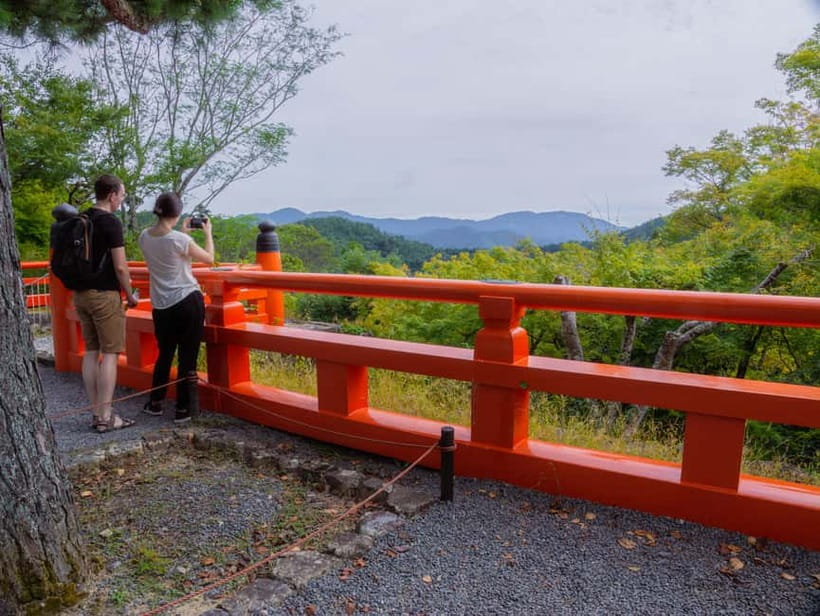
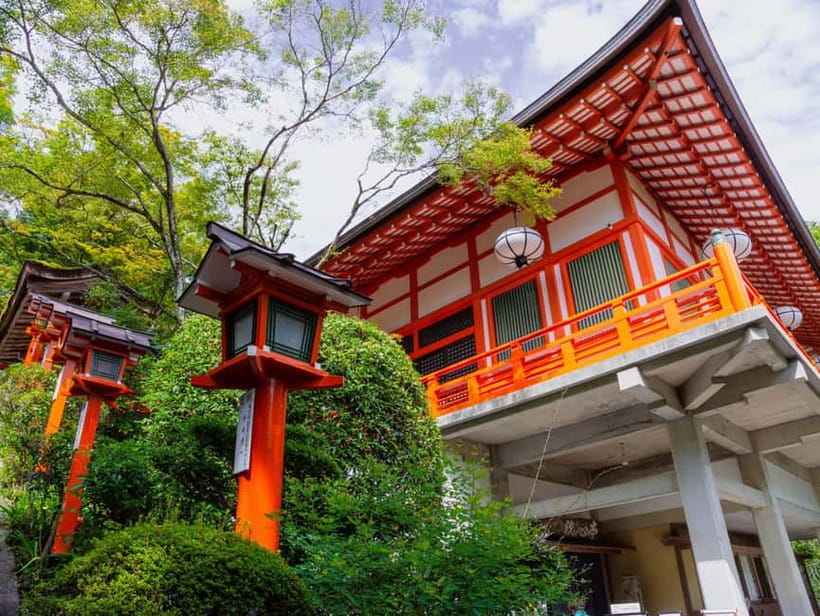
Kurama Temple sits near the top of the mountain and is the main destination of the climb. The temple is described locally as a power spot, so the visit has more weight than a quick photograph and departure.
Your guide explains the temple’s religious setting, the deities connected with it, and stories tied to the mountain. The area also has a strong connection with Reiki, a spiritual healing practice that traces its origins to Mount Kurama. If that subject interests you, the visit may feel especially meaningful. If you prefer architecture and scenery without spiritual discussion, you can still appreciate the setting, but expect the guide to give this part real attention.
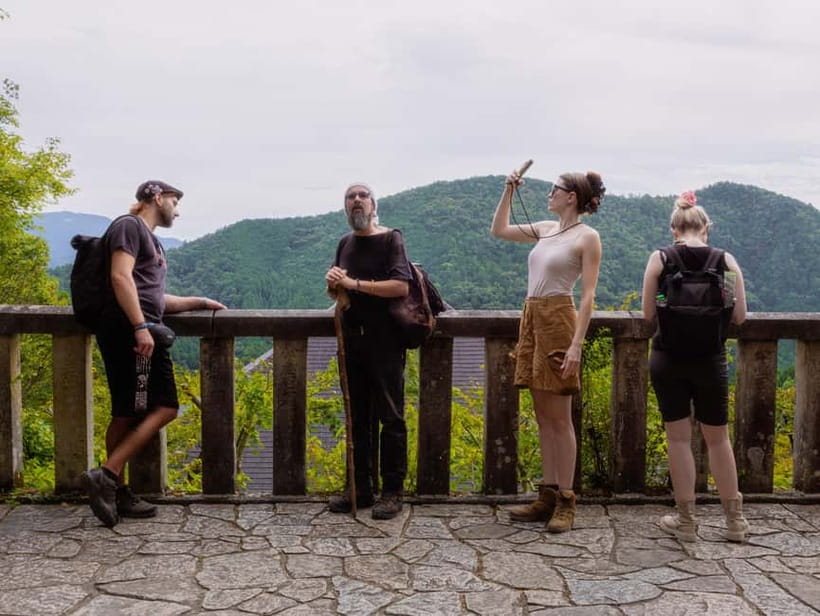
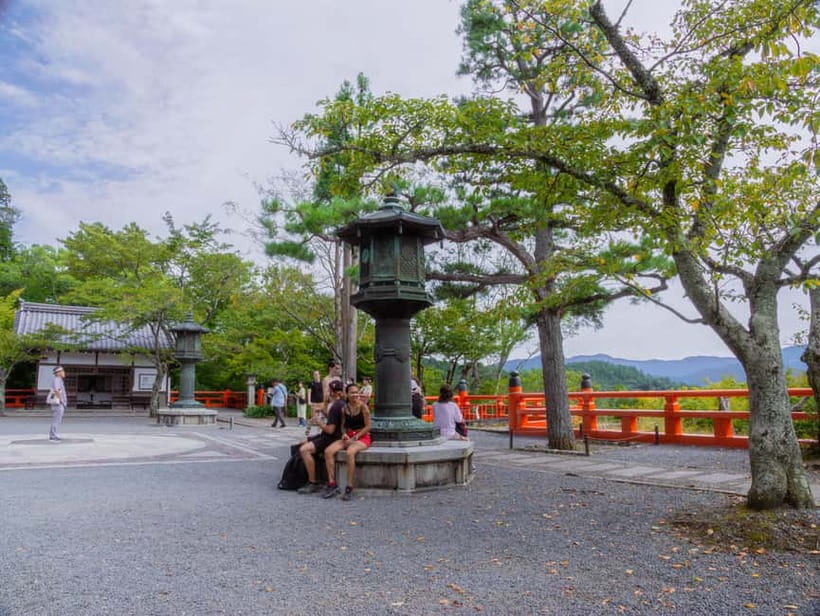
From the upper area, you can look down toward the valley and rest in the cooler mountain air. The views are one of the rewards for the climb. The feeling is less formal than visiting Kyoto’s grand central temples, since the forest and the slope remain part of the experience.
Conditions at the temple can affect what you see. Maintenance work once left the main temple partly covered by scaffolding, although entry and other features were still available. That is a useful reminder not to book this solely for one perfect temple photograph. The forest, route, stories, and valley views are important parts of the outing too.
The tour may also include less familiar corners of the mountain when time and conditions allow. One private outing included a crypt and a maze beneath the temple area. Treat such additions as guide-dependent rather than guaranteed features. They are a good reason to choose a private or small group if you want a more flexible pace.
A completely different side of Kyoto Prefecture:
- Kyoto: Zen Meditation and Garden Tour at a Temple with Lunch
★ 4.9 · 86 reviews - Kyoto Satoyama Cycling with Lunch and English Guide
★ 5.0 · 19 reviews - Kyoto 1 Day Suntory Yamazaki Distillery Tour and Asahi Art Museum
★ 5.0 · 13 reviews - Kyoto Half Day Yamazaki Whisky Museum and Asahi Art Museum
★ 5.0 · 11 reviews
Kibune Shrine and prayers for good relationships
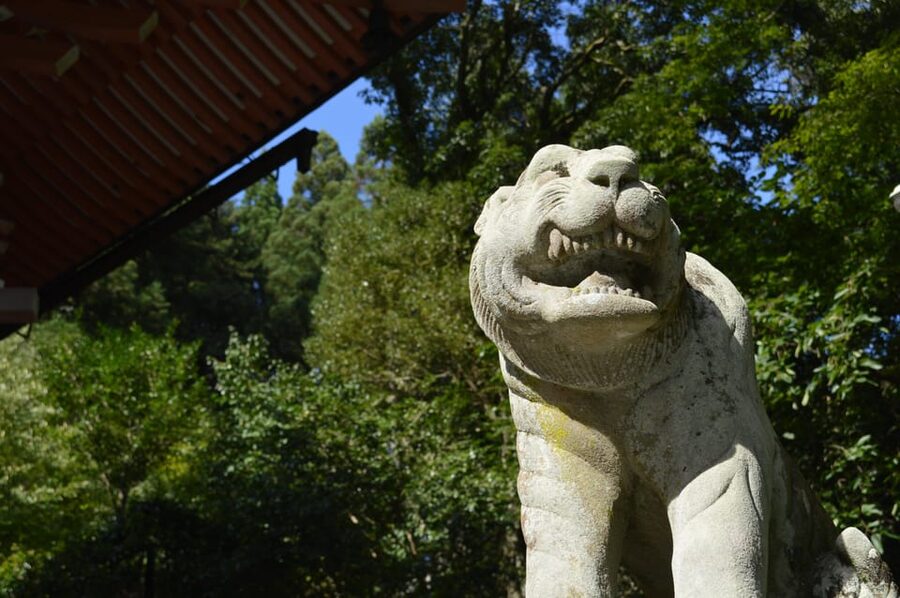
The experience also includes a visit to Kibune Shrine, a sacred site connected with prayers for good relationships. This gives the tour a second spiritual focus and helps explain why the Kurama and Kibune area has long drawn people seeking more than scenery.
The exact order and timing can depend on the route and group pace, so you should not expect every minute to be rigidly fixed. The important point is that the outing links forest walking with both Kurama’s mountain temple and Kibune’s shrine traditions.
For you, the appeal is simple: this is a chance to make a personal prayer in a quiet setting rather than rush through a major city shrine among large crowds. The guide can explain the customs and stories, while you decide how much time to give the spiritual side.
Descending to Kurama village
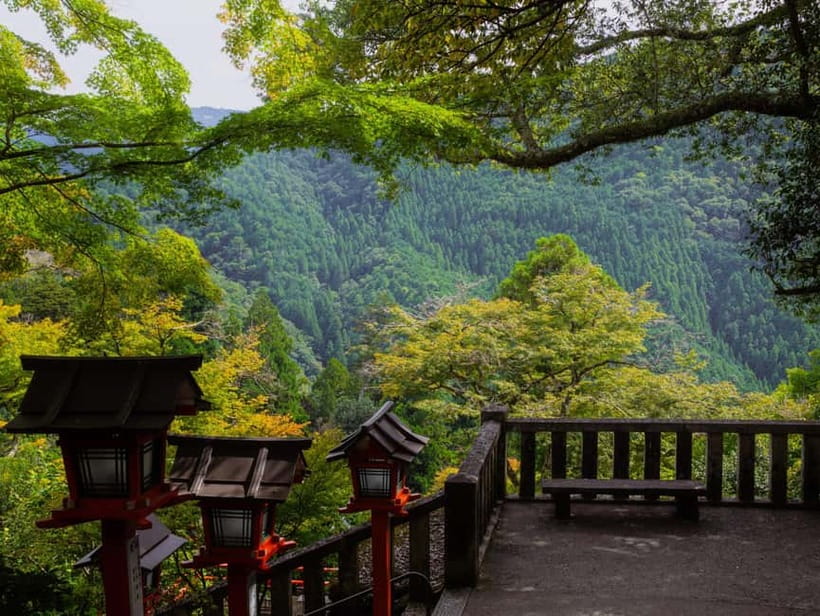
After the temple visit, you walk back down toward Kurama village. The descent is easier on your lungs but can still be demanding on your knees, especially after the uphill steps. Keep your pace controlled and do not treat the downhill section as an afterthought.
Kurama village provides a pleasant change from the forest. Here you can stop for a late lunch, stroll around, or decide how to return to Kyoto. Lunch is not included, and the tour does not promise a particular restaurant, so bring enough money and allow time if eating is part of your plan.
The village is also where the tour becomes more flexible. You can finish the guided portion and return by train, or extend the outing with a bath. This arrangement works well for independent-minded visitors who want advice but do not want a guide directing every moment of the afternoon.
Why the Kurama Hot Spring is worth planning for
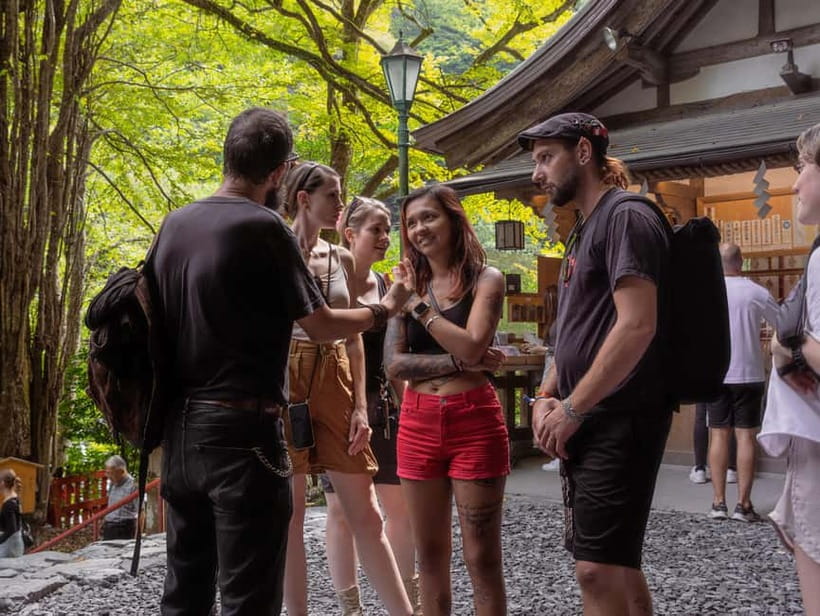
The optional hot spring bath is one of the strongest reasons to leave extra time at the end. After a climb and descent, soaking in a mountain bath is a fitting finish, especially because the outdoor bath is known for its views toward the surrounding hills.
The hot spring fee is not included, though a special discounted ticket may be available through the tour. Ask about it before you set off so you know how much time and money to reserve.
One practical warning: the bath is an option, not the guaranteed final stop of the four-hour guided activity. If you need to return to central Kyoto at a precise time, check the train timing and decide whether the bath fits. If your schedule is open, I would strongly consider it. The combination of exertion, fresh air, and a hot spring can turn a good half-day into a very satisfying mountain outing.
The guides can shape the entire experience
The guide is the most important variable here. This route has enough history, religion, and local lore to reward explanation, but the quality of that explanation depends on who leads your group.
Philippe appears repeatedly in the supplied feedback, with praise for his humor, patience, cultural background, and ability to explain temples and deities. He was also described as attentive on the climb and good at adjusting the pace. Chris was praised for taking guests to lesser-known places, while Kevin received credit for giving useful historical and cultural context. Salome and Eric were also remembered warmly.
Private and small-group options make sense if you want to ask questions or set a slower pace. The program can be flexible, particularly when the group is small. That may let you spend more time at Kurama, stop more often, or focus on subjects such as Reiki, local legends, or Japanese religious customs.
There is one important balance point. A past participant had a disappointing guide experience, describing smoking during the walk and drinking beer near the end of the tour. That is not presented as the normal standard, and most of the supplied feedback was strongly positive, but it is a reminder that guide assignments matter. If you have specific needs, state them when booking.
How hard is the hike?
The activity is described as moderate, but that word needs context. The summit can be reached in 30 to 40 minutes, yet the stair climb is continuous enough to challenge anyone who rarely hikes.
You should be comfortable walking uphill and downhill on steps. This is not suitable for children under 11, wheelchair users, people with mobility impairments, or people without hiking experience. Those restrictions are sensible rather than overly cautious.
The weather makes a real difference. In August, heat can make the climb much more tiring, so water, breathable clothing, and a slower pace matter. In spring and autumn, the forest should be more comfortable for walking. Winter can bring a crisp, quiet atmosphere, and one January outing encountered light snow and sunny conditions, but you should still dress for mountain weather.
Wear long pants if insects bother you. Comfortable shoes are essential. A small bottle of water is the minimum, and you may want a little extra if you plan to spend time in the village afterward.
Who should book this half-day outing?
I would choose this tour if you have already seen several of Kyoto’s central temples and want a change of setting. It suits people who like walking, local religious traditions, mountain scenery, and a guide who can explain what they are seeing.
It is also a good match for visitors who want a flexible finish. You can return by train, eat in Kurama, or add the hot spring. Couples may particularly enjoy the Kibune relationship prayer, while anyone interested in Reiki or Japanese spiritual practice will find the mountain’s traditions worth exploring.
I would not choose it if your main goal is a gentle sightseeing day. The climb is real, and the four-hour estimate does not include every possible extension. It is also not the right fit if you need step-free access or have no experience with hill walking.
At $80, the tour offers good value for a guide-led escape from Kyoto, especially when the guide is one of the stronger local interpreters. You are paying for transport, temple admission, route planning, and context, not for lunch or the bath. Add those costs before deciding, and remember that the return journey from Kurama is separate.
Should you book Kyoto: Hike and Hot Springs in Kurama?
Book it if you want a real mountain walk within reach of Kyoto, not another quick temple stop. The cedar forest, Kurama Temple, Kibune Shrine, and optional bath create a varied half-day with a strong sense of place.
Choose it with realistic expectations. Wear proper shoes, bring water, allow for heat, and keep your afternoon flexible if you want lunch or the hot spring. If you are fit enough for a steady stair climb and enjoy hearing the stories behind sacred places, this is one of the better ways to trade Kyoto’s busy center for the northern hills.
FAQ
Where does the tour meet?
The meeting point is Exit 7 at Demachiyanagi Station in Kyoto, in front of the Eizan Railway.
How long does the activity last?
The guided activity lasts four hours. The time spent on lunch, the hot spring, or the return journey from Kurama is separate.
What transportation is included?
Transportation during the tour is included. Transportation back to the original meeting point is not included.
Is lunch included?
No. Lunch is not included, but you can eat in Kurama village after the hike.
Is the hot spring included?
No. The hot spring fee is separate. A special discounted bath ticket may be available through the tour.
How difficult is the hike?
The hike is moderate and includes steps to the top of Mount Kurama. The summit can be reached in about 30 to 40 minutes, and you should have a decent level of fitness and some hiking experience.
What should I bring?
Bring comfortable shoes and water. Long pants are recommended if you want to reduce the chance of bug bites.
What languages are available?
The live guides speak English or French. Private and small-group options are available.
Recently added around Kyoto Prefecture
- 7hr Private Wazuka True Hidden Kyoto Matcha Farm Experience★ 5.0 · 3 reviews
- Shibori Fukusa Course at Kyoto Shibori Museum★ 5.0 · 3 reviews
- Kyoto Satoyama Cycling with Lunch and English guide★ 5.0 · 4 reviews
- Kyo-arashi Shibori Scarf Class at Kyoto Shibori Museum★ 5.0 · 6 reviews
- Arashiyama Walking Tour with Optional Sagano Romantic Train Ride★ 5.0 · 6 reviews
- Amanohashidate Sand bar & culture e-bike tour★ 5.0 · 7 reviews
- kyoto:Experience creating one-of-a-kind special fragrances★ 4.8 · 8 reviews
- Kyoto’s ONLY COUNTRYSIDE E-Bike Tour with a Japanese Local!★ 5.0 · 9 reviews
Hiking & Trekking, compared.
Fushimi Inari Hidden Hiking Tour (Private Option Available)
Read our review →
Kyoto Hiking Tour: The Nature and Legends of Kurama and Kibune
Read our review →
Kyoto Arashiyama Bamboo Forest Hiking Tour(Hidden Temples)
Read our review →
Ninja Trekking half-day tour at Mt.Daimonji Kyoto
Read our review →Browse the lists this tour appears in