
REVIEW · GION GEISHA DISTRICT TOURS
Gion Nocturno: Secretos y Leyendas de las Geishas
Gion changes character after sunset. The daytime crowds thin out, the wooden lanes grow quieter, and the district’s old tea houses become easier to appreciate. This two to three-hour evening walk focuses on that calmer side of Kyoto, with stops at Minamiza Theater, Tatsumi Bridge, Hanamikoji Street, Gion Corner, and Yasaka Shrine.
I like the small maximum of 15 people, which gives the guide room to explain customs and answer questions. I also like the route itself: it links major Gion sights with the less obvious stories of geisha life, rather than treating the district as a quick photo stop. The main consideration is that the tour ends at Gion Corner, and admission there is not included, so check your plans if you hoped to attend a performance.
In This Review
- Key points to know before booking
- Why Gion works better after sunset
- Starting at Minamiza Theater
- Tatsumi Bridge and Gion Shinbashi
- Hanamikoji Street and the old machiya
- Gion Corner and the question of extra admission
- Yasaka Shrine and the final stretch
- What the $21.80 price really buys you
- Who should book this evening walk
- Booking and practical details
- Should you book Gion Nocturno?
- FAQ
- How long does the Gion Nocturno tour last?
- How many people can join the tour?
- Where does the tour begin?
- Where does the tour finish?
- Is admission to Gion Corner included?
- Is the tour available with a mobile ticket?
- Can I cancel for a full refund?
Key points to know before booking
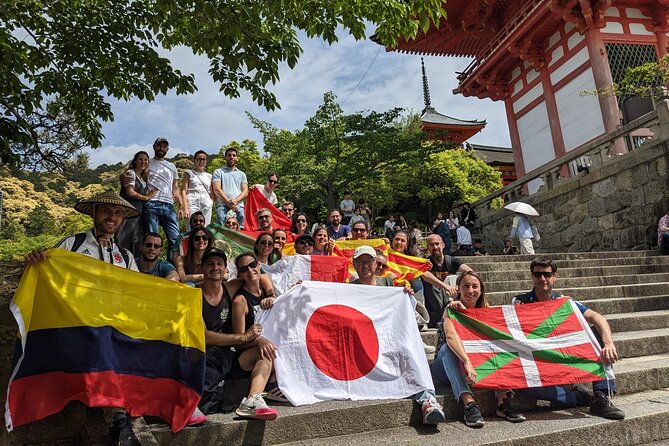
- Gion after dark: The evening timing offers a quieter look at Kyoto’s famous geisha district.
- Five central stops: The route includes Minamiza Theater, Tatsumi Bridge, Hanamikoji Street, Gion Corner, and Yasaka Shrine.
- Small-group format: The tour accepts no more than 15 people, a useful size for questions and guide interaction.
- Guides with different strengths: Sergio is described as especially strong on geisha history, while Michael is noted for being polite and engaging.
- Good price for a guided walk: At $21.80 per person, the tour costs less than many ticketed cultural activities, though Gion Corner admission is extra.
- Flexible booking terms: You receive a mobile ticket and can cancel for a full refund up to 24 hours before the start time.
Why Gion works better after sunset
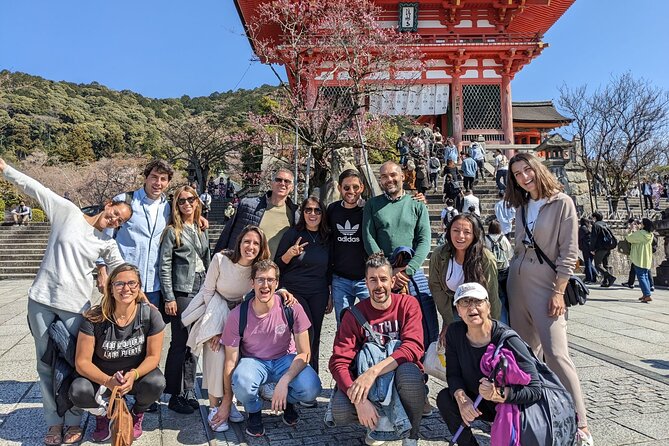
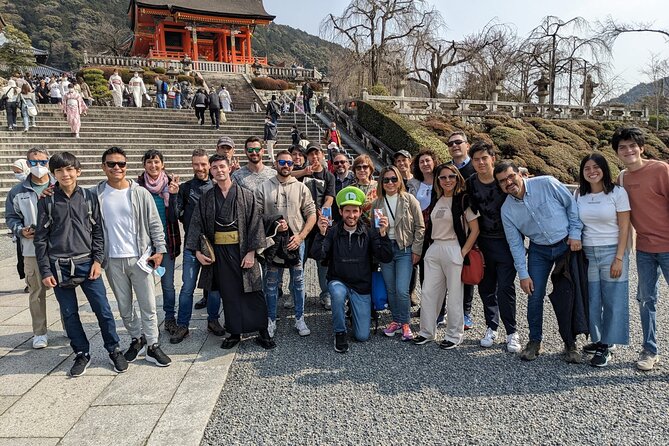
Gion is one of Kyoto’s most photographed districts, but daytime sightseeing can make it hard to see the place clearly. Tour groups, cameras, and people searching for a glimpse of a maiko can crowd the same narrow streets. An evening walk does not remove all activity, but it gives the neighborhood a slower rhythm.
That timing also fits the subject. Gion’s traditional entertainment culture has always been linked to the evening, when tea houses and performance venues come into their own. You are not simply walking through old buildings. You are learning why this district developed around music, dance, dining, and personal hospitality.
Keep your expectations sensible. This is a walking tour about the world of geisha, not a guaranteed geisha sighting or a private meeting with one. The value lies in the setting and the explanations. You see the streets where this culture operates, while the guide helps you understand what you are looking at.
The group limit matters here. With no more than 15 people, you should be able to hear the guide in the narrow streets and ask a question without holding up a large crowd. It also makes the walk feel more personal than a standard city orientation tour.
More evenings in Gion:
- Kyoto Geisha Walking Tour: Gion District & Hidden Gems
★ 4.7 · 3,273 reviews - Kyoto: Gion Magical Night Walking Tour with Geisha Trivia
★ 4.9 · 2,393 reviews - Kyoto: Gion Geisha District Walking Tour – Stories of Geisha
★ 4.7 · 2,187 reviews
Starting at Minamiza Theater
The meeting point is Minamiza Theater, at the eastern end of Shijo Bridge in Kyoto’s Higashiyama Ward. This is a practical starting place because the theater is easy to identify and sits near public transportation.
Minamiza is closely tied to kabuki, one of Japan’s best-known traditional theater forms. The building provides a useful introduction to the performance culture connected with Gion. Kabuki is known for elaborate costumes, dramatic makeup, stylized movement, and emotional storytelling. Even if you do not attend a show, the theater helps explain why this part of Kyoto became such an important center for traditional entertainment.
The scheduled stop here is about 10 minutes, with no admission fee. That makes it an orientation stop rather than a full theater visit. You should expect to learn about the building and its cultural role, then move on into the streets.
If you arrive early, use the time to find the group and get comfortable before the walk begins. The route moves through central Gion, so comfortable shoes are a good idea. Nothing in the tour description suggests difficult hiking, and most people can participate, but Kyoto’s traditional lanes are still best handled at an easy walking pace.
Tatsumi Bridge and Gion Shinbashi
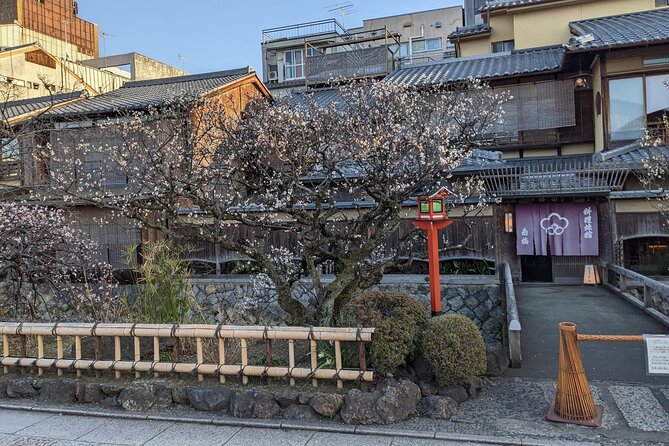
From Minamiza, the walk continues toward Tatsumi Bridge and the Gion Shinbashi area. This is one of the most atmospheric sections of the route, with stone lanes, traditional wooden buildings, and tea houses gathered around the Shirakawa area.
The appeal here is visual, but the guide’s explanation is what gives the scene meaning. Gion is not simply an old neighborhood preserved for visitors. It is a working district with rules, customs, and a long connection to the arts. A good explanation can help you understand the difference between a geisha, a maiko, a tea house, and the wider entertainment system that supports them.
This stop lasts about 10 minutes and is free. That short time means you will not linger at one viewpoint for a long photo session. Instead, you get a compact look at one of Gion’s most recognizable corners before continuing through the district.
Please bring a respectful attitude. The tour description presents Gion as a real setting for geisha culture, not a stage built for sightseeing. Keep voices low, follow the guide’s instructions, and avoid treating people or private establishments as photo props. The experience is more rewarding when you pay attention to the streets and the stories rather than chasing a picture.
Hanamikoji Street and the old machiya
Hanamikoji Street is the best-known stretch of traditional Gion. Its wooden machiya buildings, tea houses, and restaurants create the old Kyoto image many people hope to see.
The architecture is a major part of the stop. Machiya are traditional urban townhouses, and their narrow street fronts can make the buildings look smaller than they are. The street gives you a clear sense of how Gion’s design supports privacy and controlled access. From the outside, many establishments reveal very little. That reserve is part of the district’s character.
The guide’s role becomes especially useful here. You can learn about the careers and daily lives associated with geisha culture, including the training and performance work that shape the profession. Sergio, one of the guides associated with this experience, is specifically noted for his strong background in the history of geisha life. If that subject is your main reason for booking, a guide with this focus can make the walk far more useful than a simple architecture tour.
The stop is listed at about 10 minutes and does not include an admission charge. You should not expect to enter tea houses or restaurants as part of the walk. The point is to see the street, understand its purpose, and hear how the district functions.
Hanamikoji can also be the busiest part of the route, even at night. The evening schedule improves the atmosphere, but it does not guarantee an empty street. Stay with the group and be prepared for a steady walking pace.
A completely different side of Kyoto:
- PERFECT KYOTO 1-Day Bus Tour
★ 5.0 · 13,518 reviews - Kyoto: Fushimi Inari, Kinkakuji, Bamboo Grove 1 Day Bus Tour
★ 4.8 · 4,316 reviews - Kyoto: Tea Ceremony in a Traditional Tea House in Kiyomizu
★ 4.9 · 3,519 reviews - Kyoto: Tea Ceremony Ju-An at Jotokuji Temple
★ 4.9 · 3,207 reviews
Gion Corner and the question of extra admission
Gion Corner is both a stop on the route and the ending point. It is a cultural venue where visitors can see several Japanese traditions presented in one setting. The description connects it with arts such as traditional theater and other forms of Japanese performance.
The tour stops here for about 10 minutes, but admission to a performance is not included. That distinction is important. You will finish in front of Gion Corner, not automatically receive a show ticket. If you want to attend a performance, you need to arrange that separately and confirm current schedules and prices.
This arrangement can be useful if you prefer flexibility. You can finish the walking tour and decide how to spend the rest of your evening. It can also be a drawback if you expected the tour price to include a cultural show. At $21.80, the walk remains reasonably priced, but the total cost rises if you add a ticket.
Gion Corner makes a sensible final stop because it connects the streets you have just seen with the performing arts that helped shape the district. The walk gives you context first. A separate performance, if available, lets you see some of those traditions on stage.
Yasaka Shrine and the final stretch
Yasaka Shrine, also called Yasaka Jinja or Gion Shrine, is one of Kyoto’s best-known Shinto shrines. It has more than a thousand years of history and sits directly beside the Gion district, making it a natural part of this route.
The shrine offers a change of mood. Gion’s tea houses and entertainment streets are closely built and private. Yasaka Shrine feels more open and ceremonial. Its presence shows that the neighborhood is not only about restaurants, theaters, or geisha culture. Religious life has also shaped this part of Kyoto for centuries.
The stop is scheduled for about 10 minutes and is free. That is enough for an introduction and a look around, but not a full shrine visit. If you want time to explore the grounds at length, plan to return on your own after the tour.
The route ends in front of Gion Corner, near Yasaka Shrine and the southern side of Gion. This is convenient for continuing your evening in the area. It also means the walk does not return you to Minamiza Theater, so keep the endpoint in mind when arranging transportation.
What the $21.80 price really buys you
At $21.80 per person, this is priced as an affordable guided introduction rather than a premium private experience. You are paying for a two to three-hour evening walk, a guide’s explanations, and a route through several of Kyoto’s most important Gion landmarks.
The value is strongest if you want context. You can walk through Hanamikoji Street and Tatsumi Bridge on your own for free, but it is harder to understand the role of geisha culture, kabuki, tea houses, and shrine life without some explanation. The guide turns a pleasant walk into a more informed one.
The price is less compelling if you want entry to paid attractions. Gion Corner admission is not included, and the route does not promise access to tea houses or a performance. Think of this as a neighborhood and culture walk, not a bundled sightseeing ticket.
The published score is 4.9 from 140 reviews, with 99 percent recommending the experience. That is a strong satisfaction record, and the most praised qualities are clear: guides who cover the important places, engaging explanations, and a sense of seeing Gion in a more authentic setting. Still, one piece of feedback raises a useful caution. Michael is described as polite and engaging, but one participant felt that some historical details were not always accurate. I would treat the guide’s commentary as a helpful introduction, while checking important historical claims through a museum, book, or official source if you want academic precision.
Who should book this evening walk
I would recommend it to first-time Kyoto visitors who want a clear introduction to Gion without paying for a private guide. It suits people interested in geisha culture, traditional performance, Japanese architecture, and the atmosphere of old Kyoto streets.
It also works well for couples, solo visitors, and small groups who prefer a structured evening. The maximum of 15 people is small enough for a personal feel, but the tour is not advertised as private.
You should also consider it if daytime Gion felt too crowded. The evening setting is the main reason to choose this walk over a standard daytime orientation. You see the same district under more suitable conditions, with fewer distractions and a stronger connection to its traditional role.
I would be more cautious if your priority is entering historic buildings, attending a show, or meeting geisha. Those are not included. The tour explains the world of Gion from its public streets, and that is valuable, but it is different from a backstage cultural experience.
The tour is also not ideal for anyone who wants to move at their own pace. The schedule gives each major stop about 10 minutes, with walking between them. You will gain structure and coverage, but not unlimited time for photographs or independent exploration.
Booking and practical details
You receive confirmation when booking, along with a mobile ticket. The meeting point is Minamiza Theater, near Shijo Bridge in Higashiyama Ward. The endpoint is in front of Gion Corner, so plan your return journey from there rather than assuming you will finish where you started.
The experience is near public transportation, and most people can participate. The group is limited to 15 participants. It is usually booked about 38 days ahead, so reserve early if your Kyoto dates are fixed, particularly during popular travel periods.
You can cancel for a full refund up to 24 hours before the local start time. Changes made inside that 24-hour window are not accepted, and late cancellations are not refunded. The activity also requires a minimum number of participants, so a cancellation by the operator can result in another date or experience, or a full refund.
Should you book Gion Nocturno?
Book it if you want an affordable, evening introduction to Gion with a small group and a clear focus on geisha culture. The route covers the district’s major sights, and guides such as Sergio can add useful depth to the story of geisha careers and traditional entertainment.
Skip it if you mainly want a paid performance or guaranteed geisha encounter. Those are not part of the package, and Gion Corner admission costs extra.
For most first-time visitors, the $21.80 price is fair. You get a well-chosen route, a quieter time of day, and explanations that help the streets make sense. Just arrive ready to walk, keep your expectations realistic, and treat Gion as a living neighborhood rather than a photo set.
FAQ
How long does the Gion Nocturno tour last?
The tour lasts approximately two to three hours.
How many people can join the tour?
The group has a maximum of 15 participants.
Where does the tour begin?
The meeting point is Minamiza Theater, at Shijo Bridge in Nakanocho, Higashiyama Ward, Kyoto.
Where does the tour finish?
The tour ends in front of Gion Corner at 570-2 Gionmachi Minamigawa, Higashiyama Ward, Kyoto.
Is admission to Gion Corner included?
No. The tour stops at Gion Corner, but admission is not included in the price.
Is the tour available with a mobile ticket?
Yes. Confirmation is provided at the time of booking, and the experience features a mobile ticket.
Can I cancel for a full refund?
Yes. You can cancel at least 24 hours before the experience start time for a full refund. Cancellations or changes made less than 24 hours before the start time are not refunded or accepted.
Recently added around Kyoto
- Higashiyama | Kyoto: Sakura Season Private Rickshaw Tour★ 5.0 · 3 reviews
- Kyoto Kimono Rental CHAMATSU|Kimono/Yukata Rental FamilyPlan★ 5.0 · 3 reviews
- Kyoto: Half-Day Private Guided Tour to the Old Town of Gion★ 4.4 · 3 reviews
- Nara Private Customizable Half Day Tour★ 5.0 · 3 reviews
- Kansai Region Hiking Adventure in Nara Kobe Kyoto and More★ 5.0 · 3 reviews
- Full Day Nara Deer, Temple, Shrine, Activities & Tea Ceremony★ 5.0 · 3 reviews
- Nara: Essential Private Tour with Deer Park and Temples★ 5.0 · 3 reviews
- Hiking Tour for Sacred Sites in Kyoto with a Guide★ 5.0 · 3 reviews
Gion Geisha District Tours, compared.

Kyoto Geisha Walking Tour: Gion District & Hidden Gems
Read our review →
Gion Magical Night Walking Tour with Geisha Trivia
Read our review →
Gion Geisha District Walking Tour – Stories of Geisha
Read our review →
Best of Kyoto: Gion, Geisha, Pagodas & Cobblestones
Read our review →

Kyoto Night Foodie Tour in Gion (9+ dishes + 6 Sake tastings)
Read our review →
Kyoto Gion Geisha District Walking Tour – The Stories of Geisha
Read our review →
Kyoto Gion: 2-Hour Geisha Culture & History Walking Tour
Read our review →Browse the lists this tour appears in