
REVIEW · GION GEISHA DISTRICT TOURS
Dance and Game with Maiko
A maiko dance can turn a short Kyoto stop into something special. In this 30 to 45-minute program, you watch two graceful performances, see a traditional game between a maiko and audience volunteers, and pose for a photo at close range. I like the small-group feel and the chance to receive a Senjafuda lucky charm. I also like that it fits neatly into a packed sightseeing day.
The main catch is timing. The program is advertised as 45 minutes, but several recent ratings describe the main event ending after about 30 minutes, with the photo and chatting period bringing the total closer to the stated length. The venue is a regular building rather than an ochaya, and you must climb stairs.
In This Review
- Key points to know before booking
- Why this short maiko program works in Kyoto
- Getting to the venue from Gojo Station
- The opening dance performance
- The traditional game with audience volunteers
- Close-up photo and Senjafuda gift
- What the price means at $28 per person
- Language, atmosphere, and group dynamics
- Best fit for your Kyoto schedule
- Booking details worth keeping in mind
- Should you book Dance and Game with Maiko?
- FAQ
- Where does Dance and Game with Maiko take place?
- How long does the experience last?
- What is included in the $28 price?
- Are children under two free?
- Is the venue a traditional ochaya?
- Is there an elevator?
- Is English available?
- Will a maiko always appear?
- Can I take a photo with the performer?
- Can I cancel for a full refund?
Key points to know before booking
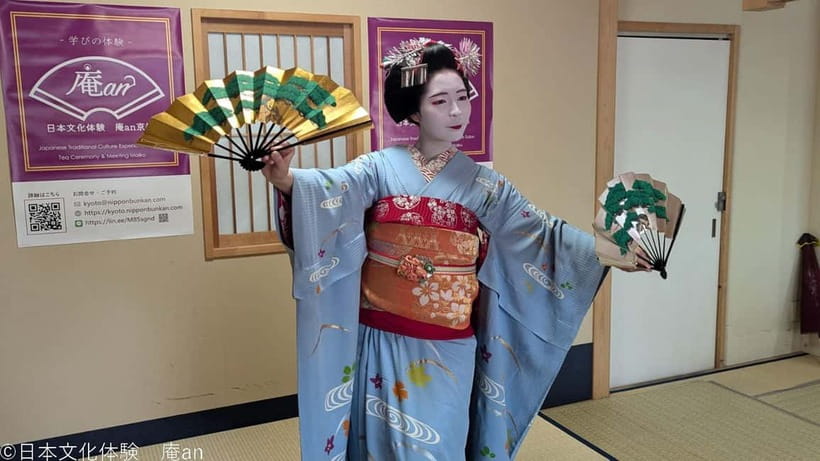
- Two maiko dances: Watch elegant performances based on seasonal scenes, love stories, and daily life.
- A lively traditional game: Audience volunteers may play with the maiko while everyone else claps and cheers.
- Photo opportunity: Take a commemorative picture beside the maiko after the formal program.
- Senjafuda keepsake: You receive a small lucky charm to remember your Kyoto visit.
- Easy central meeting point: The venue is one minute from Exit 1 of Gojo Station on the Karasuma subway line.
- Compact but variable timing: Expect the formal portion to last around 30 minutes, followed by photos and conversation.
Why this short maiko program works in Kyoto
Kyoto offers plenty of grand sights, but not every visitor has time for a full tea ceremony, evening entertainment, or a meal with a maiko. This experience answers a practical problem: you can meet a maiko without giving up half a day.
The format is simple. You enter a relaxed venue near Gojo Station, watch two dances, see a traditional game, take a photo, and receive a Senjafuda. There is no special dress code or preparation. That makes it easy to place between the Nishiki Market area, Kyoto Station, and central Kyoto sights.
I especially like the balance between watching and joining. The dances give you a quiet look at a formal art, while the game adds a bit of noise and fun. You do not need to volunteer, so shy children and adults can enjoy the event from their seats. If you are willing to join, the staff may invite volunteers from the room.
The program has a rating of 3.9 out of 5 from 46 ratings, which fits the experience well. The strongest reactions praise the maiko, the beauty of the dance, and the game. The less enthusiastic comments focus mainly on the program feeling shorter than expected. Set your expectations correctly and the value becomes easier to judge.
More evenings in Gion:
- Kyoto Geisha Walking Tour: Gion District & Hidden Gems
★ 4.7 · 3,273 reviews - Kyoto: Gion Magical Night Walking Tour with Geisha Trivia
★ 4.9 · 2,393 reviews - Kyoto: Gion Geisha District Walking Tour – Stories of Geisha
★ 4.7 · 2,187 reviews
Getting to the venue from Gojo Station
The meeting point is one minute from Exit 1 of Subway Karasuma Line Gojo Station. The entrance faces Gojo-dori, the main street, which helps you find it without a long search through side lanes.
That central location is one of the best practical features. Gojo sits between Kyoto Station and the downtown core, so you can reach the program by subway rather than arranging a special transfer. Still, allow a little extra time. The event cannot be held for late arrivals, and the operator does not compensate for transportation costs if you miss it.
The building has no elevator. You need to use stairs to reach the venue, so this experience may be difficult if you cannot climb them. Children under two can sit on a parent’s lap free of charge. If a child needs a separate seat or meal, the regular one-person fee applies, although this program itself is focused on the performance rather than dining.
The venue is not an ochaya, the traditional teahouse setting associated with geiko and maiko entertainment. It is inside a building with a relaxed atmosphere and friendly staff. That is worth knowing before you arrive. You are getting a practical public introduction, not entry into a private Kyoto teahouse.
The opening dance performance
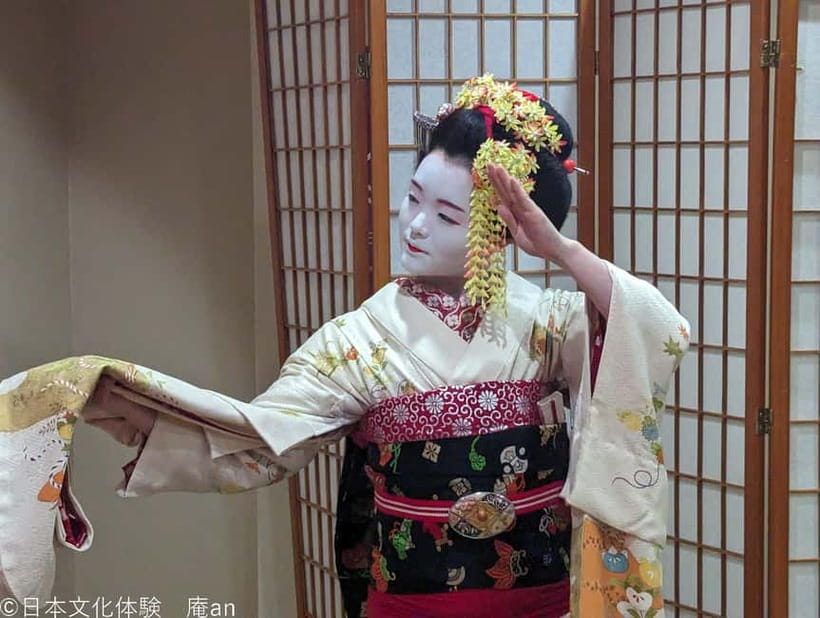
The program begins with a maiko dance. You watch from the room as the dancer moves with careful posture and controlled gestures, accompanied by traditional music.
The performances portray scenes connected with Japan’s seasons, love stories, and ordinary life. You may not understand every detail of the story, but the movement gives you a visual way into the subject. Small motions matter here. A turn of the head, the handling of a fan, or a measured step can carry more weight than a large theatrical gesture.
Two dances are included. That matters because one performance can feel like a quick introduction, while two give you a better sense of the form. You can compare the mood and movement of each piece, and you have two chances to take photographs from your seat.
Photography is allowed during the performance according to the activity description, so keep your camera ready. Since this is a short program, you do not need to spend the entire time taking pictures. I would watch the first dance with your own eyes, then use the second for a few careful images.
The maiko’s appearance is part of the appeal, but the dance is the heart of the experience. The costume, hairstyle, makeup, and restrained movement create a formal presentation. You should come with patience for a quiet art form, not expect a high-energy stage show.
Depending on the situation, a geiko may appear instead of a maiko. Both are trained performers in Kyoto’s traditional entertainment world, but the exact person is not guaranteed. If meeting a maiko specifically is essential to your plans, keep this substitution in mind.
The traditional game with audience volunteers
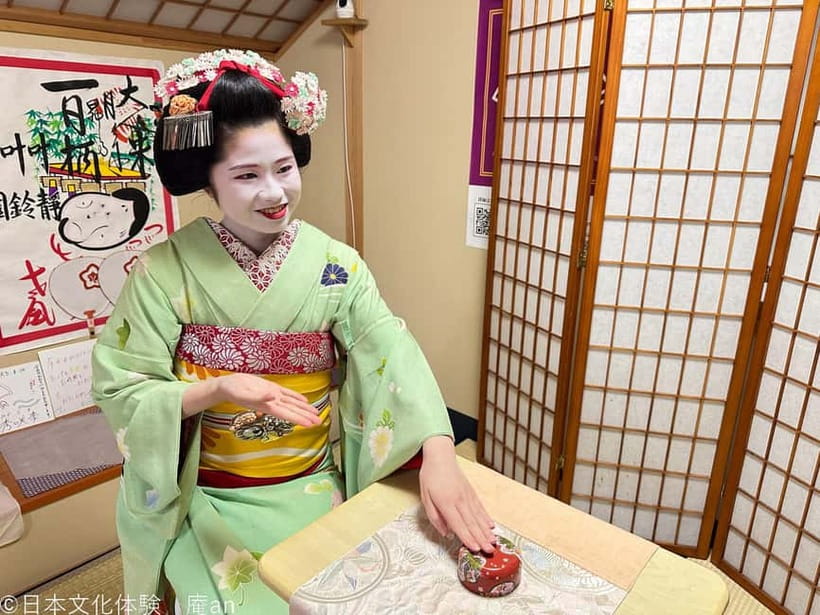
After the dance, the tone changes. A maiko plays a traditional game with volunteers from the audience. It is described as simple and exciting, and the rest of the room can clap and cheer along.
This part gives the event its social spark. You are not just sitting through a formal display. The game creates a direct connection between the performer and the people in the room. It also helps explain why the experience can appeal to families, even if younger children feel too shy to take part.
You do not have to volunteer. In fact, a recent family rating noted that children wanted to participate but felt embarrassed in front of the room. That is useful advice: talk with your children before the event and let them know that watching is perfectly fine. If they want to play, they can volunteer, but there is no need to pressure them.
The game may be the most memorable section for some people because it is unscripted in feel, even within a guided program. You see the maiko in a lighter setting, and the audience becomes part of the mood. If you prefer a formal cultural lecture, this may feel less substantial. If you enjoy shared activities, it adds welcome variety.
The available information does not name the game, so I would not book this expecting a particular famous contest. Think of it as a short traditional Japanese play activity that helps you connect with the performer.
A completely different side of Kyoto:
- PERFECT KYOTO 1-Day Bus Tour
★ 5.0 · 13,518 reviews - Kyoto: Fushimi Inari, Kinkakuji, Bamboo Grove 1 Day Bus Tour
★ 4.8 · 4,316 reviews - Kyoto: Tea Ceremony in a Traditional Tea House in Kiyomizu
★ 4.9 · 3,519 reviews - Kyoto: Tea Ceremony Ju-An at Jotokuji Temple
★ 4.9 · 3,207 reviews
Close-up photo and Senjafuda gift
Around the 30-minute mark, the formal program ends and the photo period begins. You can take a commemorative picture beside the maiko. This close-up moment is a major reason to choose this experience over simply watching a performance from a distance.
Have your camera or phone ready before your turn. A staff member may help organize the photo, but the available details do not promise a professional photographer or unlimited shots. The safest assumption is one brief commemorative opportunity, not a private portrait session.
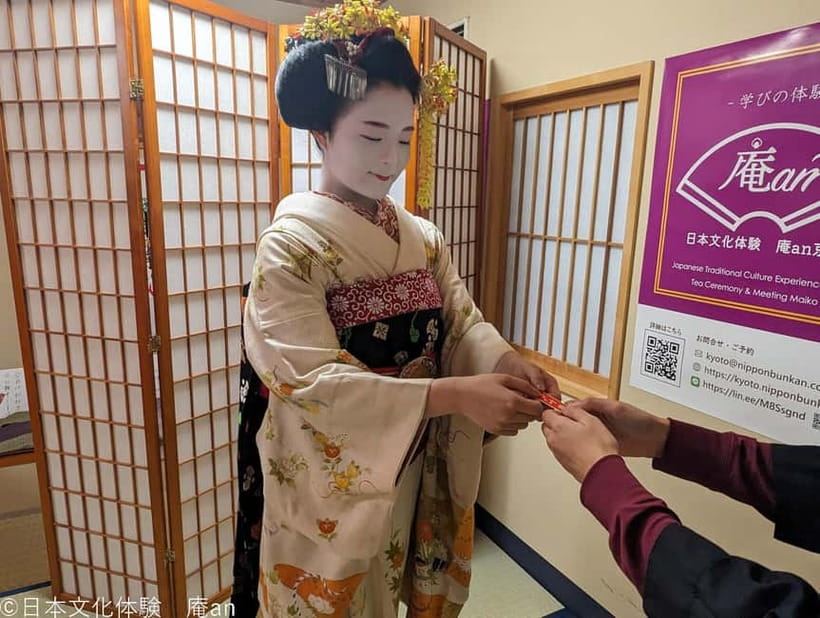
After the photo, the maiko gives you a Senjafuda. This is a small paper charm or name card associated with Japanese traditional entertainment and good fortune. It is an inexpensive object, but it gives the visit a physical memory you can carry home.
The sequence is unusual in a good way. You first watch the maiko in a formal role, then see a playful side during the game, and finally meet her beside you for a picture. That progression gives the short program more shape than a dance-only performance.
The maiko then leaves the room, and you have chatting time before departure. The full schedule lists the program beginning at zero minutes, the dance and game running to about 30 minutes, the photo and Senjafuda presentation after that, and room departure at 45 minutes. In practice, the central performance may finish closer to 30 minutes, so treat the last 15 minutes as a flexible photo and conversation period.
What the price means at $28 per person
At $28 per person, this is priced as a short cultural introduction rather than a full Kyoto evening. The fee includes the Dance and Game with Maiko program, the photo opportunity, and the Senjafuda gift. Children under two are free when sitting on a parent’s lap.
I think the price is fair if you value access and convenience. A short activity near a subway station can fit into a busy day, and you get three different elements: formal dance, audience game, and personal photo. The Senjafuda adds a small keepsake without requiring extra shopping.
The value is less convincing if you want a long performance, a meal, or a traditional teahouse setting. This is not an ochaya visit, and it does not include the tea ceremony offered by separate programs. If you are already planning a tea ceremony with a maiko, compare the two experiences rather than assuming this one includes tea. It does not.
The timing issue also affects value. Some recent ratings describe the experience as shorter than the advertised 45 minutes, with the main portion lasting about 30 minutes. I would measure the price against the complete appointment, including photos and chatting, rather than expect 45 minutes of continuous dance and game action.
Language, atmosphere, and group dynamics
The official operating language is Japanese. English translation is provided as much as possible if requested, so contact the operator before booking if you need help following the explanation or game instructions.
Do not assume that every spoken detail will be translated fully. The dances are visual, and the game can be understood through demonstration, but language support may vary. If cultural explanation is your main reason for booking, send your request early.
The room may also be shared with people having lunch or dinner. That means the setting may not feel like a silent theater. Depending on the schedule, you could see diners in the same building or room. For some people, this adds an everyday Kyoto feeling. For others, it may make the occasion feel less private.
The group size appears to be modest, with one recent rating describing only a few people in the room. Exact capacity is not provided, so I would not count on a private performance. A smaller room can make the photo and game feel more direct, but it also means volunteers may feel more visible.
The staff are described as friendly, and no special preparation is required. That makes this a good choice for first-time visitors who want an introduction without learning formal etiquette beforehand.
Best fit for your Kyoto schedule
I would recommend this for you if you have limited time but still want a close look at traditional Kyoto performance. It suits couples, solo visitors, families with older children, and anyone who wants a cultural activity that does not require an evening commitment.
It is especially useful on a Gojo-based day. You can reach the venue quickly from the subway, then continue toward Kyoto Station or central Kyoto. The 45-minute booking window is short enough to plan around, but remember that late arrivals cannot be accommodated.
Families should decide in advance how they feel about the game. Children under two can sit on a parent’s lap free of charge, but older children need their own paid place. Young participants may enjoy the colorful costume and photo while still feeling shy about playing in front of others.
I would hesitate to recommend it if you need wheelchair access, since the building has no elevator. I would also choose another program if you specifically want tea, a meal, or a traditional house. Those features are not included here.
Booking details worth keeping in mind
Operating hours are from 10:00 to 17:00, and reservations received after 17:00 are processed the next day. The available cancellation terms allow a full refund when you cancel at least eight days in advance.
After the cancellation-fee period begins, changing the date or time can also involve a specified fee. The operator will not compensate you for transportation costs if you cancel or miss the event, so check your plans before paying.
The provider is B.B. Advisors Inc. AN KYOTO. The instructor is Japanese, and an English translation request should be made ahead of time. Participants who are not booked for the experience cannot enter, so do not assume a friend can wait inside.
Should you book Dance and Game with Maiko?
Book it if you want a short, accessible introduction to maiko culture with more than a stage performance. The two dances offer a graceful cultural look, the game keeps the mood light, and the photo plus Senjafuda gives you a personal reminder of the meeting.
Skip it if you expect a long show, a private teahouse, tea ceremony, or a guaranteed 45 minutes of continuous entertainment. For the best experience, allow the full 45-minute appointment, arrive early at Gojo Station, request English help before booking, and prepare yourself for a program whose main performance may finish after roughly 30 minutes.
At $28, the strongest value comes from convenience and personal contact. It is not a grand Kyoto night out. It is a tidy, friendly way to meet a maiko when your itinerary has no room for anything larger.
FAQ
Where does Dance and Game with Maiko take place?
The venue is one minute on foot from Exit 1 of Gojo Station on Kyoto’s Karasuma subway line. The entrance faces Gojo-dori.
How long does the experience last?
The full appointment is listed as 45 minutes. The dance and game portion may finish at about 30 minutes, followed by the photo, Senjafuda gift, and chatting time.
What is included in the $28 price?
The price includes the Dance and Game with Maiko program. It also includes the opportunity to take a photo with the maiko and receive a Senjafuda charm.
Are children under two free?
Yes. Children under two are free when they sit on a parent’s lap. If a separate seat or meal is required, the regular one-person fee applies.
Is the venue a traditional ochaya?
No. The program takes place in a building rather than an ochaya or traditional Japanese house.
Is there an elevator?
No. The building has no elevator, and you need to use stairs to reach the venue.
Is English available?
The operating language is Japanese. English translation is provided as much as possible if requested, so contact the operator before booking if you need it.
Will a maiko always appear?
A geiko may appear instead of a maiko depending on the situation.
Can I take a photo with the performer?
Yes. A commemorative photo opportunity takes place after the main dance and game program.
Can I cancel for a full refund?
You can cancel up to eight days in advance for a full refund. Cancellation or schedule-change fees may apply after that point.
Recently added around Kyoto
- Higashiyama | Kyoto: Sakura Season Private Rickshaw Tour★ 5.0 · 3 reviews
- Kyoto Kimono Rental CHAMATSU|Kimono/Yukata Rental FamilyPlan★ 5.0 · 3 reviews
- Kyoto: Half-Day Private Guided Tour to the Old Town of Gion★ 4.4 · 3 reviews
- Nara Private Customizable Half Day Tour★ 5.0 · 3 reviews
- Kansai Region Hiking Adventure in Nara Kobe Kyoto and More★ 5.0 · 3 reviews
- Full Day Nara Deer, Temple, Shrine, Activities & Tea Ceremony★ 5.0 · 3 reviews
- Nara: Essential Private Tour with Deer Park and Temples★ 5.0 · 3 reviews
- Hiking Tour for Sacred Sites in Kyoto with a Guide★ 5.0 · 3 reviews
Gion Geisha District Tours, compared.
Kyoto Geisha Walking Tour: Gion District & Hidden Gems
Read our review →
Gion Magical Night Walking Tour with Geisha Trivia
Read our review →
Gion Geisha District Walking Tour – Stories of Geisha
Read our review →
Best of Kyoto: Gion, Geisha, Pagodas & Cobblestones
Read our review →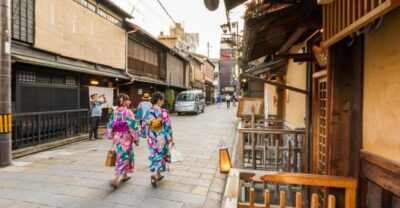
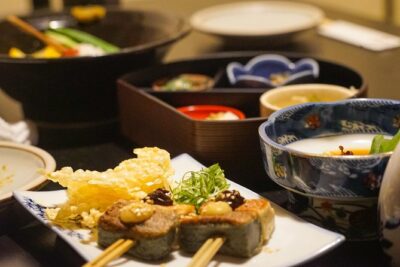
Kyoto Night Foodie Tour in Gion (9+ dishes + 6 Sake tastings)
Read our review →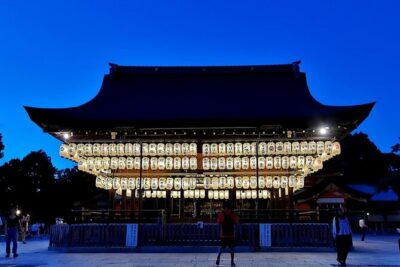
Kyoto Gion Geisha District Walking Tour – The Stories of Geisha
Read our review →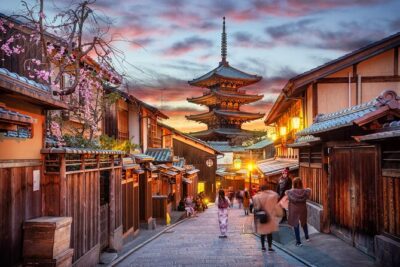
Kyoto Gion: 2-Hour Geisha Culture & History Walking Tour
Read our review →Browse the lists this tour appears in