
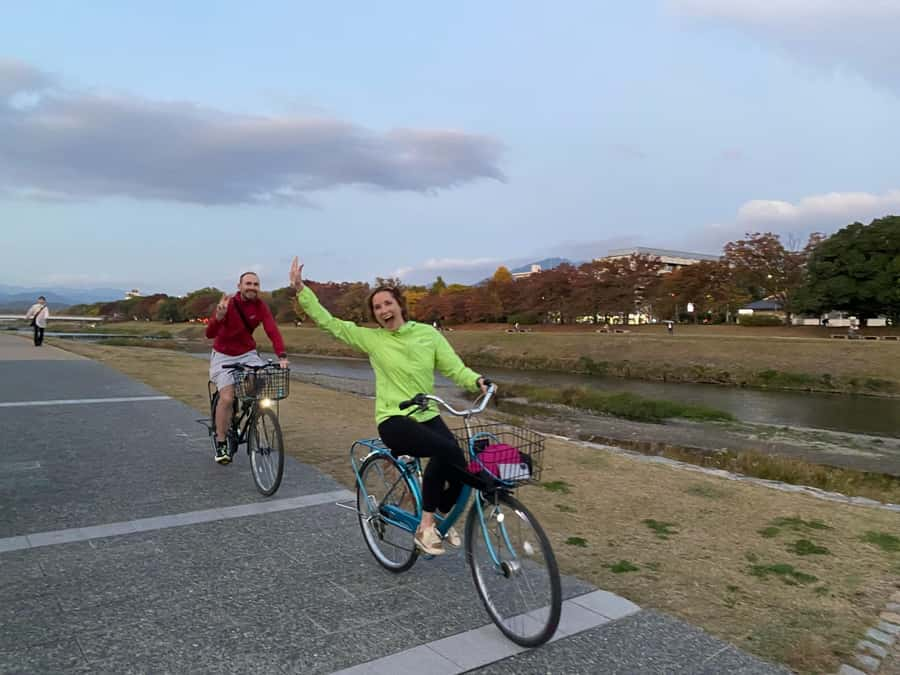
REVIEW · GION GEISHA DISTRICT TOURS
Cycle Kyoto’s Hidden Gems & Gion Stroll
Kyoto reveals itself differently from a bicycle seat. This tour leaves the busy sightseeing routes behind for riverside roads, quiet neighborhoods, small shrines, and university grounds, then brings you to major places such as the Imperial Palace and Shimogamo Shrine. The final walk through Gion or Pontocho adds Kyoto’s geisha culture to the day.
I like the mix of calm cycling and meaningful stops, especially the chance to drink natural spring water at a lesser-known shrine. I also like the friendly, patient guiding style reported from guides including Mr. Go, Benjamin, Ko, and Claire. The main consideration is stamina: you need to ride a bike comfortably, and children must be at least nine.
In This Review
- Key points to know
- Why Kyoto works so well by bicycle
- Meeting at Sanjo Ohashi
- A gentle start beside the river
- The Imperial Palace and a Zen temple
- University grounds and residential Kyoto
- Shimogamo Shrine and the Tadasu no Mori feeling
- The river junction and the ride back
- Tea, a traditional sweet, and a useful pause
- Gion or Pontocho after the bikes
- What makes this family-friendly
- Rain plans and practical limits
- Is $73 a good value?
- Should you book Cycle Kyoto’s Hidden Gems and Gion Stroll?
- FAQ
- How long does the activity last?
- Where does the tour begin?
- Where does the tour end?
- Is a rental bike included?
- Can I request an electric bike?
- What places does the cycling route visit?
- Is the tour suitable for children?
- What food and drink are included?
- Is the tour offered in English?
- What happens if it rains?
Key points to know
- A city ride with real variety: Follow a river, visit shrines and temples, cross university areas, and explore residential streets.
- Shimogamo Shrine is a major stop: Its primitive forest and traditional buildings offer a peaceful break from city traffic.
- The tour works well for families: Children aged nine and ten have been handled with patience, with regular stops and an approachable pace.
- Tea and a Japanese sweet are included: You will stop at a traditional snack shop during the experience.
- The Gion walk explains geisha culture: You will see the Flower Towns in Gion or Pontocho and learn how these entertainment districts work.
- Electric bikes cost extra: You can request one for an additional 1,000 yen, payable on the day.
Why Kyoto works so well by bicycle
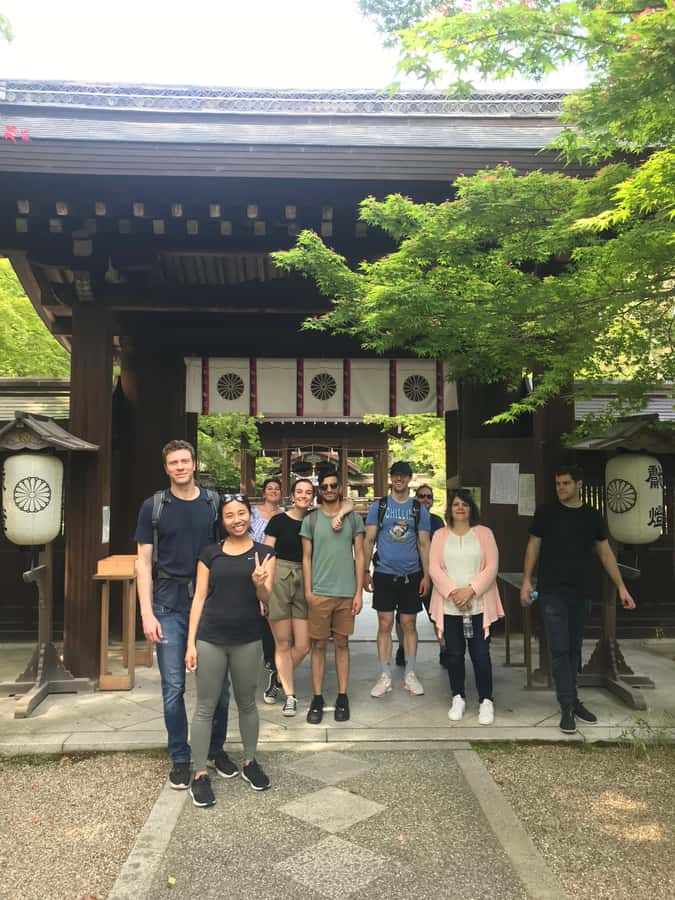
Kyoto is easy to admire from a bus window, but a bicycle gives you a better sense of how the city fits together. You feel the air change beside the river, notice quiet lanes that a large vehicle cannot use, and move between famous sights without spending the whole morning waiting for transport.
This is not a race or a checklist of giant attractions. The appeal is the connection between places. You may begin beside water, stop at a small shrine, pass the Imperial Palace, and then reach a forested sanctuary where the city feels far away. That rhythm gives you a broader picture of Kyoto than a single temple visit can.
The route also keeps the day varied. You are not cycling beside traffic for hours. The plan includes riverside roads, peaceful residential sections, university campuses, temple grounds, shrine buildings, and a river junction. The destinations can change, particularly in wet weather, but the experience is designed to keep moving and sightseeing.
At $73 per person, the price is fair if you value a guide who handles the route and adds local context. You receive a rental bike, tea, a Japanese sweet, the cycling portion, and the Gion or Pontocho walk. An electric bike costs another 1,000 yen, so budget for that only if you prefer extra help on the ride.
More evenings in Gion:
- Kyoto Geisha Walking Tour: Gion District & Hidden Gems
★ 4.7 · 3,273 reviews - Kyoto: Gion Magical Night Walking Tour with Geisha Trivia
★ 4.9 · 2,393 reviews - Kyoto: Gion Geisha District Walking Tour – Stories of Geisha
★ 4.7 · 2,187 reviews
Meeting at Sanjo Ohashi
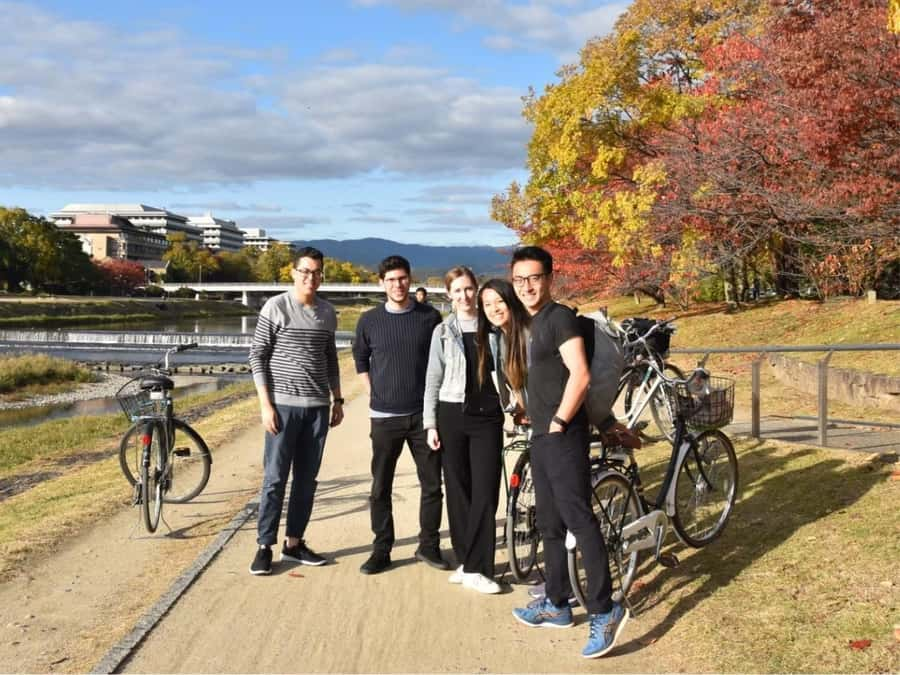
The tour begins at the kneeling man statue at the southeast corner of the Sanjo Ohashi intersection. From the east end of Sanjo Ohashi Bridge, cross the street and look for the statue. If you arrive by subway, come up to street level first, then locate the meeting point.
This is a useful place to start because the bridge is easy to identify, but the exact statue and corner matter. Give yourself time to find it rather than assuming the subway exit puts you directly beside the guide.
The activity ends back at this same meeting point. That makes the tour easier to fit into a Kyoto day, since you are not left across town trying to retrieve a bag or find your way back.
Do not bring luggage or a large bag. You will be riding, and bulky belongings are not allowed. Wear comfortable shoes, carry water, bring a camera, and dress for the weather.
A gentle start beside the river
The cycling begins on a peaceful riverside road. This early section is one of the tour’s best features because it lets you settle onto the bike before the sightseeing becomes more structured.
You can expect the guide to use the opening ride to get the group moving and introduce the feel of Kyoto outdoors. In hot and humid weather, the river route can be especially welcome. One family found that riding beside the water made a hot day much more pleasant.
The first stop is a quieter shrine where you can try pure natural spring water. That small detail gives the route character. It is not simply a photo stop at a famous gate. You get a chance to notice one of the city’s local water traditions and pause before continuing.
The tour is conducted in English. Guides such as Mr. Go, Benjamin, Ko, and Claire have been praised for being kind, helpful, and informative. The exact guide is not guaranteed, but the repeated pattern is clear: the guiding is a large part of what you are paying for.
The Imperial Palace and a Zen temple
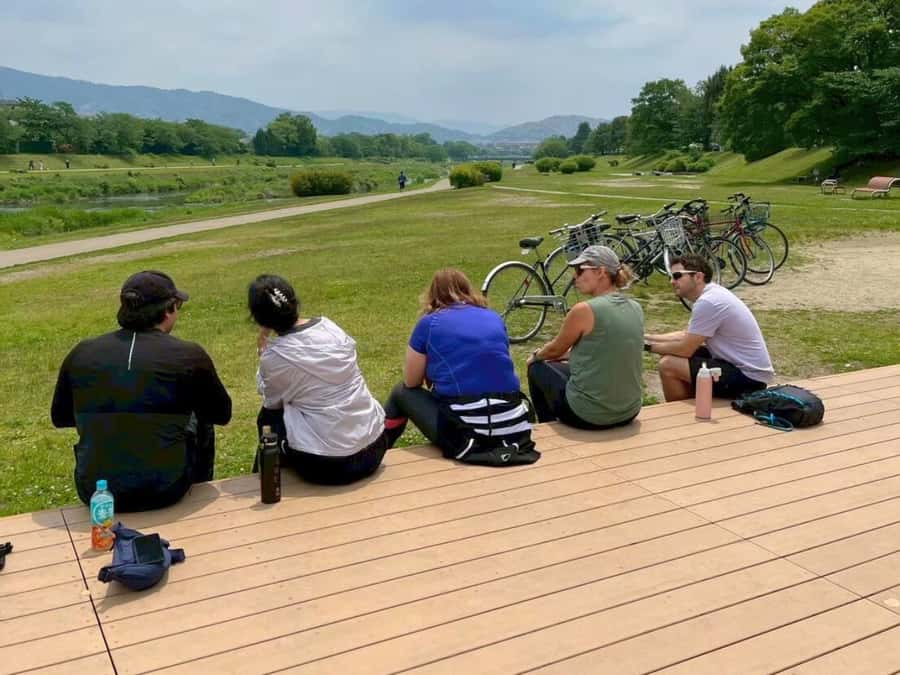
Next comes the Imperial Palace, one of Kyoto’s major landmarks. Its scale changes the mood of the ride. After smaller lanes and a quiet shrine, you reach a broad historic site that helps you understand Kyoto as a former imperial capital.
The palace visit also provides a useful contrast with the rest of the route. This tour does not avoid famous sights altogether. Instead, it places them among less familiar stops, so you are not spending the entire experience in the same kind of setting.
The route then continues to a famous Zen temple. The exact destinations may vary if weather forces an alternate plan, and the experience notes that the listed stops are examples. If a temple or shrine becomes part of a rainy-day alternative, its entrance fee is included.
Do not expect a long, private study of every building. The cycling format means the stops are part of a moving tour. You will see important places, hear explanations, and continue through the city rather than remain at one site for an extended visit.
More bike days around Kyoto:
- Hidden Kyoto E-Biking tour
★ 5.0 · 1,843 reviews - Bike Tour Exploring North Kyoto plus Lunch
★ 5.0 · 1,087 reviews - Arashiyama Bamboo Forest & Hidden Gems Bike Tour (Early Bird)
★ 5.0 · 613 reviews - 5 Top Highlights of Kyoto Full Day Bike Tour (E-bike option)
★ 5.0 · 511 reviews
University grounds and residential Kyoto
The ride passes through university campuses and peaceful residential areas. These sections may sound less dramatic than the Imperial Palace or Shimogamo Shrine, but they are important to the experience.
Kyoto is not only a collection of temples arranged for sightseeing. People study, shop, live, and commute here. Cycling through ordinary streets gives you a glimpse of that daily setting. It also breaks up the larger monuments with quieter stretches where you can simply ride.
For families, this changing scenery helps keep the tour from feeling like a long lecture. The feedback from a family with children aged nine and ten points to the value of a patient guide. Mr. Go was especially kind with the children, and the regular stops made the ride manageable for them.
Still, be honest about your group’s cycling ability. The tour is not suitable for anyone who cannot ride a bike, and children under nine cannot join. Parents should also remember that this is a substantial ride, not a short loop around one park.
Shimogamo Shrine and the Tadasu no Mori feeling
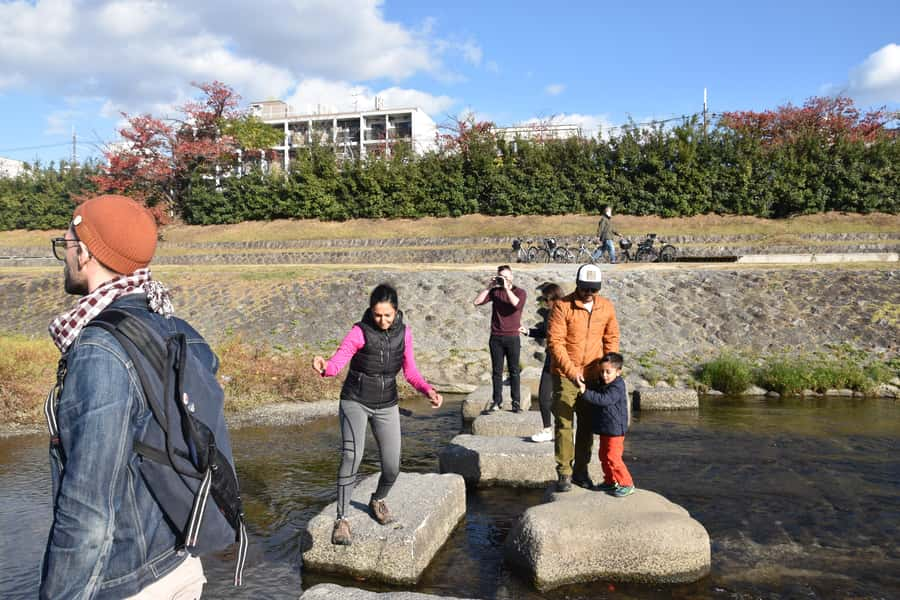
Shimogamo Shrine is one of the most rewarding stops on the route. It is a UNESCO World Heritage site, but the appeal here is not only the official designation. The shrine’s primitive forest and traditional buildings create a quiet pocket within Kyoto.
The forest gives you shade, texture, and a stronger feeling of age than a city street can provide. After riding past campuses and homes, entering this wooded shrine setting feels like a genuine change of scene.
The buildings add the formal side of Shinto worship, while the trees preserve a wilder quality. You can look closely at both rather than treating the shrine as a quick backdrop for a photograph.
This is also the kind of place that can be difficult to connect with on your own if you do not know how the route fits together. A guide helps you arrive with context and points out why the site matters. The stop is especially useful for you if you want more than Kyoto’s most heavily visited temple corridors.
The river junction and the ride back
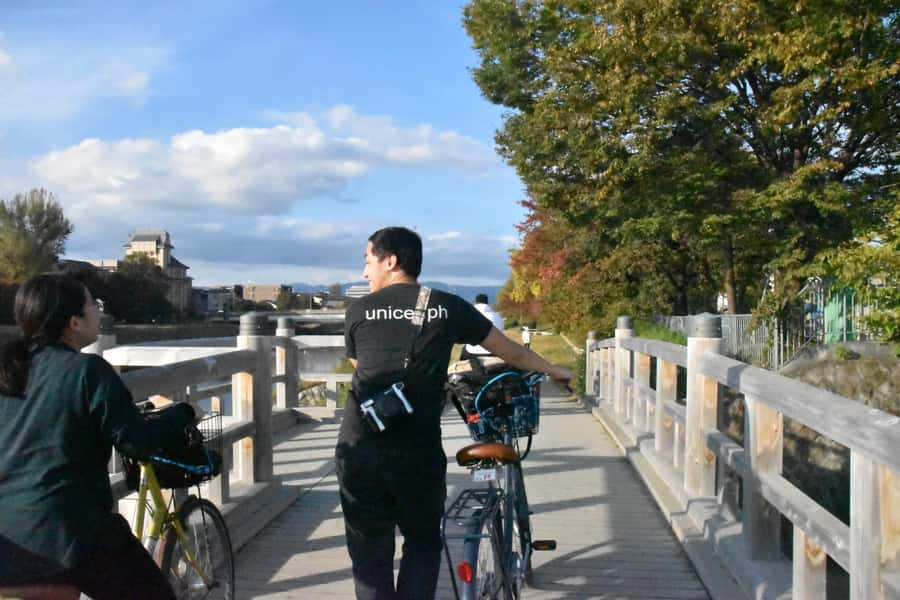
After Shimogamo Shrine, the route heads toward a distinctive river junction point. The tour description highlights this as a unique meeting of waterways, followed by a scenic riverside ride back.
That section is likely to be one of the most relaxing parts of the outing. You have already seen major buildings and forested shrine grounds. Now you can enjoy the open sky and water while the route carries you back toward the starting point.
The ride back is described as scenic and refreshed by lighting along the riverside. Since the exact route can change, you should treat this as a planned style of scenery rather than a promise of one fixed view.
The bike portion lasts about three and a half hours. The repeated praise for the bikes suggests that the rental equipment is comfortable to ride, though no bike model or frame style is specified. If you want an electric bike, request it and pay the 1,000-yen supplement on the spot.
Tea, a traditional sweet, and a useful pause
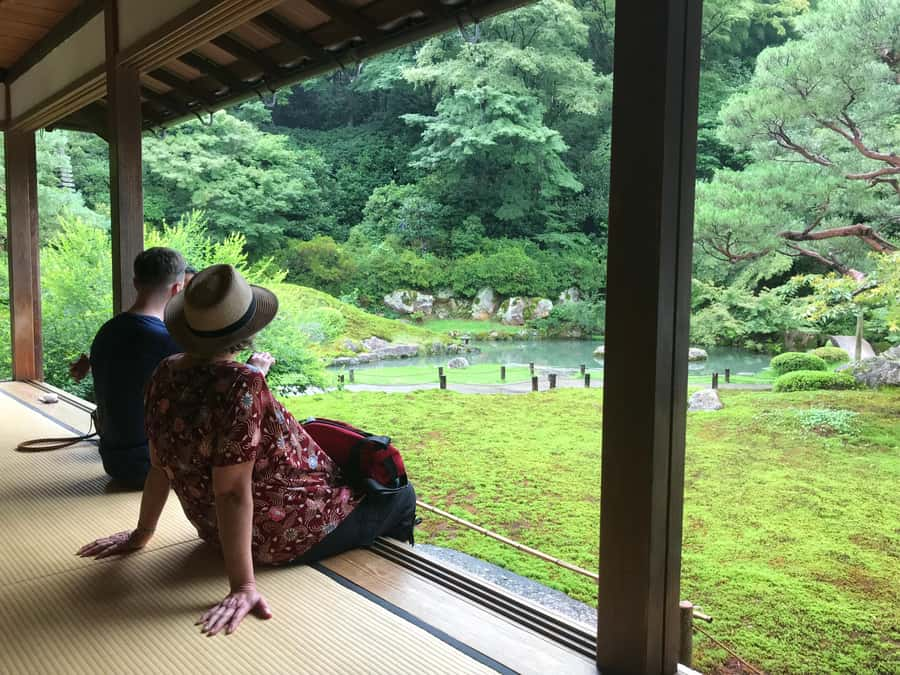
A Japanese sweet and Japanese tea at a traditional snack shop are included. This is a small but valuable part of the experience because it gives you a seated cultural pause between the moving portions of the day.
The stop is not presented as a full meal. Bring water and plan your food around the tour. During the later walk, the guide can suggest restaurants and bars based on what you want to eat or drink.
Ko’s warm, informative hosting was particularly appreciated during this tea and sweet stop. You can expect the guide to explain the setting rather than simply hand you a snack and send you on your way.
This kind of pause also helps families. A drink, a sweet, and a break from the saddle can make the difference between a pleasant afternoon and a tired one. If you have young riders, use the stop to check that everyone is comfortable before the final walk.
Gion or Pontocho after the bikes
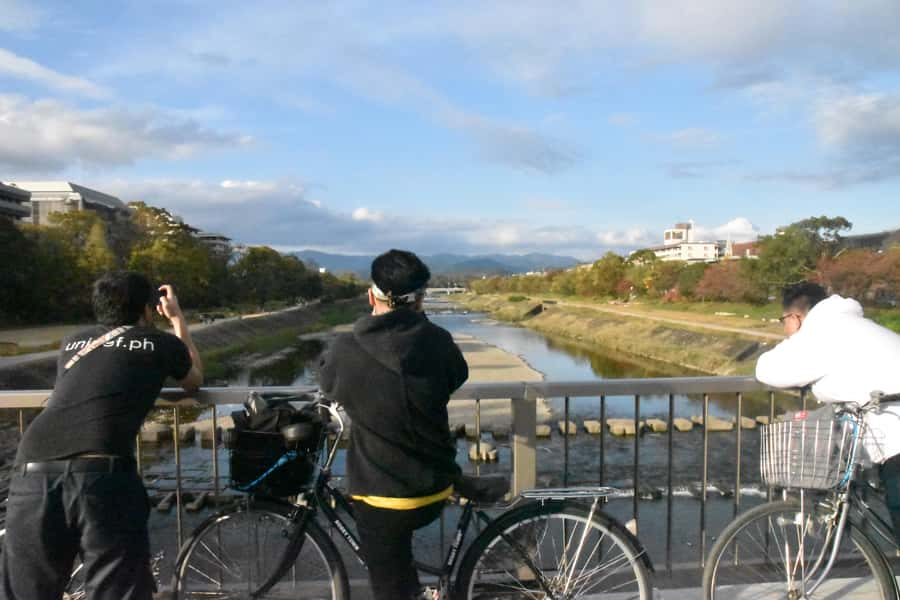
Once you return the bikes, the activity continues with a 30-minute walk through Gion or Pontocho. These are Kyoto’s famous entertainment districts, known for traditional teahouses, narrow streets, and the Flower Towns connected with geisha.
The walk is short, but it adds a different side of Kyoto. The cycling portion focuses on open space, shrines, temples, and local streets. Gion or Pontocho brings you into a more theatrical urban setting, where architecture, etiquette, and evening entertainment all matter.
Your guide explains the culture and system of geisha, giving you a better framework for what you see. If you are lucky, you may spot a geisha, but that should be treated as a possibility rather than the purpose of the walk. Do not chase or photograph anyone intrusively.
The streets are highly photogenic, so bring your camera. At the same time, the area’s beauty can tempt people to block lanes or treat working neighborhoods like a film set. Follow the guide’s advice and behave respectfully.
The final walk can be in Gion or Pontocho, depending on the plan for the day. Both offer a useful introduction to Kyoto’s traditional entertainment districts, but neither should be mistaken for a staged performance.
What makes this family-friendly
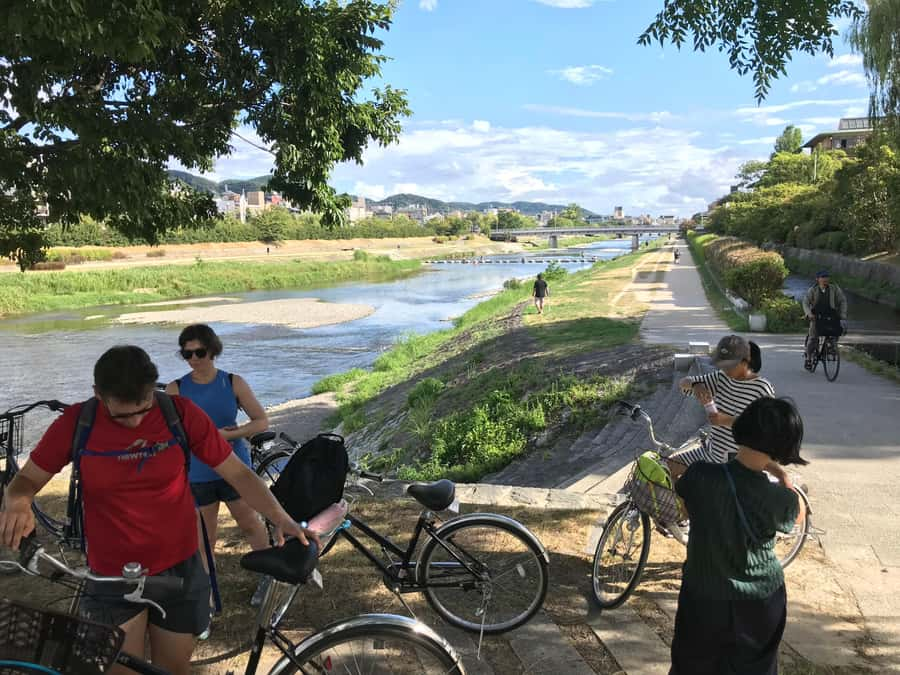
This experience suits families better than many long sightseeing walks because the bicycle keeps you moving and the route changes often. Children who can ride confidently may enjoy the river, shrine, and open-air portions more than a full day indoors at temples.
The age limit is important. Children under nine cannot join, and everyone must be able to ride a bike. A nine-year-old may be accepted, but parents should judge the child’s skill and stamina rather than rely only on the minimum age.
The strongest family detail is the guide’s manner. Mr. Go was described as patient and kind with two children aged nine and ten. Claire was also praised for choosing a good number of stops and keeping the ride enjoyable. These details point to a tour that values care and explanation, not just speed.
You should still bring water and weather-appropriate clothes. Kyoto can feel hot and humid, and cycling for several hours is more demanding than walking between nearby sights.
Rain plans and practical limits
The tour runs rain or shine. That is useful if you have a tight Kyoto schedule, but it also means you should not book it expecting perfect weather.
The destinations are examples, and the plan can change in rain. Temple or shrine entrance fees are included when one is used as an alternate rainy-day plan. This gives the guide some room to protect the quality of the outing instead of forcing the same cycling route in poor conditions.
Smoking and pets are not allowed. Large bags and luggage are also prohibited, so arrange storage before arriving. Comfortable shoes matter for both the bike and the 30-minute walk.
You can cancel up to 24 hours before the start for a full refund. You can also reserve now and pay later, which helps if you are still arranging a Japan itinerary.
Is $73 a good value?
At $73, this is a good fit for you if you would otherwise spend time trying to connect Kyoto’s rivers, shrines, palace grounds, and northern central neighborhoods on your own.
The value comes from several pieces working together:
- You get a rental bike for a substantial cycling route.
- An English-speaking guide handles navigation and explains the places you visit.
- Tea and a traditional Japanese sweet are included.
- The itinerary combines major attractions with quieter sites.
- The Gion or Pontocho walk adds cultural context after the ride.
- You receive restaurant and bar recommendations based on your requests.
The price is less compelling if you only want to see one or two famous temples, dislike cycling, or prefer to move at your own pace. The added 1,000 yen for an electric bike is reasonable if hills, distance, or heat are concerns, but the base price does not include it.
Should you book Cycle Kyoto’s Hidden Gems and Gion Stroll?
Book this tour if you want to see Kyoto through several lenses in one outing: river paths, ordinary neighborhoods, the Imperial Palace, Zen Buddhism, Shinto worship, forest, and geisha culture.
I would especially recommend it for active families with children aged nine or older, first-time Kyoto visitors who want an efficient orientation, and returning visitors who have already seen the biggest temple areas. The strongest reasons to choose it are the quiet stops, the river cycling, the included tea and sweet, and the guides’ patient approach.
Skip it if you cannot ride confidently, need a slow walking-only day, or want a fixed itinerary with long visits at each monument. For everyone else, $73 buys a well-shaped introduction to Kyoto that leaves room for both famous sights and local atmosphere.
FAQ
How long does the activity last?
The experience includes about three and a half hours of cycling followed by a 30-minute walk through Gion or Pontocho.
Where does the tour begin?
It begins at the kneeling man statue at the southeast corner of the Sanjo Ohashi intersection. From the east end of Sanjo Ohashi Bridge, cross the street to find it.
Where does the tour end?
The activity ends back at the Sanjo Ohashi meeting point.
Is a rental bike included?
Yes. A rental bike is included in the tour price.
Can I request an electric bike?
Yes. An electric bike costs an additional 1,000 yen, payable on the spot.
What places does the cycling route visit?
The route may include the Imperial Palace, a famous Zen temple, Shimogamo Shrine, a quiet shrine with natural spring water, university campuses, residential streets, and a distinctive river junction. Destinations can change, especially in rainy weather.
Is the tour suitable for children?
Children must be at least nine years old. The tour is suitable for children who can ride a bike comfortably.
What food and drink are included?
You receive Japanese tea and a Japanese sweet at a traditional snack shop.
Is the tour offered in English?
Yes. English is the listed tour language.
What happens if it rains?
The experience runs rain or shine, but the destinations may change. A temple or shrine entrance fee is included if it is used as an alternate plan on a rainy day.
Recently added around Kyoto
- Higashiyama | Kyoto: Sakura Season Private Rickshaw Tour★ 5.0 · 3 reviews
- Kyoto Kimono Rental CHAMATSU|Kimono/Yukata Rental FamilyPlan★ 5.0 · 3 reviews
- Kyoto: Half-Day Private Guided Tour to the Old Town of Gion★ 4.4 · 3 reviews
- Nara Private Customizable Half Day Tour★ 5.0 · 3 reviews
- Kansai Region Hiking Adventure in Nara Kobe Kyoto and More★ 5.0 · 3 reviews
- Full Day Nara Deer, Temple, Shrine, Activities & Tea Ceremony★ 5.0 · 3 reviews
- Nara: Essential Private Tour with Deer Park and Temples★ 5.0 · 3 reviews
- Hiking Tour for Sacred Sites in Kyoto with a Guide★ 5.0 · 3 reviews
Gion Geisha District Tours, compared.

Kyoto Geisha Walking Tour: Gion District & Hidden Gems
Read our review →
Gion Magical Night Walking Tour with Geisha Trivia
Read our review →
Gion Geisha District Walking Tour – Stories of Geisha
Read our review →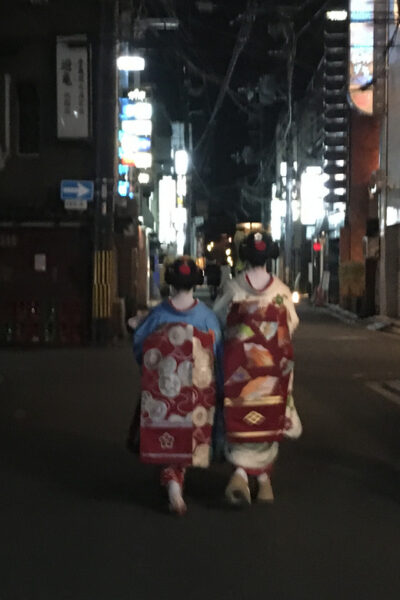
Best of Kyoto: Gion, Geisha, Pagodas & Cobblestones
Read our review →
Kyoto Night Foodie Tour in Gion (9+ dishes + 6 Sake tastings)
Read our review →
Kyoto Gion Geisha District Walking Tour – The Stories of Geisha
Read our review →
Kyoto Gion: 2-Hour Geisha Culture & History Walking Tour
Read our review →Browse the lists this tour appears in