
REVIEW · GION GEISHA DISTRICT TOURS
Authentic Maiko Experience&Kyoto Lunch (Free drink) at Noh Stage
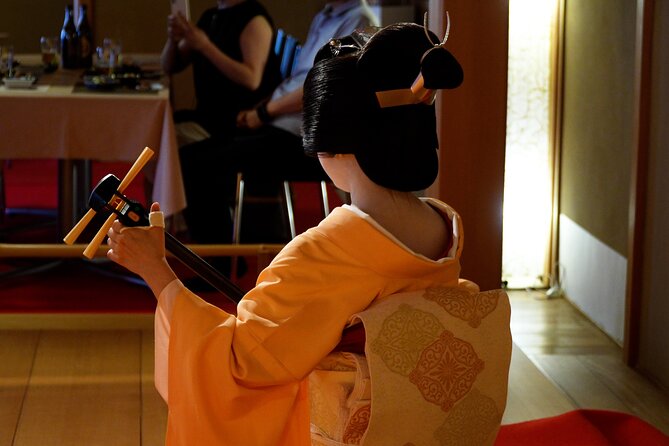
A maiko dance is lovely. Sitting close enough to see the kimono details, hair ornaments, and careful hand movements is better still. This Kyoto experience adds the parts many stage shows leave out: conversation, questions, and ozashiki games with a real maiko on a traditional Noh stage.
I like the generous two-hour format and the fact that your meal, drinks, photo, and interpreter guide are included. I also like the small-group limit of 24 people, which gives you a better chance to see and speak with the maiko. The main consideration is the price, $149.85 per person, which is fair for a special cultural encounter but more than a simple dance performance.
In This Review
- Key points
- Why this maiko encounter feels different from a stage show
- A simple schedule built around lunch and performance
- The maiko dance and the value of seeing costume details up close
- Ozashiki games bring humor to a formal tradition
- A meal, free drinks, and what the price covers
- A midday visit that fits neatly into a Kyoto day
- Group size, etiquette, and useful preparation
- What the strongest parts of the experience offer
- Who should book this Kyoto experience
- Should you book the $149.85 experience?
- FAQ
- Where does the maiko experience take place?
- What time does the activity start and finish?
- What is included in the price?
- Can I ask the maiko questions?
- Is transportation included?
- How many people can join the activity?
- Can I cancel for a full refund?
Key points
- Maiko interaction: Ask questions, chat, laugh, and take a two-shot photo with the maiko.
- Ozashiki games: Join traditional parlor games on the Noh stage rather than only watching a show.
- Meal and drinks included: Your two-hour visit includes a Kyoto-style meal and free drinks.
- Interpreter support: A Kyoto-certified interpreter guide helps you follow the explanations and conversation.
- Convenient midday timing: The program runs from 12:30 to 2:30 p.m., leaving your evening free.
- Small-group setting: The maximum is 24 people, with a minimum of two participants required.
Why this maiko encounter feels different from a stage show
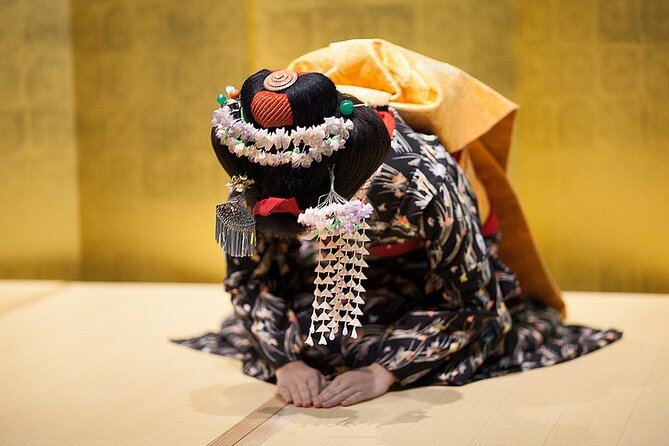
Many cultural performances ask you to sit quietly and watch. Here, you get a fuller introduction to the maiko world. You see dance, hear an explanation of the costume and movements, ask questions, speak with the performer, and take part in ozashiki asobi, the traditional games associated with private entertainment gatherings.
That change matters. A dance can be beautiful but brief. Conversation gives you a sense of the person behind the formal appearance, while the games bring some lightness to an art form that can otherwise feel distant or mysterious.
The setting is Okazaki-an at 91-5 Okazaki Enshōjichō in Kyoto’s Sakyo Ward. The activity takes place on a Noh stage, a fitting setting for Japanese performance arts. One visitor particularly appreciated the Kyoto atmosphere created by the stage and location, and I can see why. The venue gives the program a stronger sense of place than a hotel meeting room would.
The event is arranged through GEISHA JAPAN, an organization with more than 12 years of ties to Kyoto’s traditional arts. That network allows several maiko and geiko to appear at some gatherings, although the specific performer or performers for your date are not named in the information provided. Plan on an intimate meeting with a charming maiko, without assuming a particular person will be present.
More evenings in Gion:
- Kyoto Geisha Walking Tour: Gion District & Hidden Gems
★ 4.7 · 3,273 reviews - Kyoto: Gion Magical Night Walking Tour with Geisha Trivia
★ 4.9 · 2,393 reviews - Kyoto: Gion Geisha District Walking Tour – Stories of Geisha
★ 4.7 · 2,187 reviews
A simple schedule built around lunch and performance
Doors open at 12:20 p.m. The program begins at 12:30, so arriving a little early gives you time to settle in. If you get there before the doors open, you can relax in the café space on the first floor.
The schedule calls the meal dinner in one place, but this is clearly a midday program. Think of it as a Kyoto lunch with entertainment. Starting with food is practical: you can eat while the event gets under way instead of trying to fit a separate meal around the performance.
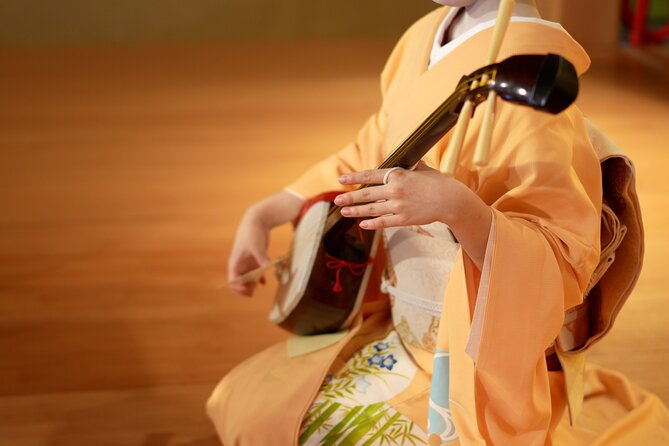
At 12:45 p.m., the maiko dance begins. This is the formal heart of the event. Expect an elegant presentation rather than a long theatrical production. The dance lets you focus on the controlled gestures, posture, costume, and music of Kyoto’s traditional entertainment culture.
A lecture follows the dance. The maiko and geiko explain elements of the performance and costumes, giving you useful context for what you have just seen. This is especially helpful if you are new to Japanese dance. Without an explanation, the restrained movements and detailed clothing can be difficult to interpret.
Next comes a question-and-answer session. The Kyoto-certified interpreter guide helps make this part accessible, particularly for English-speaking participants. The guide’s name is not provided, but interpreter support is included as part of the activity.
Around 1:10 p.m., the schedule shifts into communication time. This is your chance to speak more directly with the maiko. The tone is less formal than the dance, and the supplied feedback describes chatting, laughing, and enjoying a close exchange as one of the most memorable parts of the program.
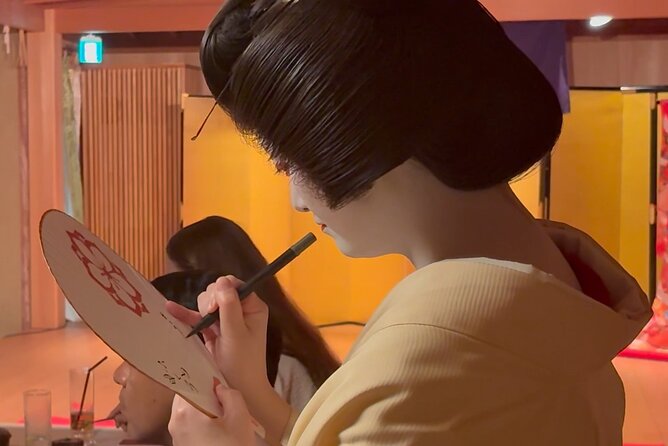
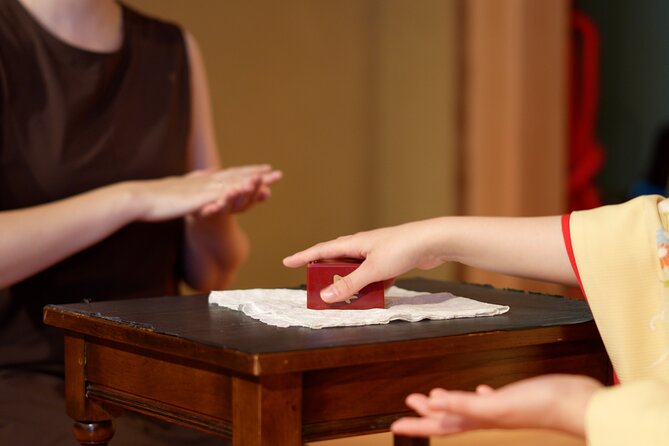
At 1:40 p.m., you take part in ozashiki asobi on the Noh stage. These parlor games are designed for participation and provide a playful contrast to the quiet grace of the dance. You are not simply watching a demonstration. You get involved, with the maiko guiding the activity.
Another period of communication follows at 1:55 p.m. The final dance takes place at 2:20 p.m., and the program ends at 2:30 p.m. The repeated dance and conversation segments give the event a useful rhythm: formal performance, explanation, personal exchange, games, then a final artistic moment.
The maiko dance and the value of seeing costume details up close
The dance is likely to be the part you picture first when considering this activity. A maiko’s appearance is highly formal, and the kimono, hair styling, and ornaments are not simple stage props. They help communicate age, season, training, and position within Kyoto’s traditional entertainment culture.
The information provided does not identify the exact dance or musical pieces, so I would not book this expecting a specific repertoire. Instead, come for the chance to see the performance at close range and then ask about what you have seen.
That question time is important. You can ask about the dance, costume, training, or daily work, as long as your questions are suitable for the setting. The interpreter guide helps keep the exchange clear.
The program also includes a photo opportunity. A two-shot photo with the maiko is included, giving you a lasting record of the meeting. Follow the staff’s instructions on timing and camera use, and remember that the photo is a small part of the occasion, not the whole purpose.
Ozashiki games bring humor to a formal tradition
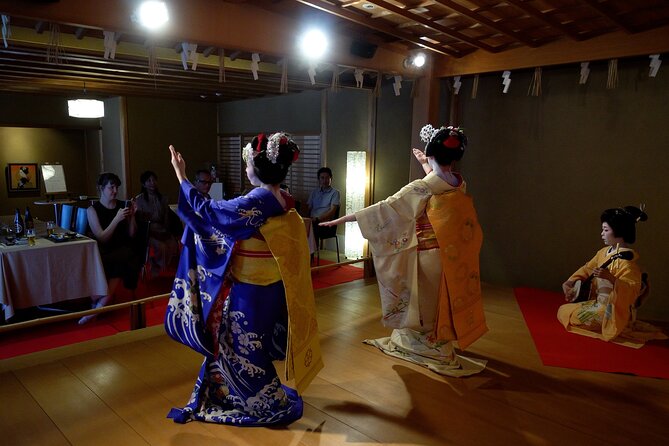
Ozashiki games are among the strongest reasons to choose this experience over a basic cultural show. The games make the meeting social. You can see how the maiko uses quick responses, gestures, and humor in a setting that feels more relaxed than the dance.
The details of the specific games are not given, so I would not promise a particular activity. What is clear is that you will have the chance to participate on the Noh stage, with the maiko present and the interpreter helping as needed.
This section may suit families, siblings, and small groups particularly well. One account describes two brothers enjoying the program together, while another praised the game as fun and engaging. The activity is not limited to serious arts enthusiasts. You can appreciate the dance and still enjoy the playful side.
If you are shy about performing in front of others, remember that the group can include as many as 24 people. You may not be alone in the game, but you may still be invited to take part. The best approach is to expect some participation and join in with good humor.
More Kyoto tours that include lunch:
- Bike Tour Exploring North Kyoto plus Lunch
★ 5.0 · 1,087 reviews - Kyoto Zen Meditation & Garden Tour at a Zen Temple with Lunch
★ 5.0 · 441 reviews - 4.5-Hour Kyoto Bike Tour with Lunch and UNESCO Zen Temples
★ 5.0 · 122 reviews - From Kyoto: Nara History Guided Half Day Bus Tour with Lunch
★ 4.8 · 114 reviews
A meal, free drinks, and what the price covers
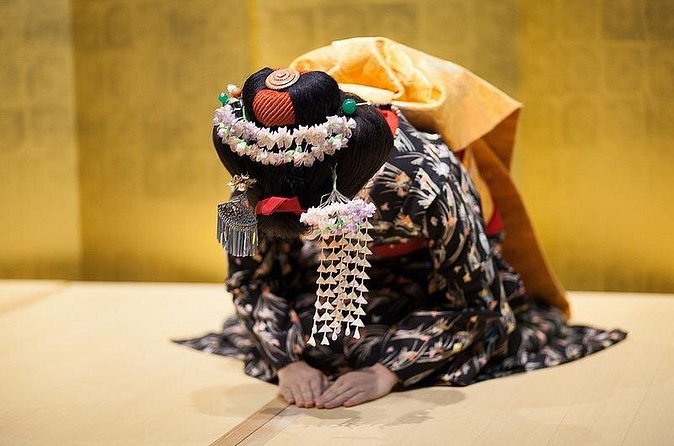
At $149.85 per person, this is not a budget lunch. The price makes more sense when you count the parts included: a meal, free drinks for two hours, dance performances, interpreter support, conversation, ozashiki games, and a two-shot photo.
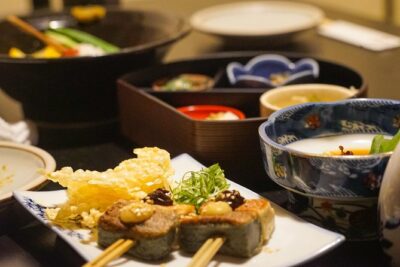
The food is described as traditional Kyoto cuisine. The exact menu is not supplied, so do not book based on a particular dish. The available feedback describes the meal as nice and filling, which suggests that lunch is a real part of the experience rather than a token snack.
Free drinks are included throughout the two-hour program. This is a useful value point, especially because you are staying through a full meal and several performances. The listing uses the word unlimited, but the specific drink selection is not stated. Ask on arrival if you need details about what is served.
I see the price as reasonable for a one-time cultural meeting, especially if you value personal contact more than a polished theater production. If you only want to watch a short dance and take a picture, you may find cheaper ways to enjoy Kyoto performance arts. If you want conversation and games as well, the package offers more.
A midday visit that fits neatly into a Kyoto day
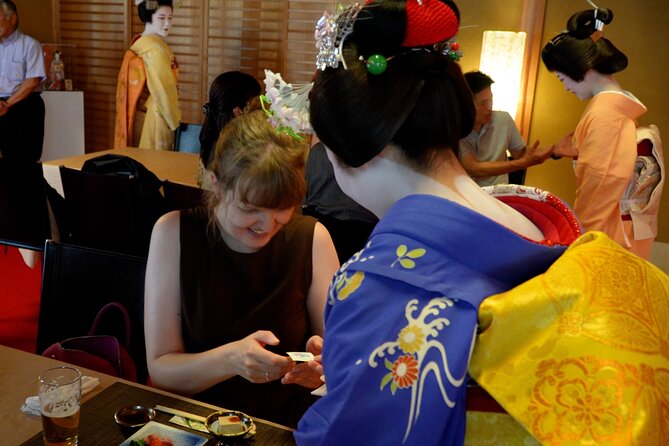
The 12:30 p.m. start is convenient. You can visit in the morning, enjoy lunch and the program, then continue sightseeing in the afternoon. The event ends at 2:30 p.m. and returns you to the same meeting point.
The venue is near public transportation, but the exact station or walking route is not supplied. Use the full address, Okazaki-an, 91-5 Okazaki Enshōjichō, Sakyo Ward, Kyoto 606-8344, when planning your route.
The location also makes this easy to pair with other Kyoto sights in the Okazaki area, though the activity information does not promise admission to any nearby attraction. Leave enough time for transport and finding the entrance. The doors open at 12:20 p.m., and the performance starts at 12:30 p.m.
A mobile ticket is included, so keep your booking confirmation available on your phone. Confirmation arrives at booking. The experience requires at least two participants, making it unsuitable for a solo booking unless you arrange to join with another participant or group.
Group size, etiquette, and useful preparation
The maximum group size is 24 people. That is not a private meeting, but it is much more manageable than a large public performance. Your seat and exact view are not specified, so a close look at the stage is likely but not guaranteed from every position.
Wear something comfortable and arrive ready to sit, eat, listen, and participate. The information specifically says bare feet are not included, so do not plan to attend barefoot. Oversize luggage is also not included, which means you should leave large bags elsewhere rather than bringing them to the venue.
The program welcomes most participants. No special fitness requirement is stated, and the activity lasts about two hours. Still, you should be prepared for a mixture of seated viewing, conversation, and participation in games.
Good manners matter here. Speak through the interpreter when needed, listen during explanations, and follow instructions for photography. The maiko is there to meet you, but this is still a working cultural performance, not an informal photo stop.
What the strongest parts of the experience offer
The most praised elements are consistent: the maiko dance, beautiful kimono, direct conversation, games, food, and welcoming atmosphere. Several accounts describe the meeting as a core memory or a once-in-a-lifetime moment, especially because participants could talk with the maiko rather than only watch from a distance.
I would place conversation near the top of the list. Kyoto’s geisha culture is often surrounded by mystery, and a respectful question-and-answer session gives you a clearer, more human understanding of the work. The interpreter support helps prevent language from becoming a wall.
The costume is another visual highlight. A dance viewed from far away can blur into color and movement. In this setting, you have a better chance to notice the details, then ask about them.
The food and drinks also help the occasion feel generous. You are not paying only for a short show. You are spending two hours in a structured cultural gathering, with several ways to take part.
The main limitation is that the program is carefully timed. You get several scheduled sections, but not unlimited personal conversation. If the group reaches 24 people, individual exchange may be brief. Think of this as an intimate group program, not a private appointment.
Who should book this Kyoto experience
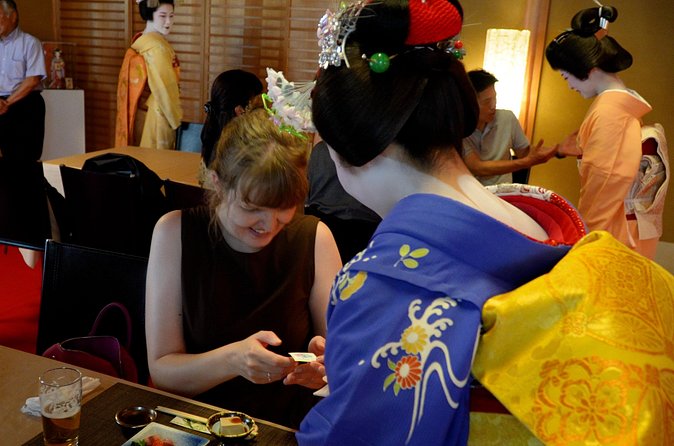
I would recommend it to a first-time Kyoto visitor who wants a clear, accessible introduction to maiko culture. The interpreter, meal, and structured schedule remove much of the uncertainty that can come with seeking out a traditional performance on your own.
It also suits couples, siblings, and small groups who want a shared cultural memory. The games make it more social than a quiet dance recital, and the photo gives you a simple keepsake.
You may want to skip it if your main goal is a low-cost meal, a specific performer, or a long private conversation. The exact maiko is not named, the menu is not specified, and the group can reach 24 people.
For someone choosing between a short show and a fuller cultural encounter, I would pick this one if the budget allows. You get performance, explanation, interaction, games, food, drinks, and a photo in a compact two-hour visit.
Should you book the $149.85 experience?
Book it if you want more than a glimpse of Kyoto’s geisha culture. The dance is beautiful, but the real value comes from the combination of conversation, ozashiki games, interpreter help, and time in a traditional Noh-stage setting.
The price is high for lunch alone, yet reasonable for the complete package. I would consider it especially worthwhile early in your Kyoto stay, when the introduction can give later walks through the city’s traditional districts more meaning.
Cancel at least 24 hours before the 12:30 p.m. start for a full refund. Changes or cancellations made within 24 hours are not accepted for a refund, based on local time. If the cost fits your plans and you are comfortable with a group setting, this is a thoughtful, well-rounded way to meet a maiko respectfully.
FAQ
Where does the maiko experience take place?
It takes place at Okazaki-an, located at 91-5 Okazaki Enshōjichō, Sakyo Ward, Kyoto 606-8344, Japan. The activity ends at the same meeting point.
What time does the activity start and finish?
Doors open at 12:20 p.m. The program starts at 12:30 p.m. and ends at 2:30 p.m., for a duration of about two hours.
What is included in the price?
The price includes a meal, free drinks for two hours, maiko dance performances, conversation time, ozashiki games, a two-shot photo with the maiko, and a Kyoto-certified interpreter guide.
Can I ask the maiko questions?
Yes. The program includes a question-and-answer session, as well as additional communication time with the maiko.
Is transportation included?
No. Transportation expenses from your home to the venue are not included. The venue is near public transportation.
How many people can join the activity?
The group can include up to 24 people. The activity requires a minimum of two participants.
Can I cancel for a full refund?
Yes, if you cancel at least 24 hours before the experience start time. Cancellations or changes made less than 24 hours before the start are not eligible for a refund.
Recently added around Kyoto
- Higashiyama | Kyoto: Sakura Season Private Rickshaw Tour★ 5.0 · 3 reviews
- Kyoto Kimono Rental CHAMATSU|Kimono/Yukata Rental FamilyPlan★ 5.0 · 3 reviews
- Kyoto: Half-Day Private Guided Tour to the Old Town of Gion★ 4.4 · 3 reviews
- Nara Private Customizable Half Day Tour★ 5.0 · 3 reviews
- Full Day Nara Deer, Temple, Shrine, Activities & Tea Ceremony★ 5.0 · 3 reviews
- Nara: Essential Private Tour with Deer Park and Temples★ 5.0 · 3 reviews
- Kansai Region Hiking Adventure in Nara Kobe Kyoto and More★ 5.0 · 3 reviews
- Hiking Tour for Sacred Sites in Kyoto with a Guide★ 5.0 · 3 reviews
Gion Geisha District Tours, compared.

Kyoto Geisha Walking Tour: Gion District & Hidden Gems
Read our review →
Gion Magical Night Walking Tour with Geisha Trivia
Read our review →
Gion Geisha District Walking Tour – Stories of Geisha
Read our review →
Best of Kyoto: Gion, Geisha, Pagodas & Cobblestones
Read our review →
Kyoto Night Foodie Tour in Gion (9+ dishes + 6 Sake tastings)
Read our review →
Kyoto Gion Geisha District Walking Tour – The Stories of Geisha
Read our review →
Kyoto Gion: 2-Hour Geisha Culture & History Walking Tour
Read our review →Browse the lists this tour appears in