
REVIEW · GION GEISHA DISTRICT TOURS
Authentic Kyoto Gion Geisha/Maiko Cultural Experience
The rare treat here is not simply seeing a maiko in costume. You enter a real Gion teahouse, sit in a tatami room, and have time for questions, a traditional dance, music, tea, and photographs. The small group, capped at 10, keeps the setting personal rather than parade-like.
I like the short walk along Hanamikoji Street, since your guide gives useful Gion context before you sit down. I also like the live conversation and translation, which help explain the work and traditions behind the elaborate appearance. The main consideration is price: at $155.22 per person, this is a special cultural outing, not a budget activity.
In This Review
- Key Details Before You Book
- Why This Gion Experience Feels Different
- Walking From Gion-Shijo Station to Hanamikoji Street
- Inside the Tatami Room
- The Dance, Music, and Conversation
- Matcha, Sweets, and the Tea Ritual
- Taking Photos Without Losing the Moment
- Is $155.22 a Fair Price?
- Who Will Enjoy This Most?
- Timing, Meeting Point, and Practical Notes
- Should You Book the Gion Maiko Experience?
- FAQ
- Where does the experience begin?
- Where does the experience end?
- How long does the experience last?
- How many people can join?
- What happens if only one person books?
- Will I meet a maiko or a geiko?
- Can I choose which maiko or geiko I meet?
- Is an English-speaking guide included?
- Can I take photographs?
- What should I wear?
- Can young children join?
- What is the cancellation policy?
Key Details Before You Book
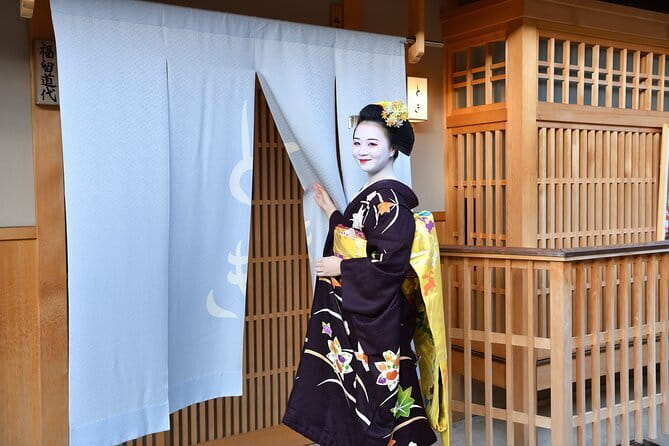
- A real Gion teahouse setting: You sit in a tatami room for tea, performances, conversation, and photos.
- The performer is assigned: You may meet a maiko or geiko, but you cannot choose which one.
- A short guided walk comes first: The route from Gion-Shijo Station includes Hanamikoji Street and takes about 15 minutes.
- English translation is included: Guides such as Yuko, Yoshi, and Tomato-san have helped explain both the neighborhood and the conversation.
- The full visit takes about 90 minutes: Plan on roughly 15 minutes of walking and one hour inside the teahouse, with a little timing flexibility.
- Wear socks: Shoes come off for the tatami room, and wet feet, clothing, or bags should be dried before entry.
Why This Gion Experience Feels Different
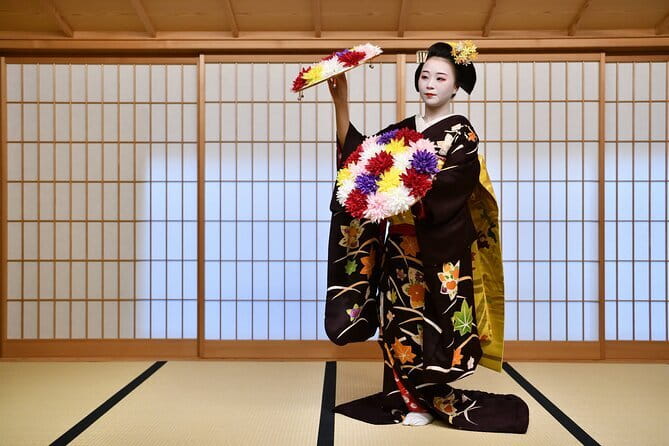
Kyoto offers plenty of chances to walk past the wooden buildings of Gion and hope you spot a geisha. That is not the same as sitting inside a teahouse with a maiko or geiko, watching a formal dance, and asking questions through an interpreter.
This experience gives you a planned, respectful introduction to that world. You are not simply watching a staged street encounter. You are seated in a traditional room, guided through proper behavior, and given context for what you see.
The setting also matters. Gion’s teahouses are private working spaces, and access is not normally something you arrange by wandering in. The visit gives you a limited look at a part of Kyoto culture that can otherwise remain closed to outsiders.
I especially value the conversation. Costumes, white makeup, elaborate hair, and precise movement can attract attention, but without explanation it is easy to reduce geisha culture to a photo opportunity. The guide helps you understand the people and customs behind the performance.
The format is intimate but not private. A maximum of 10 people is small enough for questions and clear views, though you should not expect a one-on-one appointment. If the minimum of two participants is not reached 10 days before the scheduled date, the date may be canceled.
More evenings in Gion:
- Kyoto Geisha Walking Tour: Gion District & Hidden Gems
★ 4.7 · 3,273 reviews - Kyoto: Gion Magical Night Walking Tour with Geisha Trivia
★ 4.9 · 2,393 reviews - Kyoto: Gion Geisha District Walking Tour – Stories of Geisha
★ 4.7 · 2,187 reviews
Walking From Gion-Shijo Station to Hanamikoji Street
Meet at Gion-Shijo Station at 1 Chome Miyagawasuji in Higashiyama Ward. From there, an English-speaking guide leads you toward the teahouse, taking about 15 minutes.
This first section is useful because Gion can feel like a collection of attractive streets without an obvious story. Hanamikoji Street gives you the classic view: traditional-looking facades, narrow lanes, and the atmosphere associated with Kyoto’s entertainment district.
Your guide points out details along the way and explains Gion’s role in Kyoto culture. Guides named in the feedback include Yuko, Yoshi, Tomato-san, and a guide whose name was heard as Tokodo. The exact guide depends on the date, but the strong point is the local explanation before the main event begins.
Do not treat this as a full neighborhood walking tour. The walk is short and mainly gets you from the station to the teahouse. Its value is in setting the scene, not covering every corner of Gion.
Wear comfortable shoes, but remember that the more important clothing rule comes later. You must wear socks for the tatami room. On rainy days, dry wet feet, clothing, or bags with a towel before entering so the tatami stays clean.
Inside the Tatami Room
At the teahouse, remove your shoes and settle into a carefully designed tatami room. This change in pace is part of the appeal. The street sounds fade, and the room asks you to sit quietly, watch closely, and follow the customs explained by your guide.
You are accompanied by either a maiko or a geiko, along with a tea master, depending on the day. A maiko is an apprentice geisha, while a geiko is the term commonly used for a fully trained geisha in Kyoto.
You cannot select the performer in advance. That is worth understanding before you pay. The experience is built around the tradition and program available that day, not a request for a particular person.
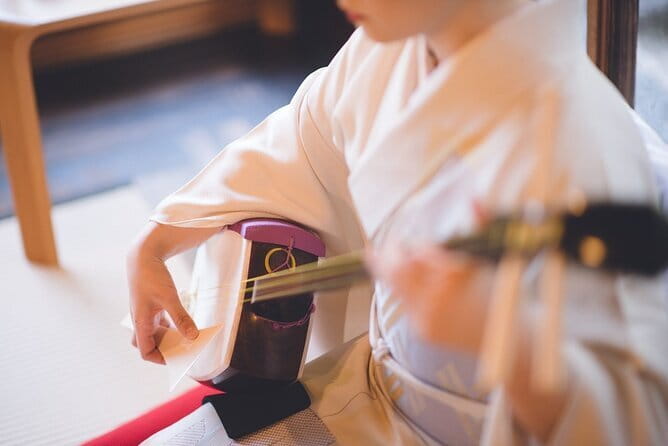
The session includes conversation, a traditional dance, matcha, and photography. Music may also be part of the presentation. One account described dancing by a maiko and instrument playing by the teahouse owner, a former geiko, while another described both a maiko and geiko taking questions.
The exact lineup and performance details can vary. You should expect a genuine cultural presentation, but not a fixed stage show with an identical cast each time.
The Dance, Music, and Conversation
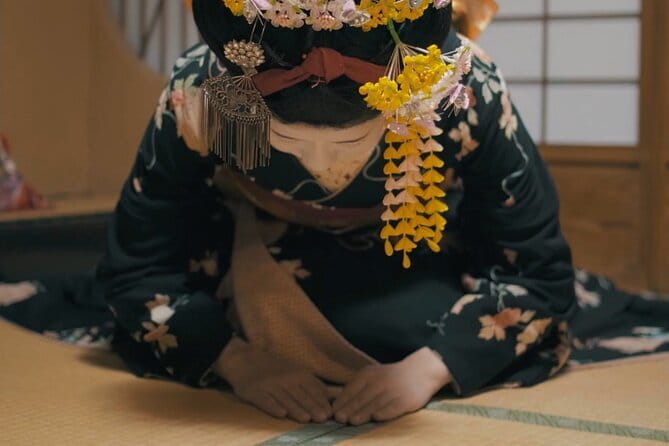
The dance is the emotional center of the visit. It is formal and controlled, with movement that may look simple until you notice how carefully every gesture is placed.
This is a quiet performance, not a large theatrical production. The small room lets you see the details of the costume and movement at close range. It also means you should keep your phone use polite and follow the guide’s instructions about when photos are appropriate.
The question period adds something a regular performance cannot. You can ask about the maiko or geiko’s work and receive translation from the guide. That conversation helps put the dance in context and gives you a more human view of a profession that can seem mysterious from the outside.
Guides make a major difference here. Yoshi was praised for sharing personal experience of growing up in Kyoto, while Yuko was noted for explaining Gion details before the meeting and translating clearly. Tomato-san was described as friendly, entertaining, and comfortable in English.
Those personal touches are valuable because cultural questions can be hard to phrase. A good interpreter does more than convert words between languages. The guide helps you understand tone, etiquette, and which questions are suitable in the room.
A completely different side of Kyoto:
- PERFECT KYOTO 1-Day Bus Tour
★ 5.0 · 13,518 reviews - Kyoto: Fushimi Inari, Kinkakuji, Bamboo Grove 1 Day Bus Tour
★ 4.8 · 4,316 reviews - Kyoto: Tea Ceremony in a Traditional Tea House in Kiyomizu
★ 4.9 · 3,519 reviews - Kyoto: Tea Ceremony Ju-An at Jotokuji Temple
★ 4.9 · 3,207 reviews
Matcha, Sweets, and the Tea Ritual
The tea portion is not an optional extra tacked onto the end. It gives the visit a slower, more traditional rhythm.
You receive matcha as part of a ceremonial tea experience. The presentation focuses on careful hospitality and manners, so listen when the guide explains what to do. You do not need to be a tea expert, but you should be ready to follow the room’s customs rather than treat the tea like a quick café stop.
The food served has included a traditional sweet, matcha ice cream, dessert, and tea, though the precise refreshments may vary. These small servings make the ceremony more approachable, especially if you have never tried matcha before.
The tea is also a useful reminder that this is not only about costumes and photographs. The visit combines performance, food, conversation, and etiquette. Each part shows a different side of Japanese hospitality.
Taking Photos Without Losing the Moment
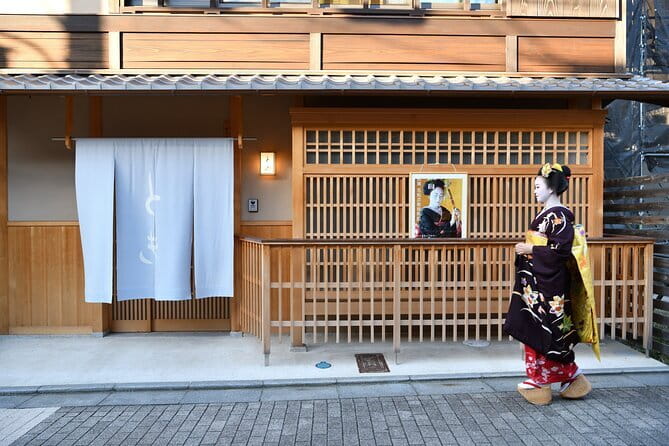
Photography is included, and you can take pictures during the experience. You may photograph the maiko or geiko and, where permitted, take photos with her.
That is a welcome feature, especially at this price. Still, I would treat the camera as a small part of the visit. If you spend the dance watching through a phone screen, you will miss the details that make the performance worthwhile.
Follow the guide’s instructions about timing and manners. The teahouse is a working cultural space, not a studio set. Your photos will be better if you first pay attention to the room, the movement, and the conversation.
The setting itself should provide memorable images: tatami, traditional dress, tea utensils, and the carefully arranged room. You do not need to force a dramatic pose. A respectful portrait or group photo is enough.
Is $155.22 a Fair Price?
At $155.22 per person, this is expensive compared with a standard temple visit or ordinary tea tasting. The price makes more sense when you consider what is bundled into the 90-minute appointment.
You are paying for:
- Entry to a teahouse that is not normally open for casual drop-in visits
- A maiko or geiko appearance
- Live dance and possible music
- A tea experience with refreshments
- An English-speaking guide and translation
- A short Gion orientation walk
- Photo opportunities
- A group limited to 10 people
The strongest value comes from access and scale. A large public show can offer polished entertainment, but it will not necessarily allow direct questions in a small tatami room. A private appointment would likely cost far more, while independent sightseeing cannot easily recreate the teahouse visit.
I would call it fair value for someone who has a serious interest in geisha culture or wants one carefully arranged traditional experience in Kyoto. I would not recommend it to someone seeking a cheap activity, a long walking tour, or a full evening of entertainment.
The high rating and 100 percent recommendation figure suggest that the format has worked very well for the people who booked it, but the cost remains real. Think of it as one major cultural purchase for your Kyoto visit, not a casual add-on.
Who Will Enjoy This Most?
This suits adults and older children who are curious, polite, and willing to sit quietly for a formal presentation. Most people can participate, but children aged 0 to 5 cannot join.
Anyone under 18 needs written parental permission. Participants under 15, or anyone not yet enrolled in middle school, must be accompanied by a parent or guardian.
The experience is a strong fit if you:
- Have wanted to learn about maiko and geiko culture
- Prefer a small group to a large stage show
- Want a guide to explain what you are seeing
- Enjoy traditional arts, tea, and etiquette
- Value conversation and questions as much as photographs
- Have limited time in Gion but want more than street sightseeing
It may be less suitable if you dislike sitting on tatami, do not want to follow indoor etiquette, or hope to choose a particular maiko or geiko. The visit is also too short for anyone expecting a detailed tour of all Gion.
Timing, Meeting Point, and Practical Notes
The experience lasts about 1 hour and 30 minutes. The listed schedule includes about 15 minutes from Gion-Shijo Station to the teahouse and about one hour inside. The meeting point is at Gion-Shijo Station, and the tour ends at the teahouse in Gion on Gionmachi Minamigawa.
That ending point is useful. You are already in Gion after the visit, so you can continue exploring the district or make your own plans nearby. Do not expect transport back to the station to be part of the experience.
Confirmation is sent within 48 hours of booking, subject to availability. The date can be canceled if fewer than two people have booked 10 days before departure. Free cancellation is available up to 24 hours before the start time, but cancellations or changes made inside that period are not accepted for a refund.
The ticket is mobile, so keep it accessible on your phone. Most importantly, arrive ready for a traditional indoor setting: clean socks, dry belongings, and a willingness to follow instructions.
Should You Book the Gion Maiko Experience?
I would book this if meeting a maiko or geiko is high on your Kyoto wish list and you want more than a quick sighting on the street. The live dance, translated conversation, tea, and small group create a focused cultural visit that is hard to arrange on your own.
I would skip it if $155.22 feels uncomfortable, if you prefer free sightseeing, or if you want a longer performance. You also need to accept that the day’s performer is assigned rather than chosen.
For the right person, this is one of the more meaningful ways to spend an hour and a half in Gion. Book it as a respectful introduction to a living tradition, wear socks, and leave room in your schedule for a quiet walk through Gion afterward.
FAQ
Where does the experience begin?
It begins at Gion-Shijo Station, at 1 Chome Miyagawasuji in Kyoto’s Higashiyama Ward.
Where does the experience end?
It ends at the teahouse in Gion, on Gionmachi Minamigawa.
How long does the experience last?
The full experience lasts approximately 1 hour and 30 minutes. The walk takes about 15 minutes, followed by about one hour at the teahouse.
How many people can join?
The maximum group size is 10 people.
What happens if only one person books?
At least two participants are required. If that minimum is not reached 10 days before the scheduled date, the tour may be canceled.
Will I meet a maiko or a geiko?
You will be accompanied by either a maiko or geiko, along with a tea master, depending on the day.
Can I choose which maiko or geiko I meet?
No. The maiko or geiko cannot be selected in advance.
Is an English-speaking guide included?
Yes. An English-speaking guide leads the walk and provides translation and context during the teahouse visit.
Can I take photographs?
Yes. Photo taking is included, and photographs of the maiko or geiko and with her are part of the experience.
What should I wear?
You must wear socks for the tatami room. If your feet, clothes, or bag are wet, dry them before entering the teahouse.
Can young children join?
Children aged 0 to 5 cannot join. Participants under 18 need written parental permission, and anyone under 15 or not yet enrolled in middle school must attend with a parent or guardian.
What is the cancellation policy?
You can cancel up to 24 hours before the start time for a full refund. Cancellations or changes made less than 24 hours before the experience are not accepted for a refund.
Recently added around Kyoto
- Higashiyama | Kyoto: Sakura Season Private Rickshaw Tour★ 5.0 · 3 reviews
- Kyoto Kimono Rental CHAMATSU|Kimono/Yukata Rental FamilyPlan★ 5.0 · 3 reviews
- Kyoto: Half-Day Private Guided Tour to the Old Town of Gion★ 4.4 · 3 reviews
- Nara Private Customizable Half Day Tour★ 5.0 · 3 reviews
- Kansai Region Hiking Adventure in Nara Kobe Kyoto and More★ 5.0 · 3 reviews
- Full Day Nara Deer, Temple, Shrine, Activities & Tea Ceremony★ 5.0 · 3 reviews
- Nara: Essential Private Tour with Deer Park and Temples★ 5.0 · 3 reviews
- Hiking Tour for Sacred Sites in Kyoto with a Guide★ 5.0 · 3 reviews
Gion Geisha District Tours, compared.

Kyoto Geisha Walking Tour: Gion District & Hidden Gems
Read our review →
Gion Magical Night Walking Tour with Geisha Trivia
Read our review →
Gion Geisha District Walking Tour – Stories of Geisha
Read our review →
Best of Kyoto: Gion, Geisha, Pagodas & Cobblestones
Read our review →

Kyoto Night Foodie Tour in Gion (9+ dishes + 6 Sake tastings)
Read our review →
Kyoto Gion Geisha District Walking Tour – The Stories of Geisha
Read our review →
Kyoto Gion: 2-Hour Geisha Culture & History Walking Tour
Read our review →Browse the lists this tour appears in