
REVIEW · KYOTO TEMPLE TOURS
The Way of Tea: Kyoto Crafts, Hidden Temples & Wabi-Sabi Walk
Kyoto’s tea culture makes the most sense when you see it beside the temples, gardens, and handmade objects that shaped it. This three-and-a-half-hour walk links Gion, Kennin-ji, craft shops, and a traditional tea house, ending with your own matcha-making lesson.
I like the small maximum of seven people, which gives you room to ask questions, and I like the way the tour includes admission to two temples rather than leaving you to sort out tickets. The main caution is communication: one guest found the guide’s English too soft to hear clearly, so stay near the guide and speak up if you miss an explanation.
In This Review
- Key points to know before booking
- A Kyoto walk built around the cup
- Meeting at Gion Shijo Station
- Gion and the story of Japanese tea
- Kennin-ji and two temple admissions
- Craft shops and the character of raku bowls
- A quieter temple and garden stop
- Learning to make matcha in a traditional house
- What the $94.45 price really buys
- Communication, pace, and practical comfort
- Who will get the most from this experience
- Should you book the Way of Tea?
- FAQ
- How long does the tour last?
- Where does the tour begin?
- How will I identify the guide?
- Where does the tour finish?
- What is included in the price?
- Can children join the tea ceremony?
- What happens if I need to cancel?
Key points to know before booking
- Tea and temples in one compact outing: You visit Gion, Kennin-ji, craft shops, a temple garden, and a tea house.
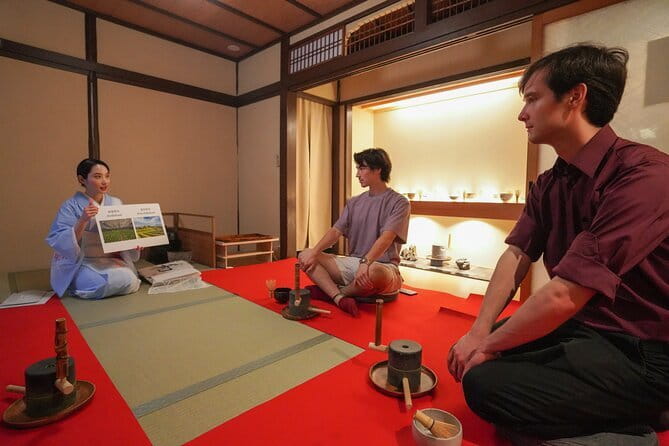
- A real matcha lesson at the end: A tea master guides you through the tea ceremony in a traditional Japanese house.
- Small group access: The tour accepts no more than seven people, useful for questions and close guidance.
- Raku ceramics add meaning: You learn why tea bowls are valued for their individual character rather than factory-perfect sameness.
- The route ends near Kiyomizu: The tour begins at Gion Shijo Station and finishes at the tea experience location in Higashiyama.
- Plan for the weather: Kyoto can reach 40°C in summer and fall to -5°C in winter, and much of the outing is outdoors.
A Kyoto walk built around the cup
I like this tour because it does not treat the tea ceremony as an isolated performance. You first walk through parts of eastern Kyoto where tea, temples, gardens, and crafts belong together. By the time you sit down to prepare matcha, you have some context for the objects and ideas in front of you.
The route also solves a common Kyoto problem: fitting several small sights into one outing without spending half the morning checking maps. Your English-speaking guide leads you from the statue of Izumo-no-Okuni outside Exit 5 of Gion Shijo Station to the final tea house in the Kiyomizu area.
The pace is fairly brisk. Five main stops receive about 30 minutes each, followed by a one-hour tea experience. You will be walking between them, so comfortable shoes matter. The tour includes temple admission, matcha, and photos taken during the outing, but extra food and drinks cost more.
More Kyoto temples worth a morning:
- Kyoto: Tea Ceremony Ju-An at Jotokuji Temple
★ 4.9 · 3,207 reviews - Arashiyama Bamboo, Temple, Monkeys, or Secret Sake Brewery
★ 4.8 · 886 reviews - Kyoto: Arashiyama Bamboo Forest, Monkeys, Matcha & Temple Tour
★ 5.0 · 759 reviews
Meeting at Gion Shijo Station
The meeting point is easy to identify if you use the Keihan Line. Go to Exit 5 of Gion Shijo Station and look for the statue of Izumo-no-Okuni. The guide carries an orange Magical Trip Tour signboard.
Arrive early. This tour begins on time, and you cannot join the group, reschedule, or receive a refund if you miss the start. That rule is strict, but it matters on a walking tour with several timed stops. A late start would cut into the temple visits or the tea lesson for everyone.
The group size is capped at seven people. That is a useful number for Kyoto lanes and small shops. It also gives you a better chance to ask about unfamiliar customs, especially if this is your first visit to Japan.
The meeting point is close to public transportation, but the tour does not return there. It ends at 4-chōme-172-7 Kiyomizu, in Kyoto’s Higashiyama Ward. Keep that in mind when planning your next stop. You may want to continue sightseeing in the Kiyomizu area rather than heading back across town.
Gion and the story of Japanese tea
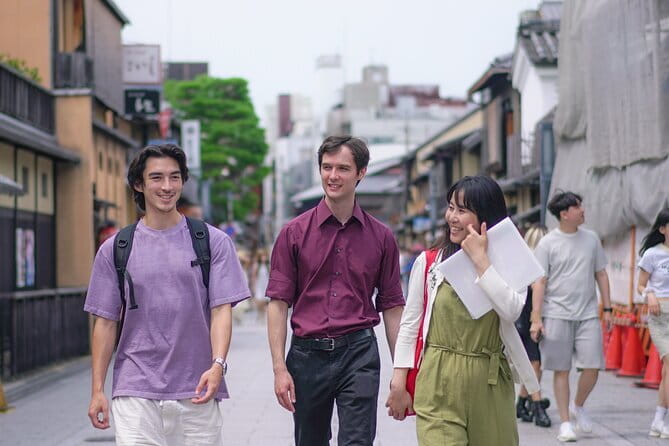
The first part takes you through Gion, Kyoto’s famous historic district. The focus here is Japanese tea and how matcha is made, with a visit to a well-known matcha shop.
The 30-minute stop will not turn you into a tea farmer or tea scholar. Its value is more practical. You begin to understand what makes matcha different from ordinary brewed tea and why the powder plays such an important part in Japanese culture.
Gion is also a good setting for this introduction. Its traditional streets provide the visual setting for the customs you will discuss, though you should remember that the area is a working district, not a stage set. Walk politely, avoid blocking narrow lanes, and do not assume that every person in traditional clothing is available for photographs.
Because this is a walking tour, the Gion portion is an orientation rather than a long standalone visit. If you want extensive time for shopping, photographs, or a quiet look at the district, return later on your own. Here, the guide needs to keep the group moving toward the temple and craft stops.
Kennin-ji and two temple admissions
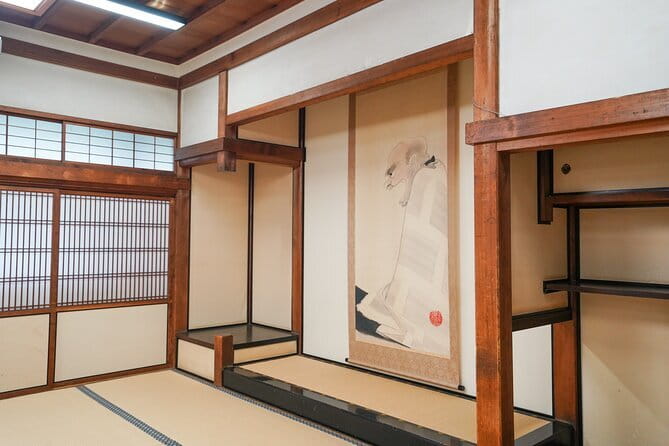
Kennin-ji is the first major temple visit. It has stood for centuries and gives the tour a substantial cultural stop early in the route.
The temple admission is included, as is entry to a second temple later in the tour. That makes the $94.45 price easier to assess. You are not simply paying for a guide to walk you through public streets. Part of the fee covers access to sites, while the guide connects them to tea and craft traditions.
You receive about 30 minutes at Kennin-ji. That is enough for a focused introduction and a look at the temple, but it is not a full temple study. If you prefer to linger over every room, garden, and detail, you may find the schedule short.
I see the limited time as a tradeoff rather than a flaw. Kyoto has an enormous number of temples, and trying to visit several independently can create a scattered day. This tour gives you one significant temple, another garden setting, and a tea ceremony without asking you to organize the sequence yourself.
Temple etiquette remains important. Follow your guide’s instructions about where to walk and what you may photograph. The supplied information does not promise a particular interior, garden feature, or seasonal display, so treat the visit as a guided introduction rather than a guarantee of a specific sight.
More walking tours in Kyoto:
- Kyoto Geisha Walking Tour: Gion District & Hidden Gems
★ 4.7 · 3,273 reviews - Kyoto: Gion Magical Night Walking Tour with Geisha Trivia
★ 4.9 · 2,393 reviews - Kyoto: Gion Geisha District Walking Tour – Stories of Geisha
★ 4.7 · 2,187 reviews - Night Walk in Gion: Kyoto’s Geisha District
★ 4.5 · 2,003 reviews
Craft shops and the character of raku bowls
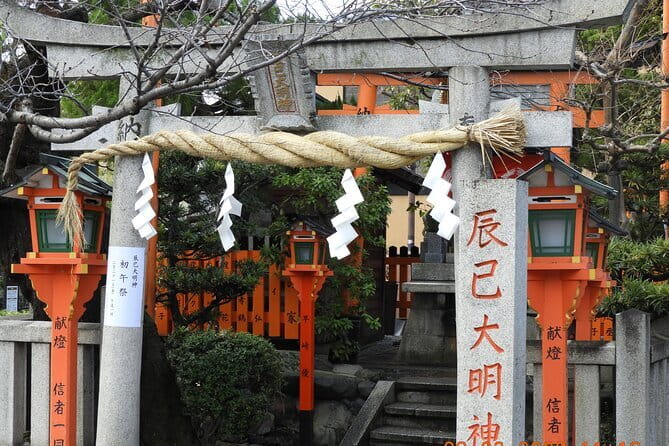
The next part turns from buildings to objects. You visit craft shops in Kyoto Prefecture, then stop at a tea bowl shop where the raku teacup receives special attention.
This is one of the more distinctive parts of the experience. Many tea ceremonies place great importance on the bowl itself, not just the drink. Your guide explains how each cup has its own character, background, and meaning. That helps you see the tea ceremony as a meeting of touch, shape, age, and use.
Raku ware is especially suited to this discussion. The point is not that every bowl is rare or costly. The useful lesson is that a handmade tea bowl can show marks of the maker and firing process. Those differences are part of its appeal.
You may find the craft stops more interesting if you enjoy ceramics, design, or Japanese traditions of restraint. If you mainly want famous landmarks, these 30-minute visits may feel less urgent than Kennin-ji. I would not skip them, though. They explain why the tea ceremony pays such close attention to humble-looking objects.
The tour does not state that purchases are included, so assume shopping is separate. Ask the guide about any shop’s prices, shipping, or photography rules before buying. A tea bowl is not an impulse souvenir for every budget, and the most useful purchase may simply be the understanding you take with you.
A quieter temple and garden stop
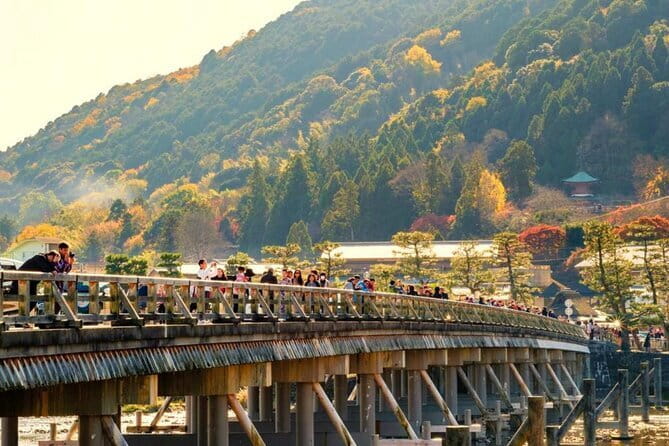
The itinerary includes a second temple and garden, described as a quieter or less obvious stop along the route. The exact temple name is not specified, so you should not book this expecting a particular famous landmark.
That lack of a named site is worth noting. If you need a fixed checklist of Kyoto attractions, this tour may feel less predictable than one built around Kiyomizu-dera or Fushimi Inari. If you like seeing a calmer side of the city, the stop fits the tour’s theme well.
The garden gives you a pause between walking and the final tea lesson. Gardens in this setting are not just scenery. Their empty space, careful placement, and controlled simplicity connect with the wabi-sabi ideas introduced during the walk.
The tour description does not promise a specific seasonal view, so the experience will change with the weather and time of year. Kyoto’s climate can be severe. Summer temperatures may reach 40°C, while winter can fall to -5°C. Wear layers in cold weather and bring protection from sun or rain when needed.
Learning to make matcha in a traditional house
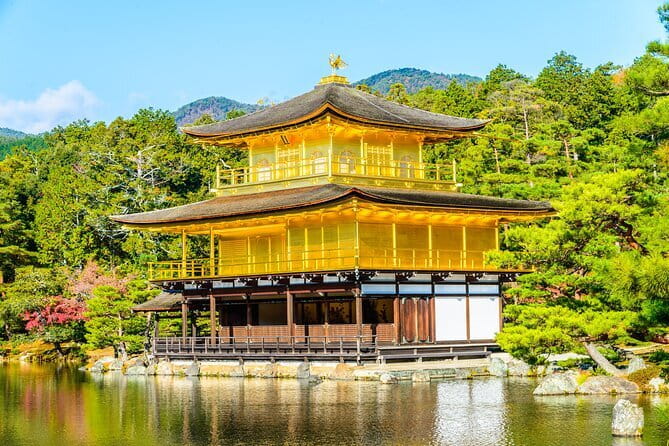
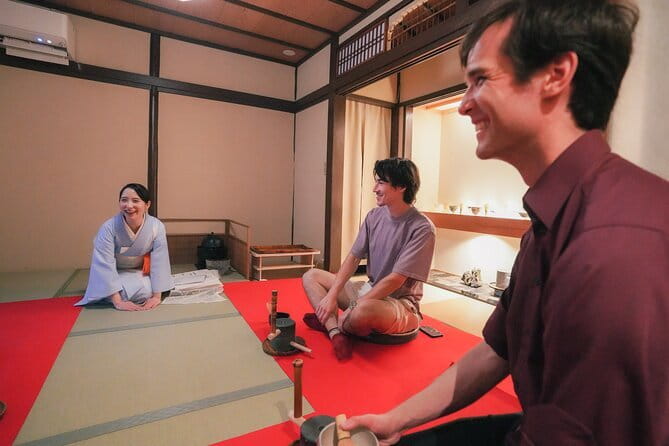
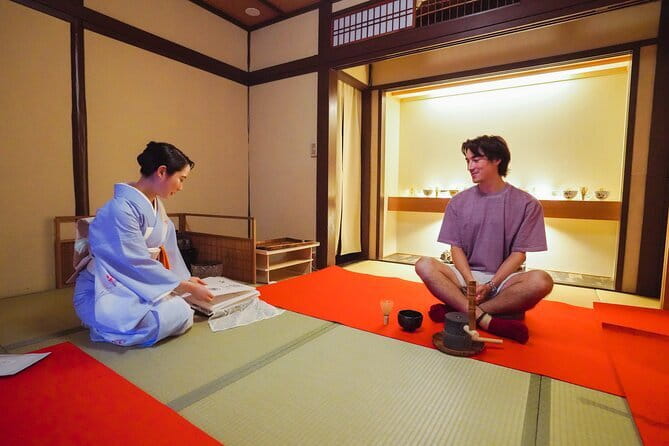
The final hour is the heart of the outing. At the Chayu tea experience, you enter a traditional Japanese house and take part in a tea ceremony with instruction from a tea master.
This is not simply a cup of matcha handed to you at the end. You learn how to prepare the tea yourself. The lesson gives you a practical way to understand the movements, tools, and care involved in the ceremony.
Expect the tea master to guide you through the process. The supplied details do not list every step or utensil, so I would avoid expecting a full professional tea-school course. Think of it as a hands-on introduction that makes the ceremony easier to appreciate.
The connection to wabi-sabi is the main reason this ending works. After seeing handmade bowls and a garden, you can consider how tea values simplicity, imperfection, and the marks of use. The ideas become easier to grasp when you are holding the bowl and preparing the drink yourself.
The experience serves matcha, and tea is included. Additional food and drinks are not. Children must be at least six years old to take part in the tea ceremony. Younger children may come on the tour, but one adult must remain outside the facility with them during the experience.
The tour ends at the tea house rather than taking you back to Gion Shijo Station. That is convenient if you plan to continue around Kiyomizu, but less convenient if you need to retrieve luggage or return to a hotel near the station.
What the $94.45 price really buys
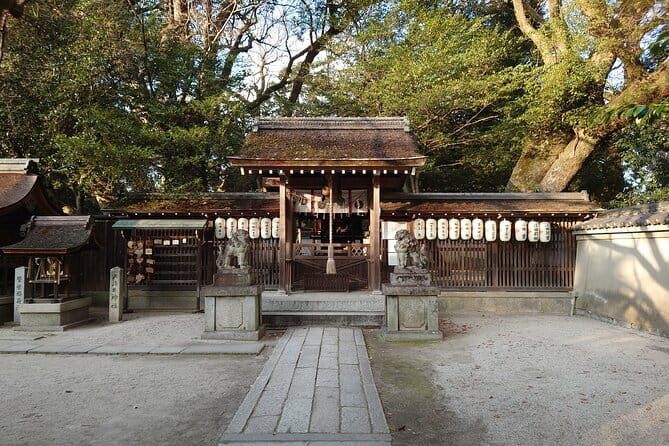
At $94.45 per person, this is not a bargain walking tour. The value comes from the combination of several paid and guided elements in a short span: an English-speaking guide, admission to two temples, a traditional tea-house experience, matcha, and photos taken during the tour.
You are also paying for planning. Kyoto’s eastern districts can look close together on a map, but moving between a station, temple, garden, shop, and tea house takes time and attention. A guide removes that navigation work and gives the route a clear theme.
The price makes the most sense if you are new to Kyoto, have only a few days, or want a structured introduction to tea culture. It is less compelling if you already know Gion and Kennin-ji, dislike group schedules, or would rather spend an hour choosing your own tea house.
The group limit of seven helps protect the experience from becoming a large procession. Still, the tour may include other participants, and the small-group format does not guarantee private guiding. You should expect to share the guide’s attention.
Communication, pace, and practical comfort
The tour’s success depends heavily on the guide. One recorded experience raised a useful concern: the guide spoke English very softly, making some explanations difficult to hear, and the guest felt the guide did not know enough about certain places. The operator apologized and said it would work with guides on clearer communication and stronger site information.
I would take that seriously without treating it as a reason to reject the tour outright. Most of the route depends on explanation, especially the tea, raku bowls, and wabi-sabi themes. Stay close to the guide, ask for repetition, and tell the guide early if you cannot hear.
You should also prepare for a walking route rather than a seated sightseeing trip. The three-and-a-half-hour duration includes movement between stops. Wear shoes suitable for walking and be ready for outdoor conditions. The tour may be cancelled if weather creates safety concerns.
Confirmation arrives when you book. Free cancellation or rescheduling is available up to 24 hours before the start time. Changes made inside that period are not accepted, and the cut-off uses Kyoto local time.
The activity is near public transportation, and most people can participate. The provided details do not promise wheelchair access or describe every surface, so contact the operator if you have specific mobility needs.
Who will get the most from this experience
I would choose this tour for a first or second visit to Kyoto, especially if you want more than a quick ceremonial photo. The route gives you a working introduction to tea, temples, handmade ceramics, and garden design in one morning or afternoon.
It also suits you if you like learning by doing. The tea lesson is more useful than a lecture because you handle the tea-making process yourself. The craft discussion adds another layer, showing that the cup is part of the experience rather than a disposable container.
Families can join if children are six or older for the tea ceremony. Parents with younger children need to plan for one adult to stay outside during that portion. The walking and the formal setting may also suit older children better than very young ones.
I would hesitate to recommend it to anyone seeking a private, slow-paced cultural appointment. The schedule is fixed, the group may not be private, and each stop receives a limited amount of time. A dedicated tea ceremony or private guide would offer more depth, but likely at a higher price.
Should you book the Way of Tea?
Book it if you want a compact, guided introduction to Kyoto’s tea world, with temples and crafts giving the final ceremony some context. The small group, included temple admissions, traditional house, matcha lesson, and end point near Kiyomizu make the package practical for a short Kyoto stay.
Think twice if you need a named temple at every stop, want extensive free time, or are especially concerned about hearing a guide in a busy outdoor setting. Arrive early, stay close, and speak up if an explanation is too quiet.
For the right visitor, $94.45 buys more than tea. It buys a coherent route through several parts of Kyoto culture, ending with a skill you can remember and repeat long after the bowl is back on the shelf.
FAQ
How long does the tour last?
The experience lasts approximately 3 hours and 30 minutes. The guided portion is described as three hours, followed by an approximately one-hour tea ceremony experience.
Where does the tour begin?
It begins in front of the Statue of Izumo-no-Okuni, outside Exit 5 of Gion Shijo Station on the Keihan Line, at Kawabatacho in Kyoto’s Higashiyama Ward.
How will I identify the guide?
The guide will hold an orange signboard marked Magical Trip Tour.
Where does the tour finish?
The tour ends at the tea experience location at 4-chōme-172-7 Kiyomizu, in Kyoto’s Higashiyama Ward. It does not return to the starting point.
What is included in the price?
The price includes the tea ceremony in a traditional Japanese house, matcha, admission to two temples, an English-speaking local guide, and photos taken during the tour.
Can children join the tea ceremony?
Children must be six years old or older to take part in the tea ceremony. Younger children may join the tour, but one adult must accompany them outside the tea facility during that portion.
What happens if I need to cancel?
You can cancel for a full refund up to 24 hours before the experience begins. Cancellations or changes made less than 24 hours before the start time are not accepted for a refund or rescheduling.
Recently added around Kyoto
- Kyoto Kimono Rental CHAMATSU|Kimono/Yukata Rental FamilyPlan★ 5.0 · 3 reviews
- Higashiyama | Kyoto: Sakura Season Private Rickshaw Tour★ 5.0 · 3 reviews
- Kyoto: Half-Day Private Guided Tour to the Old Town of Gion★ 4.4 · 3 reviews
- Nara Private Customizable Half Day Tour★ 5.0 · 3 reviews
- Kansai Region Hiking Adventure in Nara Kobe Kyoto and More★ 5.0 · 3 reviews
- Full Day Nara Deer, Temple, Shrine, Activities & Tea Ceremony★ 5.0 · 3 reviews
- Nara: Essential Private Tour with Deer Park and Temples★ 5.0 · 3 reviews
- Hiking Tour for Sacred Sites in Kyoto with a Guide★ 5.0 · 3 reviews
Kyoto Temple Tours, compared.
Arashiyama Bamboo, Temple, Monkeys, or Secret Sake Brewery
Read our review →
Arashiyama Bamboo Forest, Monkeys, Matcha & Temple Tour
Read our review →
Kyoto Zen Meditation & Garden Tour at a Zen Temple with Lunch
Read our review →
Arashiyama Bamboo, Matcha, Monkeys & Temple Tour
Read our review →
Arashiyama Bamboo, Temple, Matcha, Monkeys & secret spots
Read our review →
Browse the lists this tour appears in