REVIEW · PRIVATE
SHIRAKAWA Japanese Culture Experiences with private English staff
The most appealing part of this Kyoto experience is its setting: Furukawacho Shopping Arcade, a working neighborhood market rather than a major sightseeing complex. Lanterns hang from the roof, local shops line the passage, and the focus is on everyday Japanese skills, from whetstone sharpening to family-style cooking.
I like the choice of two workshops, which lets you shape the visit around your interests. I also like the private English-speaking staff, especially because the lessons involve hands-on instructions and cultural details that can be easy to miss. The main drawback is that you cannot do all three activities, and the workshop you want depends on availability.
In This Review
- Key points at a glance
- A Kyoto workshop in a local shopping arcade
- Choosing between three very different lessons
- Knife sharpening with a 26-year artisan
- Obanzai cooking with Kyo-gohan Nishimura
- Calligraphy and your own hanging scroll
- What the private English support changes
- Why the two-class format works
- Is $98.53 a fair price?
- Who will get the most from this experience?
- Practical planning before you book
- The best workshop combinations
- Should you book Furukawacho’s culture workshops?
- FAQ
- Where does the experience take place?
- What is the meeting point?
- Where does the activity end?
- How long does the experience last?
- How many workshops can I take?
- Is an English-speaking guide included?
- How large can the group be?
- Is transportation included?
- What happens if my preferred workshop is unavailable?
- Can I cancel for a refund?
Key points at a glance
- Choose two of three hands-on lessons: Knife sharpening, obanzai cooking, or Japanese calligraphy.
- Learn from local specialists: An artisan with 26 years of sharpening experience leads the knife lesson, while the chef-owner of Kyo-gohan Nishimura teaches obanzai.
- Explore a real neighborhood arcade: Furukawacho serves as part of the local food and shopping life of the Shirakawa area.
- Receive private English support: Your own English-speaking staff member attends each workshop.
- Plan for a small group: The activity accepts groups of two to six people only.
- Allow about three hours: The two selected classes fit into a compact Kyoto cultural outing.
A Kyoto workshop in a local shopping arcade
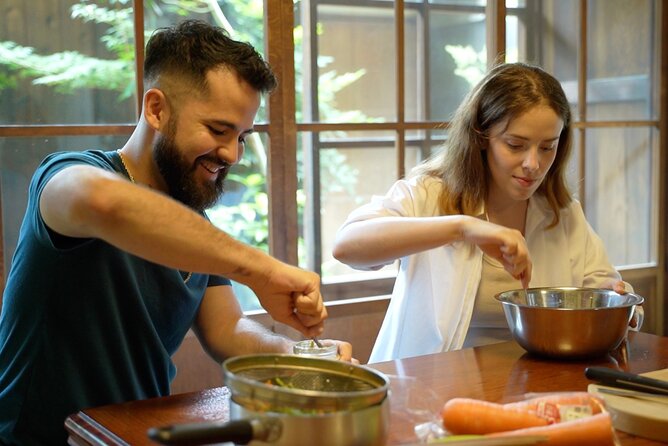
Furukawacho Shopping Arcade gives this activity its character. The concept is described as retro and modern, and the setting reflects that mix. Lanterns hang beneath the arcade roof, while the shops provide the practical food and services that support daily life in the neighborhood.
That matters because the experience is not built around a staged cultural show. You are learning skills connected to ordinary Japanese life. Knife care, home cooking, and brush writing all have a place in the culture, but here they are presented through local businesses and instructors.
The arcade is in Kyoto’s Higashiyama Ward, in the Shirakawa area. Your meeting point is Furukawashuzo, at 546-1 Furukawachō. The activity returns to this same meeting point, and public transportation is nearby. Private transportation is not included, so you will need to make your own way there.
The booking is private for your group, with two to six people accepted. That limit is useful for a hands-on class. You should be able to ask questions and receive attention without sharing the lesson with a large crowd. It also means this is not a suitable choice for a solo booking unless you are joining with at least one other person.
A few more Kyoto experiences worth comparing
- Fushimi Inari Hidden Hiking Tour (Private Option Available)
★ 5.0 · 1,750 reviews - Private Kyoto Tour with a Local, Highlights & Hidden Gems, Personalised
★ 5.0 · 1,543 reviews - Kyoto 6hr Private Tour with Government-Licensed Guide
★ 5.0 · 1,369 reviews
Choosing between three very different lessons
You choose two workshops from three options. Tell the English-speaking staff your choices by message, and keep in mind that availability can affect which lessons you receive. If your preferred workshop cannot be reserved, the prepaid fee is refunded to the card used for payment.
The three classes are quite different, so your choice should depend on the kind of souvenir you want from the afternoon. Knife sharpening is practical. Obanzai is food-centered and social. Calligraphy is slower and more artistic.
Knife sharpening with a 26-year artisan
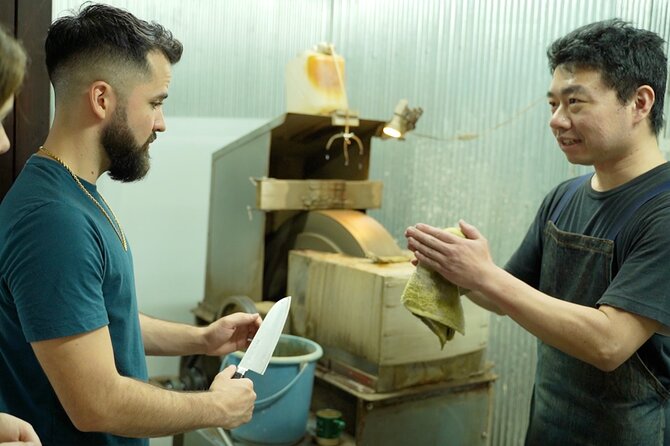
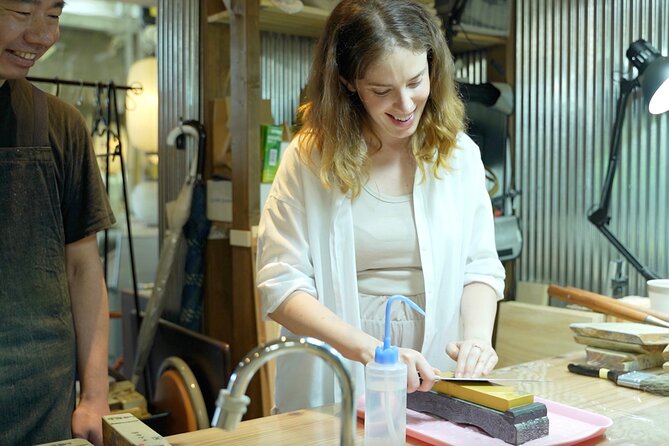
The knife sharpening lesson lasts about 90 minutes. You visit a shop that specializes in sharpening cutting tools on a whetstone, where an artisan with 26 years of experience teaches the proper method.
This is a good pick if you cook at home or like learning a skill you can use long after your Japan trip. Sharpening a knife is not just about making the blade sharper. The lesson focuses on using the whetstone correctly, which gives the activity a clear practical purpose.
The appeal is also its specificity. You are not simply watching a craft demonstration. You are receiving instruction in a trade practiced at a specialist shop in the arcade. The English-speaking staff helps you follow the lesson, but the central teaching comes from the local artisan.
You should choose this workshop if you prefer doing something with your hands and want a useful connection to Japanese kitchen culture. It may be less satisfying if you are mainly looking for a finished keepsake or a food tasting.
Obanzai cooking with Kyo-gohan Nishimura
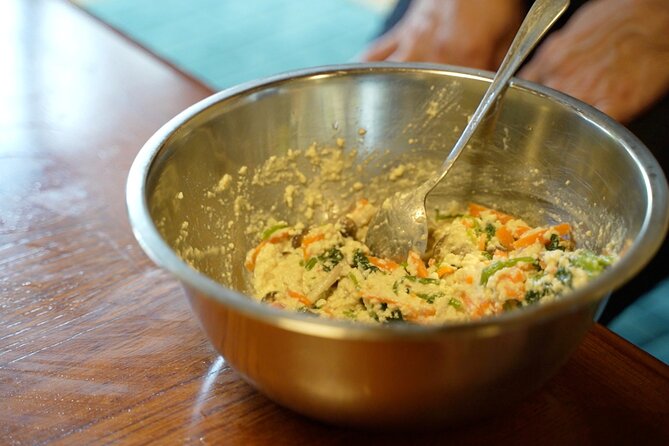
The obanzai workshop lasts about 70 minutes. Obanzai is a Kyoto term for home-cooked dishes made from recipes passed down through families. At Kyo-gohan Nishimura, the chef-owner shares a family recipe and guides you through preparing the dishes.
A particularly good feature is that you buy ingredients from shops in the arcade before cooking. That links the class to the neighborhood instead of treating the kitchen as an isolated classroom. You see how the shopping street supplies the meal, then use those ingredients with the chef-owner.
I like this option for anyone who wants food culture with context. You are learning more than a recipe. You are seeing how Kyoto’s home cooking connects to local shopping and family traditions. The 70-minute format is also shorter than the other two workshops, which makes it a sensible choice if you want a balanced pair of activities.
The practical limitation is that the supplied information does not specify the exact dishes or ingredients available on your date. The menu may depend on what the chef selects and what the arcade shops can provide. If you have strict dietary needs, ask before booking rather than assuming the recipe can be changed.
A completely different side of Kyoto:
- PERFECT KYOTO 1-Day Bus Tour
★ 5.0 · 13,518 reviews - Kyoto: Fushimi Inari, Kinkakuji, Bamboo Grove 1 Day Bus Tour
★ 4.8 · 4,316 reviews - Kyoto: Tea Ceremony in a Traditional Tea House in Kiyomizu
★ 4.9 · 3,519 reviews - Kyoto Geisha Walking Tour: Gion District & Hidden Gems
★ 4.7 · 3,273 reviews
Calligraphy and your own hanging scroll
The calligraphy experience lasts about 90 minutes. The instructor explains the shape of kanji and teaches you how to use the brush, ink, and suzuri, the inkstone used in traditional calligraphy.
You then try writing with the brush and can ask how to write the kanji for your name. The lesson ends with a one-of-a-kind hanging scroll, giving you a personal item to take home.
This is the most clearly souvenir-focused choice. The finished scroll has a direct connection to your visit, and the lesson gives meaning to the characters rather than asking you to copy an attractive design without context. It is a strong choice for families, couples, and anyone who enjoys visual arts.
The class requires patience. Brush writing is a technique, not a quick photo opportunity, and the final result will reflect your first attempts. That is part of its charm, but you should not expect professional-level calligraphy after one session.
What the private English support changes
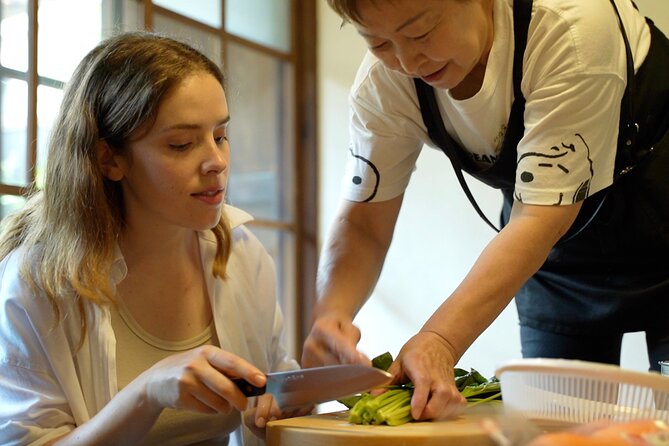
An English-speaking staff member attends each workshop and stays with your private group. That is more useful here than it might be on a simple sightseeing walk.
Each class involves instructions, tools, or cultural terms. The knife workshop has a particular method. Obanzai refers to a Kyoto cooking tradition with a family connection. Calligraphy requires attention to brush use and kanji form. Private language support helps you keep up and ask questions as the lesson moves along.
The staff member is not described as the main instructor for each class. Instead, the local artisan, chef-owner, or calligraphy instructor provides the specialist teaching, while the English staff helps the communication work. That arrangement gives you both local instruction and a clearer path through the lesson.
Because the activity is private, you can also set the pace of your questions within the scheduled time. The group size remains small, from two to six people. This makes the experience better suited to a family or a small group of friends than to someone hoping to meet a large mix of international participants.
Why the two-class format works
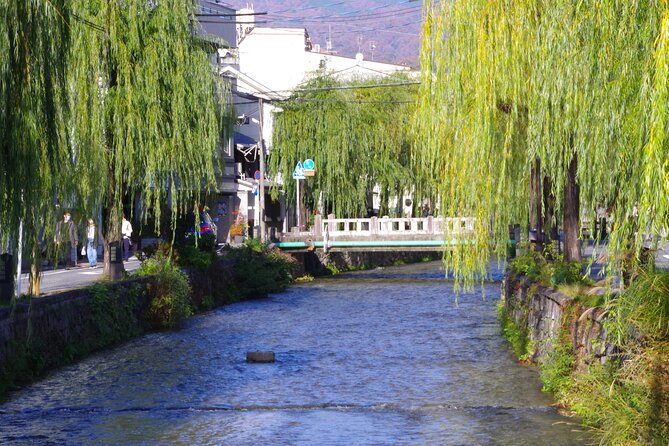
Three hours is a manageable length for a Kyoto itinerary. You get enough time for two substantial workshops without giving up an entire day of sightseeing.
The 90-minute knife class and 90-minute calligraphy class are the longest choices. The 70-minute obanzai workshop gives you a little more breathing room, especially if you combine it with one of the 90-minute options. In practical terms, an obanzai and calligraphy pairing offers food, shopping, and a keepsake. Obanzai plus knife sharpening gives you the strongest connection to kitchen life. Knife sharpening plus calligraphy creates the sharpest contrast between practical craft and artistic practice.
You cannot choose all three. That is the central planning decision, so think about what you want to remember from Kyoto. If your trip already includes many food stops, calligraphy may add a different kind of experience. If you want something useful and tactile, knife sharpening is the obvious pick. If local food culture is your priority, select obanzai.
Workshop availability is not guaranteed until the booking is confirmed. Confirmation is generally sent within 48 hours, while the provider may also contact you by email or message within three business days after application and payment. Give yourself time for this exchange, especially if your Kyoto schedule is tight.
Is $98.53 a fair price?
At $98.53 per person, the cost is higher than a basic calligraphy class or a casual market visit. But this is not a single short demonstration. The price covers two workshops, private English-speaking support, and access to local instructors in a neighborhood shopping arcade.
The value depends on how much you care about direct participation. If you only want to see the arcade, you can visit the area without paying for this activity. If you want to learn a technique, cook with a local chef-owner, or produce a personal scroll, the price pays for instruction and a small private setting.
The obanzai class includes shopping for ingredients in the arcade, which adds another layer to the visit. The calligraphy class includes a hanging scroll, while the knife sharpening lesson offers a skill you can continue using at home. Those elements make the fee easier to justify for people seeking a focused cultural activity rather than a low-cost stop.
The private format also affects the value. You are not simply joining a crowded group, and your English-speaking staff member attends your selected workshops. For two people, the per-person price may feel reasonable if you want a tailored cultural session. Larger groups can compare the cost against other private activities in Kyoto.
Who will get the most from this experience?
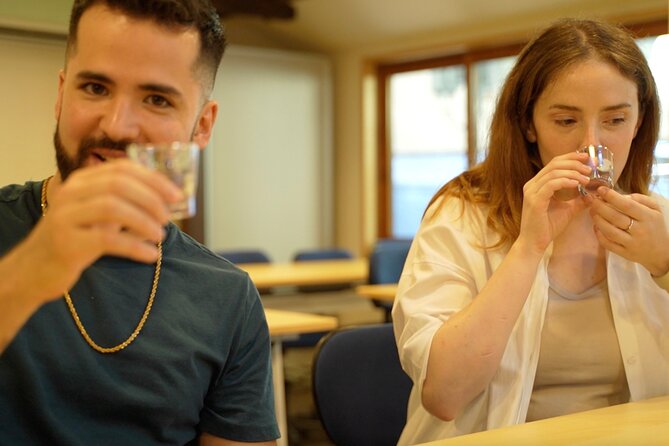
I would recommend this activity to visitors who have already seen some of Kyoto’s major sights and want a closer look at daily culture. It suits people who prefer learning by doing, not just looking at buildings or taking photographs.
It is especially useful for:
- Couples choosing a shared activity with a personal result
- Families with older children who can follow a hands-on lesson
- Small groups of friends interested in cooking, crafts, or Japanese traditions
- Home cooks who want to understand whetstone sharpening
- Anyone looking for a calligraphy souvenir made during the trip
- Food lovers who want Kyoto cooking tied to a local market setting
It may not be the right match if you want a flexible drop-in activity, a large group atmosphere, or a full-day excursion. The group must have two to six people, the activity lasts about three hours, and your preferred class may not be available.
Practical planning before you book
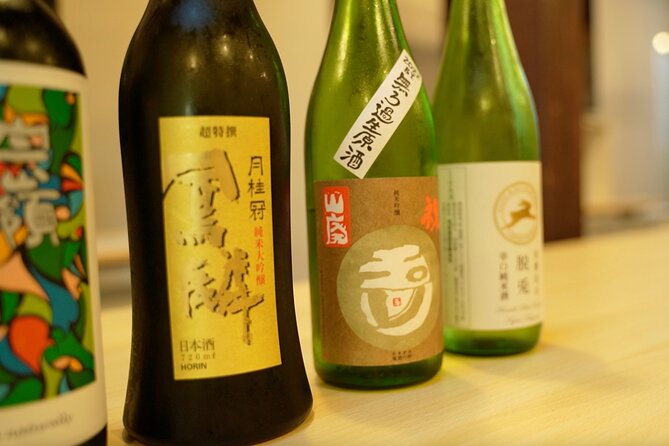
Start by choosing your two workshop preferences. Send them by message as requested, and do not assume your first choice is secured until availability is confirmed.
The meeting point is Furukawashozo, written in the supplied address as 古川趣蔵 Furukawashuzo, at 546-1 Furukawachō, Higashiyama Ward, Kyoto, postal code 605-0026. The activity ends there as well. Since transportation is not included, plan your route to the arcade and allow enough time to find the meeting point.
The experience is listed as a mobile-ticket activity. You should keep the ticket accessible on your phone, along with the provider’s messages about the confirmed workshops.
The activity is non-refundable and cannot be changed after booking. That makes the availability message especially important. Check your dates, group size, and workshop preferences before paying. If the provider cannot place you in the workshop you want, the prepaid amount is refunded to the original card, but a personal cancellation does not qualify for a refund.
The best workshop combinations
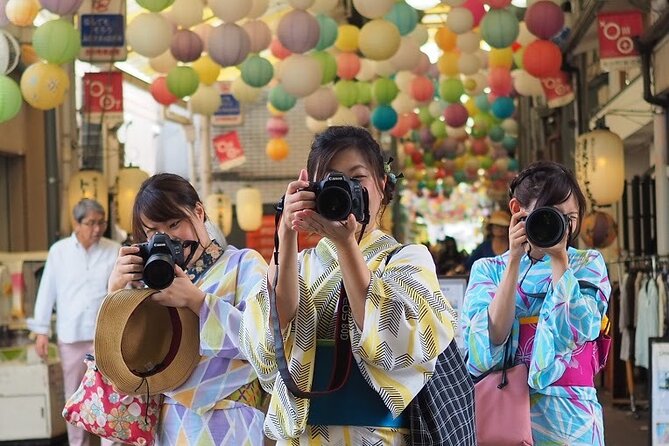
Your ideal pairing depends on the kind of afternoon you want.
For food culture: Choose obanzai and knife sharpening. Both connect to the kitchen, but in different ways. One teaches cooking and local ingredients, while the other teaches care for the tools used in cooking.
For a keepsake: Choose obanzai and calligraphy. You cook a Kyoto-style home dish, then create a hanging scroll with your name in kanji.
For hands-on craft: Choose knife sharpening and calligraphy. The contrast keeps the experience varied, moving from whetstone technique to brush and ink.
For a shorter cooking-centered visit: Choose obanzai with either of the 90-minute classes. Its 70-minute length can make the overall schedule feel less demanding.
Because the workshop choice depends on reservations, keep a second option in mind. That way, you are not disappointed if the exact pairing is unavailable.
Should you book Furukawacho’s culture workshops?
Book it if you want local, hands-on Kyoto culture in a small private group. The arcade setting, the specialist instructors, and the private English support give the activity more substance than a quick craft demonstration. I especially like the choice between a practical kitchen skill, a family-style cooking lesson, and a personal calligraphy scroll.
Think twice if you need a flexible cancellation policy, require all three activities, or are traveling alone. For everyone else, $98.53 is a reasonable price when you value direct instruction and an experience connected to an operating neighborhood arcade. Pick your two preferred workshops early, confirm the schedule, and let this three-hour visit add a practical human scale to your time in Kyoto.
FAQ
Where does the experience take place?
The activity takes place at Furukawacho Shopping Arcade in the Shirakawa area of Kyoto, Japan.
What is the meeting point?
The meeting point is 古川趣蔵 Furukawashuzo, at 546-1 Furukawachō, Higashiyama Ward, Kyoto, 605-0026, Japan.
Where does the activity end?
The activity ends back at the meeting point.
How long does the experience last?
The experience lasts approximately three hours.
How many workshops can I take?
You can choose two workshops from knife sharpening, obanzai cooking, and calligraphy.
Is an English-speaking guide included?
Yes. A private English-speaking staff member attends your group at both workshops.
How large can the group be?
The activity accepts groups of two to six people only.
Is transportation included?
No. Private transportation is not included, though the meeting point is near public transportation.
What happens if my preferred workshop is unavailable?
You may not be able to take your preferred workshop if it is already reserved. In that case, the prepaid fee is refunded to the credit card used for payment.
Can I cancel for a refund?
No. The activity is non-refundable and cannot be changed for any reason after booking.
Recently added around Kyoto
- Higashiyama | Kyoto: Sakura Season Private Rickshaw Tour★ 5.0 · 3 reviews
- Kyoto Kimono Rental CHAMATSU|Kimono/Yukata Rental FamilyPlan★ 5.0 · 3 reviews
- Kyoto: Half-Day Private Guided Tour to the Old Town of Gion★ 4.4 · 3 reviews
- Nara Private Customizable Half Day Tour★ 5.0 · 3 reviews
- Kansai Region Hiking Adventure in Nara Kobe Kyoto and More★ 5.0 · 3 reviews
- Full Day Nara Deer, Temple, Shrine, Activities & Tea Ceremony★ 5.0 · 3 reviews
- Nara: Essential Private Tour with Deer Park and Temples★ 5.0 · 3 reviews
- Hiking Tour for Sacred Sites in Kyoto with a Guide★ 5.0 · 3 reviews
Private, compared.
Fushimi Inari Hidden Hiking Tour (Private Option Available)
Read our review →
Private Kyoto Tour with a Local, Highlights & Hidden Gems, Personalised
Read our review →
Kyoto 6hr Private Tour with Government-Licensed Guide
Read our review →
10 Must-see Spots in Kyoto One Day Private Tour (up to 7 people)
Read our review →
Nara Half Day Trip Walking Tour (Private Option Available)
Read our review →
Kyoto 4hr Private Tour with Government-Licensed Guide
Read our review →