REVIEW · GUIDED
Private Kyoto Tour with Licensed Guide & Vehicle (Max 15 persons)
Kyoto’s crowded buses and confusing rail connections can eat up a day. This private tour puts a guide and vehicle at your service, letting you connect far-flung sights such as Fushimi Inari, Kinkaku-ji, and Arashiyama without constantly checking a transit map. I especially like the three or four-stop format, which keeps the day practical, and the chance to shape the route around your own priorities.
I also like the door-to-door pickup and the separate driver, since your guide can focus on temples, customs, and local stories instead of parking. Guides including Ken, Michi, Yuka, Noriko, and Tomy have been praised for adjusting routes, helping with photos, finding lunch, and working around mobility needs. The catch is price: at $634.72 per group of up to two, this is a serious splurge for a couple, though the value improves for a larger party. You will not see all 24 possible stops in six hours.
In This Review
- Key points to know before booking
- A private ride through Kyoto’s scattered sights
- The route is flexible, but six hours goes quickly
- Fushimi Inari and the red torii gates
- Nijo Castle and Kyoto’s imperial past
- Gion, Pontocho, and Higashiyama after dark in spirit
- Kiyomizu-dera and the eastern hills
- Nishiki Market, Kyoto’s Kitchen
- Kinkaku-ji, Ryoan-ji, and northern Kyoto
- Arashiyama and the western temple route
- Northern mountains and quieter alternatives
- The guides make or break the day
- Who gets the best value
- Should you book this Kyoto tour?
- FAQ
- How long is the private Kyoto tour?
- How many sights can I choose?
- Is transportation included?
- Is hotel pickup available?
- Are entrance fees included?
- Can I book the tour for a large group?
- Can children or people with mobility needs participate?
Key points to know before booking
- Choose three or four sights: The long stop list is a menu, not a promise to visit every temple and district.
- Private vehicle included: This saves time on Kyoto’s crowded buses and lets you cover separate parts of the city in one day.
- Licensed English-speaking guide: Guide quality matters here, and names such as Ken, Michi, Yuka, Noriko, and Tomy have received especially warm praise.
- Entrance fees are extra: Bring cash or another accepted payment method for places such as Kinkaku-ji, Nijo Castle, and Kiyomizu-dera.
- Pickup is offered: Hotel and Kyoto Station pickup have both been used, but confirm the exact meeting place and time.
- Best for a first Kyoto day: Families, small groups, older adults, and anyone short on time gain the most.
A private ride through Kyoto’s scattered sights
Kyoto is not a compact sightseeing town. Fushimi Inari lies in the southeast, Kinkaku-ji in the northwest, and Arashiyama farther west. Add Gion, Nishiki Market, Nijo Castle, or the Imperial Palace, and a day of public transport can become a relay race of buses, trains, walks, and queues.
This tour solves that problem in the most comfortable way: a private car, a driver who knows the city, and a licensed guide who joins you at the sights. You get hotel pickup, a private experience for your own party, and roughly six hours to visit a short list of places you select.
The vehicle is not a magic shortcut. Kyoto traffic can be heavy, and most famous temples still require walking from the drop-off point. But close parking and a driver familiar with the city can make a large difference. One couple arriving by bullet train from Tokyo was able to visit four major sights between a 9:14 a.m. arrival and a 4:01 p.m. departure. That is a strong use of a tight schedule.
The stated price is $634.72 per group of up to two, while the experience allows groups of up to 15. Confirm the price for your party before booking. For two people, the cost is high compared with using trains and buses. For a family or group splitting the charge, the math looks better, especially when you value saved time, door-to-door service, and a guide who can handle the day’s decisions.
A few more Kyoto experiences worth comparing
- Fushimi Inari Hidden Hiking Tour (Private Option Available)
★ 5.0 · 1,750 reviews - Private Kyoto Tour with a Local, Highlights & Hidden Gems, Personalised
★ 5.0 · 1,543 reviews - Kyoto 6hr Private Tour with Government-Licensed Guide
★ 5.0 · 1,369 reviews
The route is flexible, but six hours goes quickly
The possible stops form a wide menu. You might choose the classic eastern and southern Kyoto combination of Fushimi Inari, Kiyomizu-dera, Gion, and Nishiki Market. Another route could focus on the northwest with Kinkaku-ji, Ryoan-ji, Ninna-ji, and Arashiyama.
That flexibility is the main reason to book this rather than a fixed sightseeing bus. Tell the operator what matters to you before the day begins. If this is your first visit, a guide can help turn a wish list into a route that works on the road, not just on a map.
Do not try to collect every famous name. The possible list includes 24 places, from Shugakuin Imperial Villa and Katsura Imperial Villa to Kurama and Yoshimine-dera. Many are separated by long drives, and some need more than a quick look. The listed schedule shows 15-minute entries for many stops, while Kiyomizu-dera is described as a longer guided visit. In practical terms, three or four well-chosen sights are the realistic target.
I would plan one major temple, one shrine, and one district or market. That gives you variety without turning every stop into a rushed photograph. If you want several large temple compounds, accept that you may spend much of the day walking and looking rather than covering every corner.
Fushimi Inari and the red torii gates
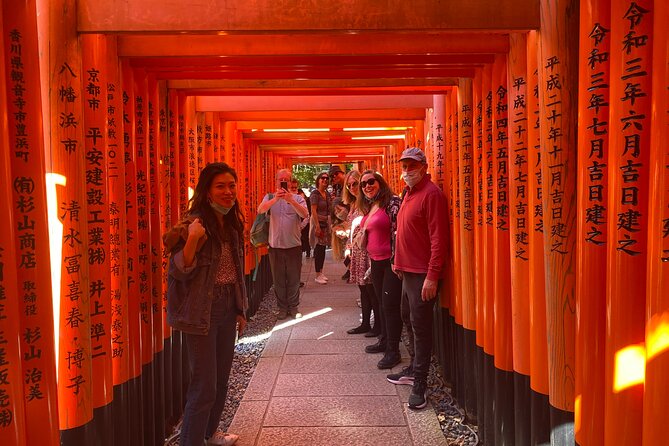
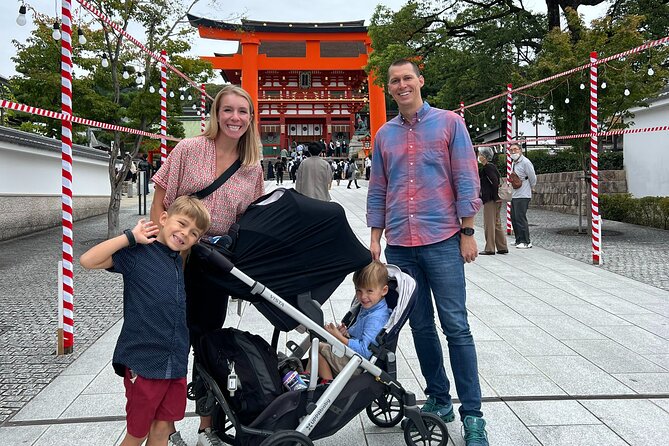
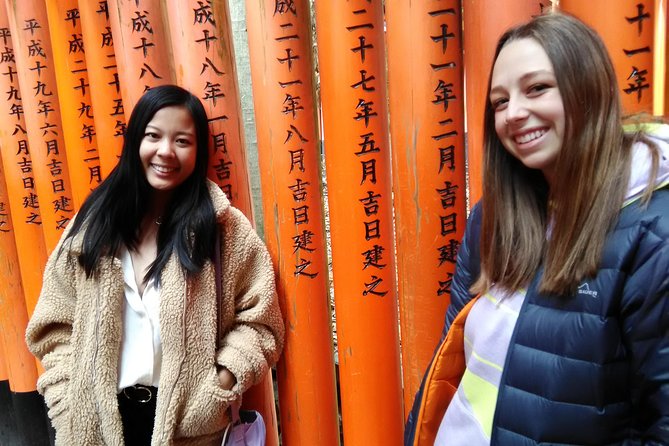
Fushimi Inari-taisha is one of Kyoto’s most recognizable places, with rows of vermilion torii gates climbing the wooded mountain. The shrine is free, so it is an easy addition to a route that already passes through southeastern Kyoto.
The main advantage of visiting with a guide is orientation. A first visit can feel like a maze of gates, lanes, shrine buildings, and uphill paths. Your guide can explain the shrine’s place in Japanese religious life and help you decide how far to walk within your time.
The drawback is simple: the famous approach can be very crowded. A short stop gives you the visual impact but not the full mountain walk. If the torii gates are your top priority, tell the guide in advance that you want walking time here and fewer additional stops.
Tofuku-ji, also in southeastern Kyoto, can pair well with Fushimi Inari. It is a large Zen temple, especially noted for autumn color. The two are geographically sensible together, but adding too many eastern temples afterward can squeeze the day.
Nijo Castle and Kyoto’s imperial past
Nijo Castle was built in 1603 as Tokugawa Ieyasu’s Kyoto residence. It offers a different experience from Kyoto’s temples: here, you are looking at the political world of the shoguns, castle gates, palace rooms, and the famous nightingale floors designed to make a sound underfoot.
Admission is not included, so budget for the entry fee. A 15-minute roadside-style visit would not be enough to appreciate the castle interiors and grounds, so clarify how much time your chosen route allows. If you want to enter, do not treat Nijo Castle as a quick photo stop.
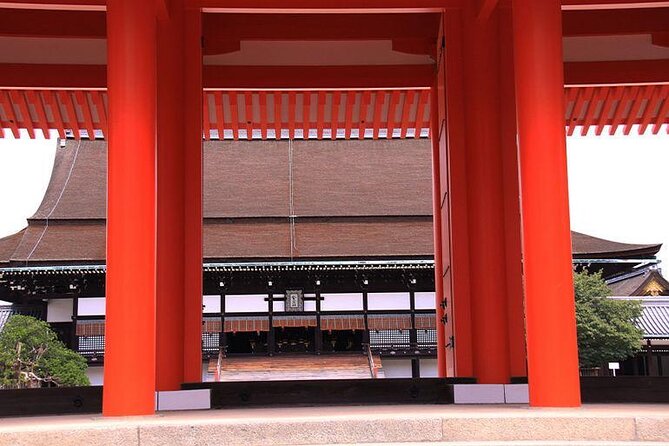
The Kyoto Imperial Palace gives you a second view of Japan’s former capital. The Imperial family lived here until 1868, when the capital moved to Tokyo. Its broad grounds feel quite different from the narrow lanes of Gion or the packed approach to Kiyomizu-dera.
The palace is a good choice if you want open space and court history rather than a famous single building. It is also worth remembering that the grounds are spacious. Pairing it with several major temples may create more walking and driving than you expect.
A completely different side of Kyoto:
- PERFECT KYOTO 1-Day Bus Tour
★ 5.0 · 13,518 reviews - Kyoto: Fushimi Inari, Kinkakuji, Bamboo Grove 1 Day Bus Tour
★ 4.8 · 4,316 reviews - Kyoto: Tea Ceremony in a Traditional Tea House in Kiyomizu
★ 4.9 · 3,519 reviews - Kyoto Geisha Walking Tour: Gion District & Hidden Gems
★ 4.7 · 3,273 reviews
Gion, Pontocho, and Higashiyama after dark in spirit
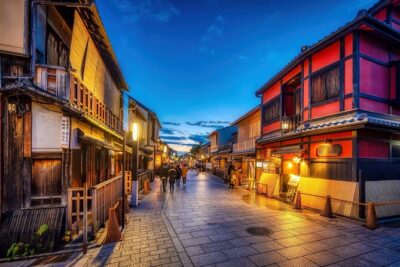
Gion is Kyoto’s best-known traditional entertainment district, with narrow lanes, old wooden buildings, tea houses, and a strong sense of place. A guide is useful because the district is easy to wander through without understanding what you are seeing.
Please keep expectations respectful. Gion is a working neighborhood, not a stage set. Your guide can help you understand the area’s customs and point out details you might otherwise miss, but you should not treat residents or performers as photo props.
Nearby Higashiyama preserves some of old Kyoto’s most atmospheric streets along the eastern hills. This is a pleasant choice if you want traditional architecture, small shops, temple approaches, and a slower walk. The cost is footwork: the car gets you near the district, but you explore it on foot.
Pontocho is a narrow dining lane near the Kamogawa River, packed with restaurants and evening atmosphere. It is more a place to stroll or eat than a major daytime attraction. If lunch is part of your plan, ask your guide for help. Several guides have helped people find local meals, including okonomiyaki, sushi, conveyor-belt dining, and food suited to particular preferences. Lunch itself is not included.
Kiyomizu-dera and the eastern hills
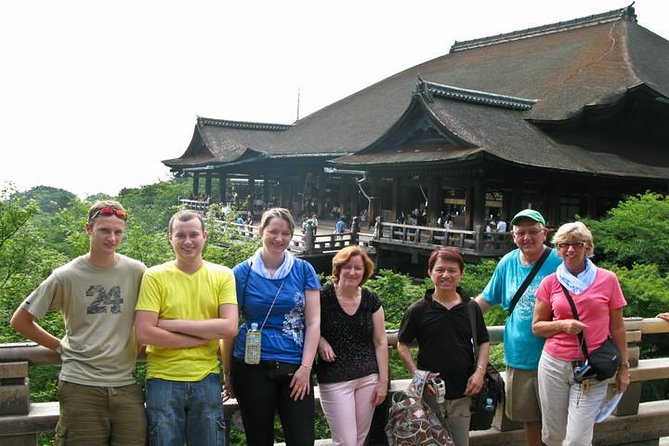
Kiyomizu-dera is one of Kyoto’s essential temples, famous for its wooden stage and hillside setting. It is also one of the busiest places in the city. You will usually approach through the Higashiyama streets, where crowds, shops, and slopes become part of the experience.
An English-speaking guide adds value here by explaining the temple grounds rather than leaving you to follow the crowd. Entrance is extra. Because the grounds are large and the approach can involve slopes and stairs, tell the operator about mobility limits before the tour.
Kiyomizu-dera works well with Gion, Higashiyama, and Nishiki Market. It is less sensible to combine it with Arashiyama and several northern temples unless you are happy with a lot of time in the vehicle.
Kennin-ji is another eastern option, close to Hanamikoji and Shijo streets. Its spacious grounds and dry gardens offer a calmer temple visit near Gion. It is listed as a shorter possible stop, so choose it if you prefer gardens and Zen design over another headline attraction.
Nishiki Market, Kyoto’s Kitchen
Nishiki Market is a narrow, five-block shopping street lined with more than 100 shops and restaurants. It is a good place to add food to a temple-heavy day, with pickles, seafood, sweets, seasonings, and other local specialties on offer.
I would not treat Nishiki as a quick drive-by. The street is narrow, and browsing takes time. A guide can help you understand unfamiliar foods and avoid spending your entire lunch period deciding where to stop.
The market can be busy, particularly in the middle of the day. That is part of its appeal, but it may be difficult for a stroller or anyone who dislikes tight crowds. Since lunch is not included, use the guide’s local suggestions, but state dietary needs clearly and early. One guide worked to find gluten-free food, though the experience showed why special requirements need advance planning.
Kinkaku-ji, Ryoan-ji, and northern Kyoto
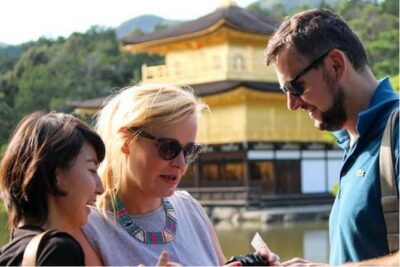
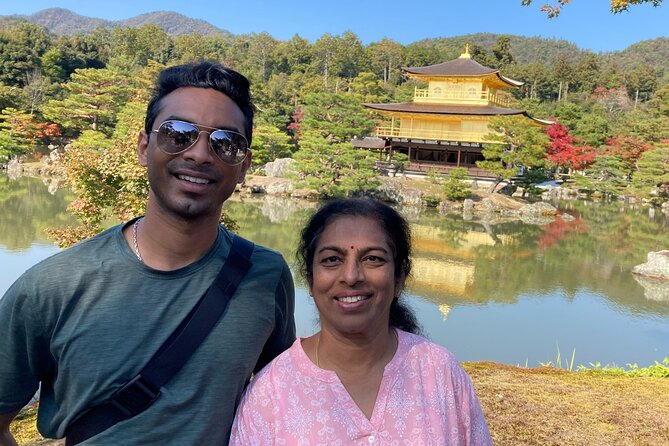
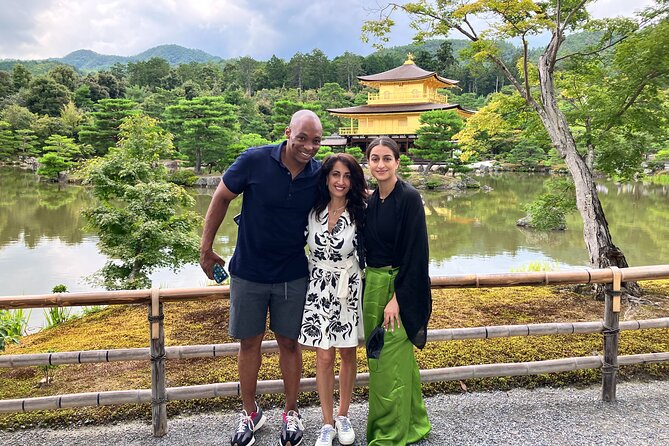
Kinkaku-ji, the Golden Pavilion, is one of Kyoto’s signature sights. The upper two floors are covered in gold leaf, and the pavilion reflects across its pond in the classic view most people expect.
The grounds are not free, and the entry fee is separate. This is another place where crowds can overwhelm the scene, especially in good weather or during school visits. Your guide can help you move through the grounds efficiently and find better positions for photos, but no private car can remove the queue at the entrance.
Ryoan-ji offers a quieter kind of fame. Its rock garden is among Japan’s best known, and the attraction lies in sitting with the arrangement rather than rushing past it. If you enjoy design, silence, and a little time to think, choose Ryoan-ji instead of stacking several similar temple visits.
Ninna-ji is a World Heritage temple and the head temple of the Omuro school of Shingon Buddhism. It gives you another side of northern Kyoto’s religious tradition. Kinkaku-ji, Ryoan-ji, and Ninna-ji make a logical cluster, but seeing all three properly can consume most of the six-hour day.
Arashiyama and the western temple route
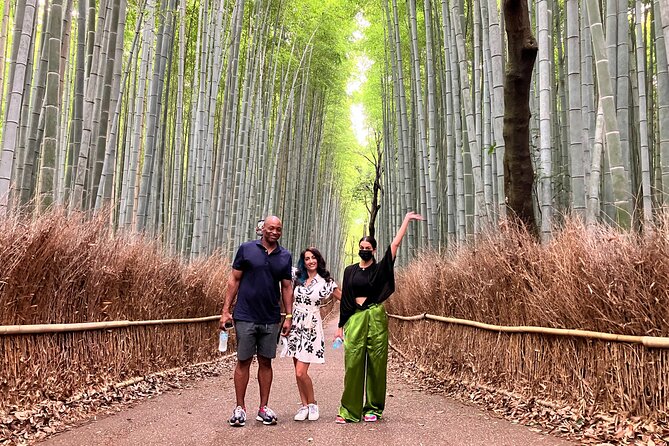
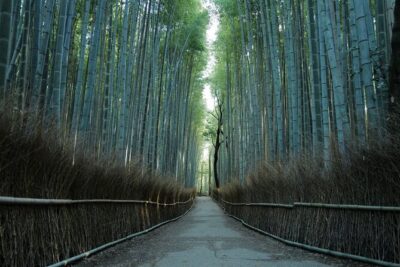
Arashiyama is a scenic district on Kyoto’s western edge, known for its bamboo grove, river setting, and temples. It is a popular area, not a quiet secret, and the central paths can be crowded.
Tenryu-ji is the area’s leading temple and a World Heritage site. Its Zen gardens are a strong reason to visit, while the nearby bamboo grove gives you the familiar Kyoto photo opportunity. The private vehicle helps with the long cross-city journey, but Arashiyama still requires walking once you arrive.
Daikaku-ji, also in the Sagano area, began as Emperor Saga’s detached palace. It is a useful choice if you want a more spacious temple setting after the central crowds. Katsura Imperial Villa offers celebrated Japanese architecture and garden design, but entrance is extra and access requirements should be confirmed before making it the main goal of a short tour.
The western route works best as its own day plan. Trying to combine Arashiyama with Fushimi Inari, Kiyomizu-dera, and Kinkaku-ji may produce a long ride with brief stops.
Northern mountains and quieter alternatives
Kibune, Kurama, and Kurama-dera take you into Kyoto’s northern mountains. Kibune developed around Kifune Shrine in a forested valley, while Kurama is known for Kurama-dera and its hot spring.
These places offer a change from central Kyoto’s major sights, but distance matters. They are not sensible add-ons to a route already packed with temples across town. Choose them if you have a particular interest in mountain scenery, shrine traditions, or a less central side of Kyoto.
Shugakuin Imperial Villa is another northern option, built in the 17th century for Emperor Gomizuno and managed by the Imperial Household Agency. Its three villa areas make it a substantial choice rather than a casual stop. Check access details before booking if this is your priority.
The guides make or break the day
The strongest part of this experience is not the car alone. It is the guide’s ability to turn a fast sightseeing day into something personal.
Ken has been praised for clear English, useful information, flexible planning, and helping groups see more in six hours than they might manage in two days by public transport. Michi stayed beyond the scheduled time to help with lunch and a particular food request. Yuka has been described as enthusiastic and very comfortable explaining Japanese customs.
Noriko has adjusted routes for limited walking and stairs, while Shuji planned ahead for a wheelchair. Tomy has helped shape routes before arrival, found a lunch stop, taken photos, and even indicated places where the driver could slow down for a better view. Other guide names connected with strong experiences include Haru, Hiroko, Harumi, Kazu, Kaori, Hiro, Olive, Yoshii, Chiyuki, Andy, Masaki, and Etsuko.
That said, guide quality can vary. One disappointing experience involved a pleasant but uninspiring guide, while another guest felt the guide did not listen to personal preferences. The practical lesson is to send a clear priority list and mobility or food notes before the day. A private tour only feels personal when you speak up.
The driver matters, too. The most successful outings paired an informed guide with a polite, experienced driver and a clean, comfortable car. You benefit from close parking and less effort, but you still need to walk at temple grounds and through market streets.
Who gets the best value
I would choose this tour for a family with children, a small group sharing the cost, older adults, or anyone making a short Kyoto stop from Tokyo or Osaka. It is also a good fit if you have already spent a day walking elsewhere in Japan and want to conserve energy.
It is less attractive for a solo visitor on a tight budget. Kyoto’s trains and buses cost far less, and independent sightseeing gives you more time at one place. The private tour earns its price when time, comfort, and local help matter more than the lowest fare.
The advertised maximum is 15 people, but the listed price is for a group of up to two. Confirm the correct group rate and vehicle arrangement for a larger party. Service animals are allowed, most people can participate, and a limited number of car seats and booster seats are available. Rear-facing car seats are not available, and you must contact the operator if you need child equipment.
Free cancellation is available up to 24 hours before the start time. Changes or cancellations inside that window are not accepted for a refund.
Should you book this Kyoto tour?
Book it if you want to cover several widely separated Kyoto sights in one day without wrestling with buses, or if you need a route shaped around children, older family members, a wheelchair, food needs, or a tight train schedule.
Before paying, decide on three or four priorities. Ask for a realistic route, confirm pickup, check the price for your party, and set aside extra money for temple admissions and lunch. If you do that homework, this can be an efficient and comfortable introduction to Kyoto, with enough personal guidance to make the city feel less like a checklist.
Skip it if you prefer slow temple visits, independent wandering, or low-cost public transport. Kyoto rewards lingering, and six hours in a car cannot replace a full day in one neighborhood. For a first look, though, the private vehicle and flexible guide can be worth the premium.
FAQ
How long is the private Kyoto tour?
The tour lasts approximately six hours.
How many sights can I choose?
The included service allows you to choose three or four sites from the available list.
Is transportation included?
Yes. A private vehicle and a licensed local English-speaking guide are included.
Is hotel pickup available?
Yes. Pickup is offered, and the tour information also supports pickup arrangements from Kyoto Station.
Are entrance fees included?
No. Entrance fees, lunch, and personal expenses are not included. Guide entry fees are covered only for sights listed in the tour information.
Can I book the tour for a large group?
The activity is private and allows up to 15 people, but the stated price of $634.72 is for a group of up to two. Confirm the applicable rate for a larger group.
Can children or people with mobility needs participate?
Most people can participate. A limited number of car seats and booster seats are available, but rear-facing car seats are not. The operator should be contacted in advance about child seats or mobility requirements.
Recently added around Kyoto
- Higashiyama | Kyoto: Sakura Season Private Rickshaw Tour★ 5.0 · 3 reviews
- Kyoto Kimono Rental CHAMATSU|Kimono/Yukata Rental FamilyPlan★ 5.0 · 3 reviews
- Kyoto: Half-Day Private Guided Tour to the Old Town of Gion★ 4.4 · 3 reviews
- Nara Private Customizable Half Day Tour★ 5.0 · 3 reviews
- Kansai Region Hiking Adventure in Nara Kobe Kyoto and More★ 5.0 · 3 reviews
- Full Day Nara Deer, Temple, Shrine, Activities & Tea Ceremony★ 5.0 · 3 reviews
- Nara: Essential Private Tour with Deer Park and Temples★ 5.0 · 3 reviews
- Hiking Tour for Sacred Sites in Kyoto with a Guide★ 5.0 · 3 reviews
Guided, compared.
Kyoto Early Morning Tour with English-Speaking Guide
Read our review →
Kyoto 6hr Private Tour with Government-Licensed Guide
Read our review →Early Morning Tour with English-Speaking Guide
Read our review →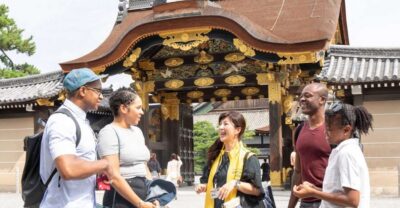
Nijo-jo Castle and Ninomaru Palace Guided Tour
Read our review →
Kyoto Gion Night Walk & Geisha District Guided Tour
Read our review →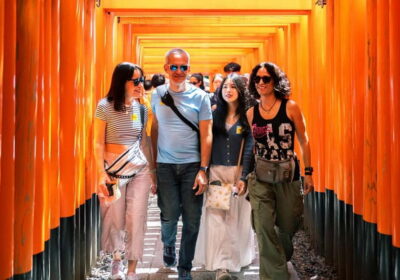
From Kyoto/Osaka: Kyoto Top Highlights 1-Day Guided Bus Tour
Read our review →