REVIEW · PRIVATE
Scenic Green Tea Fields of Hidden Kyoto & Local Tea Exp (Private)
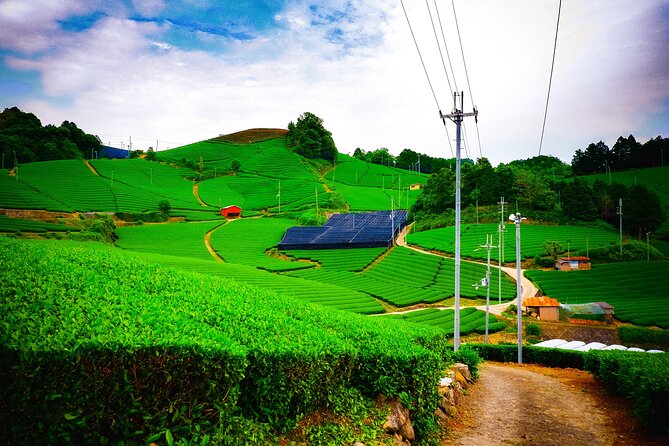
The striking part of this private outing is how quickly Kyoto’s city streets give way to rolling tea fields and cedar-covered hills. In Wazuka and Ujitawara, tea bushes are planted in tidy bands that climb the slopes, creating a view far removed from the crowded temple routes.
I like the mix of two very different experiences: Byodoin’s grand Phoenix Hall and the quiet farms where tea is grown, tasted, and sold. I also like the flexibility of a private car, especially when guide Daiki can adjust the route, help with photographs, or finish near your dinner plans. The main consideration is the price if you are traveling alone, plus the fact that admission fees and your own tea or coffee are extra.
In This Review
- Key points to know before you book
- Why Kyoto’s tea country is worth the drive
- Byodoin Phoenix Hall and the 10-yen coin
- A local cafe and the taste of Wazuka tea
- Ishitera’s tea fields reaching toward the sky
- Ujitawara and the working side of tea
- Shoju-in and the famous heart-shaped window
- What the private vehicle changes
- The guide can make or break this route
- Is $250.38 a fair price?
- Who should book this afternoon?
- Should you book Scenic Green Tea Fields of Hidden Kyoto?
- FAQ
- How long does the tour last?
- How many people can join the private tour?
- What transport is provided?
- Are pickup and drop-off included?
- How much are the temple admission fees?
- Is tea or coffee included?
Key points to know before you book
- Tea country beyond central Kyoto: Reach Wazuka and Ujitawara, two rural areas that are difficult to cover by public transport in a short afternoon.
- A private guide named Daiki: Expect history, tea talk, local context, and a patient approach to photo stops.
- Five distinct stops: The route includes Byodoin, a local tea cafe, two tea-growing areas, and Shoju-in Temple.
- Comfortable private transport: Groups of two to six ride in an air-conditioned Nissan van, while solo visitors use an open-air convertible Mini Cooper.
- Strong value for groups: At $250.38 per group of up to six, the cost becomes far more attractive when shared.
- Plan for extra entrance costs: Byodoin costs ¥600 per person and Shoju-in costs ¥1,000 per person, with drinks purchased separately.
Why Kyoto’s tea country is worth the drive
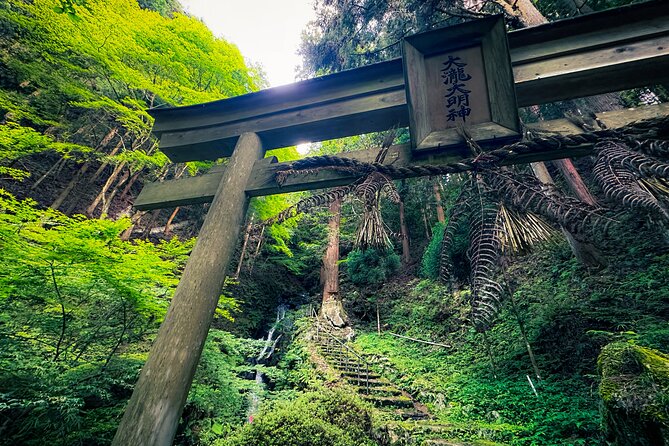
Kyoto is famous for its temples, but the southern countryside offers a different view of the region. Wazuka is known for producing high-quality Uji tea, including matcha, while Ujitawara is closely linked with the development of Japanese green tea and matcha culture.
You do not simply pass through farmland here. The tea bushes are carefully shaped and planted in clean rows, often running up hillsides in sweeping curves. The result is highly photogenic, but the appeal is not only visual. You get a look at the working side of tea production, where the product sold in Kyoto shops begins as a crop cared for by local farmers.
I especially like that the tour combines scenery with tasting. A countryside drive without any connection to local food can feel thin. Here, the cafe stop gives you a chance to taste tea and matcha desserts, then buy premium tea at prices described as roughly one-half to one-third of what you may find in the city.
That pricing claim should be treated as a guide rather than a guarantee for every product. Still, the chance to shop close to the farms makes more sense than buying all your tea in a central Kyoto department store.
A few more Kyoto experiences worth comparing
- Fushimi Inari Hidden Hiking Tour (Private Option Available)
★ 5.0 · 1,750 reviews - Private Kyoto Tour with a Local, Highlights & Hidden Gems, Personalised
★ 5.0 · 1,543 reviews - Kyoto 6hr Private Tour with Government-Licensed Guide
★ 5.0 · 1,369 reviews
Byodoin Phoenix Hall and the 10-yen coin
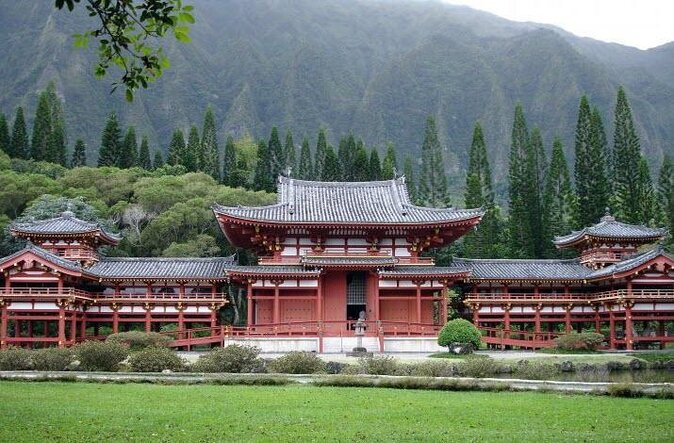
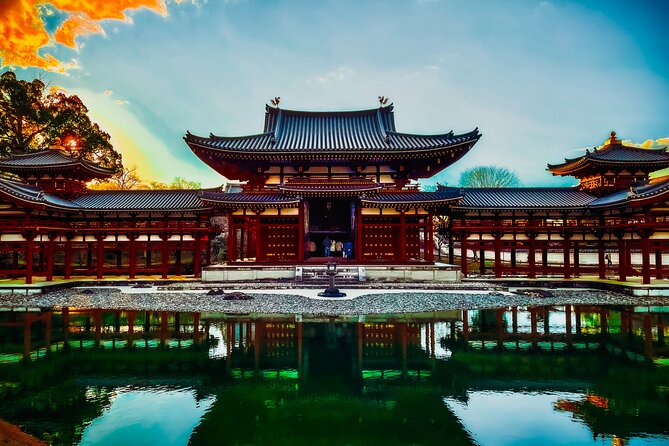
Your first stop is Byodoin Temple, with about two hours set aside. The centerpiece is Phoenix Hall, the elegant building pictured on Japan’s 10-yen coin.
Byodoin was designed to represent the Buddhist Pure Land, or paradise, on earth. Its position beside the water and its balanced architecture make it one of the most memorable temple settings near Kyoto. The building has also survived centuries of war and change, which gives the visit more weight than a quick photograph from outside.
The admission fee is ¥600 per person and is not included. The two-hour allocation gives you time to see more than the famous hall, though the exact use of that time can vary with crowd levels and temple conditions.
I like beginning here because it gives you a visual introduction to the spiritual and artistic ideas that shaped Japanese tea culture. Later, when you reach the rural farms, the day moves from imperial and religious architecture to the everyday work of growing and preparing tea.
The drawback is timing. Byodoin is a major sight, so it may feel busier than the country stops. If your main goal is remote scenery, two hours here may seem long. If you want a well-known cultural site before heading into the hills, it is a sensible opening.
A local cafe and the taste of Wazuka tea
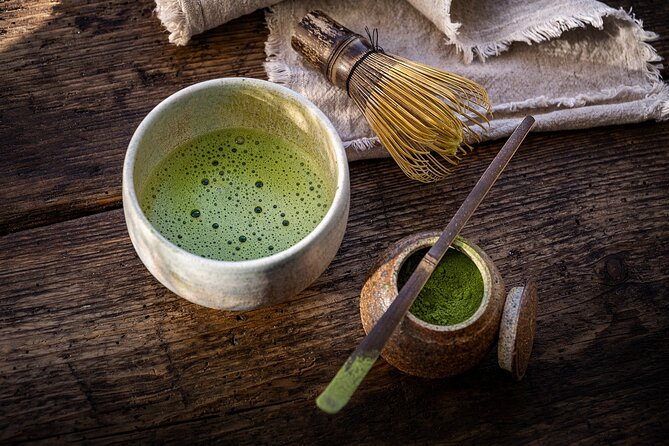
The Wazuka-cha Cafe receives about an hour. This is the most direct food and drink stop on the route, with local tea, matcha, and matcha-based desserts.
The experience is less about quickly checking a drink off your list and more about understanding what makes tea from this area special. Wazuka tea is presented as especially pure and authentic, even beside the already famous Uji name. You can taste the tea, ask questions, and shop for premium leaves or matcha to take home.
Your own coffee or tea is not included, so budget for the drink or dessert you choose. That is a small extra cost, but it is also one of the more worthwhile purchases on the trip. Tea is light to pack, useful at home, and tied directly to the farms you have just seen.
Daiki’s role matters here. The strongest part of this tour is not simply being driven to a cafe. It is having someone explain the connection between the place, the crop, and Japanese culture in clear terms. His style, based on the way the day is described, includes plenty of historical and cultural detail without forcing the group into a fixed, impersonal schedule.
Ishitera’s tea fields reaching toward the sky

The Ishitera Tea Plantation is a short 30-minute stop, but it may become your favorite photo point. The tea fields are planted in geometric rows that climb the hills, producing the famous image of green waves reaching upward.
The scenery changes with the season, but the appeal remains outside the peak growing months. The fields are described as vivid even in winter, when many visitors expect the countryside to look bare. That makes this route useful beyond cherry blossom and autumn color season.
You should expect a short walk rather than a long farm visit. The stop is designed to give you time to take in the view and photograph the rows, not to provide a full lesson in agricultural work.
Wear shoes that handle short walks and uneven ground. Stairs are also part of the day, especially at temple sites. The tour is not presented as a strenuous hike, but it is not entirely vehicle-based either.
This is also where a private tour earns its keep. A large group can make a photo stop feel rushed. With your own guide and vehicle, you can spend a little more time framing the view, within the limits of the day’s schedule and road conditions.
A completely different side of Kyoto:
- PERFECT KYOTO 1-Day Bus Tour
★ 5.0 · 13,518 reviews - Kyoto: Fushimi Inari, Kinkakuji, Bamboo Grove 1 Day Bus Tour
★ 4.8 · 4,316 reviews - Kyoto: Tea Ceremony in a Traditional Tea House in Kiyomizu
★ 4.9 · 3,519 reviews - Kyoto Geisha Walking Tour: Gion District & Hidden Gems
★ 4.7 · 3,273 reviews
Ujitawara and the working side of tea
Ujitawara-cho gets another 30 minutes. This area is regarded as one of Japan’s important tea-producing districts and is associated with the invention and development of Japanese green tea and matcha.
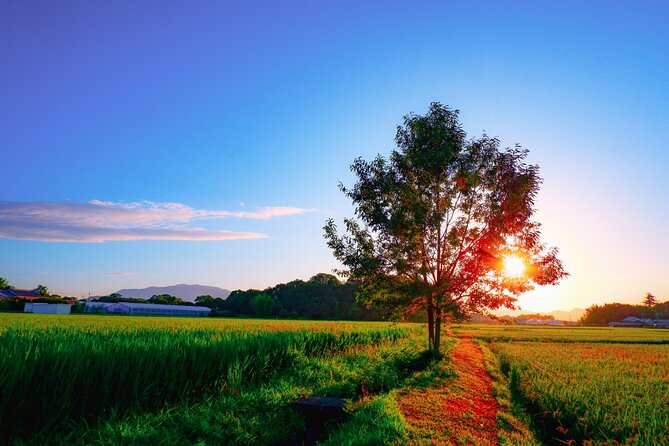
The stop includes a tea field where you can walk on a farm and take photographs. That detail makes it different from a roadside viewpoint. You are closer to the planted rows and the shape of the land, with a better sense of how much care goes into producing a crop that often arrives in your cup as a simple drink.
Do not expect a long farm lecture or a full production tour based on the stated schedule. The value here is access. A car takes you to a part of southern Kyoto that would be awkward to combine with Byodoin and Shoju-in on your own in one afternoon.
I like the pairing of Ishitera and Ujitawara. The first stop delivers the big scenic image. The second adds a more grounded connection to the farms themselves. Together, they keep the tea theme from becoming just a photo opportunity.
Shoju-in and the famous heart-shaped window
The final stop is Shoju-in, with about an hour and 30 minutes planned. This temple is in the southern countryside and is known for a heart-shaped window in its tea room.
The window is an appealing final image, but the temple also adds another quiet religious site to a day already anchored by Byodoin. It gives you time to slow down after the drive through the tea country and see a smaller setting away from the major Kyoto circuit.
Admission costs ¥1,000 per person and is not included. That is the largest additional entrance charge of the day, so include it when comparing the total cost.
The stated drive from central Kyoto to this area can take about an hour. That road time is part of the trade-off. You lose some time in the vehicle, but you gain access to countryside temples and tea fields that are not easy to reach on a standard half-day city itinerary.
Past outings with Daiki have sometimes included extra shrines, dinner stops, or a different final destination when time allowed. You should not assume those additions are part of this fixed experience, but the private format gives the guide more room to respond to your interests and the conditions on the day.
What the private vehicle changes
Pickup and drop-off are offered, and a different starting point and ending point can be arranged. That is useful if you want to begin at your accommodation and finish near a restaurant or another evening plan.
For two to six people, the vehicle is an air-conditioned Nissan van. The listed price is $250.38 per group, not per person. At six people, that is about $42 per person before admissions and drinks, which is good value for a private vehicle, fuel, highway fees, and a guide for five and a half hours.
For two people, the per-person cost is much higher, but still reasonable if you value convenience and access to rural places. Solo visitors receive a convertible Mini Cooper, which adds a fun element to the mountain roads but gives you less interior space and less protection from weather.
The tour begins at 1:00 p.m. That makes it a useful afternoon plan, especially if you want a slower morning in Kyoto. It also means you should not expect a full day of sightseeing. The five-and-a-half-hour duration is enough for the listed stops, but delays from roads, crowds, or closures can affect the schedule.
The guide can make or break this route
A rural tour depends heavily on the person behind the wheel. Daiki is repeatedly described as energetic, considerate, and easy to talk with. His strengths appear to be explaining Japanese history and culture, answering questions, and giving you room to take photographs without making you feel rushed.
That matters at Ishitera and Ujitawara, where the scenery is beautiful but the meaning of the place is not immediately obvious. A good explanation helps you see the farms as part of local life rather than simply another scenic stop.
The private setup also allows small practical favors. Daiki has dropped visitors near a restaurant at the end of the day, and some longer custom outings have included bonus shrines or a meal stop. Those details are not guaranteed on this five-and-a-half-hour route, but they show why a private guide can be more useful than a fixed bus schedule.
Is $250.38 a fair price?
For a group of up to six, yes, provided you want rural Kyoto rather than only famous city temples. Fuel and highway charges are included, as are pickup and drop-off arrangements. You are paying for the vehicle, the guide, and the time saved by connecting several distant places in one trip.
The cost is less attractive for one person, particularly because the Mini Cooper option does not remove the separate admission fees. Add ¥600 for Byodoin, ¥1,000 for Shoju-in, and whatever you spend at the cafe or tea shop.
I would compare this tour with the cost and effort of arranging multiple trains, buses, taxis, and local directions. The tour’s value comes from making an awkward rural route simple. If you are happy using public transport and only want Byodoin, you can probably spend less. If you want tea farms, rural roads, two temple settings, and a guide in one afternoon, the price is easier to justify.
Who should book this afternoon?
I would choose this tour for a small group that has already seen central Kyoto and wants a quieter change of pace. It is also a strong option for solo visitors who like photography and want a private guide without joining a bus group.
Tea fans will get the most from the cafe and farm stops, while culture-minded visitors will appreciate the contrast between Byodoin and Shoju-in. Families and mixed-interest groups may also like the variety, since the day includes temples, scenery, shopping, and a comfortable drive.
This is not the best fit if you dislike car travel, want a long hands-on tea-making class, or need a completely fixed schedule. The route covers several places, and some driving is unavoidable. Short walks and stairs are required, though most visitors can participate and service animals are allowed.
Free cancellation is available up to 24 hours before the 1:00 p.m. start time. Since conditions can change because of closures, road problems, or crowd levels, keep a little flexibility in your plans.
Should you book Scenic Green Tea Fields of Hidden Kyoto?
Book it if you want to see the side of Kyoto that requires a car: tea fields on wooded hills, local matcha, small temples, and roads far beyond the city center. The combination of Byodoin, Wazuka, Ujitawara, and Shoju-in gives the afternoon a clear rhythm, and Daiki’s personal guidance appears to be a major part of its appeal.
Skip it if your Kyoto visit is short and you have not yet seen the city’s essential temples, or if you want a dedicated tea ceremony rather than tastings and tea shopping. For everyone else, especially groups of four to six, this is a practical and distinctive way to reach southern Kyoto without wrestling with a complicated transport plan.
FAQ
How long does the tour last?
The experience lasts approximately five hours and 30 minutes, beginning at 1:00 p.m.
How many people can join the private tour?
The tour is private for your group, with a maximum of six people.
What transport is provided?
Groups of two to six use an air-conditioned Nissan van. Solo visitors use an open-air convertible Mini Cooper. Fuel and highway fees are included.
Are pickup and drop-off included?
Yes. Pinpoint pickup and drop-off are offered, and a different starting point and ending point can be arranged.
How much are the temple admission fees?
Byodoin admission is ¥600 per person. Shoju-in admission is ¥1,000 per person. Neither fee is included in the tour price.
Is tea or coffee included?
No. Tea, coffee, and other drinks purchased for you are not included. The Wazuka-cha Cafe offers tea, matcha, desserts, and premium tea for purchase.
Recently added around Kyoto
- Higashiyama | Kyoto: Sakura Season Private Rickshaw Tour★ 5.0 · 3 reviews
- Kyoto Kimono Rental CHAMATSU|Kimono/Yukata Rental FamilyPlan★ 5.0 · 3 reviews
- Kyoto: Half-Day Private Guided Tour to the Old Town of Gion★ 4.4 · 3 reviews
- Nara Private Customizable Half Day Tour★ 5.0 · 3 reviews
- Kansai Region Hiking Adventure in Nara Kobe Kyoto and More★ 5.0 · 3 reviews
- Full Day Nara Deer, Temple, Shrine, Activities & Tea Ceremony★ 5.0 · 3 reviews
- Nara: Essential Private Tour with Deer Park and Temples★ 5.0 · 3 reviews
- Hiking Tour for Sacred Sites in Kyoto with a Guide★ 5.0 · 3 reviews
Private, compared.
Fushimi Inari Hidden Hiking Tour (Private Option Available)
Read our review →
Private Kyoto Tour with a Local, Highlights & Hidden Gems, Personalised
Read our review →
Kyoto 6hr Private Tour with Government-Licensed Guide
Read our review →
10 Must-see Spots in Kyoto One Day Private Tour (up to 7 people)
Read our review →
Nara Half Day Trip Walking Tour (Private Option Available)
Read our review →
Kyoto 4hr Private Tour with Government-Licensed Guide
Read our review →