
REVIEW · FUSHIMI INARI SHRINE TOURS
Sacred Treasure Fushimi Inari and Kiyomizu Dera Tour
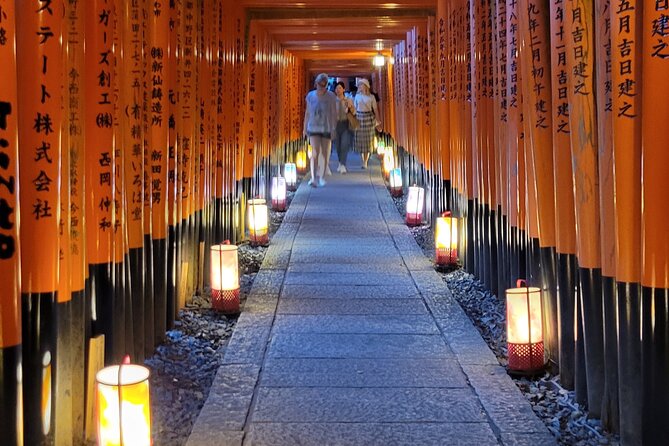
Fushimi Inari’s endless vermillion torii gates and Kiyomizu-dera’s wooden stage give this three-hour tour two of Kyoto’s strongest sights in one compact outing. You also get a guided walk through Ninenzaka and Sannenzaka, where old wooden buildings now house teahouses, craft shops, and souvenir stores.
I like the clear cultural contrast: Fushimi Inari introduces Shinto worship, while Kiyomizu-dera brings you into Buddhist Kyoto. I also like the practical route, which begins at Kyoto Station and finishes near the shopping streets, so you can continue with coffee or browsing instead of backtracking.
The main caution is organization. The advertised price is $30 per person, with temple tickets included, yet one account says the guide requested extra money for transportation and entrance fees. Most ratings praise the guiding, but the low overall score of 3.3 from seven ratings means you should confirm the inclusions before setting out.
In This Review
- Key points to know before booking
- Why this route works for a first look at Kyoto
- Fushimi Inari Taisha and the first hour under the torii gates
- Kiyomizu-dera and the wooden stage
- Ninenzaka and Sannenzaka, Kyoto’s old lanes
- What the guides add to the experience
- Timing, transport, and group size
- Is the $30 price a good deal?
- Who should book this Kyoto walk?
- Should you book Sacred Treasure Fushimi Inari and Kiyomizu-dera?
- FAQ
- How long does the tour last?
- How much does the tour cost?
- Where does the tour begin?
- Where does the tour end?
- Are admission tickets included?
- Is transportation included?
- How many people can join the tour?
- Can I cancel for a full refund?
- What happens if the tour is canceled because of weather or too few participants?
Key points to know before booking
- Two major religious sites in three hours: You visit Fushimi Inari Taisha for Shinto traditions and Kiyomizu-dera for Buddhist history.
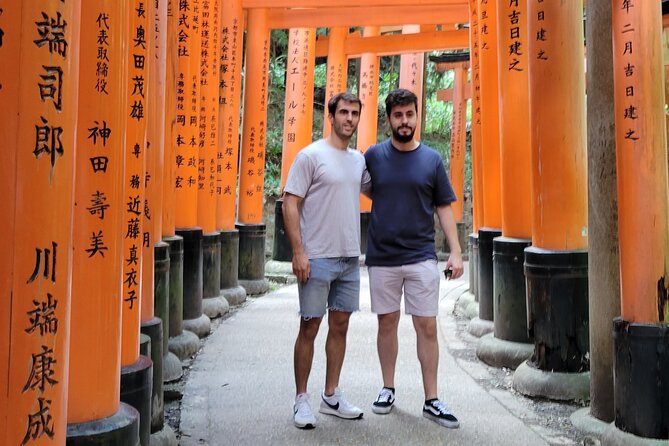
- The torii gates are the headline sight: The first hour at Fushimi Inari lets you walk beneath the famous orange-red gates dedicated to prosperity and business.
- Kiyomizu-dera gets the longest visit: Plan on about 90 minutes for the temple, its wooden stage, hillside views, and sacred waters.
- The tour ends in Kyoto’s old shopping quarter: Ninenzaka and Sannenzaka are short guided walks followed by time near traditional shops and teahouses.
- Transportation is not included: You meet at Kyoto Station, but private transportation and transportation fees are listed separately from the tour price.
- Group size can reach 50 people: That keeps the $30 price low, but it may feel less personal than a small-group outing.
Why this route works for a first look at Kyoto
Kyoto can feel scattered on a first visit. Fushimi Inari is in the southeast of the city, Kiyomizu-dera sits farther west in the Higashiyama district, and the old lanes around the temple are easy to reach but easy to lose yourself in. This tour links them in a sensible cultural arc.
You begin with Inari, the Shinto deity associated with rice, prosperity, and business. You then move to Kiyomizu-dera, a Buddhist temple known for its wooden stage and sacred water. The final walk through Ninenzaka and Sannenzaka gives you the everyday side of historic Kyoto: shops, food, crafts, and old-style streets.
That mix is the tour’s strongest idea. You are not simply collecting famous photographs. You are given a basic framework for understanding two major Japanese religious traditions, then shown how those traditions sit within Kyoto’s streets and commercial life.
The price also makes the route appealing. At $30, this is inexpensive for a guided outing that lists temple admission as included. You are paying for a short introduction rather than an all-day study tour, and that can be the right choice if you have limited time or want help with navigation.
Still, the low price comes with tradeoffs. The group may include up to 50 people, and the tour does not include private transportation or transportation fees. If the guide has to manage a large group across multiple locations, the pace and personal attention may vary.
More ways to walk Fushimi Inari:
- Kyoto: Fushimi Inari, Kinkakuji, Bamboo Grove 1 Day Bus Tour
★ 4.8 · 4,316 reviews - Fushimi Inari Hidden Hiking Tour (Private Option Available)
★ 5.0 · 1,750 reviews - Kyoto/Osaka: Nara, Fushimi Inari Taisha, Arashiyama Bus Tour
★ 4.7 · 1,275 reviews
Fushimi Inari Taisha and the first hour under the torii gates
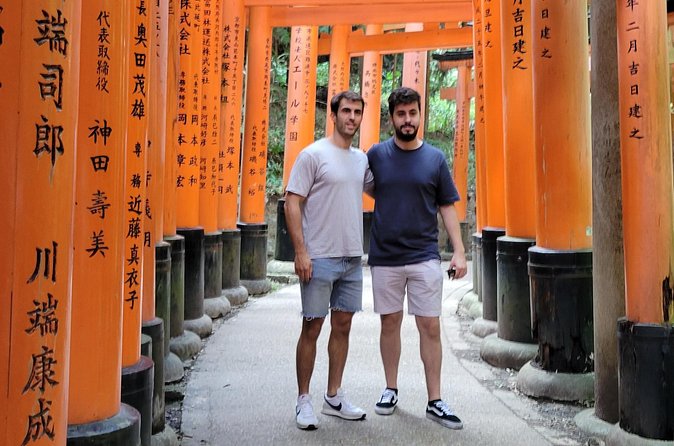
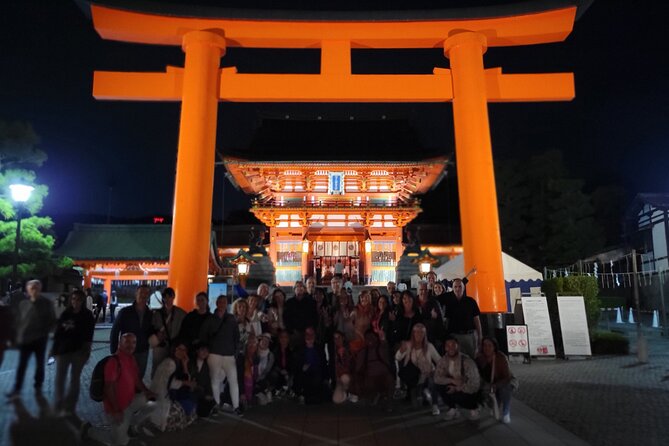
Your first stop is Fushimi Inari Taisha, one of Kyoto’s most recognizable religious sites. Its signature feature is the long sequence of vermillion torii gates, donated over time by individuals and businesses seeking blessings for prosperity.
The first hour is enough to experience the main approach and get a feel for the shrine’s religious setting. The gates create a memorable passage from the ordinary city into a more symbolic space, and the color makes this one of Kyoto’s easiest places to recognize in photographs.
I would listen closely here when the guide explains the role of Inari. The shrine is not simply a scenic corridor. Its connection to rice, commerce, and success helps explain why so many people and companies have supported it.
The stop is also a good introduction to Shinto practice. You can expect the guide to explain some of the meaning behind the shrine and its rituals, though the exact amount of interpretation may depend on the guide and the size of the group. Robert, one guide named in a tour account, was praised for explaining Japanese mythology and history. Andrea was also singled out for helping with history and site navigation.
One practical point: one hour passes quickly at Fushimi Inari. You will not have time for a long walk through every section of the shrine grounds. If your main goal is a lengthy hike through the torii gates, this tour may feel too brief. If you want a guided introduction and the essential experience, the timing is more useful.
Kiyomizu-dera and the wooden stage
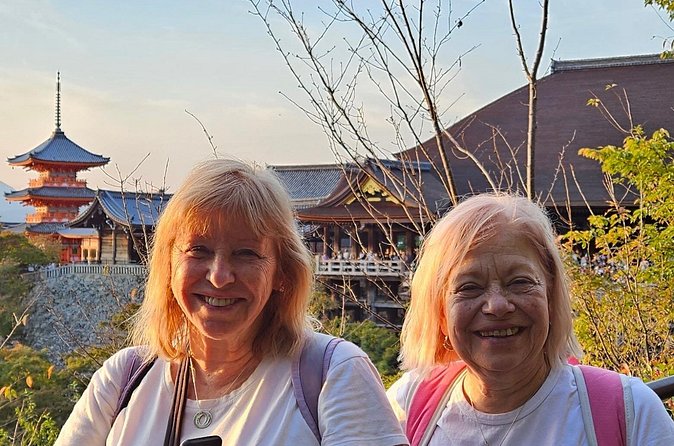
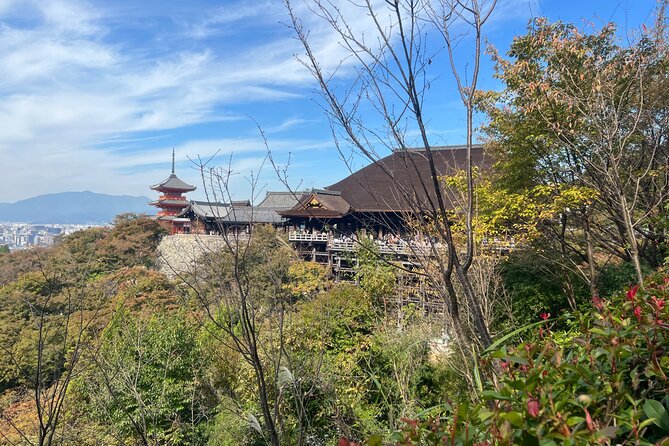
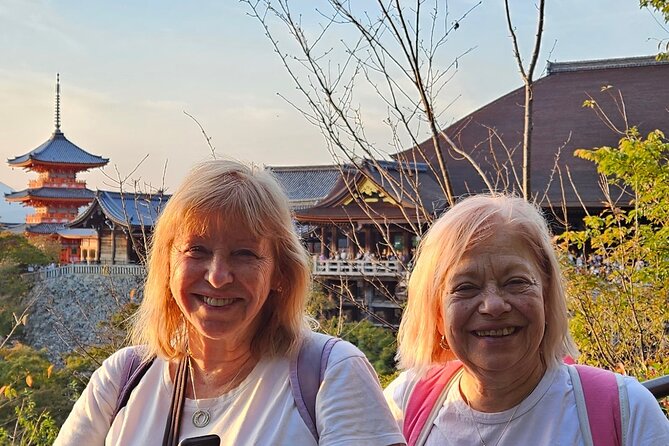
Kiyomizu-dera receives about 90 minutes, making it the central stop. The temple is also known as the Pure Water Temple and has more than a thousand years of history behind it. Its best-known feature is the large wooden stage projecting over the hillside.
The stage gives you broad views over the surrounding hills and parts of Kyoto. It is the kind of place where the setting matters as much as the structure. You can look out from the temple complex, then return your attention to the religious buildings, pathways, and water associated with the site.
The sacred waters are tied to wishes for health and longevity. That detail gives the visit a personal angle. Instead of treating the temple as a monument to photograph and leave, you can see how a religious site remains connected to hopes for a longer, healthier life.
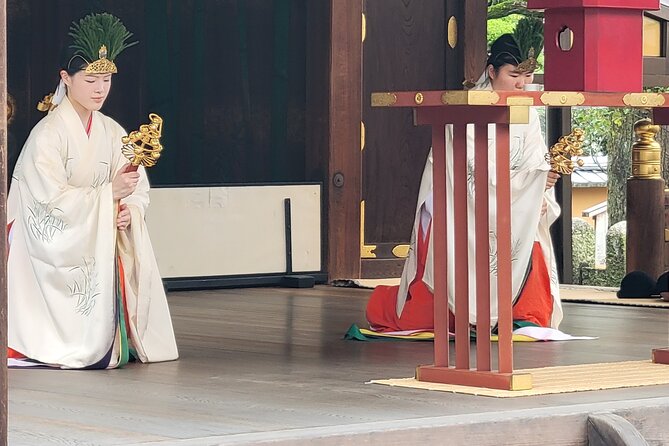
The 90-minute stop should give your guide time to explain the site, point out important features, and allow some independent looking. Several high ratings praise the tour for explaining Japanese religion and history. One participant described taking part in part of a temple ritual while learning how to identify the right person in a religious context. That suggests the visit can be more engaging than a simple walk past buildings, although activities will depend on the guide and conditions on the day.
Kiyomizu-dera can also be the busiest and most demanding part of the route. You will be walking through a major sightseeing area, and the tour’s large maximum group size may make it harder to stay close to the guide. Keep your meeting instructions and guide contact information handy, and pay attention when the group moves.
The temple tickets are listed as included, which improves the value of the $30 fee. However, one low rating reports being asked to pay entrance costs and transportation fees. Because that conflicts with the stated inclusions, I would clarify this before booking or at the start of the tour.
Ninenzaka and Sannenzaka, Kyoto’s old lanes
After Kiyomizu-dera, the route continues through Ninenzaka and Sannenzaka. Each walk is listed at about 15 minutes, so these are brief guided sections rather than a long neighborhood tour.
The streets are cobbled and lined with traditional wooden buildings. Teahouses, craft stores, food shops, and souvenir sellers give the area a different feel from the shrine and temple grounds. Here, Kyoto’s old architecture is tied to shopping and daily tourism rather than formal worship.
The tour ends near these shopping streets, which is a useful design choice. You can stay on to browse, stop for coffee, or find something to eat without returning to Kyoto Station. The end point is listed at Kiyomizu-dera, with the practical note that the group finishes around Ninenzaka and Sannenzaka.
I would treat the 30 minutes of guided walking as an introduction, not enough time for serious shopping. If you want a particular craft item, tea, or snack, you may want to return after the tour. The guide can still help you understand the layout and point out the kind of shops found along the route.
Joanes and Ricardo received especially warm praise for temple explanations, patience, food suggestions, and practical recommendations. Their approach points to one of the tour’s best possibilities: a good guide can turn the final streets into a useful local orientation rather than just a walk between attractions.
More visits to Kiyomizu-dera:
- Kyoto: Tea Ceremony in a Traditional Tea House in Kiyomizu
★ 4.9 · 3,519 reviews - Kyoto: Nijo Castle, Kiyomizu & Fushimi Inari Guided Tour
★ 4.7 · 700 reviews - Kyoto: Nijo, Kinkaku-ji, Arashiyama, Kiyomizu & Fushimi Inari
★ 5.0 · 699 reviews - Kyoto Tea Ceremony & Kiyomizu-dera Temple Walking Tour
★ 5.0 · 115 reviews
What the guides add to the experience
The guide is the main variable here. The itinerary itself contains Kyoto’s famous sights, but the quality of the explanation determines how much you take away.
The strongest guide experiences described include explanations of Japanese mythology, religious history, temple rituals, and the differences between Japan’s two major religious traditions. That last point is particularly valuable. Fushimi Inari and Kiyomizu-dera can look like two beautiful stops, but a guide can help you understand why they represent different parts of Japanese spiritual life.
Named guides include Robert, Andrea, Joanes, and Ricardo. You should not assume that one of them will lead your departure, but their names show the range of guiding styles connected with the experience. Robert was praised for history and mythology. Andrea helped with transport, navigation, and site background. Joanes and Ricardo were praised for patience and recommendations about food.
The praise is not universal. One account describes a guide who tried to change the planned route at the meeting point, creating confusion and extra costs. Another account reports a cancellation call only 45 minutes before the start, followed by difficulty obtaining a refund. Those are serious concerns, especially if you have arranged other Kyoto plans around this tour.
The overall rating of 3.3 from seven ratings reflects that uneven picture. I would book this for the sights and the possible cultural explanation, but I would not treat the guide service as guaranteed to be consistent.
Timing, transport, and group size
The tour lasts about three hours. That makes it easy to fit into a day that also includes other Kyoto sites, but it also means the schedule is tight.
You meet at Kyoto Station in the Shimogyo Ward. The tour ends in the Kiyomizu-dera area, near Ninenzaka and Sannenzaka. Since the route does not return you to the starting point, plan your next activity from eastern Kyoto rather than assuming you will be back near the station.
Private transportation is not included, and transportation fees are listed separately. One positive account praised the assistance with transportation and navigation, so the guide may help you understand how to move between sites. That does not mean the cost of moving between them is covered.
The group can include as many as 50 people. This is important at the $30 price point. A large group can make a popular tour affordable, but you may spend less time asking questions or moving at your own pace. If you prefer quiet explanations and close contact with a guide, look for a smaller group option.
Most people can participate, and the tour is near public transportation. No special participation restriction is listed beyond the need to manage a walking route through shrines, temple grounds, and old streets.
Is the $30 price a good deal?
On paper, yes, especially if the temple tickets are honored as included. You receive a certified guide, admission to the temples, and a route covering two of Kyoto’s essential cultural sites plus one of the city’s best-known historic shopping areas.
The value is highest for a first-time visitor who wants orientation. You can see Fushimi Inari without working out the route alone, learn the basic religious context, and reach Kiyomizu-dera before finishing in an area suited to independent exploring.
The value is weaker if you already know Kyoto’s temples or want a slow photography walk. The three-hour limit and possible group of 50 leave little room for lingering. You will also need to budget for transportation fees and your own food or shopping.
I would confirm three points before paying:
- Are both temple admission fees covered on your date?
- Which transportation costs, if any, should you expect to pay?
- Where exactly will the group finish near Ninenzaka and Sannenzaka?
Those questions are reasonable because one low rating describes a very different cost experience from the stated inclusions.
Who should book this Kyoto walk?
I think this tour suits you if you have only a short time in Kyoto and want the city’s major spiritual sights explained in plain terms. It is also a good fit if you are uneasy about finding your way between Fushimi Inari, Kiyomizu-dera, and the old Higashiyama streets.
Families and mixed-interest groups may like the balance. One person can focus on photography at the torii gates, another can listen to the religious background, and everyone can finish with food and shops. The mobile ticket also makes access simple at the meeting stage.
I would be more cautious if you need a dependable, tightly managed schedule. The reported last-minute cancellation and route changes are not minor inconveniences. If missing the tour would affect a train, reservation, or limited Kyoto day, consider a backup plan.
The experience requires good weather and a minimum number of participants. If conditions are poor or the minimum is not met, the operator offers another date or experience, or a full refund. You can cancel for a full refund up to 24 hours before the start time, but late cancellations and changes are not accepted.
Should you book Sacred Treasure Fushimi Inari and Kiyomizu-dera?
Book it if you want an affordable, guided introduction to two major Kyoto sites and like ending near old streets full of shops and teahouses. The best parts are the contrast between Fushimi Inari and Kiyomizu-dera, the chance to hear about Japanese religion, and the practical finish near Ninenzaka and Sannenzaka.
Before booking, confirm the ticket and transportation arrangements. The experience has earned strong praise for guides such as Robert, Andrea, Joanes, and Ricardo, but its modest 3.3 rating and reports of poor organization call for realistic expectations. At $30, it can be a smart Kyoto primer, not a flawless private tour.
FAQ
How long does the tour last?
The tour lasts approximately three hours.
How much does the tour cost?
The listed price is $30 per person.
Where does the tour begin?
The meeting point is Kyoto Station in Higashishiokoji Kamadonocho, Shimogyo Ward, Kyoto.
Where does the tour end?
The tour ends in the Kiyomizu-dera area, near the Ninenzaka and Sannenzaka shopping streets.
Are admission tickets included?
Tickets to the temples are listed as included. One account reports being asked to pay entrance fees, so you should confirm the arrangement before the tour begins.
Is transportation included?
Private transportation and transportation fees are not included. The guide may assist with navigation and transportation, but you should expect transportation costs to be separate.
How many people can join the tour?
The maximum group size is 50 people.
Can I cancel for a full refund?
Yes. You can cancel at least 24 hours before the experience start time for a full refund. Cancellations or changes made less than 24 hours before the start time are not accepted for a refund.
What happens if the tour is canceled because of weather or too few participants?
You will be offered a different date or experience, or a full refund.
Recently added around Kyoto
- Higashiyama | Kyoto: Sakura Season Private Rickshaw Tour★ 5.0 · 3 reviews
- Kyoto Kimono Rental CHAMATSU|Kimono/Yukata Rental FamilyPlan★ 5.0 · 3 reviews
- Kyoto: Half-Day Private Guided Tour to the Old Town of Gion★ 4.4 · 3 reviews
- Nara Private Customizable Half Day Tour★ 5.0 · 3 reviews
- Kansai Region Hiking Adventure in Nara Kobe Kyoto and More★ 5.0 · 3 reviews
- Full Day Nara Deer, Temple, Shrine, Activities & Tea Ceremony★ 5.0 · 3 reviews
- Nara: Essential Private Tour with Deer Park and Temples★ 5.0 · 3 reviews
- Hiking Tour for Sacred Sites in Kyoto with a Guide★ 5.0 · 3 reviews
Fushimi Inari Shrine Tours, compared.
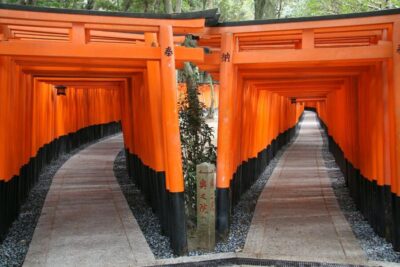
Fushimi Inari, Kinkakuji, Bamboo Grove 1 Day Bus Tour
Read our review →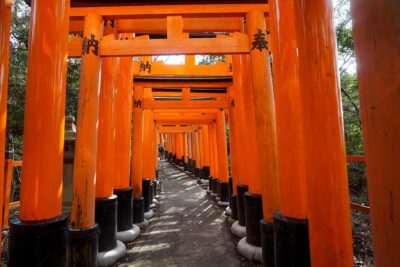
Fushimi Inari Hidden Hiking Tour (Private Option Available)
Read our review →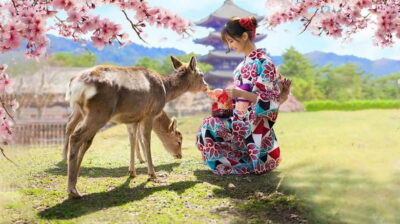
Kyoto/Osaka: Nara, Fushimi Inari Taisha, Arashiyama Bus Tour
Read our review →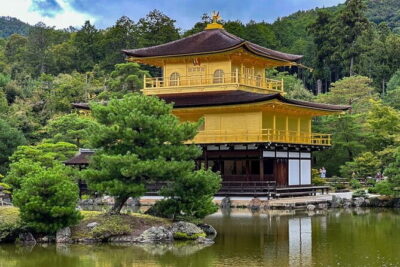
Nijo, Kinkaku-ji, Arashiyama, Kiyomizu & Fushimi Inari
Read our review →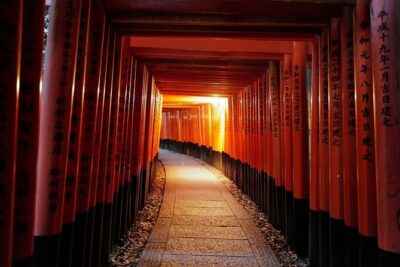
Kyoto Early Bird English Tour: Fushimi-Inari and Arashiyama
Read our review →
Fushimi, Arashiyama – Bamboo, Monkey, Torii & Secrets
Read our review →Browse the lists this tour appears in