
REVIEW · KYOTO TEMPLE TOURS
Sacred Temple Yoga Experience in Japan
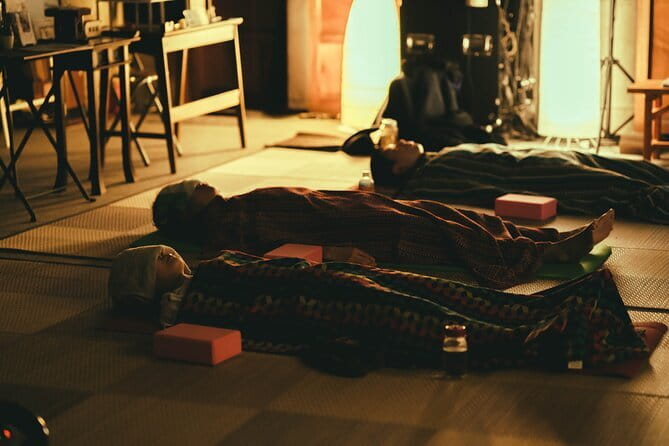
A small Kyoto temple is the setting for a yoga session that feels far removed from the city’s busy sightseeing circuit. You’ll practice Vinyasa Flow and Relax Yoga, hear Japanese principles from Nana, and have time to talk with local people afterward.
I like the open, friendly design. Solo participants and beginners are welcome, and the group is capped at 10 people. I also like the cultural exchange: you can discuss Japan with locals while they practice English.
The main consideration is the price. At $56.76, this is not a cheap drop-in yoga class, and the cost of the optional post-yoga meal is not stated. You’re paying for a small-group cultural experience, not just exercise.
In This Review
- Key Points at a Glance
- Why Temple Yoga Works in Kyoto
- Meeting Nana at 10:30 in Nakagyo Ward
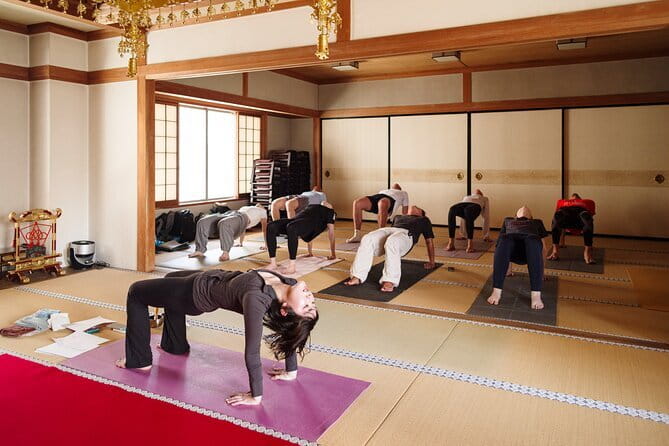
- First Class: Vinyasa Flow
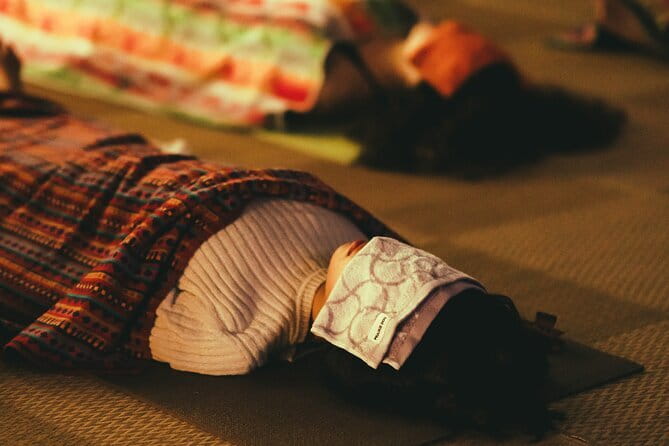
- Second Class: Relax Yoga
- Japanese Principles and Conversation With Locals
- The Post-Yoga Meal and Travel Talk
- What the $56.76 Price Really Buys
- Who Will Enjoy This Most
- Practical Details Before You Book
- What Makes This Different From Studio Yoga
- Should You Book the Sacred Temple Yoga Experience?
- FAQ
- Where does the Sacred Temple Yoga Experience meet?
- What time does the activity start?
- How long does the experience last?
- What types of yoga are included?
- Can beginners join?
- Is the post-yoga meal included?
- What is the cancellation policy?
Key Points at a Glance
- Two yoga styles in one session: Start with Vinyasa Flow, then slow down with Relax Yoga.
- A small temple setting: Practice in a quiet religious space where the mood is calm and reflective.
- Nana leads the cultural side: Expect discussion of Japanese principles as well as yoga instruction.
- Small group size: A maximum of 10 people makes conversation easier, especially for solo participants.
- Local connection after class: You may join the group at an organic restaurant for food and travel talk.
- Temple support included: A portion of your fee goes toward preserving the temple.
Why Temple Yoga Works in Kyoto
Kyoto is full of famous temples, but many sightseeing stops are built around looking, photographing, and moving on. This activity asks you to stay still. That simple change can make a familiar Kyoto theme feel more personal.
The temple setting gives the class a sense of purpose. You are not only following yoga poses in a studio. You are taking time to notice your breathing, settle your attention, and think about Japanese ideas of presence and balance.
You should keep your expectations in check. This is not a temple ceremony or a guided tour of Buddhist art. The focus is yoga, conversation, and quiet time. The temple is the setting, not a separate sightseeing stop with a long historical explanation.
That is part of the appeal. You get a calm cultural setting without adding another major attraction to an already crowded Kyoto schedule.
More Kyoto temples worth a morning:
- Kyoto: Tea Ceremony Ju-An at Jotokuji Temple
★ 4.9 · 3,207 reviews - Arashiyama Bamboo, Temple, Monkeys, or Secret Sake Brewery
★ 4.8 · 886 reviews - Kyoto: Arashiyama Bamboo Forest, Monkeys, Matcha & Temple Tour
★ 5.0 · 759 reviews
Meeting Nana at 10:30 in Nakagyo Ward
The meeting point is at 316 Rokkakuaburanokōjichō in Nakagyo Ward, Kyoto, 604-8245. The activity begins at 10:30 a.m. and returns to the same meeting point at the end.
This central Kyoto location matters. You do not need to arrange a separate transfer to a distant mountain temple or resort area. The meeting point is near public transportation, though you should still allow time to find the exact address in Kyoto’s compact but sometimes confusing street grid.
The mobile ticket is useful for a morning booking. Keep the confirmation easy to open on your phone, and check the meeting details before leaving your hotel. The activity is designed for most people to participate, but the supplied information does not give details about floor surfaces, changing rooms, showers, or equipment.
I would arrive a little early. That gives you time to get oriented, meet Nana, and avoid starting the class in a rush. A yoga session works best when your mind is already slowing down.
First Class: Vinyasa Flow
The first class is Vinyasa Flow. This style links movement and breathing, giving the session an active start before the slower portion begins.
The description does not specify the exact poses, pace, or level of physical demand. That means you should not assume this is either a very gentle stretch class or a vigorous workout. If you are new to yoga, tell Nana at the start and work within your own limits.
The welcoming policy helps here. Yoga beginners are specifically accepted, and English beginners are also welcome. The class is built for international communication, so you do not need polished English to participate.
I like the order of the session. Starting with movement can help release some of the stiffness that comes with long flights, train rides, or full days walking around Kyoto. You then have a natural transition into a quieter practice.
The temple atmosphere may also change how you approach the exercise. In an ordinary gym class, it is easy to treat yoga as another item to complete. Here, the setting encourages you to pay attention to the pace and the moment.
Second Class: Relax Yoga
The second class is Relax Yoga. After the movement of Vinyasa Flow, this slower portion gives you time to settle your body and calm your thoughts.
The name suggests a restorative finish, but the exact sequence is not provided. You might find this part especially useful if your Japan trip has involved early train departures, crowded attractions, and long hours on your feet.
This is also where the temple setting makes the most sense. Quiet surroundings can help you focus on breathing without the usual pressure to perform. The aim is not to prove flexibility. It is to release some tension and return your attention to the present.
You should remember that relaxation is personal. Some people want a physically demanding class, while others want stillness and conversation. This session gives you both active and restful elements, but those seeking a serious athletic workout may find the class too gentle.
A completely different side of Kyoto:
- PERFECT KYOTO 1-Day Bus Tour
★ 5.0 · 13,518 reviews - Kyoto: Fushimi Inari, Kinkakuji, Bamboo Grove 1 Day Bus Tour
★ 4.8 · 4,316 reviews - Kyoto: Tea Ceremony in a Traditional Tea House in Kiyomizu
★ 4.9 · 3,519 reviews - Kyoto Geisha Walking Tour: Gion District & Hidden Gems
★ 4.7 · 3,273 reviews
Japanese Principles and Conversation With Locals
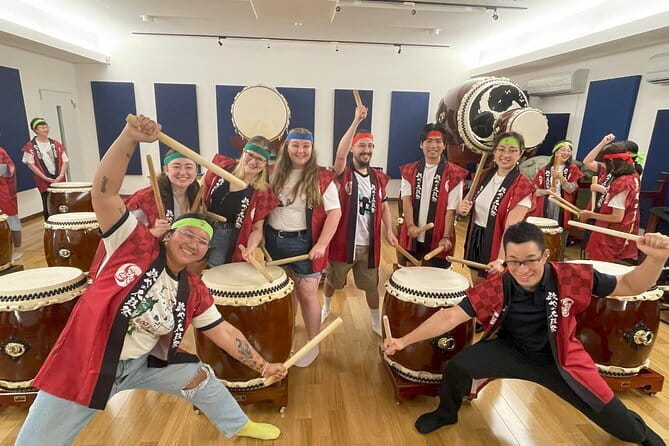
Nana shares Japanese principles during the session, adding a cultural layer to the yoga. The supplied information does not name the specific principles, so you should expect a general introduction rather than a formal lecture on religion or philosophy.
The social design is one of the most distinctive parts of the activity. It creates a bridge between people from overseas who want to connect with locals and Japanese people who want to practice English.
That exchange can be more rewarding than a standard sightseeing talk. You have a shared activity to discuss, so conversation does not need to begin with a forced question about where you are from. You can talk about yoga, Japanese customs, your route through Japan, or places worth visiting next.
English beginners are welcome. This is important because a language exchange can sound intimidating if you picture a formal conversation class. Here, the yoga gives everyone a common subject and a reason to take pauses.
A maximum of 10 participants keeps the group manageable. You are more likely to speak with several people rather than disappear into a large tour crowd. The tradeoff is that a small class may fill quickly, especially for visitors with fixed Kyoto schedules.
The Post-Yoga Meal and Travel Talk
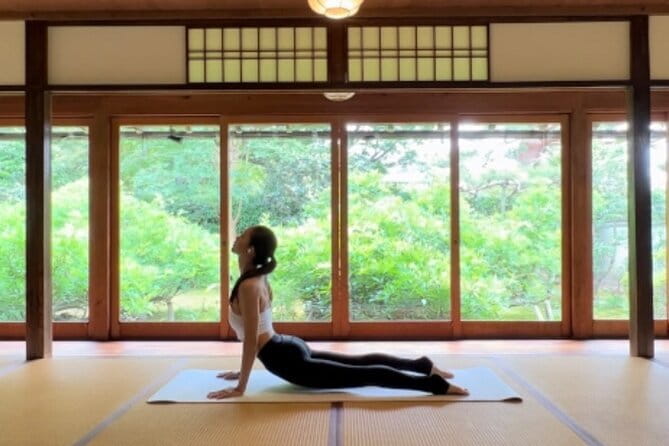
After yoga, you have the opportunity to gather for lunch or dinner, relax, and continue the conversation. Nana arranges an organic restaurant with high-quality organic food for post-yoga nourishment.
Pay attention to the wording here. The restaurant arrangement is part of the social plan, but the price of the meal is not stated. Do not assume your $56.76 booking automatically covers food unless the provider confirms it.
The meal is a useful extension of the class rather than a separate restaurant tour. You can discuss where you have been in Japan and ask for local recommendations. If you are traveling alone, this may be the easiest part of the day for making connections.
A reviewer who attended a temple class in Osaka described an informal lunch in a park afterward. That was an Osaka version of the activity, not a promised feature of this Kyoto booking, so you should not expect a park picnic. The useful point is that the social time can remain relaxed and flexible after the formal class ends.
You also do not have to join the meal. The activity description presents it as an opportunity. If you have a reservation elsewhere or need to catch a train, you can treat the yoga session as the main event.
What the $56.76 Price Really Buys
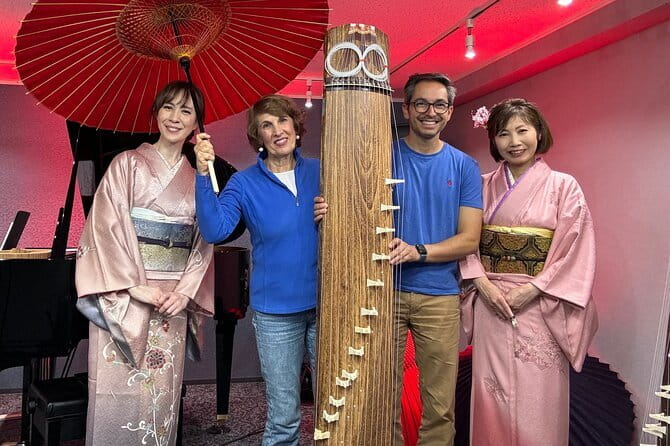
At $56.76 per person, the cost is higher than a basic local yoga class. The value depends on what you want from your morning.
You are paying for a roughly three-hour experience, a small group limited to 10 people, instruction in two yoga styles, cultural discussion, and a temple setting. A portion of the fee is donated to the temple for preservation, which gives the booking a direct connection to maintaining the place where you practice.
The price also covers something difficult to arrange independently: a structured meeting with local people who are interested in speaking English. You could certainly find a yoga studio in Kyoto for less, but it would not necessarily provide the temple atmosphere or the social exchange.
I would consider this good value if you want a slower, people-focused activity and plan to make use of the conversation time. It is less convincing value if you only want 60 minutes of exercise and do not care about the cultural or social side.
The meal requires a little budget caution. Since the cost is not provided, ask Nana or the booking provider whether the restaurant meal is included, optional, or paid separately.
Who Will Enjoy This Most
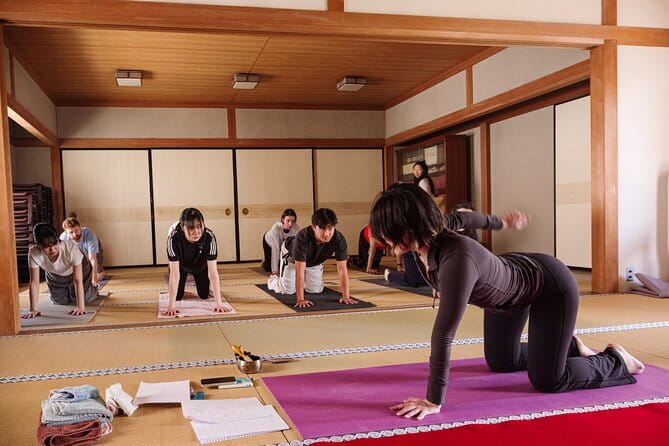
This activity suits you if you want to:
- Add a calm morning to a busy Kyoto itinerary
- Try yoga without needing advanced experience
- Meet Japanese people in a relaxed setting
- Practice simple English conversation
- Travel alone and welcome a small social group
- Support temple preservation through your booking
- Combine physical activity with cultural discussion
It is also a good fit for couples or friends who want an activity beyond the usual temple route. You can share the class, then decide together whether to continue to the restaurant.
You may want to choose another option if you need a highly specialized yoga class, detailed temple history, a guaranteed meal included in the fee, or a fully scheduled sightseeing itinerary. None of those is the main purpose here.
The class may be especially useful in the middle of a longer Japan trip. Use it as a reset between demanding sightseeing days, rather than adding it to an already packed morning.
Practical Details Before You Book
The activity lasts about three hours, starts at 10:30 a.m., and ends back at the meeting point. It is near public transportation, and confirmation is provided when you book.
Wear clothing that allows comfortable movement. The supplied details do not say whether mats or other equipment are provided, so check with the provider before arriving if you need to bring anything.
The maximum group size is 10. That small capacity is good for conversation but means you should not wait until the last minute if your Kyoto dates are fixed.
Solo participants are welcome. You do not need to arrive with a partner or an existing group, and the social design gives you a natural way to meet people.
Free cancellation is available if you cancel at least 24 hours before the local start time. If you cancel within 24 hours, you will not receive a refund, and late changes are not accepted.
What Makes This Different From Studio Yoga
A regular studio class gives you a familiar setting and a clear focus on physical practice. This activity adds a place-based element. The temple changes the mood, and Nana’s discussion of Japanese principles gives the session a cultural frame.
It also puts conversation at the center. You are not simply sharing a room with other students. You are invited to talk with Japanese people who want to practice English, then continue the exchange over food if you choose.
That can make the class feel less polished than a conventional wellness retreat, and that is not necessarily a problem. The strength is the human contact. You may leave remembering a conversation or local suggestion as much as the yoga itself.
The previous feedback attached to this experience gives strong emphasis to the calm atmosphere, welcoming instructors, friendly groups, and special feeling of practicing in a small temple. One Kyoto participant joined through Nana’s social media page and found the temple setting and group especially memorable. Those details point to the real appeal: this is intimate and personal, not a large commercial wellness program.
Should You Book the Sacred Temple Yoga Experience?
Book it if you want a peaceful Kyoto activity that combines Vinyasa Flow, Relax Yoga, and local conversation. The strongest reasons are the small group, the temple setting, the welcome for beginners, and the chance to meet Japanese people outside the usual sightseeing pattern.
The $56.76 price makes sense when you value the cultural exchange and the temple donation. It is harder to justify if you only want basic exercise or need every part of the price, including the meal, spelled out in advance.
For a solo visitor, an English learner, or anyone feeling worn out by a fast Japan itinerary, this could be a thoughtful three-hour pause. Confirm the meal cost and equipment details before booking, then arrive ready to slow down and talk.
FAQ
Where does the Sacred Temple Yoga Experience meet?
It meets at 316 Rokkakuaburanokōjichō, Nakagyo Ward, Kyoto, 604-8245, Japan.
What time does the activity start?
The activity starts at 10:30 a.m.
How long does the experience last?
It lasts approximately three hours.
What types of yoga are included?
The session includes a first class of Vinyasa Flow followed by a second class of Relax Yoga.
Can beginners join?
Yes. Yoga beginners are welcome, and English beginners are also welcome.
Is the post-yoga meal included?
The experience provides an opportunity to gather for lunch or dinner at an organic restaurant, but the supplied information does not state whether the meal is included in the booking price.
What is the cancellation policy?
You can cancel for a full refund up to 24 hours before the experience start time. Cancellations or changes made less than 24 hours before the local start time are not accepted for a refund.
Recently added around Kyoto
- Higashiyama | Kyoto: Sakura Season Private Rickshaw Tour★ 5.0 · 3 reviews
- Kyoto Kimono Rental CHAMATSU|Kimono/Yukata Rental FamilyPlan★ 5.0 · 3 reviews
- Kyoto: Half-Day Private Guided Tour to the Old Town of Gion★ 4.4 · 3 reviews
- Nara Private Customizable Half Day Tour★ 5.0 · 3 reviews
- Kansai Region Hiking Adventure in Nara Kobe Kyoto and More★ 5.0 · 3 reviews
- Full Day Nara Deer, Temple, Shrine, Activities & Tea Ceremony★ 5.0 · 3 reviews
- Nara: Essential Private Tour with Deer Park and Temples★ 5.0 · 3 reviews
- Hiking Tour for Sacred Sites in Kyoto with a Guide★ 5.0 · 3 reviews
Kyoto Temple Tours, compared.
Arashiyama Bamboo, Temple, Monkeys, or Secret Sake Brewery
Read our review →
Arashiyama Bamboo Forest, Monkeys, Matcha & Temple Tour
Read our review →
Kyoto Zen Meditation & Garden Tour at a Zen Temple with Lunch
Read our review →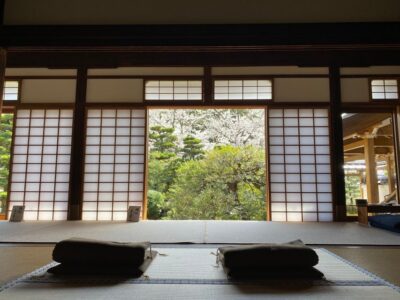
Arashiyama Bamboo, Matcha, Monkeys & Temple Tour
Read our review →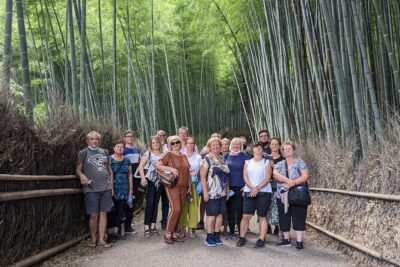
Arashiyama Bamboo, Temple, Matcha, Monkeys & secret spots
Read our review →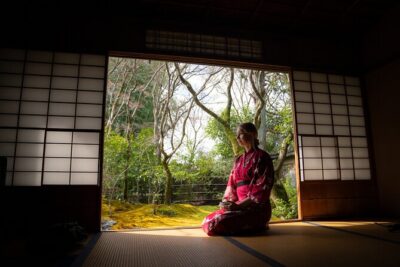
Browse the lists this tour appears in