REVIEW · PRIVATE
Private Highlights of Kyoto Tour
Kyoto’s greatest challenge is not finding beautiful sights. It is fitting them together without losing half the day to confusion, crowds, and transport. This private tour gives you a guide and a clear route through the city’s major temples, shrines, gardens, and old neighborhoods, all by public transportation.
I like the private format, which lets the guide adjust the pace, answer questions, and help with buses and trains. I also like the choice of two routes: the northwest course brings you to Arashiyama and the Golden Pavilion, while the southeast course focuses on Fushimi Inari, Kiyomizu-dera, sake, and Gion.
The main drawback is the ambitious seven-hour schedule. You will cover a lot of ground, but you will not have unlimited time at every stop. At $151.20 per person, it is also a serious expense for a small group, though the value improves when several people share the guide.
In This Review
- Key points to know before booking
- A smart first day in Kyoto
- Choosing the northwest route: bamboo, Zen, and gold
- Arashiyama and the Bamboo Forest Street
- Ryoan-ji and its fifteen stones
- Kinkaku-ji, the Golden Pavilion
- Nishiki Market or Nijo Castle
- Choosing the southeast route: shrines, sake, and old Kyoto
- Gekkeikan Okura Sake Museum
- Fushimi Inari and its red torii gates
- Sanjusangendo’s 1,001 statues
- Kiyomizu-dera and the hillside neighborhoods
- Gion is a useful ending point
- What the private guide adds
- Is $151.20 per person good value?
- Who should book this Kyoto tour?
- FAQ
- Where does the tour start?
- How long does the tour last?
- Is the tour private?
- Which routes can I choose?
- Is lunch included?
- Does the tour use public transportation?
- Is hotel pickup included?
- Can I cancel for a full refund?
Key points to know before booking
- Two distinct routes: Pick the northwest course for Arashiyama, the bamboo forest, Ryoan-ji, Kinkaku-ji, and Nishiki Market or Nijo Castle. Pick the southeast course for sake, Fushimi Inari, Sanjusangendo, Kiyomizu-dera, and Gion.
- Private attention: Groups can have up to eight people, with a professional English-speaking guide focused on your party.
- Public transport is part of the lesson: The tour uses local trains and buses, helping you learn how to get around Kyoto on your own.
- The guides are a major strength: Mie, Mia, Chako, Choko, Mai, and Hiseko are praised for clear English, historical context, flexibility, and warmth.
- Lunch is not included: You pay for your own meal, but the private format allows the guide to suggest a suitable restaurant.
- Expect plenty of walking: Arashiyama, Fushimi Inari, Kiyomizu-dera, Ninenzaka, and Sannenzaka all require time on foot, including slopes and uneven paths.
A smart first day in Kyoto
This tour works best as an introduction to Kyoto. You meet at 9 a.m. outside Hotel Granvia Kyoto, by the central entrance of Kyoto Station, then set out by public transport rather than sitting in a private vehicle.
That choice matters. Kyoto is a city where knowing which train, bus, or walking route to use can save real time. You also get a look at ordinary city life along the way. The guide can explain local customs, help with directions, and point out details you might pass without noticing.
The tour lasts about seven hours and ends in Gion. A full day of major sights can be tiring, especially in hot weather or rain, but the private setting helps. Guides have adjusted the pace for families, including groups with young children, and have kept older children engaged with stories, questions, and cultural explanations.
The operator supplies public transportation and a one-day city bus pass. That pass can be used after the tour, which adds practical value if you plan to keep exploring Kyoto that evening or the next day. Food, drinks, lunch, hotel pickup, and hotel drop-off are not included.
A few more Kyoto experiences worth comparing
- Fushimi Inari Hidden Hiking Tour (Private Option Available)
★ 5.0 · 1,750 reviews - Private Kyoto Tour with a Local, Highlights & Hidden Gems, Personalised
★ 5.0 · 1,543 reviews - Kyoto 6hr Private Tour with Government-Licensed Guide
★ 5.0 · 1,369 reviews
Choosing the northwest route: bamboo, Zen, and gold
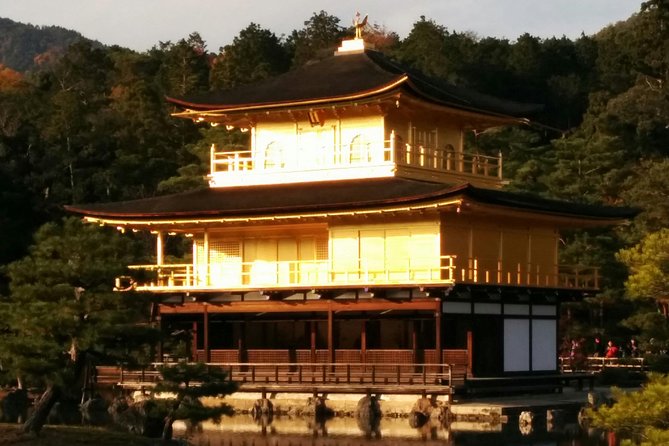
The northwest-bound itinerary is the best fit if you want Kyoto’s most familiar postcard scenes. It starts around Arashiyama, continues to Ryoan-ji and Kinkaku-ji, and then finishes with a choice between Nishiki Food Market and Nijo Castle.
Arashiyama and the Bamboo Forest Street
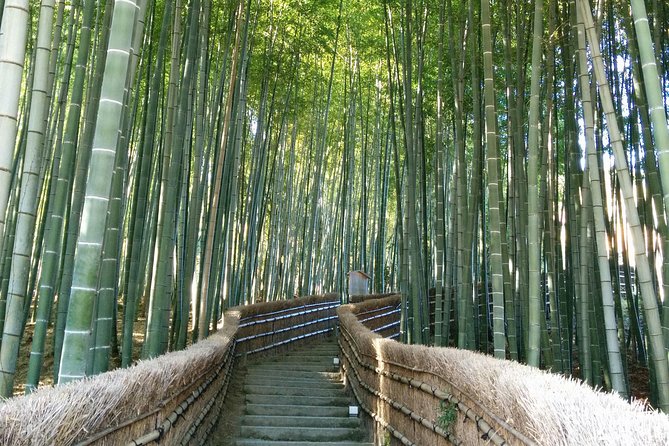
Arashiyama gives you several different Kyoto experiences in one area. The Bamboo Forest Street is the visual star, with a 30-minute walk through tall bamboo that has appeared in countless guidebooks and photographs.
The bamboo path is attractive, but it is not a quiet private garden. Crowds can gather along the route, so your guide’s help is useful for keeping the visit moving and showing you how the area fits together. The nearby Togetsukyo Bridge is another listed stop, a large wooden bridge associated with the Arashiyama district.
You should expect walking here rather than a quick photo stop from a vehicle. The combination of bamboo, temple grounds, and bridge views makes this route especially appealing for first-time visitors, but the area can feel busy.
Ryoan-ji and its fifteen stones
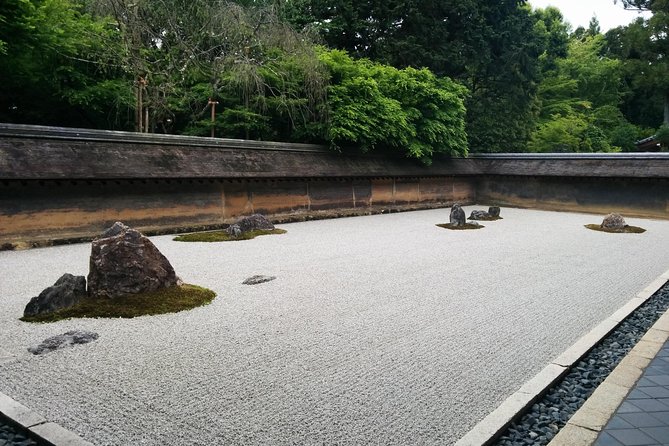
Ryoan-ji offers a sharp change of mood. Its famous Zen rock garden is spare and deliberate, with fifteen stones arranged across a bed of pale gravel. The garden is not about elaborate decoration. It asks you to slow down and look carefully.
The visit is scheduled for about 30 minutes, which is enough to see the garden and hear an explanation of Zen design, but not enough for a long, quiet stay. If the meaning of the arrangement interests you, use the private guide time to ask questions rather than simply taking a photograph and leaving.
A completely different side of Kyoto:
- PERFECT KYOTO 1-Day Bus Tour
★ 5.0 · 13,518 reviews - Kyoto: Fushimi Inari, Kinkakuji, Bamboo Grove 1 Day Bus Tour
★ 4.8 · 4,316 reviews - Kyoto: Tea Ceremony in a Traditional Tea House in Kiyomizu
★ 4.9 · 3,519 reviews - Kyoto Geisha Walking Tour: Gion District & Hidden Gems
★ 4.7 · 3,273 reviews
Kinkaku-ji, the Golden Pavilion
Kinkaku-ji, better known as the Golden Pavilion, is one of Kyoto’s most instantly recognizable temples. Its gold-covered upper structure reflects in the pond, with wooded grounds around it.
The stop lasts about 50 minutes and admission is included. The view is compact and highly photogenic, but the route through the grounds is controlled, so this is not a place where you wander freely for hours. Your guide can explain the building’s role and the symbolism of the setting, giving the visit more substance than a quick picture.
The Golden Pavilion is also one of Kyoto’s busiest major sights. The private guide does not remove the crowds, but it does make the visit easier to understand and keeps you from wasting time figuring out where to go next.
Nishiki Market or Nijo Castle
The northwest route allows a choice between Nishiki Food Market and Nijo Castle. This is one of the most useful parts of the private setup because the two options suit different interests.
Nishiki is the better pick if you want to see Kyoto’s food culture and browse a narrow market filled with local ingredients and snacks. Lunch is at your own cost, and the market can be a practical place to eat, though you should ask your guide how to handle the stop without rushing.
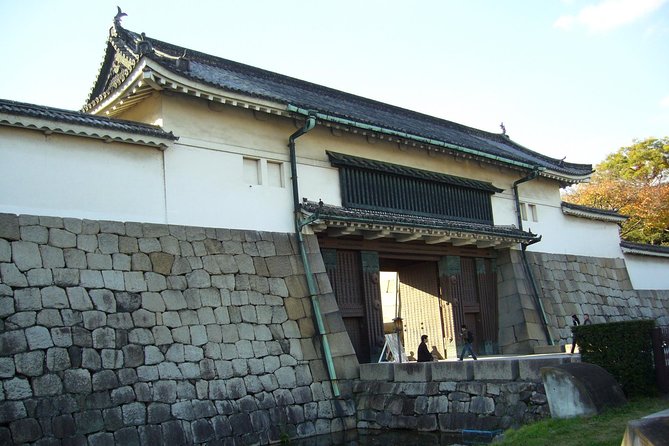
Nijo Castle is the stronger choice for political and architectural history. Built during the Tokugawa Shogunate period in the early 17th century, it is known for its original shogun-era living quarters, gold-leaf decoration, and painted interiors. The scheduled visit is about 50 minutes with admission included.
One caution: the published material describes both Nishiki Market and Nijo Castle as possible choices, while the listed stops include both. Confirm your preferred version with the operator or guide at the start of the day so your expectations match the route.
Choosing the southeast route: shrines, sake, and old Kyoto
The southeast course is a strong choice if you want Kyoto’s most atmospheric religious sites and a finish in the traditional Gion area. It includes a sake museum, Fushimi Inari, Sanjusangendo, Kiyomizu-dera, and the slopes of Ninenzaka and Sannenzaka.
Gekkeikan Okura Sake Museum
The Gekkeikan Okura Sake Museum introduces you to Japan’s famous rice wine through one of the country’s oldest sake brands. Admission is included, and the stop lasts about 50 minutes.
This is a good choice if you want more than temple scenery. You can learn how sake is made and get context for a drink that appears throughout Japanese food and religious traditions. The museum gives the day some variety before the shrine and temple visits.
Fushimi Inari and its red torii gates
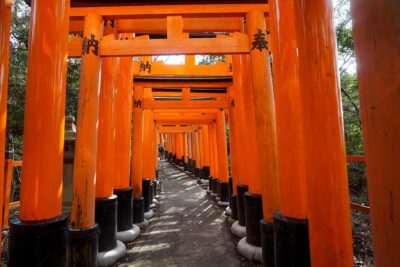
Fushimi Inari-taisha is known for its long trails of red torii gates climbing the mountain. Stone fox figures and small shrines appear along the way, connecting the site to Inari, a Shinto deity associated with rice and prosperity.
The tour allows about 50 minutes here, but that is not enough to walk the entire mountain route. You will see the famous lower section and get a sense of the shrine’s scale. Wear comfortable shoes, and do not expect to reach the highest points during this schedule.
Fushimi Inari is one of Kyoto’s essential sights, but it can be crowded near the entrance. The private guide helps explain the torii, fox imagery, and shrine etiquette, which makes the visit more meaningful than simply walking through a tunnel of red gates.
Sanjusangendo’s 1,001 statues
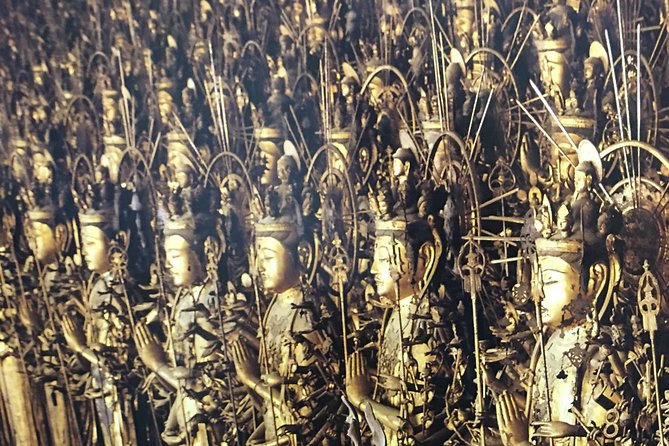
Sanjusangendo is one of the tour’s most unusual stops. Inside, you see 1,001 statues of Kannon, the Buddhist figure associated with compassion. The repeated figures create an effect very different from the open courtyards and gardens elsewhere in Kyoto.
The visit is scheduled for about 50 minutes, with admission included. Photography rules and interior conditions can limit what you record, so this is a place to pay attention while you are there. A guide is particularly helpful for explaining what you are seeing and why the arrangement matters.
Kiyomizu-dera and the hillside neighborhoods
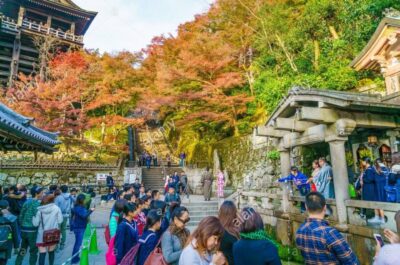
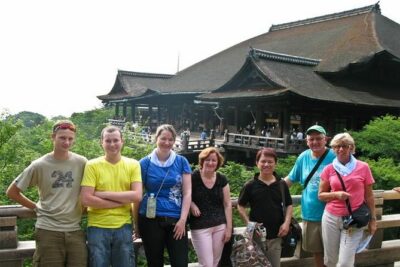
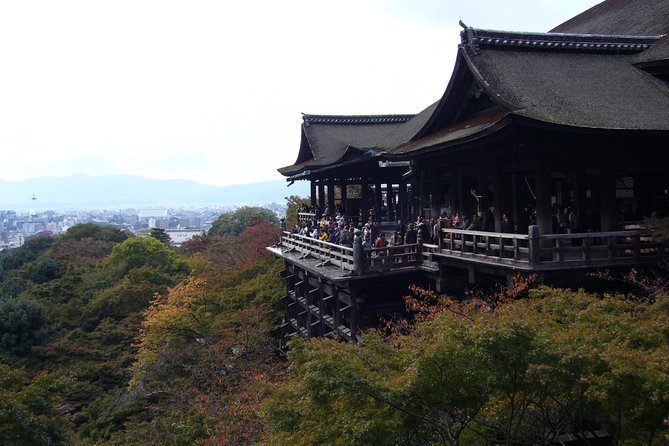
Kiyomizu-dera sits above Kyoto and is famous for its large wooden balcony and broad views over the city. The temple dates back to the eighth century, and its setting makes it one of Kyoto’s classic stops.
The tour allows about 50 minutes and includes admission. From here, you continue through Ninenzaka and Sannenzaka, two historic hillside areas leading toward the temple. These lanes are attractive, but they are steep in places and can be crowded, so allow for a slower pace.
This section is not just a temple visit. You get old streets, traditional buildings, shops, and views. It is also one of the more tiring parts of the day. If you have mobility concerns, discuss the route with the operator before booking, since the experience includes substantial walking and slopes.
Gion is a useful ending point
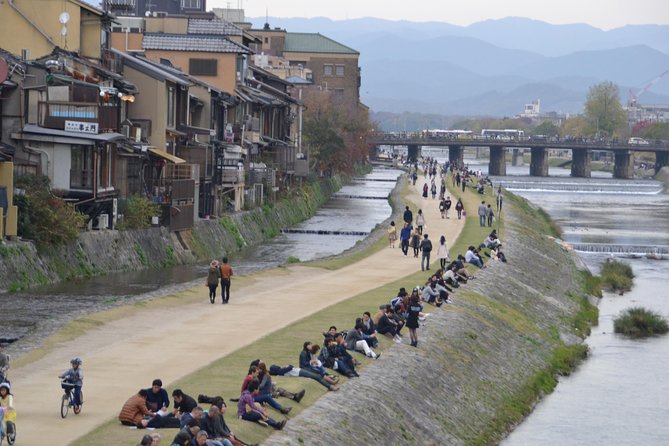
Both routes finish in Gion, Kyoto’s famous geisha district. The end point is practical as well as atmospheric. You can continue walking through the area after the tour, find dinner, or join a separate Gion-focused evening tour that begins at 6 p.m.
Do not expect the guide to arrange an encounter with a geisha. The value here is seeing the traditional streets and learning how Gion fits into Kyoto’s cultural life. Treat the neighborhood with care, follow local signs, and remember that it is a living district rather than a stage set.
Ending in Gion also means you are not returned to Kyoto Station. That may be convenient if you plan to eat or explore nearby, but it is worth planning your onward route.
What the private guide adds
The strongest part of this experience is the guide. Mie appears repeatedly as a warm, organized guide with excellent English, strong knowledge of Japanese history, and a flexible approach. Mia is praised for clear explanations, humor, patience with children, and the ability to shape the day around a group’s interests.
Chako and Choko are also highlighted for cultural explanations, translation help, photography, and friendly company. Mai is noted for adding a custom stop at the Donguri Kyowakoku Ghibli store, while Hiseko is praised for explaining the symbolism in sculptures and decorative motifs.
These details show what you are paying for. The guide is not only there to lead you from one entrance to the next. The best version of the tour gives you historical background, helps with Japanese phrases, explains etiquette, suggests lunch, and adjusts the route when practical.
There is one important caveat. One disappointing experience described a guide who mainly moved the group from one place to another without much explanation. That appears to be the exception among the available feedback, but it is a reminder to speak up. Tell your guide what interests you, ask questions, and confirm the route at the beginning.
Is $151.20 per person good value?
At $151.20 per person, this is not a budget sightseeing day. You still pay separately for lunch and drinks, and the tour does not include hotel transportation.
The value depends heavily on group size. For one or two people, the price buys convenience, transport help, local context, and a private pace. For a family or group of several paying adults, the cost is easier to justify because one guide serves the whole party.
Admission is included for the major paid sites listed, including Kinkaku-ji, Kiyomizu-dera, Nijo Castle, Sanjusangendo, Ryoan-ji, and the sake museum. You also receive public transportation and a bus pass that remains useful after the tour.
I would compare this with the cost of arranging separate taxis, entrance tickets, and a guide. If you are comfortable navigating Kyoto independently and prefer long visits at fewer sights, you may find the price high. If you have one day to get oriented and want a personal guide to handle the complicated parts, the price is more reasonable.
Who should book this Kyoto tour?
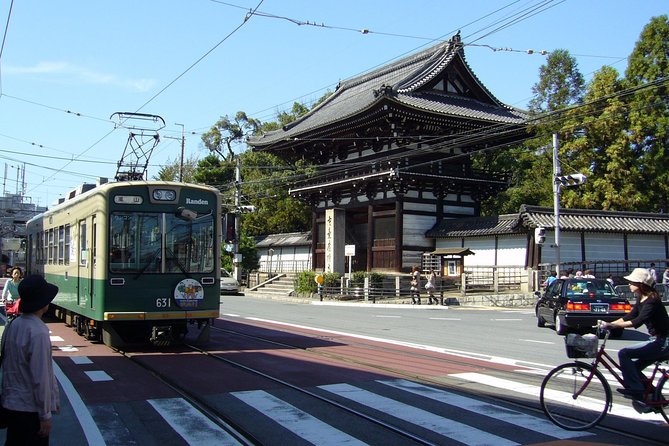
I would recommend it most strongly to first-time Kyoto visitors, families, couples on a short stay, and anyone who wants historical explanation instead of silent sightseeing. It is also useful if you are making a day trip from Tokyo and need to use your Kyoto hours efficiently.
Choose the northwest course if the bamboo forest, Zen garden, Golden Pavilion, and food market appeal most. Choose the southeast course if you prefer sake, shrine gates, Buddhist statues, Kiyomizu-dera, and Gion.
You should be ready for a full day on foot, public transport, crowds, hills, and a paid lunch. The tour requires good weather, and poor weather can lead to a new date or a full refund. Free cancellation is available up to 24 hours before the start time.
With a 4.8 rating, 96 percent recommendation rate, and a maximum of eight people, this is a well-regarded way to see Kyoto’s headline sights. Book it if you value a flexible guide and a fast, well-explained introduction. Skip it if you want a slow temple day, dislike group movement between many stops, or prefer to build your own route.
FAQ
Where does the tour start?
The tour starts at 9 a.m. at Hotel Granvia Kyoto, near Kyoto Station’s JR central entrance, at Higashishiokōjichō, Shimogyo Ward, Kyoto.
How long does the tour last?
The experience lasts approximately seven hours.
Is the tour private?
Yes. It is a private tour with a maximum of eight travelers and a professional English-speaking guide.
Which routes can I choose?
You can choose a northwest-bound route covering Arashiyama, the Bamboo Forest Street, Ryoan-ji, Kinkaku-ji, and either Nishiki Food Market or Nijo Castle. The southeast-bound route covers Gekkeikan Okura Sake Museum, Fushimi Inari, Sanjusangendo, Kiyomizu-dera, Ninenzaka, Sannenzaka, and Gion.
Is lunch included?
No. Lunch, food, and drinks are not included, so you pay for your own meal.
Does the tour use public transportation?
Yes. Public transportation is included, along with a one-day city bus pass that you can continue using after the tour.
Is hotel pickup included?
No. You must make your own way to Hotel Granvia Kyoto, and hotel drop-off is not included.
Can I cancel for a full refund?
You can cancel for a full refund up to 24 hours before the experience start time. If poor weather causes the operator to cancel, you will be offered another date or a full refund.
Recently added around Kyoto
- Higashiyama | Kyoto: Sakura Season Private Rickshaw Tour★ 5.0 · 3 reviews
- Kyoto Kimono Rental CHAMATSU|Kimono/Yukata Rental FamilyPlan★ 5.0 · 3 reviews
- Kyoto: Half-Day Private Guided Tour to the Old Town of Gion★ 4.4 · 3 reviews
- Nara Private Customizable Half Day Tour★ 5.0 · 3 reviews
- Kansai Region Hiking Adventure in Nara Kobe Kyoto and More★ 5.0 · 3 reviews
- Full Day Nara Deer, Temple, Shrine, Activities & Tea Ceremony★ 5.0 · 3 reviews
- Nara: Essential Private Tour with Deer Park and Temples★ 5.0 · 3 reviews
- Hiking Tour for Sacred Sites in Kyoto with a Guide★ 5.0 · 3 reviews
Private, compared.
Fushimi Inari Hidden Hiking Tour (Private Option Available)
Read our review →
Private Kyoto Tour with a Local, Highlights & Hidden Gems, Personalised
Read our review →
Kyoto 6hr Private Tour with Government-Licensed Guide
Read our review →
10 Must-see Spots in Kyoto One Day Private Tour (up to 7 people)
Read our review →
Nara Half Day Trip Walking Tour (Private Option Available)
Read our review →
Kyoto 4hr Private Tour with Government-Licensed Guide
Read our review →