
REVIEW · KYOTO TEMPLE TOURS
Kyoto Walking Tour Goshuin Collecting and Temples Discover
Kyoto’s goshuin tradition gives this temple walk a clear purpose. You visit three very different places, learn how temple stamps work, and can build a personal souvenir collection instead of simply taking another set of photos. The colorful Hanachozu flower basins add a creative touch, while Tofukuji brings the grand views and gardens.
I like the private format, since your guide can help with the parts that are tricky without Japanese, including goshuin and Omamori purchases. I also like the route’s mix of major Tofukuji and quieter temples such as Shorinji and Shinzenkoji. The main drawback is the $299 price for about three hours, especially since stamps, stamp books, charms, and meals are not included.
In This Review
- Key points
- Why Goshuin Makes This Kyoto Walk Different
- Starting at Tofukuji Station and Entering Tofukuji
- Shorinji and the Art of Hanachozu
- Shinzenkoji’s Maple Trees and Quiet Garden
- What the $299 Price Really Buys You
- Who Will Enjoy This Temple Experience Most
- Practical Ways to Get More From the Three Hours
- Should You Book the Kyoto Goshuin Walk?
- FAQ
- Where does the tour begin?
- Where does the tour end?
- How long does the experience last?
- Is Tofukuji admission included?
- Are goshuin included?
- Is this a private tour?
- How much walking is involved?
- What happens if bad weather cancels the tour?
Key points
- Goshuin help without Japanese: Your guide can explain the collection process and help you navigate temple customs.
- Tofukuji’s Tsutenkyo Bridge: The tour includes admission to one of Kyoto’s best-known temple settings for autumn maple views.
- Hanachozu at Shorinji: Flower-filled water basins add a changing seasonal detail to the visit.
- Three temples in three hours: You get a focused introduction rather than an all-day temple marathon.
- Private group format: Only your party takes part, which allows a more personal pace.
- Real walking required: Bring water and rain gear, and expect a moderate level of physical effort.
Why Goshuin Makes This Kyoto Walk Different
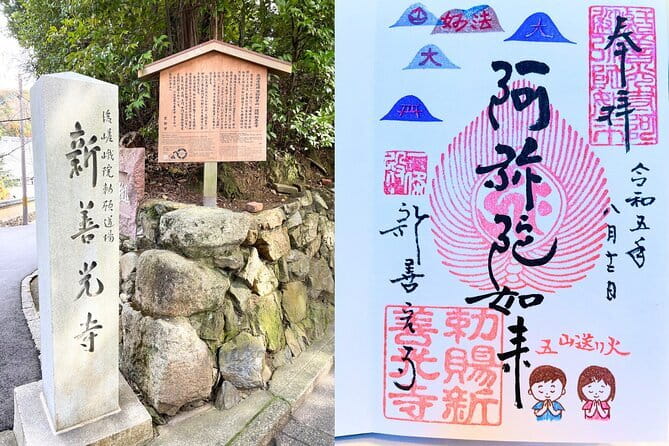
A goshuin is a temple stamp and calligraphy inscription collected in a special book called a goshuin-cho. It is both a keepsake and a record of your visit. For many people, the appeal is not just the finished page. It is the small ritual of visiting a temple, learning what it honors, and receiving a design tied to that place.
That process can be confusing if you do not speak Japanese. You need to know where stamps are issued, what they cost, and how to present the book. This tour includes a professional guide, making that part much easier. The goshuin themselves are not included, and neither are the stamp book or Omamori charms, so bring extra yen for purchases.
I would not book this simply as a shopping trip. The stamps make more sense when you understand the temples behind them. This route gives you that context at three stops, with time to look at gardens and religious details rather than rushing from one stamp counter to the next.
The activity has a 5/5 score from four published ratings. The strongest themes are help with starting a goshuin collection, beautiful garden settings, and the pleasure of seeing Hanachozu. Those are also the reasons I see this as a good choice for a first goshuin experience.
More Kyoto temples worth a morning:
- Kyoto: Tea Ceremony Ju-An at Jotokuji Temple
★ 4.9 · 3,207 reviews - Arashiyama Bamboo, Temple, Monkeys, or Secret Sake Brewery
★ 4.8 · 886 reviews - Kyoto: Arashiyama Bamboo Forest, Monkeys, Matcha & Temple Tour
★ 5.0 · 759 reviews
Starting at Tofukuji Station and Entering Tofukuji
The meeting point is outside Tofukuji Station at 12 Chome Honmachi, in Kyoto’s Higashiyama Ward. The tour ends back at the same meeting point, so you do not need to work out a separate pickup or finish point.
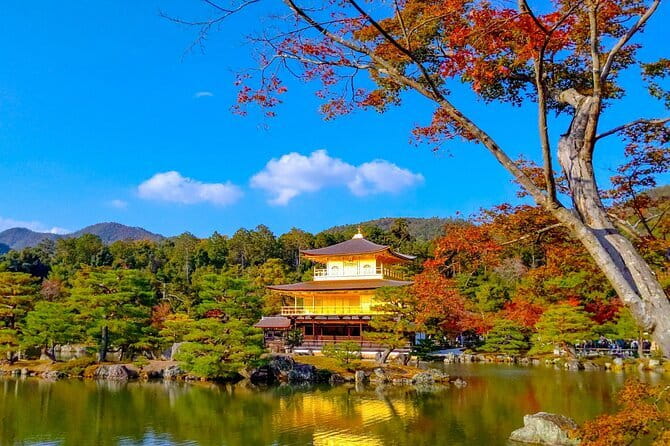
Your first stop is Tofukuji Temple, where about 1 hour and 15 minutes are set aside. That is the largest portion of the tour, and it makes sense. Tofukuji is the anchor of the route, with a major temple setting, the Tsutenkyo Bridge, and gardens designed by Mirei Shigemori.
Tofukuji honors Shakyamuni Buddha. Its best-known view comes from Tsutenkyo Bridge, particularly in autumn when maple leaves fill the valley below and around the temple buildings. The timing of your visit will shape what you see. Autumn brings the famous red foliage, while summer offers thick green tree cover and a cooler garden mood.
The gardens are an important reason not to rush this stop. Mirei Shigemori’s designs use carefully arranged spaces to create quiet visual patterns. You might find the garden more rewarding if you slow down and let your guide point out how the different areas are organized.
There is a practical catch. Tofukuji is a popular place, and the bridge and gardens can draw plenty of visitors during the maple season. The setting is well maintained, but you should not expect complete solitude, especially in peak autumn. If you want the calmest possible visit, ask about the best available start time when booking.
Admission to Tofukuji is included. That matters because it removes the largest known entry cost from the outing. It does not cover goshuin, the goshuin-cho, or Omamori. Those are personal purchases, and the amount you spend will depend on what you choose.
Shorinji and the Art of Hanachozu
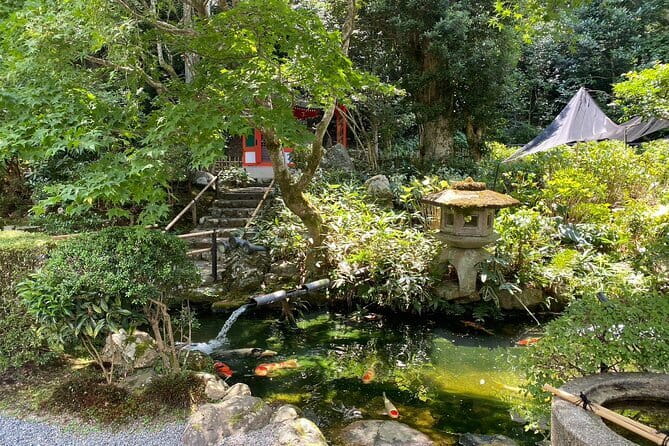
The second stop is Shorinji Temple, with about 20 minutes to see it. That may sound brief, but it gives the route a change of scale after Tofukuji.
Shorinji was founded during the Heian period and has more than a thousand years of history. It honors Manjushri Bodhisattva, which gives it the name Temple of Wisdom. For this tour, its most distinctive feature is Hanachozu.
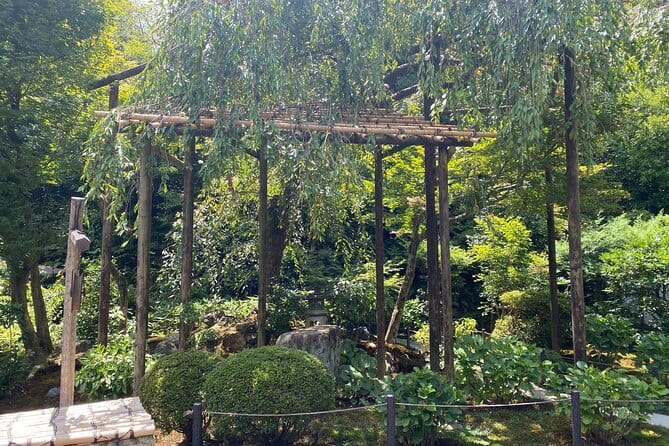
A chozuya is a place where visitors traditionally purify their hands before entering a sacred area. Hanachozu uses flowers in the water basin, turning a practical religious feature into a delicate seasonal display. The arrangement can change, so what you see depends on the day and time of year.
This is one of the tour’s most photogenic details, but it is worth treating it as more than a picture stop. Your guide can help explain the custom and show you how it fits into a temple visit. If you have never seen Hanachozu before, Shorinji gives you a small but memorable example of how old practices and fresh design can sit side by side.
The 20-minute visit will not allow a long examination of every part of the temple. That is the tradeoff of a three-hour route. You get a taste of Shorinji and its Hanachozu, but not an unhurried afternoon there. If this feature is your main reason for booking, tell the guide early so you can use the available time well.
Shorinji’s goshuin may also be part of your collection. The exact designs and availability can vary, and the cost is not included. One published experience specifically noted the excitement of starting a collection and the beauty of the hand-washing basin. That pairing captures the appeal here: a small ritual, a distinctive visual detail, and a stamp connected to the place.
Shinzenkoji’s Maple Trees and Quiet Garden
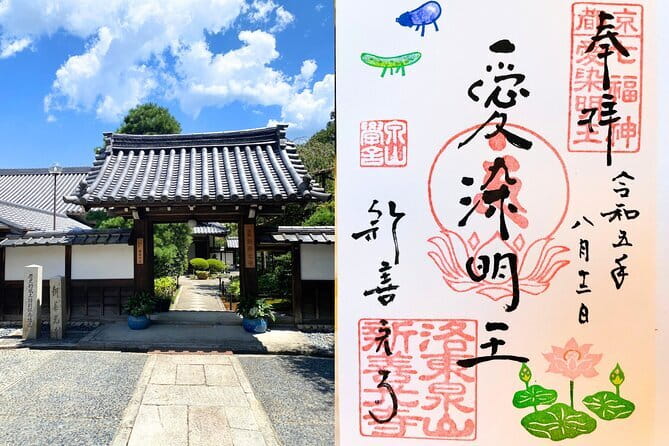
The final temple is Shinzenkoji, with another 20 minutes. It honors Amida Buddha, a figure associated here with compassion. Its peaceful garden and old maple trees give the stop a softer ending than the grand opening at Tofukuji.
In autumn, the maple leaves can add strong color. In summer, the trees provide a full green setting. The garden is intended for calm walks and meditation, although your visit will be short and part of a guided route rather than a long retreat.
I like the way this stop rounds out the itinerary. Tofukuji gives you the major temple views, Shorinji introduces Hanachozu, and Shinzenkoji lets you pause among trees and garden spaces. The three sites do not offer exactly the same experience, which keeps the walk from feeling like a repeat of one temple after another.
Still, twenty minutes passes quickly. You may have enough time for a garden walk, a few photographs, and a goshuin request, but probably not all three at a leisurely pace. If you want to meditate or sit quietly for a long stretch, this tour may feel too structured.
The route also requires a significant amount of walking between and within the sites. The operator asks you to have moderate physical fitness and bring sufficient water, rain gear, and other necessary items. Kyoto weather can change, and this is an outdoor walking experience, so comfortable shoes matter more than stylish footwear.
More walking tours in Kyoto:
- Kyoto Geisha Walking Tour: Gion District & Hidden Gems
★ 4.7 · 3,273 reviews - Kyoto: Gion Magical Night Walking Tour with Geisha Trivia
★ 4.9 · 2,393 reviews - Kyoto: Gion Geisha District Walking Tour – Stories of Geisha
★ 4.7 · 2,187 reviews - Night Walk in Gion: Kyoto’s Geisha District
★ 4.5 · 2,003 reviews
What the $299 Price Really Buys You
At $299, this is not a budget temple walk. The price covers a professional guide and the Tofukuji admission, while the activity is private for your group. It does not cover meals, personal expenses, goshuin, goshuin-cho, or Omamori.
The value depends heavily on how much help you want. If you already know Japanese temple customs, can locate goshuin counters yourself, and prefer to move independently, the cost may be hard to justify. You could visit temples on your own for less.
If you are new to goshuin, the private guide changes the calculation. The guide can explain the tradition, help you collect stamps, and make the process less stressful if you do not speak Japanese. You also get a planned route linking three temples, rather than spending time figuring out directions and procedures.
The private format is especially useful for couples, families, or friends with a shared interest in Japanese culture. Only your group participates, so the pace is not set by strangers. You can ask questions, spend a little longer at a favorite garden, or focus on the stamp collection.
The three-hour length is another factor. It fits well into a Kyoto day, especially if you want time afterward for another neighborhood or meal. On the other hand, the route is compact and purposeful. You are paying for guidance and access to a themed experience, not a full-day tour with food or transportation included.
Who Will Enjoy This Temple Experience Most
I would recommend this tour most strongly to first-time goshuin collectors. You get a clear introduction to the stamp tradition and three opportunities to add to a book. The guide’s support is valuable if language barriers would otherwise make the process awkward.
It also suits people who enjoy gardens, seasonal scenery, and small cultural details. Tofukuji’s autumn maple views receive the most attention, but summer has its own appeal, with green trees around the temple grounds. Shorinji’s Hanachozu is a special draw for anyone who enjoys Japanese floral displays and careful visual design.
This is less suitable for someone who wants a relaxed, slow temple day. The schedule gives Tofukuji 75 minutes, but only 20 minutes each at Shorinji and Shinzenkoji. The walking is substantial, and the route returns to the starting point rather than continuing to another part of Kyoto.
You should also think about your shopping budget. The activity fee does not include the souvenirs that give the tour its name. If you want several goshuin, a goshuin-cho, and Omamori, set aside additional money before you arrive.
Service animals are allowed, and the meeting point is near public transportation. The activity requires good weather, and it may also require a minimum number of participants despite being private for your group. If poor weather cancels the tour, you are offered another date or a full refund.
Practical Ways to Get More From the Three Hours
Wear shoes you can comfortably use for a long walk. The tour description specifically warns that walking is significant, and temple grounds may include different surfaces and steps. Carry water, and bring rain gear even if the forecast looks promising.
Keep your goshuin-cho clean and easy to reach if you bring one. If you are starting a collection, you can purchase one during the outing, but the cost is not included. Ask your guide how the book should be presented before you approach a stamp counter.
Allow room in your schedule after the tour. Since the activity ends where it starts, you can continue from Tofukuji Station, but the exact walking time and energy you have left will depend on the weather and your pace. Do not book a tight connection immediately afterward.
Autumn is the most obvious season for maple color at Tofukuji and Shinzenkoji. Summer offers green trees and a different garden mood. The tour is not limited to a single season, but the scenery and Hanachozu arrangements can change during the year.
Free cancellation is available up to 24 hours before the local start time. Inside that window, the payment is not refunded and changes are not accepted. Because the activity depends on good weather, check the cancellation terms before you commit to a fixed Kyoto schedule.
Should You Book the Kyoto Goshuin Walk?
Book it if you want a guided start to goshuin collecting, appreciate Japanese gardens, and prefer a private outing with a clear three-temple route. The combination of Tofukuji’s bridge and gardens, Shorinji’s Hanachozu, and Shinzenkoji’s maple-filled garden gives the tour more variety than a simple stamp-hunting errand.
Think twice if $299 feels high for three hours or if you prefer exploring temples independently. You will also pay extra for every stamp, book, charm, and meal. The short visits at the two smaller temples may frustrate you if you like to linger.
For the right person, the price buys confidence as much as sightseeing. You can ask questions, handle the goshuin process with help, and take home a collection tied to three meaningful Kyoto sites. That makes this a focused cultural outing, best suited to someone who values guidance and personal context over the lowest possible cost.
FAQ
Where does the tour begin?
The tour begins at Tofukuji Station, at 12 Chome Honmachi, Higashiyama Ward, Kyoto, 605-0981, Japan.
Where does the tour end?
The activity ends back at the meeting point near Tofukuji Station.
How long does the experience last?
The walking tour lasts approximately three hours.
Is Tofukuji admission included?
Yes. The Tofukuji admission ticket is included in the tour price.
Are goshuin included?
No. Goshuin, goshuin-cho stamp books, and Omamori charms are not included and must be purchased separately.
Is this a private tour?
Yes. Only your group will participate in the activity.
How much walking is involved?
The tour requires a significant amount of walking and a moderate level of physical fitness. You should bring sufficient water, rain gear, and other necessary items.
What happens if bad weather cancels the tour?
If poor weather causes a cancellation, you will be offered a different date or a full refund. Free cancellation is also available if you cancel at least 24 hours before the local start time.
Recently added around Kyoto
- Higashiyama | Kyoto: Sakura Season Private Rickshaw Tour★ 5.0 · 3 reviews
- Kyoto Kimono Rental CHAMATSU|Kimono/Yukata Rental FamilyPlan★ 5.0 · 3 reviews
- Kyoto: Half-Day Private Guided Tour to the Old Town of Gion★ 4.4 · 3 reviews
- Nara Private Customizable Half Day Tour★ 5.0 · 3 reviews
- Full Day Nara Deer, Temple, Shrine, Activities & Tea Ceremony★ 5.0 · 3 reviews
- Nara: Essential Private Tour with Deer Park and Temples★ 5.0 · 3 reviews
- Kansai Region Hiking Adventure in Nara Kobe Kyoto and More★ 5.0 · 3 reviews
- Hiking Tour for Sacred Sites in Kyoto with a Guide★ 5.0 · 3 reviews
Kyoto Temple Tours, compared.
Arashiyama Bamboo, Temple, Monkeys, or Secret Sake Brewery
Read our review →
Arashiyama Bamboo Forest, Monkeys, Matcha & Temple Tour
Read our review →
Kyoto Zen Meditation & Garden Tour at a Zen Temple with Lunch
Read our review →
Arashiyama Bamboo, Matcha, Monkeys & Temple Tour
Read our review →
Arashiyama Bamboo, Temple, Matcha, Monkeys & secret spots
Read our review →
Browse the lists this tour appears in