
REVIEW · GION GEISHA DISTRICT TOURS
Kyoto: Try Nishijin Weaving in the Oldest Geisha District
Kyoto’s oldest geisha district is also a working textile neighborhood, and this three-hour tour lets you take part in that craft rather than simply look at old buildings. You’ll visit Kitano Tenmangu, learn Tsuzure-ori weaving from a traditional craftsman, and walk the 400-meter street of Kamishichiken’s old wooden townhouses.
I like the way the tour joins two sides of Kyoto: the shrine’s grand religious setting and the careful, hands-on work of a real workshop. I also like its quiet pace, especially the chance to see a part of the city that feels far removed from Kyoto’s busiest sights.
The main consideration is the price, $131 per person. That is a serious spend for three hours, and the tour makes the most sense if you care about traditional crafts, local history, or taking home something you made yourself.
In This Review
- Key points at a glance
- Why this Kyoto tour feels different
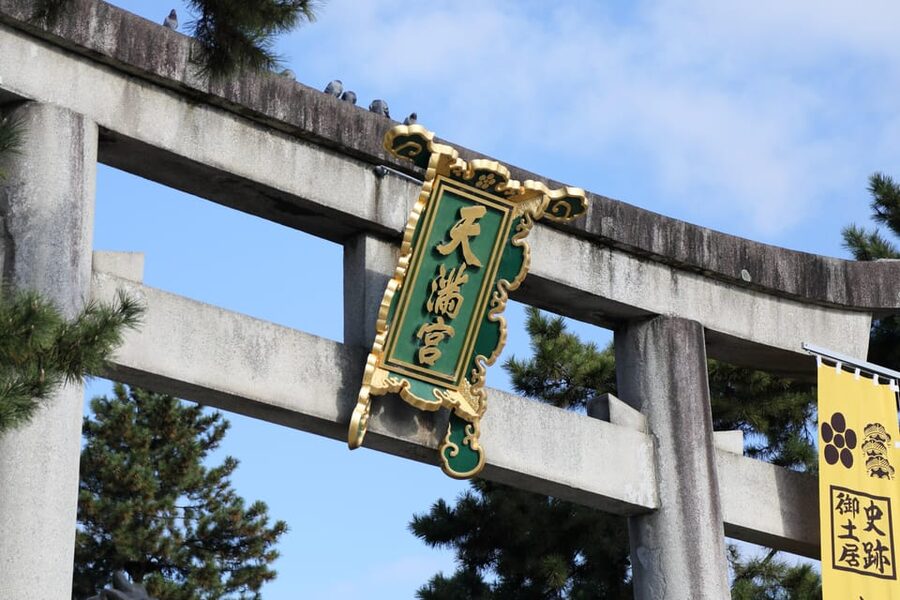
- Meeting Kitano Tenmangu at the first torii
- The 1.5-hour Tsuzure-ori workshop
- Walking Kamishichiken’s 400-meter street
- What $131 buys you
- Who will enjoy this experience most
- Small details that improve the visit
- Should you book the Kamishichiken weaving tour?
- FAQ
- Where does the tour begin?
- How long does the experience last?
- What language is the tour offered in?
- Is the tour private or shared?
- What happens at Kitano Tenmangu?
- How long is the weaving class?
- What type of weaving will I learn?
- Can I make my own item?
- Is dango tasting guaranteed?
- Can I cancel for a refund?
Key points at a glance
- Make a traditional textile: Learn Tsuzure-ori, an old patterned weaving method, under the guidance of master weaver Hirano.
- Begin at a major shrine: Visit Kitano Tenmangu, including its main worship hall and important cultural assets.
- Walk Kyoto’s oldest Hanamachi: Explore Kamishichiken, a 400-meter street lined with traditional lattice-fronted townhouses.
- See a quieter side of Kyoto: The district offers a calm stroll away from the city’s larger crowds.
- Choose a private or small group: The format suits travelers who want room for questions and personal instruction.
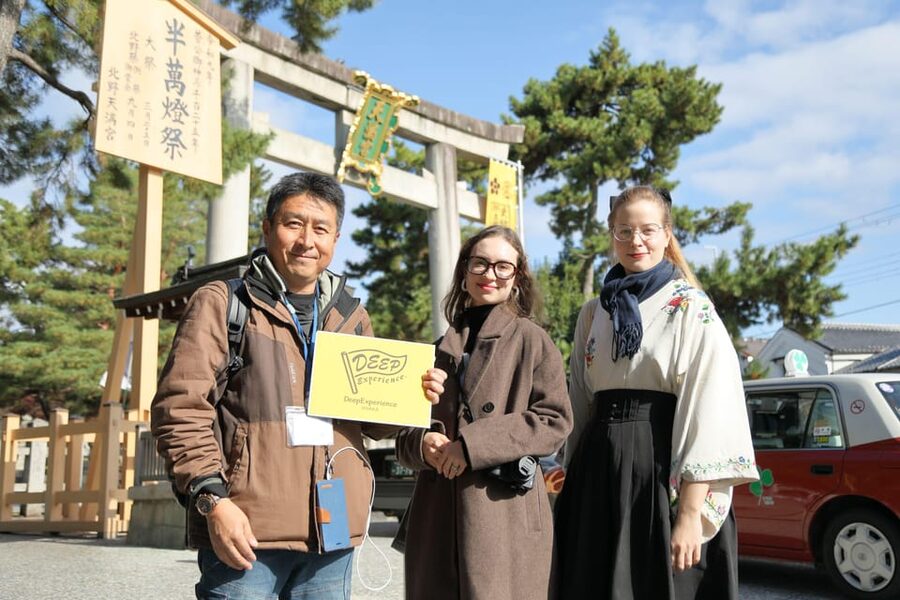
- Meet at the first torii: Find your guide in front of Kitano Tenmangu’s first grand torii, holding the yellow DeepExperience sign.
Why this Kyoto tour feels different
Many Kyoto tours take you to a famous shrine, point out a few traditional buildings, and move on. This one gives you a practical link to the neighborhood. You learn how cloth is made, then walk through the district where geiko and maiko culture still shapes the local identity.
That connection matters. Kamishichiken is not presented as a stage set. Its streets retain old townhouses with latticework fronts, and the district is tied to the nearby Kitano Tenmangu Shrine. The result is a tour with a clear sense of place: shrine, workshop, street, and living culture all fit together.
I would choose this experience for a second or third day in Kyoto, after you have seen a few of the city’s major temples. It gives you something less familiar than another grand gate or garden, while still including a major religious site.
The guide is an important part of the experience. English and Japanese tours are available, and private or small-group options can make the explanations easier to follow. Guides named in the experience include Kanako, Yayoi, and Juraj. The workshop is led by master weaver Hirano, whose patient and humorous teaching style is especially useful when you are trying a traditional technique for the first time.
More evenings in Gion:
- Kyoto Geisha Walking Tour: Gion District & Hidden Gems
★ 4.7 · 3,273 reviews - Kyoto: Gion Magical Night Walking Tour with Geisha Trivia
★ 4.9 · 2,393 reviews - Kyoto: Gion Geisha District Walking Tour – Stories of Geisha
★ 4.7 · 2,187 reviews
Meeting Kitano Tenmangu at the first torii
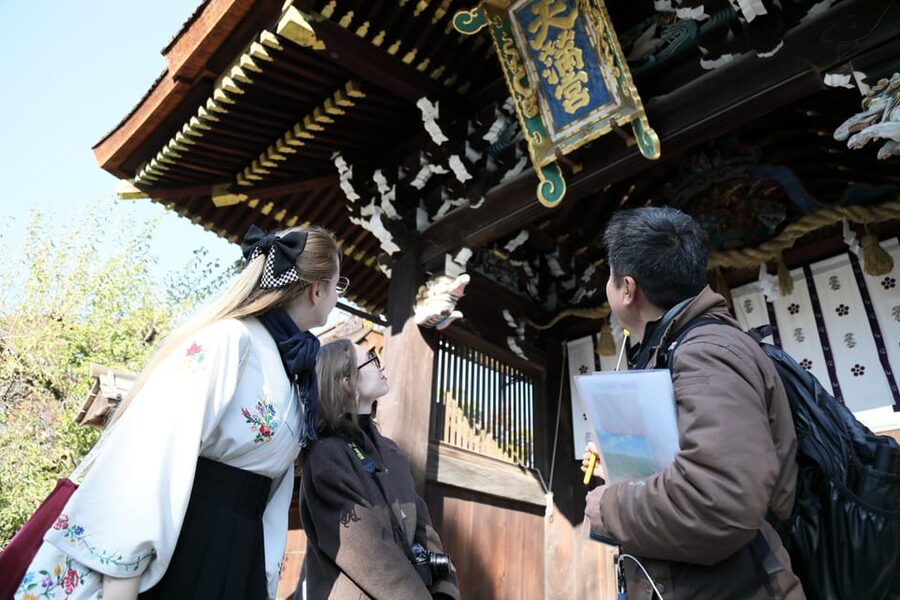
Your meeting point is easy to define, though you should pay attention when arriving: meet in front of the first grand torii of Kitano Tenmangu, not deep inside the shrine grounds. Your guide will hold a yellow sign with the DeepExperience logo.
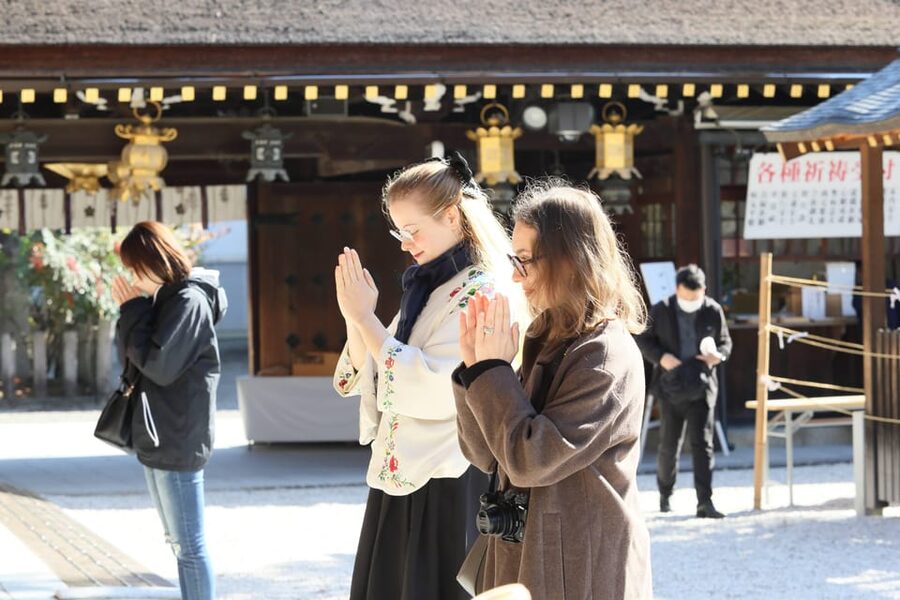
The first stop is Kitano Tenmangu, described as the guardian shrine of the area. You spend about 30 minutes here with your guide. That is enough time for an introduction to the shrine, a look at the main worship hall, and an explanation of how the shrine helped shape Kamishichiken.
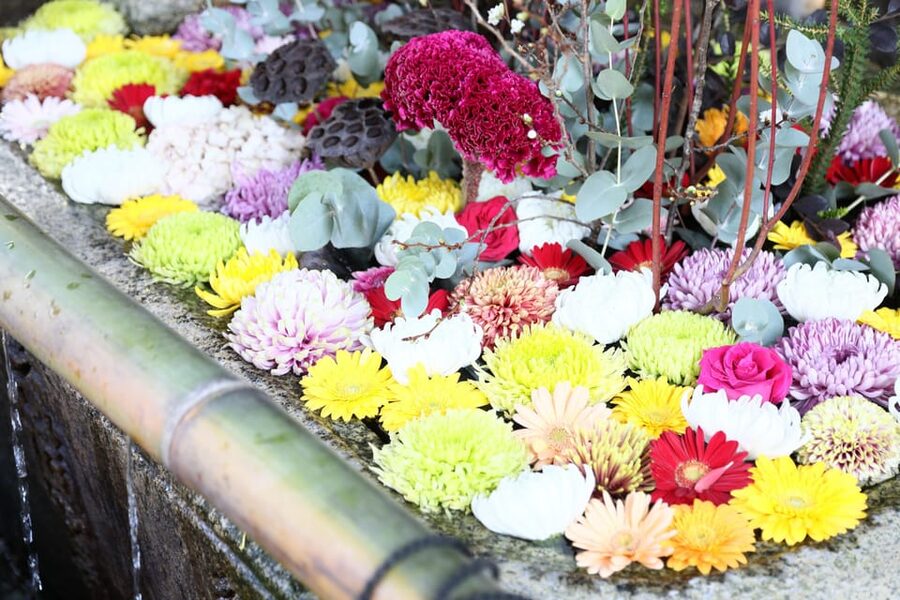
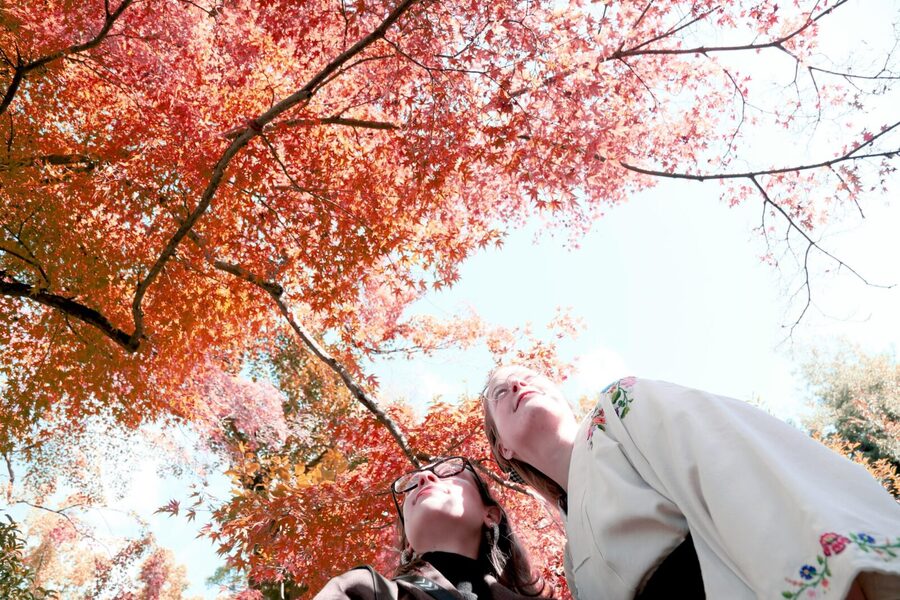
The shrine grounds also change with the seasons. The supplied details specifically point to seasonal scenery, so the visual character of the visit will depend on when you go. Rain does not necessarily spoil this part of the tour. One account of a cold, wet day found that the weather gave the shrine an extra sense of atmosphere.
I appreciate that the shrine visit comes first. It gives you a useful frame for the rest of the morning or afternoon. You are not simply entering an old district without context. You learn why the area developed here before seeing the streets and craft traditions connected to it.
The 30-minute visit is also a practical compromise. Kitano Tenmangu is important, but this is not a full shrine tour. If you want to inspect every building or spend a long time at the grounds, you will need a separate visit. On this tour, the shrine serves as the opening chapter.
The 1.5-hour Tsuzure-ori workshop
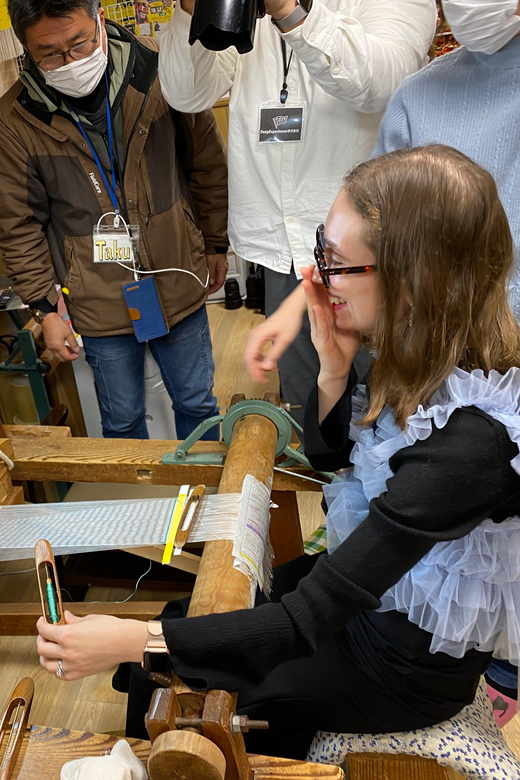
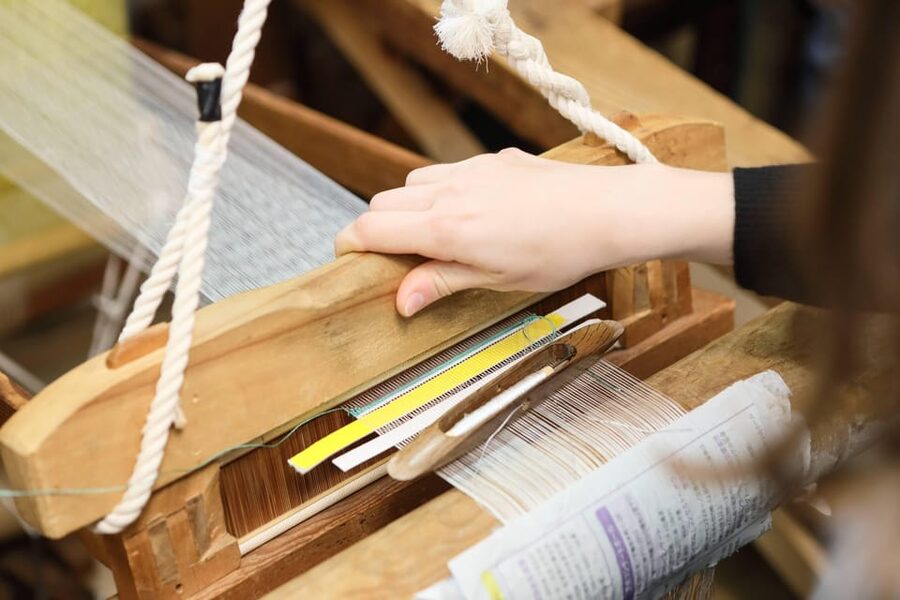
The centerpiece is a 90-minute Nishijin weaving class in a real workshop. You learn the basics of Tsuzure-ori, an old patterned textile technique described as about 4,000 years old and as the oldest Nishijin textile method.
The point is not to watch a craftsman work while you stand nearby. You choose an item from the available selection and make your own piece using traditional methods. The exact choices are not specified in advance, so do not book this expecting one particular finished object unless the operator confirms it beforehand.
The workshop is where this tour earns much of its price. You receive instruction from a traditional craftsman and get time to work at the technique rather than spend only a few minutes on a quick craft sample. If you enjoy fiber arts, this is likely to be the strongest reason to book.
Hirano, the master weaver named for this experience, is described as warm, patient, humorous, and deeply devoted to his craft. Those qualities matter more than fancy equipment when you are learning a process that has a long technical tradition. You should expect correction, encouragement, and a slower pace than a standard tourist activity.
I would not treat this as a polished souvenir factory. The value is in understanding how much care goes into patterned cloth and in making a one-of-a-kind work under supervision. Your finished piece may be modest, but it carries a connection to the method and the neighborhood.
The class lasts half the tour, so this is not an add-on. If you are mainly interested in architecture or shrine photography, 90 minutes of weaving may feel too long. If you like making things, it gives the tour a focus that sightseeing alone cannot provide.
A traditional fabric store may also be included during the wider experience, depending on how the visit is arranged. Since the core details specifically guarantee the shrine, class, and Kamishichiken walk, treat the fabric store as an additional possibility rather than the main reason to reserve.
Walking Kamishichiken’s 400-meter street
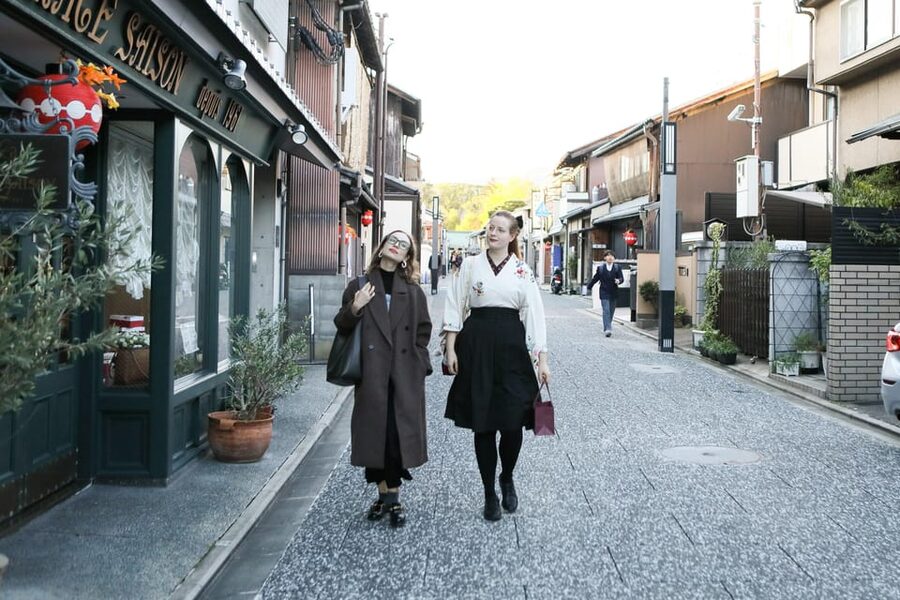
After the workshop, you spend about 30 minutes walking through Kamishichiken. The name refers to Kyoto’s oldest Hanamachi district, one of the traditional geisha entertainment areas. Here, the focus is on the preserved townscape and the places linked with local geiko and maiko culture.
The district’s best feature is its scale. A 400-meter street lined with townhouses may sound small, but that compact length lets you notice details without wearing yourself out. Look for the traditional latticework fronts and the way the buildings hold the street edge.
This is a stroll, not a performance. There is no promise of seeing a geiko or maiko, and you should not expect an arranged encounter. Instead, your guide explains the district and points out local connections as you move through it.
That distinction is useful. Kamishichiken rewards respectful observation. You can appreciate the architecture and cultural setting without treating the neighborhood as a photo opportunity. The quiet atmosphere is part of its appeal, especially if you have already spent time around Kyoto’s more crowded central sights.
A dango tasting may be available, but it depends on whether the shop is open and able to serve it. Consider it a pleasant extra, not a guaranteed part of the plan.
The walk follows the weaving class, which creates a sensible progression. First you learn about the area’s shrine. Then you work with a traditional local textile. Finally, you see the old district on foot. The tour’s pieces support one another instead of feeling like three unrelated stops.
A completely different side of Kyoto:
- PERFECT KYOTO 1-Day Bus Tour
★ 5.0 · 13,518 reviews - Kyoto: Fushimi Inari, Kinkakuji, Bamboo Grove 1 Day Bus Tour
★ 4.8 · 4,316 reviews - Kyoto: Tea Ceremony in a Traditional Tea House in Kiyomizu
★ 4.9 · 3,519 reviews - Kyoto: Tea Ceremony Ju-An at Jotokuji Temple
★ 4.9 · 3,207 reviews
What $131 buys you
At $131 per person, this is not a bargain walking tour. You are paying for three hours, an expert guide, a shrine visit, a 90-minute craft class, and a guided walk through one of Kyoto’s oldest Hanamachi districts.
The workshop is the key value question. If you would otherwise pay for a weaving lesson, the price becomes easier to justify because the tour also supplies historical context and a neighborhood walk. If you have little interest in crafts, you may find the cost high compared with a simple Kyoto sightseeing tour.
Private and small-group availability helps explain the price. A smaller group can make a real difference in a hands-on class, where you may need help with the technique or want to ask about the tools and materials. Still, group size can vary, so confirm the format you want when booking.
The experience also offers reserve-now-and-pay-later booking, along with free cancellation up to 24 hours before the start for a full refund. Those policies make it easier to fit the tour into a changing Kyoto schedule, though you should still check the available starting time before committing.
Who will enjoy this experience most
I would put this tour high on the list for anyone interested in textiles, weaving, design, Japanese craft, or traditional neighborhoods. It is particularly suited to people who want a souvenir with a personal story rather than a shop-bought object.
It also works well for repeat visitors to Kyoto. You still see a major shrine, but the main subject is more local and specific than the usual first-visit route. The tour gives you a way to spend time in an old district without trying to cover half the city.
Families and mixed-interest groups may need to think it through. The shrine and street walk are accessible in concept, but the experience is built around a 90-minute class. Someone who does not enjoy careful handwork may become restless.
You should also consider the weather. The shrine and Kamishichiken walk take place outside, and the tour does not become an indoor-only activity on a rainy day. Bring suitable clothing if the forecast looks damp or cold. One wet-day account found the shrine scenery appealing in the rain, but comfort will depend on your own tolerance.
The tour is available in English and Japanese. If you want detailed cultural explanations, choose the language in which you can ask questions most comfortably. A private or small-group format may be worth the extra cost if personal attention is important to you.
Small details that improve the visit
Arrive at the first torii with enough time to locate the meeting point. Kitano Tenmangu is a large shrine complex, and starting inside the grounds could make the first meeting harder than necessary.
Keep your expectations clear about food. Dango tasting depends on store availability, so do not count on it as part of the paid value. The weaving lesson, shrine visit, and district walk are the dependable core.
Give yourself mental room for the class. Traditional handwork is not a quick button-pushing activity. You will get more from it if you are willing to listen carefully, try the method, and accept that the process matters as much as the finished item.
The guides add a human layer to the history. Kanako is described as warm and natural with guests, while Yayoi is noted for clear and informative guiding. Juraj brings strong interest in Japanese culture and daily life. Since guide assignments can change, you should not assume a particular person will lead your date, but these names give you an idea of the personal approach available.
Should you book the Kamishichiken weaving tour?
Book it if you want a small-scale Kyoto experience with real craft instruction, a knowledgeable local guide, and a quiet historic district. The workshop gives the tour a purpose beyond sightseeing, and the connection between Kitano Tenmangu, Nishijin textiles, and Kamishichiken makes the three hours feel well planned.
Skip it if you are looking for a low-cost shrine visit, a fast photo stop, or a guaranteed geiko or maiko sighting. The $131 price is hard to defend unless the weaving class appeals to you.
For fiber-art enthusiasts, this may be one of the most memorable activities in Kyoto. For everyone else, ask yourself one simple question: would I enjoy spending 90 minutes learning to make a traditional textile? If the answer is yes, the shrine and old district are valuable extras. If not, choose a shorter walking tour and put the money toward another attraction.
FAQ
Where does the tour begin?
Meet in front of the first grand torii gate of Kitano Tenmangu Shrine. Your guide will hold a yellow sign with the DeepExperience logo.
How long does the experience last?
The tour lasts three hours.
What language is the tour offered in?
Live guiding is available in English and Japanese.
Is the tour private or shared?
Private and small-group options are available.
What happens at Kitano Tenmangu?
You take a guided visit lasting about 30 minutes. The tour covers the shrine’s role as guardian of the area, its main worship hall, important cultural assets, and seasonal scenery.
How long is the weaving class?
The Nishijin weaving class lasts about 1.5 hours.
What type of weaving will I learn?
You will learn the basics of Tsuzure-ori, described as an old patterned textile technique and the oldest Nishijin textile method.
Can I make my own item?
Yes. You choose an item from the available selection and make it using traditional techniques under the guidance of a traditional craftsman.
Is dango tasting guaranteed?
No. Dango tasting depends on the store’s availability.
Can I cancel for a refund?
You can cancel up to 24 hours in advance for a full refund. Reserve-now-and-pay-later booking is also available.
Recently added around Kyoto
- Higashiyama | Kyoto: Sakura Season Private Rickshaw Tour★ 5.0 · 3 reviews
- Kyoto Kimono Rental CHAMATSU|Kimono/Yukata Rental FamilyPlan★ 5.0 · 3 reviews
- Kyoto: Half-Day Private Guided Tour to the Old Town of Gion★ 4.4 · 3 reviews
- Nara Private Customizable Half Day Tour★ 5.0 · 3 reviews
- Kansai Region Hiking Adventure in Nara Kobe Kyoto and More★ 5.0 · 3 reviews
- Full Day Nara Deer, Temple, Shrine, Activities & Tea Ceremony★ 5.0 · 3 reviews
- Nara: Essential Private Tour with Deer Park and Temples★ 5.0 · 3 reviews
- Photo Shoot with a Private Vacation Photographer in KYOTO, JAPAN★ 5.0 · 3 reviews
Gion Geisha District Tours, compared.

Kyoto Geisha Walking Tour: Gion District & Hidden Gems
Read our review →
Gion Magical Night Walking Tour with Geisha Trivia
Read our review →
Gion Geisha District Walking Tour – Stories of Geisha
Read our review →
Best of Kyoto: Gion, Geisha, Pagodas & Cobblestones
Read our review →

Kyoto Night Foodie Tour in Gion (9+ dishes + 6 Sake tastings)
Read our review →
Kyoto Gion Geisha District Walking Tour – The Stories of Geisha
Read our review →
Kyoto Gion: 2-Hour Geisha Culture & History Walking Tour
Read our review →Browse the lists this tour appears in