REVIEW · TOURS
KYOTO: Tour guidato tra i tesori della città (in italiano)
Kyoto packs centuries of temples, imperial connections, samurai stories, and working geisha districts into one demanding day. This tour links the city’s biggest sights, from the Golden Pagoda and Sagano Bamboo Forest to Kiyomizu-dera and Gion, with an Italian-speaking native Kyoto guide explaining what you are seeing.
I like two things right away: the guide handles the city’s trains and buses, and the route gives you both famous sights and old neighborhood streets. The Italian commentary also matters here, since Kyoto’s history is full of small distinctions between Maiko, Geiko, aristocrats, monks, and samurai.
The main drawback is pace. You cover a lot of ground, and the supplied schedule describes the experience both as a one-day tour and as lasting half a day. Confirm the exact start and finish time before booking, and expect a full sightseeing day rather than a slow temple visit.
In This Review
- Key points to know before booking
- A big Kyoto day, handled in Italian
- Sagano Bamboo Forest: a short walk with a famous view
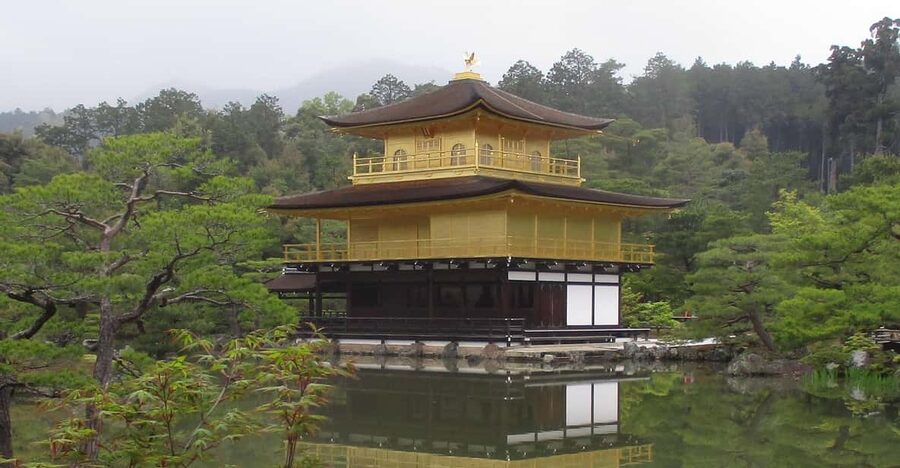
- Kinkaku-ji: Kyoto’s Golden Pavilion
- The Kyoto Station break and the move south
- Kiyomizu-dera and Kyoto’s sloping old streets
- Gion-kobu: a working district, not a costume show
- Minami-za and the finish in Pontocho
- What the Italian guide adds
- Is $153 a fair price?
- Who will get the most from this route?
- Should you book this Kyoto tour?
- FAQ
- Where does the tour begin?
- How do I find the meeting point?
- What language is the tour conducted in?
- Which major temples are included?
- Is the Sagano Bamboo Forest included?
- Are transportation costs included?
- Where does the tour finish?
- Can I leave before the end?
- Is the tour wheelchair accessible?
- What is the cancellation policy?
Key points to know before booking
- Italian-speaking native Kyoto guide: You can ask questions about Kyoto’s history, customs, and modern daily life in Italian.
- Two major temple visits: Entrance fees are included for Kinkaku-ji and Kiyomizu-dera.
- Public transport is part of the plan: Trains, buses, and the subway connect the widely scattered sights.
- A strong first-time route: You see Arashiyama, northern Kyoto, Higashiyama, Gion, and Pontocho in one outing.
- The route ends in Pontocho: You are also free to leave the tour halfway if you have had enough.
- Only five published ratings are available: They are all five-star ratings, with particular praise for the guide’s Italian and detailed explanations.
A big Kyoto day, handled in Italian
This is designed for visitors who want Kyoto’s headline sights without spending hours puzzling over transport. The city’s major attractions sit in different districts, so the value is not just the guiding. It is the route planning.
You meet at Kyoto Station’s North Entrance, also called the Karasuma-guchi side. The precise meeting point is in the open space between the two escalators in front of the taxi terminal, not the bus terminal. Kyoto Tower should be visible ahead and to your upper left. That last detail is useful because Kyoto Station is large, and a vague meeting point can waste the first part of your morning.
The tour is offered as either a group or individual experience, with an Italian-speaking guide. The guide explains the past and present of Kyoto, including the daily lives of ordinary people, the imperial household, aristocrats, literati, and the samurai class. You are not simply moving from one photo stop to the next. The purpose is to connect the buildings and streets to the people who used them.
Other Kyoto mornings people book alongside this one:
- PERFECT KYOTO 1-Day Bus Tour
★ 5.0 · 13,518 reviews - Kyoto: Fushimi Inari, Kinkakuji, Bamboo Grove 1 Day Bus Tour
★ 4.8 · 4,316 reviews - Kyoto: Tea Ceremony in a Traditional Tea House in Kiyomizu
★ 4.9 · 3,519 reviews
Sagano Bamboo Forest: a short walk with a famous view
From Kyoto Station, the first train ride takes about 20 minutes. You then spend roughly an hour visiting and walking through the Sagano Bamboo Forest in the Arashiyama area.
The bamboo path is one of Kyoto’s most recognizable scenes. Tall bamboo rises on both sides, creating a narrow green corridor that feels far removed from the station district. The walk is straightforward, but it is still a walking stop, so comfortable shoes are a sensible choice.
An hour is enough to see the forest without turning the morning into a long hike. It also keeps the larger route moving. You should not expect an extended exploration of every corner of Arashiyama. This is a focused visit to one of the area’s best-known natural sights, followed by more transport.
The first train and walk also give your guide a useful opening to explain Kyoto’s geography. You begin at the modern transport hub, move into the city’s northwestern suburbs, and then continue toward one of Japan’s most photographed temples.
Kinkaku-ji: Kyoto’s Golden Pavilion
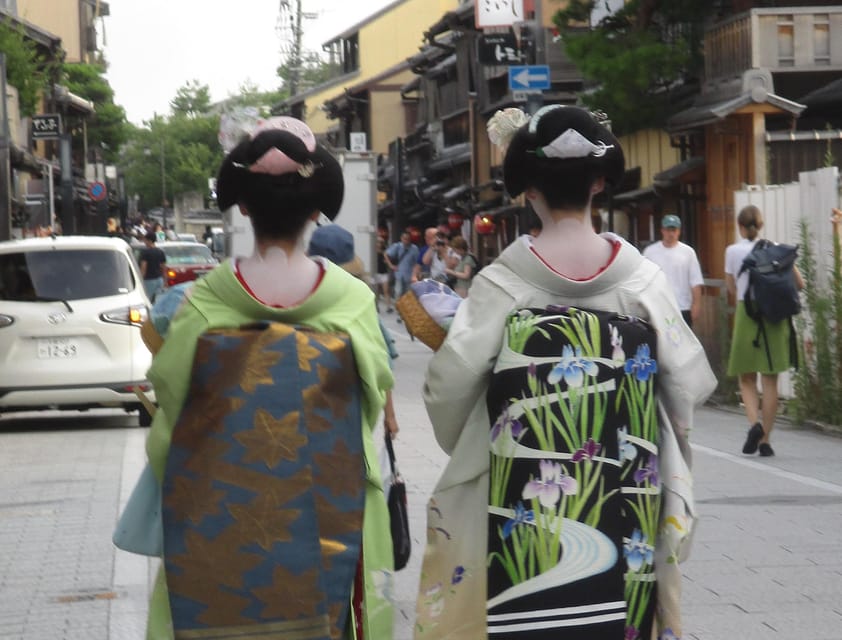
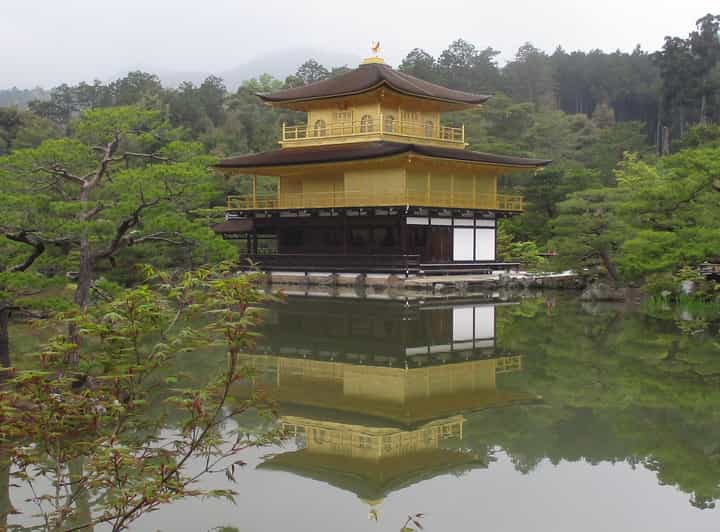
After another train ride of about 20 minutes, a 15-minute bus journey brings you to Kinkaku-ji, the Golden Pavilion. The guided visit and sightseeing stop lasts about an hour.
Kinkaku-ji is famous for its gold-covered upper floors, which reflect in the pond in front of the pavilion. The building is viewed from a set route through the temple grounds. You get a clear look at the pavilion and the surrounding garden, but this is not a museum visit with long indoor stops.
The temple is valuable as a visual symbol, but the guide’s context is what makes the stop more useful. The tour presents Kyoto through the lives of imperial relatives, aristocrats, and literary figures who spent time in the old capital’s quieter areas. That gives the polished pavilion a place in a much larger story about status, retreat, taste, and power.
The schedule allows roughly an hour here. That is enough for the main view and a guided explanation, though visitors who love gardens or photography may wish they had more time. You are trading lingering time at each attraction for a wider view of Kyoto.
The Kyoto Station break and the move south
After Kinkaku-ji, the group takes another bus for about 15 minutes and then a subway ride of roughly 15 minutes back toward Kyoto Station. A one-hour break is listed there.
This pause matters. The morning combines train travel, bus travel, walking, and temple visits, so the break gives you time to stop before the afternoon section. The provided details do not specify whether lunch is included, so plan to handle your own meal during this interval unless the guide tells you otherwise.
The schedule then adds a 15-minute bus ride to Kiyomizu-dera. Because the experience is described in one place as a half-day itinerary and elsewhere as a one-day activity, you should check the available departure time and expected finish when reserving. The full route from Kyoto Station through Pontocho clearly involves a substantial number of hours.
A completely different side of Kyoto:
- Kyoto Geisha Walking Tour: Gion District & Hidden Gems
★ 4.7 · 3,273 reviews - Kyoto: Tea Ceremony Ju-An at Jotokuji Temple
★ 4.9 · 3,207 reviews - Kyoto: Gion Magical Night Walking Tour with Geisha Trivia
★ 4.9 · 2,393 reviews - Kyoto: 45-Minute Tea Ceremony Lesson Experience
★ 4.3 · 2,378 reviews
Kiyomizu-dera and Kyoto’s sloping old streets
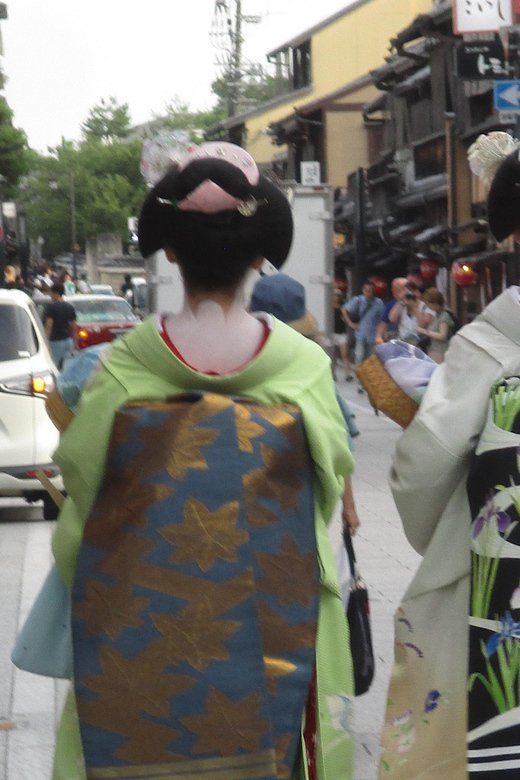
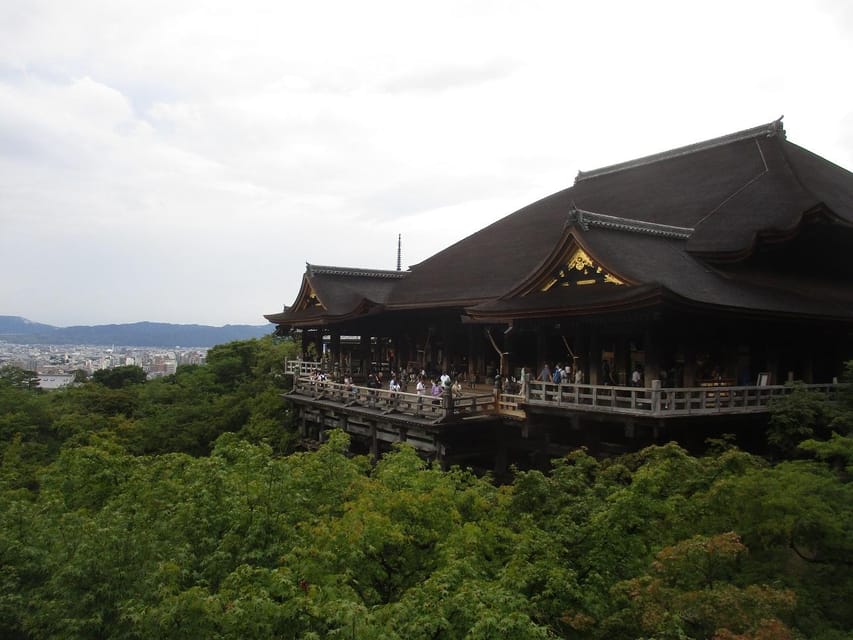
The afternoon’s main temple visit is Kiyomizu-dera, reached by bus. The guided sightseeing stop lasts about an hour.
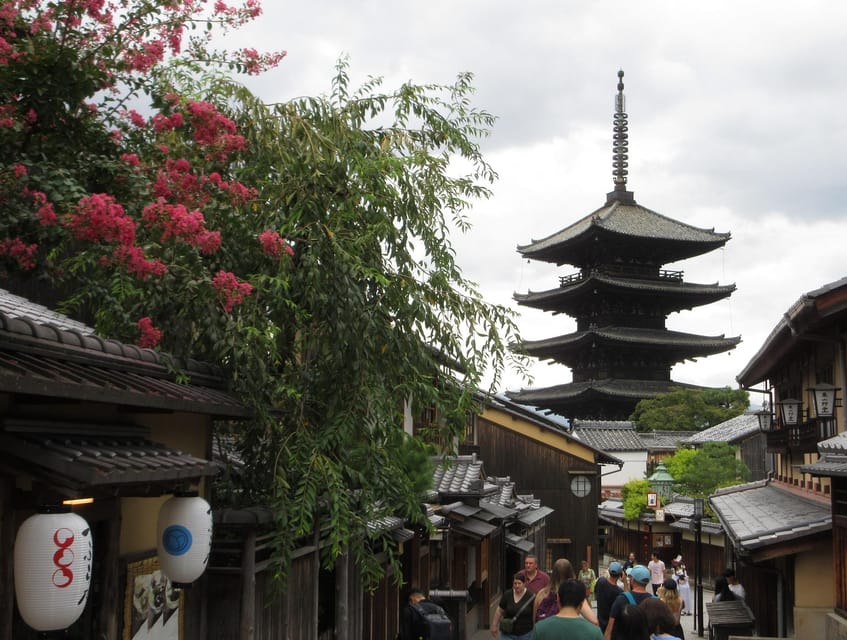
Kiyomizu-dera is one of Kyoto’s essential temple visits, not only because of the temple itself but also because of its setting above the eastern side of the city. The visit introduces a different side of Kyoto from the Golden Pavilion. Kinkaku-ji is viewed across a pond in a garden setting, while Kiyomizu-dera leads you into a dense old district of lanes, shops, slopes, and traditional streets.
After the temple, the route continues on foot for about five minutes to Sannenzaka. You spend around three minutes on a guided sightseeing and walking stop, then continue for another five minutes to Ninenzaka for a shorter walk.
The listed times for Sannenzaka and Ninenzaka are brief, so think of these as orientation walks rather than long shopping visits. Their value is the transition between major sights. You see how Kyoto’s historic atmosphere continues outside temple gates, in the lanes connecting the religious sites to the Gion area.
These streets can be tiring because the day includes repeated walking and changes in elevation. The short stops also mean you may not have much freedom to browse. If your priority is buying crafts, sweets, or souvenirs, you will likely want to return to Higashiyama on your own.
Gion-kobu: a working district, not a costume show
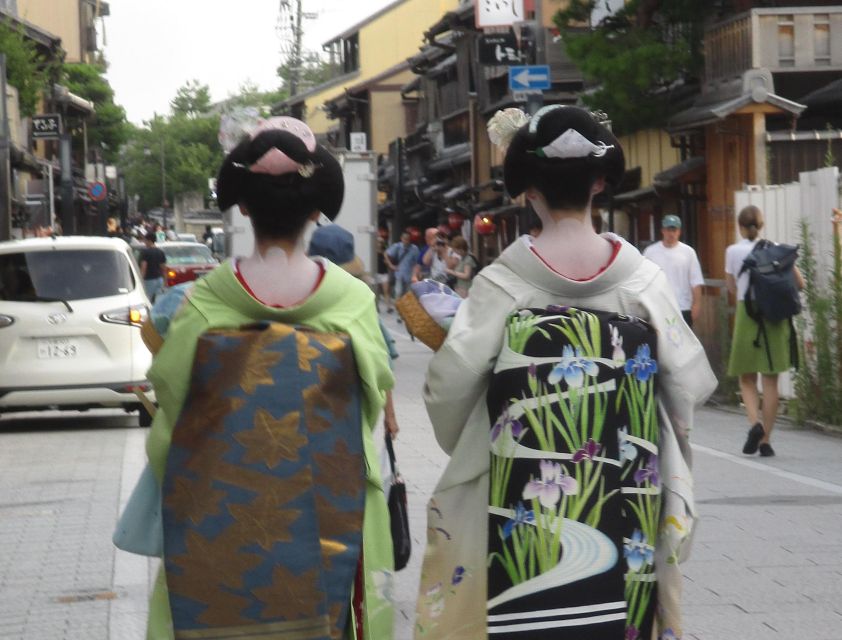
From Ninenzaka, you walk about 15 minutes to Gion. The guided visit lasts around 30 minutes.
The tour presents the Gion-kobu area as the workplace of professional artists known as Maiko and Geiko, often called Geisha. That wording is important. You are being introduced to a traditional professional world, not promised a staged performance or a guaranteed meeting with an artist.
Gion is best understood through its streets, tea-house culture, and working traditions. A guide can help you read the district with more care and avoid treating it as a backdrop for photographs. You may find that the explanation about professional artists and local customs adds more value than simply walking through the lanes alone.
The half-hour stop is short. It gives you an introduction, not a complete study of Gion-kobu. Keep your expectations realistic and behave respectfully in the area. The tour’s emphasis is cultural explanation, not entertainment.
Minami-za and the finish in Pontocho
The route continues on foot for about five minutes to Kyoto Minami-za, Kyoto’s well-known kabuki theater. The listed guided sightseeing stop is only about three minutes, so the theater is a brief point of interest rather than a performance visit.
From Minami-za, you walk three minutes to Pontocho, where the tour finishes. Pontocho is a narrow dining and entertainment alley beside the Kamo River, and it is a useful place to end because you can continue your evening independently.
The tour information specifically says you are free to leave halfway. That gives the route some flexibility. You might choose to stop after Kiyomizu-dera or Gion if you are tired, want more time in Higashiyama, or prefer to spend your evening at your own pace. Ask the guide about the easiest point to depart rather than simply disappearing from the group.
Ending in Pontocho also avoids sending you back to Kyoto Station after the final stop. If you plan dinner in central Kyoto, this finish can save time. The exact convenience depends on your evening plans, but the location gives you a natural next step.
What the Italian guide adds
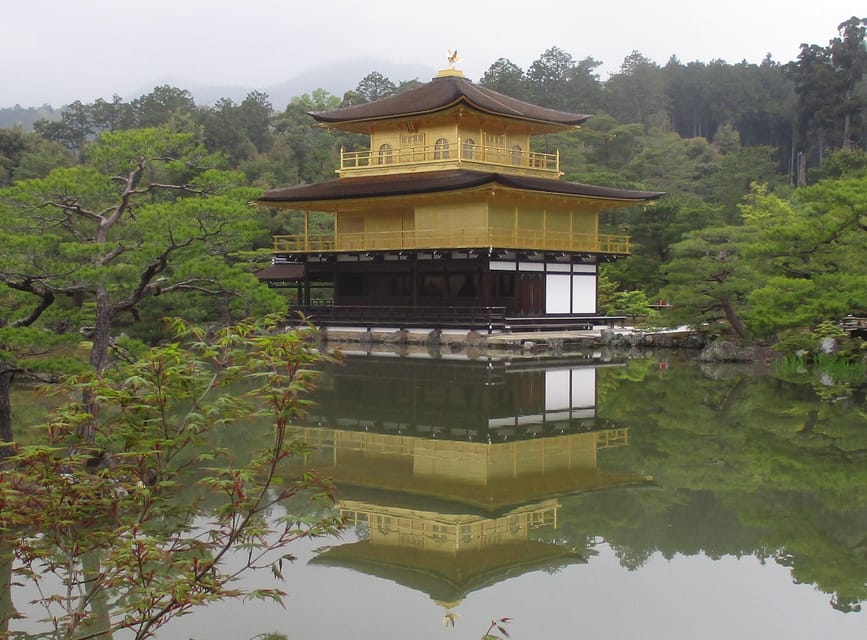
The guide is a central part of this experience. The published Italian-language feedback praises the guide’s perfect Italian, availability, detailed explanations, and friendly manner. One particularly useful detail is the emphasis on explaining the history of each temple and site rather than offering only short facts.
That approach suits Kyoto. Many temples look beautiful at first glance, but their meaning can be difficult to read without context. A native Kyoto guide can answer questions about the former capital, local life, religious sites, aristocratic retreats, samurai culture, and the city as it is today.
No guide’s name is provided in the tour information, so you should not expect a specific named guide when booking. What is clear is that the guide speaks Italian and is described as native to Kyoto. If you have questions about etiquette, Maiko and Geiko, temple traditions, or daily life, ask them during the transport sections as well as at the monuments.
Is $153 a fair price?
At $153 per person, this is not a bargain sightseeing loop. It becomes easier to justify if you value three things: Italian-language guiding, included transport, and included entrance fees.
Kyoto’s sights are spread across several districts. On your own, you would need to plan the route, buy or organize multiple train, bus, and subway rides, find Kinkaku-ji and Kiyomizu-dera, and work out how to connect them with Arashiyama and Gion. The tour takes that planning off your plate.
The price is less attractive if you already know Kyoto well, speak Japanese or English comfortably, or prefer to spend half a day at one temple district. You also pay for breadth. The route gives you a broad introduction, but several stops are short, especially Sannenzaka, Ninenzaka, Gion, and Minami-za.
Entrance fees and transportation during the itinerary are included. The meeting point is easy to identify if you use Kyoto Tower as your reference, and the option to reserve now and pay later gives you some booking flexibility. Cancellation is free up to 24 hours before the tour for a full refund.
Who will get the most from this route?
I would recommend this tour most strongly to a first-time Kyoto visitor who wants the major sights explained in Italian. It also fits you if you have limited time and want to combine Arashiyama, Kinkaku-ji, Higashiyama, Gion, and Pontocho without building the transport plan yourself.
It suits visitors who enjoy history and cultural context more than unstructured wandering. The guide covers the lives of nobles, imperial relatives, literati, and samurai, along with modern Japanese life. That makes the tour more than a temple checklist.
You should think twice if you dislike fixed schedules, walk slowly, or want long periods for photography and shopping. The day includes several transfers and a lot of movement. Wheelchair access is listed, but the supplied information does not explain how every walking section, slope, or historic site is handled. If that matters to you, confirm the practical details before paying.
Should you book this Kyoto tour?
Book it if you want an efficient introduction to Kyoto with Italian explanations, included transport, and the city’s most famous temple and neighborhood stops. The guide’s detailed history talks and friendly, helpful manner are the strongest reasons to choose it, and the small set of published ratings is uniformly positive.
Skip it if your ideal Kyoto day means lingering in one garden, shopping slowly in Ninenzaka, or exploring Gion without a timetable. The route is broad and useful, but it is busy.
Before booking, confirm the exact duration because the description uses both one-day and half-day wording. If the schedule fits your energy and you want to see a great deal in one outing, $153 can be reasonable for the convenience and Italian-language guidance.
FAQ
Where does the tour begin?
It begins at Kyoto Station’s North Entrance, also called the Karasuma-guchi side.
How do I find the meeting point?
Go to the space between the two escalators in front of the taxi terminal, not the bus terminal. Kyoto Tower should be visible ahead and to your upper left.
What language is the tour conducted in?
The live tour guide speaks Italian. The tour information describes the guide as a native Kyoto guide.
Which major temples are included?
The route includes Kinkaku-ji, also known as the Golden Pagoda, and Kiyomizu-dera.
Is the Sagano Bamboo Forest included?
Yes. The tour includes a guided visit and walk of about one hour in the Sagano Bamboo Forest.
Are transportation costs included?
Yes. Transportation and entrance fees for the monuments visited during the itinerary are included. The route uses trains, buses, and the subway.
Where does the tour finish?
The tour finishes in Pontocho after the Gion and Kyoto Minami-za stops.
Can I leave before the end?
Yes. You are free to leave the tour halfway.
Is the tour wheelchair accessible?
Wheelchair accessibility is listed for the activity. The supplied information does not give separate details for every route section or historic site.
What is the cancellation policy?
You can cancel up to 24 hours in advance for a full refund. You can also reserve now and pay later.
Recently added around Kyoto
- Higashiyama | Kyoto: Sakura Season Private Rickshaw Tour★ 5.0 · 3 reviews
- Kyoto Kimono Rental CHAMATSU|Kimono/Yukata Rental FamilyPlan★ 5.0 · 3 reviews
- Kyoto: Half-Day Private Guided Tour to the Old Town of Gion★ 4.4 · 3 reviews
- Nara Private Customizable Half Day Tour★ 5.0 · 3 reviews
- Kansai Region Hiking Adventure in Nara Kobe Kyoto and More★ 5.0 · 3 reviews
- Full Day Nara Deer, Temple, Shrine, Activities & Tea Ceremony★ 5.0 · 3 reviews
- Nara: Essential Private Tour with Deer Park and Temples★ 5.0 · 3 reviews
- Hiking Tour for Sacred Sites in Kyoto with a Guide★ 5.0 · 3 reviews
Tours, compared.
Fushimi Inari, Kinkakuji, Bamboo Grove 1 Day Bus Tour
Read our review →
Kyoto Geisha Walking Tour: Gion District & Hidden Gems
Read our review →
Gion Magical Night Walking Tour with Geisha Trivia
Read our review →
Gion Geisha District Walking Tour – Stories of Geisha
Read our review →
Kyoto Night Foodie Tour in Gion (9+ dishes + 6 Sake tastings)
Read our review →