
REVIEW · CYCLING TOURS
Kyoto Shogun Cycling Tour
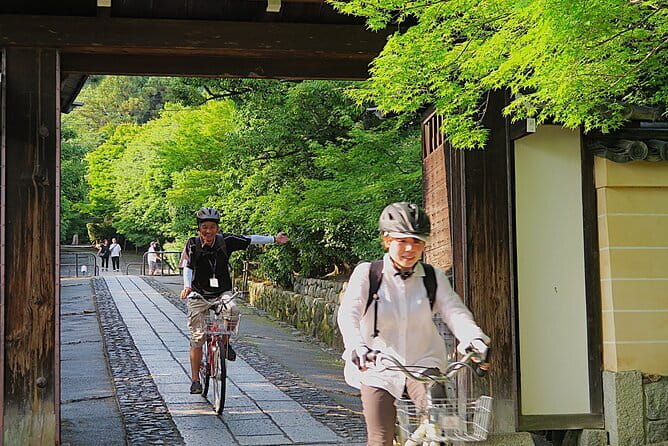
Kyoto’s shogun-era story makes far more sense when you move through it by bicycle. This tour links Kinkakuji, Toji-in, and Nijo Castle on an easy route, shifting from glittering temple gardens to Zen quiet and finally to the former Kyoto home of the Tokugawa rulers.
I like the small private groups, limited to six people per guide, and the way the tour ends at Kyoto Station rather than returning you to the starting point. The main thing to consider is the price, $153.50 per person, which is a serious spend for three and a half hours, especially since matcha is not included and the route still uses public roads.
In This Review
- Key points at a glance
- Why this Kyoto bike route works so well
- Kinkakuji, Kyoto’s famous Golden Pavilion
- Toji-in and the quieter side of Zen
- Nijo Castle and the end of the shogun era
- What your guide adds to the ride
- Bikes, group size, and physical demands
- Rain plans and seasonal comfort
- Is $153.50 a fair price?
- Starting near Wara Tenjin and finishing at Kyoto Station
- Who should book this ride?
- Should you book the Kyoto Shogun Cycling Tour?
- FAQ
- How long does the Kyoto Shogun Cycling Tour last?
- Which sights are included?
- Is admission included?
- Is bicycle equipment provided?
- Is matcha included?
- How many people can join?
- Can children join?
- What happens if it rains?
- Where does the tour start and finish?
Key points at a glance
- Three major sights in one ride: Kinkakuji, Toji-in, and Nijo Castle each show a different side of Kyoto’s political and religious past.
- An easy downhill route: The tour is designed to suit most participants, though children must be at least 10 years old and 145 centimeters tall.
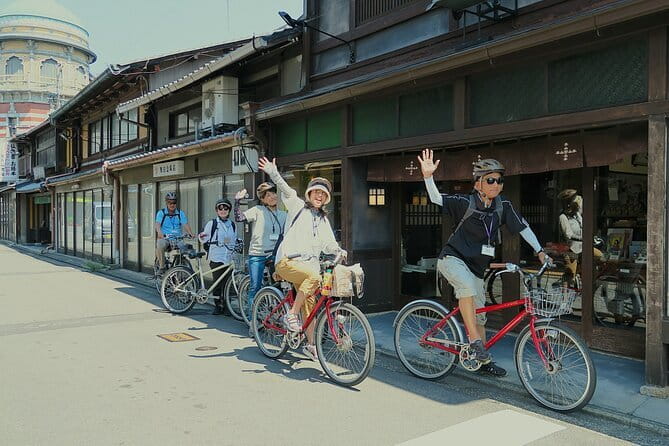
- Private groups of two to six: You ride with your own party and guide, with an extra guide available for groups of seven to twelve.
- Strong English-language guiding: Guides including Seiya, Makoto, Nozomi, Yutaka Kaneda, and Yasunobu Yagyu have been praised for clear explanations and friendly company.
- Rain is not an automatic cancellation: You can continue by bicycle with a free poncho or switch to a walking tour using public transport.
- Practical ending at Kyoto Station: The finish at the Kyoto Cycling Tour Project terminal makes it easy to continue sightseeing or catch a train.
Why this Kyoto bike route works so well
Kyoto is spread across a broad plain, and its best sights are not always close to one another. You can connect them by bus, but buses often mean waiting, squeezing through crowded streets, and losing your sense of how the city fits together.
A bicycle gives you a better middle ground. You cover more ground than on foot, yet you still notice small streets, temple walls, gardens, and changes in the city around you. This route starts near Wara Tenjin in the Kinugasa area and finishes near Kyoto Station, so it has a useful one-way shape instead of sending you back to the beginning.
The tour lasts about three and a half hours. Each main stop receives roughly an hour, with Nijo Castle getting about an hour and a half. That timing gives you enough room for more than a quick photograph, though you should not expect a slow, full-day examination of every building.
The route is described as easy and downhill. That should appeal if you want active sightseeing without signing up for a demanding cycling trip. Still, you need to ride safely on public roads without help. This is not a bicycle with a guide doing all the work for you.
More bike days around Kyoto:
- Hidden Kyoto E-Biking tour
★ 5.0 · 1,843 reviews - Bike Tour Exploring North Kyoto plus Lunch
★ 5.0 · 1,087 reviews - Arashiyama Bamboo Forest & Hidden Gems Bike Tour (Early Bird)
★ 5.0 · 613 reviews
Kinkakuji, Kyoto’s famous Golden Pavilion
The first stop is Kinkakuji, better known as the Golden Pavilion. Its upper floors are covered in gold leaf, and the building reflects across a pond surrounded by carefully arranged gardens.
This is one of Kyoto’s most photographed places, so it can feel familiar before you arrive. The value of having a guide here is not simply finding the pavilion. Your guide can explain its connection to the Ashikaga Shoguns and the role the site played in Kyoto’s political story.
You spend about an hour here, including admission and a walk through the gardens. That is a sensible amount of time. The pavilion itself is not a building you enter, so the visit focuses on views, the garden setting, and the surrounding temple grounds.
I would pay attention to how the garden controls your view. The pavilion appears from different angles as you follow the path, and the water, trees, stones, and architecture are arranged to create a series of quiet compositions. It is a good place to begin because the bright gold gives you an immediate visual marker for the shogun era.
The drawback is that Kinkakuji is famous for a reason. It is likely to be the busiest stop on the route, and you may find the experience less peaceful than the later temple visit. If your main goal is solitude, this stop will not provide it. If you want Kyoto’s essential sights in a short morning, it earns its place.
Toji-in and the quieter side of Zen
Toji-in offers a useful change of pace. After the strong visual impact of Kinkakuji, you move into a quieter temple setting associated with the Ashikaga family.
Your guide takes you inside the historic temple and explains its garden and small teahouse. This is where the tour’s theme becomes more than a list of famous buildings. You see how the rulers connected with religious institutions, gardens, and Zen practice.
The visit also introduces the Japanese idea of wabi-sabi, a taste for simplicity, age, restraint, and imperfection. You are encouraged to take time in the temple hall, looking toward the garden and teahouse. This is not a stop to rush through. The setting rewards stillness, and the guide’s explanation can help you understand why an apparently plain space matters.
Toji-in may be the strongest stop for anyone who wants a calmer cultural experience. Kinkakuji gives you spectacle. Toji-in gives you proportion, quiet, and a better feel for the contemplative side of Kyoto.
You should know that the tour includes a temple visit but not matcha service. If sitting down for tea is important to you, budget separately or ask about nearby options after the ride. The listed price includes the temple admission, not a tea experience.
Nijo Castle and the end of the shogun era
Nijo Castle gives the tour a strong final chapter. It was the Kyoto residence of the Tokugawa Shoguns and the site of major events connected with the end of shogun rule.
The castle grounds are more formal and political than Toji-in. You see grand buildings, ornamental carvings, and broad grounds built to express authority. A guide helps connect those details to the people who used the castle and the political changes that eventually ended the Shogunate.
The allotted time is about an hour and a half, making this the most substantial stop. That matters because Nijo Castle has enough to occupy you beyond the main entrance view. You have time to move through the grounds and take in the buildings without treating the place as a quick photo stop.
I like the order of these three sights. Kinkakuji introduces the Ashikaga period through architecture and beauty. Toji-in slows the pace and shows a more inward form of Japanese aesthetics. Nijo Castle then brings the political story forward to the Tokugawa period and its final days.
Nijo Castle is also a good place to ask your guide questions. The route is private, so you can spend more time on the parts that interest you, instead of following a large group on a fixed script.
A completely different side of Kyoto:
- PERFECT KYOTO 1-Day Bus Tour
★ 5.0 · 13,518 reviews - Kyoto: Fushimi Inari, Kinkakuji, Bamboo Grove 1 Day Bus Tour
★ 4.8 · 4,316 reviews - Kyoto: Tea Ceremony in a Traditional Tea House in Kiyomizu
★ 4.9 · 3,519 reviews - Kyoto Geisha Walking Tour: Gion District & Hidden Gems
★ 4.7 · 3,273 reviews
What your guide adds to the ride
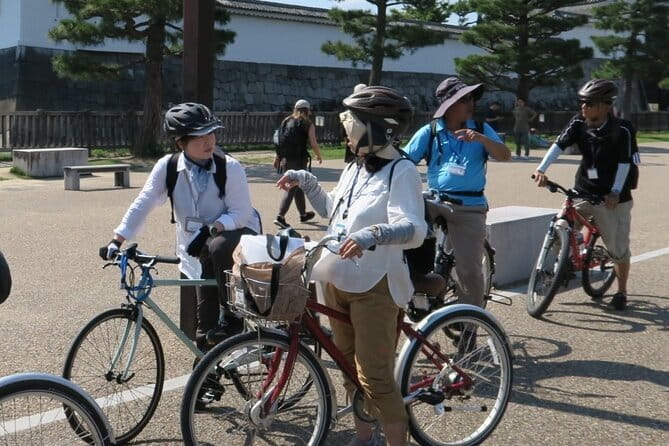
The guide is a major part of the value here. The cycling itself is not difficult to arrange independently, but connecting three historic sites with useful explanations is harder.
Several guides associated with this tour service have received especially strong praise. Seiya has been described as comfortable with families and able to keep a 12-year-old engaged. Makoto has been noted for a warm personality and for adding time when a local festival made it worthwhile. Nozomi has guided visitors through temples, shrines, Gion, and the Imperial Palace, while Yutaka Kaneda and Yasunobu Yagyu have led routes with small streets and local cultural details.
Guide assignments can change, so you should not book on the assumption that one particular person will lead your ride. The consistent point is the style of guiding: clear English, local history, personal attention, and room for questions.
One guide, Yasunobu Yagyu, was praised for explaining Kyoto’s people and culture in a way that changed how the city was seen. That is exactly what you want from a bicycle tour. The best guides do not just identify a temple. They help you notice why a street, gate, garden, or district belongs in the larger story.
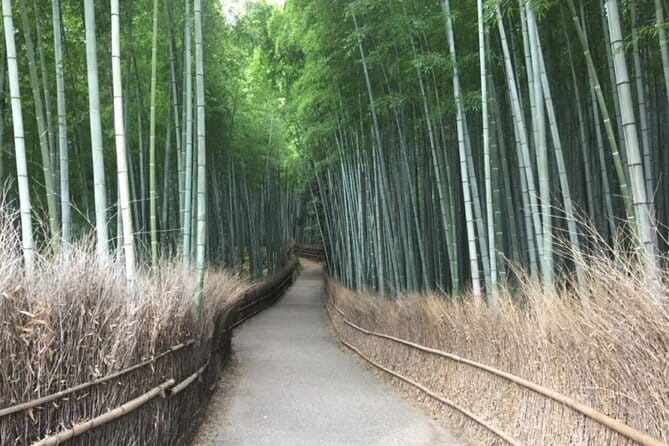
Some accounts of the cycling service also describe routes that include the Imperial Palace, Gion, riverside paths, shrines, and the bamboo forest. The Shogun route supplied here specifically focuses on Kinkakuji, Toji-in, and Nijo Castle, so do not assume those other places are included on this particular booking.
Bikes, group size, and physical demands
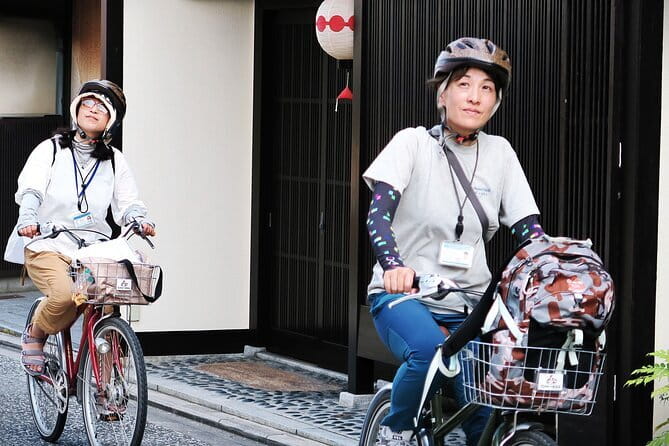
The tour supplies the bicycle, helmet, and rainwear. That keeps the preparation simple, especially if you are visiting Japan with limited luggage.
The route is intended for most participants, but the age and height rules are clear. Children must be at least 10 years old, at least 145 centimeters tall, and able to ride safely on the road without help. This is not suitable for a young child who needs a trailer, balance support, or an adult to control the bicycle.
Groups range from two to six people per guide. That is a good size for city riding. You can hear the explanations, stay together at junctions, and ask for help without holding up a large crowd. Groups of seven to twelve can be accepted with an additional guide.
The ride is described as downhill and easy, but Kyoto streets still require attention. You should be comfortable steering, braking, and following directions around traffic. Bring water and wear clothes you can pedal in, particularly during the hot summer months. One account of a ride specifically noted the heat, even though the outing remained enjoyable.
The bikes were considered easy to ride by several participants, but comfort is personal. If you have not cycled for years, be honest with yourself before booking. The tour is gentle by cycling-tour standards, not a sightseeing bus on two wheels.
Rain plans and seasonal comfort
The tour operates in rain, which is useful in Kyoto, where a wet forecast can arrive at any time. You have two choices: continue by bicycle with a free rain poncho or change to a walking tour using buses or the metro, with public transport included in the tour fee.
That flexibility is a real advantage. You do not have to decide in advance that bad weather will ruin the day. Cycling in steady rain may still be tiring, especially around temple grounds where paths can be slick, so the public transport option may be the better choice.
The information provided does not specify how hot or cold weather affects the route, so plan for ordinary outdoor conditions. In summer, light clothing, water, and sun protection are sensible. In cooler or wet weather, dress in layers that allow free movement.
Is $153.50 a fair price?
At $153.50 per person, this is not a budget bicycle rental. You are paying for the guide, bicycle, helmet, rainwear, admissions to the three main sites, and a private format.
The value improves if you are a couple or small family that wants a well-shaped introduction to Kyoto without arranging transport between distant sights. You also save planning time. Someone else handles the route, timing, entrances, and historical context while you concentrate on the city.
The price is harder to justify if you are traveling alone, since one-person bookings are not accepted, or if you already know Kyoto well and are comfortable navigating by bicycle. The tour is also less attractive if you want a full tea ceremony, since matcha service costs extra and is not part of the experience.
For two people, the private format can work well as a half-day orientation. You see three important places, learn how they connect, and finish at Kyoto Station. I would think of it as paying for structure and local guidance, not simply transportation.
Starting near Wara Tenjin and finishing at Kyoto Station
The meeting point is Wara Tenjin mae, Kinugasa Oharaicho, in Kyoto’s Kita Ward. The end point is the Kyoto Cycling Tour Project terminal near Kyoto Station at 552-13 Higashiaburanokoji-cho.
This one-way arrangement is practical. You begin near the northern temple area and finish in the city center, so you do not need to retrace the route. The end point is especially handy if you are changing plans, continuing to another part of Kyoto, or catching a train.
The starting point is near public transportation, but the supplied information does not give a detailed route from your hotel. Check the map carefully and allow time to arrive. A cycling tour that begins late because you are searching for the meeting point is a poor way to start.
Confirmation is sent within 48 hours of booking, subject to availability. The activity is private, so only your own group participates, but at least two people are required.
There is a small conflict in the supplied booking terms about cancellations. One section says you can request a refund at least three days before the tour by 18:00 Japan time, while another says the experience is non-refundable and cannot be changed. Confirm the current rule with KCTP before paying, rather than relying on one statement.
Who should book this ride?
I would recommend it to first-time Kyoto visitors who want context without spending a full day in a coach or museum. It also suits couples, families with older children, and small groups who value a private guide.
It is a particularly good match if you enjoy seeing a city in motion. The ride gives you temple architecture, gardens, political history, and ordinary Kyoto streets in one compact outing.
You should think twice if you dislike cycling, struggle with road riding, or want long, unhurried visits at each site. It is also not the best choice for solo visitors, since one-person participation is not accepted.
Should you book the Kyoto Shogun Cycling Tour?
Book it if you want a well-paced half-day ride that connects three major Kyoto sights and gives you a guide’s explanation along the way. The private group limit, downhill route, supplied rainwear, and Kyoto Station finish make the logistics easier than planning the same outing alone.
Skip it if $153.50 feels too high for three and a half hours, if you need a solo booking, or if matcha and a longer tea-focused visit are central to your plans. For everyone else, this is a practical way to link Kinkakuji, Toji-in, and Nijo Castle while seeing how Kyoto’s shogun story fits together.
FAQ
How long does the Kyoto Shogun Cycling Tour last?
The tour lasts approximately three hours and 30 minutes.
Which sights are included?
The route includes Kinkakuji Temple, Toji-in Temple, and Nijo Castle.
Is admission included?
Yes. Admission tickets for Kinkakuji, Toji-in, and Nijo Castle are included.
Is bicycle equipment provided?
Yes. The tour includes use of a bicycle, a helmet, and rainwear.
Is matcha included?
No. Matcha service is not included in the tour price.
How many people can join?
A guide can take a minimum of two and a maximum of six people. Groups of seven to twelve can be accepted if an extra guide is arranged. One-person participation is not accepted.
Can children join?
Children must be at least 10 years old, at least 145 centimeters tall, and able to ride a bicycle safely on the road without help.
What happens if it rains?
The tour operates in rain. You can continue by bicycle with a free rain poncho or switch to a walking tour using buses or the metro, with public transport included in the tour fee.
Where does the tour start and finish?
The tour starts at Wara Tenjin mae in Kinugasa, Kita Ward, Kyoto. It finishes at the Kyoto Cycling Tour Project terminal near Kyoto Station.
Recently added around Kyoto
- Higashiyama | Kyoto: Sakura Season Private Rickshaw Tour★ 5.0 · 3 reviews
- Kyoto Kimono Rental CHAMATSU|Kimono/Yukata Rental FamilyPlan★ 5.0 · 3 reviews
- Kyoto: Half-Day Private Guided Tour to the Old Town of Gion★ 4.4 · 3 reviews
- Nara Private Customizable Half Day Tour★ 5.0 · 3 reviews
- Kansai Region Hiking Adventure in Nara Kobe Kyoto and More★ 5.0 · 3 reviews
- Full Day Nara Deer, Temple, Shrine, Activities & Tea Ceremony★ 5.0 · 3 reviews
- Nara: Essential Private Tour with Deer Park and Temples★ 5.0 · 3 reviews
- Hiking Tour for Sacred Sites in Kyoto with a Guide★ 5.0 · 3 reviews
Cycling Tours, compared.
Arashiyama Bamboo Forest & Hidden Gems Bike Tour (Early Bird)
Read our review →
5 Top Highlights of Kyoto Full Day Bike Tour (E-bike option)
Read our review →
Full Day Biking Tour Exploring the Best of Kyoto
Read our review →
Afternoon Kyoto Bike Tour: Bamboo Forest, Monkeys & Hidden Spots
Read our review →
South Kyoto in a Nutshell: Gentle Backstreet Bike Tour!
Read our review →Browse the lists this tour appears in